


Max Davies
2027 Lexus TZ: Luxury brand reveals flagship three-row electric SUV
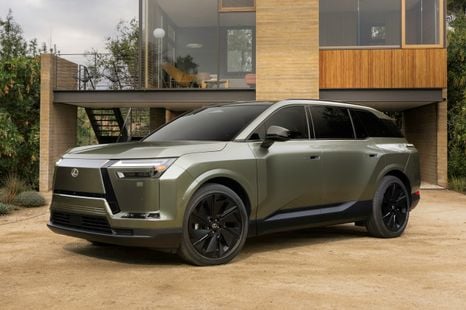
Lexus has revealed its take on the three-row Toyota Highlander, the TZ, headlined by bold styling and a luxuriously appointed interior.
34 Minutes Ago
Leapmotor’s huge D19 flagship SUV packs six or seven seats, EV or range-extender power, and serious luxury intent, but will it work in Australia?
CarExpert brings together reviews, research tools and trusted buying support, guiding you from research to delivery with confidence.
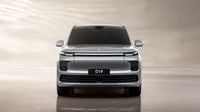
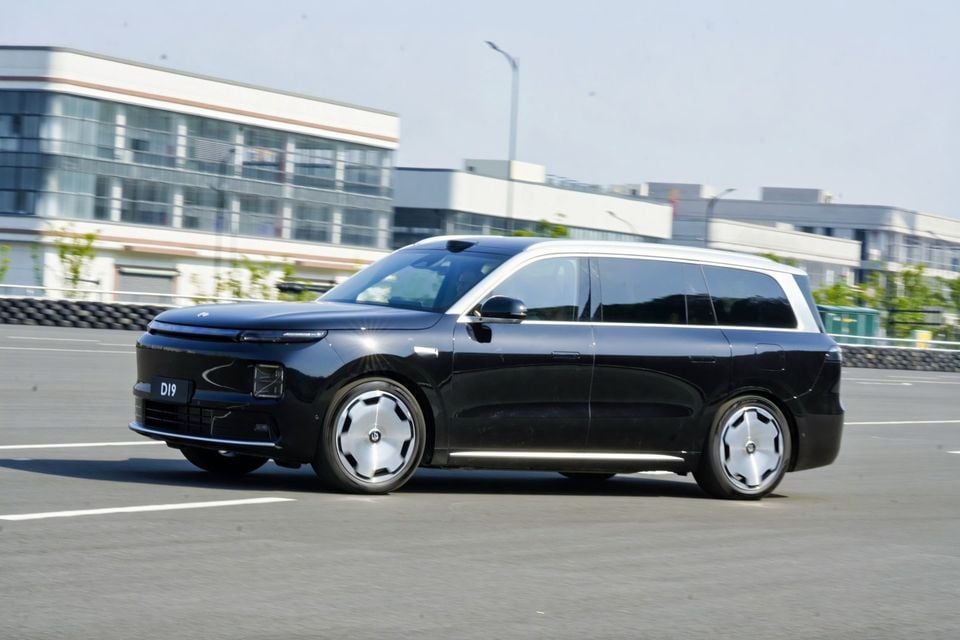
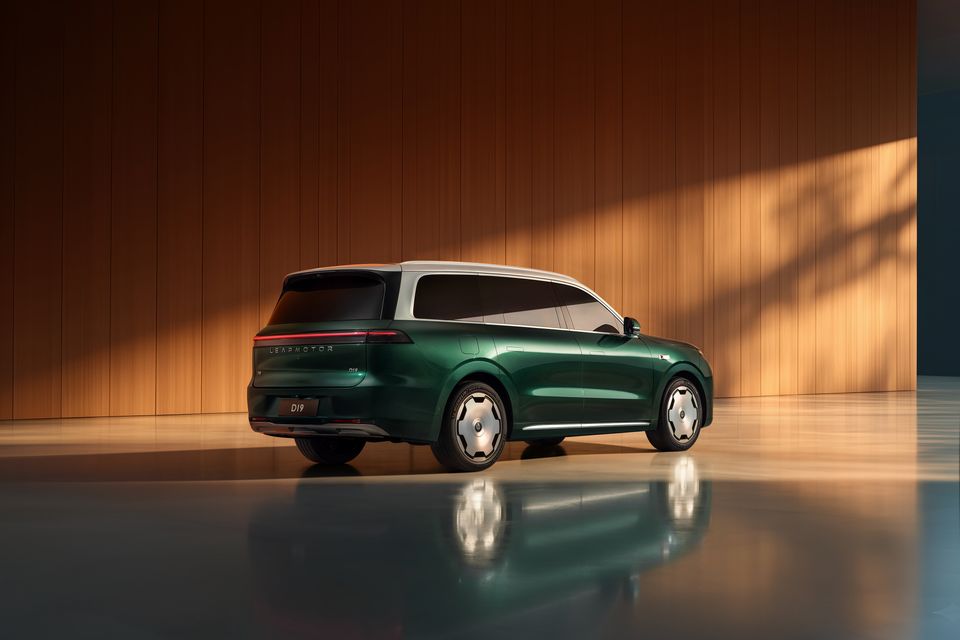
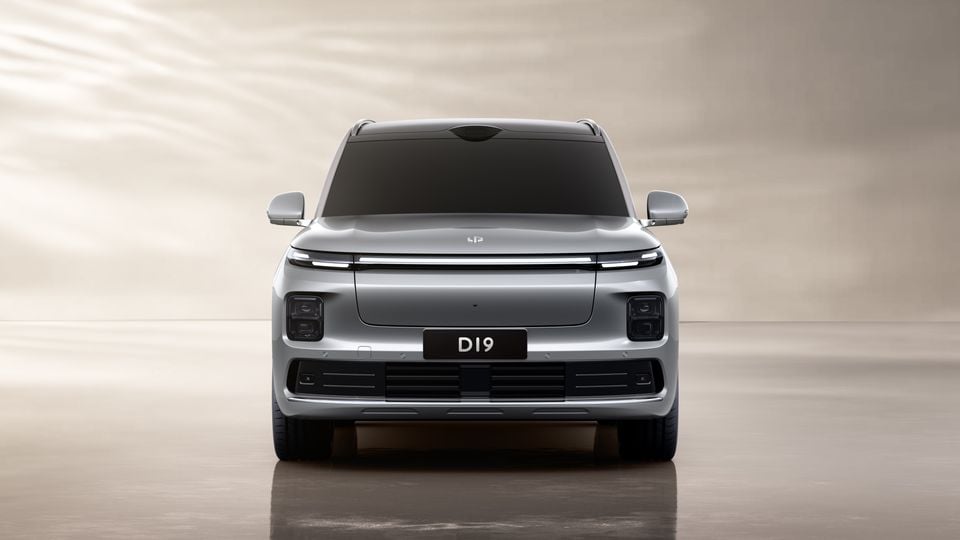
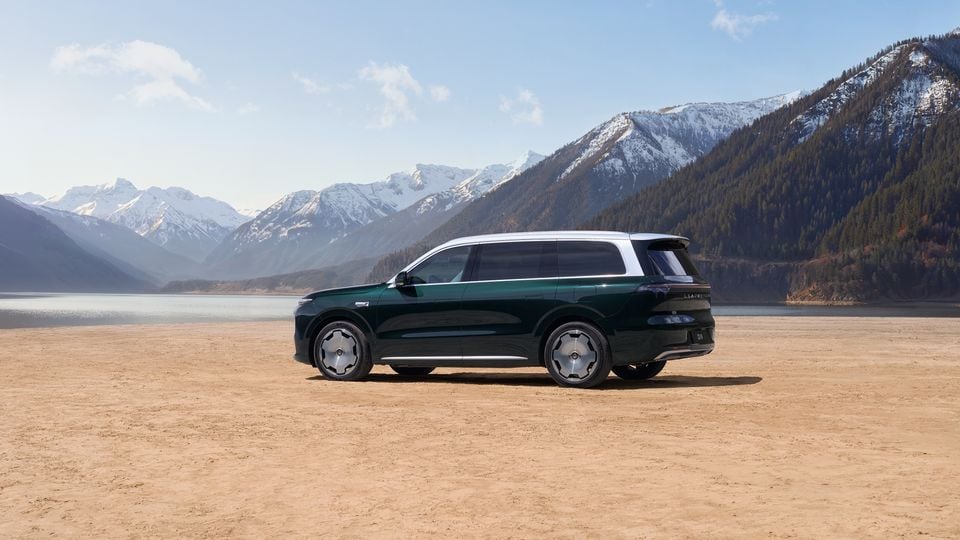
The Leapmotor D19 is the Chinese brand’s new flagship SUV, sitting above the B10 small SUV and C10 mid-size SUV in its global lineup. It's a big, beautiful thing, and while its wheels make it look like something from Bentley or Rolls-Royce, its interior is what really impressed us during our super-quick first drive in China last week.
In essence, it's a full-size, three-row luxury SUV offered in China as either a battery-electric vehicle (EV) or an extended-range electric vehicle (EREV, or REEV in Leapmotor-speak, as per the existing C10 REEV and upcoming B10 REEV). Depending on the version, it can be had with six or seven seats, dual-motor all-wheel drive, or tri-motor all-wheel drive in the flagship BEV Performance trim.
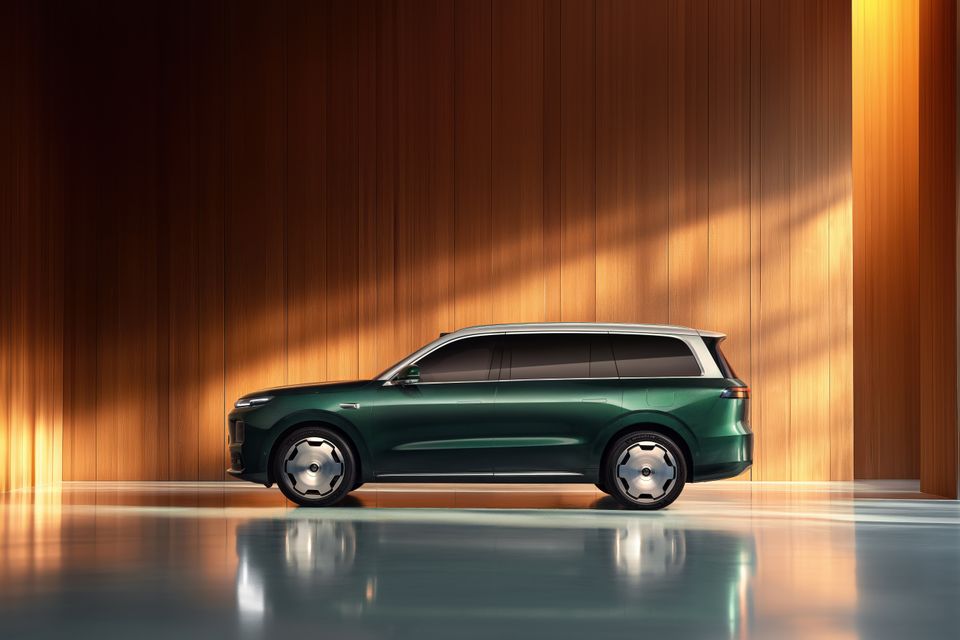
It’s also enormous. At 5252mm long, 1995mm wide and 1780mm tall, and with a 3110mm wheelbase, the D19 is longer than most large SUVs sold in Australia, and is aimed at buyers who want genuine three-row space.
The D19 hasn’t been confirmed for Australia, though we firmly believe it will be coming to our market as Stellantis looks to continue its onslaught with new Leapmotor models in Australia. Once approved, export-market vehicle localisation could theoretically be completed within nine to 12 months, which would mean the D19 arrives here sometime in 2027.
In Australia, the Leapmotor D19 is best compared with a fairly small group of large or upper-large three-row SUVs that offer a true seven-seat layout or a second-row captain’s chair configuration.
It is physically closer in size to a Cadillac Vistiq, BMW X7, Denza B8 or Mercedes-Benz GLS than it is to more obvious competitors like the Kia EV9. The Hyundai Ioniq 9 and Mazda CX-90 are also relevant because their wheelbases are similar too, even though they’re shorter overall.
Australian pricing for the Leapmotor D19 has not been announced. In China, the D19 range starts at ¥219,800 (A$45,000) for the REEV and tops out at ¥269,800 (A$55,000) for the tri-motor BEV Performance version.
China-market variant | China price | Approx. AUD equivalent | Claimed CLTC range |
|---|---|---|---|
D19 REEV 400km | ¥219,800 | approx. A$44,500 | 400km electric |
D19 REEV 500km | ¥239,800 | approx. A$48,500 | 500km electric |
D19 BEV 620km | ¥239,800 | approx. A$48,500 | 620km electric |
D19 BEV 720km | ¥249,800 | approx. A$50,600 | 720km electric |
D19 BEV Tri-Motor | ¥269,800 | approx. A$54,600 | 680km electric (est.) |
It would be fair to add around $10,000-15,000 to the prices listed above for a rough idea of what the D19 may cost in Australia.
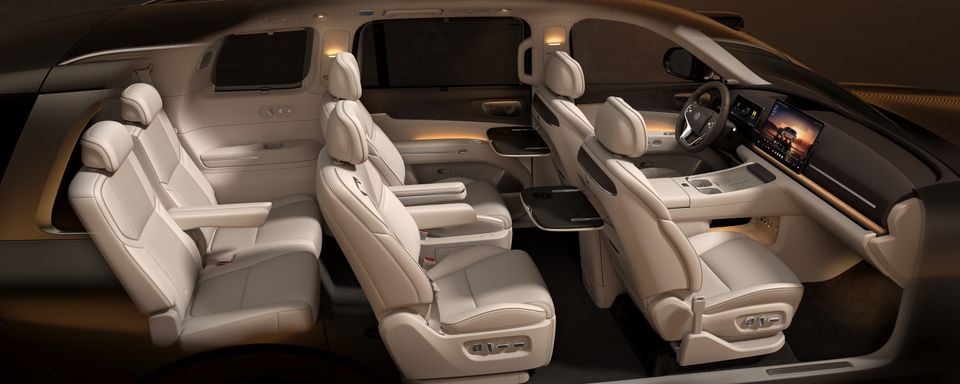
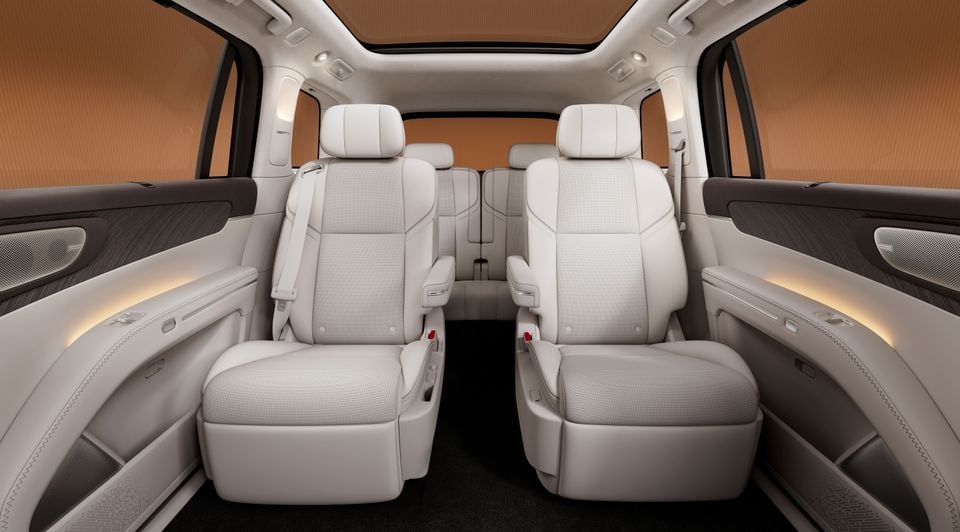
The six-seat version we tested in China had the most amazing second-row captain’s chairs, which we genuinely fell asleep in at one point while getting a massage. There is so much room in the second row that legroom is a true delight, and if you don't need more than six seats, it would be a crime not to get the captain's chair option in a D19.
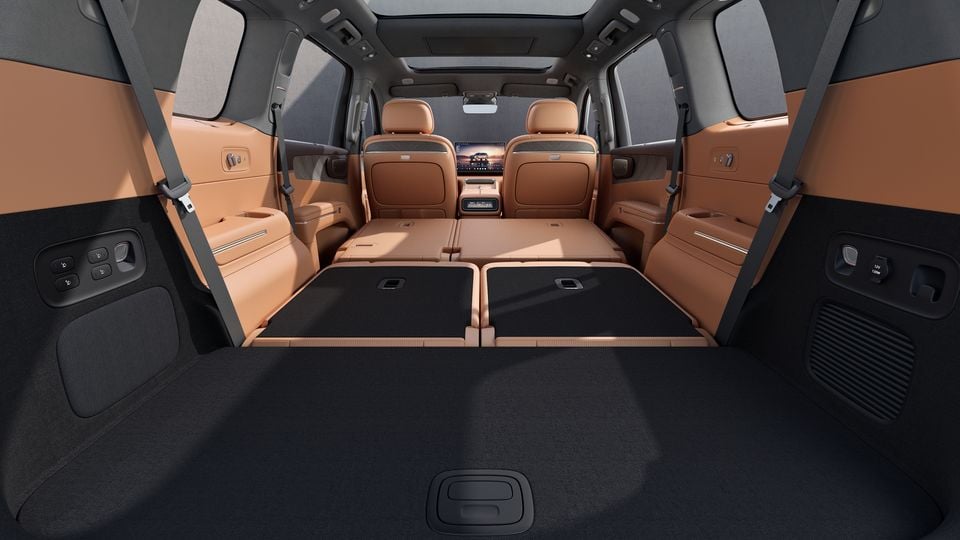
The seven-seat version is aimed at buyers who need an extra middle-row seat, of which there will be plenty, but we did not get to see an example of that in China this time. But if you only have three kids or fewer, get the six-seater version and let them grow up in absolute comfort.
The D19's six-seat layout is built around comfort, with heating, ventilation and massaging for the front seats and zero-gravity second-row captain's chairs. The 'leather' colour options are also a delight, with gorgeous browns and other brighter colours that really make the interior stand out. How they survive years of abuse by kids remains to be seen, however.
Technology is a strong point of the D19. The 15.6-inch central touchscreen, 10.2-inch digital instrument cluster, and 9.0-inch rear touchscreens are typical of what is now expected from any decent Chinese brand. And they do not disappoint, with high resolution, pretty easy menu structures, and super-responsiveness thanks to a pair of Qualcomm Snapdragon 8795 chips (the same CPU you will find in the latest Samsung Galaxy S26 Ultra).
Dimensions and practicality | Leapmotor D19 |
|---|---|
Body style | 5-door full-size luxury SUV |
Seating | 6 or 7 seats |
Length | 5252mm |
Width | 1995mm |
Height | 1780mm |
Wheelbase | 3110mm |
Kerb weight | 2450-2750kg |
Cargo volume | 337L |
Cargo volume, seats folded | 2667L |
Frunk | 176L – BEV only |
That depends on the version. The REEV uses a 1.5-litre turbocharged four-cylinder petrol engine as a range-extender, paired with a large lithium iron phosphate (LFP) battery and dual-motor all-wheel drive. The engine is there only to generate electricity and extend range, rather than making the D19 a conventional petrol-powered SUV.
Specification | D19 REEV 400km | D19 REEV 500km | D19 BEV 620km dual-motor | D19 BEV 720km dual-motor | D19 BEV tri-motor Performance |
|---|---|---|---|---|---|
Platform | LEAP 4.0 | LEAP 4.0 | LEAP 4.0 | LEAP 4.0 | LEAP 4.0 |
Powertrain type | EREV | EREV | EV | EV | EV |
Engine | 1.5L 4cyl turbo-petrol | 1.5L 4cyl turbo-petrol | None | None | None |
Engine output | 95kW | 95kW | NA | NA | NA |
Motor layout | Dual-motor AWD | Dual-motor AWD | Dual-motor AWD | Dual-motor AWD | Tri-motor AWD |
System power | 300kW | 300kW | 410kW | 410kW | 540kW |
System torque | 520Nm | 520Nm | 625Nm | 625Nm | 745Nm |
Battery chemistry | LFP | LFP | LFP | LFP | LFP |
Battery capacity | 63.7kWh | 80.3kWh | 99.6kWh | 115kWh | 115kWh |
Claimed electric range | 400km – CLTC | 500km – CLTC | 620km – CLTC | 720km – CLTC | 680km/720km (est.) |
Claimed combined range | 1300km – CLTC | 1300km (est.) | NA | NA | NA |
0-100km/h | 6.0 seconds | 6.0 seconds | 4.9 seconds | 4.9 seconds | 3.94 seconds |
Charging architecture | 800V | 800V | 1000V | 1000V | 1000V |
DC charge time | Approx. 20min, 30-80 per cent (est.) | Approx. 20min, 30-80 per cent (est.) | Approx. 15min, 30-80 per cent | Approx. 15min, 30-80 per cent | Approx. 15min, 30-80 per cent |
Weight | 2635kg | 2740kg +30kg for 7-seater | 2730kg +30kg for 7-seater | 2760kg | 2780kg |
The electric-only versions do away with the petrol engine and use larger LFP batteries, and can be had in either dual-motor all-wheel drive or tri-motor all-wheel drive forms, the latter for the Performance trim.
The range figures are based on China’s CLTC test cycle, which is generally more generous than WLTP. Any Australian-delivered D19 would likely come with different claimed figures.
We drove the D19 only briefly at the world's smoothest proving ground in China, so this isn’t a definitive verdict but our first impressions were pretty positive. This thing is massive and it weighs almost three tonnes in the higher specifications.
The car we drove was the entry-level REEV 400 which uses a small 1.5-litre petrol engine to generate electricity, rather than drive the wheels. This means the D19 feels very much like an electric car should, which means it has plenty of instantaneous torque and accelerates super-smoothly and without hesitation.
Like the Leapmotor B05 we drove, the D19 failed to live up to its claimed 0-100km/h time of 6.0 seconds (3.9 in the absolute top spec), and with four adults on board we recorded about 8.5 seconds. Again, we should point out this car was being tested over and over again so there could be a multitude of reasons why it failed to deliver standing-start acceleration anywhere close to its claims.
For something measuring more than 5.2 metres long, the D19 feels pretty agile and, given the type of use a car like this will get, it's actually pretty decent dynamically. Yes, the steering has next to no feedback, but we did drive the Chinese specification, not the D19 with the European tune that will come to Australia.
The air suspension and continuous damping control (CDC) system are meant to give the D19 a luxury SUV feel, but the proving ground only provided a small road course for testing, which the D19 handled with ease. It's such a huge thing that what occupants in the third row feel may be entirely different to those up front, so we need more time behind the wheel.
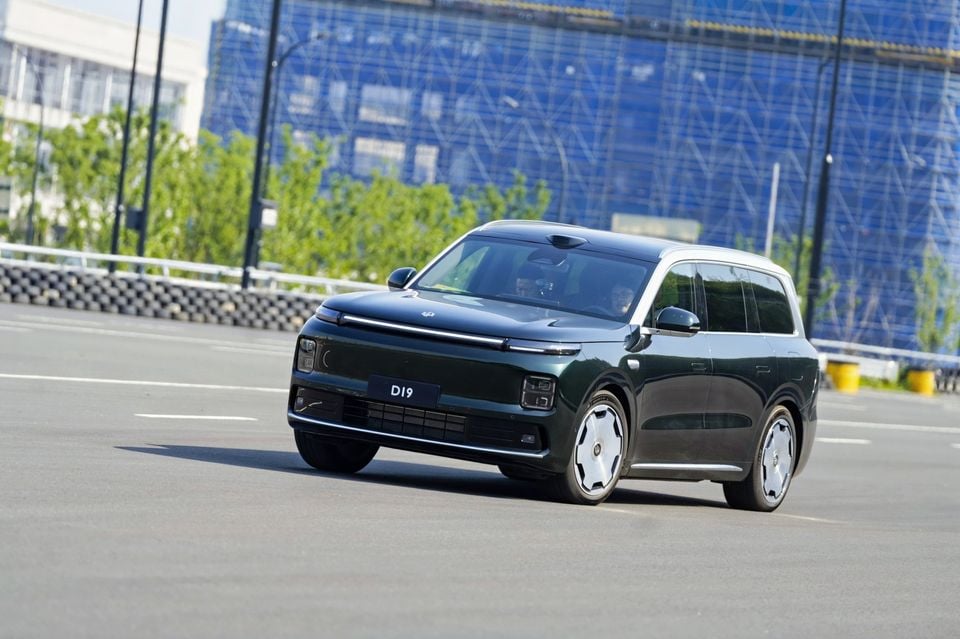
The D19’s claimed turning circle is 11.4 metres in standard form, or 10.8m for the tri-motor version with 'CrabSteer'. For context, the Kia EV9 has a 12.4m turning circle despite being shorter in length. Which is why this car feels pretty agile at slow speeds.
The biggest question is how the D19 will behave away from a controlled proving ground. On paper, it has the size, performance and technology to compete with more expensive three-row electric SUVs, but we’ll need an Australian drive to properly judge ride comfort, refinement, efficiency, and ease of use.
The Leapmotor D19 does not yet have an Australian ANCAP safety rating or a safety rating from any other independent safety authority that we could find. It is likely to have been designed to meet the latest European safety requirements for a maximum five-star Euro NCAP rating (which is pretty much mirrored for our market), but that remains to be seen.
Australian aftersales details including vehicle and battery warranty, capped-price servicing and roadside assistance haven’t been confirmed for the D19. Nonetheless, like other Leapmotor models in Australia, it should be covered by a six-year, 150,000km vehicle warranty, while its high-voltage battery pack should be covered by an eight-year, 160,000km warranty.
The Leapmotor D19 is the sort of SUV that shows how quickly Chinese brands are pushing into segments once dominated by premium and mainstream legacy automakers. Truly, it could pass for a $200,000 European luxury SUV on looks alone, and from our limited time behind the wheel the interior is also pretty damn nice.
On paper, it has all the ingredients Australian large SUV buyers like, including three rows of seating, big batteries, long range claims, all-wheel drive, air suspension, a high-tech cabin and the choice of either range-extender or pure-electric power.
The REEV version is arguably the more interesting one for Australia, because it promises long electric-only range for daily driving and petrol-backed flexibility for longer trips. The EV, meanwhile, gives Leapmotor a more direct rival for large electric SUVs like the popular Kia EV9 and Hyundai Ioniq 9, both of which are priced well above where Leapmotor should hopefully position the D19.
If Leapmotor brings the D19 here with the right specification and sharp pricing, it could give the brand a serious flagship. For now, it’s promising, but still very much a car we need to drive more extensively on Australian roads.
Click the images for the full gallery
CarExpert brings together reviews, research tools and trusted buying support, guiding you from research to delivery with confidence.
Alborz Fallah is a CarExpert co-founder and industry leader shaping digital automotive media with a unique mix of tech and car expertise.
Add CarExpert as a Preferred Source on Google so your search results prioritise writing by actual experts, not AI.
Max Davies
34 Minutes Ago

James Wong
58 Minutes Ago

Josh Nevett
58 Minutes Ago


William Stopford
59 Minutes Ago

Dave Kavermann
3 Hours Ago
James Wong
5 Hours Ago
Add CarExpert as a Preferred Source on Google so your search results prioritise writing by actual experts, not AI.
# Based on VFACTS and EVC data
† Displayed prices exclude on-road costs such as delivery charges, registration fees, number plates, insurance and applicable road taxes. These prices are subject to change without notice and may not reflect current market pricing or dealer offers.
 Automotive Vehicle Spec Data & 4K images Powered by JATO Dynamics Ltd