It might sit in a popular vehicle segment, but the Karoq is very much the unloved middle child of the Skoda lineup.
First launched way back in 2017, the mid-size SUV has only received incremental updates since then, with the Czech brand instead choosing to focus on new models and the electrification of other existing nameplates.
Skoda’s neglect of the Karoq hasn’t gone unnoticed by Australian new-car buyers. Despite persistent demand for affordable mid-size SUVs, Karoq sales were down 38 per cent last year.
Instead, Aussies have pivoted to shiny new toys, including the BYD Sealion 6, Chery Tiggo 7 Pro, and GWM Haval H6.
It’s not just cheaper Chinese rivals that have the Karoq’s measure, either. The related Volkswagen Tiguan sold in vastly greater quantities, as did relative oddballs such as the aged Renault Koleos, electric Leapmotor C10, and even the truly niche Range Rover Evoque.
Is the turn of the year likely to bring about a change in fortunes for the Karoq? Probably not, given no pricing or specification changes have been announced for 2026, after tweaks were made to the lineup heading into 2025.
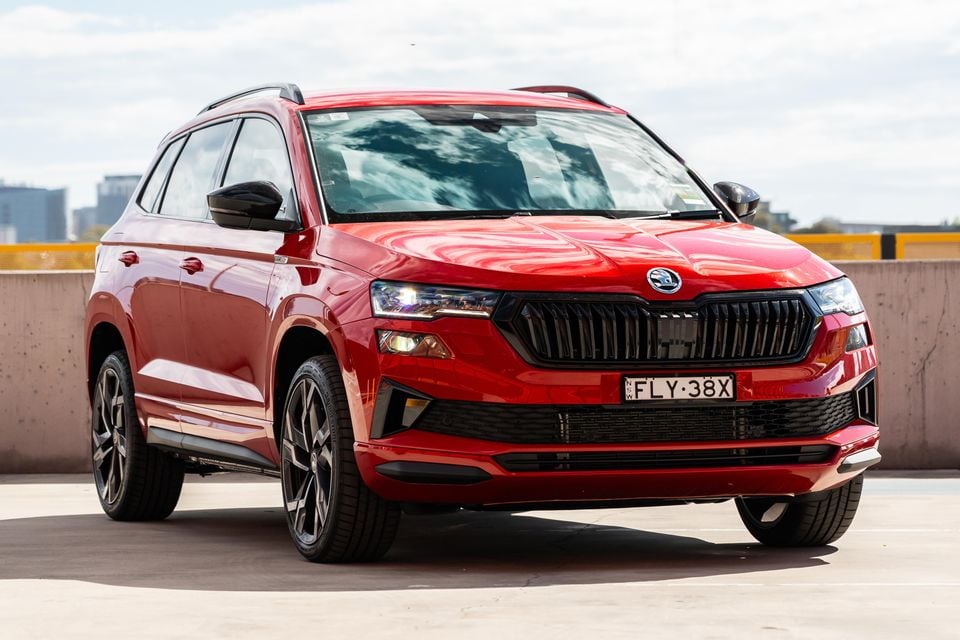
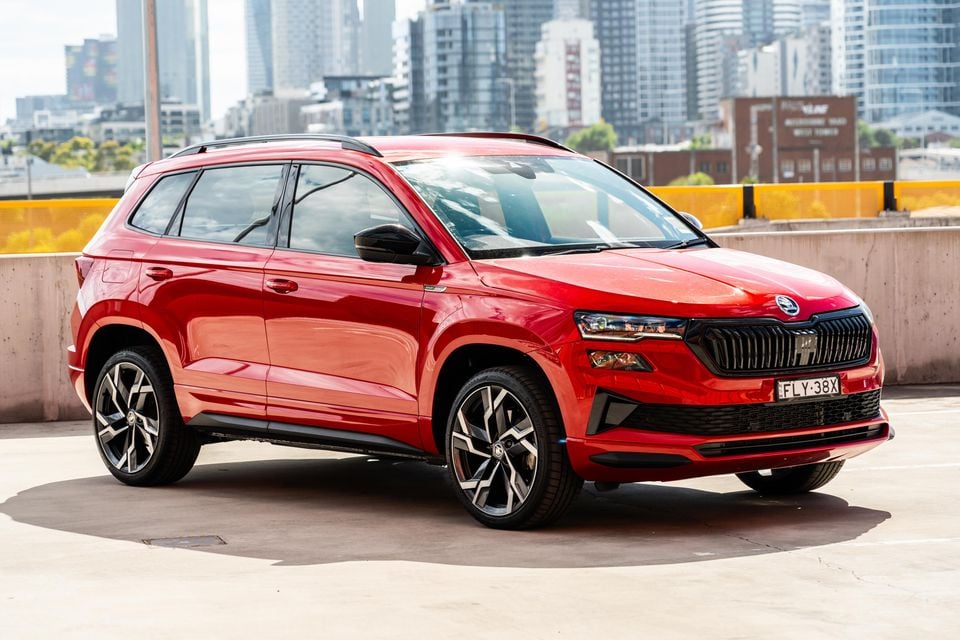
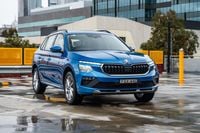
Nevertheless, we’re testing this Skoda Karoq Sportline 4×2 to see if it deserves your attention.
How much does the Skoda Karoq cost?
The mid-spec Sportline 4×2 is priced at $46,990 drive-away (a $1500 increase compared to the Style it replaced), but Skoda claims it’s fitted with $6500 worth of extras over its predecessor.
| Model | Price before on-roads | Drive-away price |
|---|
| 2025 Skoda Karoq Select 110TSI | $38,490 | $40,990 |
| 2025 Skoda Karoq Sportline 110TSI 4×2 | $44,490 | $46,990 |
| 2025 Skoda Karoq 130 Years Edition 110TSI | $48,990 | $49,990 |
| 2025 Skoda Karoq Sportline 140TSI 4×4 | $55,090 | $54,990 |
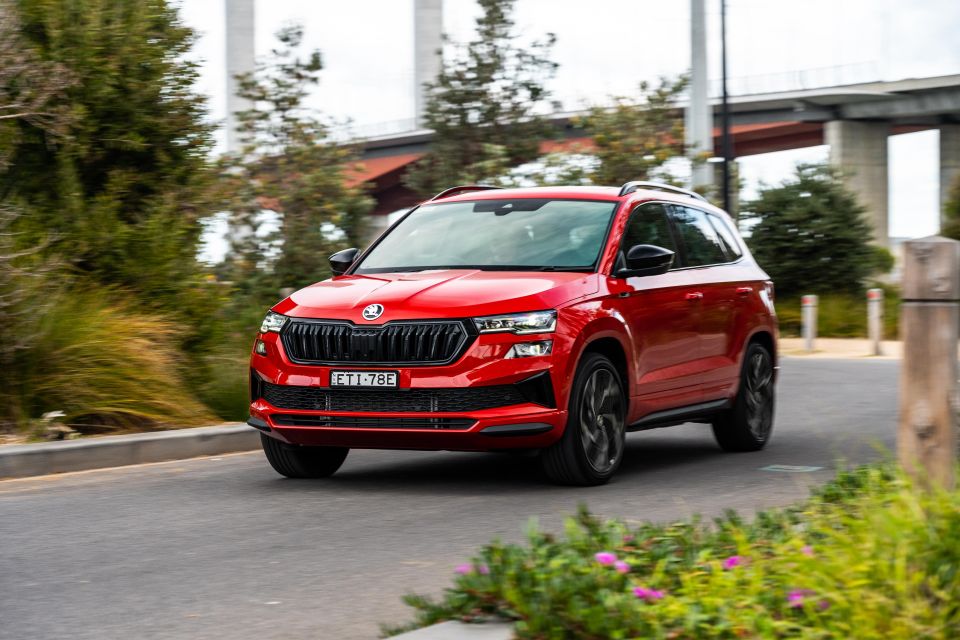
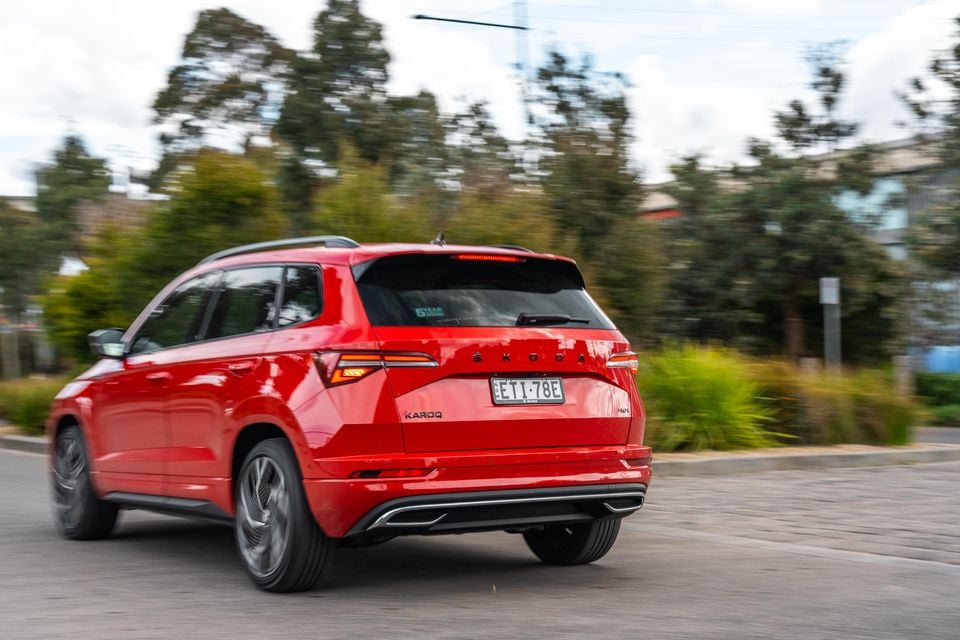
Our test vehicle was finished in Velvet Red Metallic paint, which incurs an additional charge of $770.
Find your perfect new car with CarExpert
To see how the Skoda Karoq lines up against the competition, check out our comparison tool
What is the Skoda Karoq like on the inside?
The Karoq is getting a bit long in the tooth now, and that’s apparent in the layout and features of its interior.
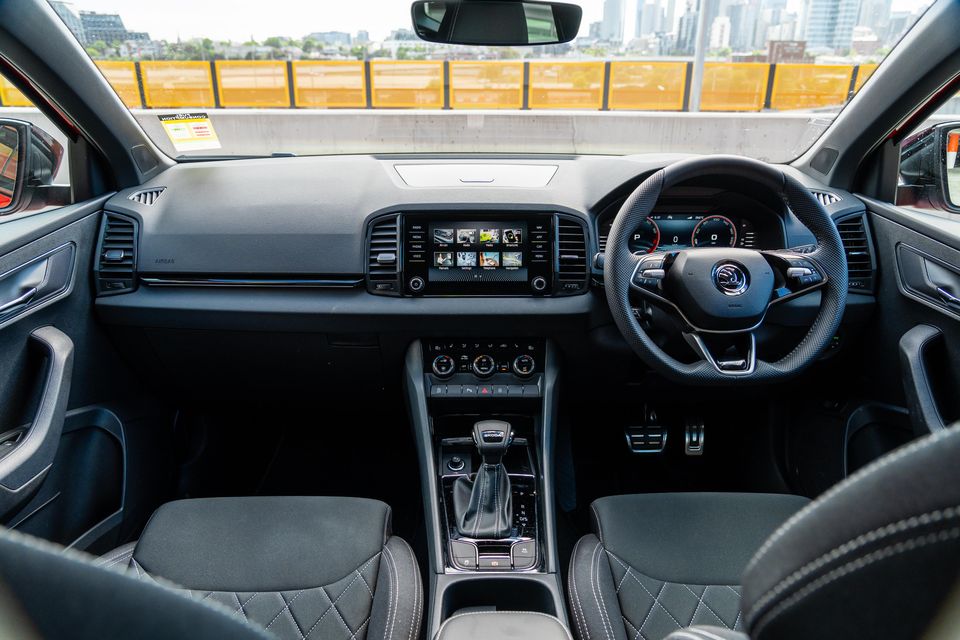
There’s a bland familiarity to the cabin – its monochrome appearance, physical controls, and restrained technology suite.
So on one hand, the Karoq Sportline 110TSI offers little to get excited about. But on the other, it’s an approachable SUV that requires a flat learning curve – exactly what some buyers are craving in 2026.
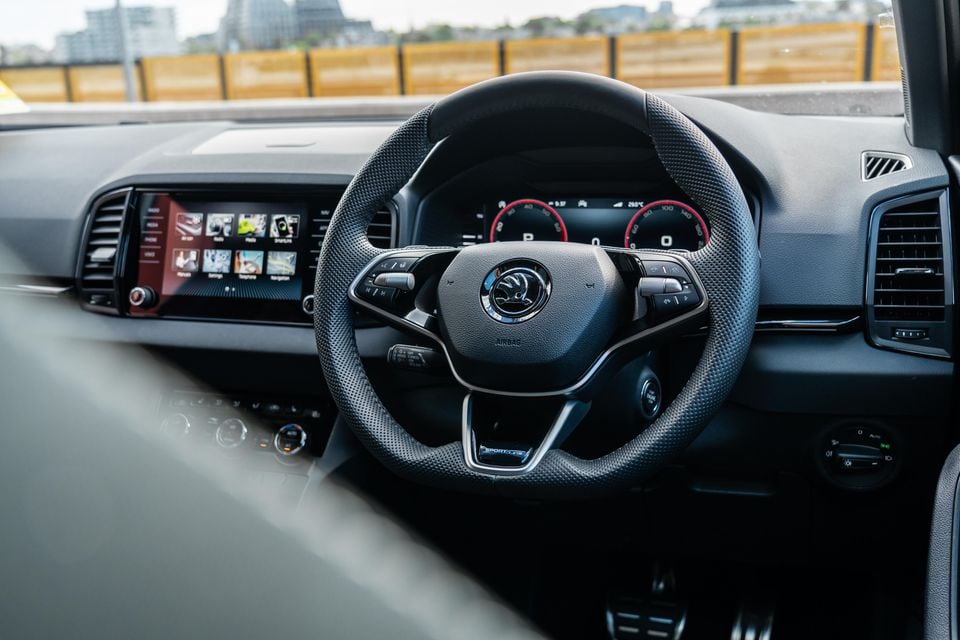
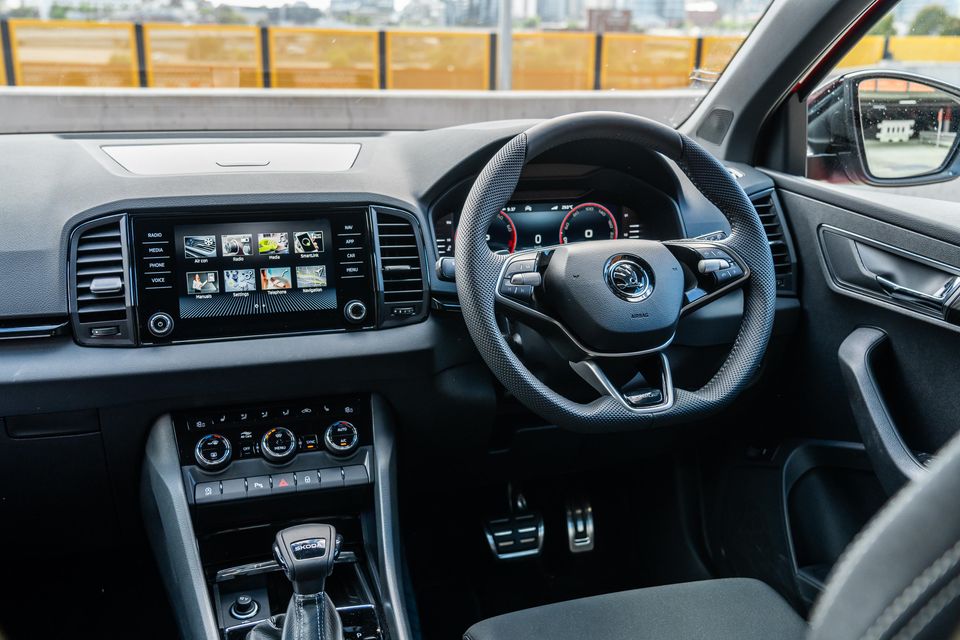
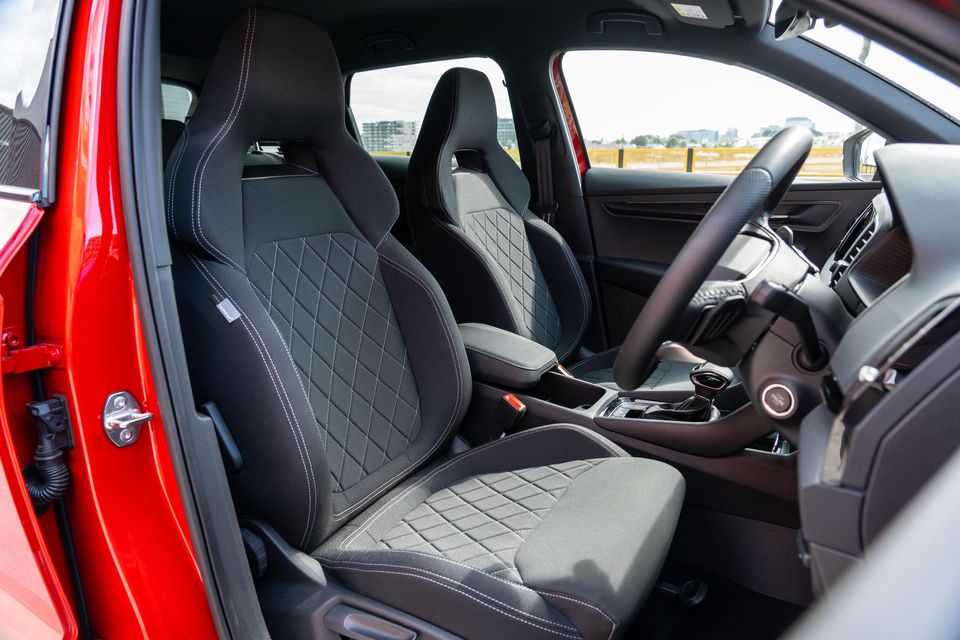
And some things never age. For example, good ergonomics. The Karoq Sportline 110TSI houses supportive cloth-trimmed seats that sit within easy reach of the central multimedia screen and steering wheel, which itself offers a decent degree of tilt and reach adjustment.
The front pews are manually adjustable – not uncommon at this price point – and feature a heating function as standard. As does the sculpted steering wheel, which is finished in grippy perforated leather for maximum comfort.
The quality of materials elsewhere is a bit of a mixed bag. Soft-touch plastics coat the dash and centre console, but the door cards are harsher in nature. Scratch-prone gloss finishes also make an appearance, much to our dismay.
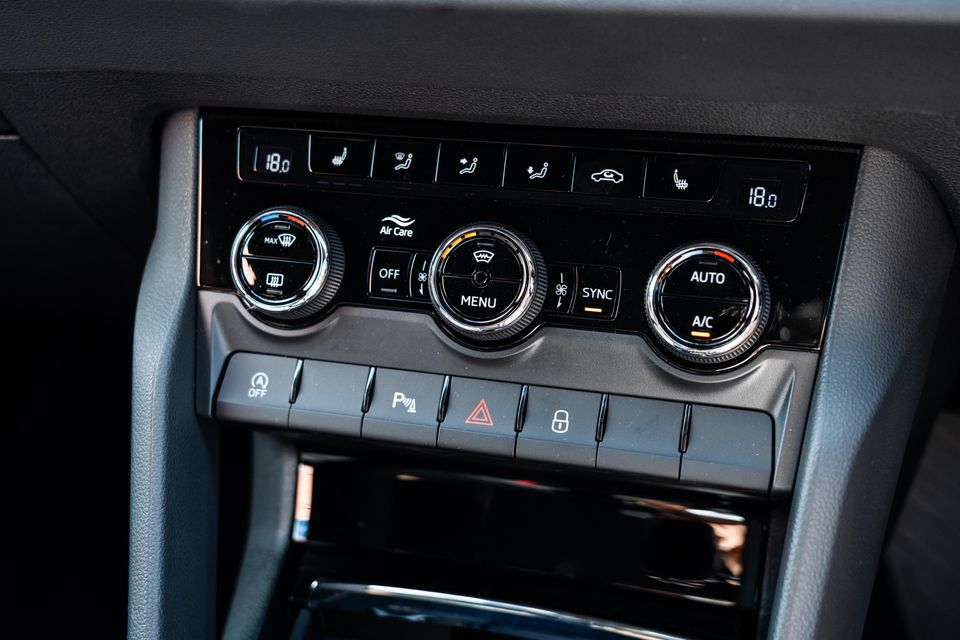
On the bright side, Skoda spared some leather for the centre armrest, leaving a squidgy spot to rest your elbow while driving. And the cabin controls, present in the form of tactile buttons and dials, are mostly pleasant to interact with.
Climate and media parameters can both be adjusted without so much as a tap on the infotainment screen – a huge win for the tech-averse. In this regard, the Karoq has an advantage over newer mid-size SUVs that are increasingly experimenting with screen-based control centres which are often convoluted and bereft of feedback.
That said, you’ll still need to interact with the touchscreen to tinker with vehicle settings or take advantage of smartphone mirroring, as there’s no rotary controller like those found in Mazda and BMW models.
Doing so brings into focus the pros and cons of the Karoq’s older tech.
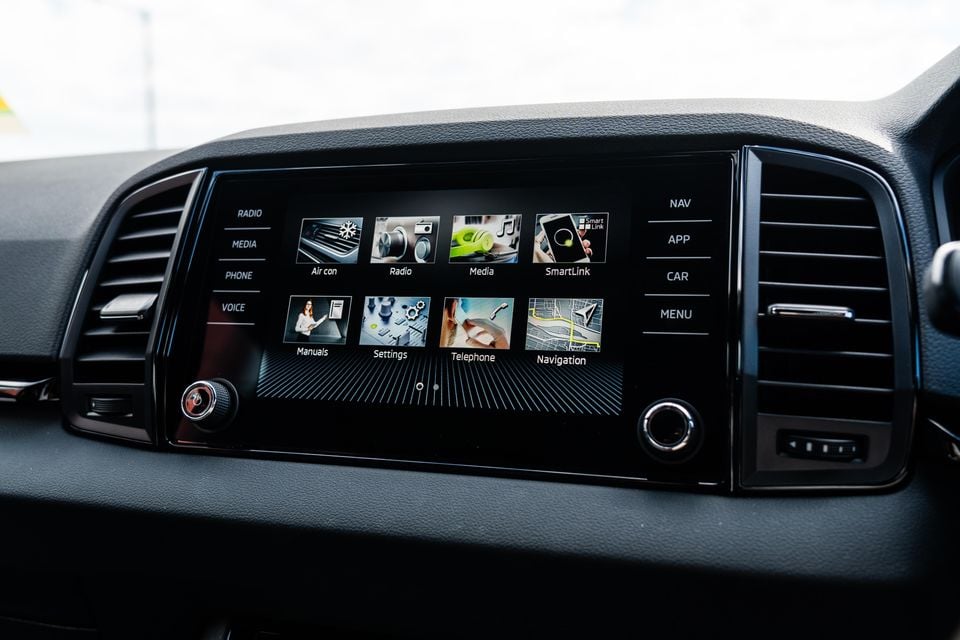
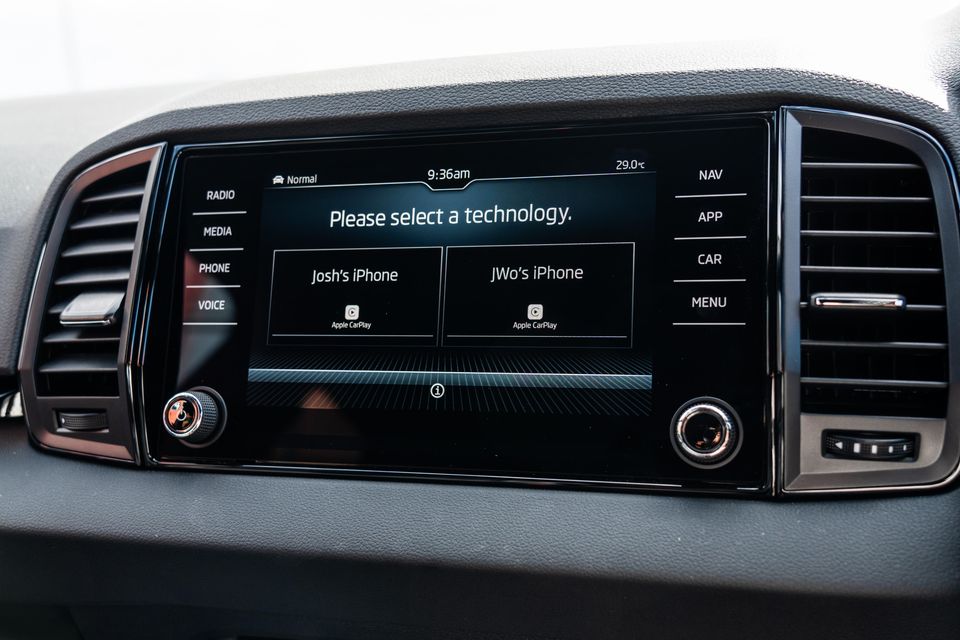
The 9.2-inch infotainment system isn’t as large or as feature-laden as the screens offered in newer Skoda models, let alone external rivals.
However, the simplicity of its two-page grid layout is somewhat refreshing. As such, you’ll never get lost in a menu maze, and touch shortcuts can be found on either side of the display.
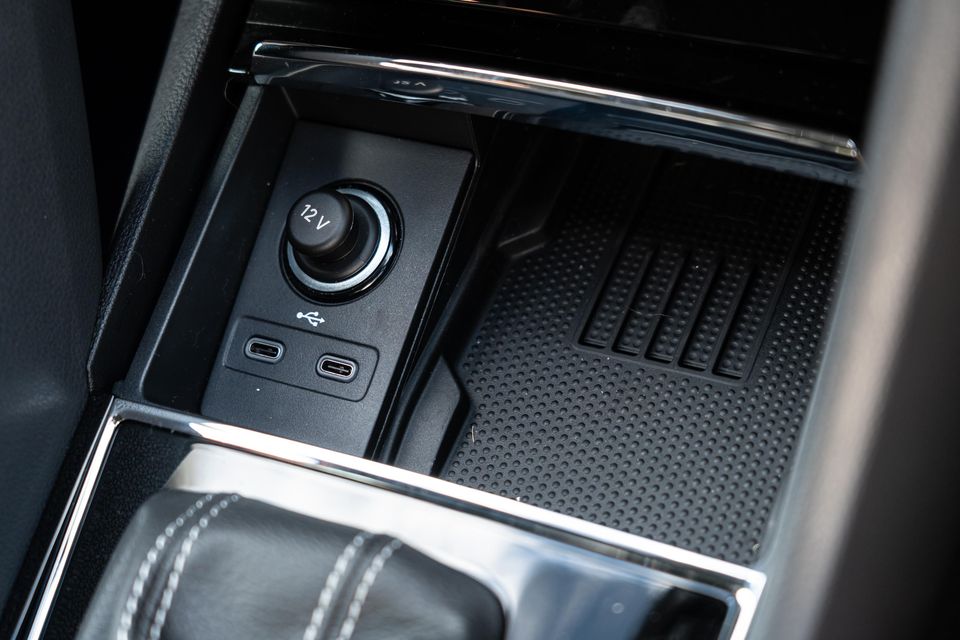
It’s not like the Karoq misses out on essential functionality such as wireless smartphone mirroring, either. Having said that, occasional Apple CarPlay dropouts left a sour taste in my mouth. With that in mind, it might be best to link your phone using the provided USB-C outlets.
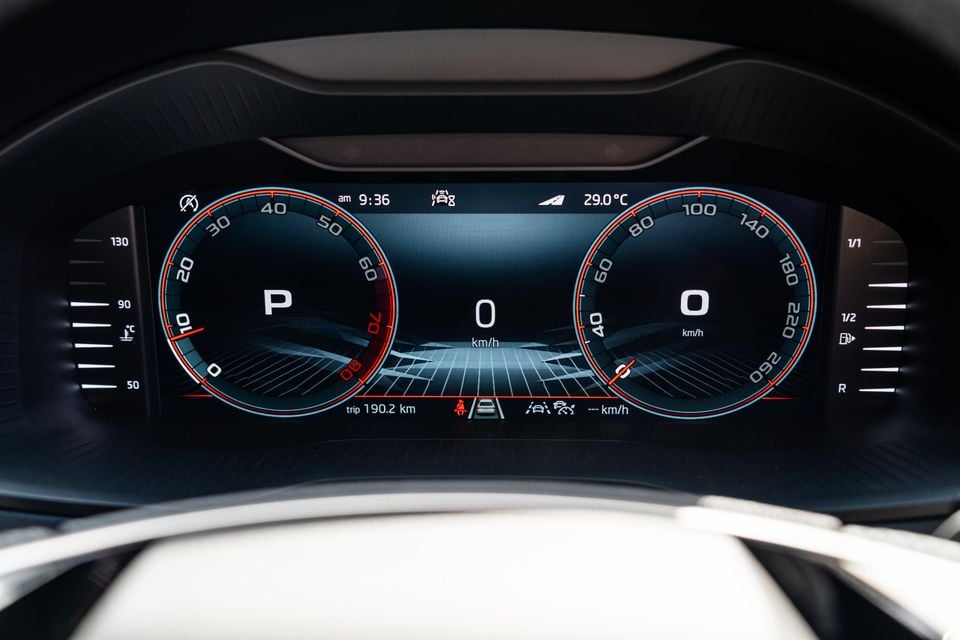
Moving across, you’ll find a 10.25-inch digital instrument cluster which better reflects the here and now. The crisp display sports a variety of layouts and readout options – more than enough to satisfy consumer demands for configurability.
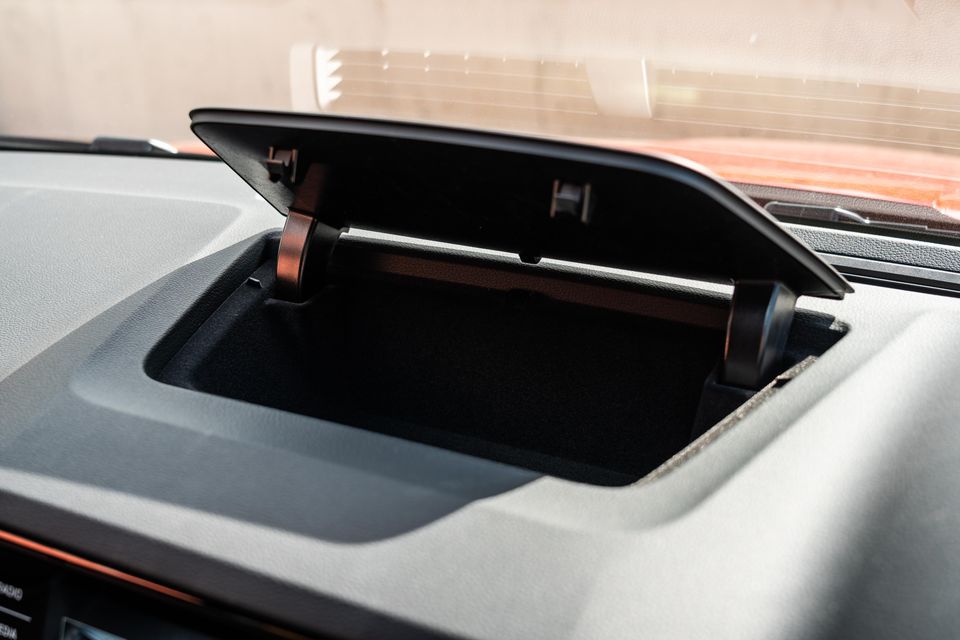
Owners are also unlikely to be disappointed by the cabin storage options available in the Karoq. Aside from a shallow centre console, all the usual nooks and crannies are relatively generous, plus there’s the provision of an additional compartment on top of the dash (see above). Trash, tissues and food scraps can be hidden out of sight in a rubbish box clipped into the driver’s door bin.
It may be practical up front, but the Karoq is flawed in its packaging of the back seats.
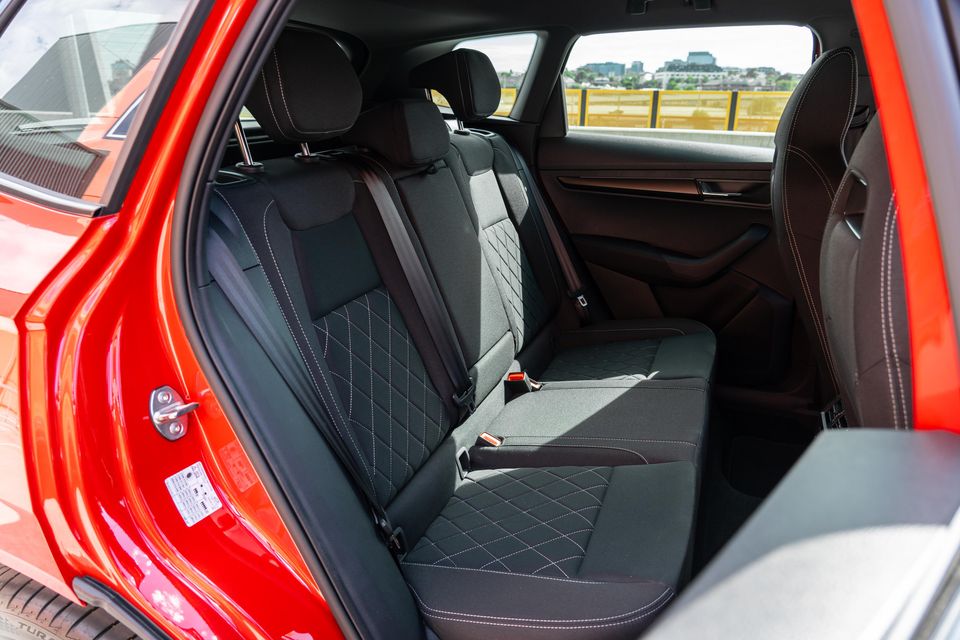
Given its mid-sized segmentation and positioning in the Skoda lineup, I was a little disappointed to discover the Karoq lacks second-row space compared to rivals, with my knobbly knees only just clearing the driver’s seatback.
Thankfully, the aforementioned seatbacks are finished in soft cloth, but taller passengers will still feel cramped in the back. That feeling is exacerbated by dark headlining overhead and the absence of a sunroof.
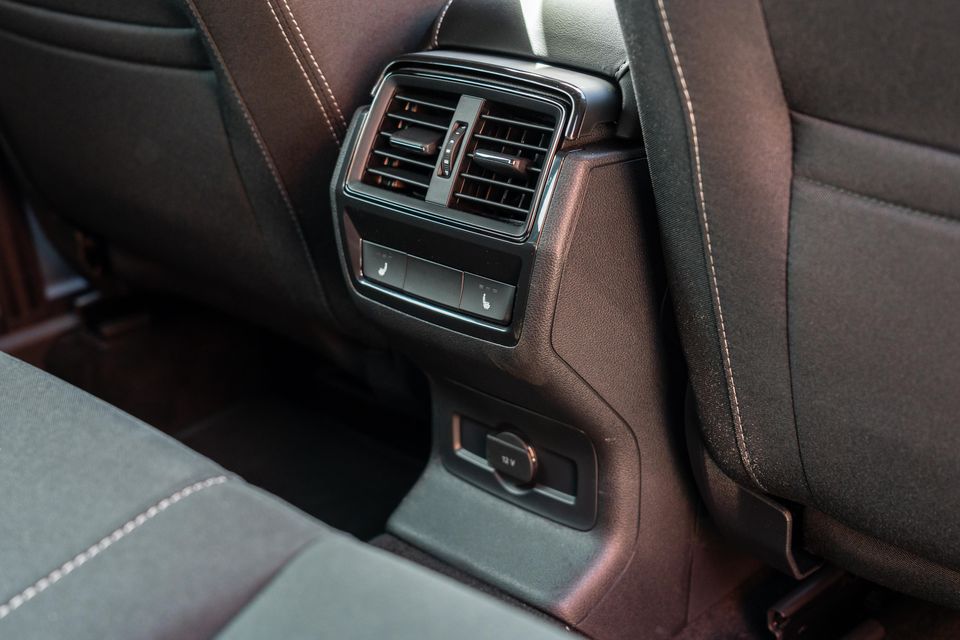
Riders of all shapes and sizes will also take umbrage with the Karoq’s lack of rear USB outlets, especially given Skoda has gone to the effort of providing outboard seat heating and a 12V power socket back there.
Other amenities include a fold-down armrest with integrated cupholders, dual air vents, seatback map pockets, and multi-function reading lights. Both outboard rear seats are child-seat-ready.
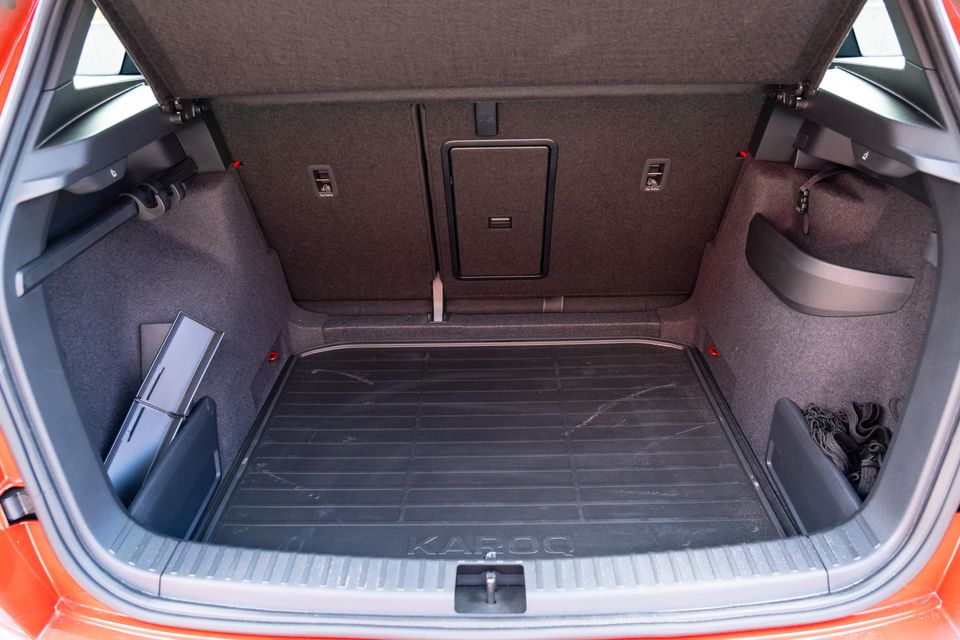
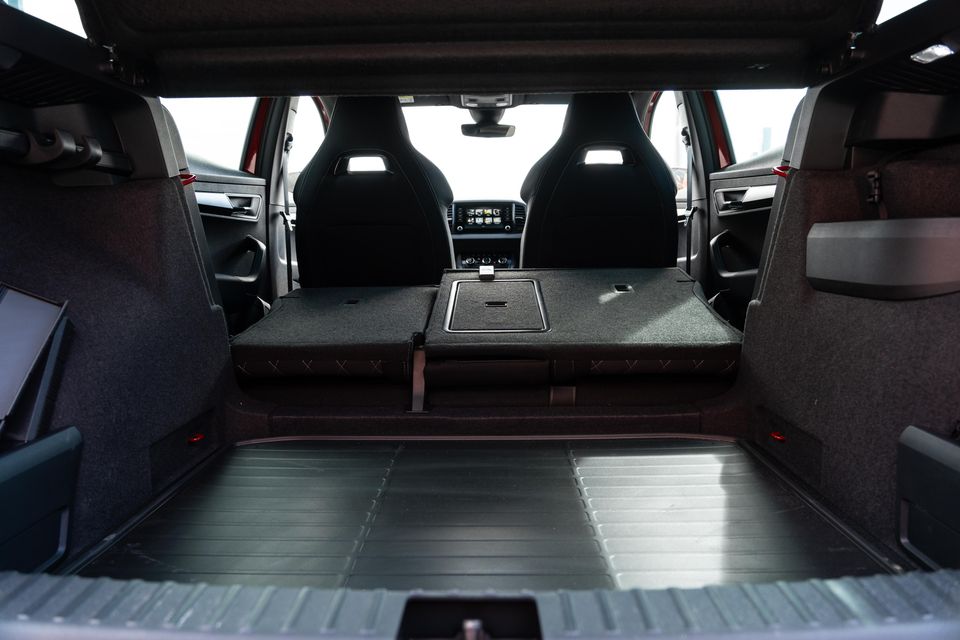
When not in use, the rear bench folds in 60/40 fashion to increase boot space from 521 litres to 1630L. However, there’s quite a steep step between the boot floor and folded bench area.
Skoda’s quoted cargo capacity numbers rank the Karoq above alternatives such as the Mitsubishi Outlander, Mazda CX-5 and BYD Sealion 6, but below segment leaders like the Volkswagen Tiguan, Nissan X-Trail, Hyundai Tucson, and Honda CR-V.
That said, the Karoq also boasts “simply clever” boot features that help to set it apart from a practicality perspective. Such extras include segregated storage bins in the boot wall, hooks for your grocery bags, and a 12V power source. Long, skinny items can also be loaded through a ‘ski port’ in the rear bench, as pictured above.
Under the boot floor, there’s a space-saver spare wheel, which is nice to have but not as useful as a full-size spare.
| Dimensions | Skoda Karoq Sportline 110TSI 4×2 |
|---|
| Length | 4390mm |
| Width | 1841mm |
| Height | 1603mm |
| Wheelbase | 2638mm |
| Cargo capacity | 521L (behind second row)
1630L (behind first row) |
To see how the Skoda Karoq lines up against the competition, check out our comparison tool
What’s under the bonnet?
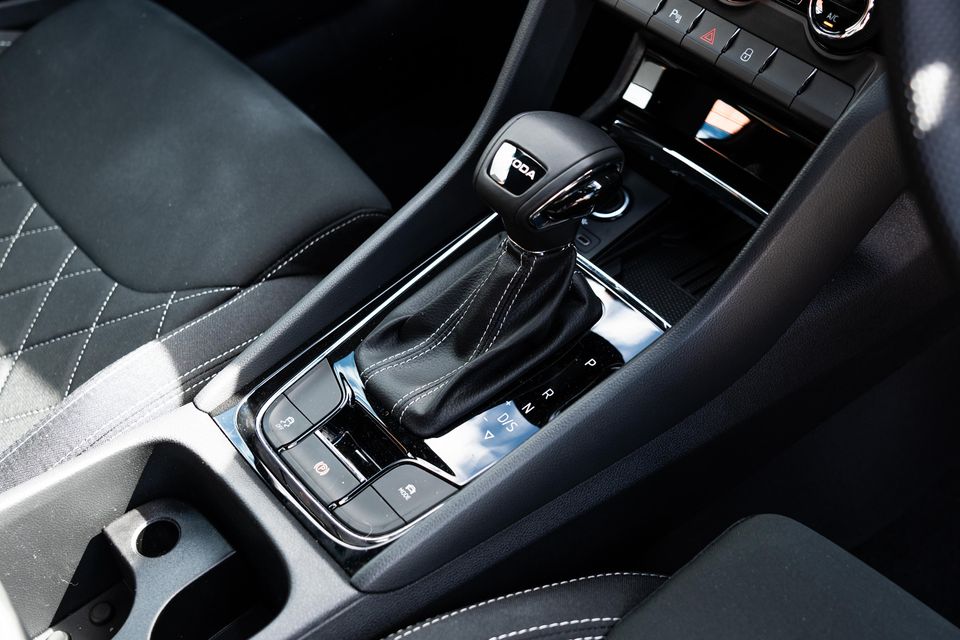
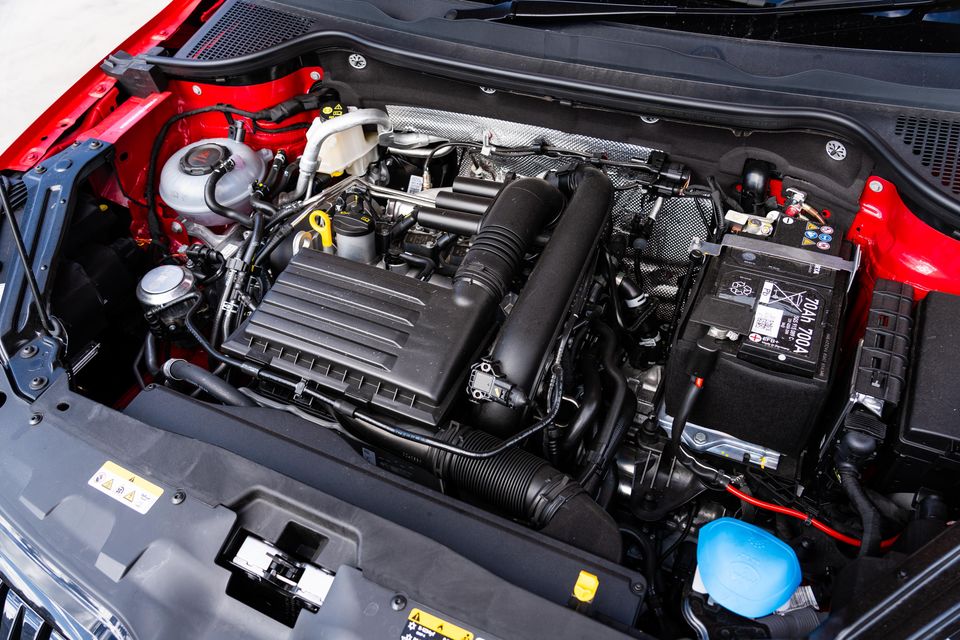
The front-wheel drive Karoq Sportline is powered by the Volkswagen Group’s 1.4 TSI four-cylinder turbo-petrol engine, with outputs rated at 110kW of power and 250Nm of torque. Local versions utilise an eight-speed automatic sourced from Aisin, rather than a dual-clutch auto.
| Model | Skoda Karoq Sportline 110TSI 4×2 |
|---|
| Engine | 1.4L 4cyl turbo-petrol |
| Power | 110kW |
| Torque | 250Nm |
| Transmission | 8-speed auto |
| Drive type | Front-wheel drive |
| Weight | 1665kg (tare) |
| 0-100km/h (claimed) | 9.2 seconds |
| Fuel economy (claimed) | 6.6L/100km |
| Fuel economy (as tested) | 9.4L/100km |
| Fuel tank capacity | 50L |
| Fuel requirement | 95-octane premium unleaded |
| CO2 emissions (claimed) | 149g/km |
| Emissions standard | Euro 6 |
To see how the Skoda Karoq lines up against the competition, check out our comparison tool
How does the Skoda Karoq drive?
This mid-spec Karoq represents an affordable access point to the refined driving experience we’ve come to expect from Volkswagen Group products.
It’s a quiet and grown-up SUV that goes about its business in a fuss-free manner, albeit in a way that’s also devoid of real excitement.
Because while the safety systems are intuitive and the cabin is well insulated, there’s not much performance on offer from the 110TSI powertrain. Acceleration is adequate and linear, but you really need to stick the boot in to complete overtaking manoeuvres or merge onto the freeway.
That’s despite quick shifts from the torque-converter automatic transmission, which I found to be far smoother than the dual-clutch unit you get in the 140TSI 4×4 variants. It’s also easy to take control of the gearbox yourself using the paddle shifters attached to the back of the steering wheel.
But for the most part, the Karoq 110TSI is a car best driven gently, with joy to be taken from its ease of operation. Both pedals provide plenty of feedback and the steering is light and direct, so you’ll never find Skoda’s mid-sizer to be a handful in everyday driving.
The Karoq also feels smaller than it really is, displaying impressive agility and a tight turning circle in urban surroundings. Outward visibility is likewise excellent, courtesy of chunky side mirrors and negligible rear blind-spots.
As a result, parking is a breeze – just don’t expect much assistance from the low-resolution reversing camera.
Other drawbacks? As is often the case with European vehicles, the ride is a bit firm, although the top-spec Sportline 140TSI 4×4 combats that with Skoda’s Dynamic Chassis Control (DCC) adaptive suspension. Upgrading to the flagship variant also brings more power from a larger engine, albeit mated to a less city-friendly DCT.
Regardless of variant, the Karoq remains an adept high-speed cruiser. Ample sound deadening acts to muffle noise from the engine bay and surrounding traffic, while tyre roar is effectively absent.
From expert reviews to the right deal
CarExpert brings together reviews, research tools and trusted buying support, guiding you from research to delivery with confidence.
Long highway stints are generally made easier by Skoda’s Travel Assist technology, which relies upon use of a small control stalk tucked behind the steering wheel. However, I find this setup to be a bit fiddly compared to buttons on the face of the steering wheel, and the tech itself isn’t perfect – the adaptive cruise element can be slow to respond to changes in traffic flow, and I was occasionally forced to hit the brakes to avoid rear-ending the car in front.
It also seems unfair that Karoq Select buyers miss out on Travel Assist altogether, considering the prevalence of semi-autonomous driving systems in rival models.
That said, Skoda does a good job of calibrating its other safety aids to not be distracting or overbearing. It’s also easy to switch systems on and off through the infotainment screen.
To see how the Skoda Karoq lines up against the competition, check out our comparison tool
What do you get?
Skoda Australia has revised its local Karoq lineup over the past 18 months, introducing new nameplates and equipment while giving the mid-size SUV a price increase.
2026 Skoda Karoq Select equipment highlights:
- 18-inch alloy wheels
- Silver roof rails and window frame surround
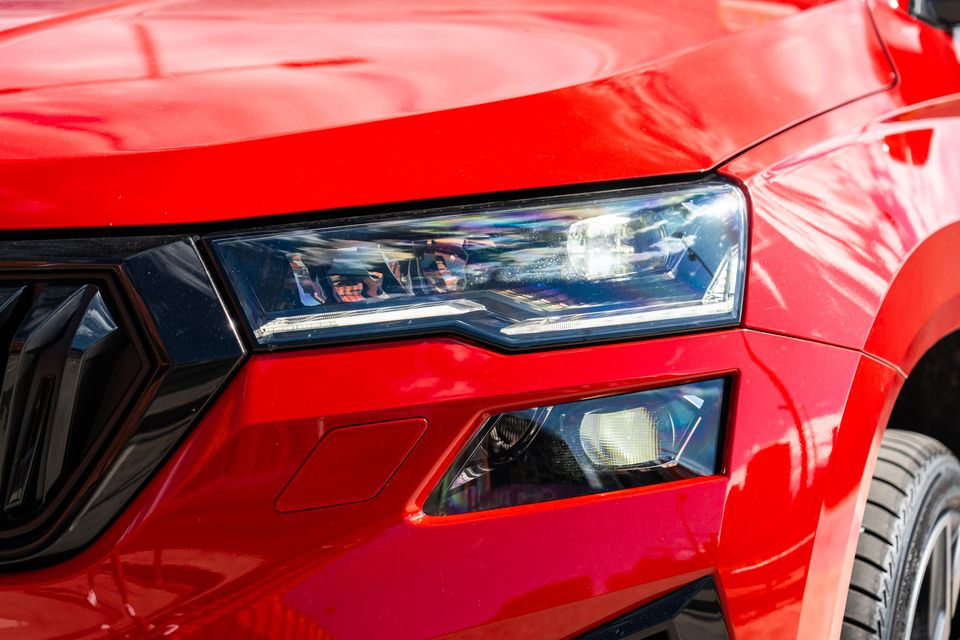
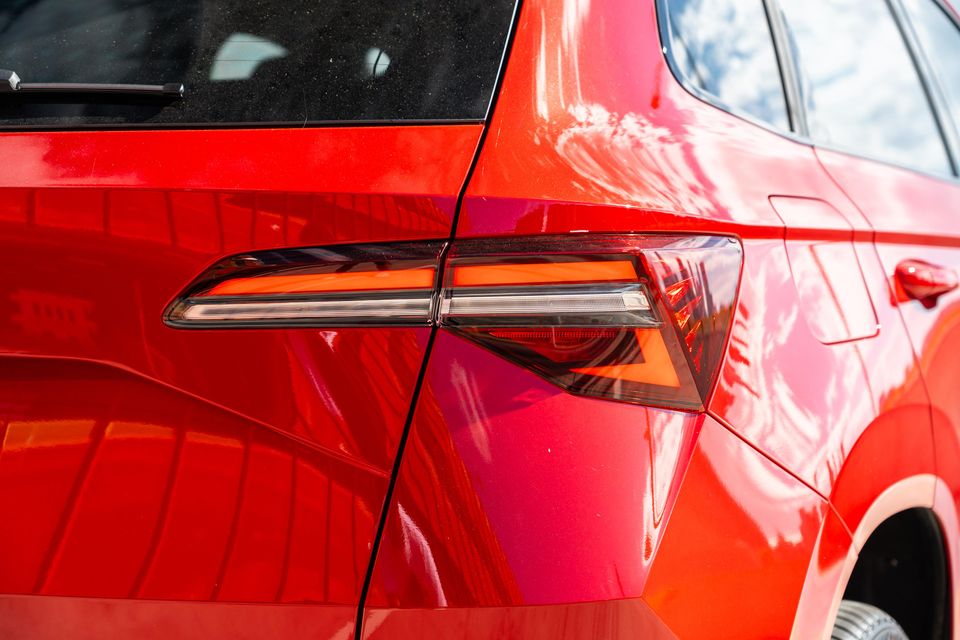
- LED headlights and tail-lights
- Automatic high-beam
- Dynamic indicators
- Power-folding and heated mirrors
- Rain-sensing wipers
- Leather-trimmed steering wheel
- Manually height-adjustable front seats
- Auto-dimming rearview mirror
- Dual-zone climate control
- 8.25-inch digital instrument cluster
- 8.0-inch infotainment touchscreen
- Wireless Apple CarPlay and Android Auto
- 2x USB-C ports
- Voice control
- Keyless start
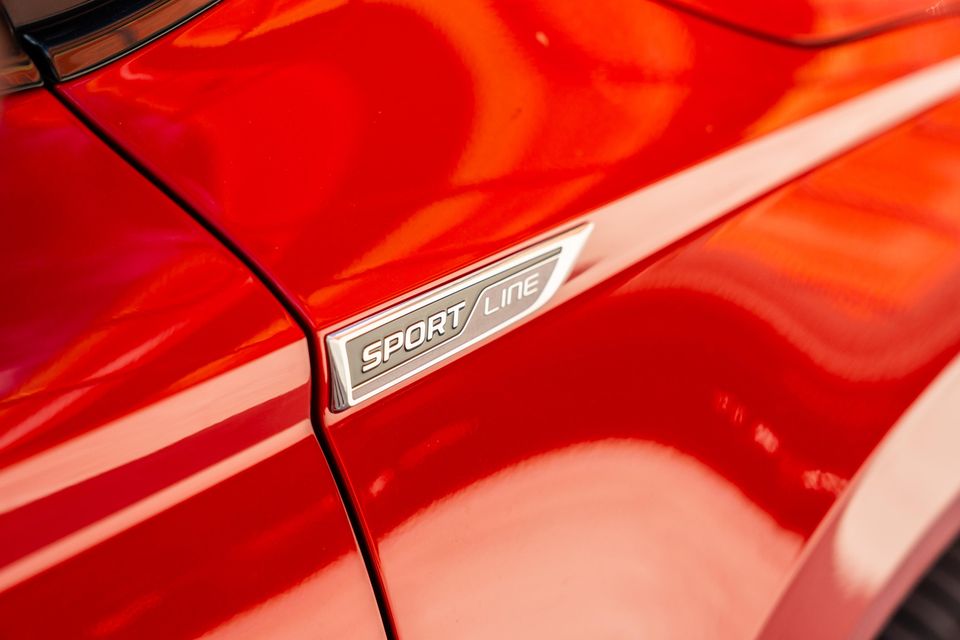
Karoq Sportline 4×2 adds:
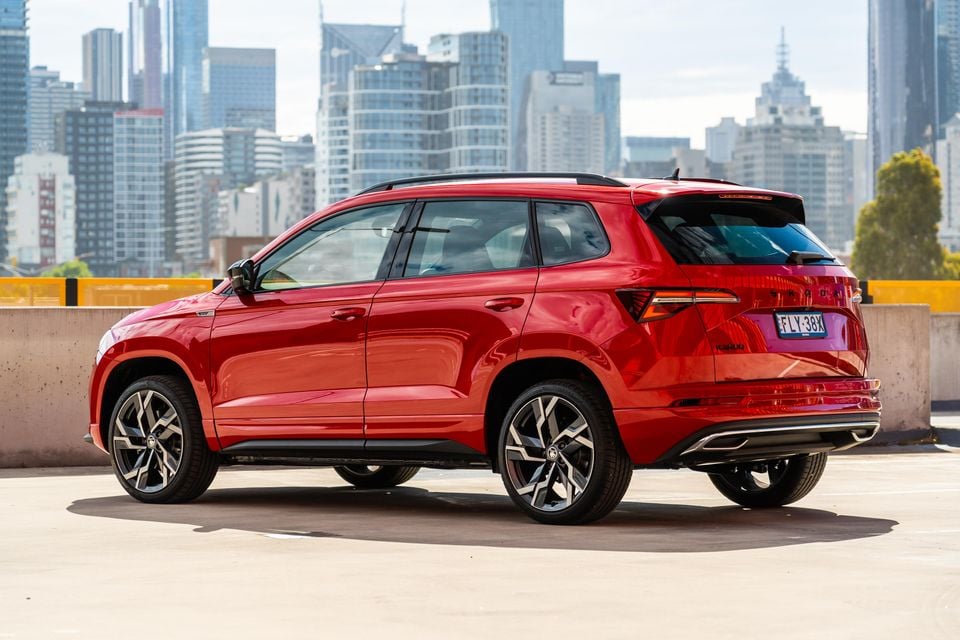
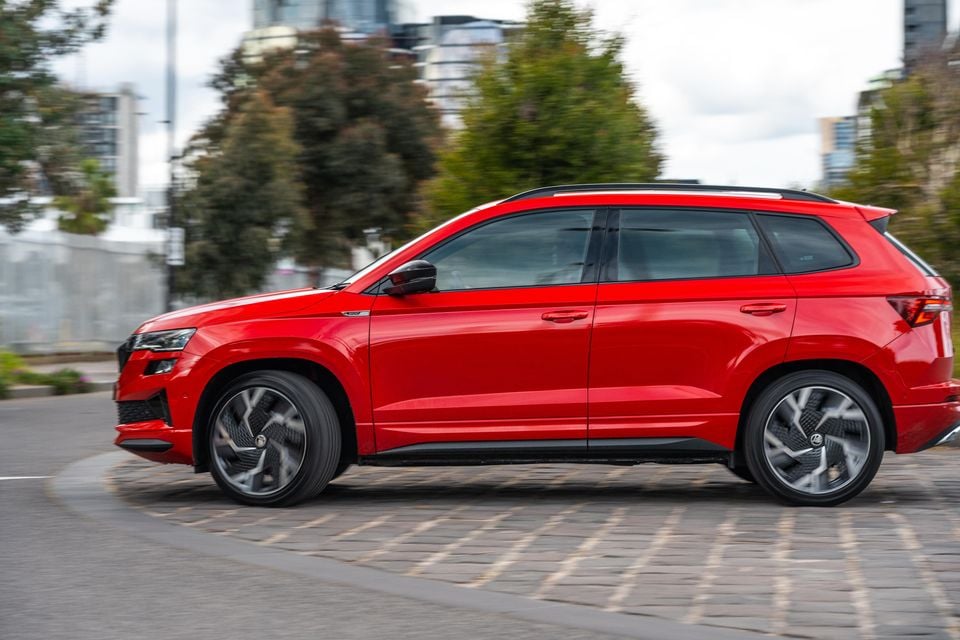
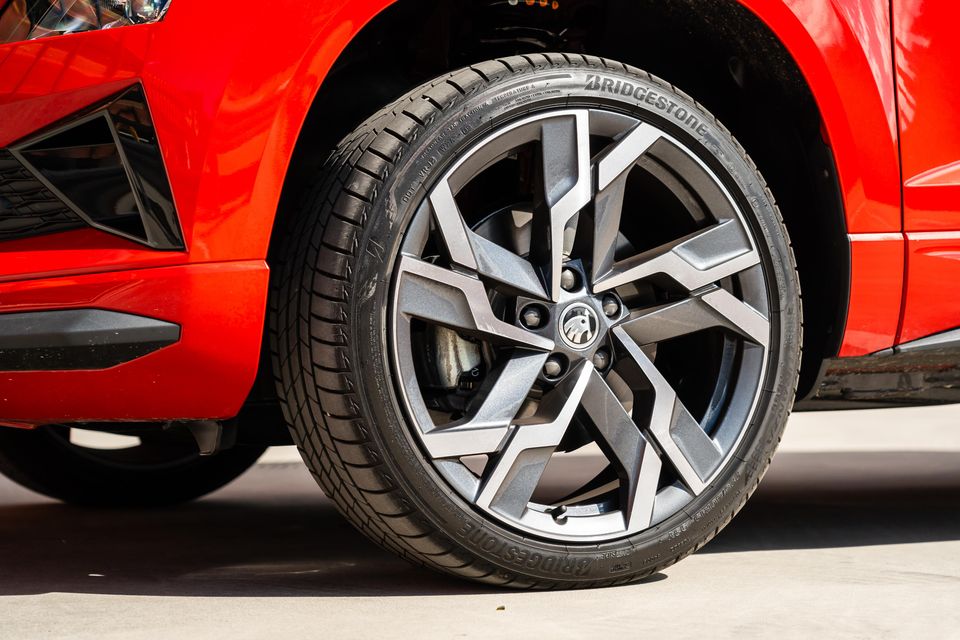
- 19-inch ‘Sagitarius’ alloy wheels in silver
- Heated windscreen
- Power-folding side mirrors with memory
- Privacy glass
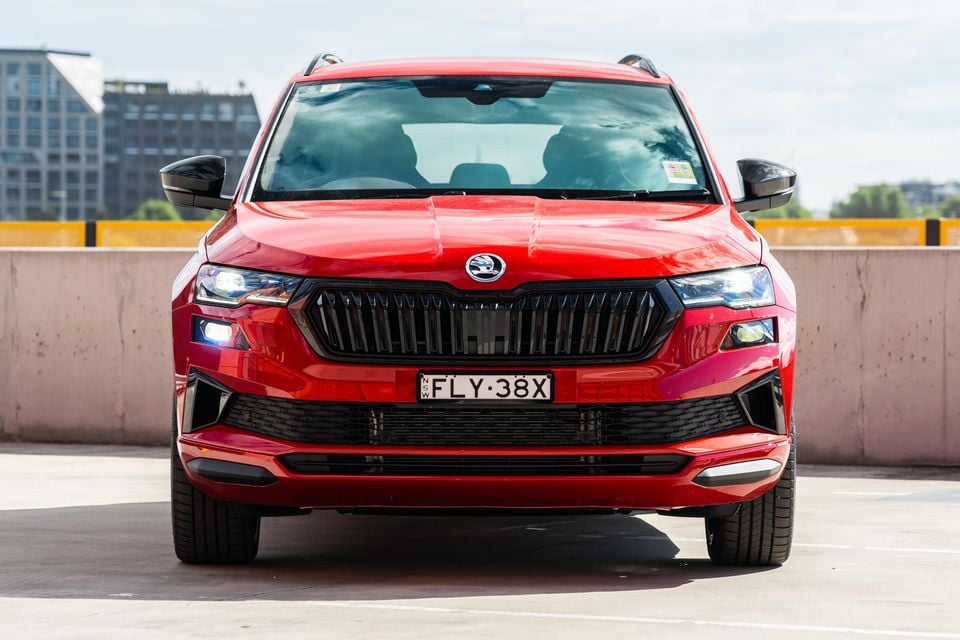
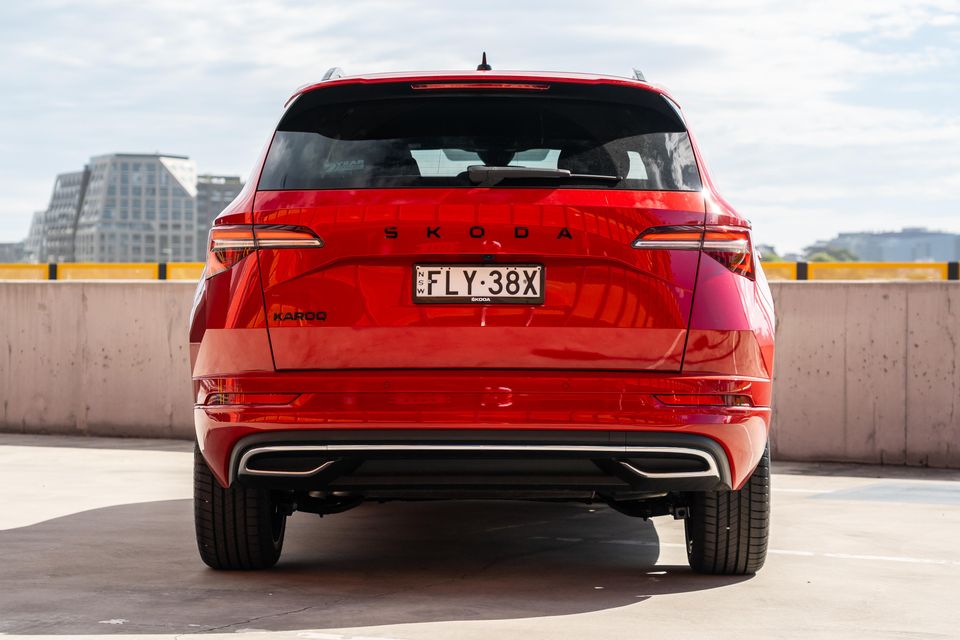
- Anthracite front spoiler and rear diffuser
- Black roof rails
- Black window frame surrounds
- Matrix LED headlights with dynamic cornering
- LED interior lighting
- LED puddle lamps
- Sports comfort front seats
- Heated front seats
- Heated steering wheel with shift paddles
- Aluminium finish pedals
- 9.2-inch touchscreen infotainment system
- 10.25-inch digital instrument cluster
- DAB+ digital radio
- Wireless phone charger
- Ambient lighting
- Black headliner
- USB-C port in rearview mirror
- Heated outboard rear seats
- Travel Assist
- Adaptive cruise control with stop/go
- Adaptive lane guidance
- Emergency assist
- Traffic jam assist
Karoq 130 Years Edition adds:
- Chrome roof rails and trim
- Unique ‘130 Years’ tailgate badge
- Keyless entry
- Leather-appointed upholstery
- Power-adjustable front seats
- Hands-free power tailgate
- Satellite navigation
- 10-speaker Canton sound system
Karoq Sportline 4×4 adds:
- Dynamic Chassis Control (DCC) adaptive suspension
- Progressive steering
- Semi-autonomous parking assist
A panoramic glass sunroof is available as a $1900 option, but it wasn’t fitted to our tester.
To see how the Skoda Karoq lines up against the competition, check out our comparison tool
Is the Skoda Karoq safe?
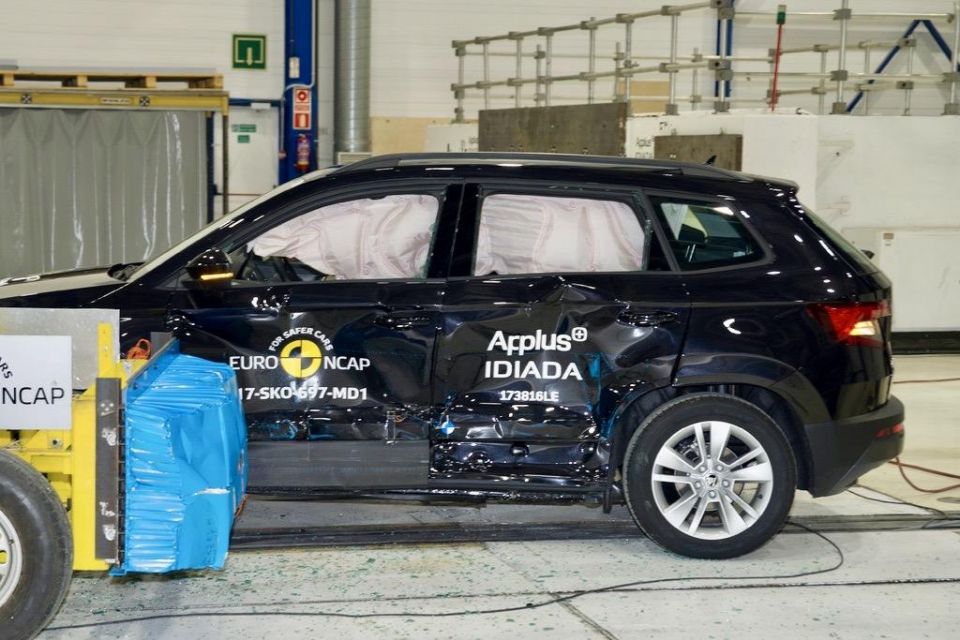
The Skoda Karoq was awarded a five-star ANCAP safety rating based on Euro NCAP tests conducted in 2017, but that’s now expired, so it’s officially ‘unrated’ by the independent vehicle safety body.
Previously, however, all Karoq variants were covered by this rating, which was based on category scores of 93 per cent for adult occupant protection, 79 per cent for child occupant protection, 73 per cent for pedestrian protection, and 58 per cent for safety assist.
Standard safety equipment includes:
- Autonomous emergency braking (AEB)
- Pedestrian detection
- Cyclist detection
- Adaptive cruise control
- Lane-keep assist
- Blind-spot monitoring
- Front and rear parking sensors
- Reversing camera
- Manoeuvre braking assist
- Multi-collision brake
- Tyre pressure monitoring
- Advanced driver fatigue detection
Stepping up to the Sportline 4×2 adds traffic jam assist, lane centring and emergency assist, while the Sportline 4×4 now includes a surround-view camera and hill-descent control.
To see how the Skoda Karoq lines up against the competition, check out our comparison tool
How much does the Skoda Karoq cost to run?
Skoda Australia backs all of its models with a seven-year, unlimited-kilometre vehicle warranty. Service intervals are 12 months or 15,000km, whichever comes first.
| Servicing and Warranty | Skoda Karoq FWD |
|---|
| Warranty | 7 years, unlimited kilometres |
| Roadside assistance | Up to 7 years |
| Service intervals | 12 months or 15,000km |
| Pre-paid servicing | Up to 7 years |
| Average annual service cost | $518 – 5 years
$499 – 7 years |
| Total capped-price service cost | $2590 – 5 years
$3490 – 7 years |
The brand offers prepaid service packs that can be bought up front or at any point before the vehicle’s first service. The Karoq’s five-year, 75,000km service pack will cost you $2590 and, if the vehicle is eligible, it can be extended by an additional two years for $900.
To see how the Skoda Karoq lines up against the competition, check out our comparison tool
CarExpert’s Take on the Skoda Karoq Sportline
While it’s efficient and nice to drive, the Karoq Sportline 110TSI 4×2 doesn’t stand out from the ballooning mid-size SUV crowd.
The strengths of this ageing model are no longer super strengths, and its weaknesses in the technology, space and value departments are only becoming more pronounced as time rolls on.
I just can’t find an obvious unique selling point here, besides perhaps the prestige of a European badge. But if it’s Euro sophistication you’re after, the new Volkswagen Tiguan feels far more modern and doesn’t command a huge price premium.
In a similar vein, the electric Skoda Elroq is a generation ahead of the Karoq and can be had from less than $50,000 drive-away.
Putting country of origin aside, the Hyundai Tucson is among my top picks in this segment, while the BYD Sealion 6 is another great option provided you’re able to charge the plug-in hybrid (PHEV) battery regularly.
CarExpert can save you thousands on a new Skoda Karoq. Click here to get a great deal.
Click the images for the full gallery
MORE: Explore the Skoda Karoq showroom

 Car News
 CarExpert Podcast
 Car Reviews
 Owner Car Reviews
 Car Comparisons
 Showroom
 Car Chooser
 Car Specifications











 Automotive Vehicle Spec Data & 4K images Powered by JATO Dynamics Ltd