
Damion Smy
Ford Ranger and Everest fuel card offer increased to $5000
The updated Ranger and Everest are being discounted even before they arrive, and there's another $1000 off run-out vehicles amid high fuel prices.
12 Hours Ago
As the Prado celebrates 30 years as a standalone model in Australia, we test the range-topping Kakadu. Does it continue the legacy?

Road Test Editor
Road Test Editor
Road Test Editor
Road Test Editor
CarExpert brings together reviews, research tools and trusted buying support, guiding you from research to delivery with confidence.
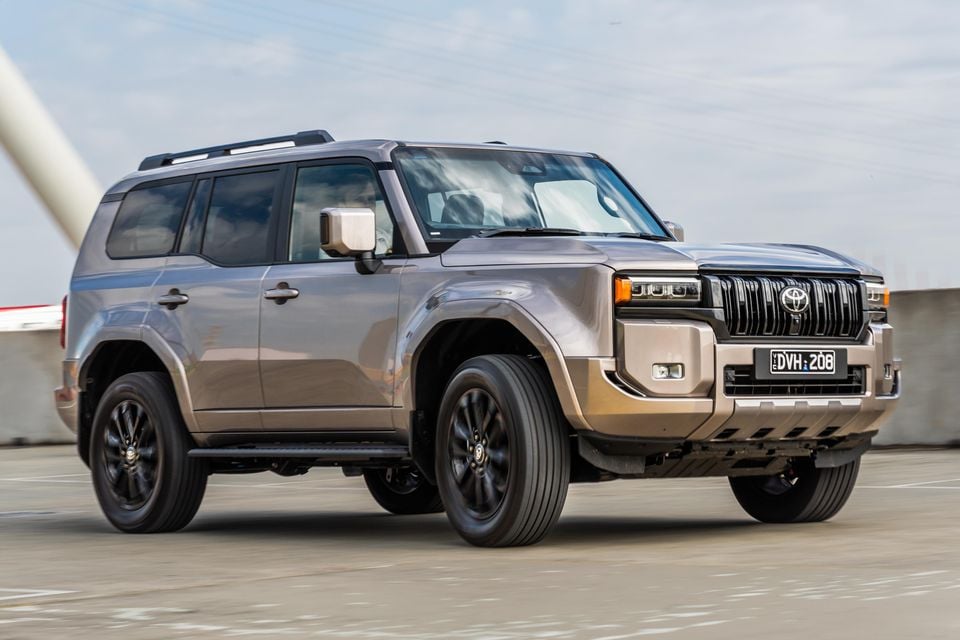
In other markets, such as North America and Europe, this is the Toyota LandCruiser – but for Australia, it is the slightly smaller sibling to the flagship LandCruiser 300 Series. This is the Toyota LandCruiser Prado 250 Series, and it’s an important vehicle for the brand.
Originally known as the Bundera, the Prado started off as a comfort-oriented variant of the 70 Series – a product line still in production today.
But the Prado evolved into its own model, launching here in mid-1996 as a more affordable family SUV, but with the same kind of off-road capabilities that Aussies had come to expect from the LandCruiser nameplate.
Starting at $36,990, the Prado was almost 26 per cent cheaper than the base LandCruiser 80 Series – with the range-topping LandCruiser Sahara being almost three times the price of the Prado.
As such, the Prado enjoyed more than two decades as the best-selling SUV in its class, with its popularity barely waning despite an onslaught of competition from both legacy and newcomer brands.
Even with increased prices, the latest generation saw more than 17,000 orders placed before the vehicle had even launched in Australia – to say nothing of the new luxury version being introduced, badged as the Lexus GX.
Despite its widespread popularity, it still took me until the previous 150-Series before I really ‘got’ the Prado.
A long-termer assigned to me for a couple of months during one of the Covid lockdowns, it ended up being one of the few times I’ve reluctantly handed a car back – accompanied with a tight grip on the keys and a forced smile.
The latest Prado carries over the 2.8-litre turbo-diesel from the previous generation, but gains a 48-volt mild-hybrid system and an eight-speed automatic transmission with full-time four-wheel drive. Despite this, power outputs remain the same as the 2021 model I drove, but the new one has gained around 140kg.
Aside from a short drive in the Lexus twin, this was my first real chance to get to know the 250 Series – a vehicle Toyota has deemed strong enough to badge as the LandCruiser overseas. A big call, albeit a strategic one.
So, as we approach its 30th birthday in Australia (as a standalone model), is the latest Prado a worthy successor in the dynasty? Let’s find out.
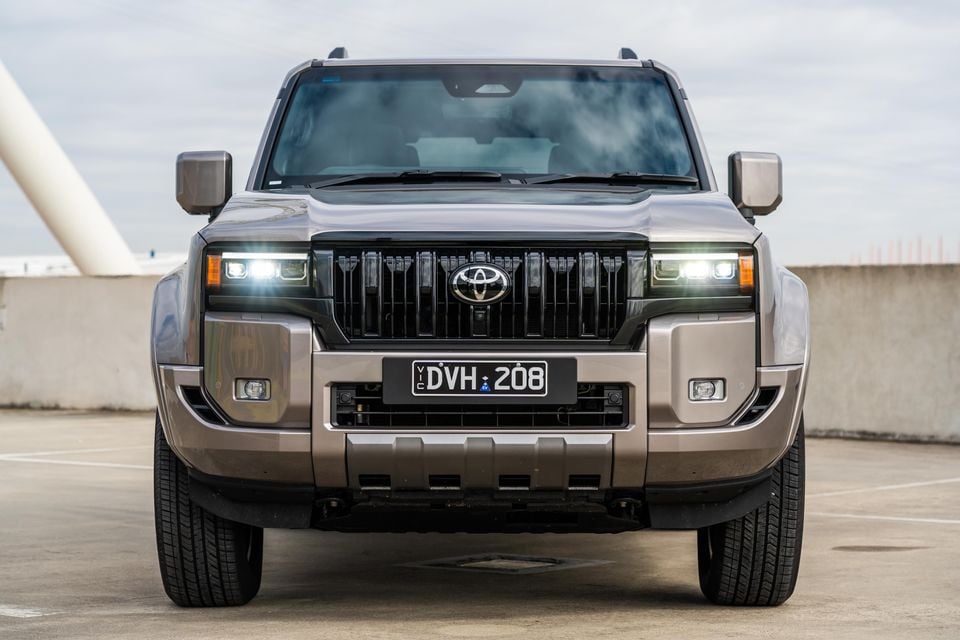
The 2026 Toyota LandCruiser Prado starts at $72,500 before on-road costs for the entry-level GX, with five variants available across the lineup.
| Model | Price before on-road costs |
|---|---|
| 2025 Toyota LandCruiser Prado GX | $72,500 |
| 2025 Toyota LandCruiser Prado GXL | $79,990 |
| 2025 Toyota LandCruiser Prado VX | $87,400 |
| 2025 Toyota LandCruiser Prado Altitude | $92,700 |
| 2025 Toyota LandCruiser Prado Kakadu | $99,990 |
As with my long-termer, this particular Prado is the range-topping Kakadu – priced from $99,990 plus on-road costs – and is the final rung in the ladder before the Lexus GX, available from $116,000 +ORCs.
In sales terms, the Prado’s most direct competitor is the Ford Everest – an off-road SUV based on the Ford Ranger ute – which starts from $58,990 +ORCs. Though arguably a more direct comparison would be the V6 Everest models, which begin from $66,990 +ORCs.
While the range-topping Everest Platinum V6 is a fair bit cheaper than the Prado Kakadu, at $83,490 +ORCs, the two models have never really felt as if they’re direct competitors on a philosophical level. The now-defunct Fortuner, itself based on the HiLux, was the true Toyota equivalent of the Everest.
The only real rival to emerge has come from China, with the GWM Tank 500 – offering a twin-turbo V6 with hybrid technology, and priced from $66,490 drive-away.
To see how the Toyota Prado stacks up against its rivals, use our comparison tool
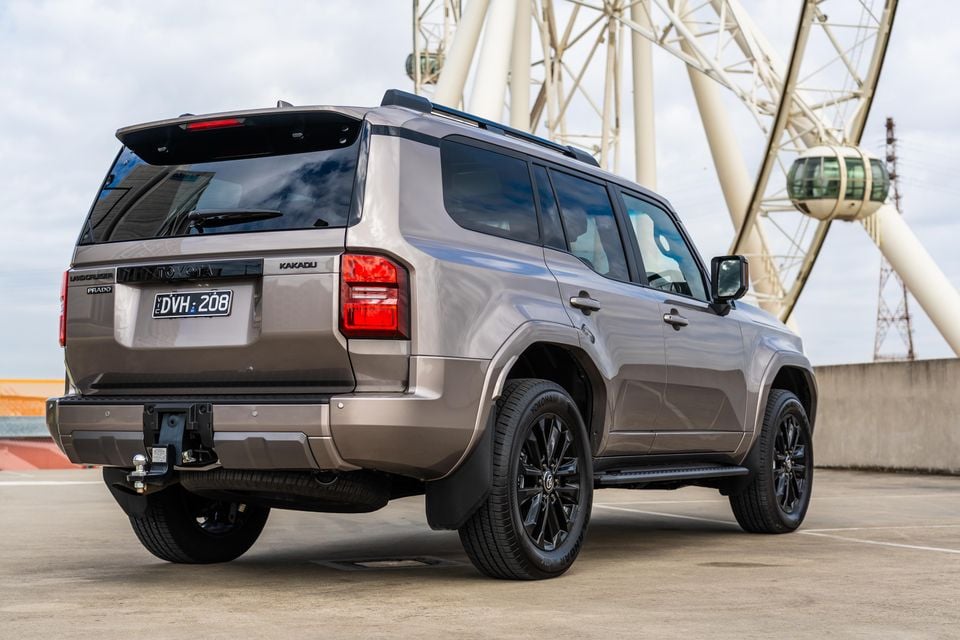
There’s been a noticeable wind change in the way Toyota has approached the Prado’s design, both outside and in.
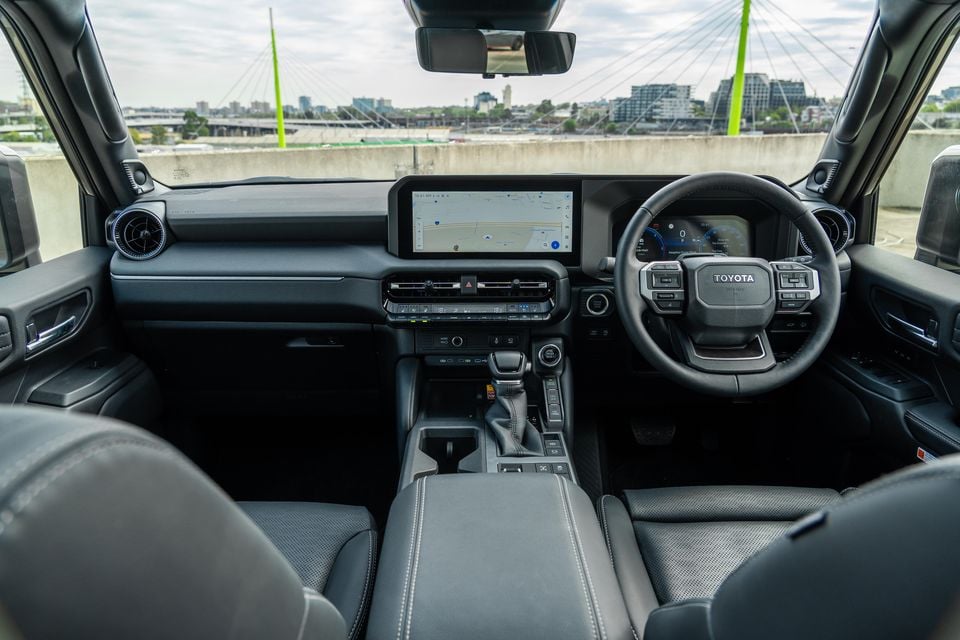
With the company knowing the Prado would be dropping the Prado moniker in many major markets, designers have given the vehicle a more rugged, muscular feel throughout – borrowing elements from the 300 Series, as well as the Tacoma and Tundra pickups, and the US-market Sequoia off-road SUV.
And while it now feels more trail-ready than ever before – perhaps with the exception of the early 70 Series Prado – the cabin doesn’t feel as inviting or family-friendly as its predecessor.
However, Toyota’s build quality and high-level materials remain, making the Prado feel every inch like a sibling to the LandCruiser 300.
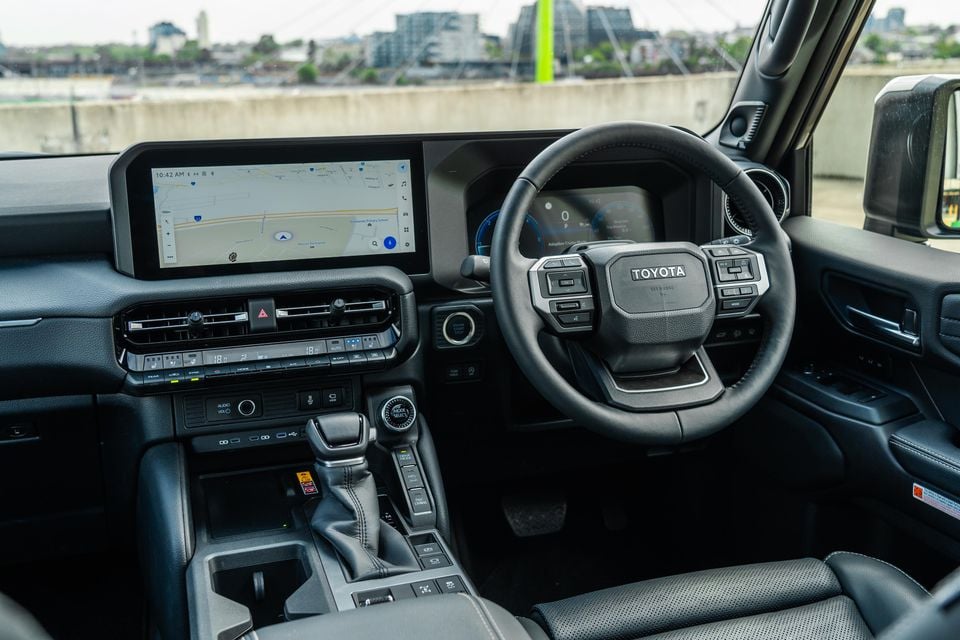
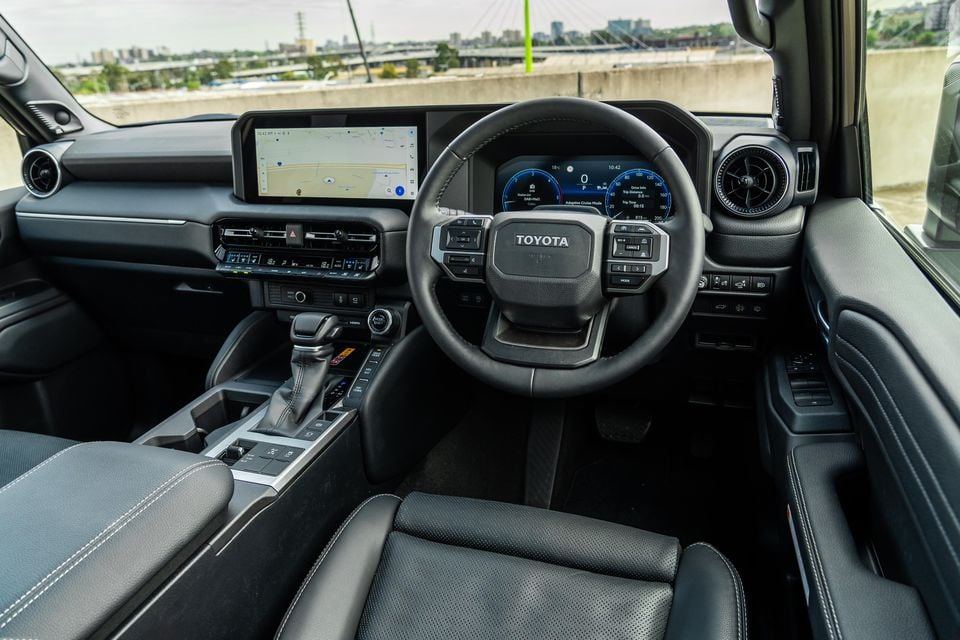
Twin 12.3-inch displays for the digital instrument cluster and infotainment offer lots of clear information, with the wireless Apple CarPlay working well throughout our time with it. The 14-speaker JBL sound system provided good, loud audio with plenty of bass.
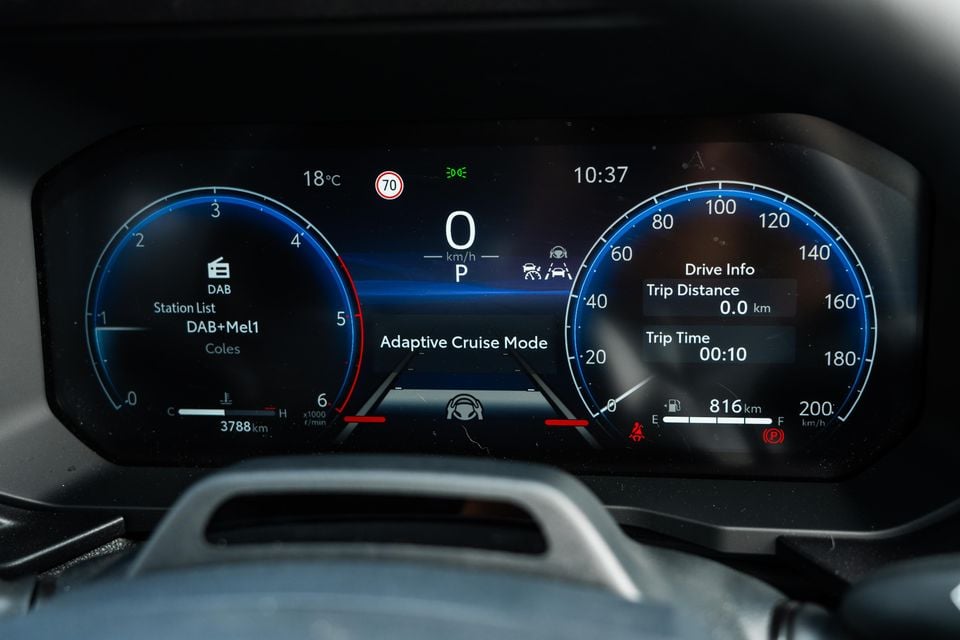
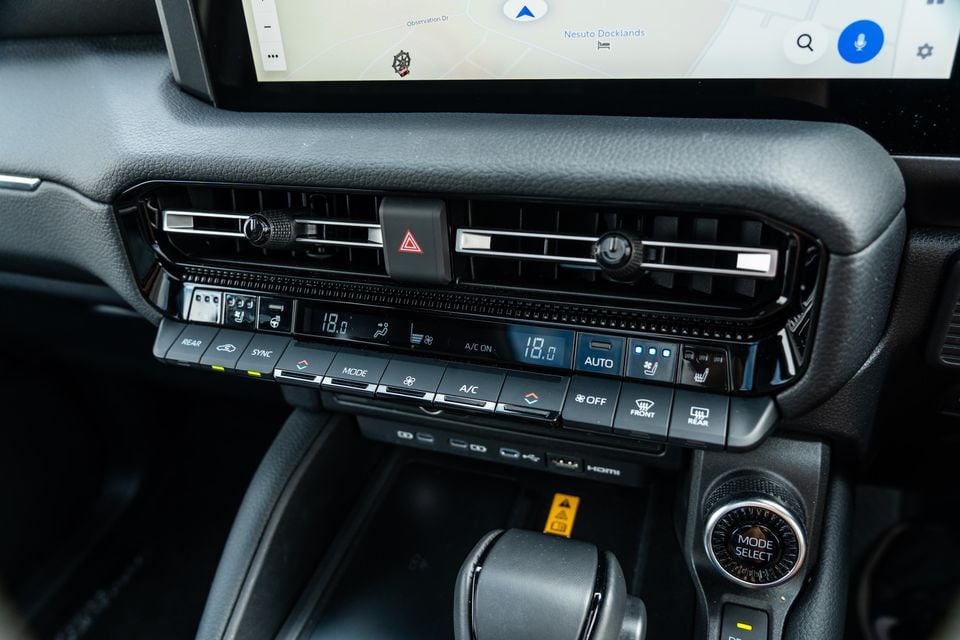
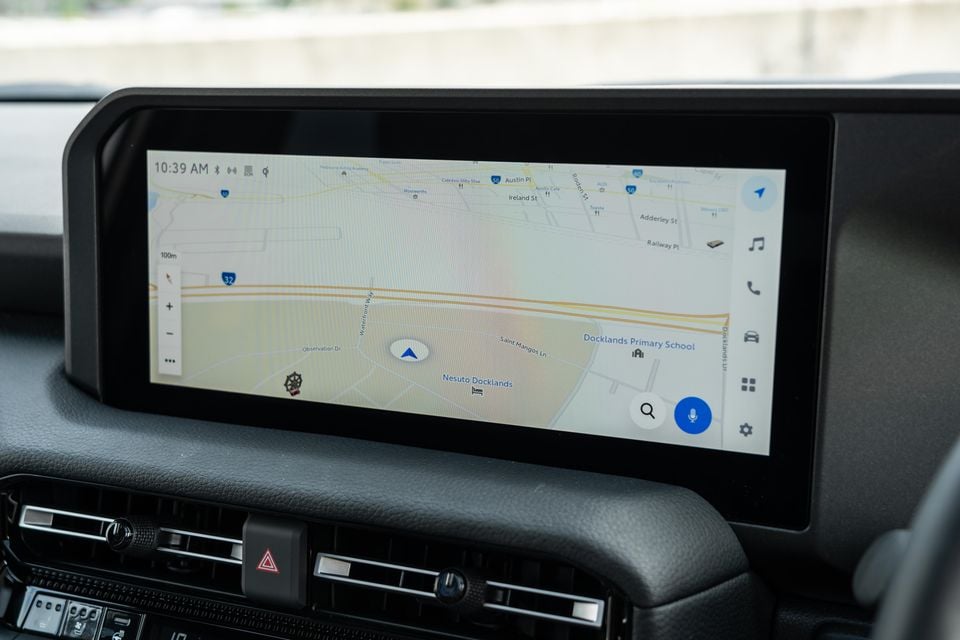
Toyota, in its infinite wisdom, has thankfully chosen to include an array of real buttons across both the steering and the dashboard. Though there’s a small learning period before you figure out what everything does, after a couple of days, controlling things like the climate control can be done quickly and without taking your eyes off the road.
The base-model Prado GX is reasonably well kitted out to begin with, but each step up includes a decent swag of extra features, culminating in the peak Kakadu.
However, it feels like not enough has been done to make the Kakadu feel like it’s the range-topping variant. The dash is a big slab of plastic with some screens, and could use a bit of the Gucci treatment to help justify the $100K price tag.
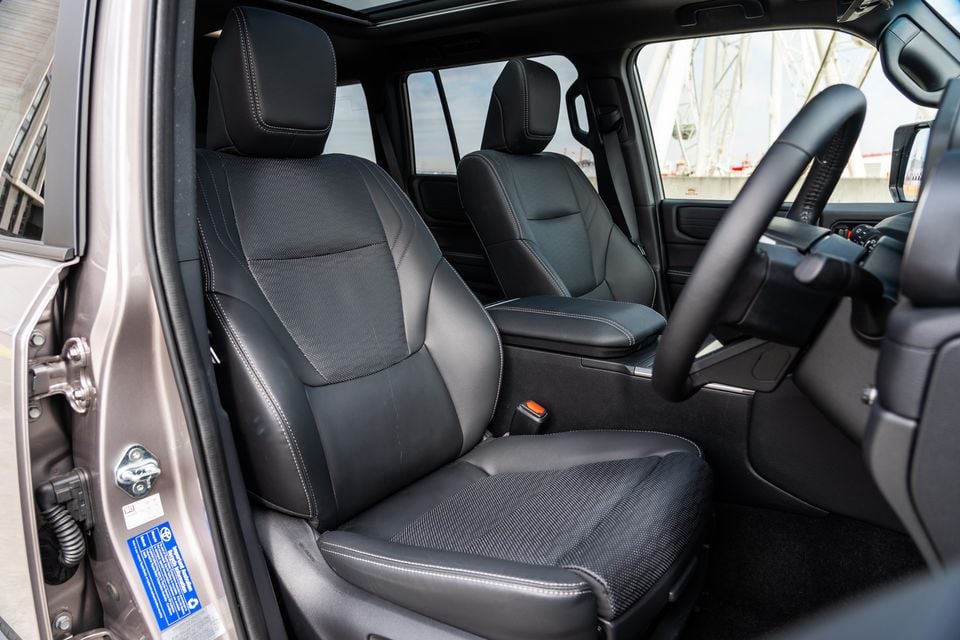
There are heated and ventilated leather seats front and rear, a heated steering wheel with power adjustment, a panoramic sunroof, illuminated side steps, a head-up display, a refrigerated centre console box, a wireless smartphone charger, and rear climate control, to name just a few.
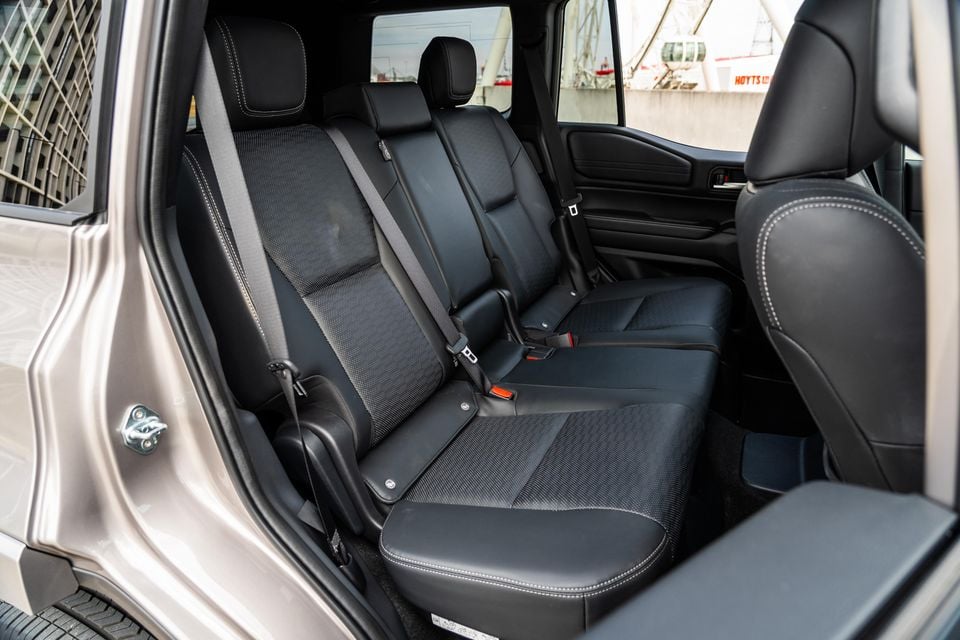
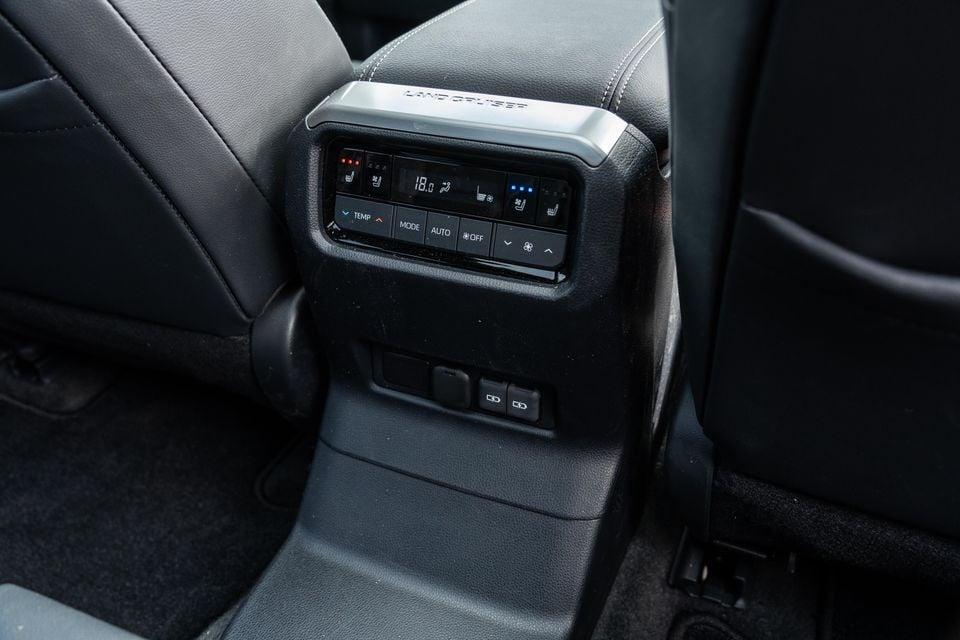
The seating position is comfortable, though it’s recommended to use the side steps when entering and exiting the Prado, as there’s about a foot between the edge of the step and the seat. Add in a bit of height from the vehicle, and you’re better off stepping up into the car rather than throwing yourself in. Or maybe I’m just getting old.
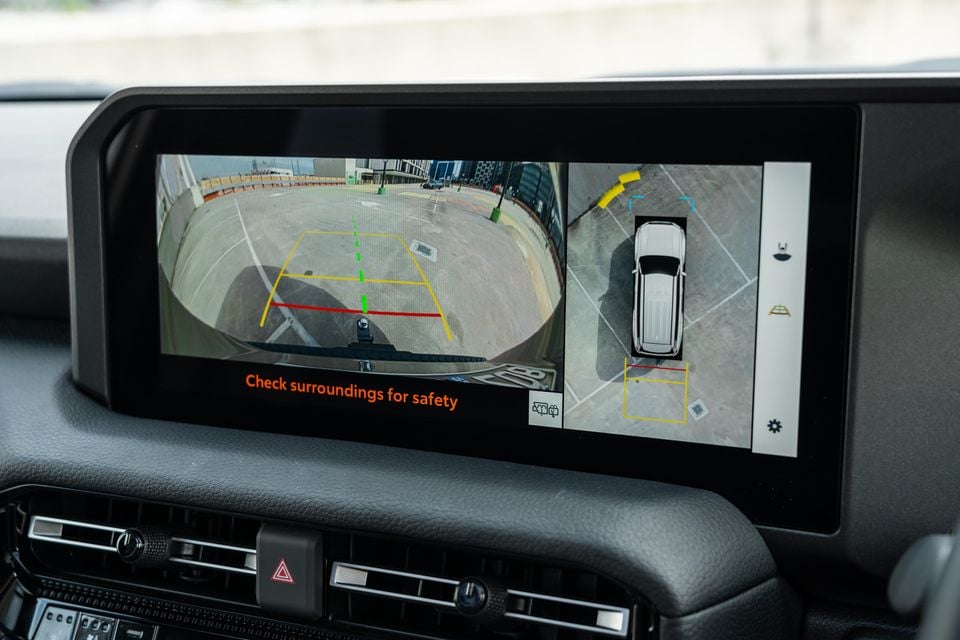
Visibility seems to have decreased a bit, due to thick pillars and what appears to be a higher shoulder line – though big mirrors, a bright and clear reversing camera, and blind-spot assist mean it’s less of an issue than it was in the past.
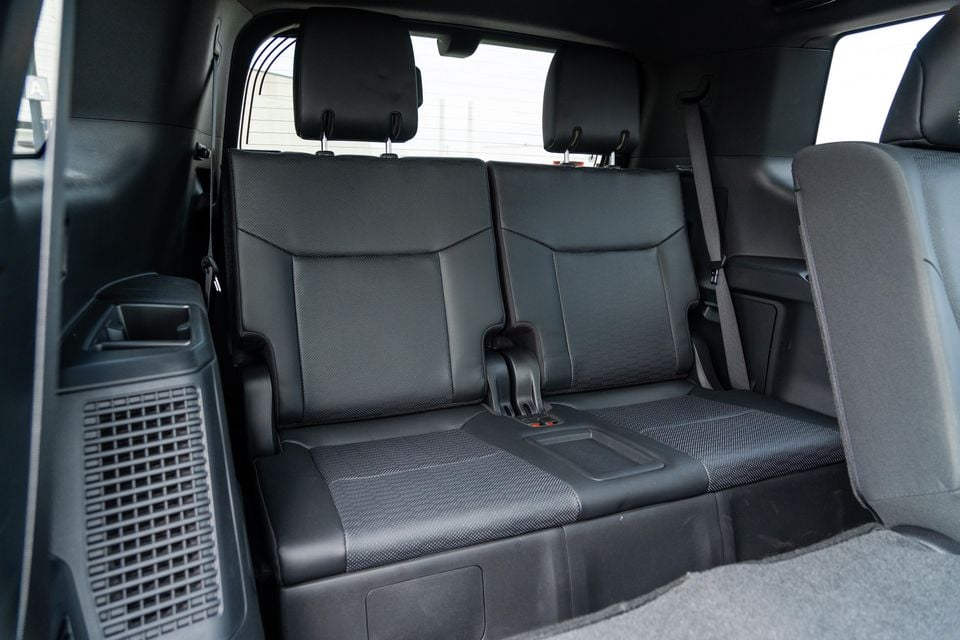
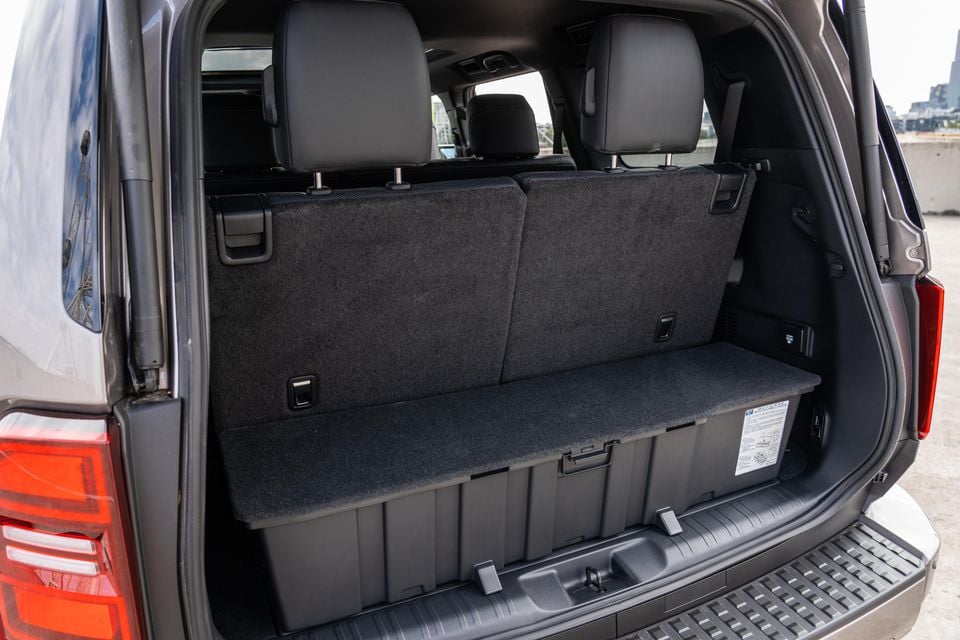
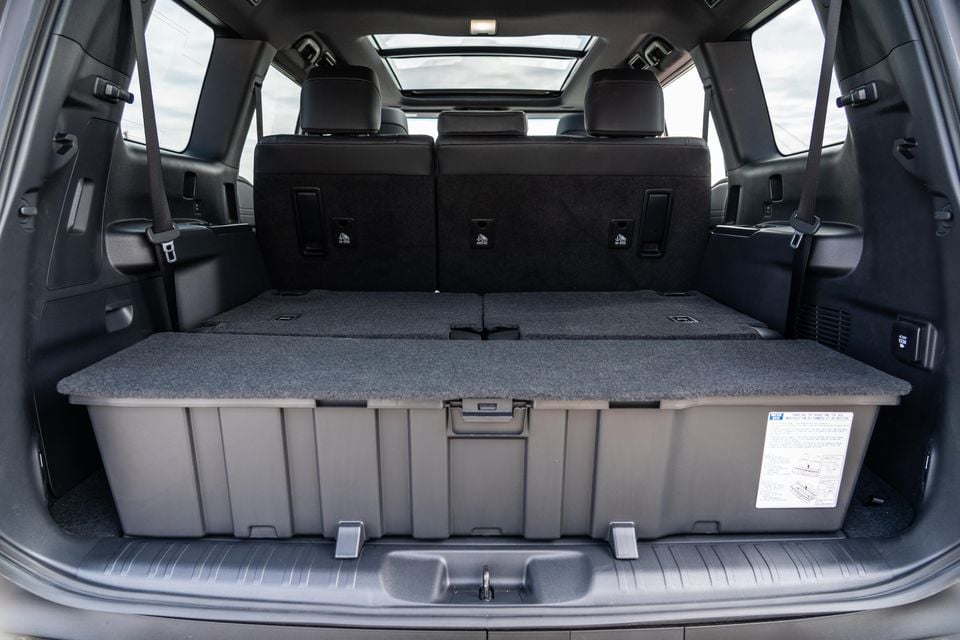
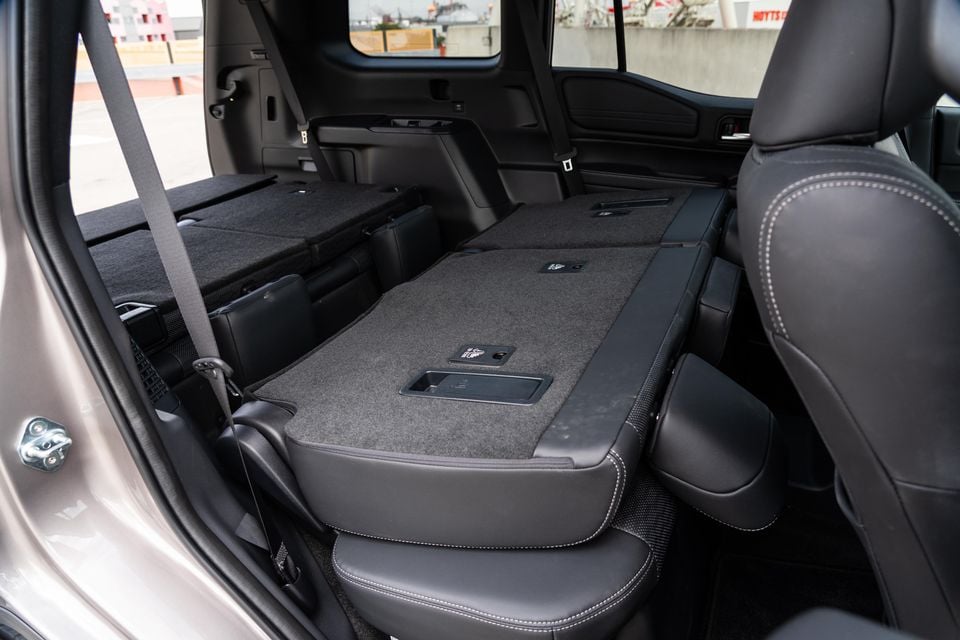
As you would expect, there’s plenty of room in the second row for adults, though the bench seat doesn’t offer much support for long distances. Being that it’s a seven-seater, there’s also a good amount of boot space with the third row of seats folded, accessed via a power tailgate.
With all three rows of seats in use, luggage space is very compromised, and best used for school commutes or emergency situations rather than a dedicated seven-seater. Our man Max Davies went into great detail about the luggage space, which you can read here. But it’s worth saying, you’re better off moving to the 300 Series or a dedicated people mover if you need to transport more than five people and their bags.
| Dimensions | Toyota Prado |
|---|---|
| Length | 4990mm |
| Width | 1980mm |
| Height | 1925mm |
| Wheelbase | 2850mm |
| Cargo capacity | 182L (all seats up) 906L (third row folded) 1829L (third and second rows folded) |
To see how the Toyota Prado stacks up against its rivals, use our comparison tool
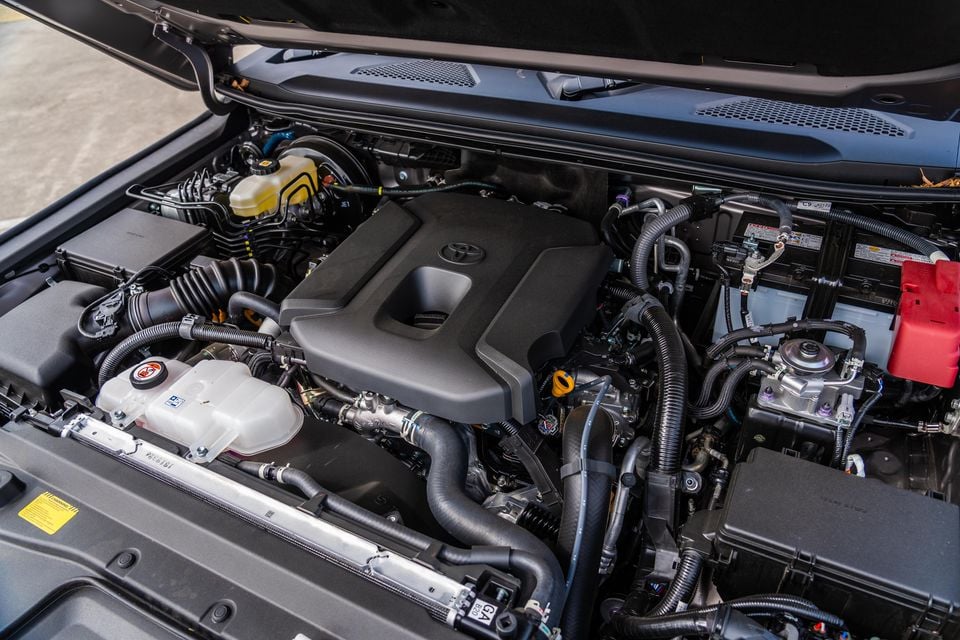
As mentioned, the Toyota Prado continues with a 2.8-litre turbo-diesel four-cylinder engine – the same found in the HiLux, LandCruiser 70 Series, and HiAce – but this generation model gets the addition of a 48-volt mild-hybrid system to help reduce fuel consumption and emissions.
| Specifications | Toyota Prado |
|---|---|
| Engine | 2.8L 4cyl turbo-diesel with 48V MHEV |
| Battery | 4.3Ah li-ion |
| Motor generator power | 8.4kW |
| Motor generator torque | 65Nm |
| Total system power | 150kW @ 3000-3400rpm |
| Total system torque | 500Nm @ 1600-2800rpm |
| Transmission | 8-speed automatic |
| Drive type | Full-time 4WD |
| Fuel economy (claimed) | 7.6L/100km |
| Fuel economy (as tested) | 8.7L/100km |
| CO2 emissions (claimed) | 200g/km |
| Fuel tank | 80L main tank 30L sub tank 17.4L AdBlue |
| Kerb weight | 2535kg |
| Payload | 615kg |
| Braked towing capacity | 3500kg |
| Gross vehicle mass (GVM) | 3150kg |
| Gross combination mass (GCM) | 6600kg |
Power is sent to all four wheels through an eight-speed automatic transmission, with low-range and a torque-sensing limited-slip rear differential for off-roading.
Over a mix of freeway, suburban, and city driving, we saw fuel economy figures of around 8.7L/100km, which isn’t far off the combined claim of 7.6L/100km.
To see how the Toyota Prado stacks up against its rivals, use our comparison tool
Everyone talks about reliability being the reason why the LandCruiser and the Prado became so popular among Australian buyers – but I’d argue it’s something else. Something harder to describe.
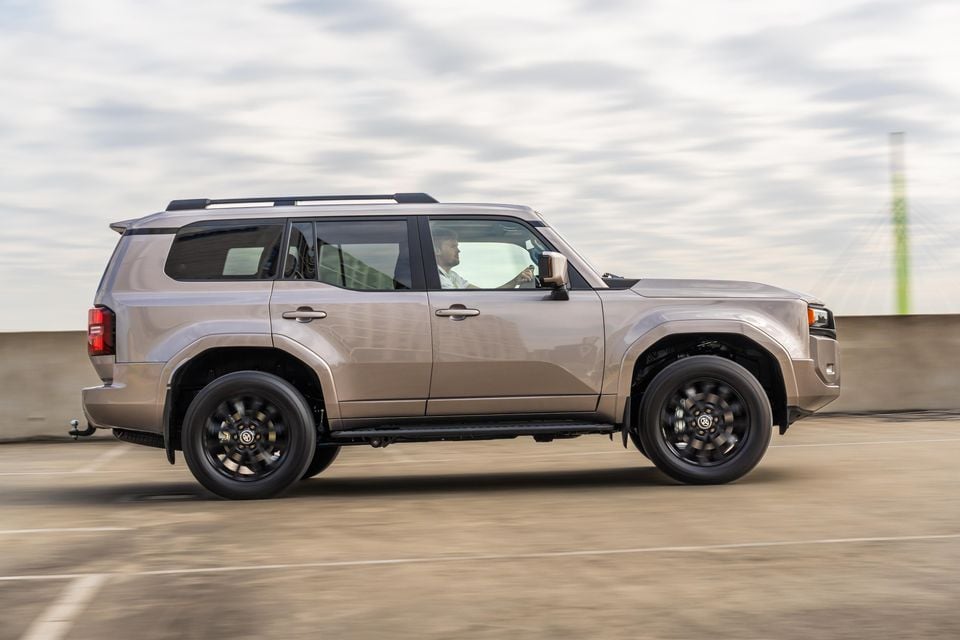
Sure, reliability is highly valued within our market, but the real attractiveness of the LandCruiser (and its extended family) comes from the feeling of solidity that comes across when you drive it. Many have tried, but there are few that match Toyota on this level.
The Prado continues this. It’s quiet, the ride is comfortable, and the chassis feels like it has an addiction to little blue pills. Add to that the high-quality fit and finish of the interior, and you get a vehicle that both impresses while also providing an immense amount of confidence to the driver.
But it’s not all sunshine and praise. Despite the mild-hybrid system presumably taking some load off the engine, the stated performance is the same. Meanwhile, the vehicle itself has gained some 140kg, which is enough to take the edge off.
Whereas the previous-generation Prado felt like it had adequate performance, the new one comes across like it’s lost a bit of fitness – which becomes more apparent when you encounter a hill or need to get ahead of traffic. It also raises some minor concerns about heavy towing, giving the V6-powered Ford Everest the advantage for those considering ‘The Lap’.
Not helping the situation is the pedal tuning. There seems to be very little difference between 50 per cent throttle and 100 per cent throttle, because the engine doesn’t really seem to have any more to give. Given there’s a bit of poke available in the first half of the pedal, it almost lures you into a false sense of security that there’s more on tap. So when you do lean on it, you come up empty.
Braking also doesn’t quite match the rest of the car for confidence, with the first 15 per cent of the brake pedal feeling too light and not delivering the level of assuredness required for a big and heavy car. The brakes are there, mind you, it just requires a little more pressure before they sign onto the job.
But give yourself enough of a gap in traffic and cruise along, and you’ll find your groove with the Prado. Ride the torque from the turbo, let the transmission shift through its cogs, and the big girl wafts along nicely.
The advanced driver assist systems weren’t the worst we’ve experienced, and actually did what they say on the box for the most part, by which we mean they didn’t distract with constant bings and bongs.
The steering weight is in the sweet spot for something this size, delivering a good balance of lightness and direction to the front wheels, though there isn’t a huge amount of communication back to the driver. But if that’s what you’re after, buy a Porsche.
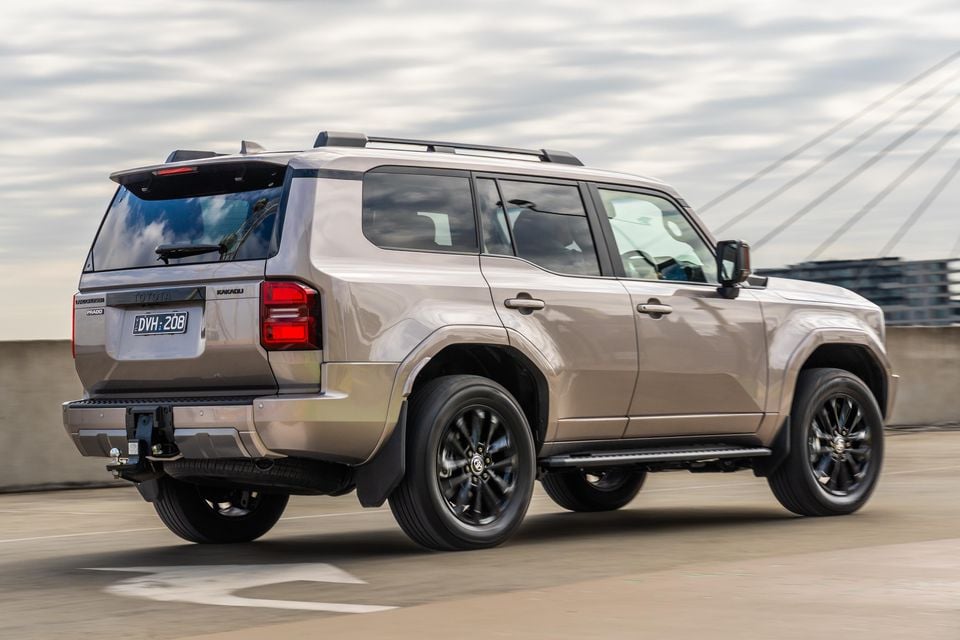
Handling is pretty good for a big bus, and while it’s not as good as its predecessor, the ride is reasonably well sorted for an SUV riding on 20-inch alloys with lower-profile tyres. The adaptive suspension does feel competent, though it can be overwhelmed on rougher terrain. Without driving the two side-by-side, it’s difficult to know whether this was a deliberate choice to make the Lexus GX the more comfortable version.
We didn’t have an opportunity to take the Prado to the bush on this occasion, but we have covered its off-road capability previously (see Paul Maric’s video at the top of this story). While the Kakadu isn’t necessarily the one you want for such things – given its wheel and tyre package – there’s no doubt the vehicle itself has enough old and new technology to tackle just about anything thrown at it.
Despite its rugged looks, it’s little more than a gentle giant – simply wanting to scoop you up and set you down safely at your destination.
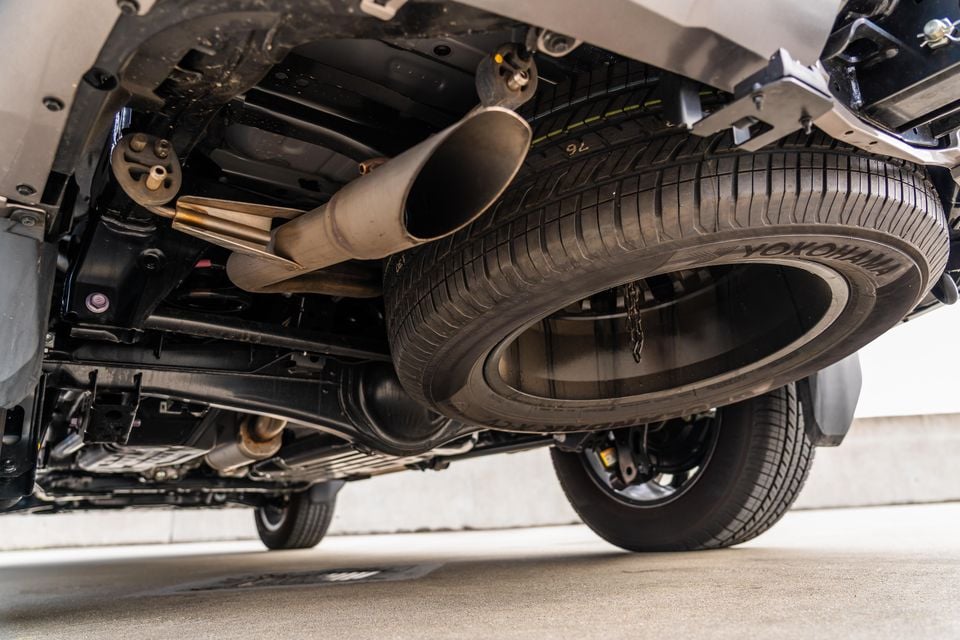
| Off-road dimensions | Toyota Prado GXL |
|---|---|
| Track front and rear | 1664mm front 1668mm rear |
| Ground clearance | 210mm |
| Approach angle | 31º |
| Departure angle | 17º |
| Ramp breakover angle | 25º |
| Wading depth | 700mm |
To see how the Toyota Prado stacks up against its rivals, use our comparison tool
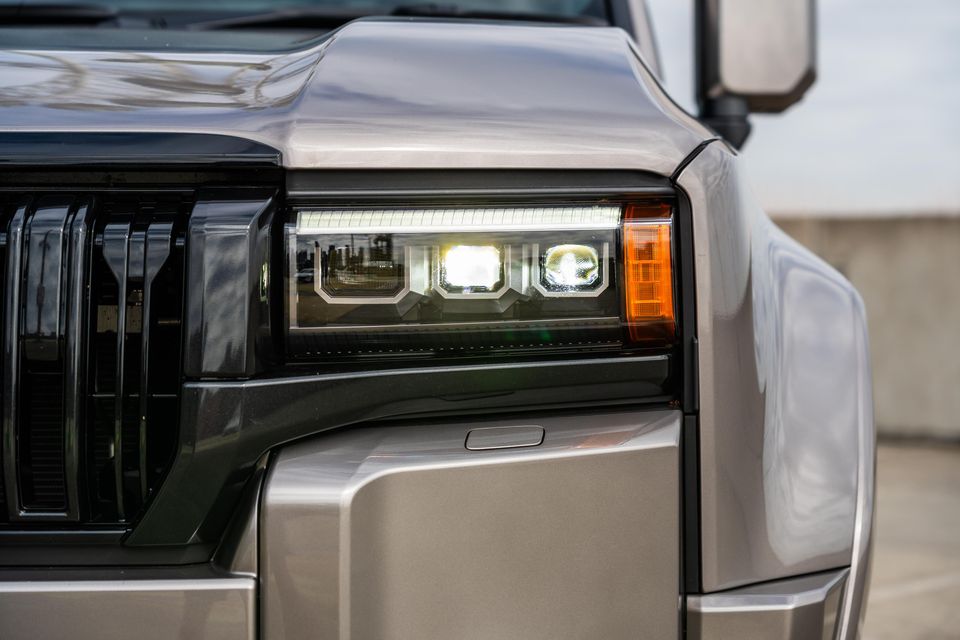
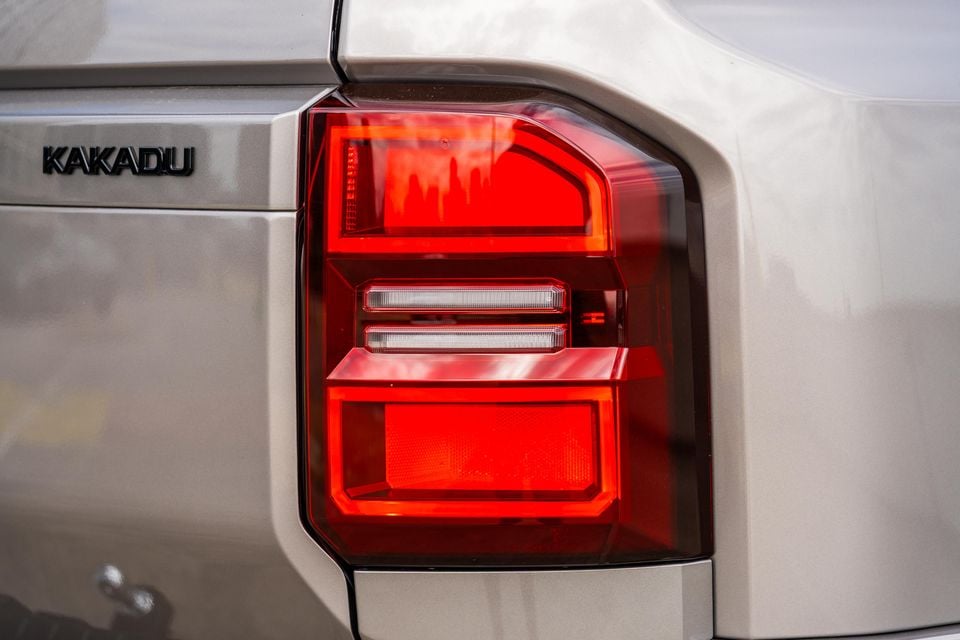
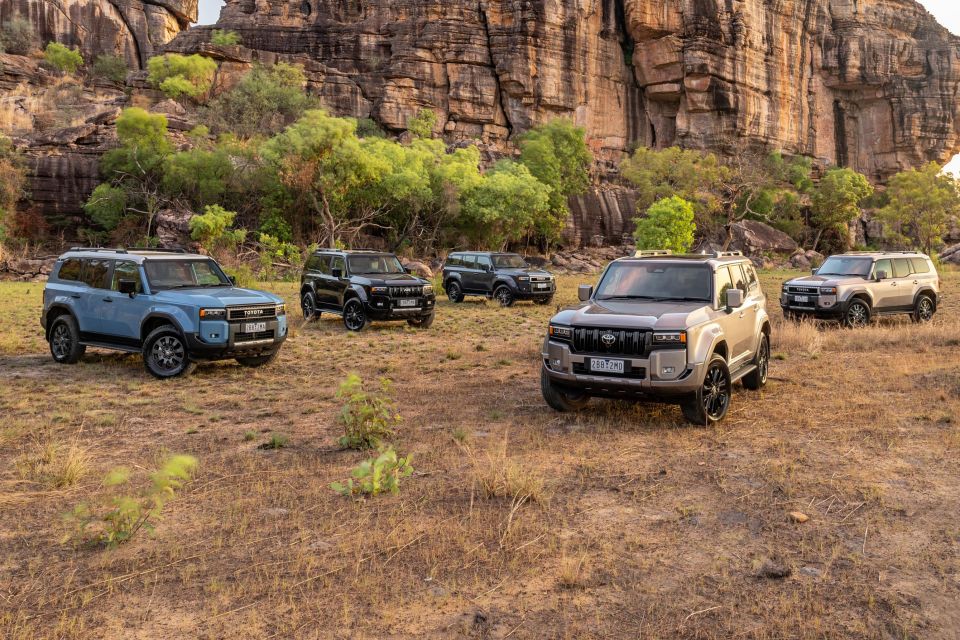
The base Prado GX takes a relatively no-frills approach, but the standard features keep piling on as you move up the range, culminating in the top-tier Kakadu variant on test here.
CarExpert brings together reviews, research tools and trusted buying support, guiding you from research to delivery with confidence.
2025 Toyota LandCruiser Prado GX equipment highlights:
Prado GXL adds:
Prado VX adds:
Prado Altitude adds:
Prado Kakadu adds:
To see how the Toyota Prado stacks up against its rivals, use our comparison tool
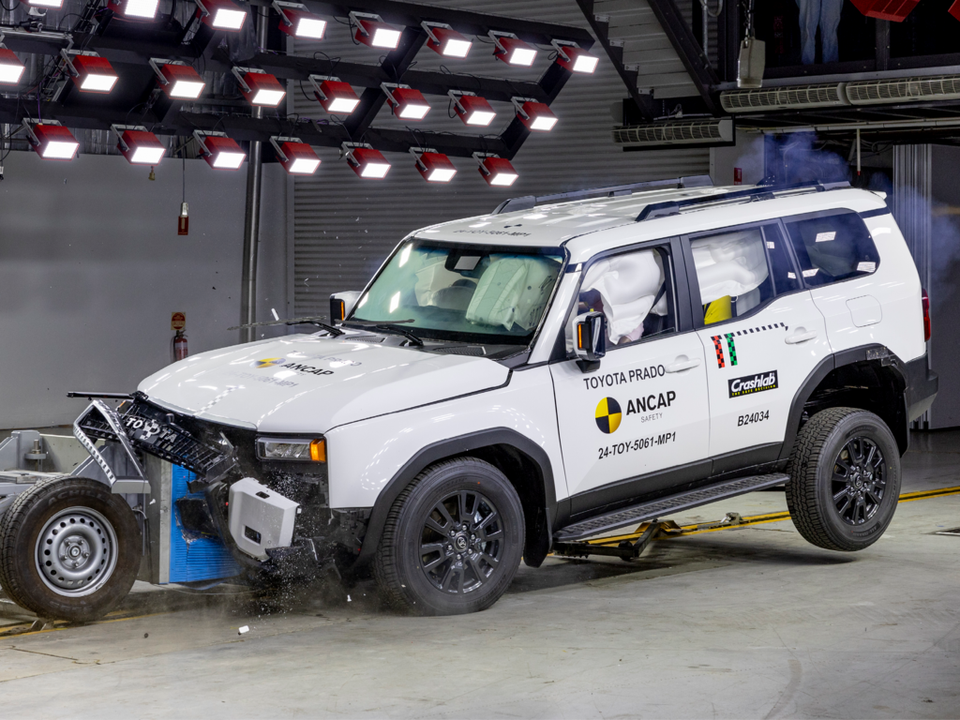
The independent government-funded vehicle safety outfit, ANCAP, awarded the Prado a full five-star safety rating back in 2024.
| Category | Toyota Prado |
|---|---|
| Adult occupant protection | 85 per cent |
| Child occupant protection | 89 per cent |
| Vulnerable road user protection | 84 per cent |
| Safety assist | 82 per cent |
And the large Toyota did well across all four categories, scoring no less than 82 at its worst (safety assist), and as high as 89 for child occupant protection – making it a top choice for families that consider safety a priority.
Safety equipment highlights:
The VX, Altitude, and Kakadu grades gain tyre pressure monitoring.
To see how the Toyota Prado stacks up against its rivals, use our comparison tool
Toyota offers a five-year, unlimited-kilometre warranty on the Prado, with roadside assistance plans available to be purchased from $99 annually.
| Servicing and Warranty | Toyota Prado |
|---|---|
| Warranty | 5 years, unlimited kilometres |
| Roadside assistance | Purchasable, $99 or $139 per year, depending on plan |
| Service intervals | 6 months or 10,000km |
| Capped-price servicing | 5 years, $395 each |
| Total capped-price service cost | $3950 |
Since we last drove the Prado, Toyota has increased its capped-price service plan from three years to five – but prices have also gone up by five bucks to $395 per visit. Which will be fairly often, given the vehicle’s maintenance schedule requires visiting your dealership every six months or 10,000km (whichever comes first).
Compare that to most other large turbo-diesel SUVs, which typically only require servicing every 12 months or 15,000km.
But although you may want to consider the additional inconvenience of taking your car in twice as much (depending on how many miles you tend to rack up), there’s also an argument that more regular servicing will help with longevity and reliability. So, if you plan to hold onto your 4×4 beyond its warranty, the extra time and money spent could end up being a wise investment.
To see how the Toyota Prado stacks up against its rivals, use our comparison tool
The latest Toyota Prado has a strong legacy to live up to, and while it hasn’t set a new benchmark for the nameplate, it remains a strong contender for those needing a comfortable SUV with real off-road capability.
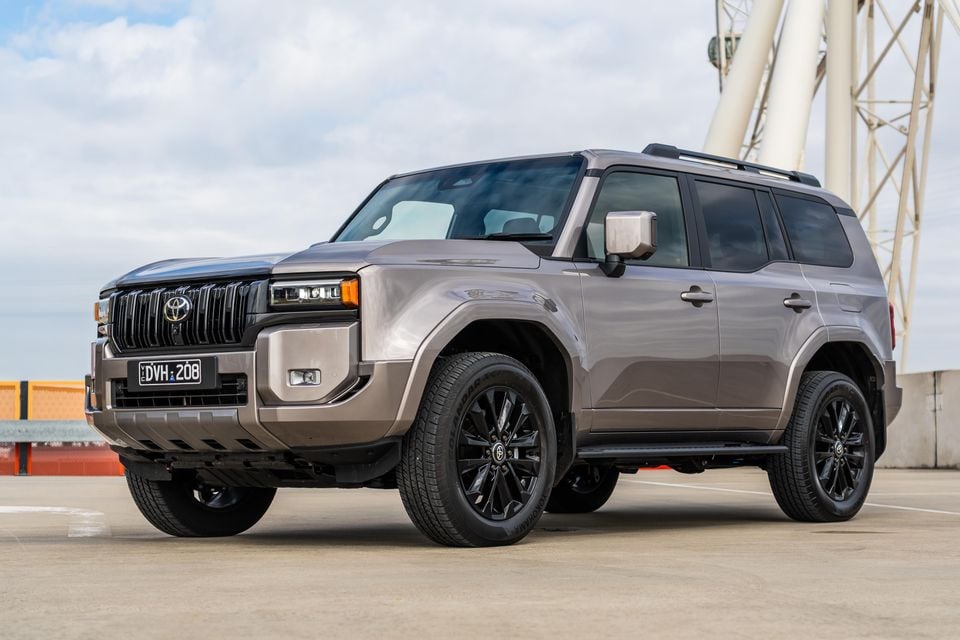
The last model was clearly ageing out and needed to be replaced, and there’s no doubt the new Prado delivers all the latest technology that buyers are looking for. With perhaps the only major exception being its usage as a dedicated seven-seater.
On the road, it delivers that cocooned robustness that is synonymous with the LandCruiser name, which may be just the thing loyal Prado owners are searching for. But although it does a lot right, we did have some minor grievances.
Then there’s the price. The Prado is a compelling option at $72,500, but another $30K on top of that for the Kakadu and – all the niceties that come with it – makes for a more difficult argument. Which might have our gaze wandering to the cheaper Ford Everest Platinum, or, if you don’t need the extra kit, the entry-level LandCruiser 300 Series.
While the new Prado has all the ingredients to make it a great car objectively, there’s a little something that seems to be lacking, which has it just fall short of being truly special like the previous generation.
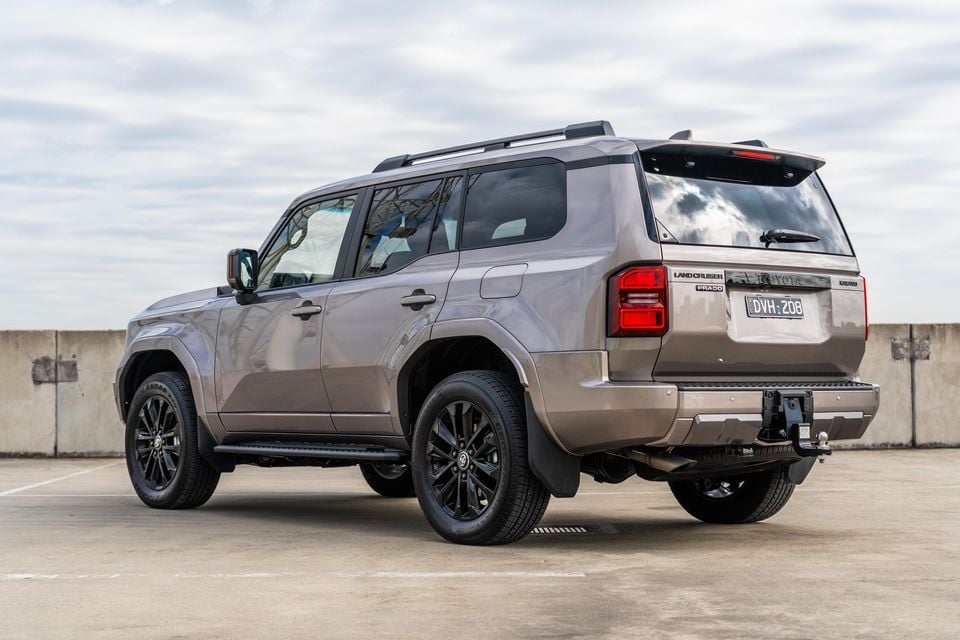
It didn’t have us clutching the keys quite as tightly when we were handing it back, as it needs that final five per cent to make it an exceptional experience – both in terms of the cabin, as well as the driving experience.
Yet as a relaxed hauler, the Prado remains a great choice for families, particularly those who live out in the country and need the peace of mind from their car that comes with being more remote – as well as the ability to get where they need to be after a storm.
Interested in buying a Toyota Prado? Let CarExpert find you the best deal here
Click the images for the full gallery
CarExpert brings together reviews, research tools and trusted buying support, guiding you from research to delivery with confidence.
Quickly see how this car stacks up against its competition. Select any benchmark to see more details.
Toyota LandCruiser Prado
Toyota LandCruiser Prado Sales rolling 12-months#
*Based on VFACTS and EVC data
Looking for complete Toyota LandCruiser Prado price history?
Our Toyota LandCruiser Prado Pricing Page shows exactly how prices have changed over time.
2026
$78,978
2026
$85,792
2026
$86,842
2026
$94,623
2026
$100,188
2026
$108,094
Ben Zachariah has 20-plus years in automotive media, writing for The Age, Drive, and Wheels, and is an expert in classic car investment.
Add CarExpert as a Preferred Source on Google so your search results prioritise writing by actual experts, not AI.
Damion Smy
12 Hours Ago

William Stopford
9 Days Ago
Ben Zachariah
9 Days Ago
William Stopford
16 Days Ago
William Stopford
16 Days Ago

Matt Robinson
20 Days Ago
Add CarExpert as a Preferred Source on Google so your search results prioritise writing by actual experts, not AI.
# Based on VFACTS and EVC data
† Displayed prices are based on the drive-away price of the vehicle, which includes delivery charges, registration fees, number plates, and applicable road taxes, based on a Sydney location. However, prices may vary between states and territories, and additional costs such as compulsory third party (CTP) insurance, dealer delivery fees, and optional extras are not included. These prices are subject to change without notice and may not reflect current market pricing or dealer offers.
 Automotive Vehicle Spec Data & 4K images Powered by JATO Dynamics Ltd