




Matt Campbell
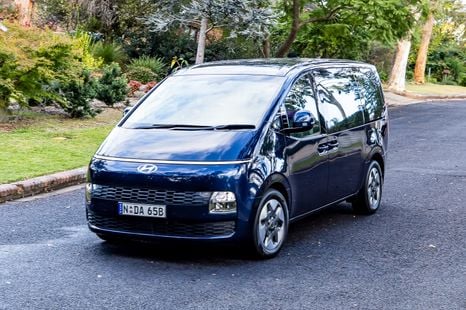
2026 Hyundai Staria review
Hyundai's updated Staria people mover range scores big revisions to its standard equipment list, but not for the better…
4 Hours Ago
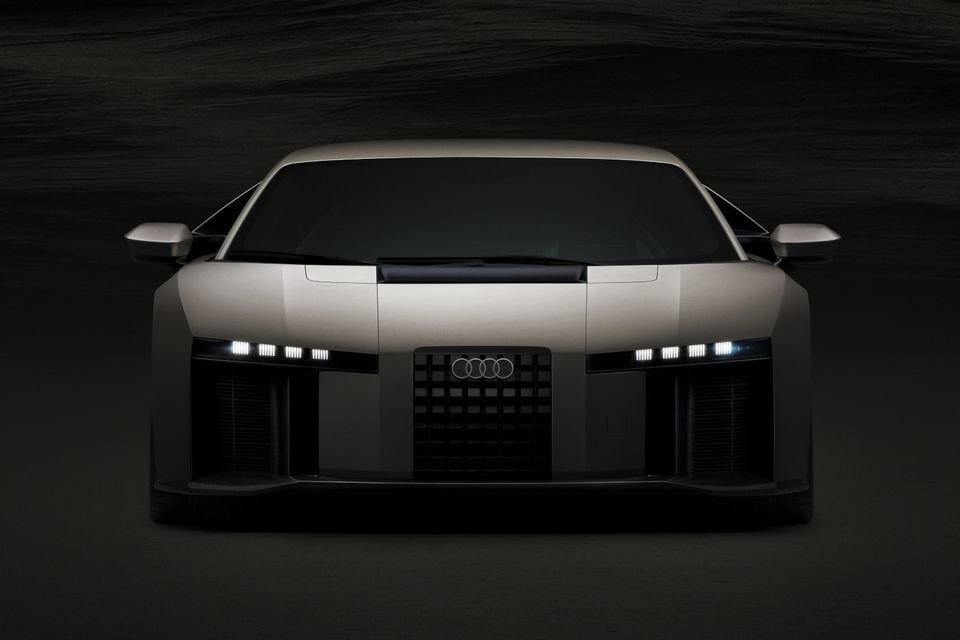
Audi has surprised the world with its most powerful and fastest production model ever, the Nuvolari, with a stonking 736kW PHEV drivetrain and various technologies derived from its F1 race car.

Marketplace Editor
Marketplace Editor
The spirit of the Audi R8 lives on, with the German marque debuting an all-new supercar boasting a Lamborghini-derived V8 hybrid powertrain.
Named after legendary Italian racing driver Tazio Nuvolari, the 2027 Audi Nuvolari will be limited to just 499 units and is claimed to be the fastest and most powerful model in the four-ringed marque's history.
Pitched as Audi's "first supercar with a high-performance hybrid powertrain", the Nuvolari is powered by a 588kW/730Nm 4.0-litre bi-turbo V8 and three axial flux electric motors each producing 110kW – similar to the drivetrain used in the Lamborghini Temerario.
All up, you're working with a stonking 736kW (1001PS). Audi claims the Nuvolari will spring from 0-100km/h in just 2.6 seconds, with 0-200km/h taking 6.8 seconds. Flat out, Audi's new supercar will do "more than 350km/h".
Looking for your next car? We'll help you research and compare so you choose with confidence.
Feeding the electric motors is a lithium-ion battery quoting a gross energy capacity of 7.3kWh, feeding the two electric motors on the front axle which are claimed to produce up to 2150Nm of torque, with the third e-motor sitting between the mid-mounted V8 and transmission.
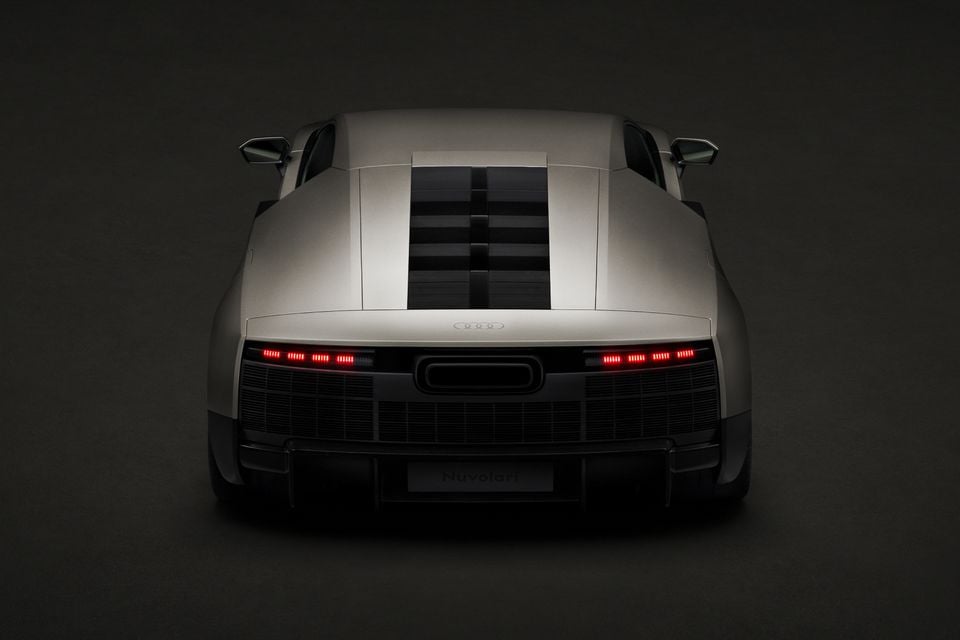
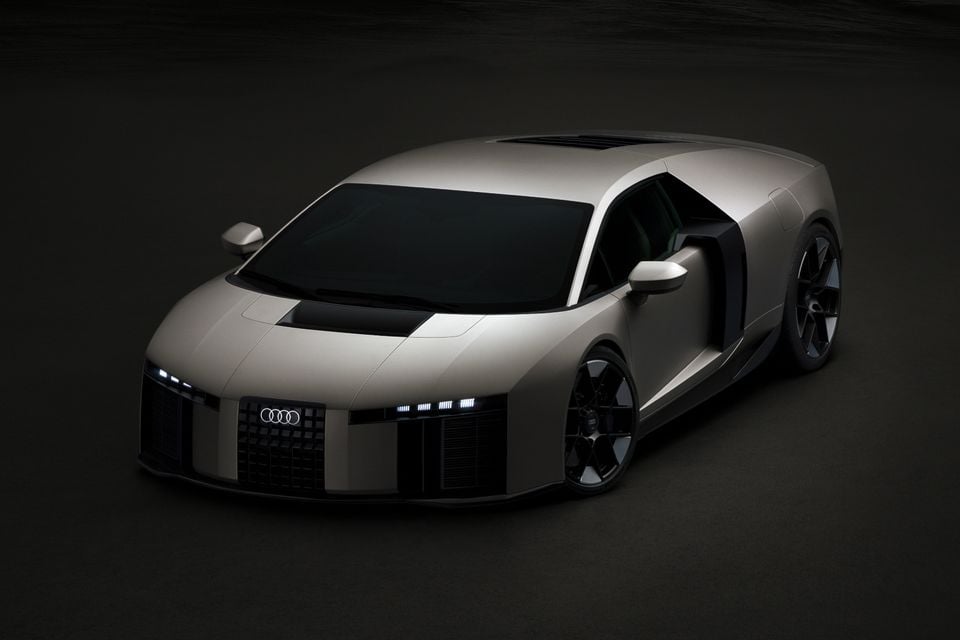
Audi's recent entry into Formula 1 has been referenced plenty of times in the Nuvolari's press materials, from the Titanium matte exterior finish that also adorns the brand's F1 race car and the recent Concept C design study, to the various carbon-fibre components in the Nuvolari's construction and active aerodynamic technologies.
Headlining the Nuvolari's spec sheet beyond its impressive performance figures is the new 'quattro predictive ride system', which uses sensor data – including steering angle, acceleration, yaw rate (rotation of the vehicle around its vertical axis) and current grip level – to inform the vehicle's variable torque distribution.
Audi says this next generation of its quattro all-wheel drive technology "ensures maximum traction and control even during severe lateral and tyre slip, on wet or snowy roads, and in changing grip conditions".
The Nuvolari also offers an array of modes to tailor the powertrain, vehicle dynamics and efficiency: E-Hybrid, Balanced, Dynamic and Dynamic+. There's also a Track Mode which opens up a range of settings for the traction control system from Wet to Dry and from Race to 'TC Off'.
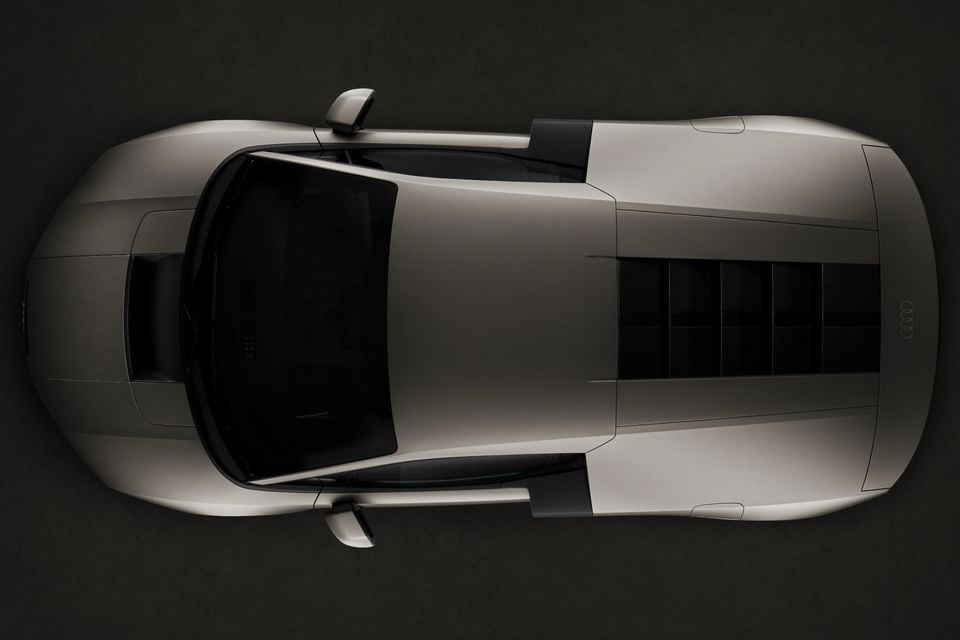
Underneath the matte-painted carbon-fibre bodywork is the latest Audi Space Frame, which aims to minimise overall weight while optimising structural strength.
Almost all of the Nuvolari's exterior components are constructed from carbon-fibre reinforced polymer (CFRP), produced in "manual layup processes that require a high level of experience, care, and craftsmanship".
Filling the wheel arches are forged centre-lock wheels that are also an Audi-first on a production-spec vehicle.
The aforementioned active aero features were developed using "targeted feedback" from Audi's Formula 1 drivers, Nico Hülkenberg and Gabriel Bortoleto.
Headlining the active aero suite is the deployable active rear wing, which "controls downforce and drag" and offers three settings: Closed, Low Downforce and High Downforce.
In performance-oriented drive modes such as Dynamic, Dynamic+ and Track, the active rear wing automatically adjusts itself according to the conditions – for example, on high-speed straights on race tracks the system will automatically drop to Low Downforce mode to optimise top speed and stability.
An F1-inspired Drag Reduction System (DRS) can also be activated manually via a dedicated steering wheel button to further lower the wing to reduce drag and increase top speed capability.
Conversely, the wing flicks up into its High Downforce position under braking and in corners to optimise downforce to improve performance and control, with Audi quoting "more than 400kg of downforce" in this position.
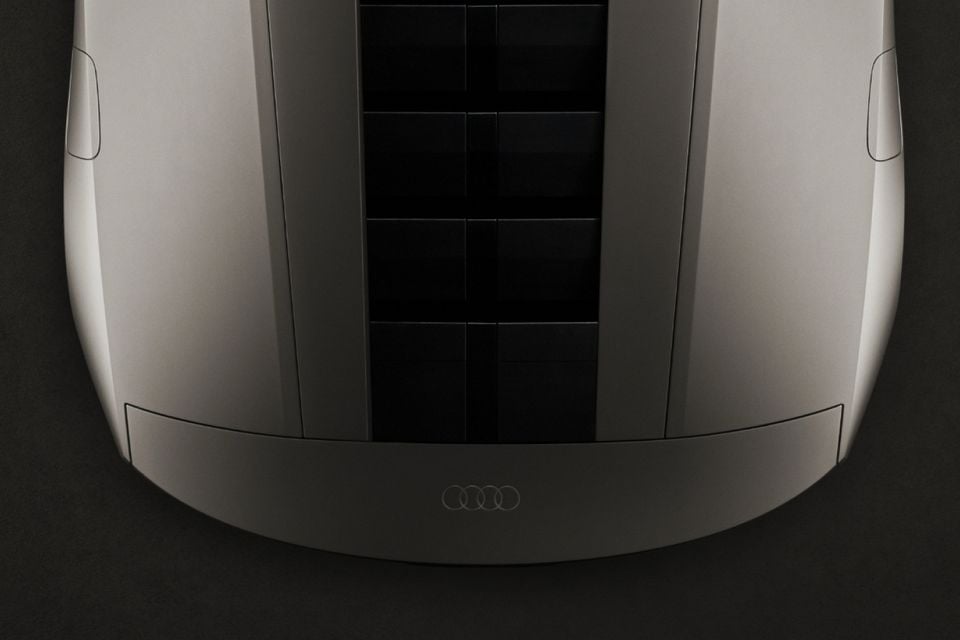
In a fun little design and engineering tidbit, Audi has integrated its four-ringed logo, fashioned in solid metal, flush into the rear wing without disturbing the aerodynamic concept.
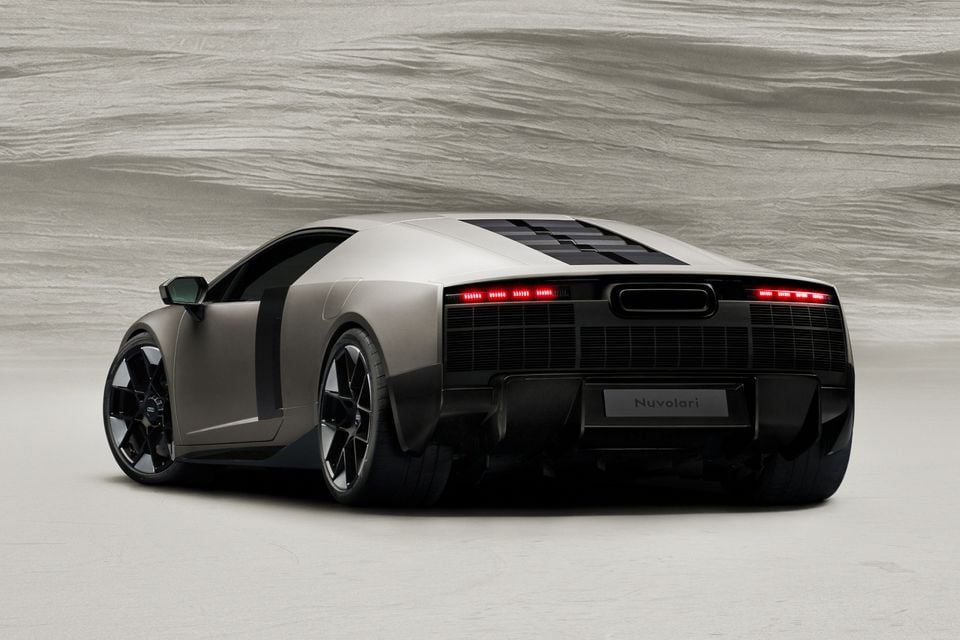
The Nuvolari's motorsports inspiration doesn't stop at the active rear wing and DRS integration either. Dynamic energy management combines regenerative braking and e-boost functions to ensure sufficient battery charge is available to maintain maximum performance or optimise efficiency and grip according to the conditions.
Electric deceleration of up to 0.3g is possible with the Nuvolari's regen braking function, with the new supercar capable of adaptive coasting and recuperation modes to "extend energy recovery to nearly all driving phases", according to Audi.
Further, the two e-motors take up a "significant portion of braking" on the front axle, while the rear axle uses coasting, partial load and traction control phases for recuperation.
Motorsport-inspired brake-by-wire technology features in Audi's new hybrid supercar, enabling variable distribution between regen and hydraulic braking. According to the company, "the brake pedal is functionally decoupled from actual braking force at the wheels to ensure a consistent and precise pedal feel".
Audi Ceramic Pro brakes debut on the Nuvolari, featuring ten-piston fixed calipers up front with 420 x 40mm discs, while the 410 x 32mm rear discs are paired to four-piston stoppers.
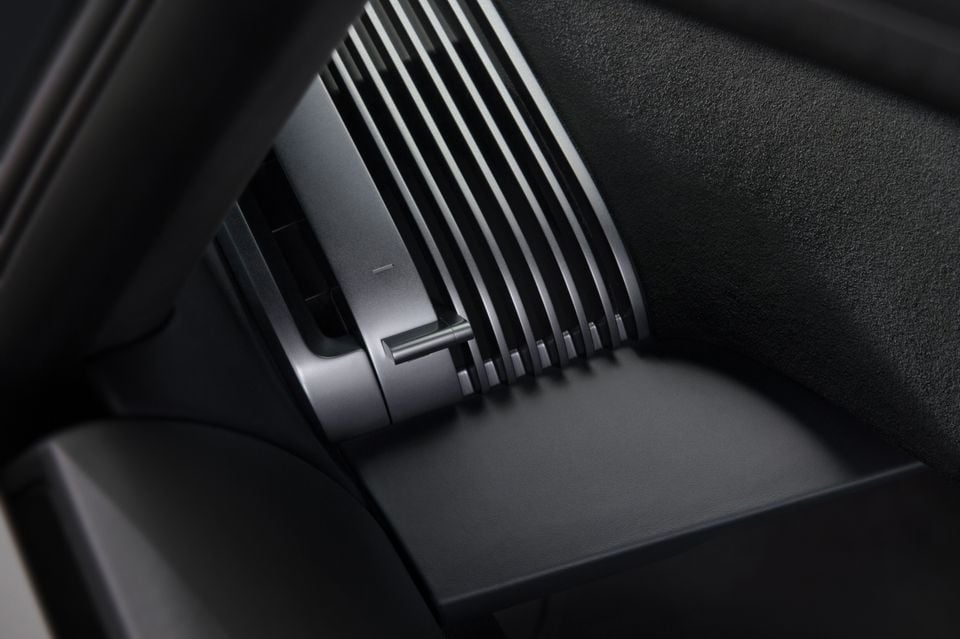
The brake disc design is claimed to have been "derived directly from Formula 1", based on a "long-fibre carbon structure designed to withstand extreme thermal loads without compromising structural integrity or consistent friction characteristics".
A specially designed internal cooling system improves airflow to the brakes and increases heat dissipation by a claimed 21 per cent compared to conventional carbon-ceramic systems.
The braking system is capable of a "significant portion of deceleration" electrically, with the hydraulic brakes saved for "higher braking demands or near the limits of vehicle dynamics".
Audi quotes an energy absorption capacity of up to 2.8 megawatts, and its "extreme deceleration loads" are on par with the company's current Formula 1 race car.
The interior of Audi's new exclusive supercar appears to draw inspiration from the minimalistic approach of the R8.
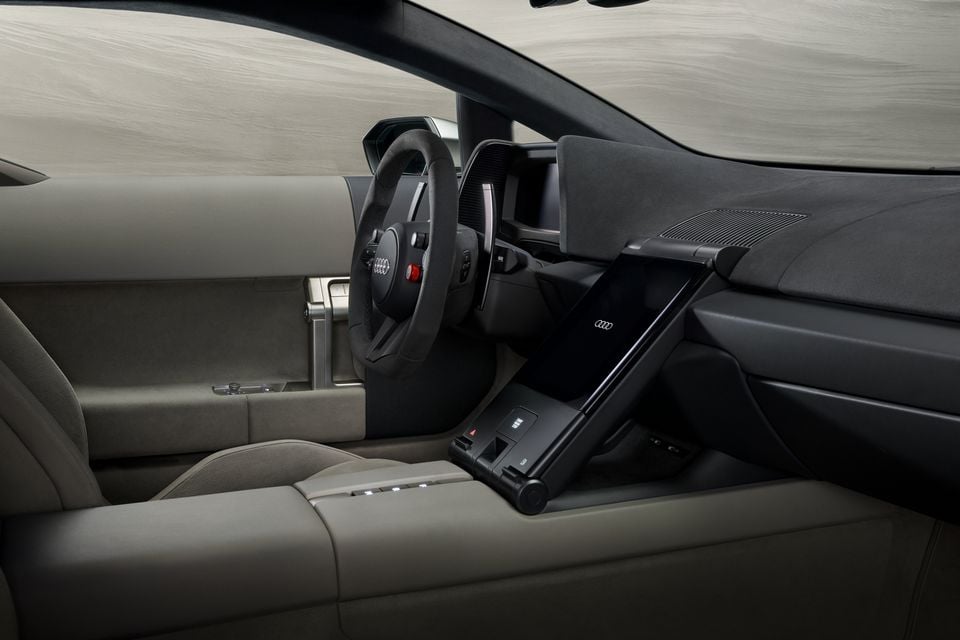
"This driver-centric approach prioritises relevant information, while secondary content remains in the background. Digital displays and physical controls follow a consistent logic, enabling natural interaction," Audi says in its media release.
Colour accents inspired by the legendary Auto Union Type C race car are integrated into the Human Machine Interface (HMI). The company says functional use of colour also plays a part in the overall interior design concept, splitting the cabin into two distinct zones.
Up front there's a deep, dark tone which has been designed to "support concentration" behind the wheel. In contrast, the rear section of the cabin introduces a new Shadow Dune tone.
The cabin is accented with the flourishes of anodised aluminium used for the interior controls, air vents, and the frame of the central infotainment display.
Finally, the lightweight seats feature a carbon-fibre construction for the seat base and backrest to further reduce weight, while providing high rigidity and lateral support.
Audi says the "ergonomic design promotes a natural seating position and enables direct feedback from both vehicle and road".
As for efficiency claims, Audi quotes preliminary specs for the European market.
The Nuvolari quotes combined fuel consumption of 11.3L/100km, with CO2 emissions rated at 270g/km – and that's with the battery's initial temperature over 28 degrees Celsius and a state of charge (SoC) above 80 per cent.
With the battery discharged, the Nuvolari quotes combined efficiency of 14.7L/100km.
Deliveries of the Audi Nuvolari will commence in the first half of 2027, with production of the company's most powerful vehicle and fastest production model ever to be capped at 499 units globally.
Naturally, CarExpert has contacted Audi Australia to see if there will be any local customers for the Nuvolari, and is awaiting a reply.
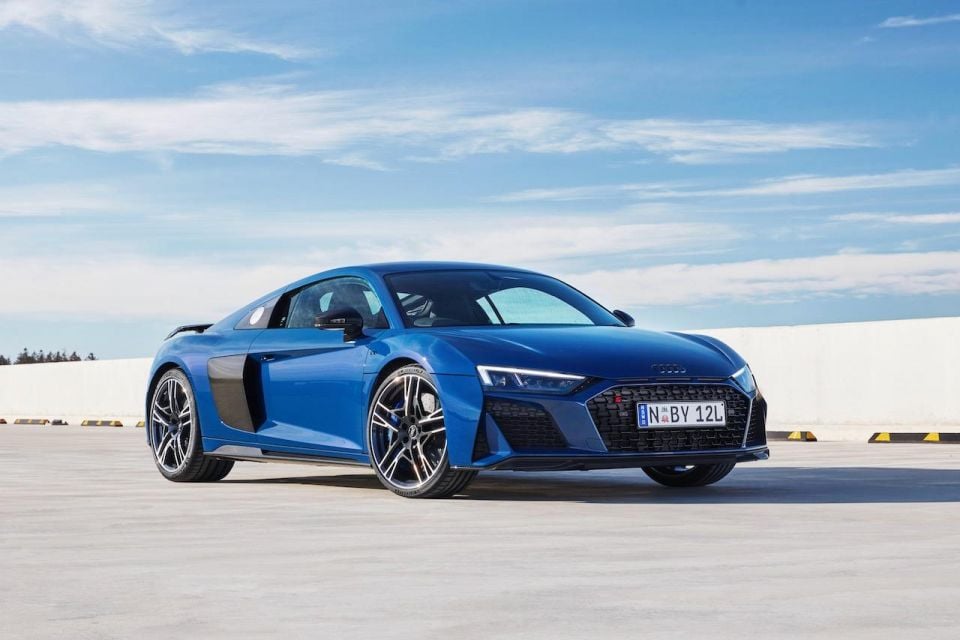
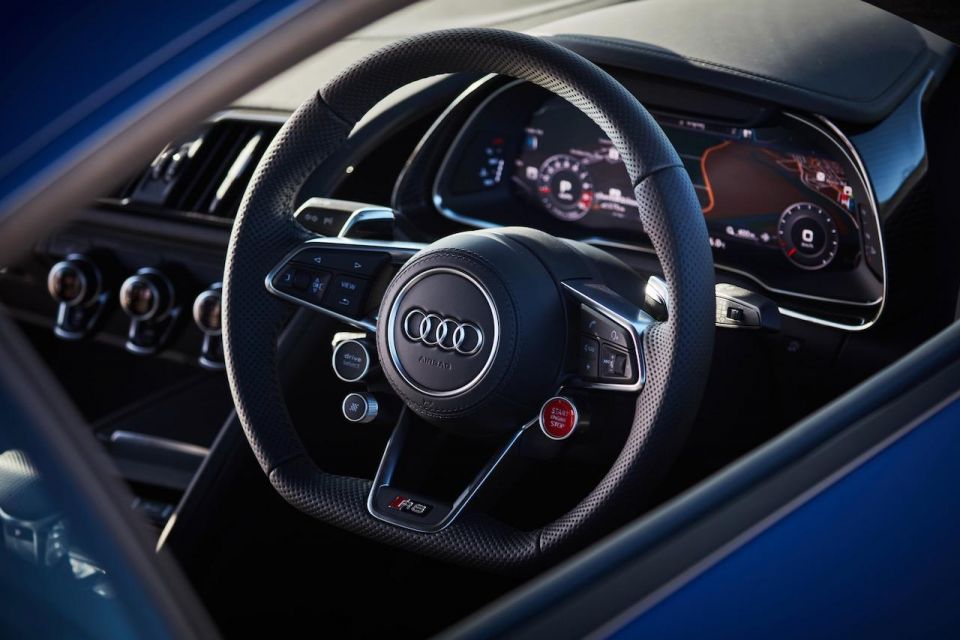
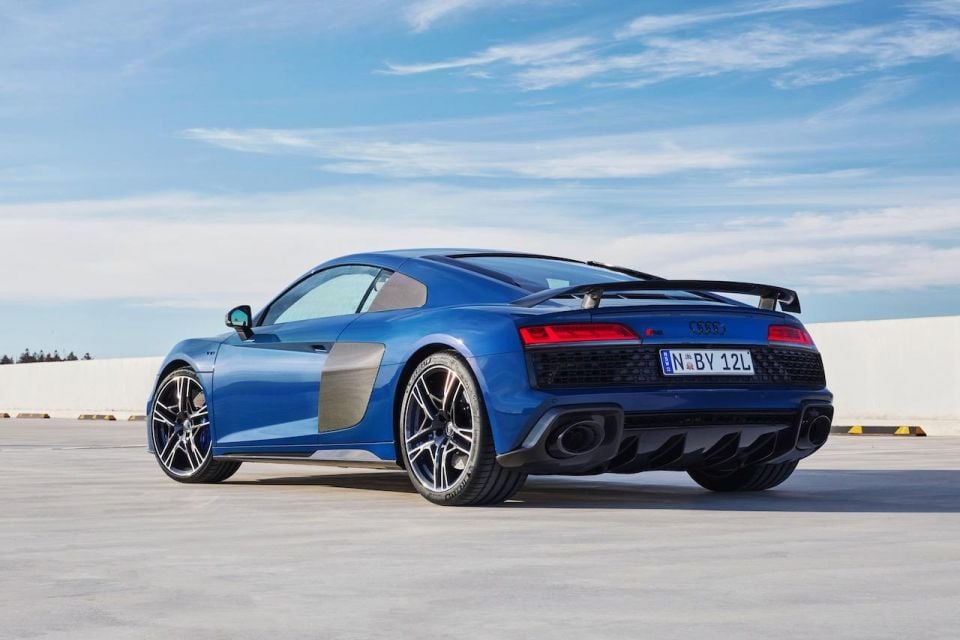
While not mentioned anywhere in Audi's media release for the Nuvolari, the brand's new supercar clearly is a spiritual successor for its previous performance halo, the Audi R8.
Two generations across an 18-year run came to an end just recently, with the final unit rolling off the production line at the Böllinger Höfe factory near Stuttgart in 2024.
Australian deliveries, however, ceased in late 2021 following the end of production for the engine tune used in Australian models.
The Audi R8 had strong genetic ties to the Lamborghini Gallardo in its first generation then the Huracan in its second, sharing its platform and V10 engines with the equivalent supercar from the Raging Bull.
Interestingly, the Nuvolari's Lambo equivalent – the Temerario – quotes a lower state of tune for its V8 plug-in hybrid system at 667kW, which breaks tradition of the Audi offering less grunt than its Bolognese brethren.
Share your thoughts on the Audi Nuvolari in the comments below
James Wong is an automotive journalist and former PR consultant, recognised among Australia’s most prolific motoring writers.
Matt Campbell
4 Hours Ago

Ben Zachariah
14 Hours Ago

William Stopford
15 Hours Ago

CarExpert
17 Hours Ago

Damion Smy
18 Hours Ago

Max Davies
18 Hours Ago
Add CarExpert as a Preferred Source on Google so your search results prioritise writing by actual experts, not AI.