




Josh Nevett
2026 Lexus RZ review: Quick drive
Huge discounts, wide-ranging upgrades and new tech suggest the updated RZ means business. Can it finally match the best electric SUVs?
7 Hours Ago
The Cadillac Optiq EV offers style and features galore, but it doesn't measure up against rivals when it comes to range and charging speed.
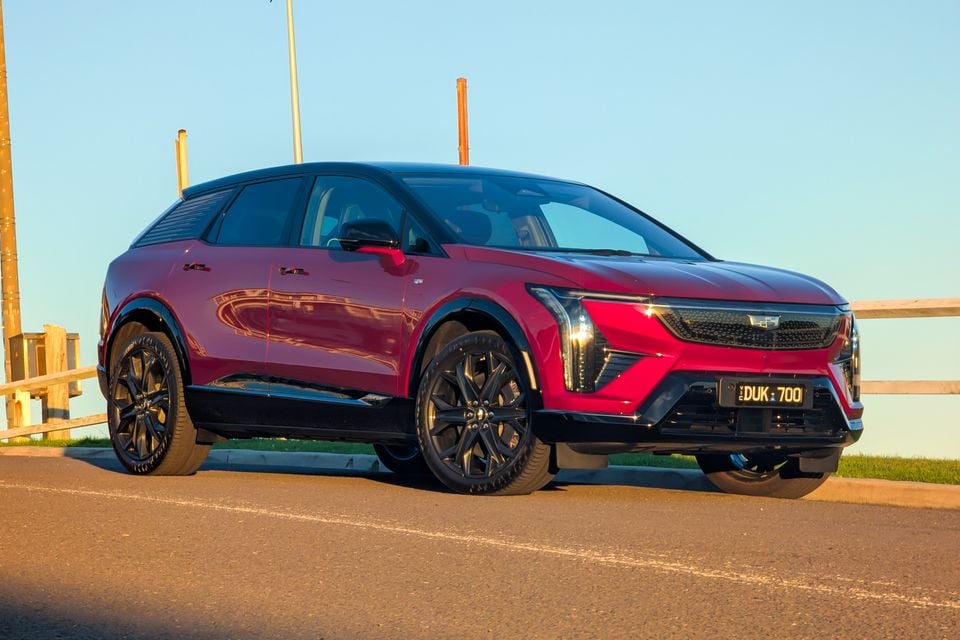
Cadillac is General Motors’ luxury brand, and yet its models are the most affordable the American giant offers in Australia. And this, the Cadillac Optiq, is the most affordable of the lot.
Priced at $80,000 before on-road costs, the mid-size electric SUV comes in a single specification with a single powertrain and no options beyond interior and exterior colours.
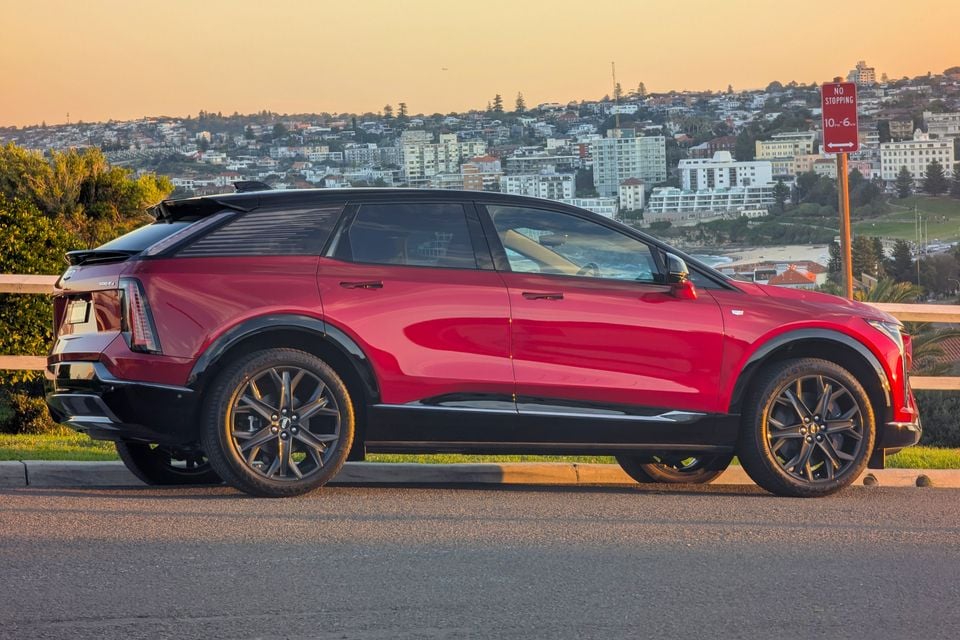
GM calls it the ‘baby Caddy’ and counts the Volvo EX40 among its competitors, but the Optiq is hardly small – at 4820mm long, it’s 28mm longer than the Tesla Model Y and has a 64mm longer wheelbase.
However, it gives the Cadillac brand – which only commenced local deliveries early in 2025 with the larger Lyriq – a new entry point.
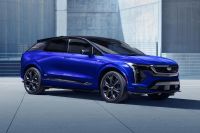
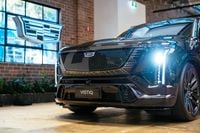
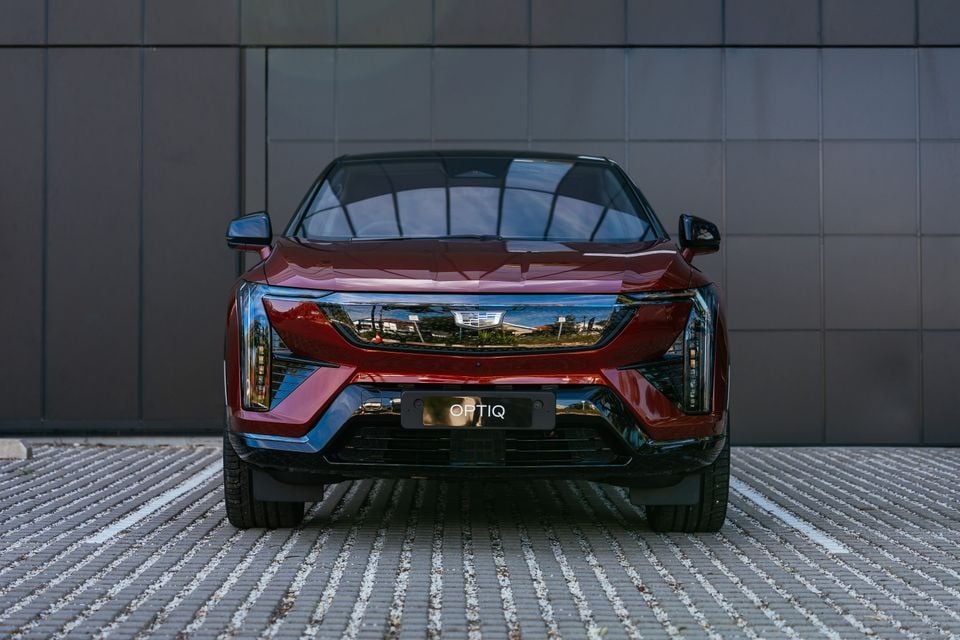
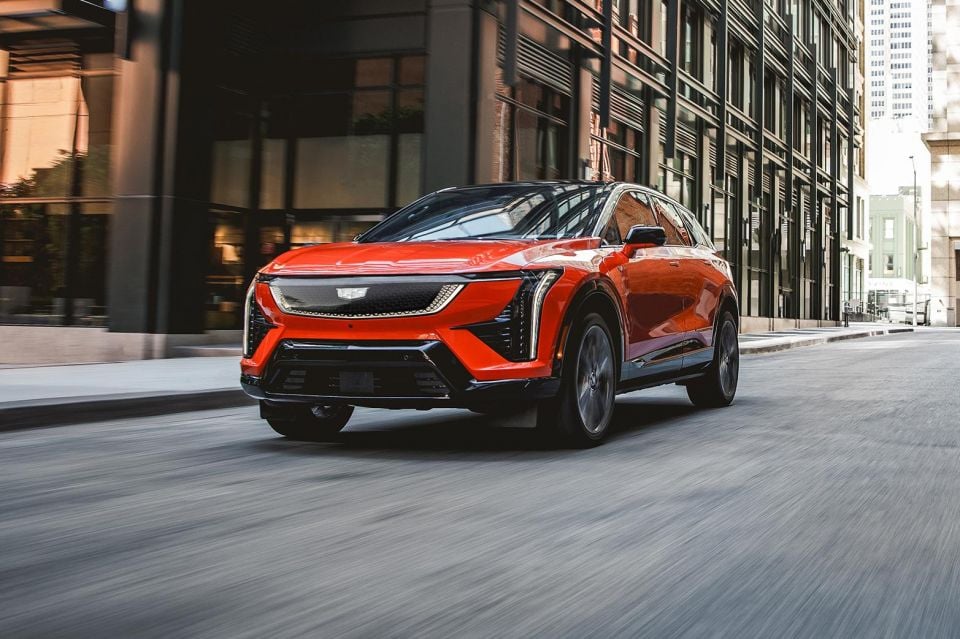
While some European brands have been known to follow a nesting doll design strategy across their lineups, the Optiq has its own unique look and yet is instantly recognisable as a relative to the larger Lyriq and Vistiq electric SUVs.
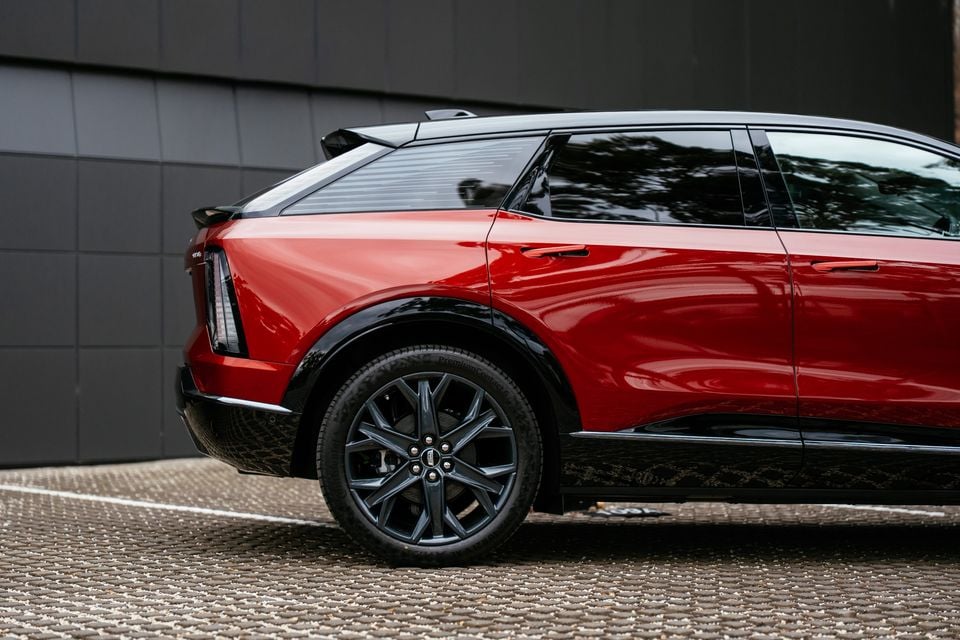
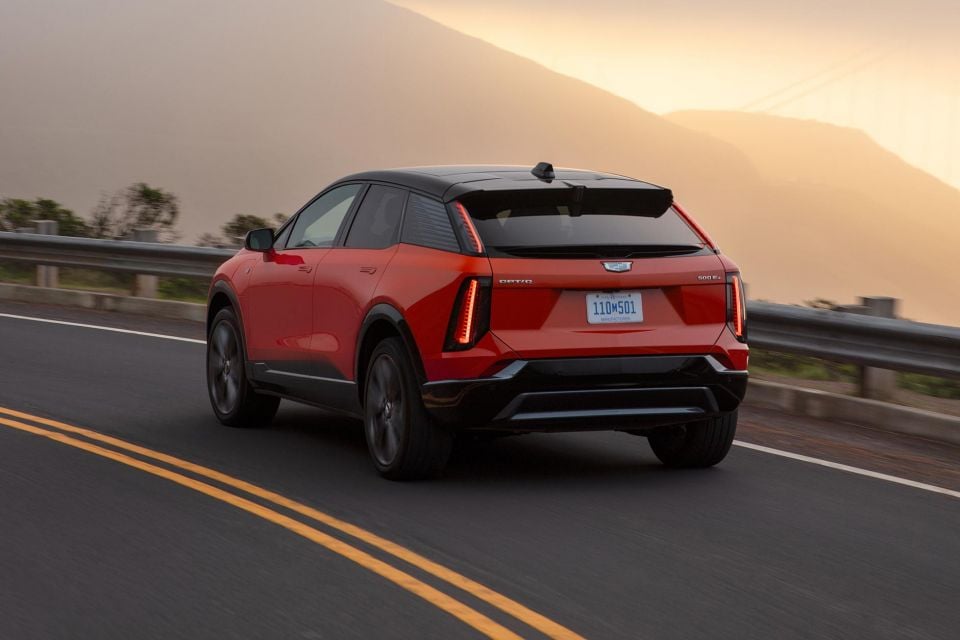
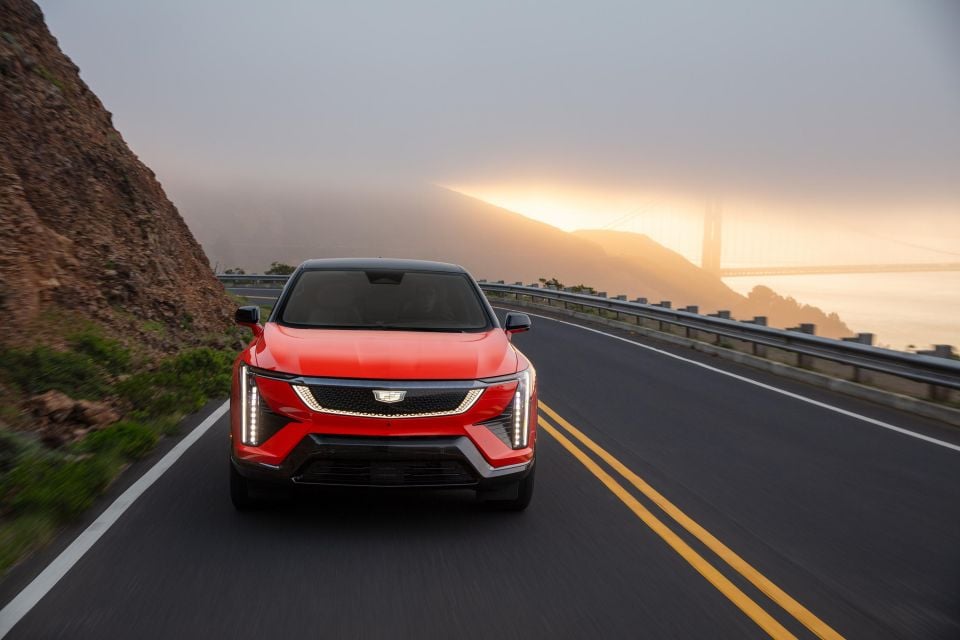
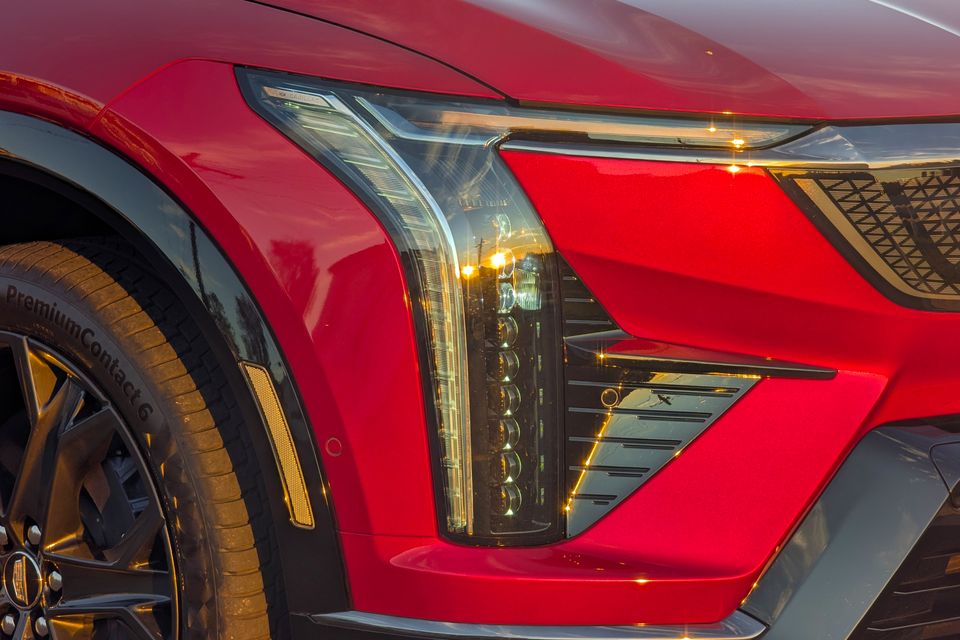
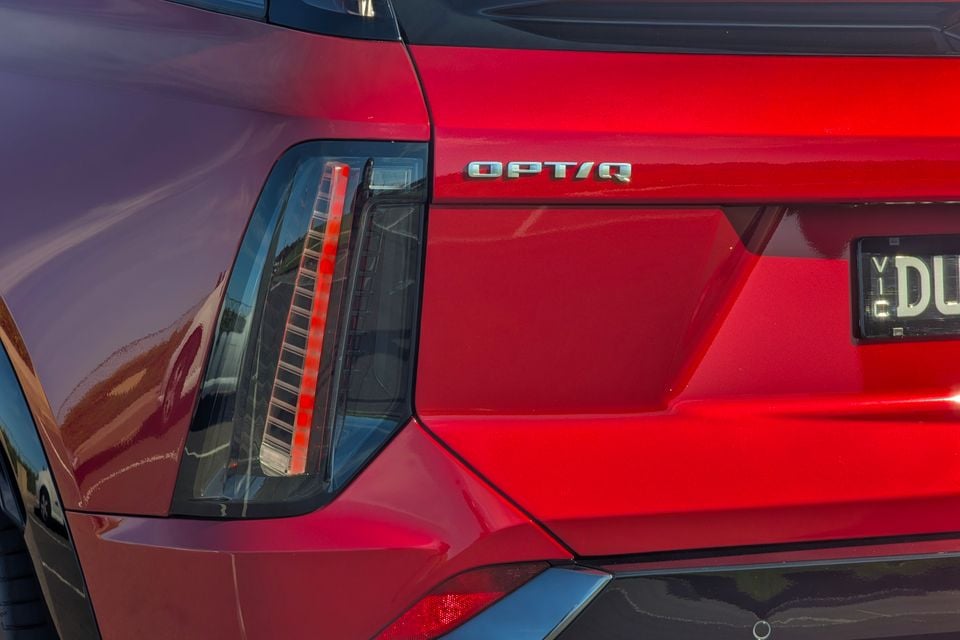
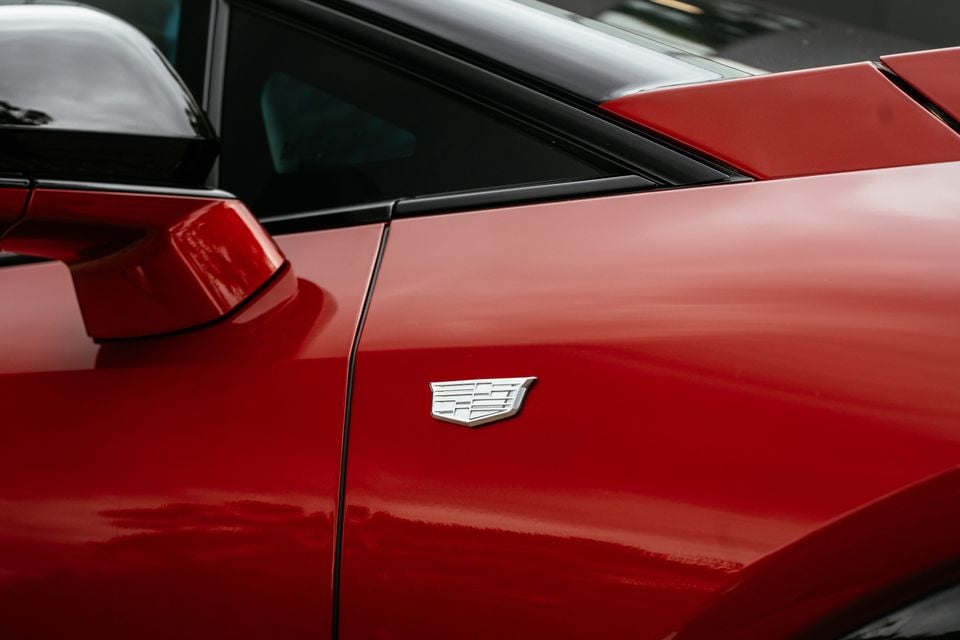
The prominent vertically oriented LED daytime running lights are a Cadillac hallmark, while the split-level rear lighting ties it in neatly with the Lyriq and Vistiq. But there’s a very different belt line to its siblings, and a silhouette that’s a bit softer overall.
The 2026 Cadillac Optiq Sport is priced at $80,000 before on-road costs, which makes it $10,000 cheaper than the repositioned Cadillac Lyriq Sport and Lyriq Luxury that retail for $90,000 before on-roads. Customer deliveries will begin in the third quarter (July to September) of 2026.
| Model | Price before on-road costs |
|---|---|
| 2026 Cadillac Optiq Sport | $80,000 |
The Optiq’s chief engineer, John Cockburn, says the mid-size electric SUV has been developed to rival predominantly European models, citing the smaller Audi Q4 e-tron (priced from $84,900 before on-roads in Australia) and Volvo EX40 (from $69,990 plus on-roads), as well as the incoming Volvo EX60 (from $86,990 plus on-roads).
We’d throw a few more rivals in the mix based on the Optiq’s size and positioning. There’s the hot-selling Zeekr 7X, priced from $57,900 plus on-roads; the Polestar 4, priced from $78,500 plus on-roads; and the newly repositioned Lexus RZ range which opens at $84,500 plus on-roads.
There’s no shortage of mid-size electric SUVs from both traditional luxury brands and other players alike, so the Optiq really needs to stand out.
To see how the Cadillac Optiq lines up against the competition, check out our comparison tool
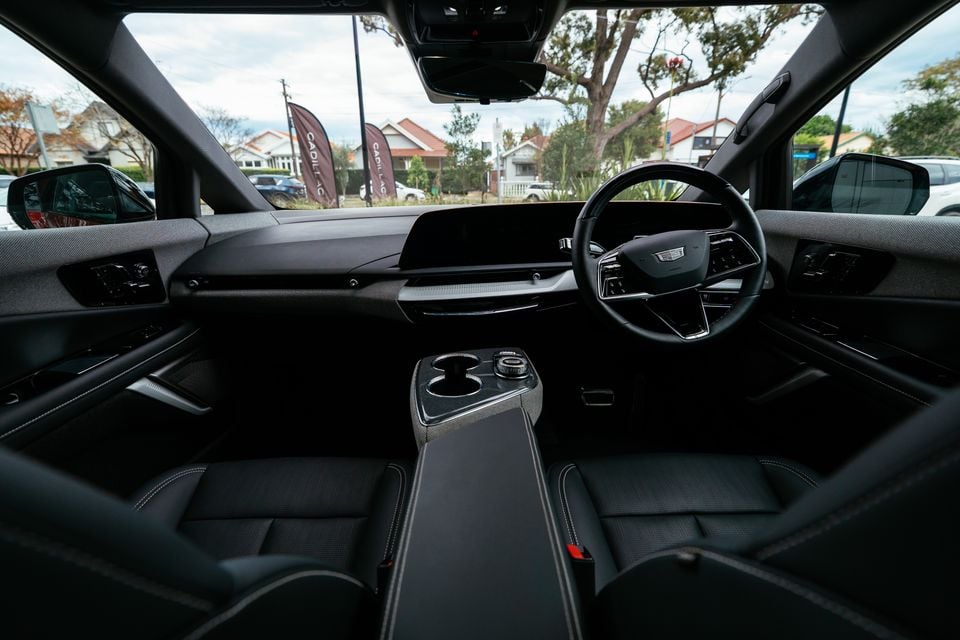
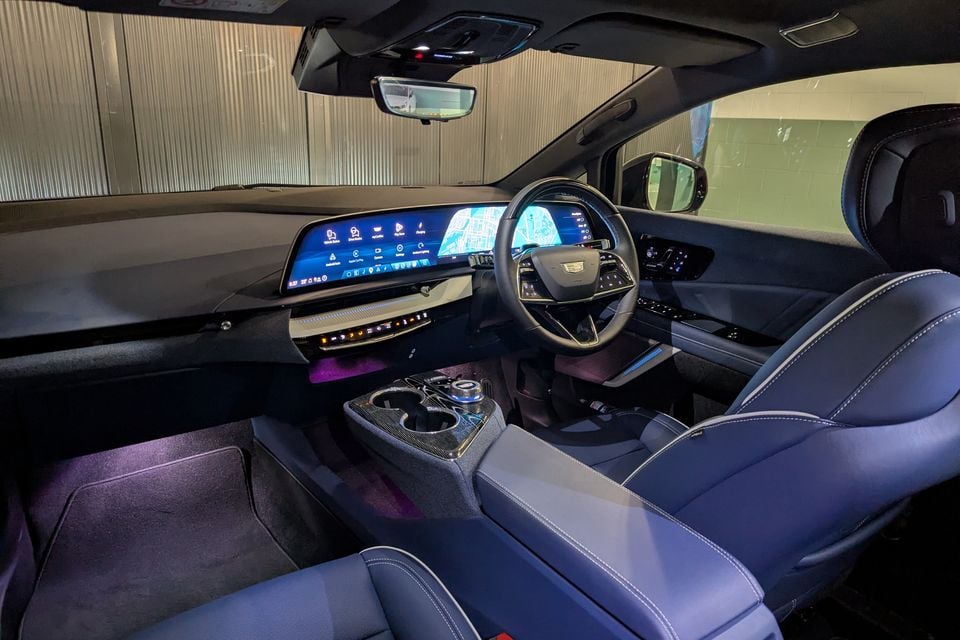
Where the Optiq impresses most is inside its cabin. This is an interior that looks distinctive and premium, and yet it has an eco-friendly bent thanks to its use of recycled materials.
We test drove an example with the available Phantom Blue interior which may not be to everyone’s tastes, but which has serious visual impact. Effectively every surface is finished in blue, from the dashboard to the seats and the doors.
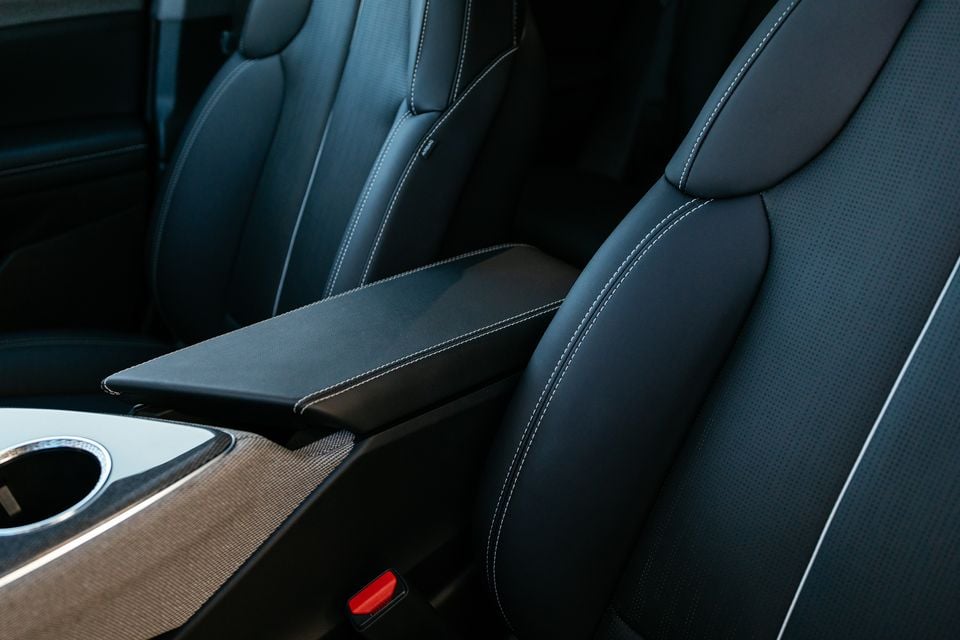
There’s blue Inteluxe (leatherette) upholstery on the seats and blue Collection fabric (100 per cent recycled polyethylene) on the dashboard and the doors.
Breaking up the sea of blue are white inserts on the dashboard and doors with ambient backlighting, and glossy black PaperWood veneer made of equal parts tulip wood and recycled newspaper – look closely and you can even see the news print.
It’s not the only distinctive interior option in the Optiq, which can also be had in Sky Cool Grey with lurid Santorini Blue inserts on the dashboard, centre console and doors, or with a more traditional Noir (black) interior.
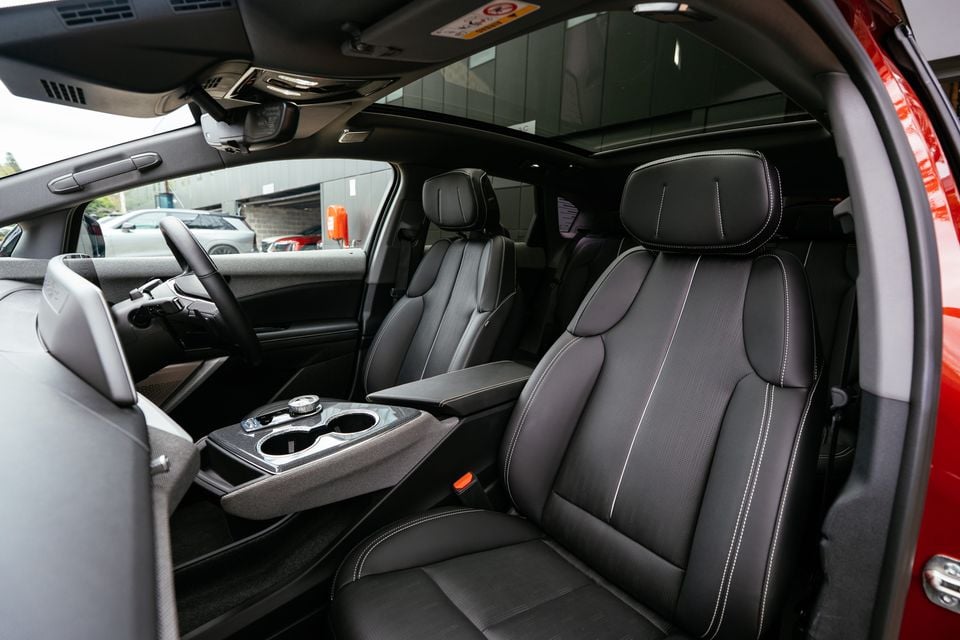
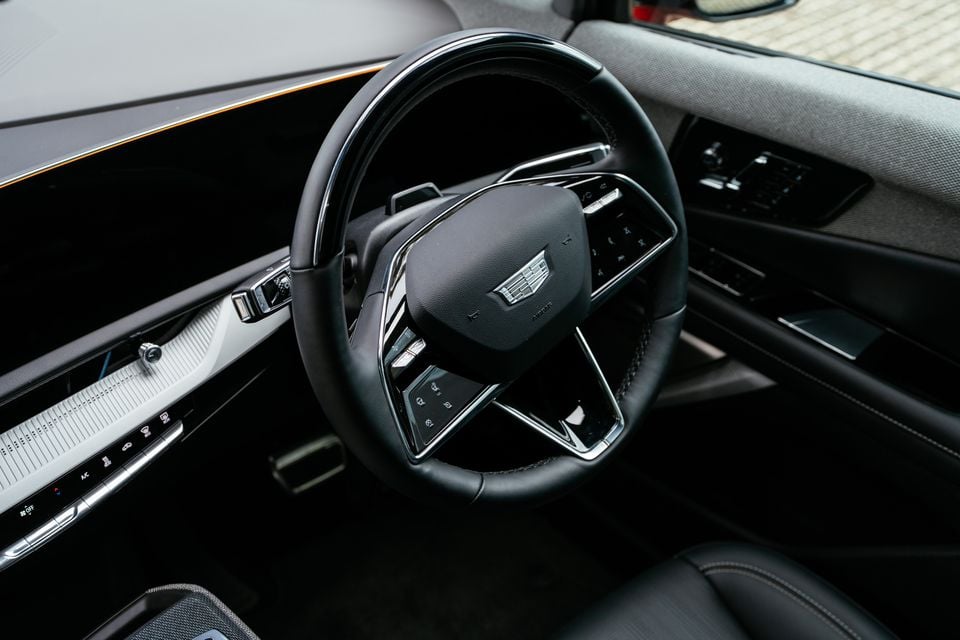
All use Collection fabric inserts and Inteluxe upholstery, with recycled material also used for the lining of the door pockets and centre console tray. Subtle colour-adjustable ambient lighting glows from the dashboard and doors, and soft-touch trim is used for all bar the lowest reaches of the dash and doors.
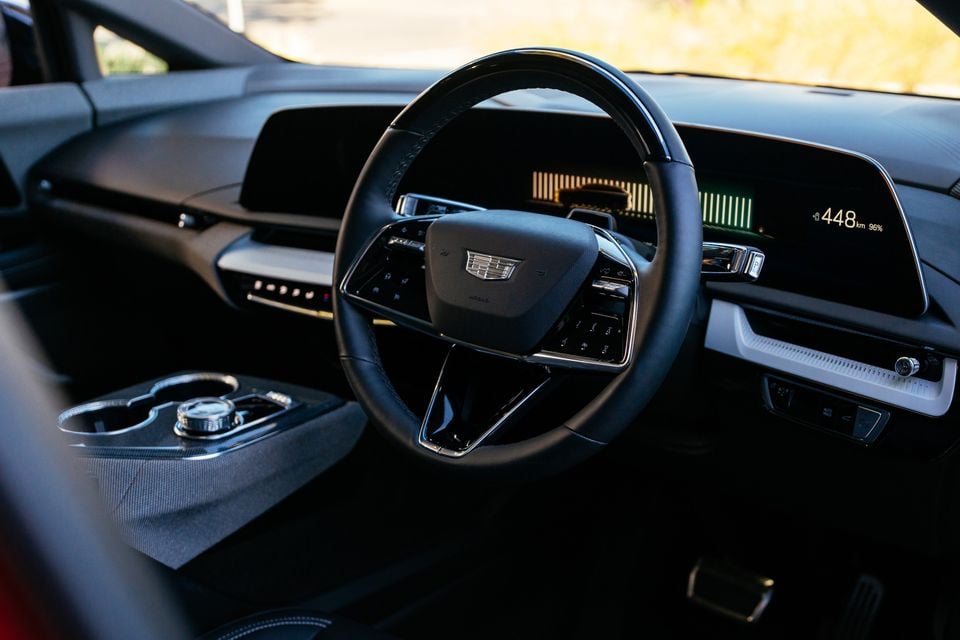
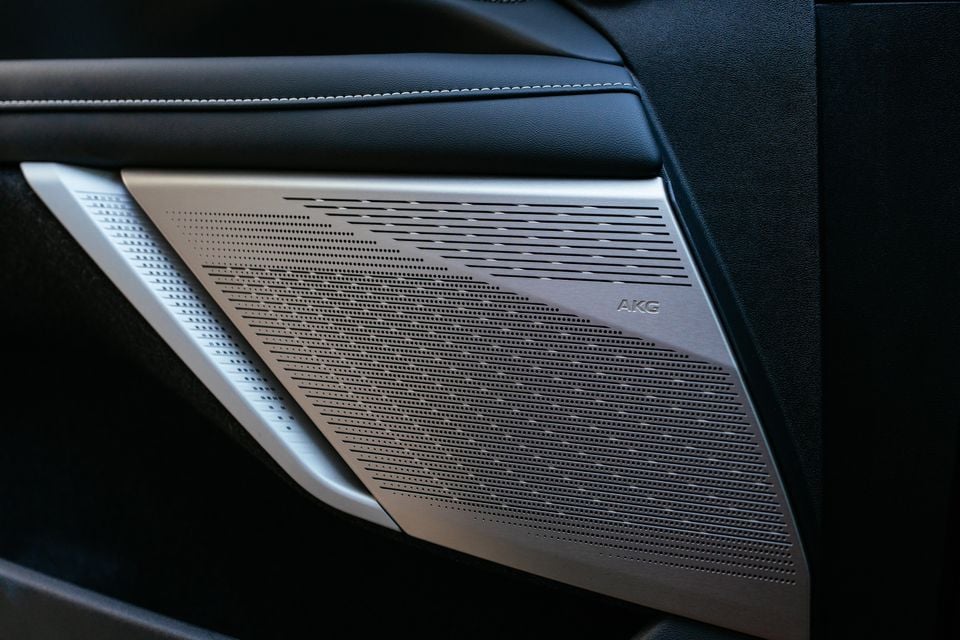
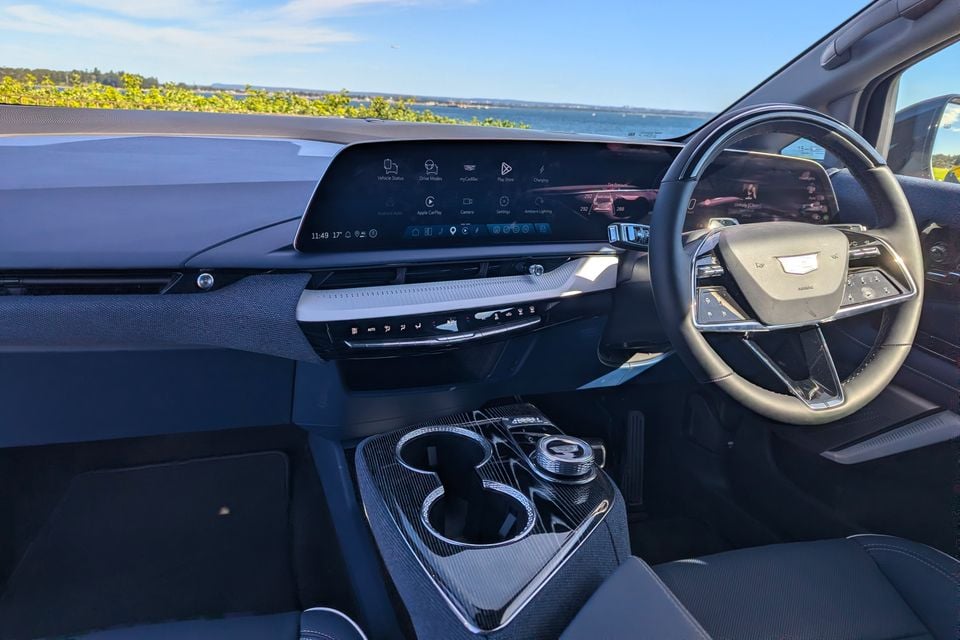
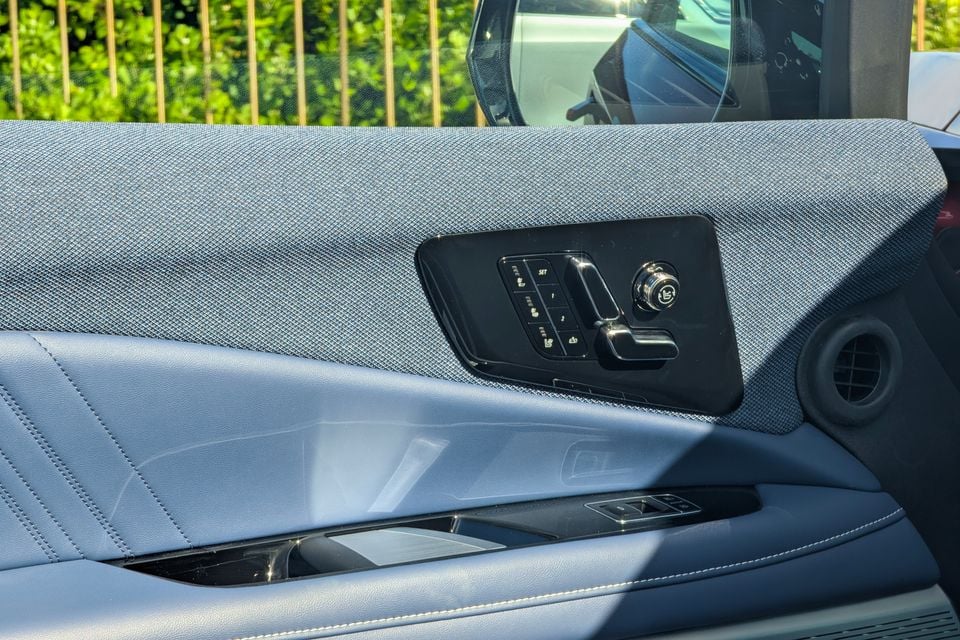
You’re not short-changed if you step down from a Lyriq to an Optiq, with the smaller electric SUV featuring the same expansive 33-inch display, excellent 19-speaker AKG Studio sound system with Dolby Atmos, and common switchgear like the physical climate controls and the Mercedes-Benz-like seat controls on the doors. Like the exterior, though, the Optiq has its own unique look.
The 33-inch display seamlessly integrates a central touchscreen, a digital instrument cluster, and another, smaller touchscreen to the right of the steering wheel which contains items like the trip computer and headlight controls.
You can toggle between different views for the instrument display, including a full-screen map view.
Cadillac has wisely made wireless Apple CarPlay and Android Auto available in markets like ours, but you still get Google Built-in with embedded apps such as the Google Assistant, as well as Google Maps which will display how much battery you’ll have at your destination before you set off.
There’s also Cadillac Connected Services, which allows you to use a smartphone app to control functions like the vehicle’s locks. You get eight years of complimentary access.
Disappointingly, there’s no head-up display as there is in left-hand drive markets, a baffling omission given GM was a pioneer of automotive head-up displays and offers the technology in various Chevrolets in Australia.
Instead, you only get GM's usual forward collision warning lights at the base of the windscreen. These warning lights work in conjunction with a driver’s seat vibration warning function, which is also activated by other safety systems in the vehicle. It’s a polarising feature of GM’s that’s been around for several years, and either you don’t mind it or you feel violated.
The steering wheel looks and feels lovely, though the black switches show smudges almost immediately. Fortunately, there’s little in the way of gloss-black trim in the cabin.
We didn’t observe any build quality issues with the Optiq, which was free of any squeaks or rattles, though the doors don’t close with as solid a thunk as the best of the European or Japanese competition and the stalks – while nicer than those in a pricier Corvette – could be better damped.
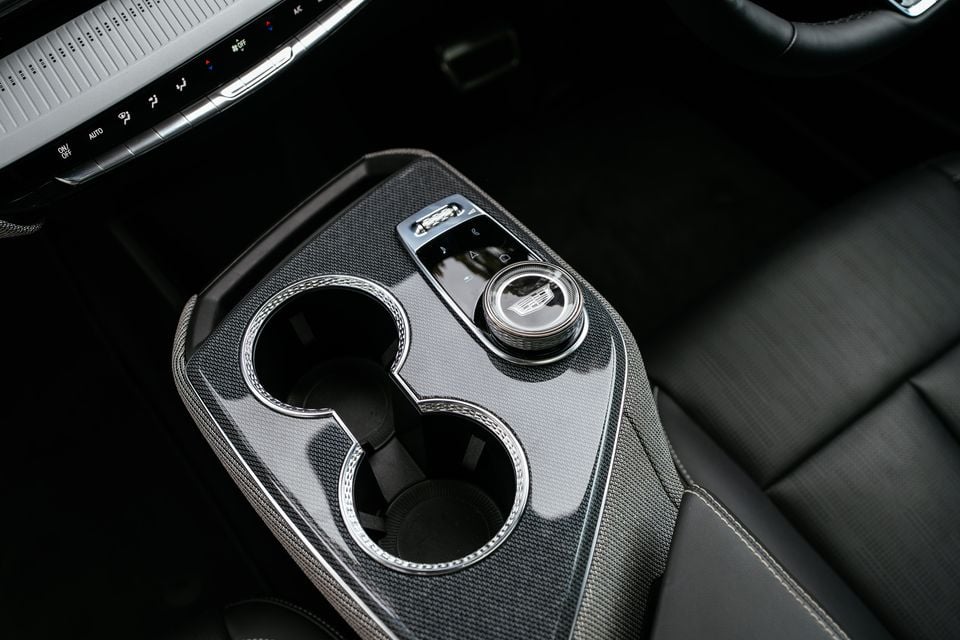
Storage is for the most part good. There’s a centre console tray large enough to fit a handbag or two, pockets in the doors that can accommodate large water bottles, and an open but lined centre console compartment that’s gently illuminated at night.
Alas, the centre console bin is fairly shallow, and the glove compartment is adequately sized but foolishly can only be opened via the touchscreen. A pocket-like wireless phone charger sits ahead of the centre armrest.
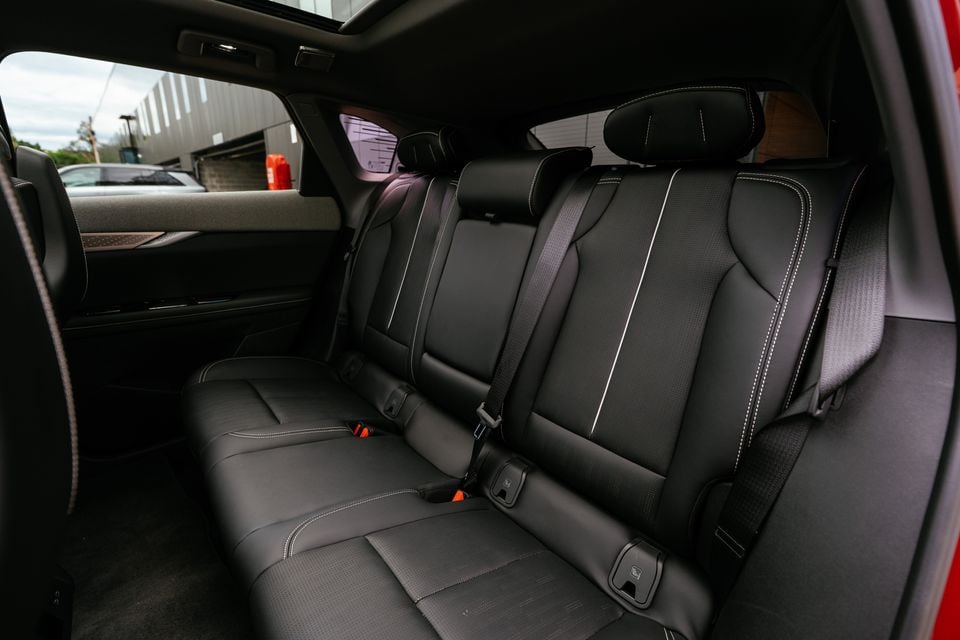
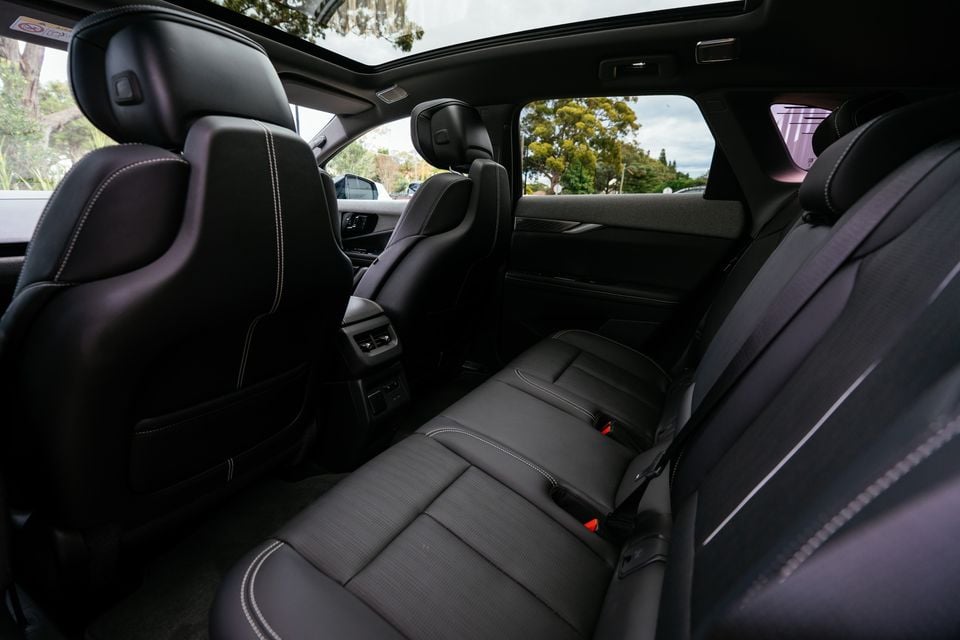
The rear bench is comfortable and features heating for the outboard positions, and legroom and kneeroom are superb thanks to the long wheelbase and almost entirely flat floor. The centre occupant’s space is impeded somewhat, however, by a centre console that juts out quite a bit but which includes a pair of USB-C outlets, a small and open storage cubby, and air vents.
Taller passengers may find headroom a bit restrictive in the rear, as at 180cm I found my hair brushing the headliner when I sat upright. Unlike the larger Lyriq and Vistiq, the panoramic roof is a fixed-glass unit and doesn’t open, though it does bathe both rows of seating in light and has a thick power sunshade if it’s too sunny.
Rear quarter windows hidden behind the brand’s ‘Mondrian’ pattern also help give rear passengers a better view out of the car.
The steeply raked tailgate and narrow rear window impedes visibility out the rear, but Cadillac has fitted a standard digital rear-view mirror. This works well in conjunction with the surround-view camera system which offers clear if not class-leading footage.
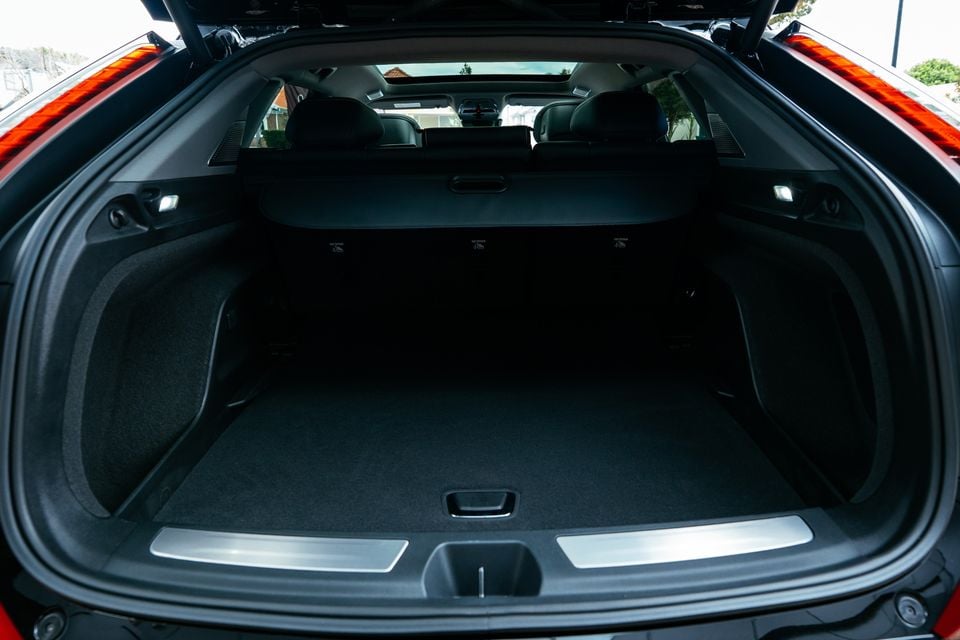
That same steeply raked tailgate eats into luggage space somewhat, so while you’ll easily fit a large suitcase and a large duffel bag, you’re limited in how much you can stack vertically back here. There’s a cargo cover plus some under-floor storage, though as with most EVs there’s no spare tyre.
| Dimensions | Cadillac Optiq |
|---|---|
| Length | 4820mm |
| Width | 1912mm (2126mm incl. mirrors) |
| Height | 1644mm |
| Wheelbase | 2954mm |
| Cargo capacity | 744L (rear seats up) 1603L (rear seats folded) |
To see how the Cadillac Optiq lines up against the competition, check out our comparison tool
The Optiq is launching here in model year 2025 (MY25) guise, but an upgraded MY26 vehicle has been launched in the US with a significantly different powertrain lineup. This comprises a new entry-level single-motor rear-wheel drive powertrain with more power (232kW vs 224kW) and almost as much torque (450Nm vs 480Nm) as the dual-motor all-wheel drive variant launching here.
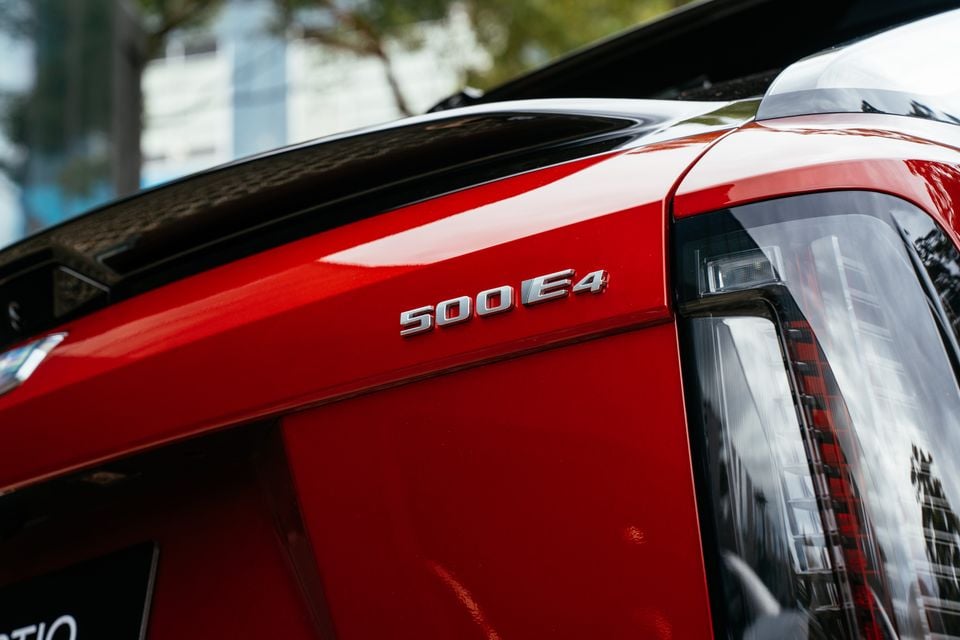
| Specifications | Cadillac Optiq |
|---|---|
| Drivetrain | Dual-motor electric |
| Battery | 75kWh nickel manganese cobalt (NMC) |
| Power | 224kW |
| Torque | 480Nm |
| Drive type | All-wheel drive |
| Energy consumption (claimed) | 19.9kWh/100km (WLTP) |
Energy consumption (as tested) | 17.9kWh/100km |
| Claimed range | 425km (WLTP) |
| Max AC charge rate | 22.1kW |
| Max DC charge rate | 110kW |
The US-spec AWD variant has received massive bumps in power and torque, to 328kW and 675Nm respectively, with the even hotter Optiq-V – ruled out for Australia – packing 387kW and 880Nm.
While the US-market MY26 Optiq sticks with a 85kWh nickel manganese cobalt (NMC) battery with 150kW DC fast-charging, the Australian-market Optiq has a smaller 75kWh NMC pack with 110kW DC charging.
In our limited drive of the Optiq, restricted to urban Sydney, we saw energy consumption of around 17.9kWh/100km. The official claim is 19.9kWh/100km, which is quite high compared to some other mid-size electric SUVs.
Its 425km of WLTP range and 110kW maximum DC charge rate are disappointing figures for 2026.
The end result is a vehicle that won’t go as far between charges as its rivals, will use more energy along the way, and will take longer to recharge.
Take a Polestar 4, for example. In both 200kW/343Nm single-motor rear-wheel drive and 400kW/686Nm dual-motor all-wheel drive variants, it has a larger 94kWh NMC battery with more range (620km and 590km respectively) and a higher 200kW DC charge rate.
Indeed, the Optiq takes the wooden spoon among mid-size electric SUVs from luxury brands in Australia when it comes to DC charge rate and WLTP range.
If you'll predominantly charge your Optiq at home, however, its 22kW AC charge rate is among the best in this class.
To see how the Cadillac Optiq lines up against the competition, check out our comparison tool
I drove a US-market Optiq last year, also in Sport trim with 21-inch alloy wheels, and found its ride comfort to be impressive over some gnarly, scarred Illinois roads.
Unlike many of its rivals, there are no adaptive dampers – these are exclusive to the Optiq-V – with the Optiq instead featuring Cadillac's Passive Plus dampers which feature an extra valve.
While the Optiq’s chief engineer says testing was conducted in Australia, the Australian-market Optiq uses the same suspension tune as the European-market model, and it does feel on the firmer side.
For a mid-size electric SUV, it’s still decently comfortable and we’d stop short of calling it stiff. But for something from a luxury brand, particularly Cadillac, it doesn’t have the level of plushness that would be ideal.
Driving it back-to-back with a Lyriq in urban Sydney, the Optiq has a similar feel in the way it soaks up urban pavement. We know Cadillac was benchmarking German rivals with the Optiq, but a plusher ride could have given it an even more unique feel in this segment.
The cabin is wonderfully hushed thanks to the standard Active Noise Cancellation, with just a slight whine from the electric motor, so in this respect it does offer a luxurious feel.
The Optiq does feel more nimble than the larger Lyriq, owing to a tare weight of 300kg less and a smaller external footprint. Leave the vehicle in Tour mode and the steering is relatively light without feeling vague, and the Optiq was comfortable to pilot around some winding Sydney roads – it’s not the quickest rack, but the ‘baby Caddy’ doesn’t feel cumbersome. We'll need more than a couple of bends to fully assess the Optiq's handling, however.
Sport adds some more weight to the steering and more spring to the Optiq’s step. There’s also a Snow/ice mode and a customisable My Mode, but toggling drive modes is fiddly on the fly – you have to do this via the touchscreen, and there’s no shortcut button anchored to the bottom. There’s also no shortcut for the cameras, which is frustrating.
Unlike current stock of the Lyriq in Australia, there’s lane-centring in addition to the standard lane-keep assist and adaptive cruise control. On our limited stretch of higher-speed driving, we found it assertive yet consistent, and it never felt nervous.
Alas, there’s still no Super Cruise hands-free driving technology like in the US, which worked to great effect in the Optiq we drove there.
The Optiq isn’t tuned to give you neck-snapping acceleration theatrics, and instead drive is delivered smoothly to the wheels. That means it doesn’t feel exceptionally quick, though the fact it still has a claimed 0-100km/h time of 6.3 seconds shows just how spoiled we’ve gotten by ultra-fast EVs.
There are levels of regenerative braking all the way up to a genuine one-pedal drive mode, which can be easily activated via a shortcut at the base of the touchscreen. Cadillac has also included its Regen On Demand paddle, which sits behind the steering wheel and can be squeezed to slow the vehicle.
It sounds like a silly gimmick, but you’d be surprised how quickly you get used to using it and how natural it feels.
To see how the Cadillac Optiq lines up against the competition, check out our comparison tool
There's just one trim level in the local Optiq lineup, called the Sport.
2026 Cadillac Optiq equipment highlights:
To see how the Cadillac Optiq lines up against the competition, check out our comparison tool
The Cadillac Optiq has yet to be rated by ANCAP, but sister authority Euro NCAP gave it a five-star rating in 2025.
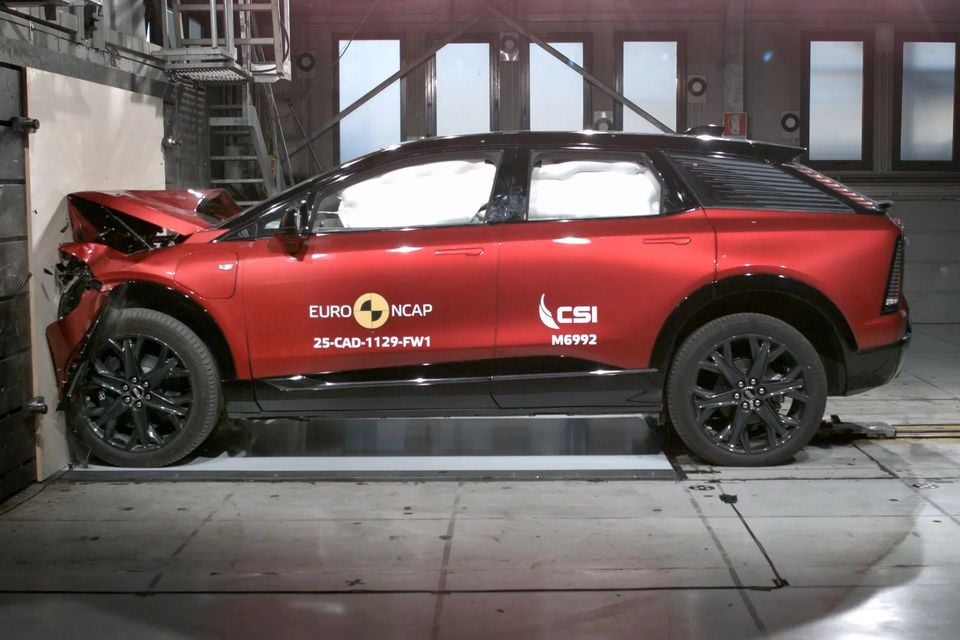
| Category | Cadillac Optiq |
|---|---|
| Adult occupant protection | 83 per cent |
| Child occupant protection | 81 per cent |
| Vulnerable road user protection | 76 per cent |
| Safety assist | 74 per cent |
Standard safety equipment includes:
To see how the Cadillac Optiq lines up against the competition, check out our comparison tool
While the larger Lyriq is offered with five years of complimentary scheduled servicing, Cadillac has yet to confirm what the servicing arrangement will be for the Optiq.
| Servicing and Warranty | Cadillac Optiq |
|---|---|
| Warranty | 5 years, unlimited kilometres – vehicle |
| Roadside assistance | 5 years |
| Service intervals | 12 months/12,000km |
"Service pricing for the Cadillac Optiq and Vistiq in Australia will be announced in the coming months as we progress our planned dealer expansion, including new franchised locations in Melbourne and Brisbane," said GM Australia and New Zealand managing director Jess Bala in a statement.
Cadillac currently has just one factory-owned 'experience centre' in Australia, located in Sydney, but is planning to expand its network with franchise partners.
To see how the Cadillac Optiq lines up against the competition, check out our comparison tool
Of all of Cadillac’s models in Australia, it’s the Optiq that has the biggest uphill battle.
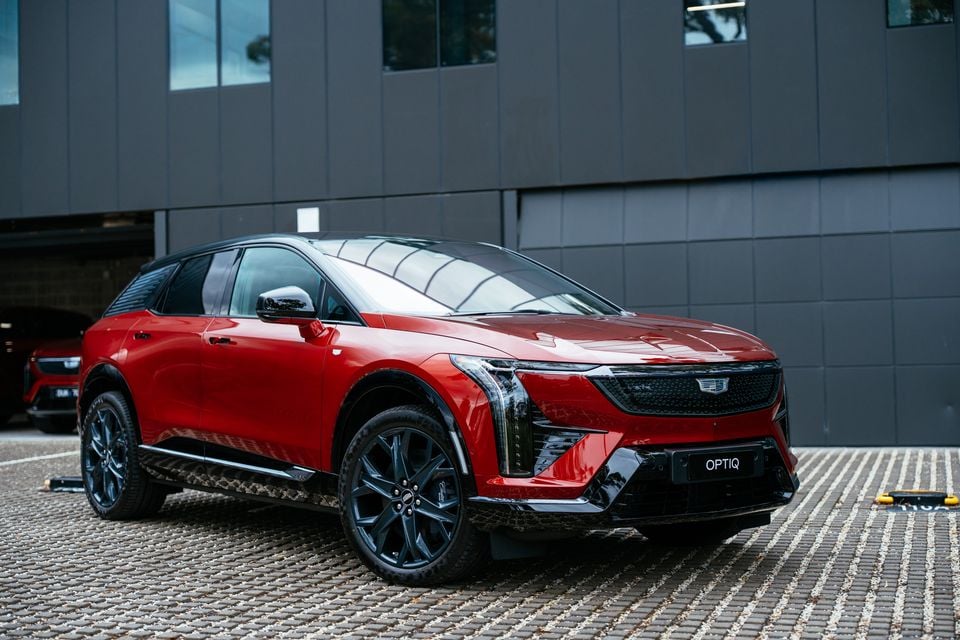
The larger Lyriq competes in a smaller segment, and the even larger Vistiq competes in a smaller one still. The Optiq, however, is yet another mid-size electric SUV in a market teeming with them.
It brings its own unique style to the segment, particularly with its distinctive and nicely appointed cabin. There’s also a long list of features, albeit disappointingly no head-up display.
Even more disappointing is the slow charging and the so-so range, and the fact we’re getting last year’s model when the US market gets an even more powerful dual-motor all-wheel drive powertrain in addition to the faster charging already offered there.
But in addition to the threat posed by established rivals from Audi, Volvo and the like, let alone newcomers like Zeekr, it has competition from within its own showroom.
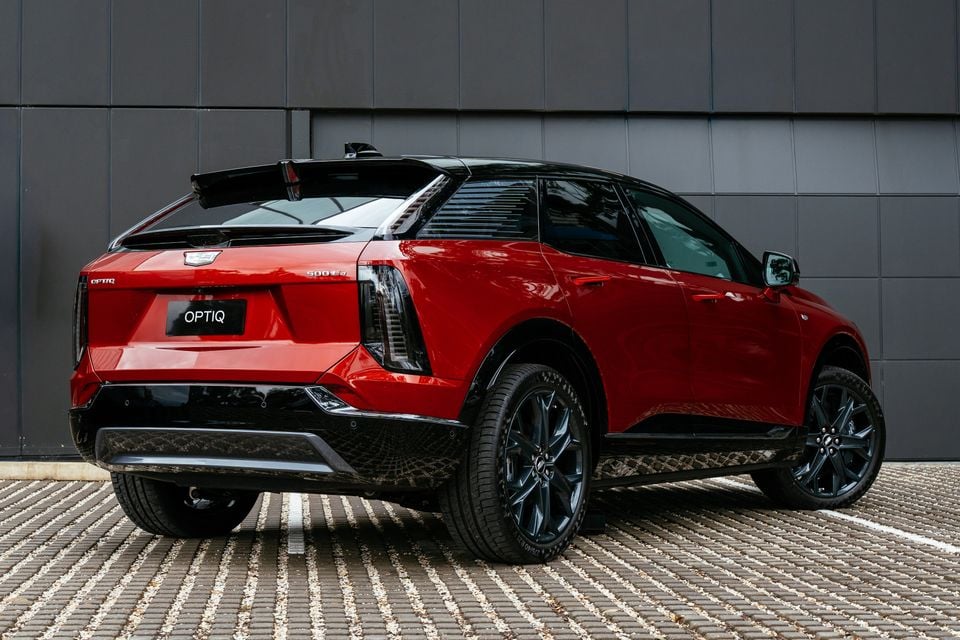
For $10,000 less than a Lyriq, you do get essentially the same amount of usable interior space but an even more distinctive interior. The features list also isn’t noticeably different between the two, and the Optiq gets lane-centring which the Lyriq misses out on.
But for $10,000 more, the Lyriq has considerably faster charging, more power and torque, and more range. The Lyriq also has more visual presence, and may better meet buyers’ expectations of what a Cadillac should look like with its long bonnet and more imposing styling.
With a lower price or a better battery, the attractive and richly appointed Optiq would have a better chance of standing out in a crowded part of the market.
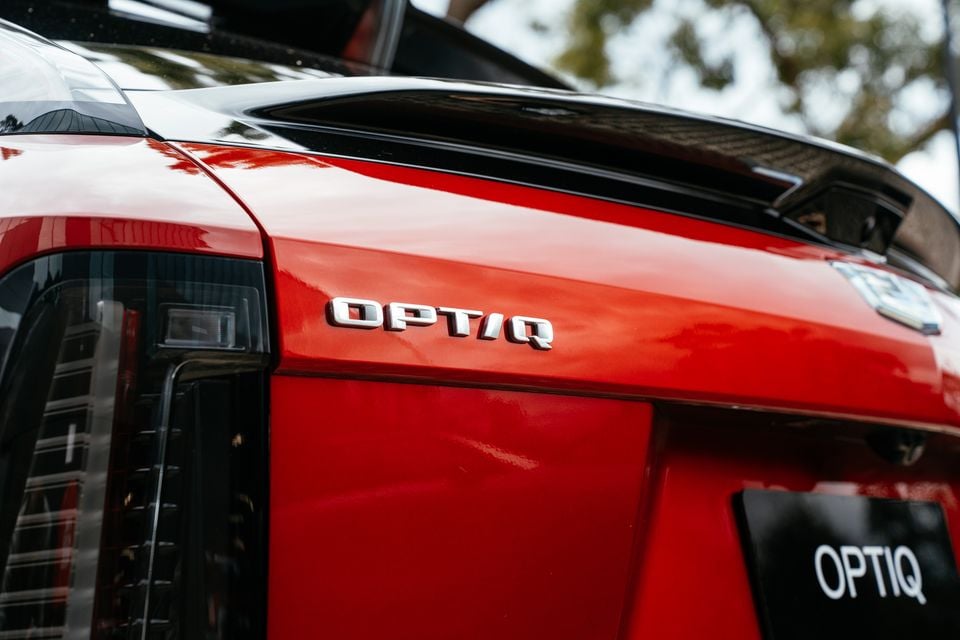
Click the images for the full gallery
Interested in buying a Cadillac Optiq? Let CarExpert find you the best deal here
William Stopford is an automotive journalist with a passion for mainstream cars, automotive history and overseas auto markets.
Add CarExpert as a Preferred Source on Google so your search results prioritise writing by actual experts, not AI.
Josh Nevett
7 Hours Ago

William Stopford
14 Hours Ago

Damion Smy
14 Hours Ago

Damion Smy
15 Hours Ago


Ben Zachariah
15 Hours Ago
William Stopford
16 Hours Ago
Add CarExpert as a Preferred Source on Google so your search results prioritise writing by actual experts, not AI.
# Based on VFACTS and EVC data
† Displayed prices exclude on-road costs such as delivery charges, registration fees, number plates, insurance and applicable road taxes. These prices are subject to change without notice and may not reflect current market pricing or dealer offers.
 Automotive Vehicle Spec Data & 4K images Powered by JATO Dynamics Ltd