

Max Davies
2026 Kia EV6 review
The Kia EV6 has been treated to a handful of thoughtful upgrades, sweetening the appeal of an already-solid electric SUV.
6 Hours Ago
Ford is on a mission to flip its fortunes with the F-150 pickup truck, offering more features and tech, and the promise of fewer recalls.

Marketplace Editor
Marketplace Editor
Marketplace Editor
Marketplace Editor
CarExpert brings together reviews, research tools and trusted buying support, guiding you from research to delivery with confidence.
The Ford F-Series pickup range is one of the world’s success stories.
In 2025, the Blue Oval celebrated its 49th consecutive year as the best-selling truck company in the US, and the 44th year of the F-Series being the market's best-selling vehicle series – they’re so popular there’s effectively one sold every 38 seconds in the US alone.
Yes, the F-Series encompasses a number of sub-model lines starting with the F-150 and including everything up to the F-750, but the sweet spot of the lineup is the ‘smallest’ model, which is the focus of this review.
The 2026 Ford F-150 (technically ‘2025’ in Australia, and model year 2024 in the US) is an updated version of the full-size American pickup. It brings mild design changes, enhanced tech levels from the base grade, and a new Platinum hero variant that adds a touch of luxury to the truck’s heavy-duty capabilities.
Remanufactured to right-hand drive in Mickleham, Victoria – just north of Melbourne – the F-150 hasn’t had the easiest start in Australia, with a string of recalls and teething issues at the brand’s conversion partner, RMA Automotive.
Last year saw the F-150 slapped with a ‘stop-delivery’ and ‘stop-sale’ order for much of 2025, but the Blue Oval is confident it’s sorted things out and is committed to supporting existing and new customers of its “class-leading” truck.
While there have been changes to the look and the spec sheet, the running gear is largely the same. There’s still a mighty twin-turbo petrol V6 under the ‘hood’, 4.5 tonnes of braked towing capacity, and two wheelbase lengths.
Are Ford’s claims accurate? Is the F-150 better than its only three rivals in Australia – the Chevrolet Silverado, Toyota Tundra and Ram 1500? We joined the local media launch to find out.
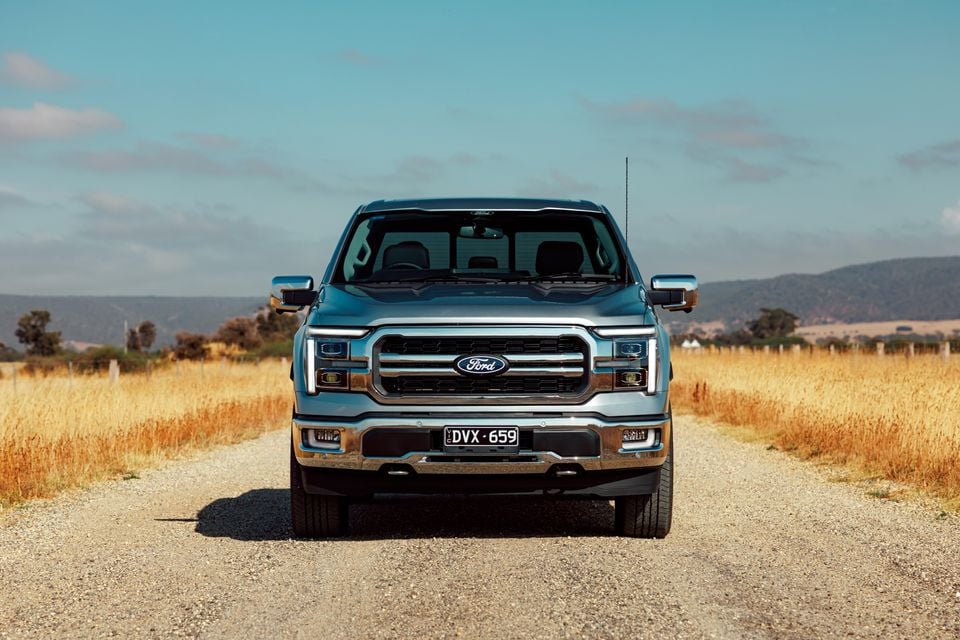
Prices are up across the XLT and Lariat grades, which have been renewed for this update, while top-end pricing is more than $20,000 higher than before with the addition of the new Platinum variants.
| Model | Price before on-road costs |
|---|---|
| 2026 Ford F-150 XLT SWB | $114,950 (+$8000) |
| 2026 Ford F-150 XLT LWB | $114,950 (+$7005) |
| 2026 Ford F-150 Lariat SWB | $143,950 (+$4000) |
| 2026 Ford F-150 Lariat LWB | $143,950 (+$3000) |
| 2026 Ford F-150 Platinum SWB | $163,950 |
| 2026 Ford F-150 Platinum LWB | $163,950 |
Ford now offers the SWB and LWB versions for the same price across all three grades, and the varying wheelbase lengths is something of a point of difference to its rivals, in lieu of a larger ‘2500’ series pickup (the F-250 isn't officially offered here by Ford).
Better yet, the XLT grade undercuts the cheapest Ram 1500 Big Horn (with its Hemi V8) and is well under the starting price of the Chevrolet Silverado LTZ (also powered by a V8), though the latter is more aligned to the Lariat grade, which is more expensive.
At the higher end, the new F-150 Platinum pushes the local range into new territory, and undercuts the new Tundra Platinum by almost $10,000.
To see how the Ford F-150 lines up against the competition, check out our comparison tool
We’re going to mainly focus on the new Platinum – as that’s the newbie in the range – but we'll also touch on the updated XLT and Lariat given they’ve also been subjected to some updates.
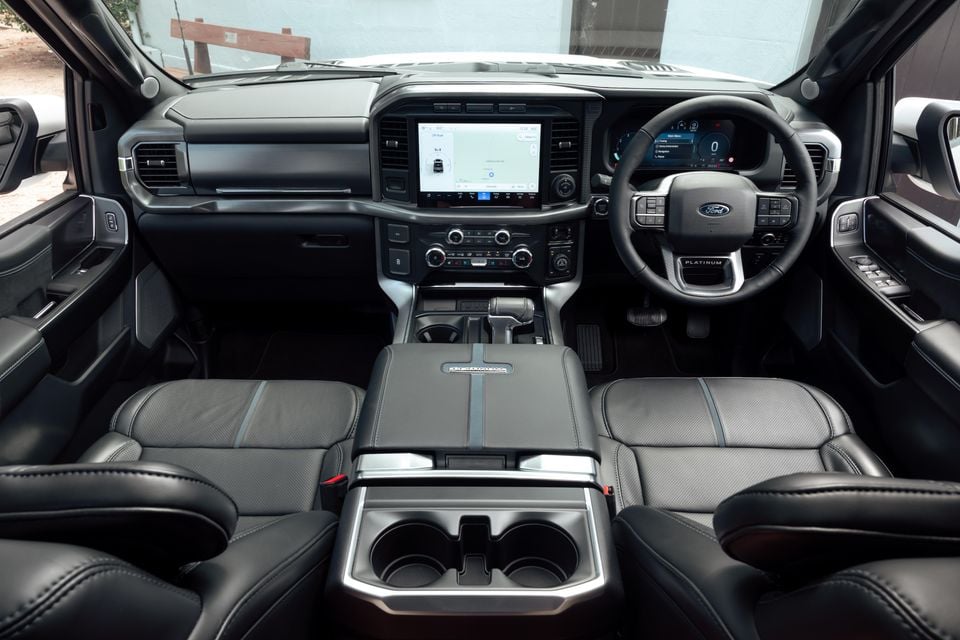
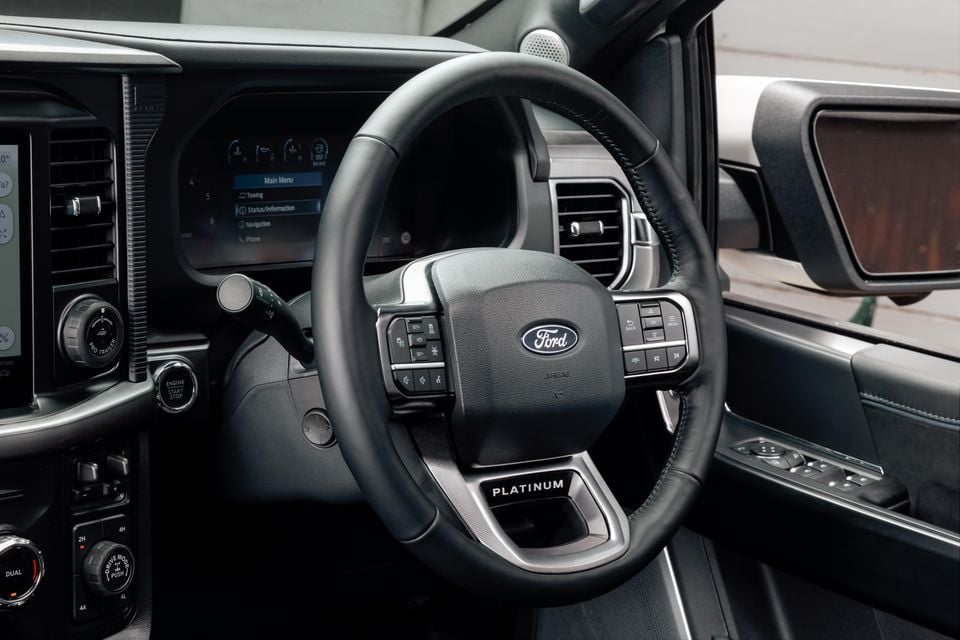
Like the bulk of these American trucks, the F-150’s cabin treads a balance between utility, practicality and comfort – without really having the plush feel that you might get from a four-wheel drive SUV at a similar price point.
Ford’s local team (in partnership with RMA Automotive) has done a great job of making everything look and feel like it came from the US factory just like this, with the tech integration and general detailing looking and feeling top-notch.
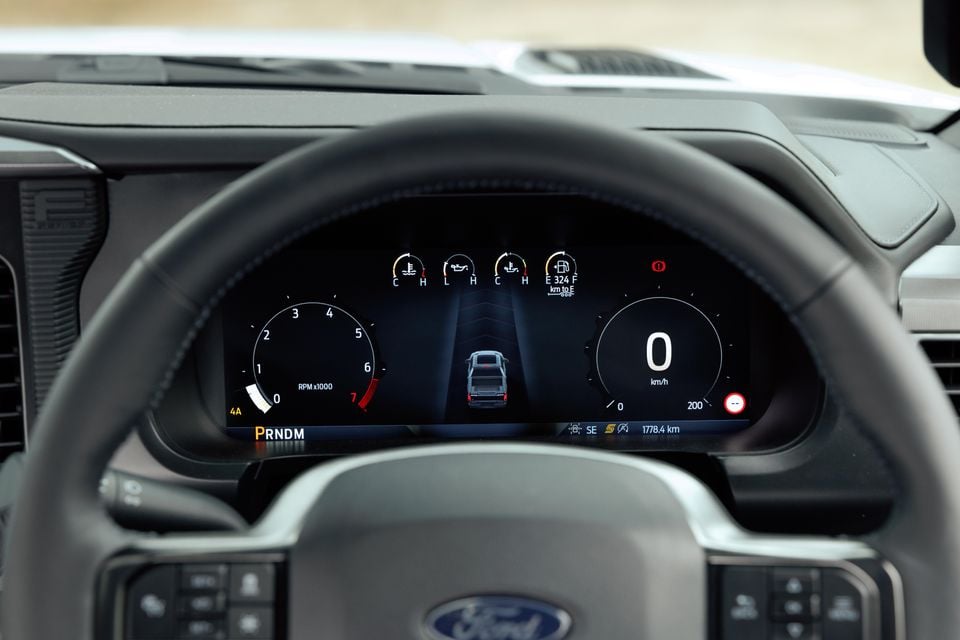
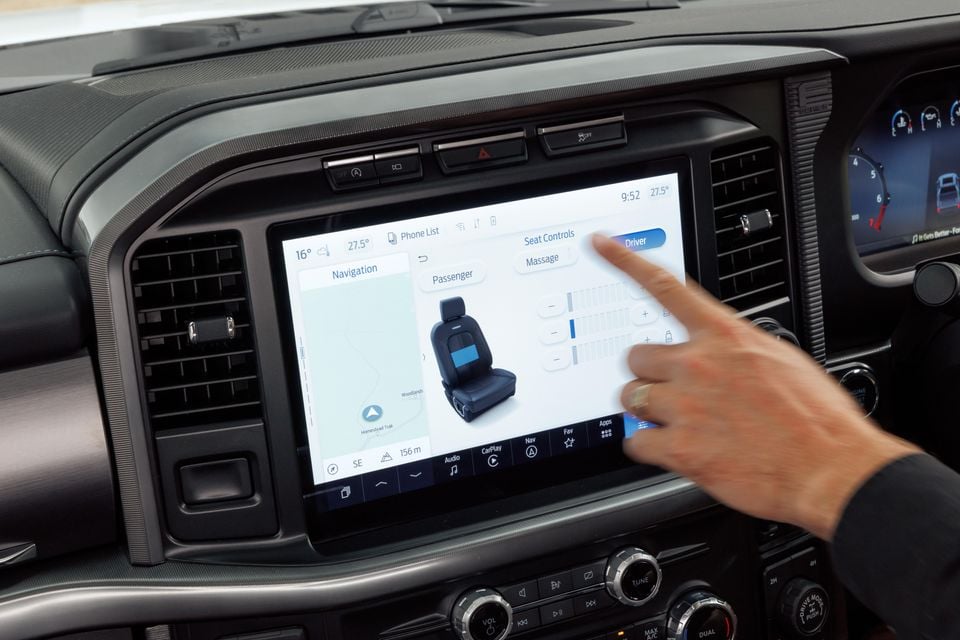
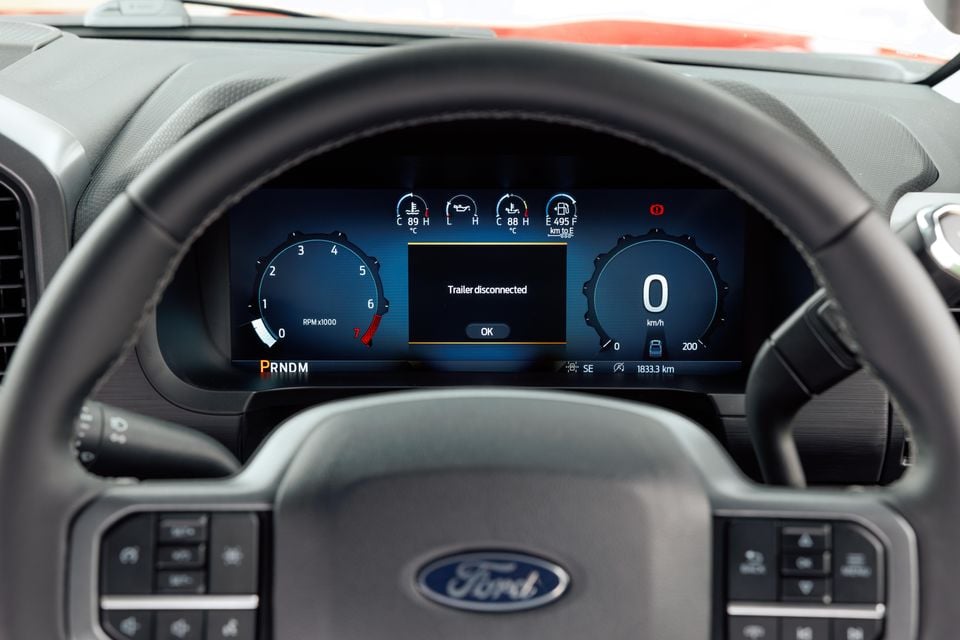
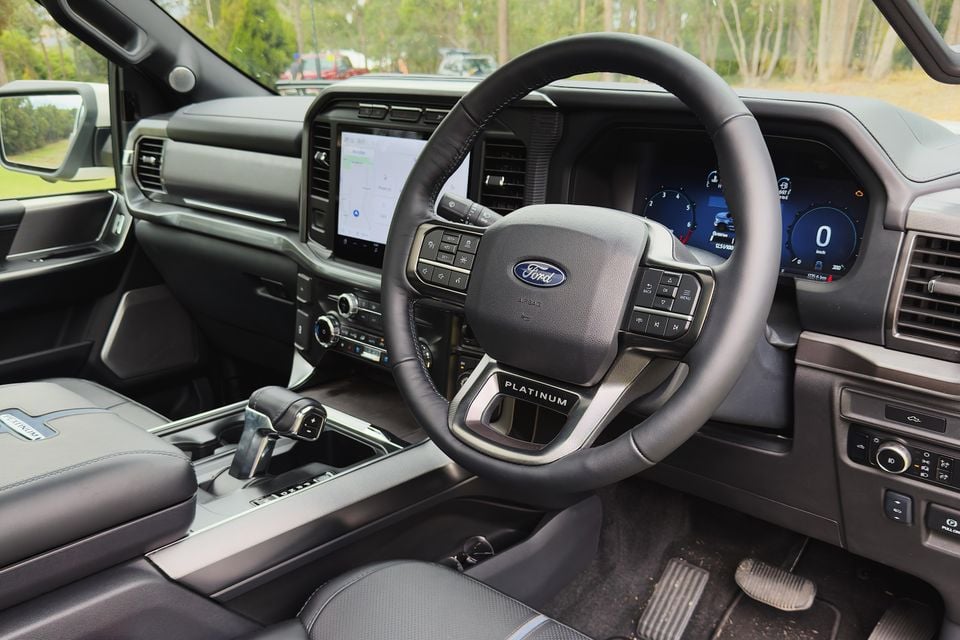
All variants get a digital instrument cluster as standard, and the 12.0-inch central infotainment touchscreen running the brand’s SYNC interface is now standardised across the lineup.
The Blue Oval knows how to do clean and easy-to-use in-car software, and the F-150’s tech suite is no different. It’s functional, attractive to look at and easy to navigate. Input responses and load times are also very good.
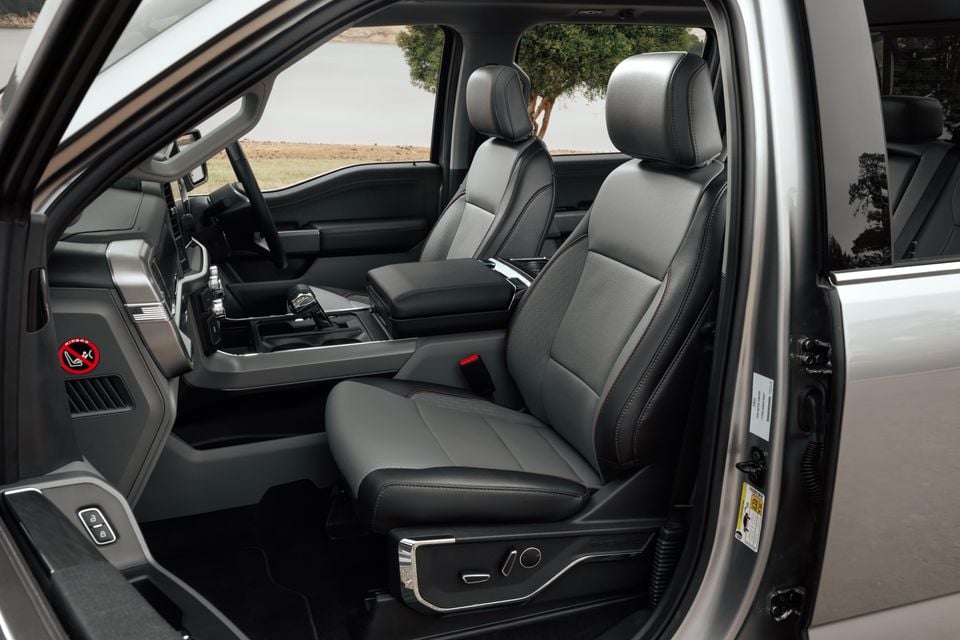
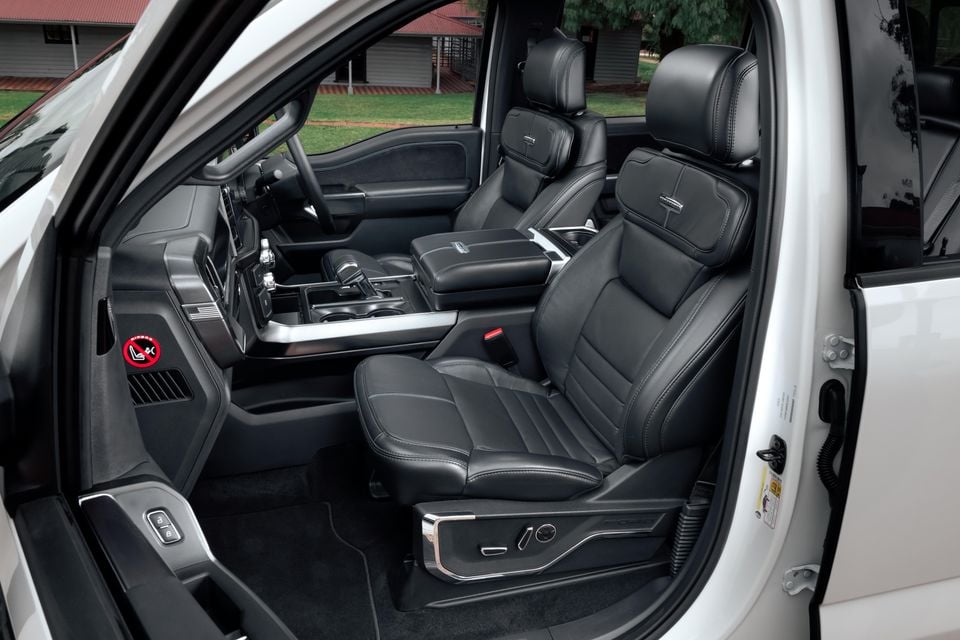
As you’d expect, space in both rows is cavernous relative to ‘regular’ (mid-size) dual-cab utes like the Ranger, made more conspicuous by the bluff upright dashboard and door cards, chunky design elements, and supersized centre console.
It certainly has a more traditional ‘truck’ feel than smaller utes, which makes sense given manufacturers are designing them more and more like SUVs to give them more everyday family appeal. That said, larger SUVs in North America definitely have the F-150's trucker feel, but that’s also the market preference there.
The seats in all grades are comfortable, with the Platinum’s cushy leather-trimmed units offering full electric adjustment to go with the more plentiful bolstering as well as heating, ventilation and massaging functions – the Lariat also gets auto climate-controlled front seats.
We spent a lot of time behind the wheel across all three trim levels, and the in-cabin comfort levels as well as general ambience was quite impressive.
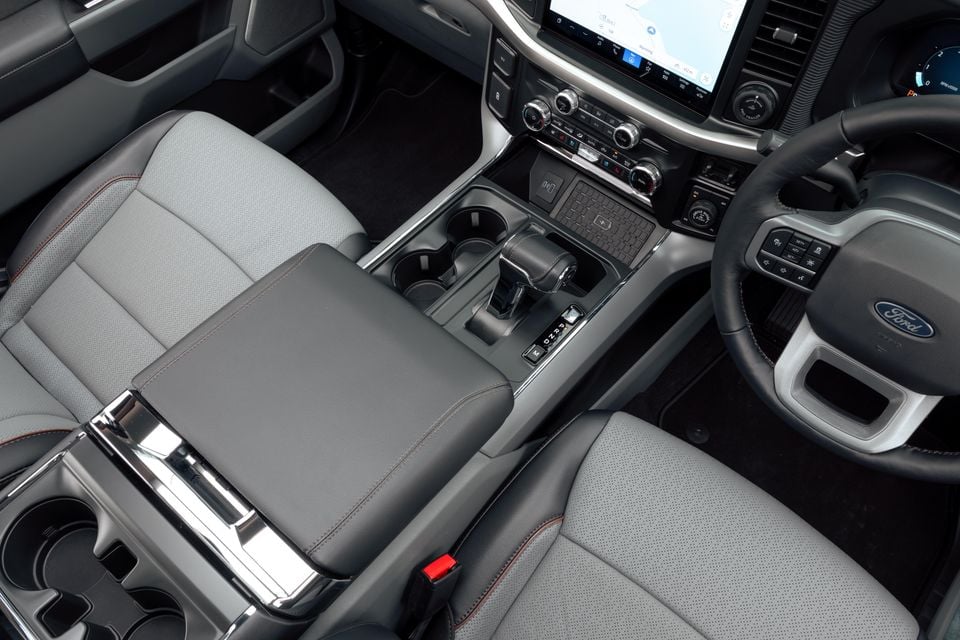
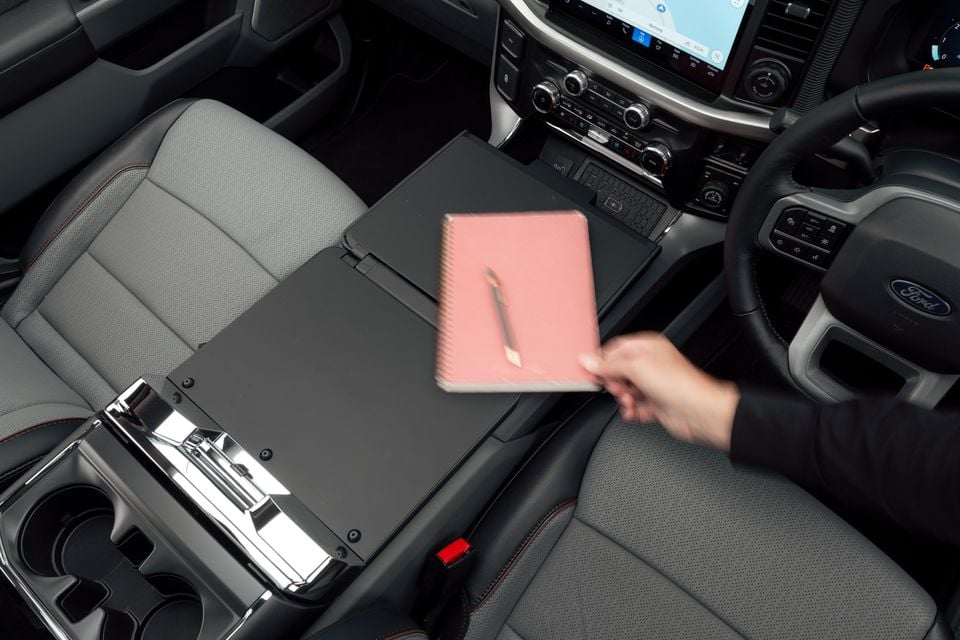
There are also heaps of storage and utility solutions, from the chunky cupholders and storage bins to the reversible centre console armrests that also double as a desk if you need to use a notebook or your laptop on the fly.
USB-C charging ports are also littered throughout, while the available wireless charger (standard in the Lariat and Platinum) adds to the convenience if you need to charge multiple devices.
There are also deep pockets on either side of the centre console, as well as decent bins in the doors to store your odds and ends out of sight.
Another pro of these full-size American pickups compared to their smaller (mostly Thai-made) counterparts is the sheer amount of space in the back.
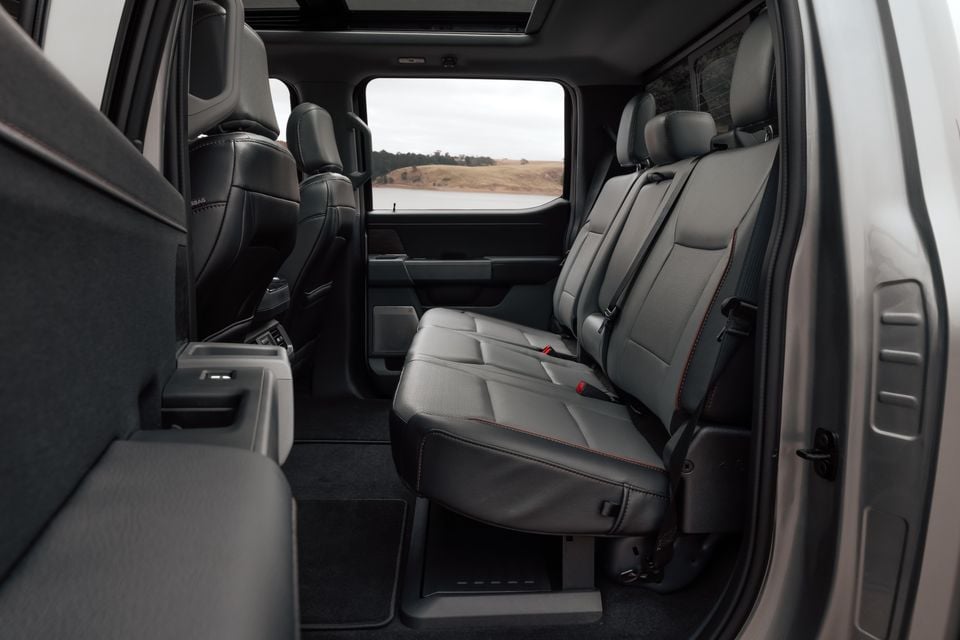
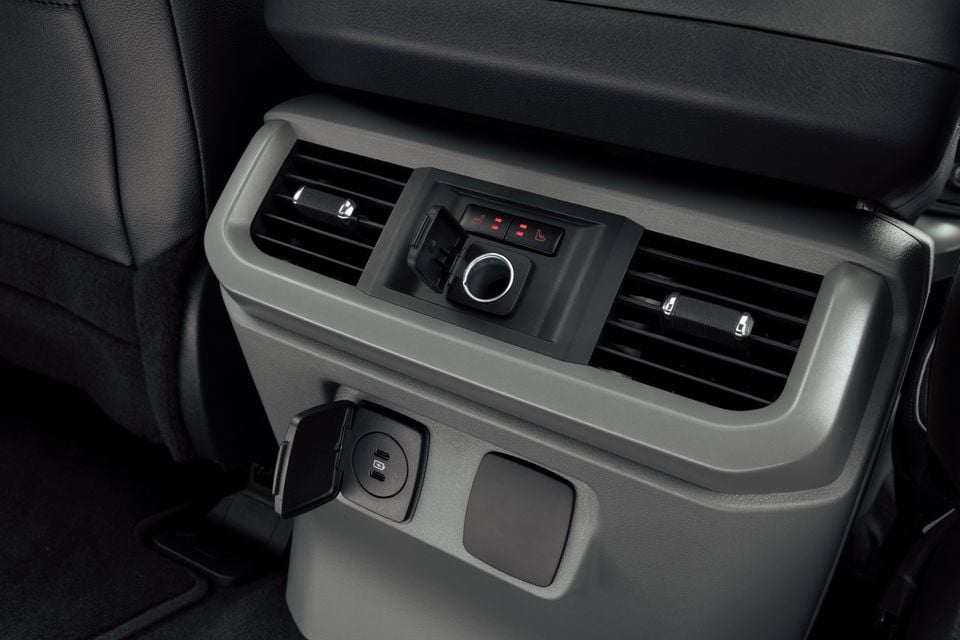
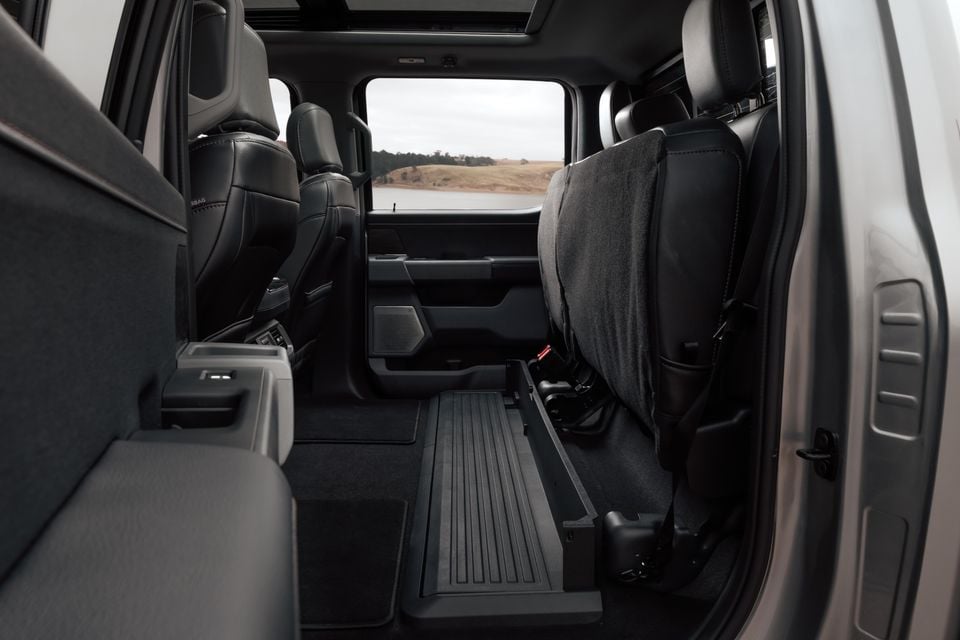
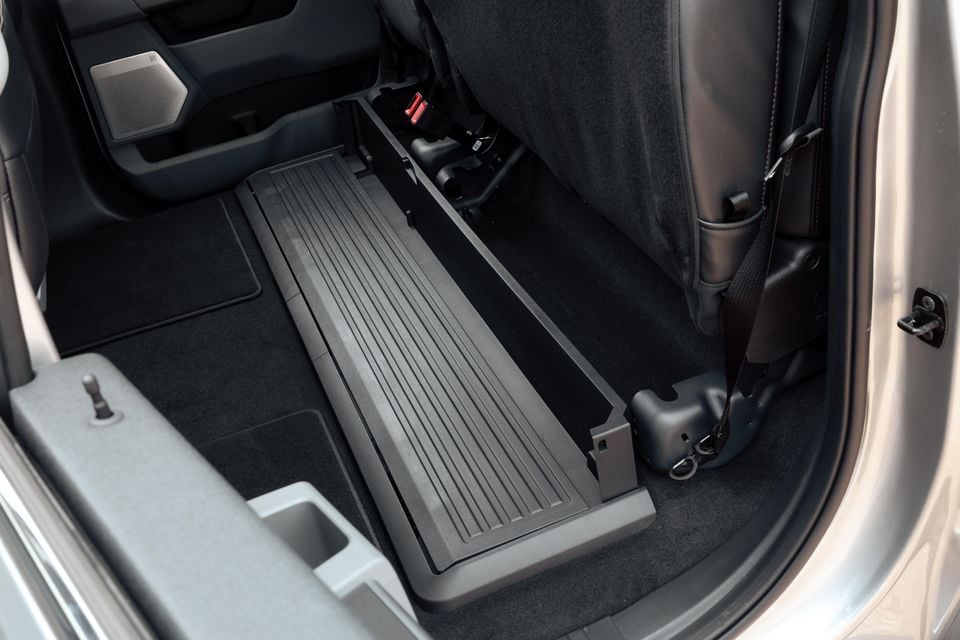
Apart from more elbow and shoulder room for everyone, the huge size of the F-150 means you can fit three adults in the back much more comfortably than you would in a Ranger, for example.
Leg, knee and head room are best described as abundant relative to the regular dual-cab utes on sale today, and the rear bench seat is quite a comfy one at that. The seat bases can be folded up to free up more storage space in the cabin, and there’s even a partition so your cargo can be kept in place.
Amenities in the rear include air vents and fan controls, additional USB-C charge ports, a fold-down centre armrest with cupholders, bottle holders in the doors, and map pockets behind the front seats. Lariat and Platinum grades also get heated outboard rear seats.
Note to parents though – there are no ISOFIX points for child seats in the F-150, just top-tether points.
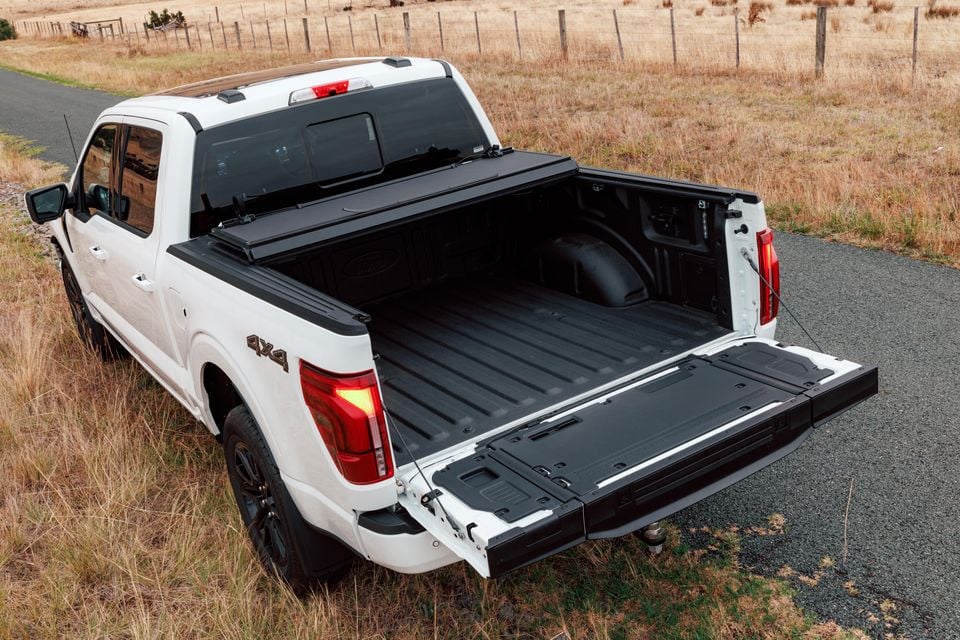
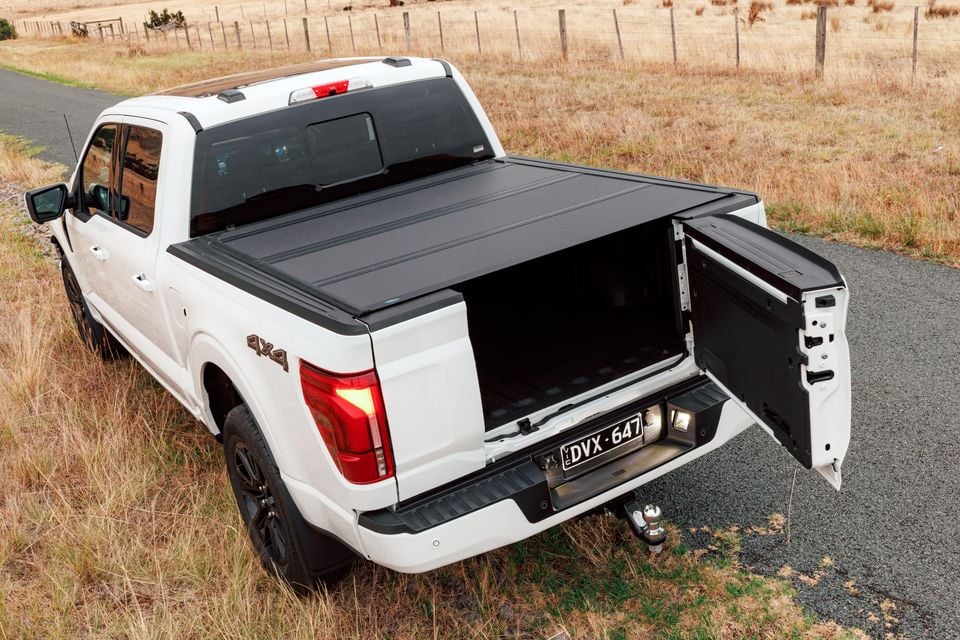
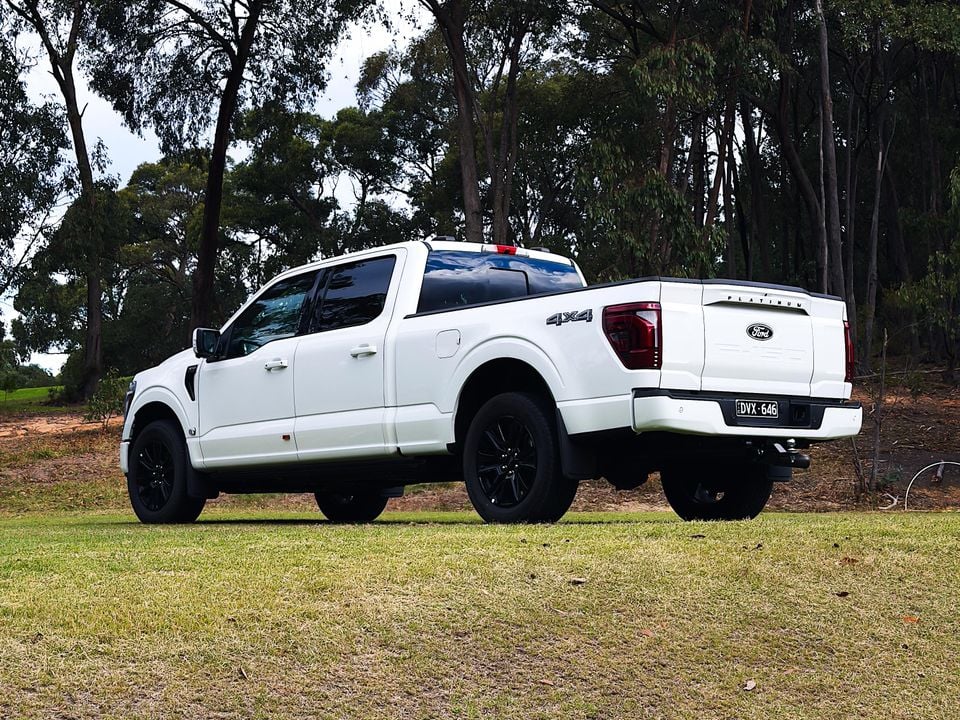
Further back, the tray (or Load Box, as the Americans call it) is particularly lengthy if you go for the LWB model.
To paint the picture, a Ranger’s tub measures 1464mm long, 1520mm wide and 525mm deep – the F-150 betters that significantly in every dimension, which is worth noting if tray space is a key priority for you.
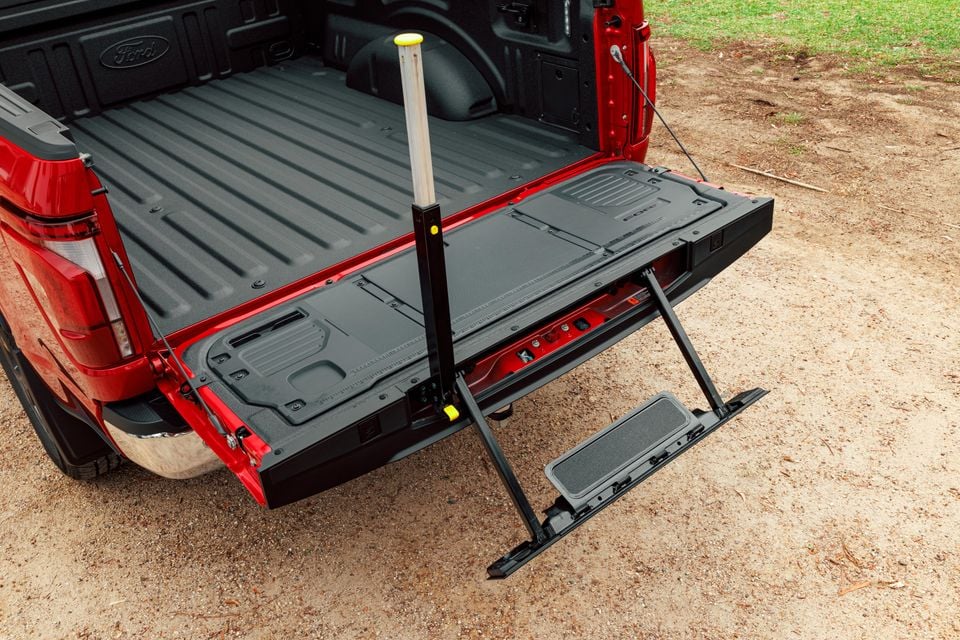
All F-150 vehicles come with ‘Load Box Elements’ like a 12V socket in the bedliner, inner tie-down points, locking cleats, illumination, a power tailgate lock, as well as a work surface and ruler built into the inner tailgate. Another handy feature is the pop-out side step to clamber in.
Lariat and Platinum models get the Pro Access tailgate which adds a manual swinging door for quick access, while the Platinum exclusively gets a folding hard tonneau cover. All models get an 18-inch temporary spare wheel with 265/70 rubber, too.
| Dimensions | Ford F-150 |
|---|---|
| Length | 5908-6208mm |
| Width | 2089mm |
| Height | 1995mm |
| Wheelbase | 3697-3997mm |
| Tray dimensions (LWH) | 1662 x 1650 x 543mm – SWB 2000 x 1650 x 543mm – LWB 1285mm – between arches |
To see how the Ford F-150 lines up against the competition, check out our comparison tool
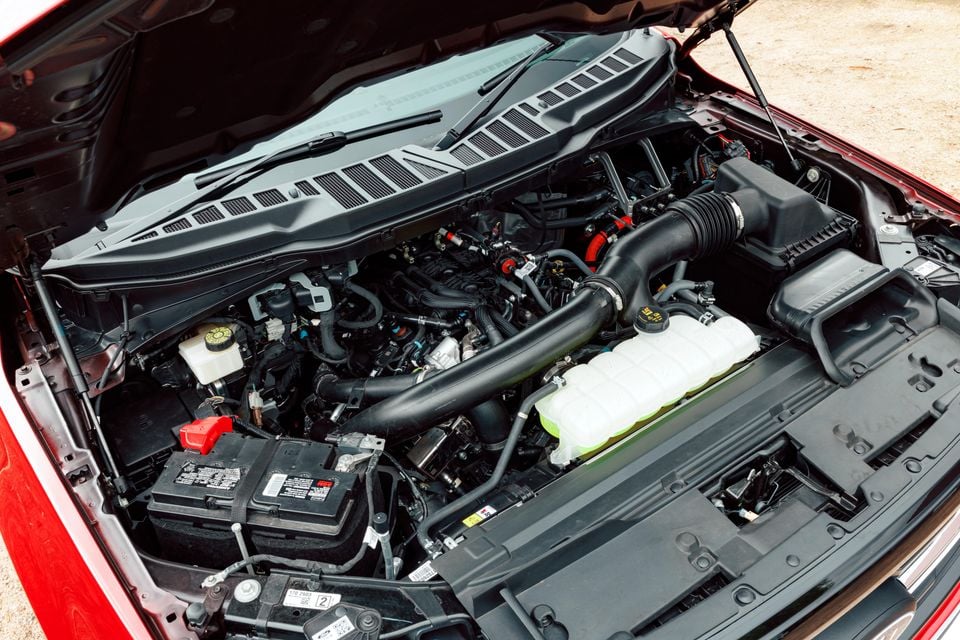
While V8 and ‘Full Hybrid’ versions are available in the States, the Australian-market F-150 is solely available with the 3.5-litre ‘EcoBoost’ twin-turbo V6 petrol engine.
| Specifications | Ford F-150 |
|---|---|
| Engine | 3.5-litre V6 twin-turbo petrol |
| Power | 298kW at 6000rpm |
| Torque | 678Nm at 3100rpm |
| Transmission | 10-speed auto |
| Drive type | 4WD with 4A, 4H, 4L |
| Fuel economy (claimed) | 13.4L/100km |
| Fuel economy (as tested) | 11.0-13.6L/100km |
| CO2 emissions (claimed) | 306g/km |
| Fuel tank | 136L |
| Weight | 2462-2636kg |
| Payload | 704-878kg |
| Braked towing capacity | 4500kg |
| Gross Vehicle Mass (GVM) | 3315-3360kg |
| Gross Combination Mass (GCM) | 7365-7410kg |
Ford hasn’t committed to further powertrain or trim variants at this stage, but it has left the door open to more if there’s enough customer demand – make of that what you will.
No doubt Australia’s New Vehicle Efficiency Standard (NVES), which requires manufacturers to meet specific CO2 emissions caps or face financial penalties, might eventually pressure Ford to start bringing in the hybrid version.
Another more subjective aspect of the powertrain debate is cylinder count. Australians, like Americans, traditionally gravitate to more displacement and cylinders, particularly in a segment like this.
The Silverado offers a V8 across the range exclusively, while the Ram 1500 has remaining stock of the Hemi V8-powered Big Horn.
To see how the Ford F-150 lines up against the competition, check out our comparison tool
We got opportunities to drive all three trim levels across SWB and LWB bodies during our time at the launch event, as well as some time towing in the XLT and Platinum.
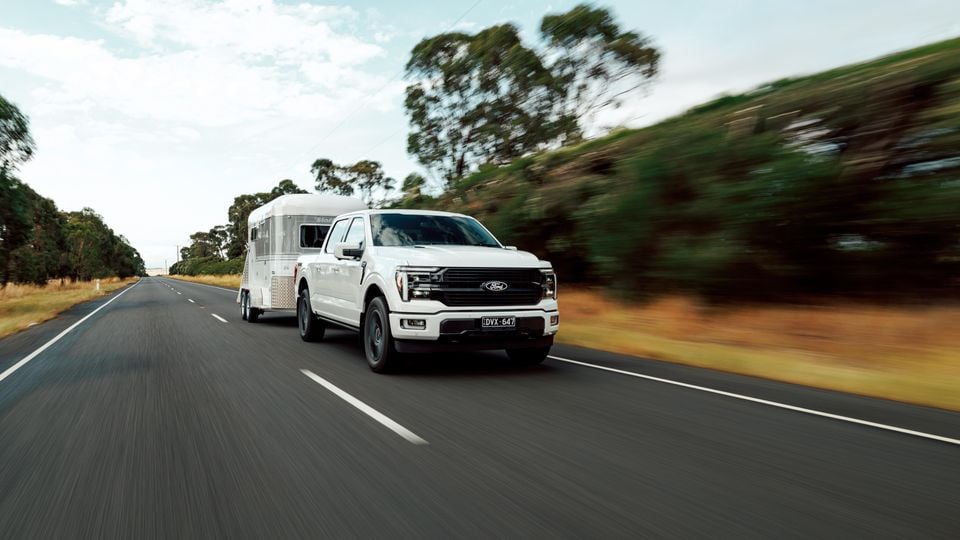
Why those two particular variants, you ask? The Platinum actually debuts a new-for-Australia Continuously Controlled Damping system which adjusts with drive modes – with the most notable differences claimed in Sport and Tow/Haul modes.
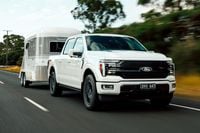
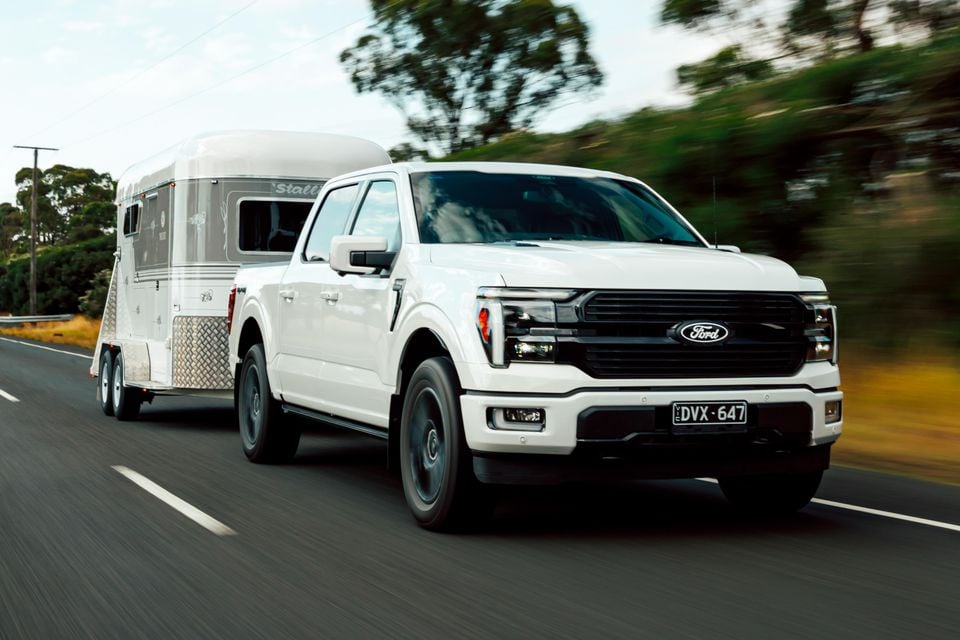
So, we started the program with the passively damped XLT towing a horse float filled with hay and weighing around 1.5 tonnes, and then upped the ante with a Mustang GT Fastback on a trailer, which altogether would have weighed around 2.0 tonnes.
The short loops on the northern outskirts of Melbourne proved just how effortless the F-150 is at hauling medium-sized trailer loads, and the difference the adaptively damped Platinum made was noticeable.
Performance from the 3.5-litre V6 is effortless even with 2.0 tonnes on the back, and the 10-speed auto in these new trucks definitely wasn’t as clumsy or indecisive as in other Ford models I’ve driven with this transmission.
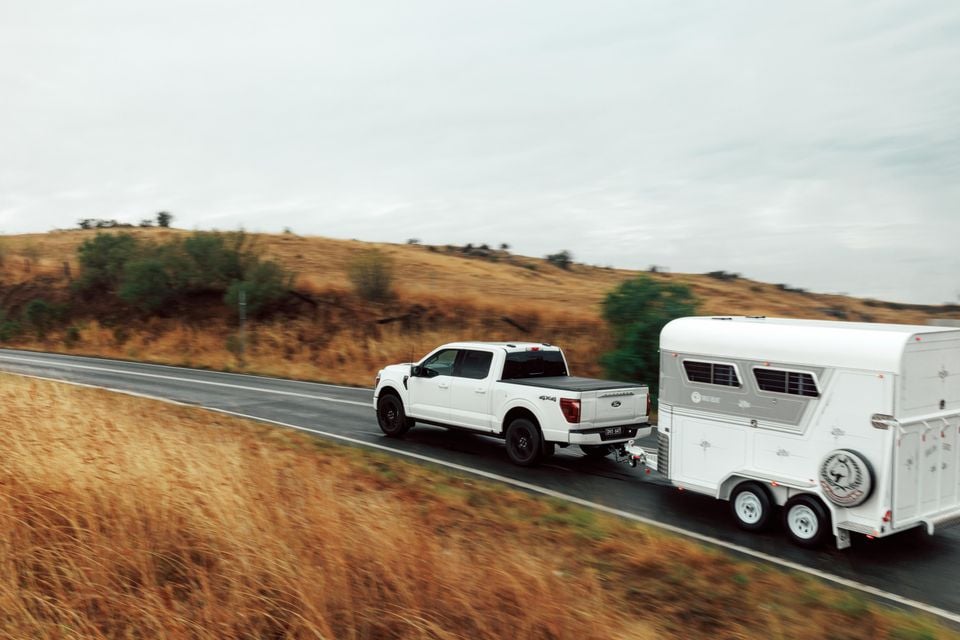
Equally impressive was the general ride and refinement when towing, with even the base XLT doing a good job of acting like it wasn’t hauling anything behind it. The only real thing of note was the one or two extra body movements it took to settle over bigger bumps, as the seesaw effect at the rear-end levelled out.
This was kept more suppressed by the Platinum’s adaptive dampers, which levelled out much sooner and returned less body movement despite the larger trailer on the back. It’s occasionally a touch sharp over pockmarked B-roads, but it certainly didn’t feel laboured or cumbersome with a load on the back.
Something that also has to be said is that the F-150’s big mirrors and tall glasshouse offer excellent visibility, particularly when towing. Both trailers were unusually sized but I could adjust the mirrors perfectly to see where all the corners and edges were, and there are also features like Pro Trailer Backup Assist when you need to park.
Like we’ve seen in the likes of the Ranger and Everest, Pro Trailer Backup Assist takes the mind work out of counter-steering when reversing a trailer, allowing you to turn with a knob on the dial which directs the trailer in the direction you’re pointing it rather than playing opposites with the steering wheel.
CarExpert brings together reviews, research tools and trusted buying support, guiding you from research to delivery with confidence.
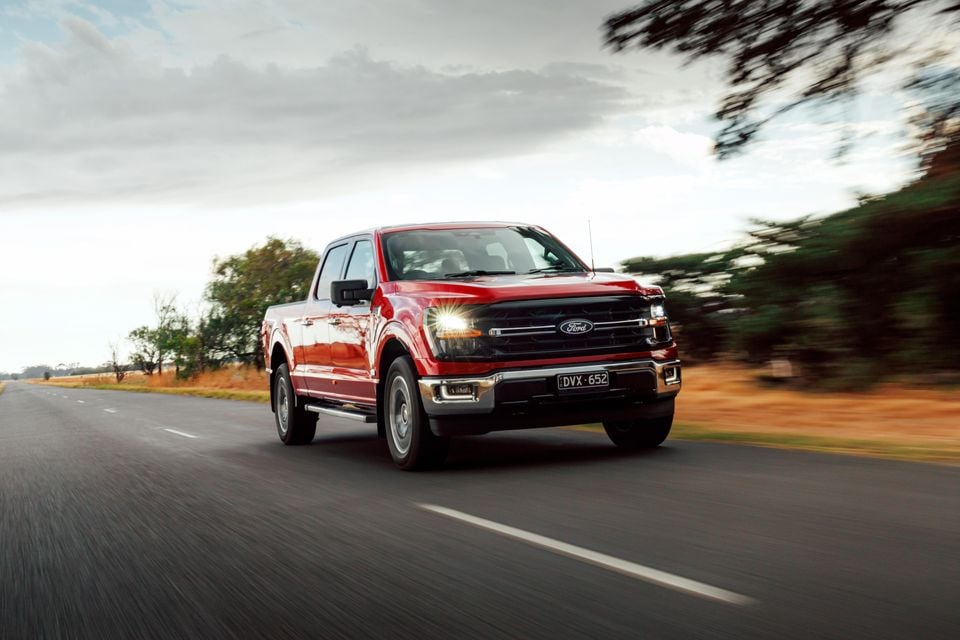
From there we hit the road in the XLT for the first driving leg, which was about two hours between a pair of drivers through the northern parts of Victoria.
Plenty of highway, B-roads and the occasional town stint ensued, and away from the city you can start to see why larger trucks like the F-150 have become more common in Australia.
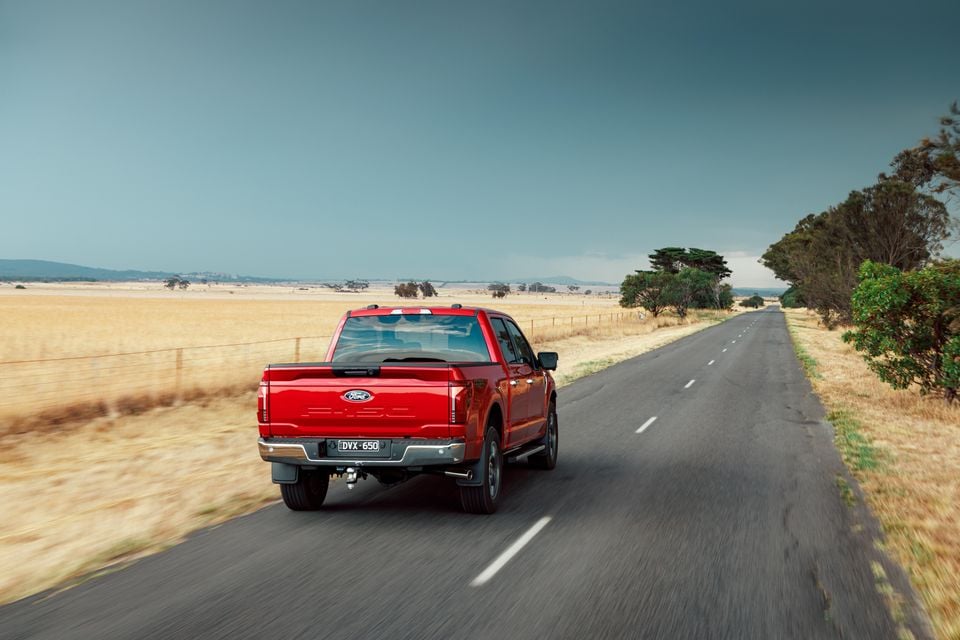
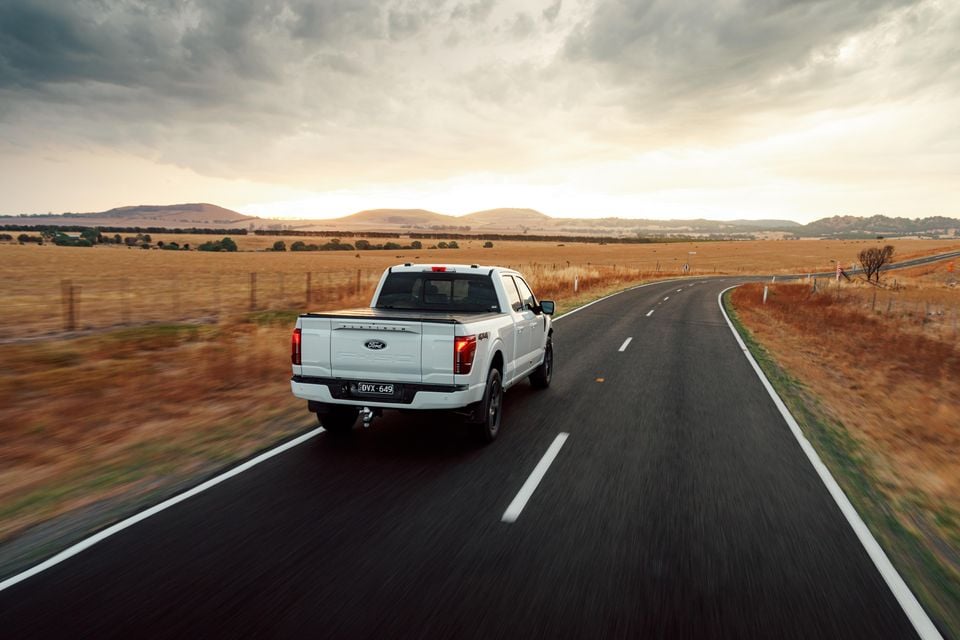
You get a proper ‘king of the road’ feel on the open road, with a wonderfully settled and refined cruising character that just eats up the miles.
Comfortable seats, relatively muted road and wind noise, as well as a settled ride make touring in the F-150 a pretty easy task – though the base XLT annoyingly lacks adaptive cruise control for said touring ventures.
Now yes, I know, I can just turn the cruise control on and do the normal thing of taking control of the car myself, but given the price point it seems silly that Ford didn’t just make adaptive cruise control standard across the range.
Once you’re off the freeway, the F-150 is surprisingly manoeuvrable and wieldy despite its hefty dimensions. Accurate and responsive steering makes the big truck shrink around you, and inspires confidence when navigating narrower streets.
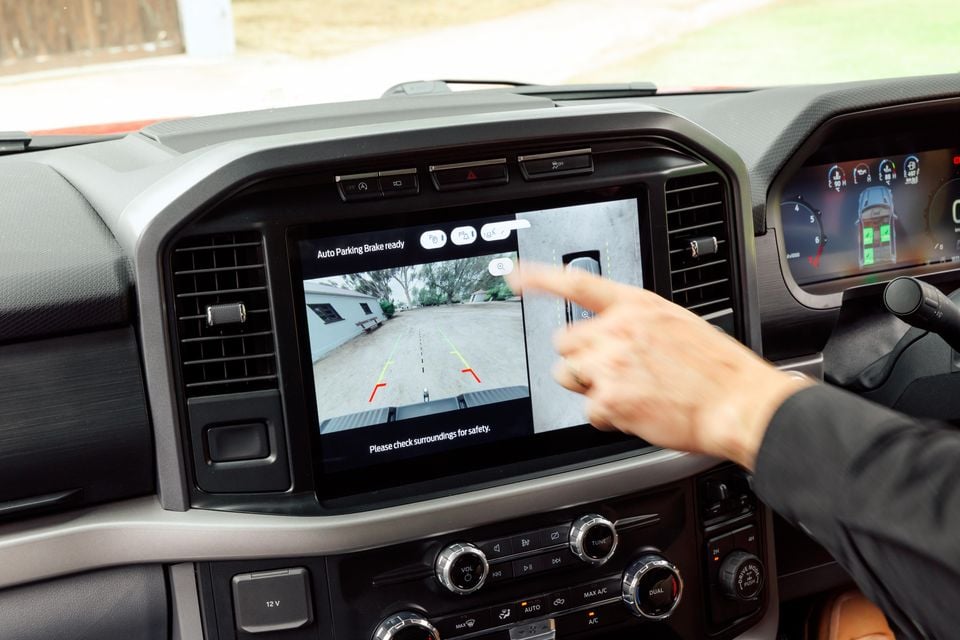
And thankfully, while adaptive cruise and lane-centring aren’t included in the XLT’s $115,000 base price, surround parking cameras are
. Combined with the big infotainment display for the camera feeds and rear parking sensors, it makes slotting this big rig into parking bays that little bit easier.
Speaking of parking, it’s worth keeping in mind that both the SWB and LWB versions of the F-150 are longer than most standard parking bays, given they measure 5.9m and 6.1m respectively – they’re humungous.
That said, front parking sensors are reserved for the Lariat and above, though the forward-facing camera somewhat substitutes this if you ever want to park nose-in.
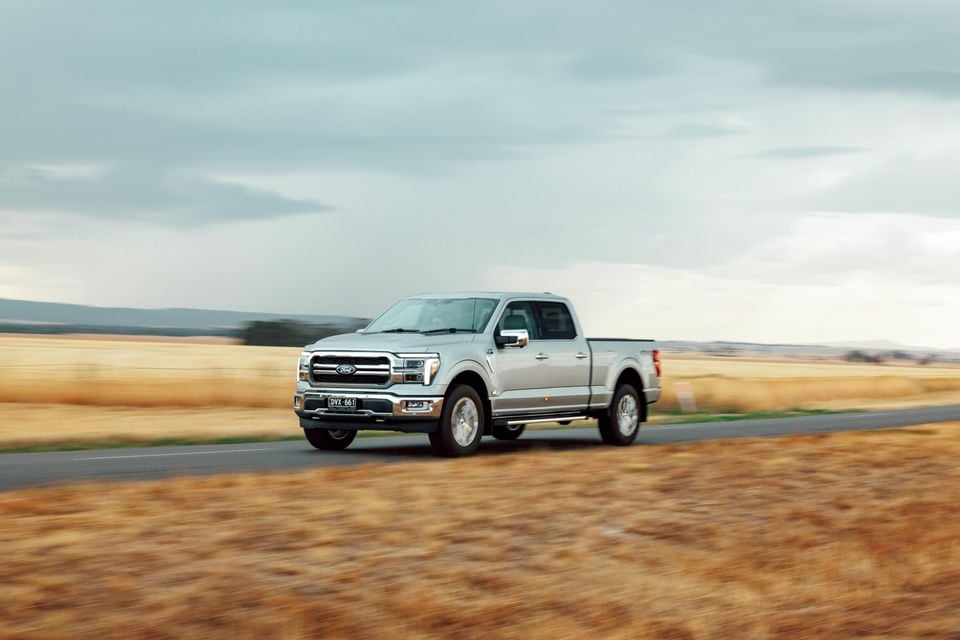
The step between the XLT and Lariat is less pronounced than the step up to the Platinum as the driving experience is more or less altered only by convenience features rather than any mechanical changes.
Adaptive cruise control with lane-centring is very handy in a truck this big, and more befitting of the price tag. Same goes for the standard parking sensors, and the added luxuries like leather trim and ventilated seats.
With that said, the driving behaviour of the Lariat is near-identical to that of the XLT, as the driveline, steering, visibility and refinement levels are pretty much all the same with no discernible differences.
Even the wheel and tyre size is the same across the range, with all models sporting 20-inch rims wrapped in 275/60-profile Hankook Dynamic AT2 rubber.
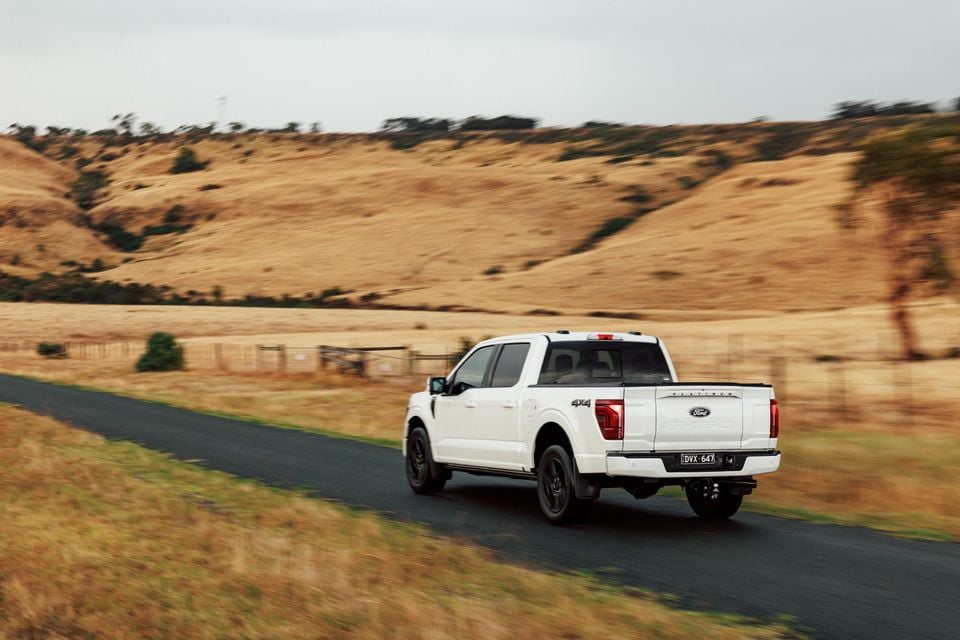
Finally, the Platinum is distinguished by its adaptive dampers and the fact the cabin is accessed by retractable side steps that automatically fold out and then back up when you open or close the vehicle.
In its Normal mode there’s not a whole lot of difference in the way it rides, but it’s noticeably firmer and tighter when you flick it into Sport – similar to how it’s a bit tighter and more settled when you’re in Tow/Haul mode.
While Ford’s choices of high-speed country roads and highways generally painted the F-150 in the best light in terms of how it drives, there were some sections of particularly broken and pockmarked tarmac that really upset the ride – and somehow we only really hit it right at the end of our drive.
Not only was it very unsettled and busy over these sections, there was a bit of porpoising from front to rear in the LWB Platinum we were driving – it’s unclear whether the same would happen in the SWB.
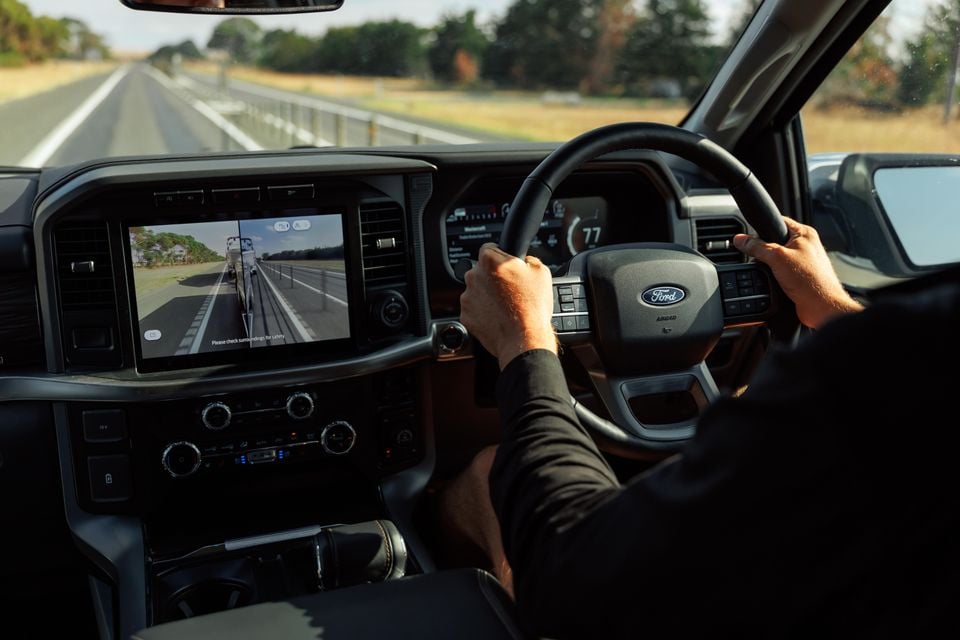
Here’s where I’d normally break down the driver assistance systems, but I’ve covered the bulk off already.
On top of the adaptive cruise and lane-centring features mentioned earlier, the basic lane keep assist isn’t overzealous given the sheer width of this thing, and the driver monitor isn’t constantly beeping and bonging at you.
Standard blind-spot monitoring and rear cross-traffic alert are handy given this #longboi measures 6.0m in length and you’re perched in the clouds when driving it, and it also includes trailer coverage when you have one hooked up.
Another thing to note is that the base XLT misses out on a few things beyond adaptive cruise control. It also lacks Evasive Steering Assist, Intersection Assist AEB and speed sign recognition compared to the Lariat and Platinum.
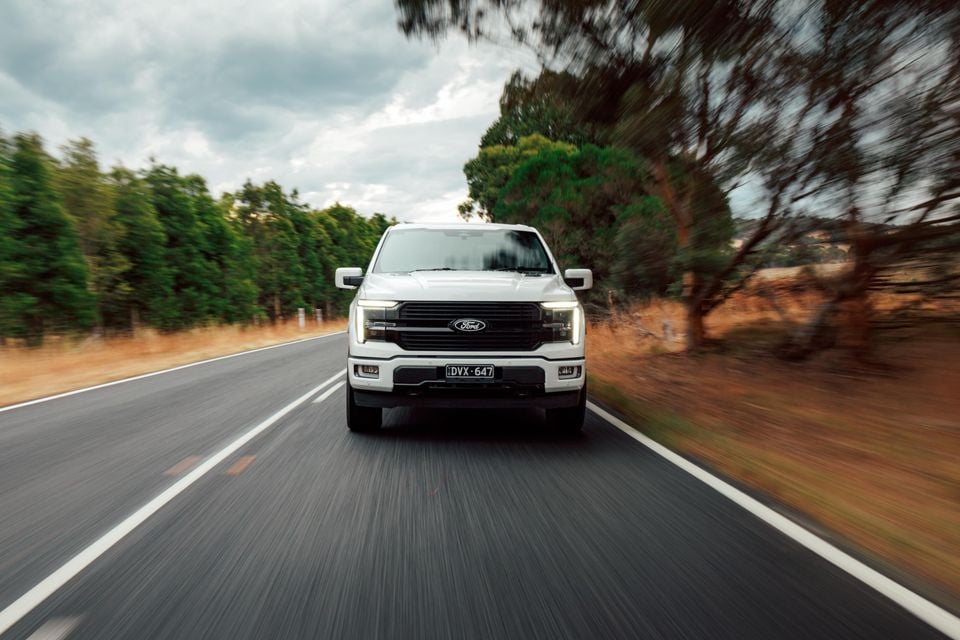
Finally, we didn’t take the F-150 off-road, so you’ll need to wait until we get one through the CarExpert garage and have Paul take it through its paces at the Lang Lang proving ground.
Interestingly, Ford also doesn’t quote off-road specs like ground clearance and approach, departure or breakover angles for the F-150 range in Australia – though perhaps it would if it brought in the more rugged Tremor variant offered overseas.
| Off-road dimensions | Ford F-150 |
|---|---|
| Track front and rear | 1725mm – front 1735mm – rear |
| Ground clearance | – |
| Approach angle | – |
| Departure angle | – |
| Ramp breakover angle | – |
| Wading depth | – |
To see how the Ford F-150 lines up against the competition, check out our comparison tool
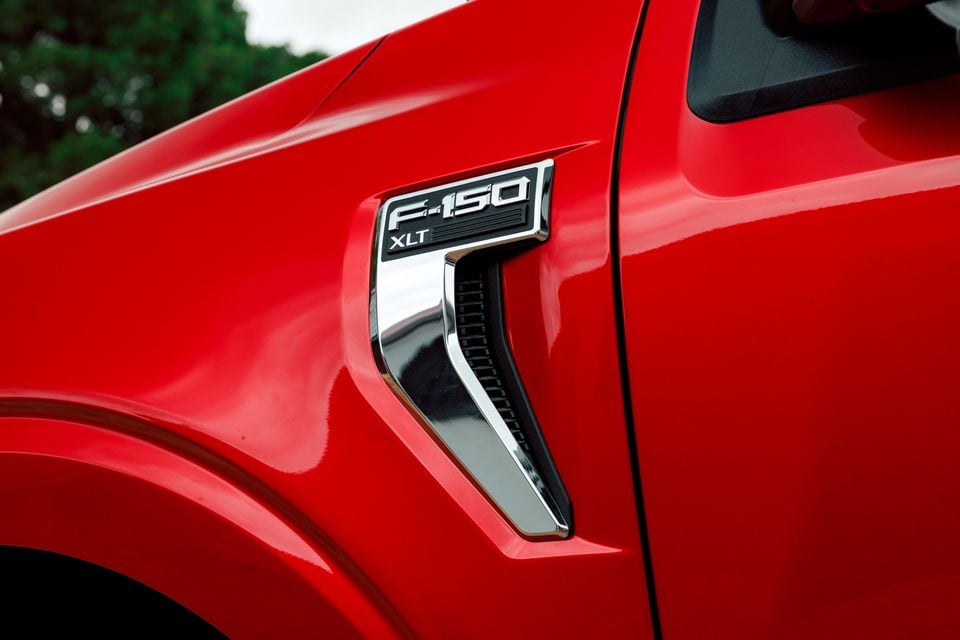
The 2025/2026 Ford F-150 range now offers three trim levels – XLT, Lariat and Platinum.
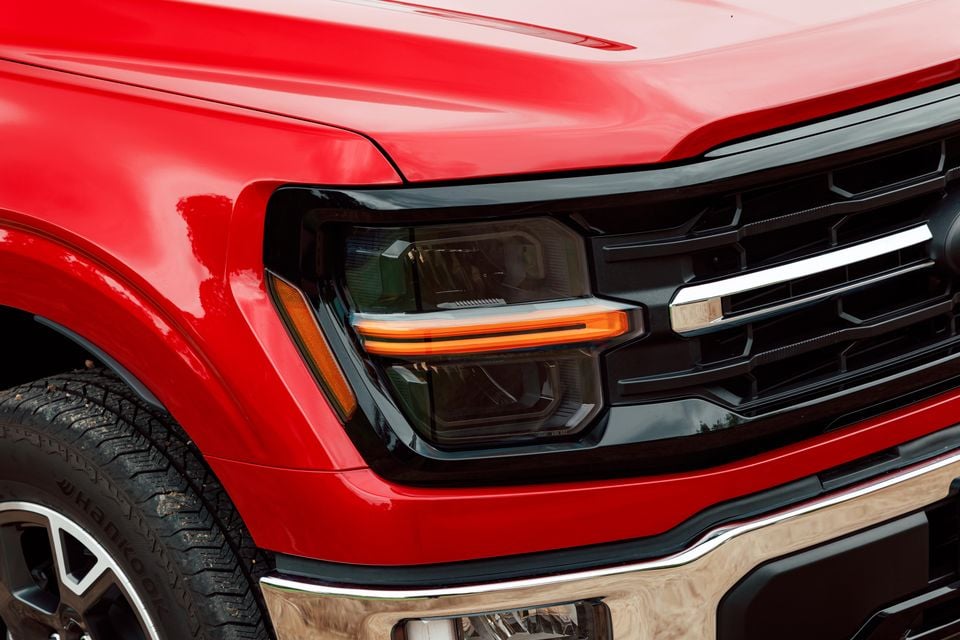
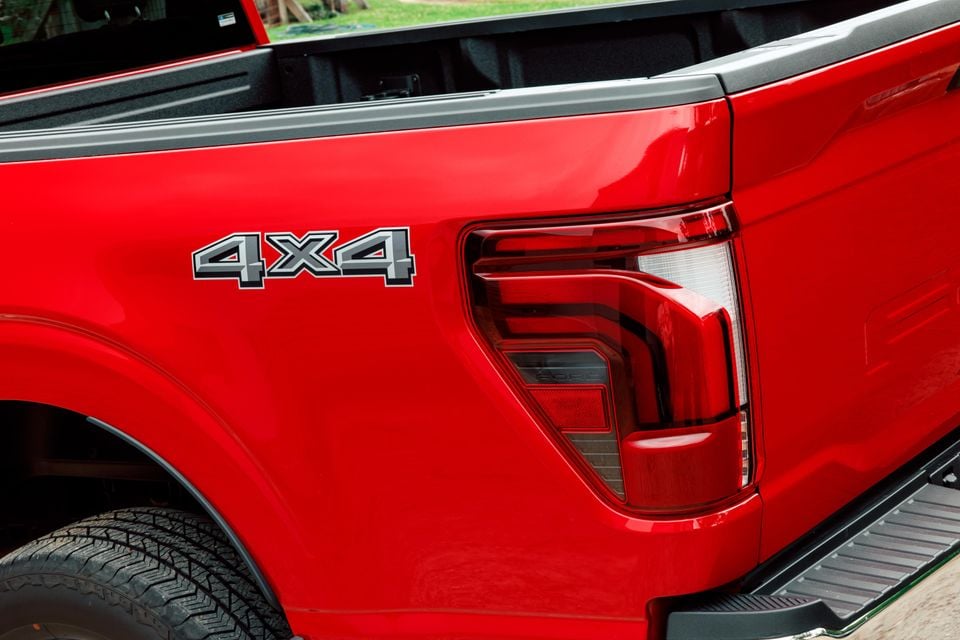
2026 Ford F-150 XLT equipment highlights:
F-150 Lariat adds:
F-150 Platinum adds:
To see how the Ford F-150 lines up against the competition, check out our comparison tool
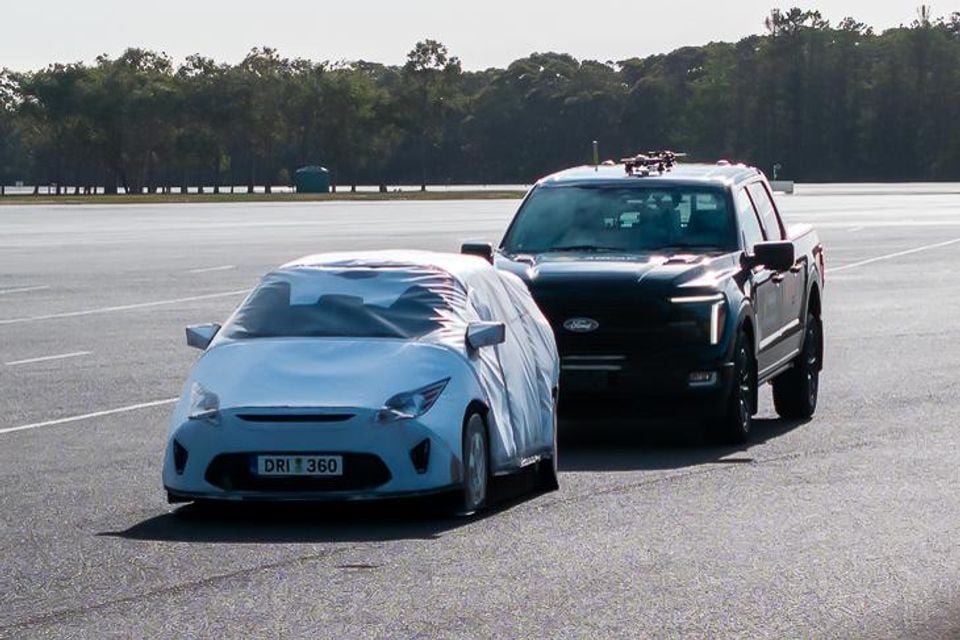
The F-150 Lariat and Platinum have been awarded a ‘Platinum’ rating by ANCAP in the large utility category, applicable to vehicles sold from October 2025.
| Category | Ford F-150 |
|---|---|
| Vulnerable road user protection | 82 per cent |
| Safety assist | 81 per cent |
Scoring 82 per cent in vulnerable road user protection and 81 per cent for safety assist in a modified set of tests for larger pickup trucks, the F-150 has the highest rating awarded in the category.
For reference, the Ram 1500 scored 70 per cent overall for a ‘Gold’ rating, while the Toyota LandCruiser 79 Series and Tundra took home ‘Silver’ ratings with 55 and 60 per cent scores respectively.
Perhaps more significant is the gap between the Ford and its Chevrolet contemporary, which managed a ‘Bronze’ grading based on a 27 per cent score.
Standard safety equipment includes:
F-150 Lariat and Platinum add:
To see how the Ford F-150 lines up against the competition, check out our comparison tool
The F-150 family is covered by Ford Australia’s five-year, unlimited-kilometre warranty.
| Servicing and Warranty | Ford F-150 |
|---|---|
| Warranty | 5 years, unlimited kilometres |
| Roadside assistance | 12 months – then service activated |
| Service intervals | 12 months or 15,000 kilometres |
| Capped-price servicing | 5 years or 75,000 kilometres |
| Average annual service cost | $394 |
| Total capped-price service cost | $1968 – 5 years |
12 months of roadside assistance is complimentary, and extendable by another 12 months each time you service at a participating Ford dealer for up to seven years after purchase.
To see how the Ford F-150 lines up against the competition, check out our comparison tool
I’m not a ute guy, let alone a ‘Murican pickup guy, but it’s easy to see why someone in the market for a vehicle like this could be swayed by the updated F-150.
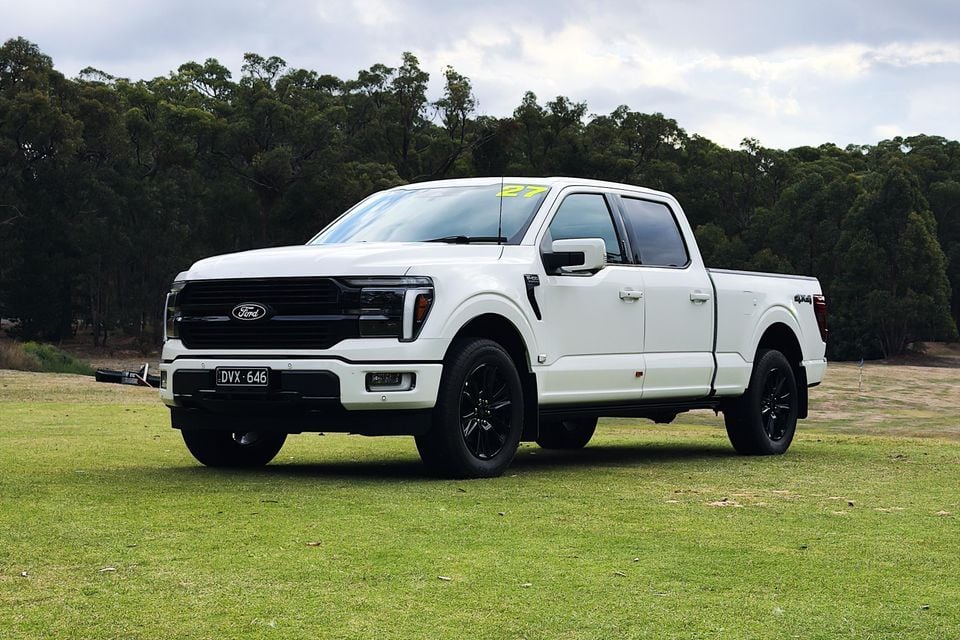
While it lacks the on-paper displacement and cylinder count of something like a Silverado, the Ford’s on-road performance, tech integration, and tough looks make it a very well-rounded choice in the segment.
The EcoBoost V6 is a brute of a motor, with mountains of torque at your feet, while the SYNC interface and assistance tech calibration is excellent – evidenced in its class-leading ANCAP safety performance, too.
If you’re more budget-conscious, the base XLT has quite a bit of extra kit compared to before and well undercuts its direct competition, while the Lariat and Platinum grades are pretty competitive in the space also.
But questions still loom about quality and reliability following a string of recall and stop-sale actions issued from both the American factory and the local outlet.
Also, with Australia's current fuel shortages and skyrocketing prices, running one of these big trucks is becoming a lot more expensive and a bigger issue to consider for many potential buyers – though that applies to the entire segment.
But as it stands, the F-150 remains one of the segment standouts.
CarExpert can save you thousands on a new Ford F-150. Click here to get a great deal.
Click the images for the full gallery
CarExpert brings together reviews, research tools and trusted buying support, guiding you from research to delivery with confidence.
Ford F-150
Ford F-150 Sales rolling 12-months#
*Based on VFACTS and EVC data
Looking for complete Ford F-150 price history?
Our Ford F-150 Pricing Page shows exactly how prices have changed over time.
2025
$122,355
2025
$152,225
2025
$172,825
James Wong is an automotive journalist and former PR consultant, recognised among Australia’s most prolific motoring writers.
Add CarExpert as a Preferred Source on Google so your search results prioritise writing by actual experts, not AI.
Max Davies
6 Hours Ago

Derek Fung
21 Hours Ago


Alborz Fallah
23 Hours Ago
Max Davies
23 Hours Ago

Andrew Maclean
1 Day Ago
Derek Fung
2 Days Ago
Add CarExpert as a Preferred Source on Google so your search results prioritise writing by actual experts, not AI.
# Based on VFACTS and EVC data
† Displayed prices are based on the drive-away price of the vehicle, which includes delivery charges, registration fees, number plates, and applicable road taxes, based on a Sydney location. However, prices may vary between states and territories, and additional costs such as compulsory third party (CTP) insurance, dealer delivery fees, and optional extras are not included. These prices are subject to change without notice and may not reflect current market pricing or dealer offers.
 Automotive Vehicle Spec Data & 4K images Powered by JATO Dynamics Ltd