 Car News
 CarExpert Podcast
 Car Reviews
 Owner Car Reviews
 Car Comparisons
 Showroom
 Car Chooser
 Car Specifications


Andrew Maclean
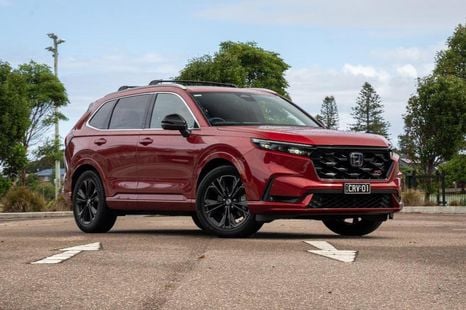
2026 Honda CR-V e:HEV RS review: Long-term introduction
Honda's flagship hybrid-powered CR-V has joined our long-term fleet, and it's made a strong first impression.
6 Hours Ago
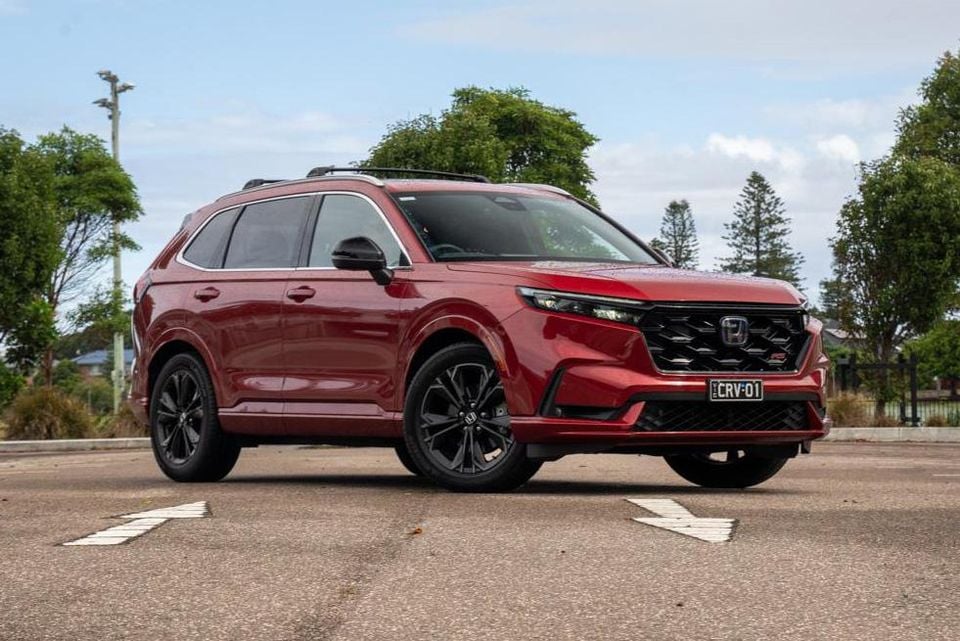
Honda's flagship hybrid-powered CR-V has joined our long-term fleet, and it's made a strong first impression.
CarExpert brings reviews, research tools and trusted buying support together, guiding you from research to delivery with confidence.
The Honda CR-V was one of the early pioneers of the mid-size SUV segment that has become the default choice for Australian families.
First introduced Down Under in 1997, the CR-V was a smash hit from the get-go, overtaking the Civic as Honda’s most popular model on the strength of its flexible and spacious cabin, car-like driving behaviour and affordable running costs.
Almost 30 years – and six generations – later, it remains faithful to the original concept while also evolving to meet the latest customer demands, safety regulations and the introduction of new technologies including a hybrid powertrain for the first time.
In its current guise, the CR-V has been on sale for a couple of years now, and faces a much broader range of competitors than ever before. A revised model range is due in showrooms later this year.
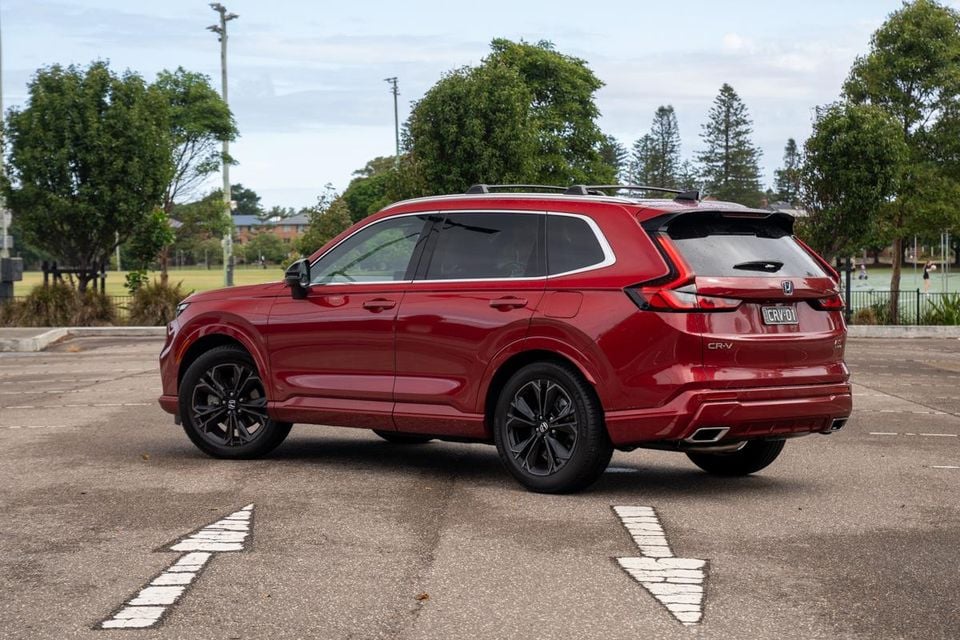
Before it arrives, we’ve taken delivery of the flagship CR-V e:HEV RS – the only hybrid-powered variant in the current lineup – as part of our long-term fleet to see how well it still stacks up by subjecting it to an extended road test period that will include everyday driving duties around town, a couple of long-distance road trips, and everything in between.
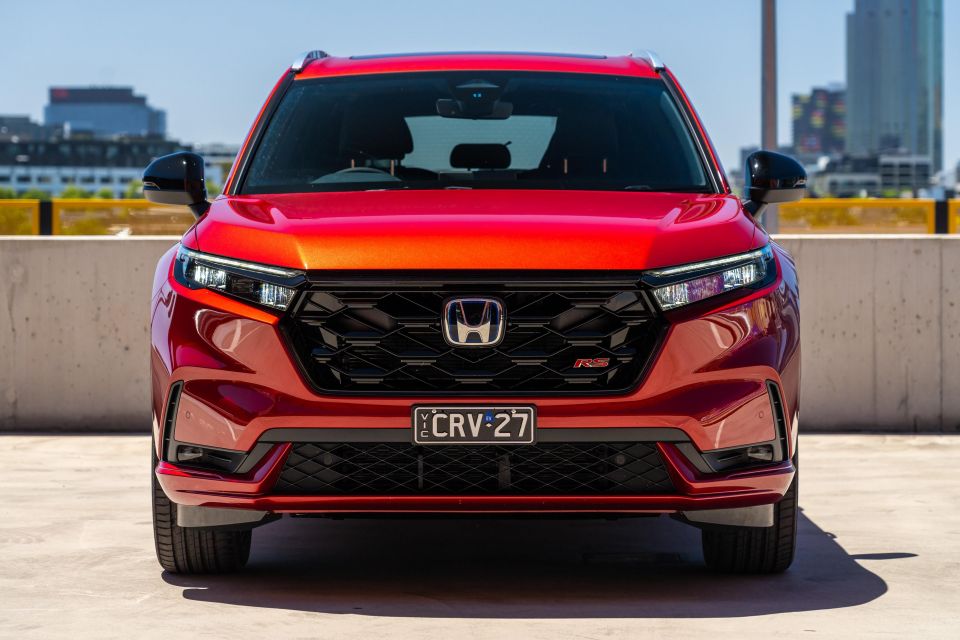
The e:HEV RS sits at the top of the current seven-variant CR-V lineup and normally costs $59,900 drive-away. However, with a revised model range due in showrooms soon, the current CR-V is now in its runout phase and Honda is offering a $3000 discount on existing stock of the e:HEV RS, which reduces its sticker price down to $56,900 drive-away.
| Model | Drive-away pricing |
|---|---|
| 2026 Honda CR-V VTi X+ | $40,900 |
| 2026 Honda CR-V VTi L | $46,300 |
| 2026 Honda CR-V VTi X7 | $47,300 |
| 2026 Honda CR-V VTi L AWD | $51,800 |
| 2026 Honda CR-V VTi L7 | $53,500 |
| 2026 Honda CR-V e:HEV RS | $56,900 |
| 2026 Honda CR-V VTi LX AWD | $57,500 |
That still positions it at the top end of the mainstream mid-size SUV segment, alongside the likes of similarly hybrid-powered range-toppers such as the Hyundai Tucson Hybrid Elite 2WD ($48,350 plus on-roads), Kia Sportage GT-Line HEV 2WD ($57,370 plus on-roads), Nissan X-Trail Ti e-Power ($54,415 plus on-roads), Subaru Forester Hybrid Touring ($55,990 plus on-roads) and Toyota RAV4 GXL 2WD ($56,990 plus on-roads).
But there are also a bunch of more affordable – and potentially more efficient plug-in hybrid – options from Chinese newcomers, like the BYD Sealion 6 (from $42,990 plus on-roads), the Chery Tiggo 7 Super Hybrid (from $39,990 drive-away), Geely Starray EM-i (from $37,490 plus on-roads), and the GWM Haval H6 Ultra PHEV (from $47,990 drive-away).
It’s undeniably the most competitive segment in Australia, presenting a lot of options for families.
To see how the Honda CR-V lines up against the competition, check out our comparison tool
Buy your new car without the stress. It's fast, simple and completely free.

Great service from Travis and team, second time I have used this business would not hesitate to recommend them to anyone
Craig C.
Purchased a Ford Ranger in Sunshine Coast, QLD
CarExpert helped Craig save thousands on his Ford Ranger, now let us save you on your next new car.
Find a dealThere’s a lot to like about the CR-V’s cabin, even if it isn’t the flashiest in terms of design.
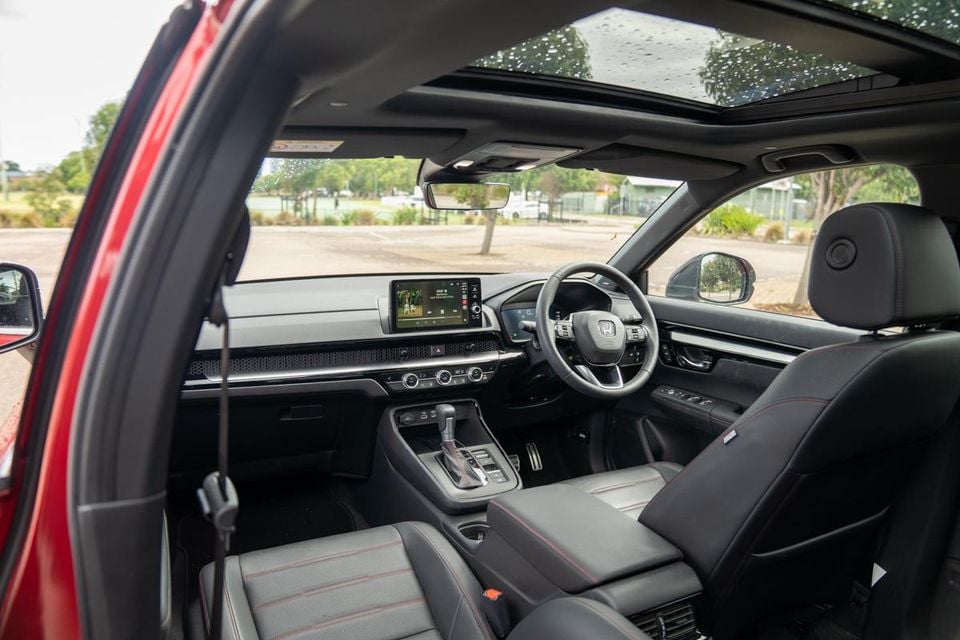
Instead, it focuses on perfecting the family-first fundamentals with plenty of space for every occupant across both the front and rear seats, in a flexible layout that makes light work of carrying large loads as well as fulfilling everyday chores.
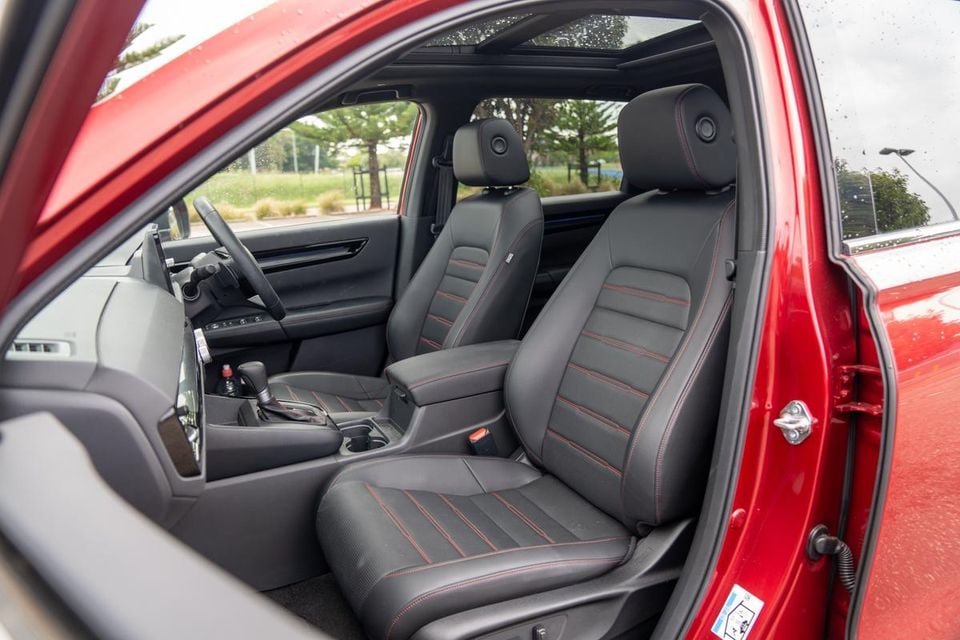
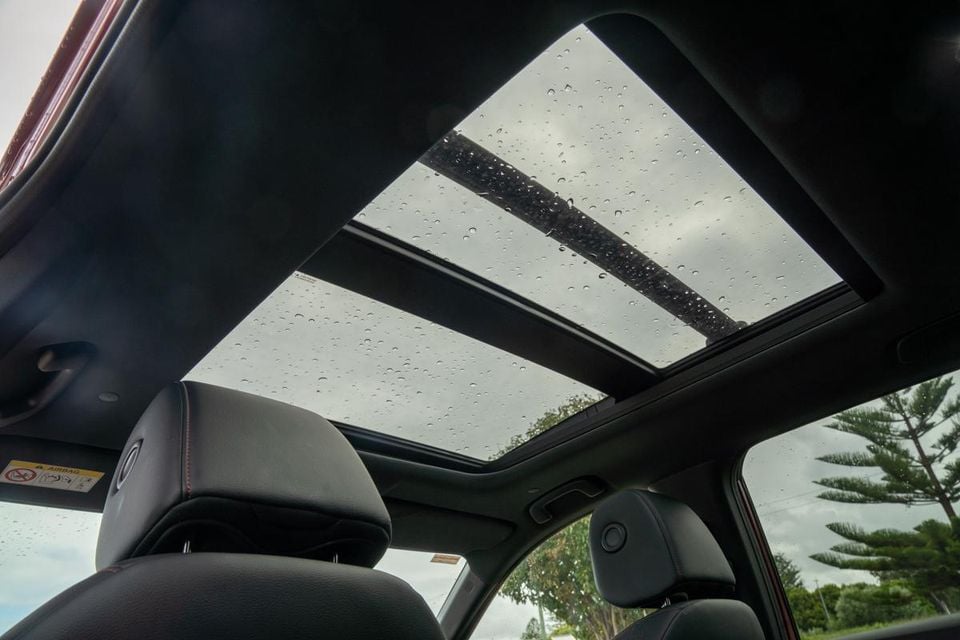
The front seats are super-supportive, offering just the right amount of side bolstering, comfortable cushioning and a wide range of (electric) adjustment to suit a myriad of body shapes and sizes. There's heaps of headroom for taller occupants and excellent vision in all directions through the generous glasshouse.
All the controls for the driver are easy to access and use, from the start/stop button to the conventional gear shifter, plus simple buttons on the steering wheel to activate and adjust the cruise control settings, adjust the volume of the audio system, and activate the Google Assistant voice command system.
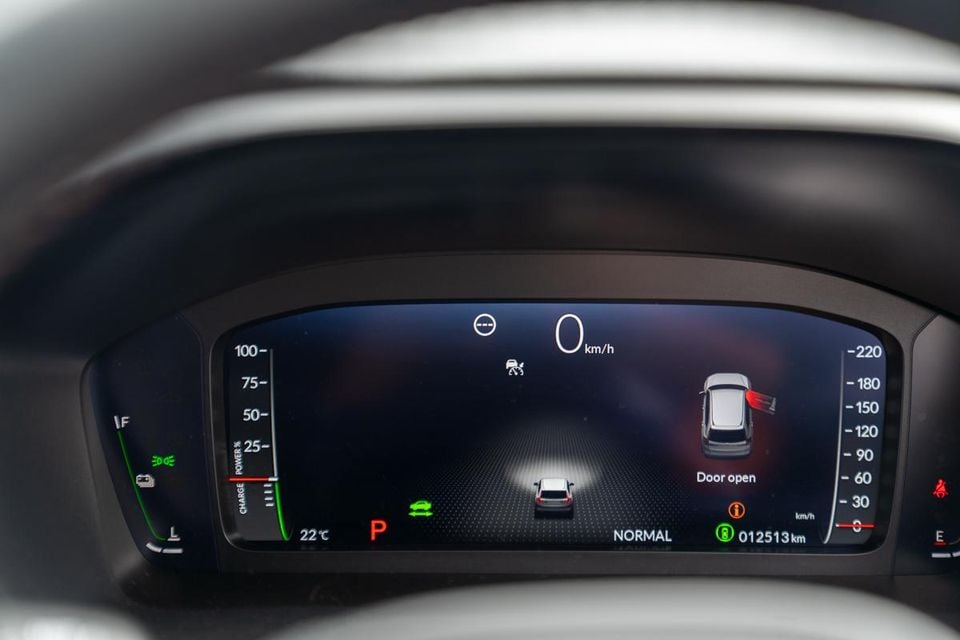
The 10.2-inch digital instrument cluster is crisp and clear, with a logical layout of information, and it's less prone to glare from harsh sunlight under its cowl than those that follow the modern trend with floating screens. The display can be altered through different themes, from traditional round gauges to rising bar graphs on either side to show road speed and energy deployment.
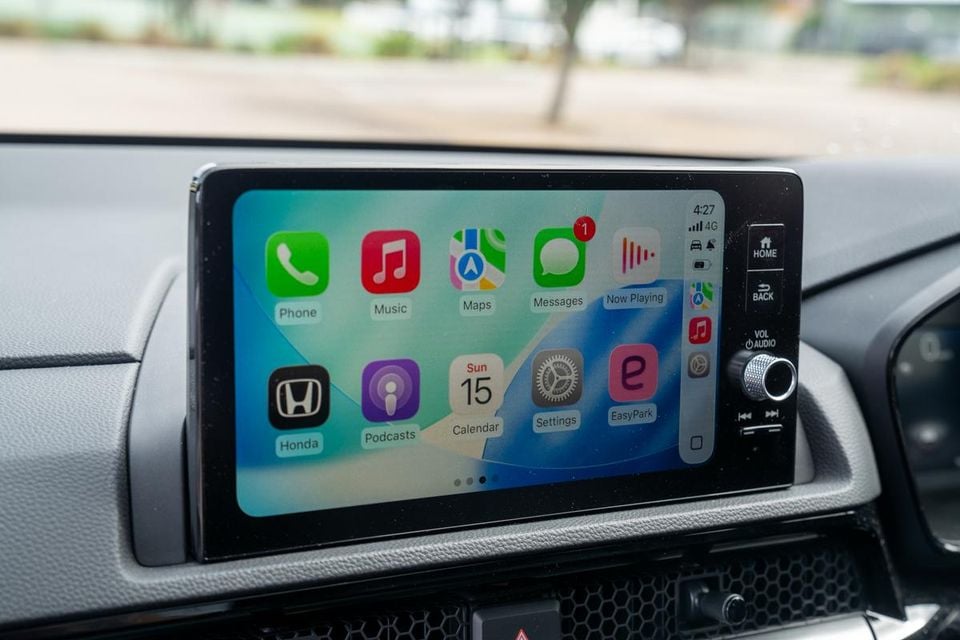
What the 9.0-inch central infotainment touchscreen lacks in size (and wow factor for the kids) it more than compensates for by being easier to use thanks to physical controls for the audio volume and track forward/backward, plus exit and home buttons.
The menu structure is also simple with phone-style widgets for all the main functions, including its array of Google Built-In elements such as Maps, Apps and Assistant.
Plus it has wireless smartphone mirroring for both Apple and Android devices, which connect seamlessly every time, a wireless phone charger in the large tray at the base of the centre console, and the Bose sound system is crystal-clear and has good staging throughout the cabin.
In terms of conveniences, there are two cupholders positioned just right in the centre console, large door pockets big enough for one-litre water bottles, a decent sized glovebox, and a deep lidded bin between the front seats.
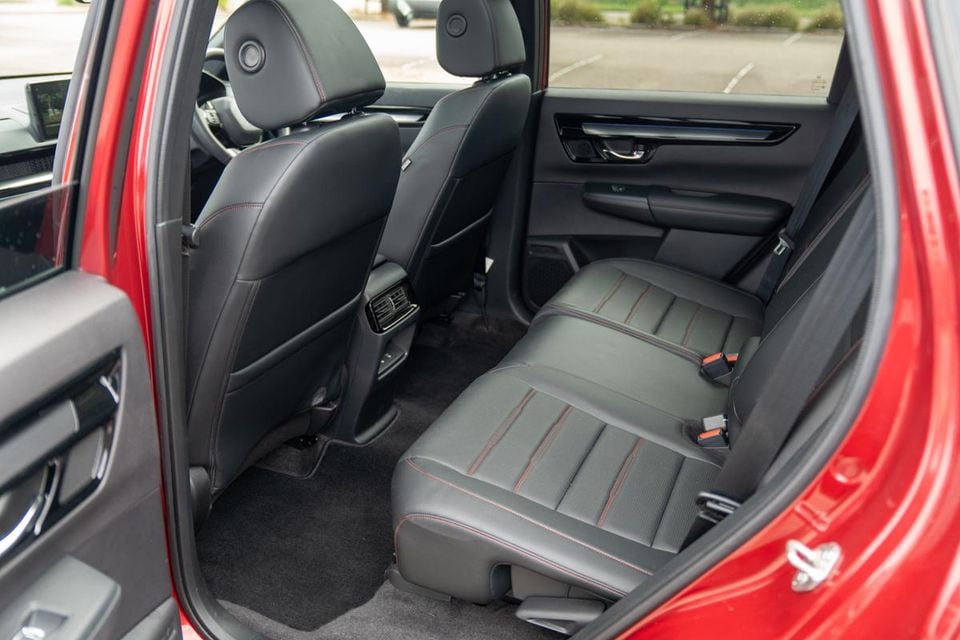
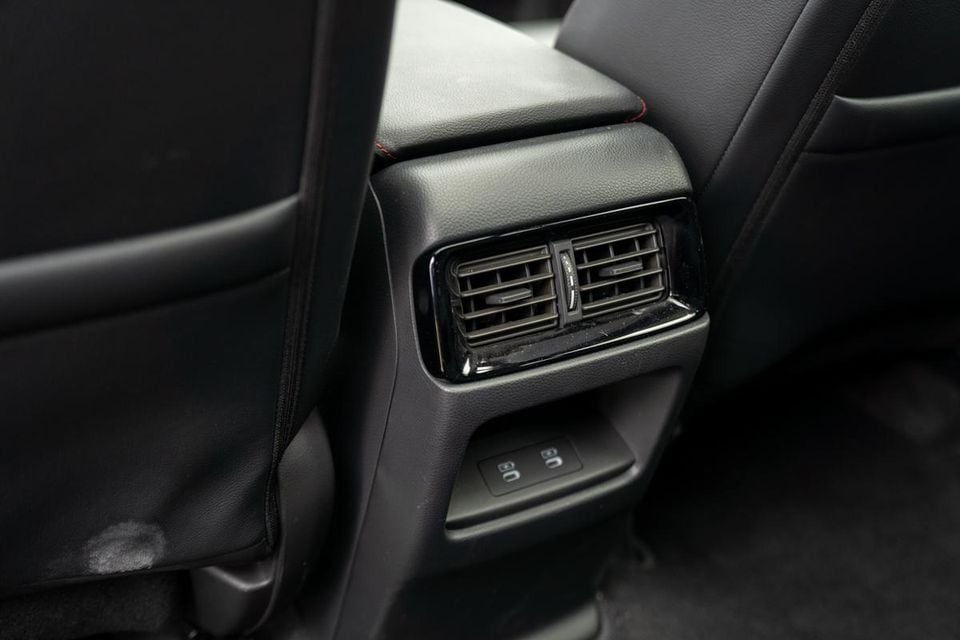
For those in the back, there is generous legroom for outboard seat occupants, adjustable air vents, two USB-C power outlets, and a flip-down armrest with cupholders. It’s super-spacious for two but the raised transmission tunnel in the centre restricts the middle seat to little ones.
Behind them, the boot offers 581 litres of cargo carrying capacity, which is more than enough to cater for everyday family duties, and can expand up to 1636L with the 60:40-split/folding seatback flipped down.
Our CR-V was also fitted with a host of genuine Honda accessories designed to enhance the load-lugging experience, including a cargo net and neoprene floor protector, a plastic boot mat for wet item storage, and a cargo organiser box with three separate areas that attaches to the carpet and is easy to install and remove.
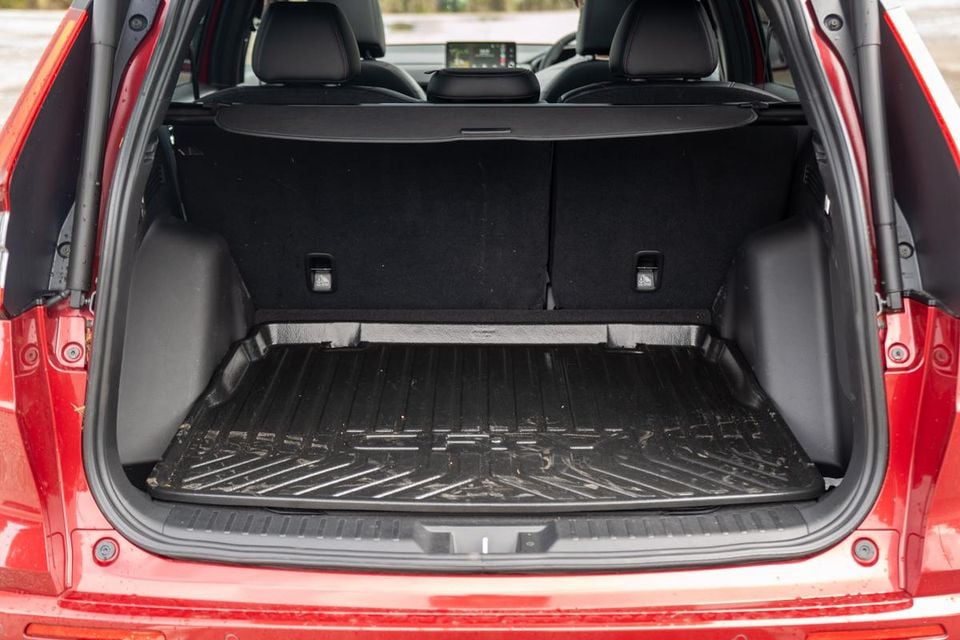
| Dimensions | Honda CR-V e:HEV RS |
|---|---|
| Length | 4704mm |
| Width | 1866mm |
| Height | 1681mm |
| Wheelbase | 2701mm |
| Cargo capacity | 581L |
To see how the Honda CR-V lines up against the competition, check out our comparison tool
The e:HEV RS is currently the only CR-V variant available with a hybrid powertrain, which combines a 2.0-litre four-cylinder petrol engine with a continuously variable automatic transmission (CVT) that houses a pair of electric motors. Unlike some other rivals, the system only drives the front wheels.
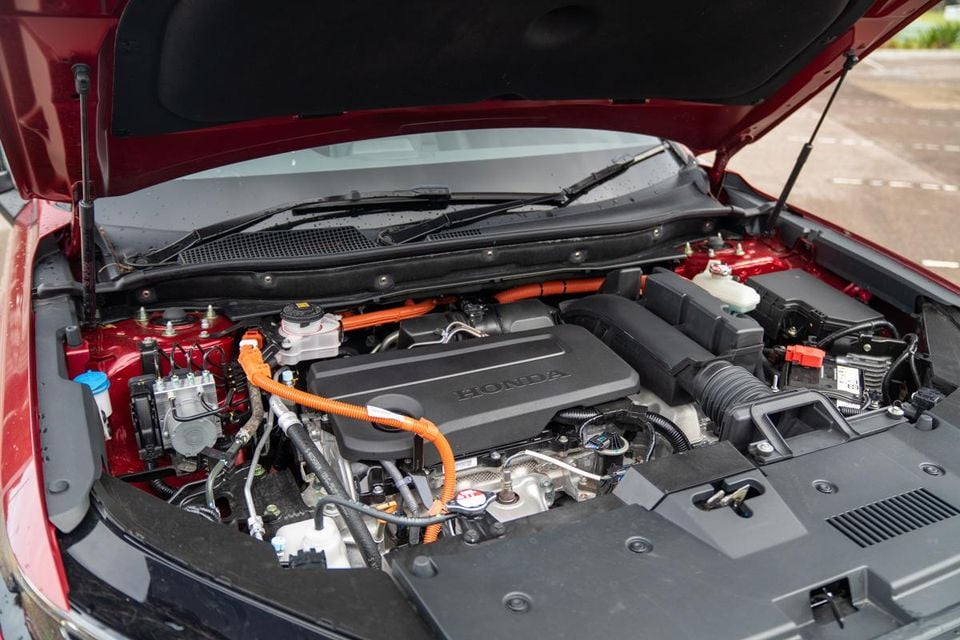
| Specifications | Honda CR-V e:HEV RS |
|---|---|
| Engine | 2.0L 4cyl hybrid |
| System outputs | 135kW 335Nm |
| Battery | 1.05kWh |
| Transmission | e-CVT |
| Drive type | Front-wheel drive |
| Weight | 1771kg |
| Fuel economy (claimed) | 5.5L/100km |
| Fuel economy (as tested) | 5.8L/100km |
| Fuel tank capacity | 57L |
| Fuel requirement | 91-octane regular unleaded |
| CO2 emissions | 125g/km |
| Emissions standard | Euro 6b |
| Braked tow capacity | 750kg |
Honda does not state separate power outputs for the combustion engine and electric motors, but claims combined power outputs of 135kW of power and 335Nm of torque.
It also claims combined fuel consumption of 5.5L/100km. With a 57L fuel tank, that equates to just over 1000km between re-fills.
After a week behind the wheel, which included a fair amount of freeway driving, so far it has proven to be almost as efficient as Honda’s claim, with the trip computer currently showing an average of 5.8L/100km.
But we're planning to do suburban motoring, where the hybrid powertrain is more efficient because it employs the electric motors more often, so we’ll see how far that comes down.
To see how the Honda CR-V lines up against the competition, check out our comparison tool
The Honda CR-V is an excellent example of what modern family motoring should be.
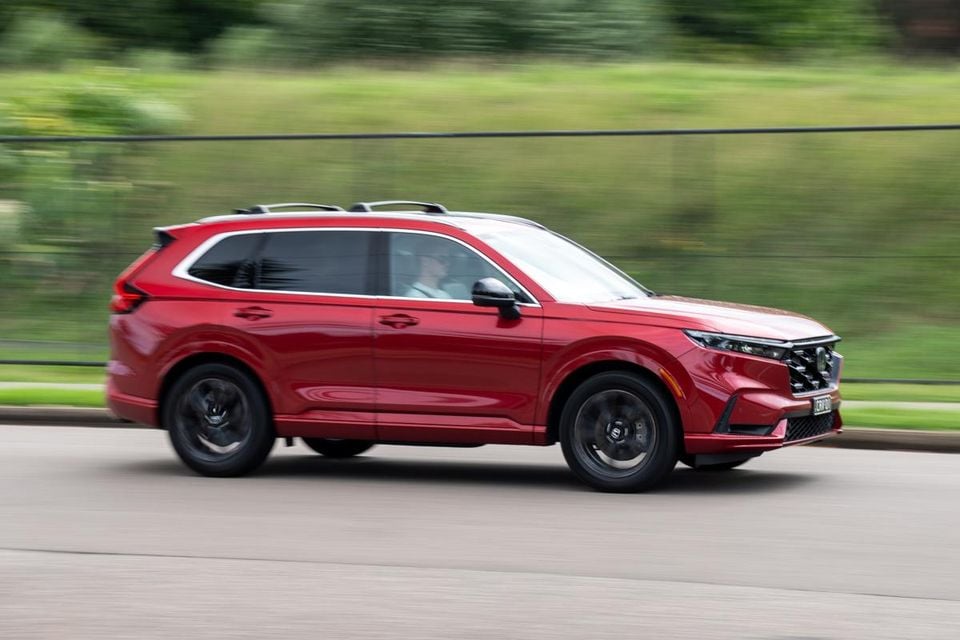
For starters, it feels more car-like than most SUVs thanks to solid and secure handling, top-notch body control, compliant ride quality, and positive steering feel.
In fact, there’s a real sense of quality engineering about the CR-V’s driving character; there are no tricky electronic dampers here, or the need to choose a certain mode for it to perform at its best, just well calibrated basics that make it feel comfortable and refined.
The same element of simplicity applies to the powertrain. Just leave the computers to do their thing in blending the petrol and electric power sources and you’ll get the optimal experience.
Sure, the numbers don’t quite justify the sporty RS badge but it does feel more muscular than they suggest as the electric motors provide seamless and effortless acceleration from any speed. They do most of the heavy lifting around town in stop-start traffic, and it’s barely perceptible when the petrol engine kicks into life.
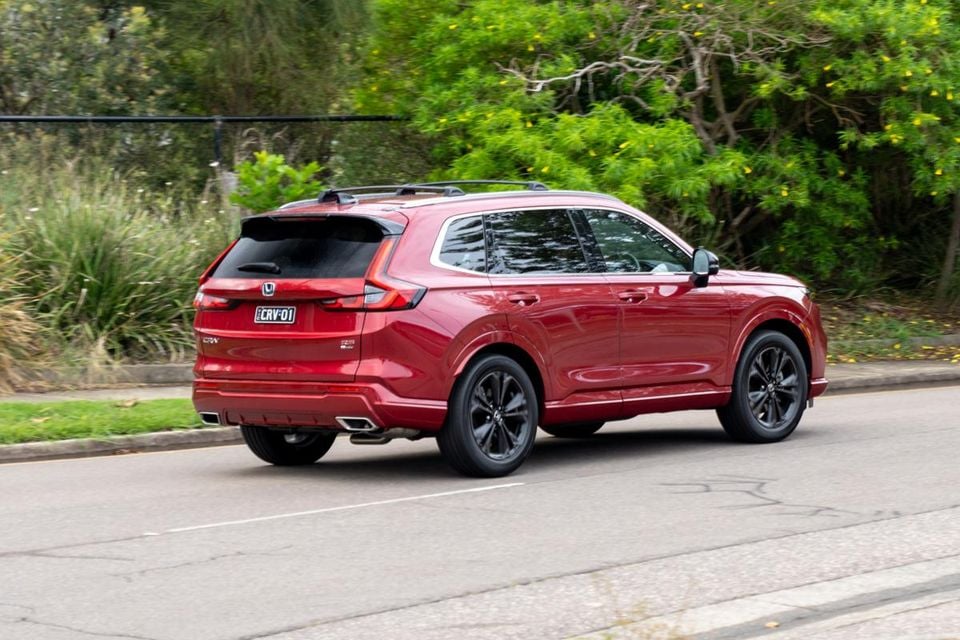
What makes the Honda setup unique – and ultimately efficient – is that one of the electric motors is predominantly dedicated to recharging the battery so there is always electrical energy on tap.
Another element that stands out is the natural brake feel. Where other hybrids feel rather wooden when slowing down using the electric motor to harvest energy back into the battery pack, the CR-V has a much more consistent feel through the entire range of the brake pedal’s stroke.
Overall refinement levels are also high, making the CR-V a pleasant place to be whether it's under hard acceleration away from the lights or while cruising on the freeway. We'll drill deeper into all of these attributes in our next long-term test instalment.
To see how the Honda CR-V lines up against the competition, check out our comparison tool
As you’d expect for the range-topping variant, the e:HEV RS comes loaded with a generous level of standard equipment.

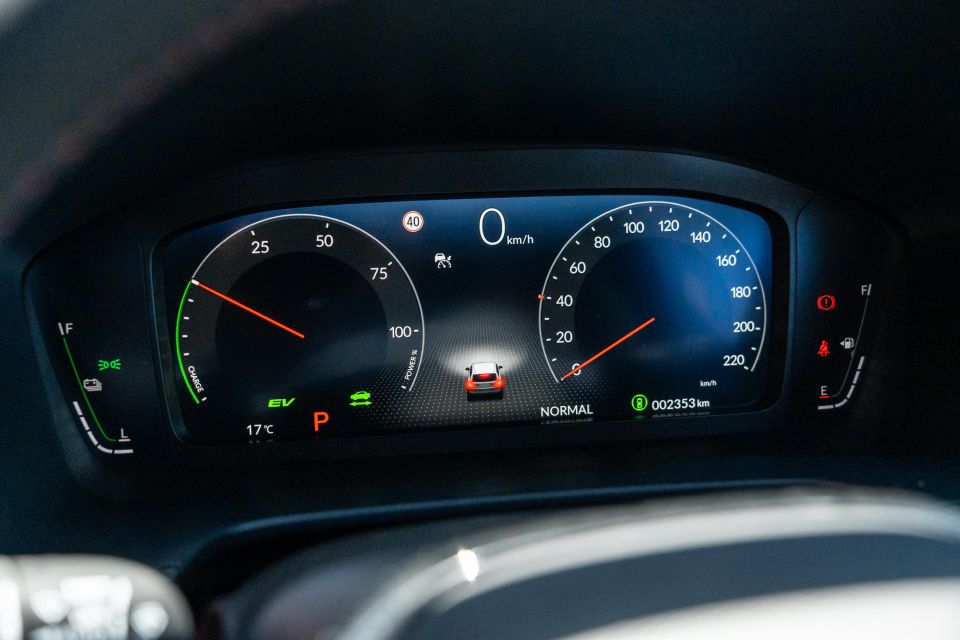
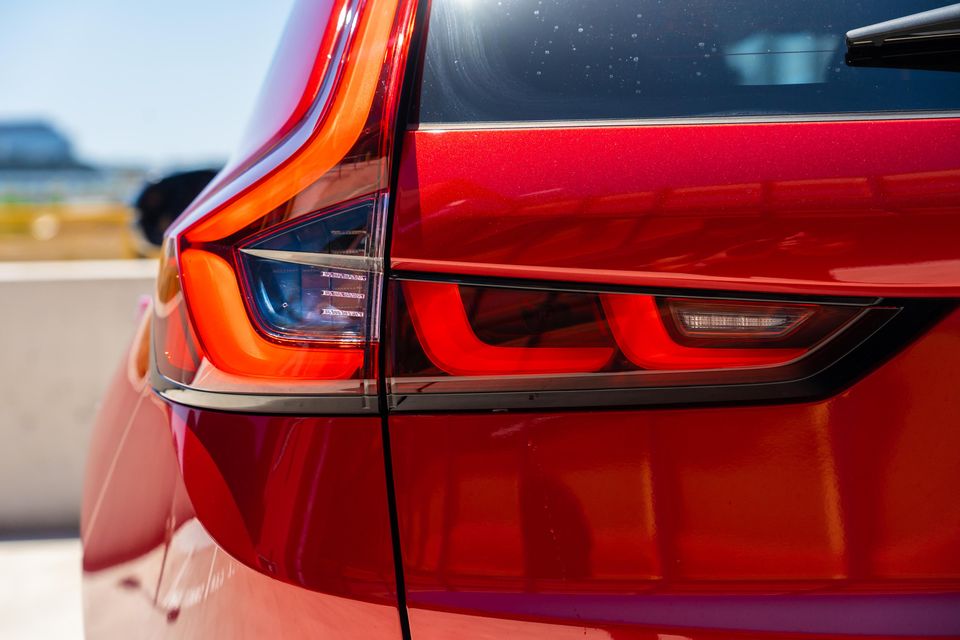
2026 Honda CR-V e:HEV RS equipment highlights:
To see how the Honda CR-V lines up against the competition, check out our comparison tool
Despite its extensive number of safety features, the CR-V has a four-star ANCAP rating based on testing conducted in 2024.
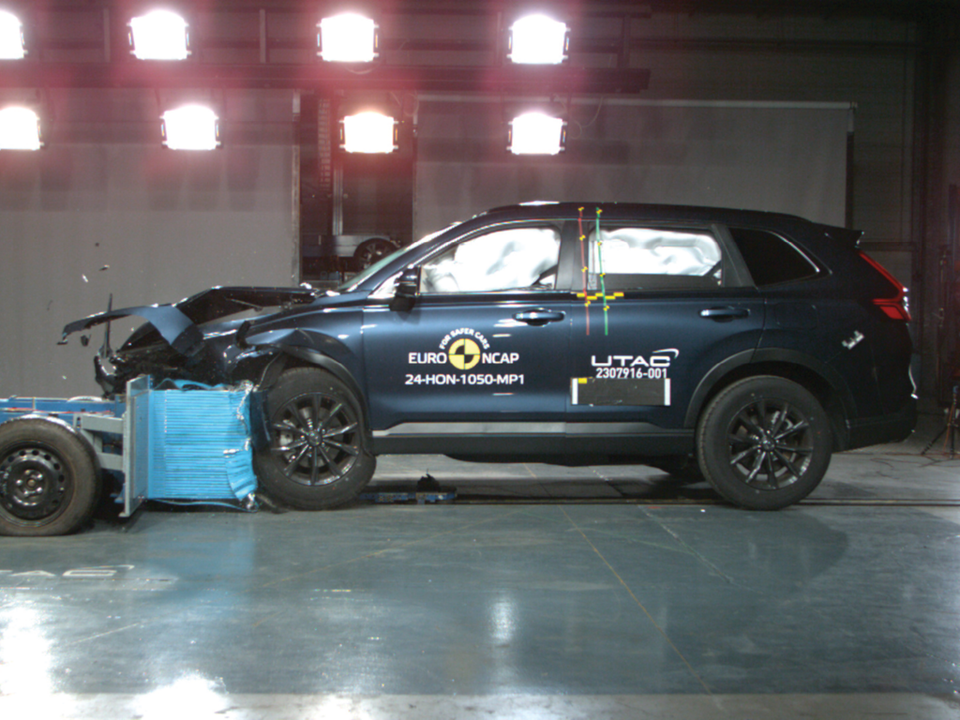
| Category | Honda CR-V |
|---|---|
| Adult occupant protection | 88 per cent |
| Child occupant protection | 88 per cent |
| Vulnerable road user protection | 76 per cent |
| Safety assist | 68 per cent |
The Honda CR-V is equipped with a comprehensive suite of advanced driver aids and crash-avoidance systems under the banner of Honda Smart Sensing.
Standard safety equipment includes:
Unlike many of its rivals, Honda has done an exemplary job of calibrating all of the safety systems to the point where they feel invisible. In other cars, functions such as the lane keeping or speed limit warnings are so overzealous and even annoying that you immediately want to deactivate them – which is obviously counter-productive to having them in the first place – but that’s not the case with the CR-V.
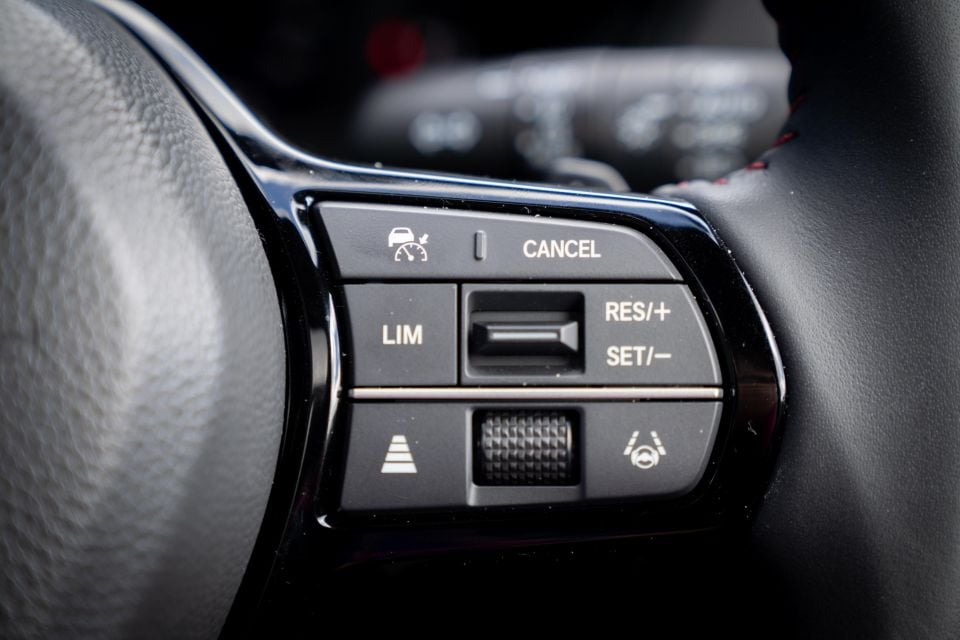
The cabin is equipped with eight airbags, including a driver’s knee airbag and a centre airbag between the front occupants, as well as ISOFIX mounting points and top-tether anchors for child restraints in the outboard rear seats.
Owners are also provided with five years free access to the Honda Connect telematics system that in the event of an accident automatically contacts the customer care centre, which can then assist emergency services to find the exact location if required.
Honda Connect also allows users to access functions via a smartphone app, allowing the ability to remotely activate the climate control to cool down the cabin before departing, turn on the headlights or activate the car alarm, and lock and unlock the doors. They can also set up geofencing and speed limits for the vehicle when it's driven by another family member or friend, which will automatically notify the owner if either is breached.
To see how the Honda CR-V lines up against the competition, check out our comparison tool
The e:HEV RS claws back its premium purchase price with class-leading running costs. The CR-V is normally covered by Honda's standard five-year, unlimited-kilometre warranty with free roadside assistance. But runout vehicles come with an extended aftersales coverage period of eight years.
CarExpert brings reviews, research tools and trusted buying support together, guiding you from research to delivery with confidence.
| Servicing and Warranty | Honda CR-V e:HEV RS |
|---|---|
| Warranty | 8 years, unlimited kilometres |
| Roadside assistance | 8 years |
| Service intervals | 12 months or 10,000 kilometres |
| Capped-price servicing | 5 years |
| Total capped-price service cost | $199 each, $995 total |
As for servicing, the CR-V requires maintenance every 12 months or 10,000km (whichever comes first), with the first five scheduled services capped at just $199 each.
Our long-term CR-V is due for its first major check-up soon, so we will get to experience the service process during our loan and report back.
To see how the Honda CR-V lines up against the competition, check out our comparison tool
With the mid-size SUV segment being so saturated with cheap newcomers that promise a lot for less, it’s difficult for the CR-V to stand out from the crowd. And it’s easy to dismiss the only hybrid variant (currently) in the range because of its premium price tag.
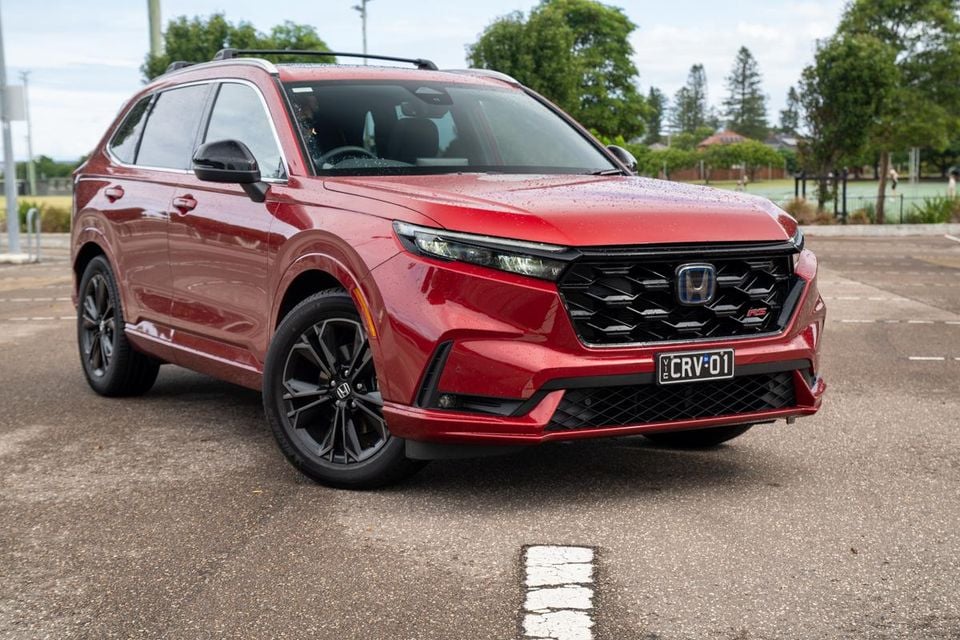
However, much of that purchase price difference will potentially be offset by its superior long-term resale value.
That aside, as a vehicle, the CR-V is much more convincing in the real world than many of its cheaper rivals. It has one of the most spacious and flexible cabins in its class, is comfortable and enjoyable to drive, offers genuine efficiency and a high level of safety, and is among the most affordable to maintain.
Now, let’s see if our first impressions change over the course of this long-term review, or if the e:HEV RS has more surprises in store.
CarExpert can save you thousands on a new Honda CR-V. Click here to get a great deal.
Click the images for the full gallery
CarExpert brings reviews, research tools and trusted buying support together, guiding you from research to delivery with confidence.
Honda CR-V
Honda CR-V Sales rolling 12-months#
*Based on VFACTS and EVC data
Looking for complete Honda CR-V price history?
Our Honda CR-V Pricing Page shows exactly how prices have changed over time.
2025
$38,526
2024
$41,621
2025
$44,351
2025
$44,739
2025
$50,649
2025
$53,887
2025
$54,459
Add CarExpert as a Preferred Source on Google so your search results prioritise writing by actual experts, not AI.
Andrew Maclean
6 Hours Ago


William Stopford
2 Days Ago


James Wong
2 Days Ago
James Wong
3 Days Ago

Max Davies
3 Days Ago
James Wong
4 Days Ago
Add CarExpert as a Preferred Source on Google so your search results prioritise writing by actual experts, not AI.
# Based on VFACTS and EVC data
* Average savings based on recent CarExpert customer transactions. Actual savings will vary depending on vehicle make and model, location, stock availability, and other factors.
† Displayed prices exclude on-road costs such as delivery charges, registration fees, number plates, insurance and applicable road taxes. These prices are subject to change without notice and may not reflect current market pricing or dealer offers.
 Automotive Vehicle Spec Data & 4K images Powered by JATO Dynamics Ltd