


William Stopford
BYD, Tesla, MG and Skoda the latest brands to earn five-star safety ratings
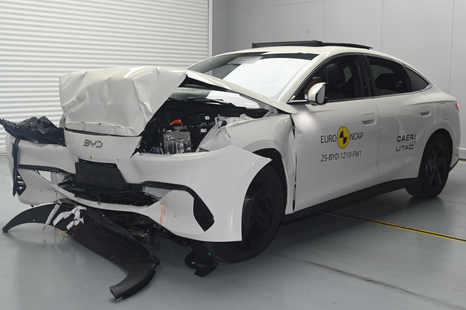
The new Tesla Model Y L, MG 4 EV Urban and BYD Seal 6 and updated Skoda Octavia have all earned five-star safety ratings.
2 Days Ago
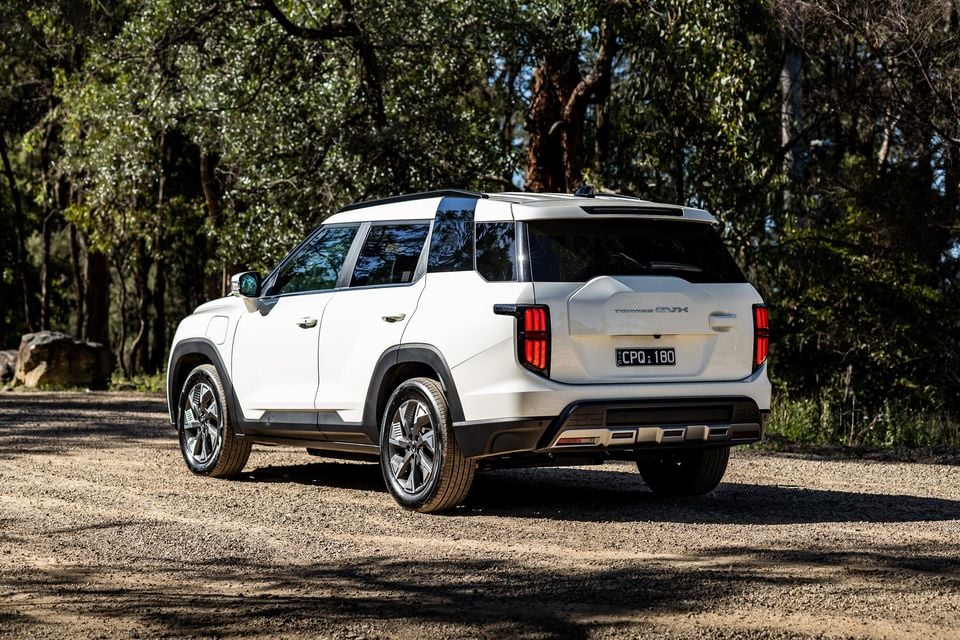
Distinctive design, a fully electric powertrain and plenty of space. The Torres EVX is an interesting mid-size SUV...
CarExpert brings together reviews, research tools and trusted buying support, guiding you from research to delivery with confidence.
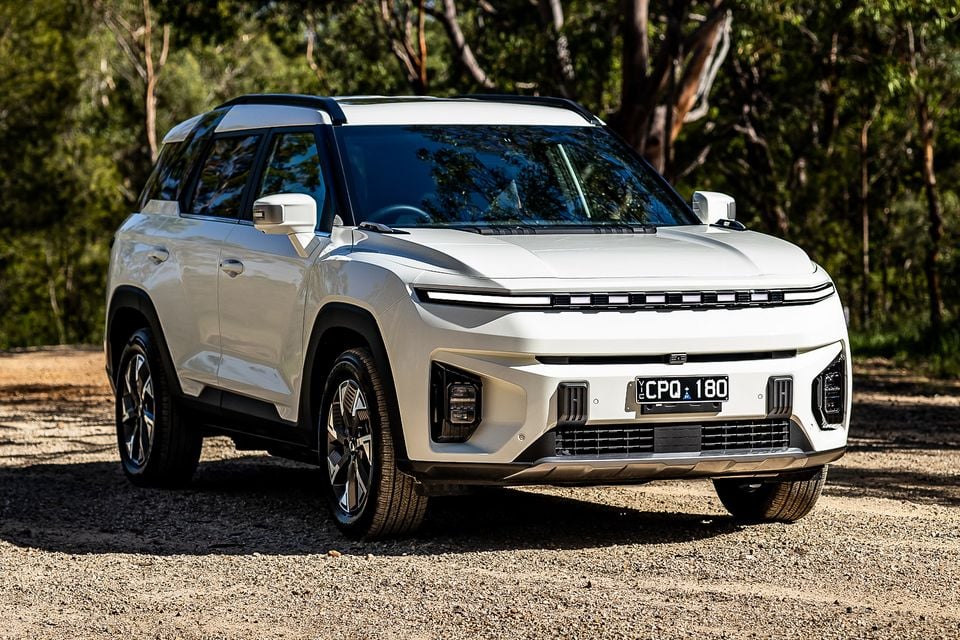
KGM is rolling out electrified models at quite a pace – and this one is the fully electric Torres EVX.
It follows on from the Torres Hybrid, and the related Musso EV ute, all of which are underpinned by the same monocoque platform (not the ladder frame on which the diesel Musso is based).
However, this mid-size electric SUV has a battery pack sourced from BYD, and some of the specs seem pretty promising.
But has the auto brand previously known as SsangYong got the price right for a front-wheel drive electric crossover in the hard-fought medium SUV segment?
There’s just one version of the KGM Torres EVX on sale in Australia.
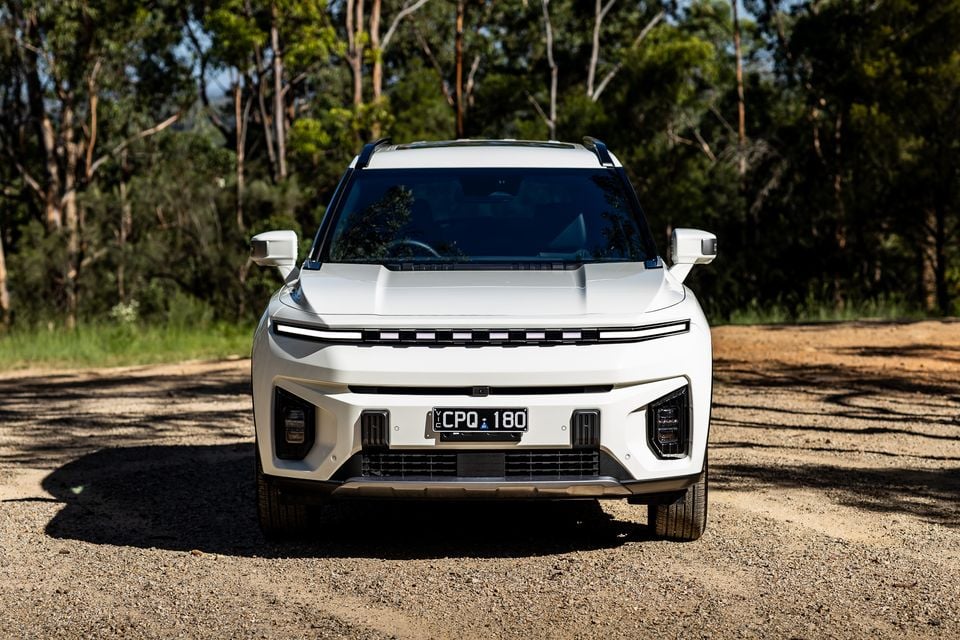
| Model | Drive-away pricing |
|---|---|
2026 KGM Torres EVX | $58,000 |
There are rivals out there with more range for similar or less money, and from brands that might hold their value better, too.
The Toyota bZ4X 2WD is priced at $55,990 before on-road costs, but if you buy it through the brand’s financial services arm, you could get an extra $5000 off. And it’s a Toyota, with almost 600km of range.
Or you could look at the GAC Aion V, starting from $42,990 plus on-roads, and while it's a bit smaller on the outside, it’s a roomy machine inside and has heaps of gear for the money. More than 500km of EV range, too.
To see how the KGM Torres EVX lines up against the competition, check out our comparison tool
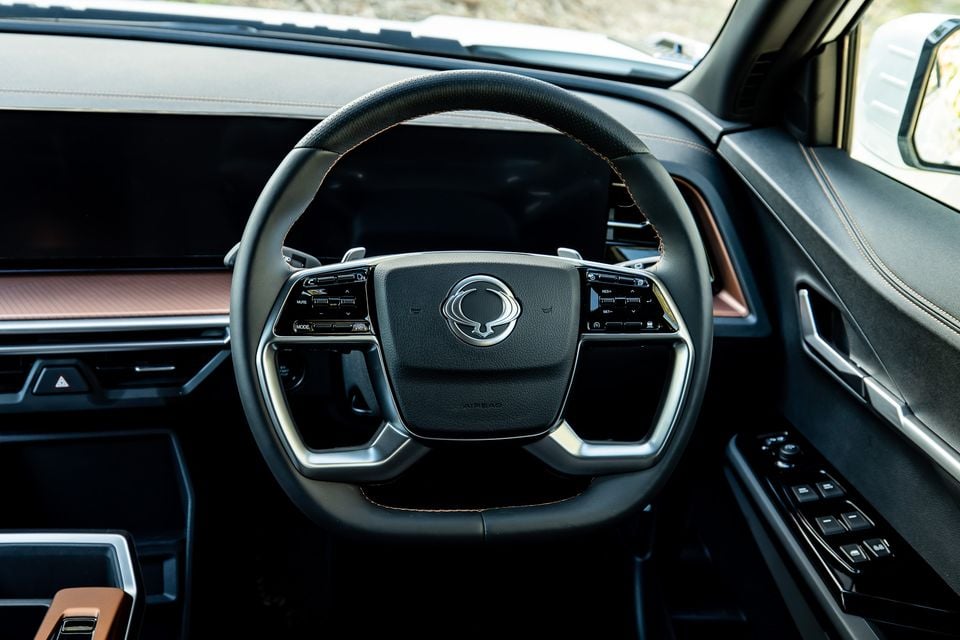
If you’ve seen any other current-gen KGM model on this platform, the interior design is going to feel very familiar.
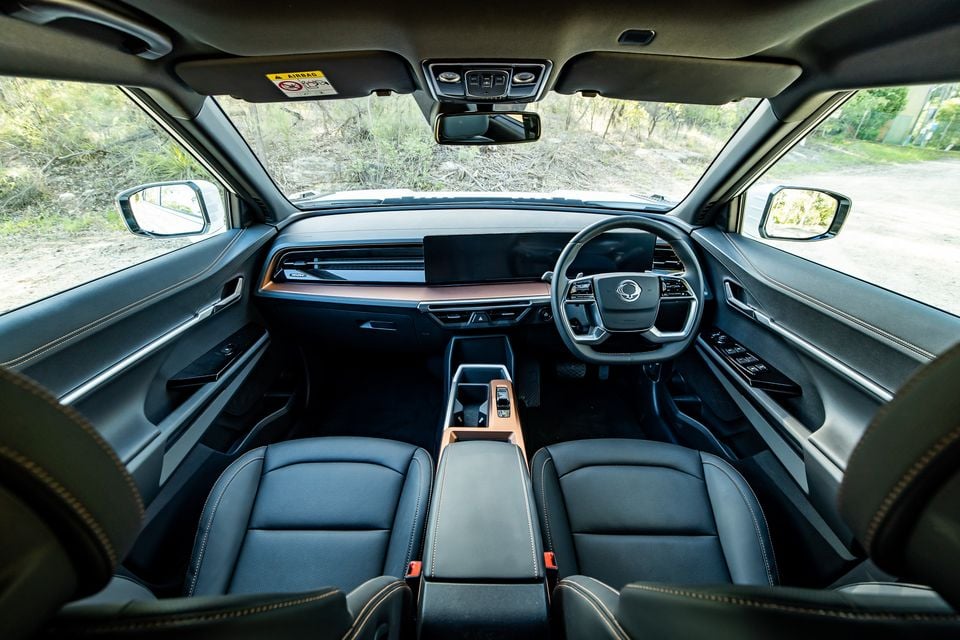
There’s a lot of dark material finishing, but the copper tones that are evident throughout make a marked difference, with a panel on the dash and the same tone of stitching through the seats and doors.
Combined with the ambient lighting and tidy touchscreen housing, it all looks impressive in a minimalist kind of way.
The twin 12.3-inch digital screen layout has no buttons or dials, so that might be a problem for some. There is a side panel for main controls and menu switching, and a pop-out menu for climate control and the controls for front seat heating and ventilation, as well as steering wheel heating, fan speed, temp, recirc, demister, and air direction.
But I think a bigger issue is the lack of wireless Apple CarPlay or Android Auto connectivity, and there’s no wireless phone charger, either. It’s plug-and-play (and power!) only. I had a couple of moments when the screen seemed somewhat delayed in its responses when using USB-connected CarPlay, too.
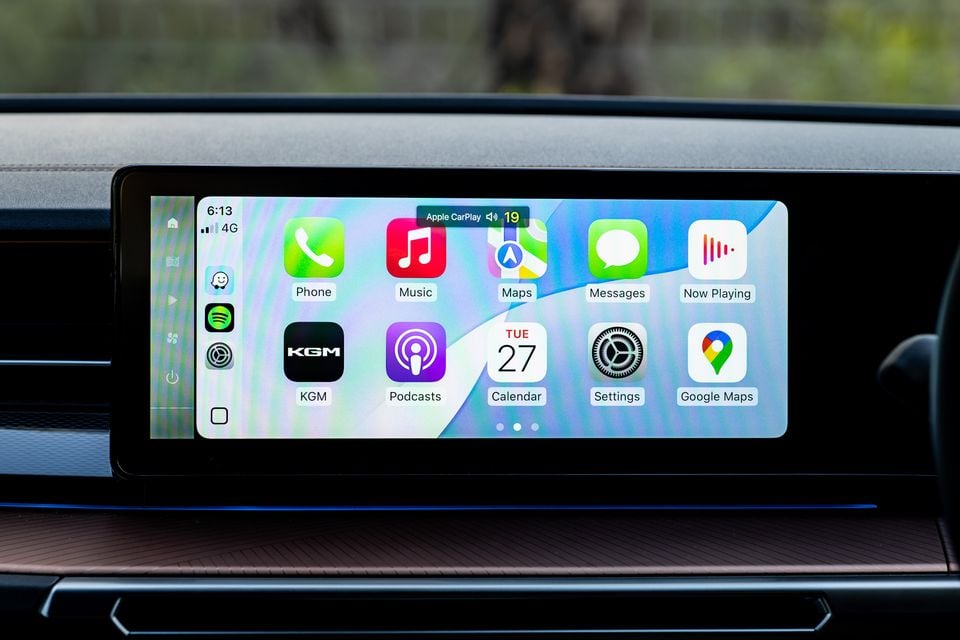
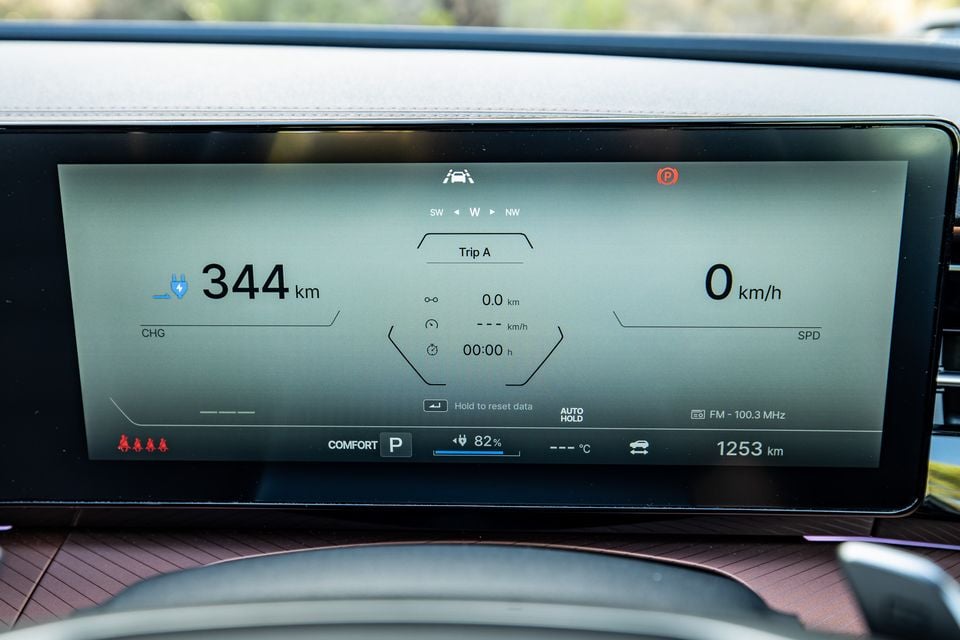
One little quirk that could potentially take only a software update to fix is the fact the home menu panel is all the way over to the left of the touchscreen, meaning it is quite a reach for the driver to jump between menus.
You need to get used to the drop-down menu being important on this screen, too. It houses a number of different controls including your Auto Hold button (more detail on that in the driving section) but also your drive mode selector and much more.
There’s also an EV Mode screen that allows you to see what’s happening with your battery pack and also configure the settings for charging timers and settings, and even an ‘at a glance’ view of how long your charging times will be.
The storage on offer in the cabin area is great, but one thing about it really needs to be improved. The section in front of the gear selector can theoretically holster your phone (with a USB cable poking through to keep it connected and charging), but unless you’re running an iPhone 3G, said phone will tumble out or tip over very easily.
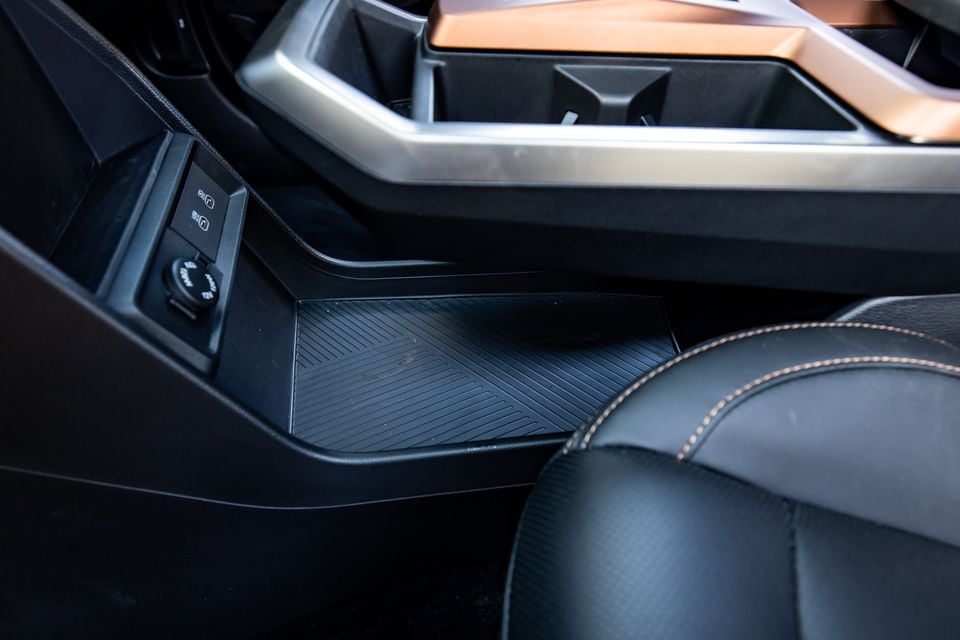
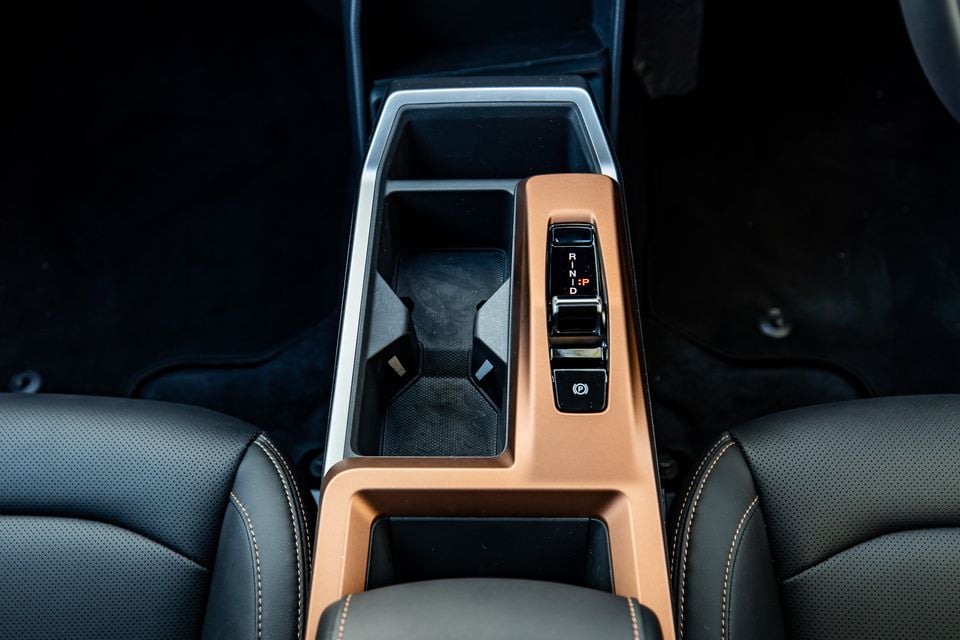
Above the front USB-C ports is a small shelf that you could probably pop a phone or a wallet into, while below it is a rubber-matted storage section for loose items. There are also cupholders, a centre console bin, and a soft-padded armrest.
In the doors there are big pockets with bottle holders and large sleeves, and the glove box is a reasonable size as well – yes, it has one, with a normal handle.
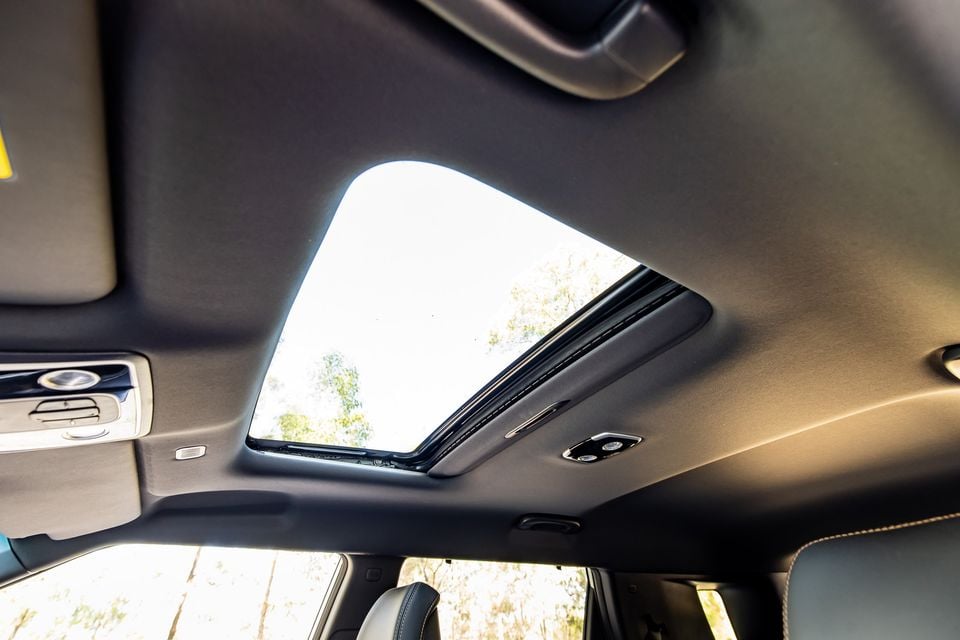
No sunglasses holder, but you do get illuminated vanity mirrors on both sun visors, and they extend out too. And there’s a ‘regular’ or ‘conventional’ sunroof as well, which when open allows a lighter and airier feel up front, because the black headlining is, well, dark.
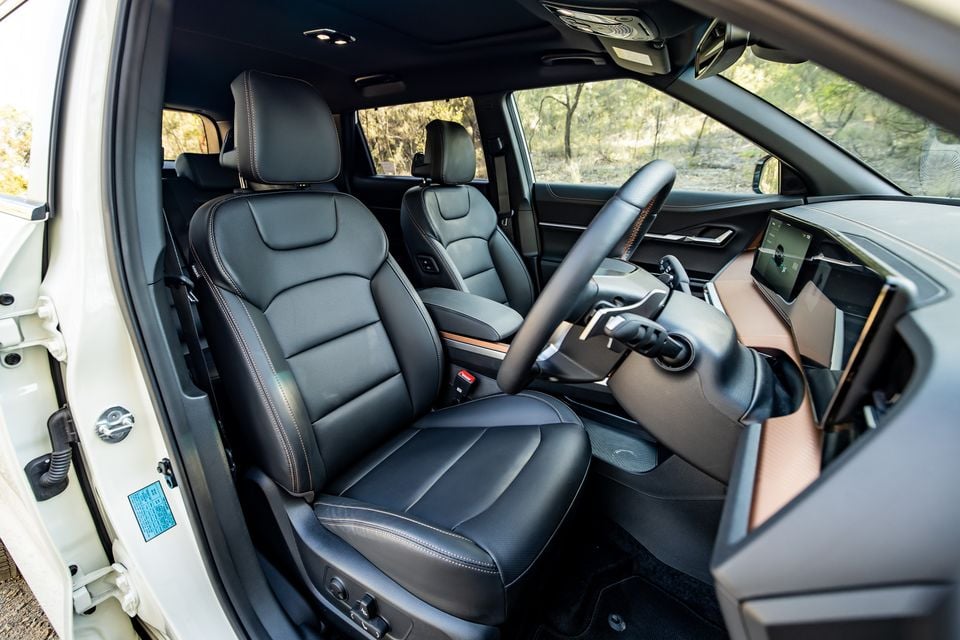
Back-seat space is great, with my 6’0”/182cm frame able to sit behind my own driving position with space to spare in front of my knees. Toeroom is generous, and headroom is brilliant. If you’ve got a six-footer in your family, they’ll fit in the back. The kink in the car’s roofline really allows a bit more space.
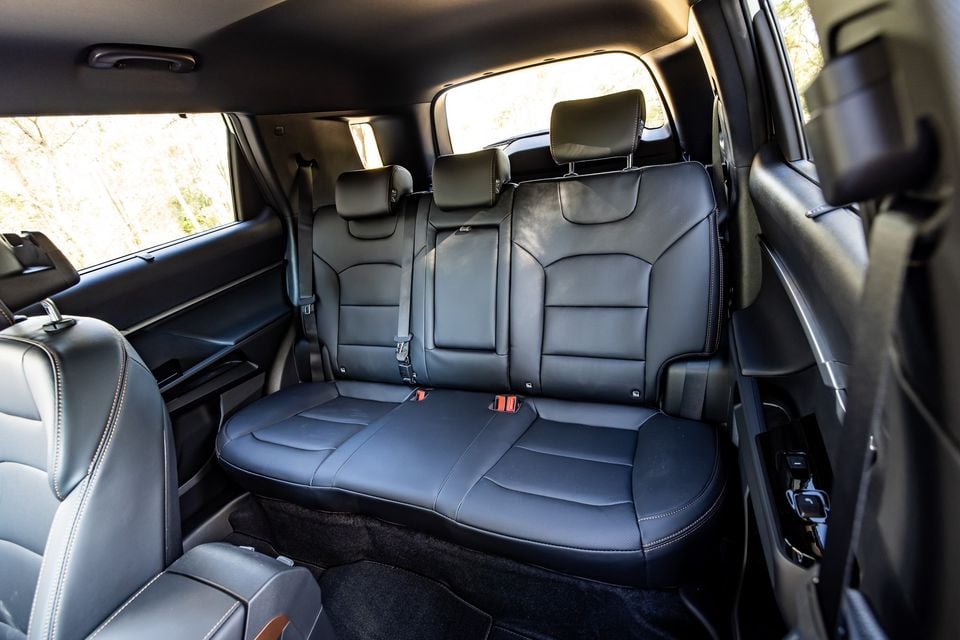
There are grab handles and hooks for storage, and centrally mounted overhead lights, but you can’t turn them on individually. Parents will get why that could be a problem.
There are standard retractable manual sun blinds, big bottle holders in the doors, multiple pockets on the seatbacks, and a flip-down armrest with cupholders.
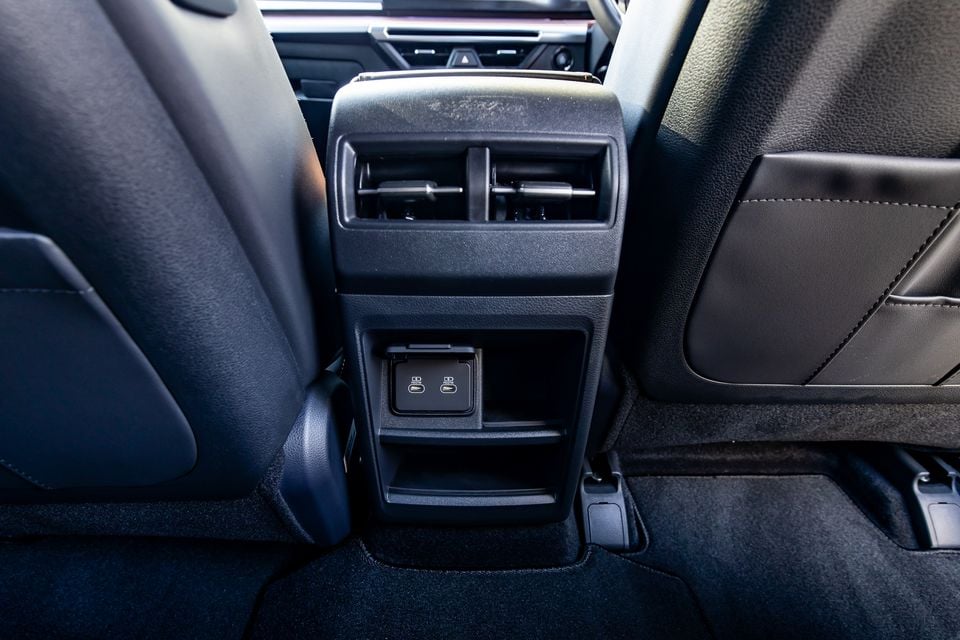
A pair of USB-C ports and directional air vents are housed in the centre area, but while there is a transmission tunnel to contend with if you are planning to put three across, it is a pretty wide cabin. The window seats have ISOFIX child seat anchors and there are three top-tethers, too.
The rear seat also offers a level of recline in a 60:40 split, which is handy for road trips, but the seatback isn’t recline-adjustable.
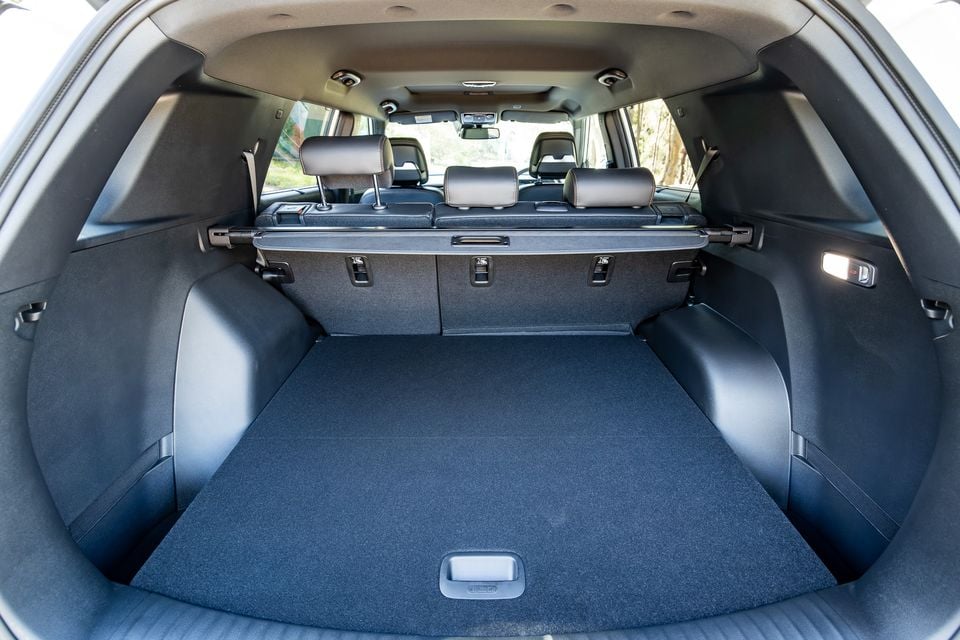
The boot offers a competitive amount of cargo capacity – 465 litres to the seatbacks or 703L to the ceiling – with the same amount of cargo space as the hybrid models.
It has a retractable cargo cover, a pull-down shopping bag hook, a light to the side, and an interior electric tailgate button – very handy for shorties who can’t reach the button on the boot lid.
Underneath the boot, however, you will not find a spare wheel – instead you just get a tyre repair kit. That's frustrating, considering there’s a bolt hole and space to mount a space-saver, though it’s not officially offered.
| Dimensions | KGM Torres EVX |
|---|---|
| Length | 4705mm |
| Width | 1890mm |
| Height | 1720mm |
| Wheelbase | 2680mm |
| Cargo capacity | 703L (rear seats up, to roof) 1526L (rear seats folded) |
To see how the KGM Torres EVX lines up against the competition, check out our comparison tool
The KGM Torres EVX is only offered with one powertrain option in Australia, and this fully electric model doesn’t push the boundaries for power, torque, range or charging specs…
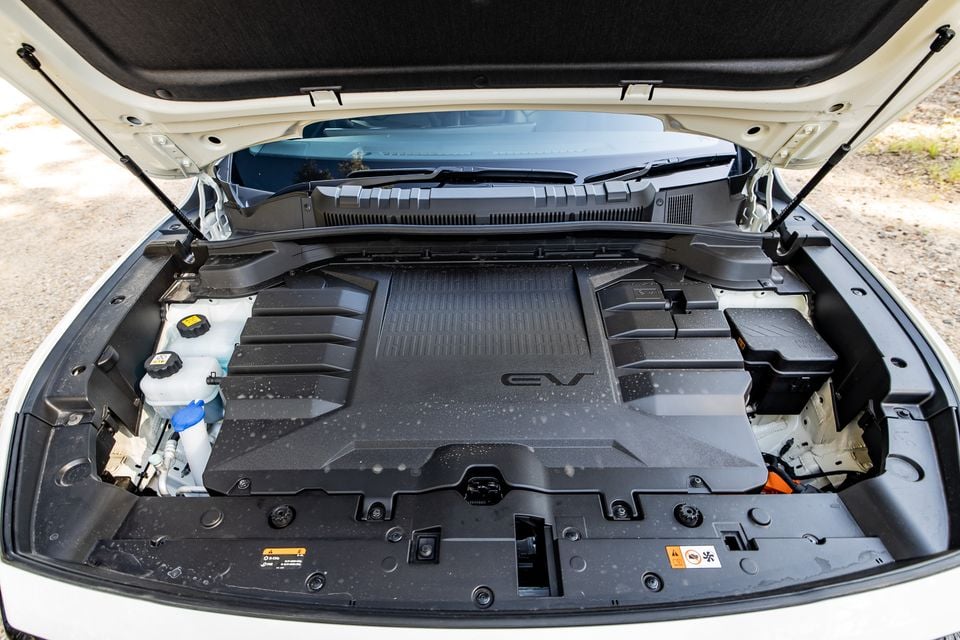
| Specifications | KGM Torres EVX |
|---|---|
| Drivetrain | Single-motor electric |
| Battery | 80.6kWh LFP |
| Power | 152kW |
| Torque | 339Nm |
| Drive type | Front-wheel drive |
| Weight | 1915kg |
| Energy consumption (claimed) | 18.7kWh/100km |
| Energy consumption (as tested) | 21.7kWh/100km |
| Claimed range (WLTP) | 462km |
| Max AC charge rate | 10.5kW |
| Max DC charge rate | 164kW |
There are some positive considerations here. Some budget EVs offer slower AC and DC charging, but this is reasonably good on both fronts.
And the EV driving range is probably what you’d call 'acceptable' for this type of vehicle, but as I mentioned above, some cheaper rivals offer more than 500km of rated range.
And the thing with sourcing battery tech from BYD? Well that company’s expertise is reassuring, but the reality is that LFP battery systems aren’t as efficient as NMC setups.
The latter – with more than 80kWh of capacity – would likely equate to more than 600km of driving range. But here you’ve got a big battery with a smaller-than-expected range.
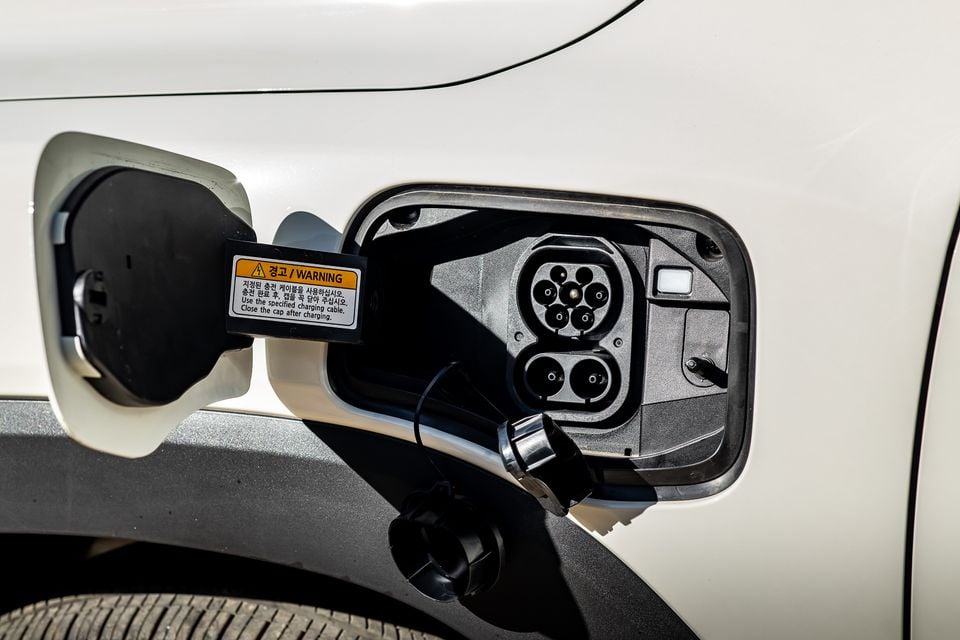
Anyway, it’s not as efficient as I'd hoped. On my test, I saw a displayed energy consumption of 21.7kWh per 100km, which is high for a basic front-drive EV doing normal things.
But, in appealing news for urban drivers who don’t have off-street parking – the charge-port location is on the passenger-side front quarter panel, which will make pulling into kerb chargers simpler. Just make sure you pull in really close if it’s a nose-in parking spot for charging.
As for the charging speed? The maximum potential DC recharge rate at 400A is 164.8kW, which is somewhat of a theoretical calculation. I’d say you’d be better off expecting a maximum recharge rate of 130kW on DC. I plugged in to see what I’d get, and it topped out at 118kW on a 37-degree Celsius day.
For what it’s worth, KGM states that 10-80% DC charging at a 100kW charger should take about 46 minutes, while a 300kW charger would cut that to 35 minutes or so.
To see how the KGM Torres EVX lines up against the competition, check out our comparison tool
I recently drove the hybrid version of the Torres, which I thought was an improvement. This one? Even better.
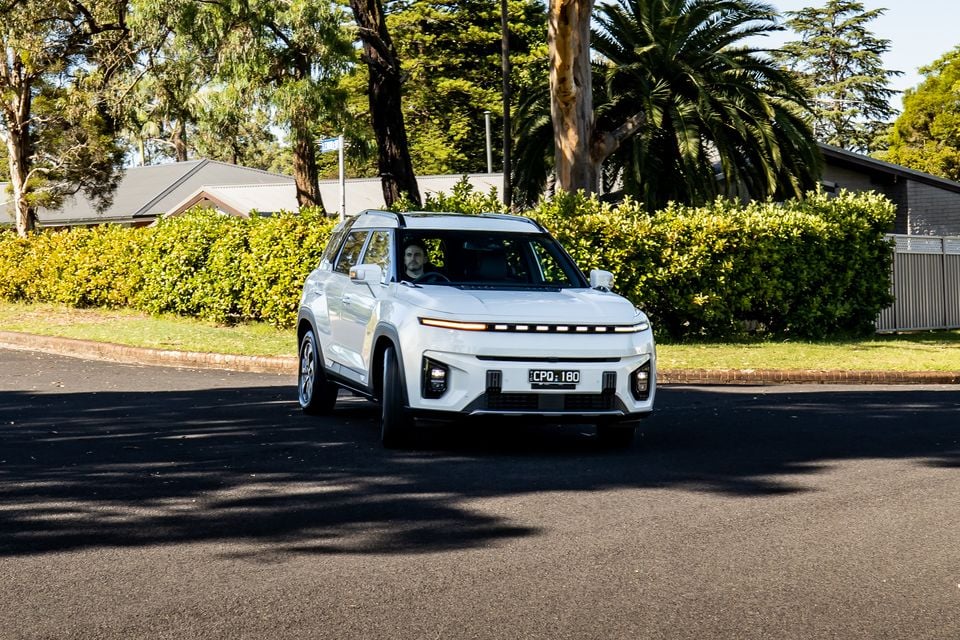
Partly, that comes down to the simple nature of EVs. They’re smooth, eager, and offer easily enough grunt for most people’s needs.
Even ones like this – which isn’t a headline-grabber in terms of the outputs – hustles along with heaps of shove when you need it, and of course it’s super-smooth. And while it is front-wheel drive, the power output is reasonably well delivered.
There is a single-speed transmission managing things, and therefore there's nothing to whinge about there… well, almost nothing.
The biggest issue with the drive experience is the gear selector. Maybe it’s just because I drive hundreds of cars each year, but the fact you have to either ‘double shift’ to get from R to D (or vice-versa), or just hold it for more than a second to get it to switch up or back, can be really annoying.
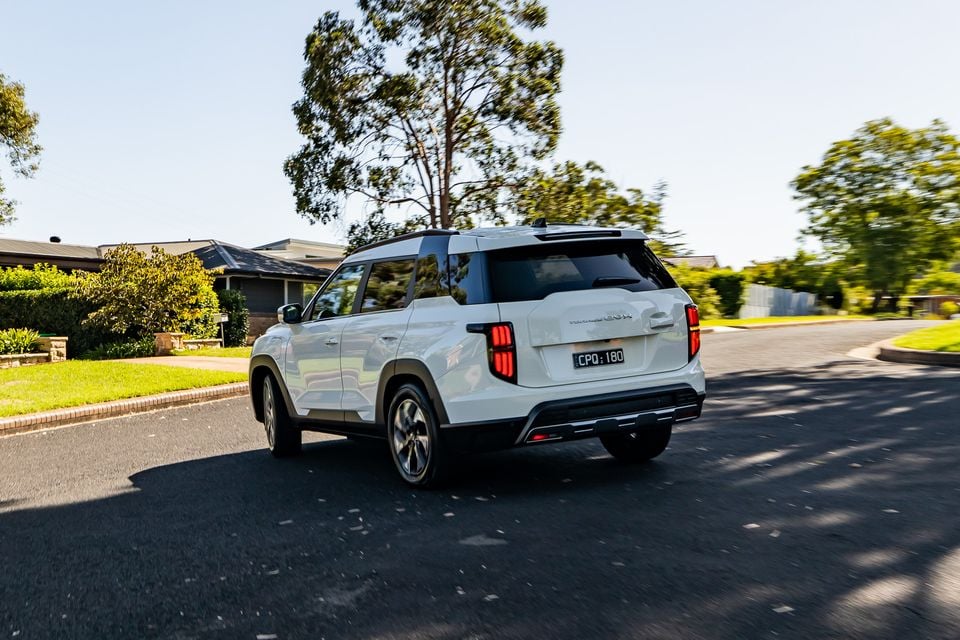
Say you’re trying to quickly do a three- or five-point turn in a suburban street. You WILL, and I guarantee this, mistakenly not select the gear you want.
You’ll also want to make sure Auto Hold is engaged, because if you do mistakenly end up selecting Neutral when you want R or D, it’ll roll forward or backward if Auto Hold isn’t on.
Beyond that, you’ve got a configurable regenerative braking system with paddle-shift adjustment to make it easier to change between the modes. The most assertive setting isn’t quite a single-pedal, come-to-a-complete-stop style ‘e-pedal’ mode, but you can do most driving moves just using the throttle if you want it to be that strong. Three modes means it’s easy to set it how you prefer.
The brake pedal feel beyond the regen is honest enough, with a progressive travel and reasonably strong stopping performance. It certainly felt a bit more reassuring than the KGM Musso EV ute I drove recently.
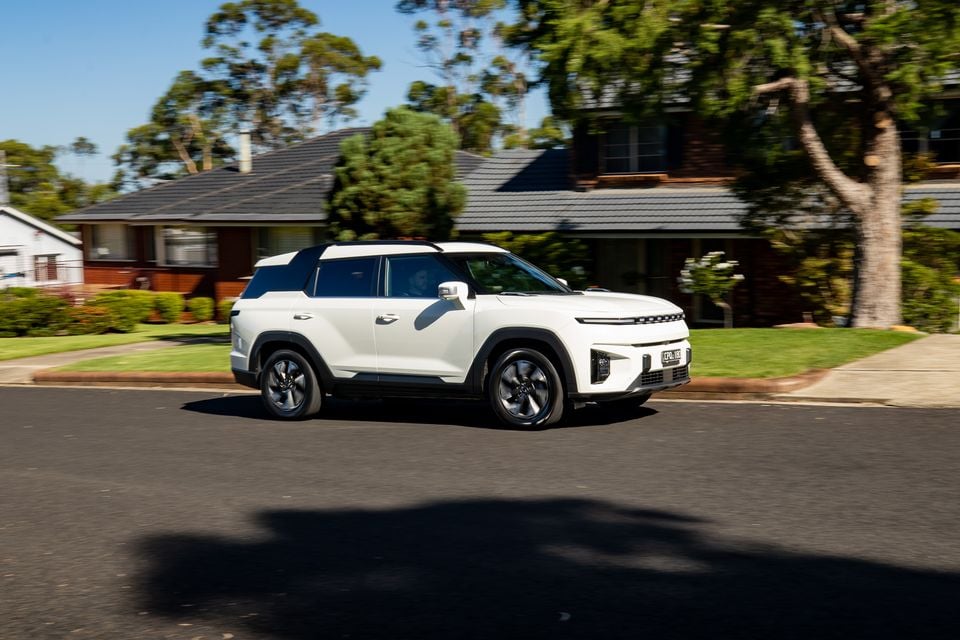
The suspension manages most bumps pretty well, but like many EVs the Torres has a bit of a weight issue to consider, and so it can transmit some of the little lumps and bumps in the surface more than you’d hope.
It isn’t constantly being jostled around, though, and while there's noticeable body roll when you change directions at pace, it handles itself well. The tyres are fine, but not the most assertive feeling when it comes to grip levels.
Other safety considerations include the excellent surround-view camera, and there are other great inclusions that won’t get on your nerves, too.
No bing-bong nonsense from driver monitoring cameras or the speed-sign technology constantly misreading the road rules. There is a lane keeping assist feature, but you can long-press the steering wheel button for it to go away.
Overall, it’s not a bad thing to drive, and seemingly a pretty great thing to live with.
To see how the KGM Torres EVX lines up against the competition, check out our comparison tool
One spec, and a decent list of standard inclusions for the KGM Torres EVX.
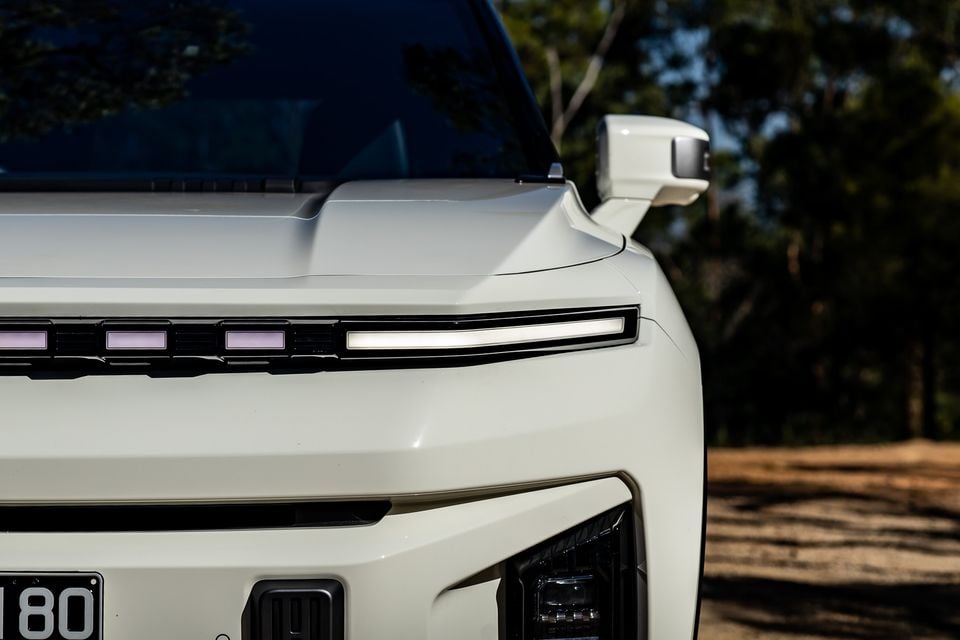
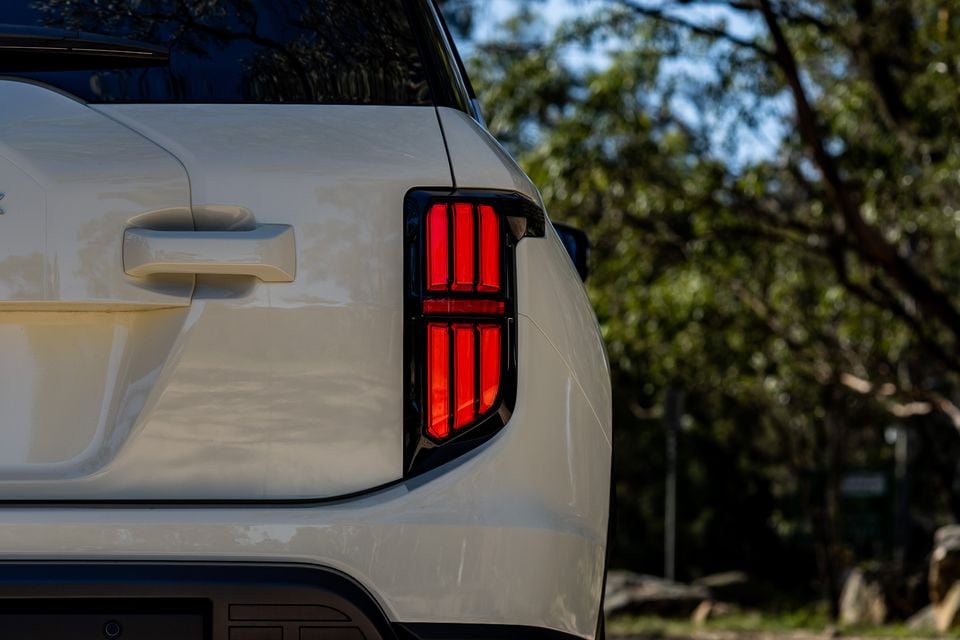
CarExpert brings together reviews, research tools and trusted buying support, guiding you from research to delivery with confidence.
2026 KGM Torres EVX equipment highlights:
What’s missing? A few things.
There is no wireless phone charging, no wireless smartphone mirroring tech, and no connected services, so there’s no app to control the car’s settings remotely from your phone. And there’s no spare wheel.
To see how the KGM Torres EVX lines up against the competition, check out our comparison tool
The KGM Torres still doesn’t have a safety rating from ANCAP or Euro NCAP. Based on the current requirements it wouldn’t score five stars, because the Gods of ANCAP are laser-focused on safety technology that annoys drivers immensely. This SUV doesn’t have those things, and it’s better to live with for that.
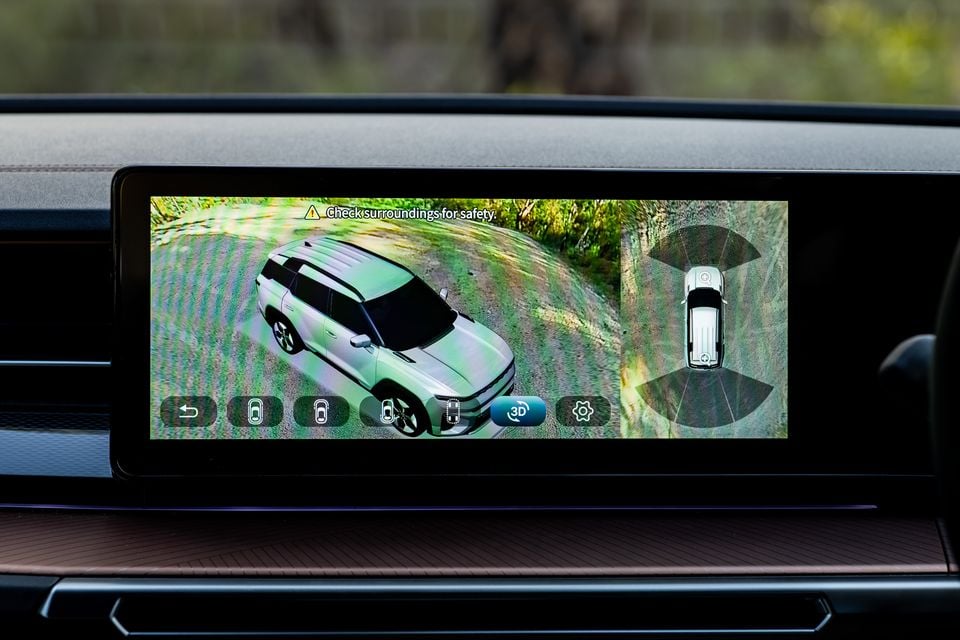
Standard safety equipment includes:
It has eight airbags: dual front, front side, driver’s knee, front centre, and curtain window airbags for both rows of seats.
To see how the KGM Torres EVX lines up against the competition, check out our comparison tool
KGM Australia offers a standard seven-year, unlimited-kilometre vehicle warranty.
| Servicing and Warranty | KGM Torres EVX |
|---|---|
| Warranty | 7 years, unlimited kilometres |
| Roadside assistance | 5 years |
| Service intervals | 12 months or 20,000km |
There’s great news if you plan to hang on to your Torres EVX for the long run, with a 10-year, unlimited-kilometre warranty for the BYD Blade high-voltage battery pack.
Maintenance is mostly easygoing, with an initial six-month/5000km service for free, but thereafter the intervals are 12 months or 20,000km.
There’s no traditional 'capped-price' service plan, but KGM offers “service pricing” covering seven years or 140,000km of maintenance.
Over that period, the average service cost – before some consumable items – is $285. Check out the KGM Australia site to see more info.
KGM Australia offers five years of free ‘call for help’ roadside assistance.
The biggest ownership cost – as with all new mainstream cars – will be the resale value. And frankly, at this point, EVs aren’t renowned for holding their value, no matter how good they are.
To see how the KGM Torres EVX lines up against the competition, check out our comparison tool
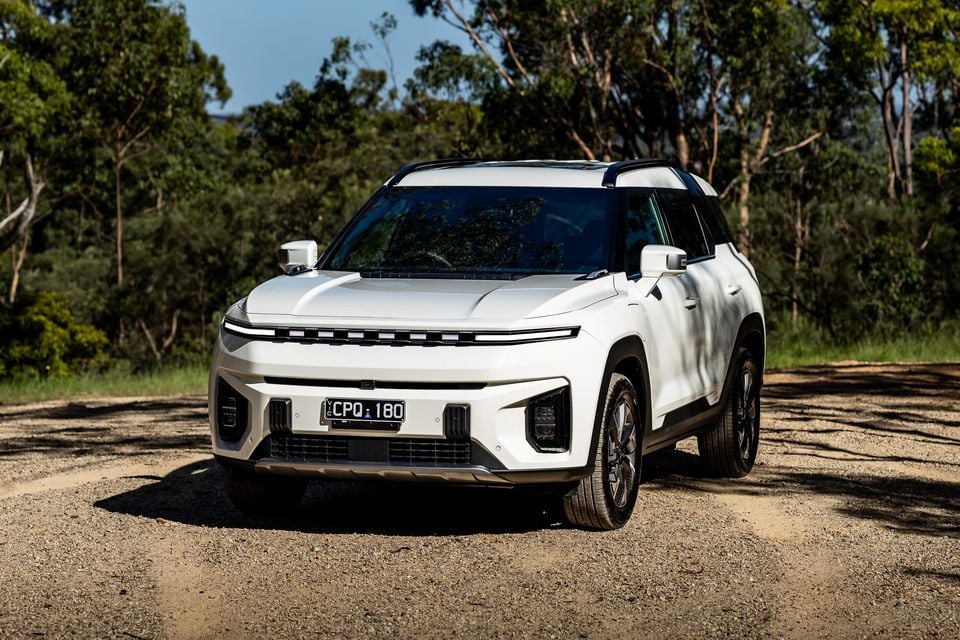
The KGM Torres EVX isn’t the best car in the mid-size electric SUV class, but if you like the way it looks and the space it offers, it could be a great choice for you.
Have your say in the comments section below – is it worth $58k with the specs and tech it has on offer?
Interested in buying a KGM Torres? Let CarExpert find you the best deal here.
Click the images for the full gallery
CarExpert brings together reviews, research tools and trusted buying support, guiding you from research to delivery with confidence.
Quickly see how this car stacks up against its competition. Select any benchmark to see more details.
2025
$38,000
2025
$43,000
2026
$46,862
2025
$47,000
2026
$49,872
2026
$58,000
Matt has more than a decade of experience in automotive journalism, and loves exploring the pros and cons of new cars, delving into deep-dive industry stories, and going for a drive just for the fun of it.
Add CarExpert as a Preferred Source on Google so your search results prioritise writing by actual experts, not AI.
William Stopford
2 Days Ago

Ben Zachariah
2 Days Ago

Max Davies
3 Days Ago

Josh Nevett
8 Days Ago
Max Davies
10 Days Ago
William Stopford
11 Days Ago
Add CarExpert as a Preferred Source on Google so your search results prioritise writing by actual experts, not AI.
# Based on VFACTS and EVC data
† Displayed prices are based on the drive-away price of the vehicle, which includes delivery charges, registration fees, number plates, and applicable road taxes, based on a Sydney location. However, prices may vary between states and territories, and additional costs such as compulsory third party (CTP) insurance, dealer delivery fees, and optional extras are not included. These prices are subject to change without notice and may not reflect current market pricing or dealer offers.
 Automotive Vehicle Spec Data & 4K images Powered by JATO Dynamics Ltd