The Kia Carnival needs no introduction – its prolific sales and familiarity effectively make it Australia’s go-to people mover.
In the first month of 2026, it commanded an astounding 90.6 per cent market share of the people mover segment, and its sales were up 124.3 per cent on January 2025. The second most popular people mover was the Hyundai Staria, with a comparatively minuscule 4.5 per cent share.
Kia seems to be tightening its grip on the segment, and recent news that the Carnival range is being pruned hasn’t yet turned people away. It’s true that from 2026 customers can no longer order new vehicles with the petrol V6 thanks to new emissions regulations, leaving only diesel and hybrid options on sale.
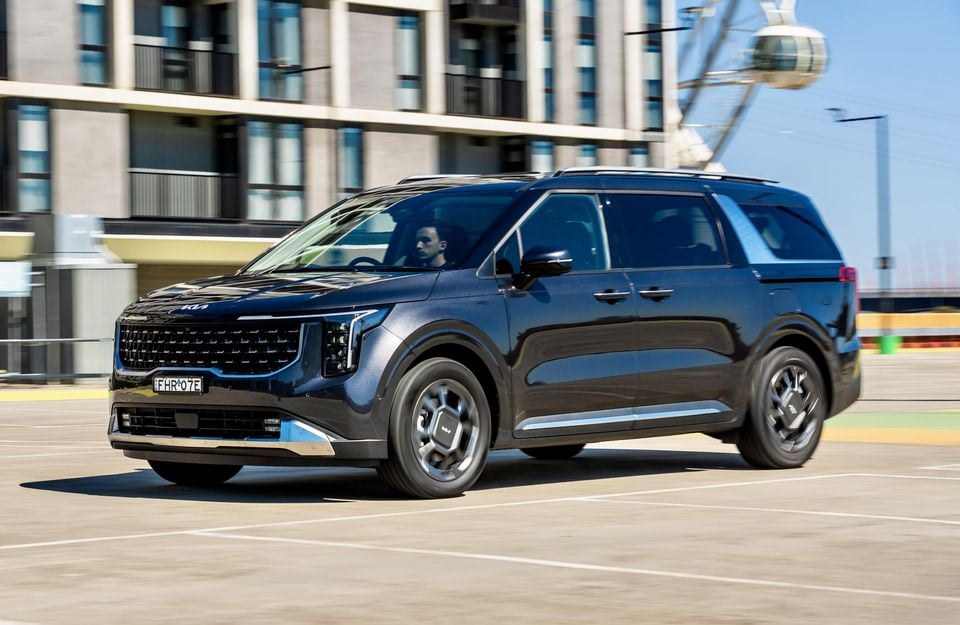
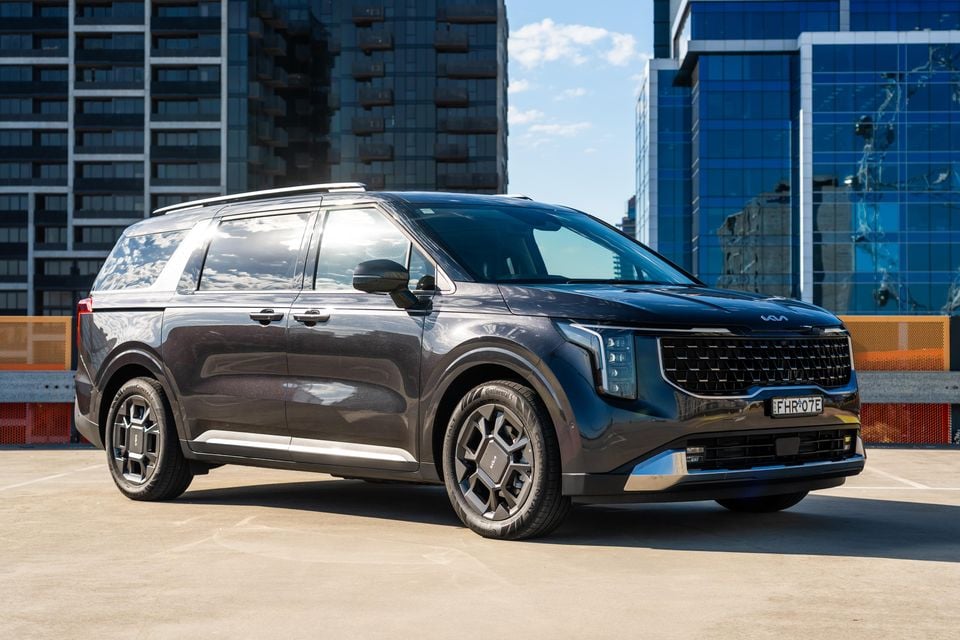
Only three variants in the Carnival’s eight-strong range are available with hybrid power, including the vehicle on test here: the 2026 Kia Carnival GT-Line HEV. It’s Kia’s flagship people mover, which means it gets the full bevy of gear available – something reflected in its price.
Is it the pick of the Carnival range or do the cheaper hybrids make more sense, or should you just go for a diesel?
How much does the Kia Carnival cost?
Our GT-Line HEV tester is the most expensive Kia Carnival currently on sale, priced at $76,630 before on-roads.
| Model | Price before on-road costs |
|---|
| 2026 Kia Carnival S diesel | $54,300 |
| 2026 Kia Carnival S HEV | $56,100 |
| 2026 Kia Carnival Sport diesel | $60,200 |
| 2026 Kia Carnival Sport+ diesel | $66,530 |
| 2026 Kia Carnival Sport+ HEV | $68,330 |
| 2026 Kia Carnival GT-Line Lite diesel | $70,500 |
| 2026 Kia Carnival GT-Line diesel | $74,830 |
| 2026 Kia Carnival GT-Line HEV | $76,630 |
The Carnival’s most direct rivals are all based on commercial vans. These include the Hyundai Staria, which tops out at $68,500 before on-roads for the Highlander AWD, and the Ford Tourneo, which tops out at $72,490 before on-roads for the Titanium X.
Find your perfect new car with CarExpert
Importantly, neither competitor is available as a hybrid.
Otherwise, there’s also the Volkswagen Multivan, priced at either $75,990 or $78,990 before on-roads, depending on the variant.
V6 petrol-powered Carnivals are no longer available to order from Kia, but some of them remain available in dealer stock, ranging in price from $52,070 to $72,600 before on-roads.
To see how the Kia Carnival stacks up against its rivals, use our comparison tool
What is the Kia Carnival like on the inside?
The Carnival is beginning to show signs of its age (the fourth generation was launched in January 2021 and facelifted in May 2024, before the hybrids were added in May 2025), but it still remains comfortable and functional.
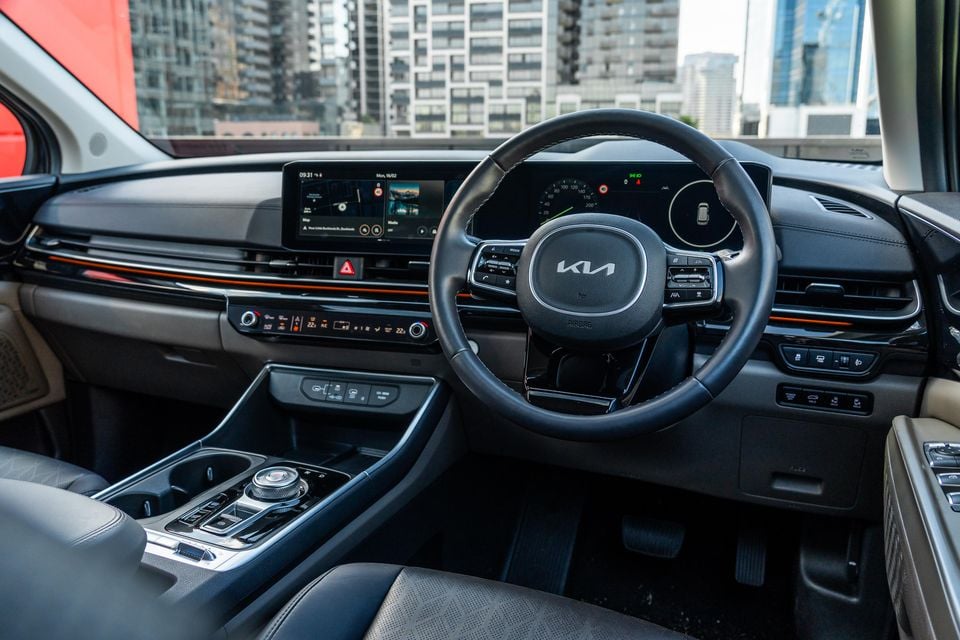
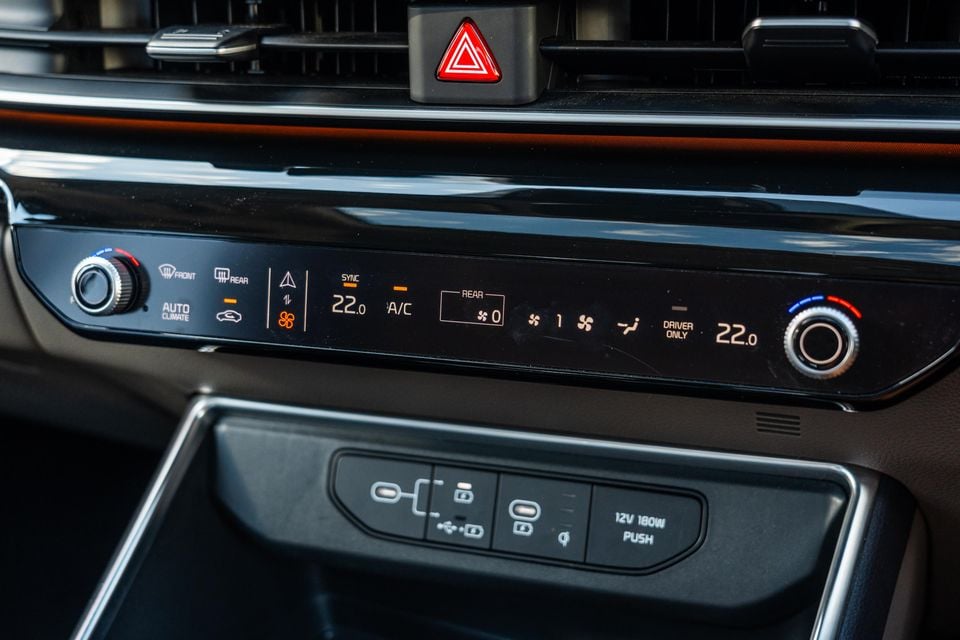
In fact, the good news is the Carnival has yet to succumb to the distinctly more annoying safety tech being fitted to the newest Kia cars. Nowhere is that better demonstrated than with the climate system; the Carnival is fitted with a dedicated panel that sits low on the dashboard.
It’s still purely touch-sensitive, aside from its physical dials, but it’s far preferable to the third climate screen found between the infotainment and instrument displays on newer Kia models like the K4, EV5, and Tasman. That’s because we’ve invariably found it to be blocked by the steering wheel in all those vehicles.
The Carnival’s panel, in contrast, is easy to figure out, even if it still can’t match the tactility of old-school buttons. There’s a reason it’s a touch panel, though: it doubles as a control centre for the car’s media system.
A button press flicks between the climate and media displays, a clever way to tidy up the interior without burying everything in the infotainment system. We’ve seen the same setup in the Sportage, and it’s no less convenient here.
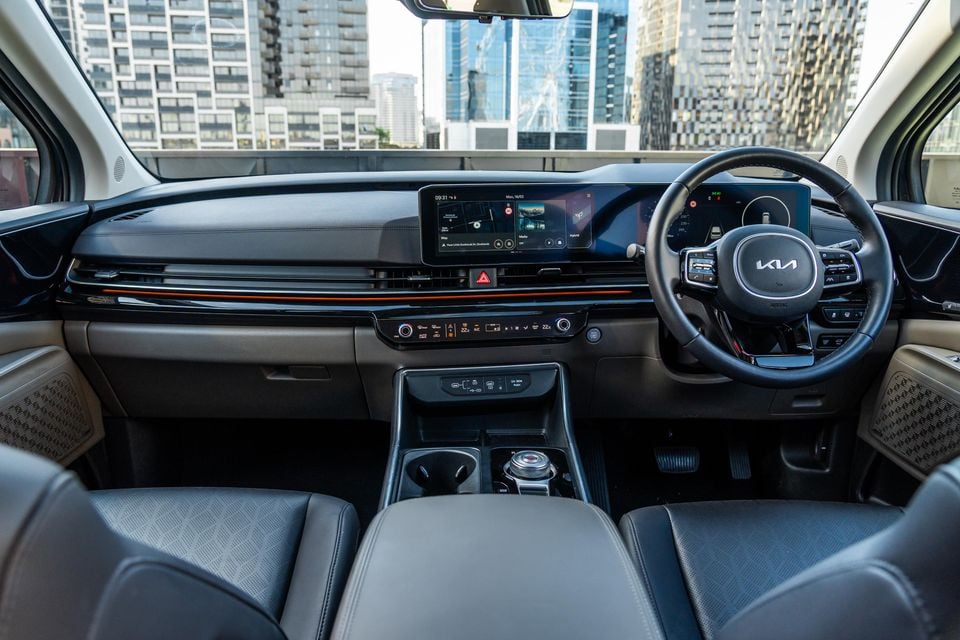
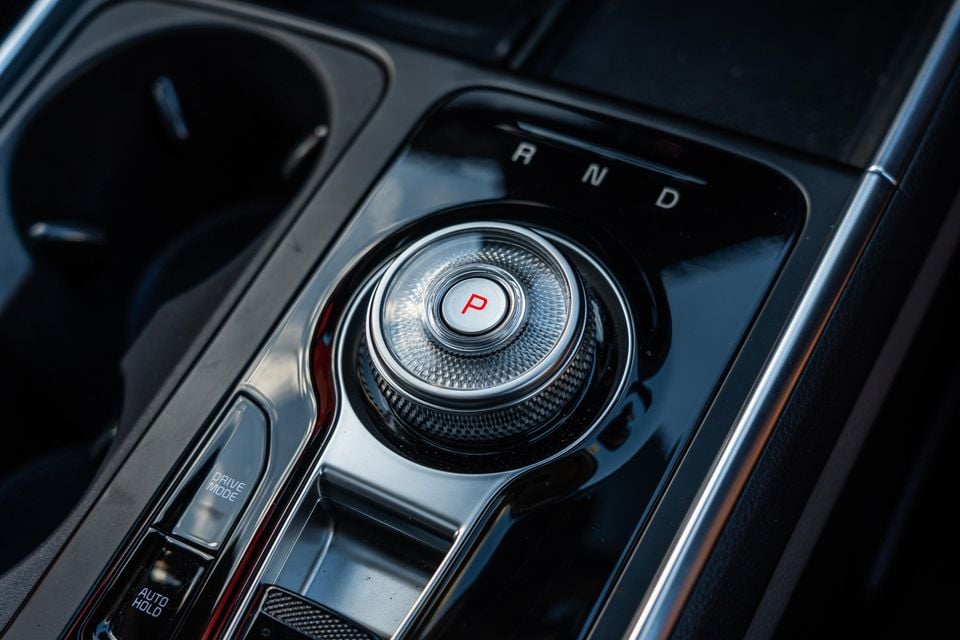
On the other hand, glossy piano-black plastic remains in the areas it’s least welcome. The most egregious example is on the centre console, where its GT-Line-specific placement around the rotary gear selector will no doubt attract scratches, dust, and smudges.
It’s a similar story for the glossy lower spoke on the steering wheel. That said, the piano-black dashboard trim looks quite classy when paired with ambient lighting.
Otherwise, the Carnival’s cabin looks nice and presents solid build quality – as evidenced by the relatively high-kilometre count on our tester. Even with the amount of plastics and moving parts in here, we had no issues with rattles or creaks.
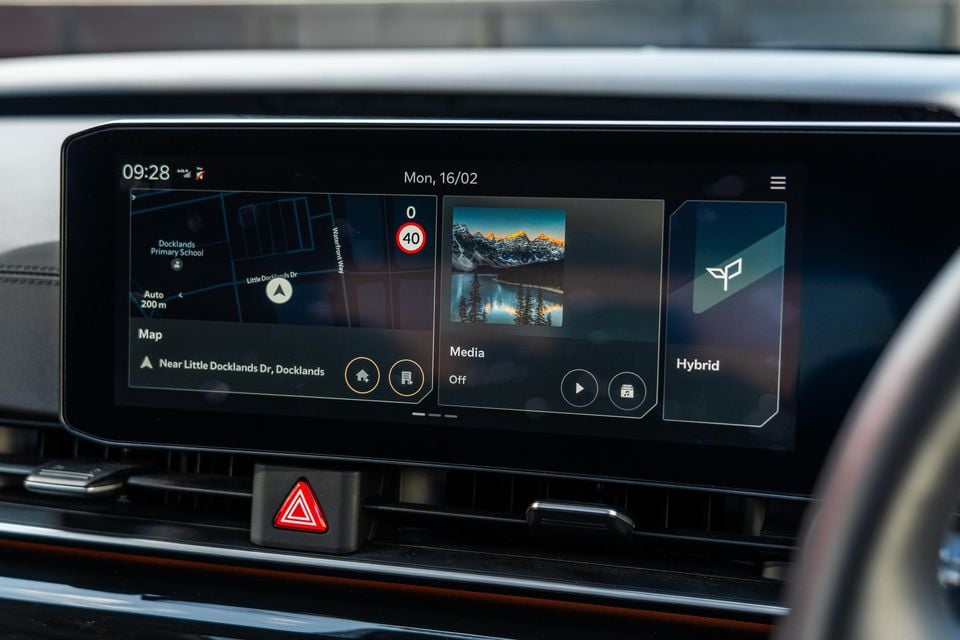
Technology-wise, the cabin is headlined by a curved display that houses two 12.3-inch screens for the infotainment and instruments. The infotainment portion serves as the car’s main control hub, as it’s where you’ll find most functions and settings.
There are multiple menus full of shortcuts to swipe through on the home screen alone, and each opens a detailed settings menu. At least its graphics and resolution are of a high standard, and the Bose sound system of our tester would be very welcome when the vehicle is fully loaded.
Wireless Apple CarPlay and Android Auto are standard, and we experienced no connectivity issues in our week with the car. A wired connection is available via one of the USB-C ports below, which you can toggle to serve only as a charging port if your passenger is low on battery to avoid interrupting smartphone mirroring.
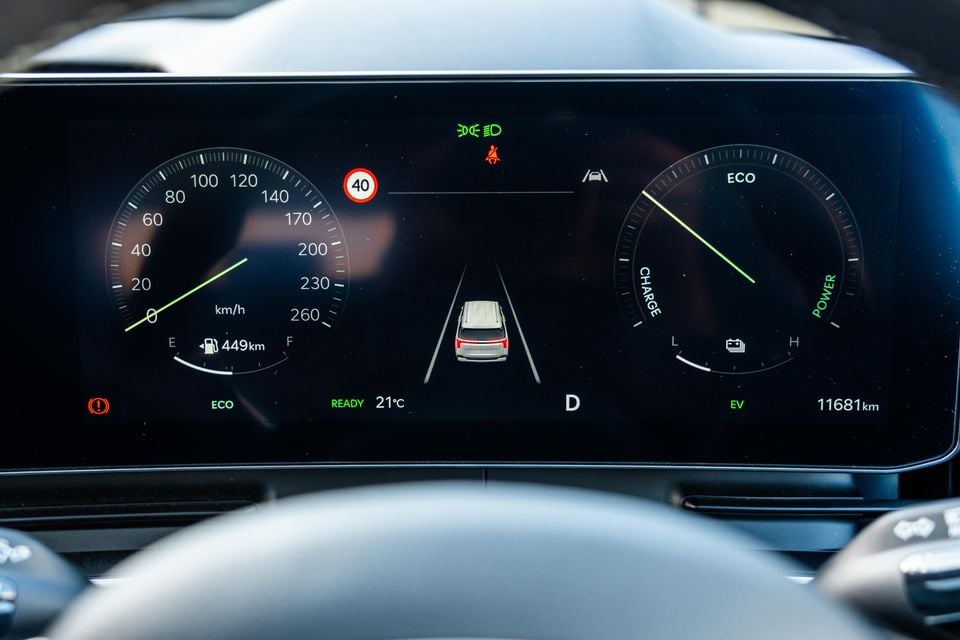
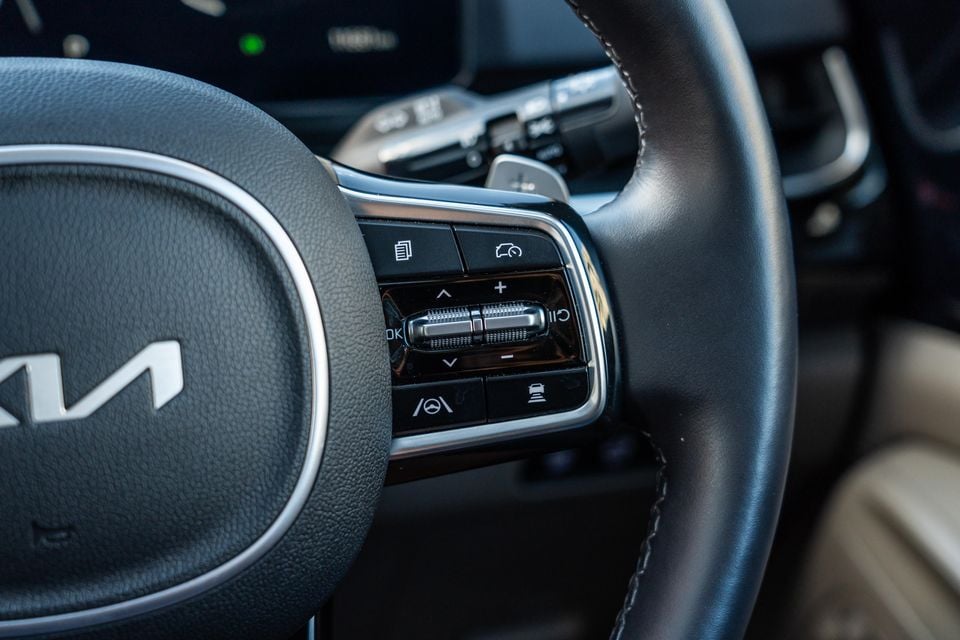
The instrument display, meanwhile, is equally sharp and easy enough to navigate using buttons on the steering wheel. Most customisable items here are tied to drive modes, but we found it simple to understand thanks to the tidy layout and clear icons.
Instead of placing vehicle settings in a separate menu like in other Hyundai group products, navigating to the settings screen reveals a shortcut that conveniently takes you to the infotainment screen. While this does force you to look at the central screen while on the move, it takes far less time to make simple changes.
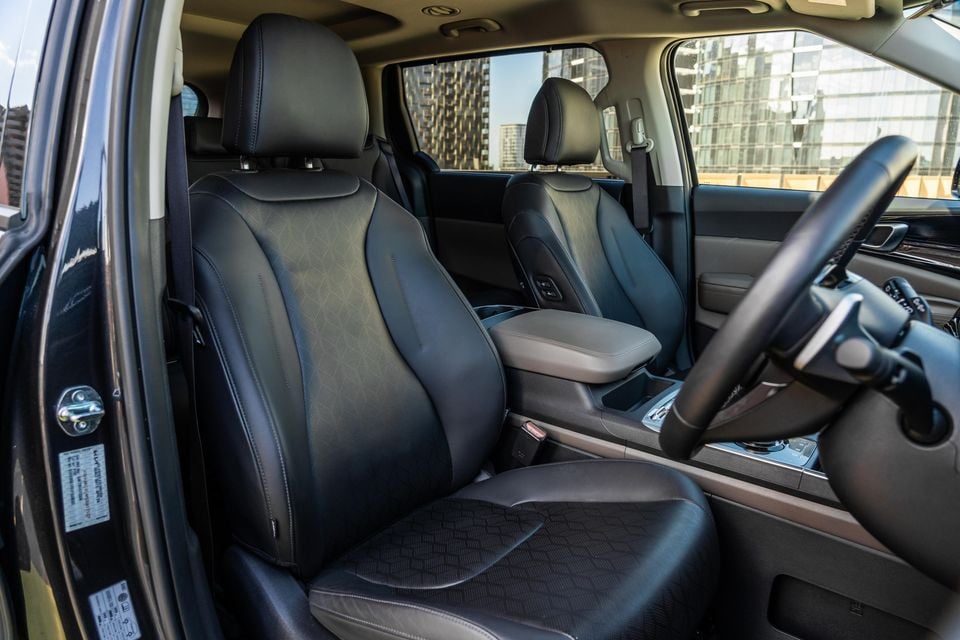
Our previous complaints about the Carnival’s interior still hold true: the front seats are fairly flat and unsupportive. The seatback bolstering isn’t strong enough to quell side-to-side movement while cornering, but there’s at least a good range of adjustment alongside heating and ventilation, and they’re more comfortable than they were a few years ago.
They’re also finished in smooth synthetic leather, which, alongside the leather-wrapped steering wheel, is standard in all Carnivals bar the base S. You’ll also find padded armrests on both the doors and the wide centre console.
For such a large vehicle, storage up front could be better. You can’t fit large bottles in the doors, and it’d be nice to have an expansive storage tray under the centre console instead of cut-outs on either side.
The central storage box is at least large, and there’s also a coin tray, dual cupholders, and a wireless phone charger atop the centre console.
One thing that’s consistent throughout the Carnival’s cabin is how spacious it feels. Every row of seating offers oodles of room in all directions, making it easy to settle into long drives without feeling cramped.
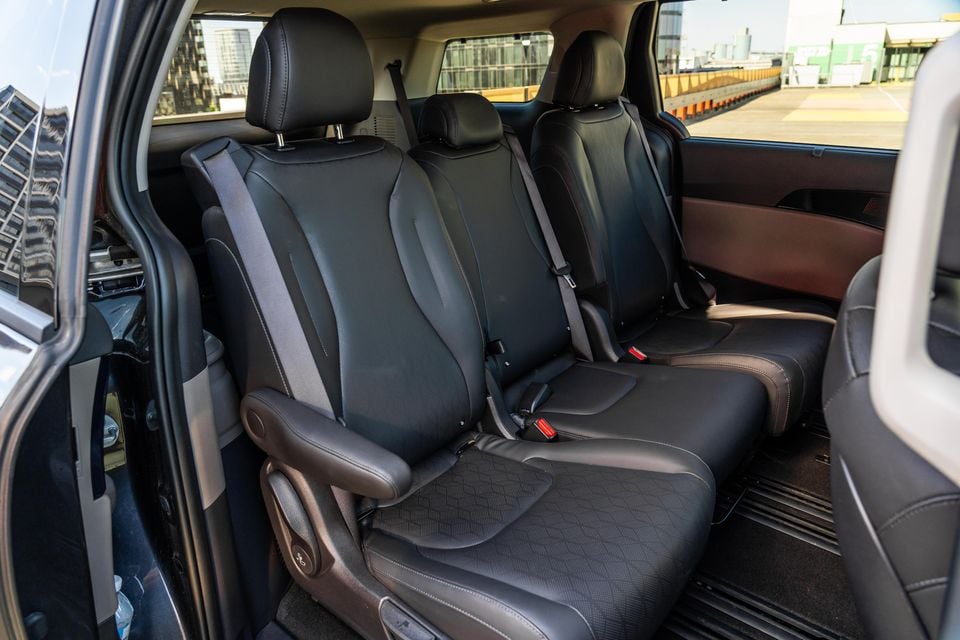
The second row is where that’s most relevant. With huge electric sliding doors and a completely flat floor, it’s impossible not to be surprised when you first climb in. The three seating positions are equally workable, and each seat is on its own set of rails, allowing independent adjustment.
That makes the Carnival all the more practical, as it can easily be configured to suit various use cases. The only thing to note is that the outboard seatbacks can be quite aggressive when pulling the lever to flatten them, so it’s best to get out of the firing line before doing so.
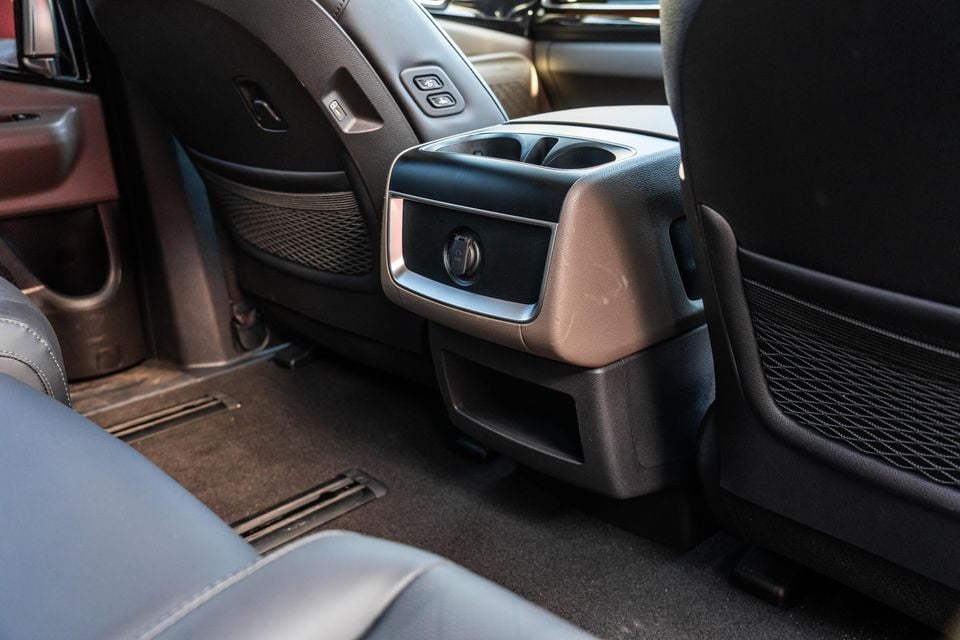
Otherwise, you get bottle holders in the doors and USB-C ports on the front seatbacks, as well as cupholders, a 12V outlet, and a small storage cubby on the back of the centre console – but there are no tray tables like you find in many van-like rivals such as the Multivan.
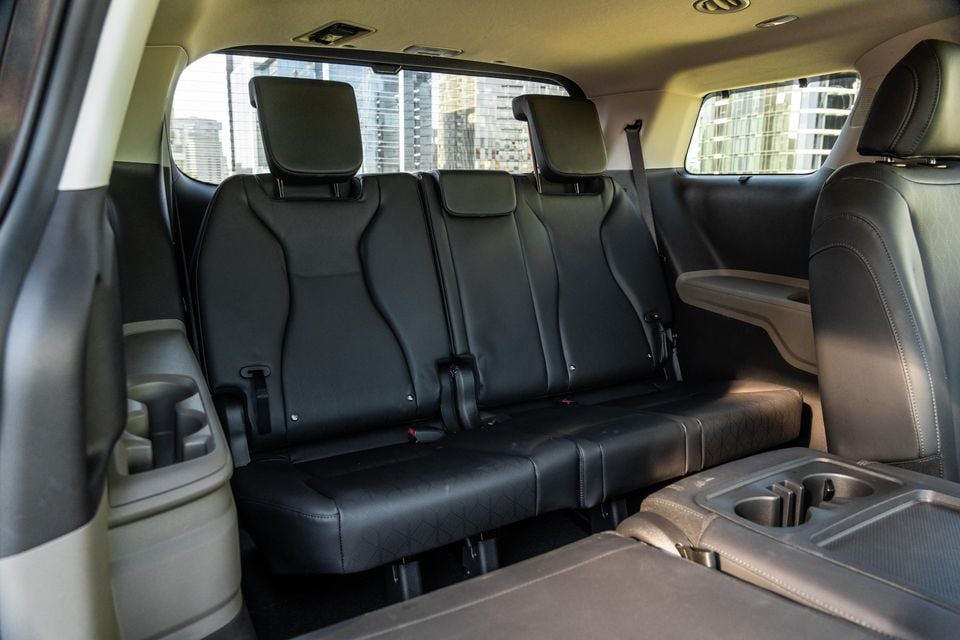
When the middle seat is folded, however, you do get a plastic tray with two cupholders. Even more cupholders are fitted on both sides of the cabin for third-row passengers, and there’s space for three people back here – the middle seat is very cramped, though, and is equipped with only a roof-mounted seatbelt.
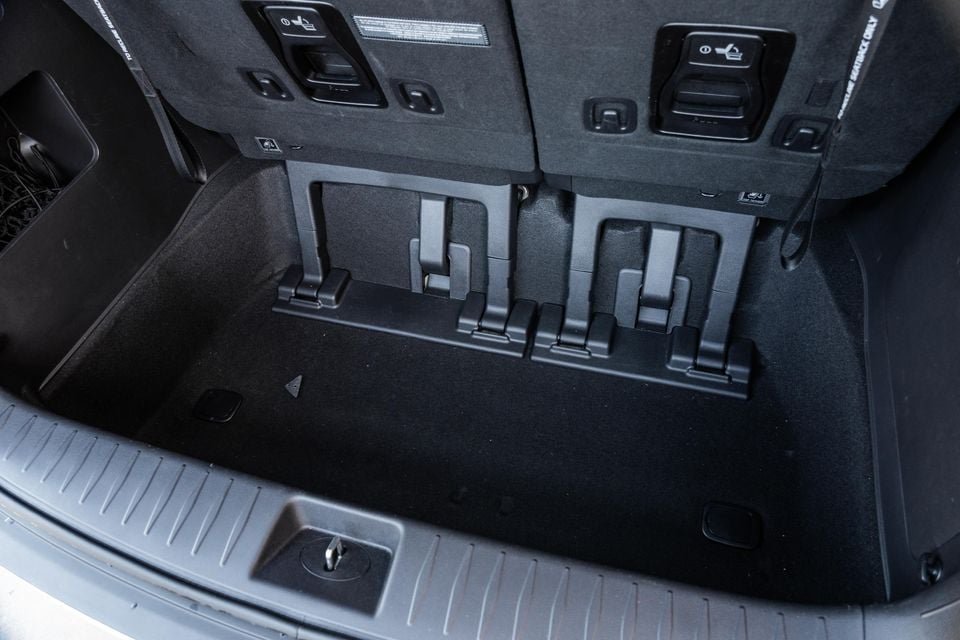
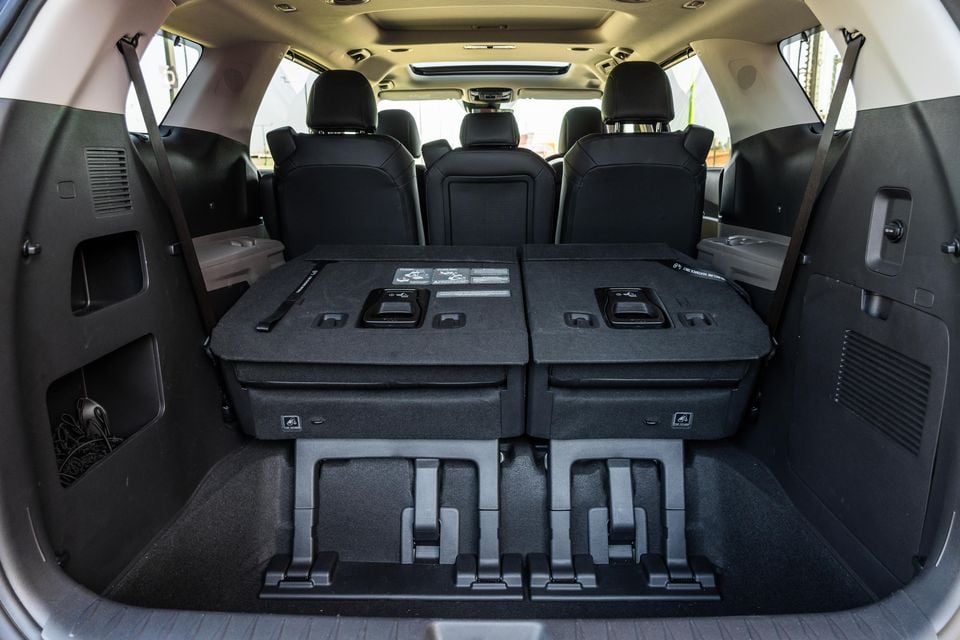
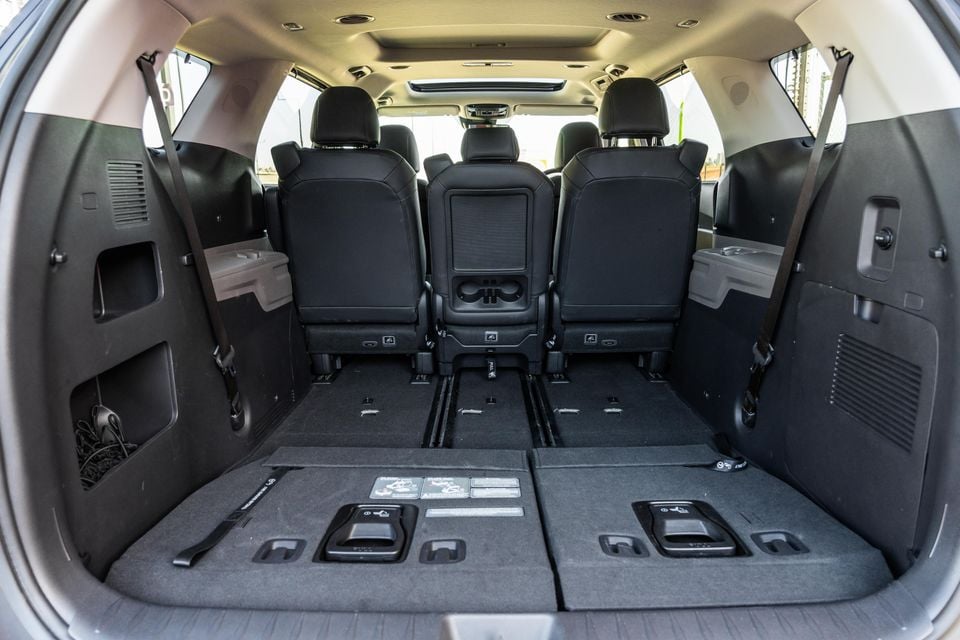
The only other amenities back here are USB-C ports on either side plus ceiling air vents, but it’s otherwise a usable space. When not in use, the Carnival has a clever folding mechanism to neatly fold the third row into the floor and create a flat load floor.
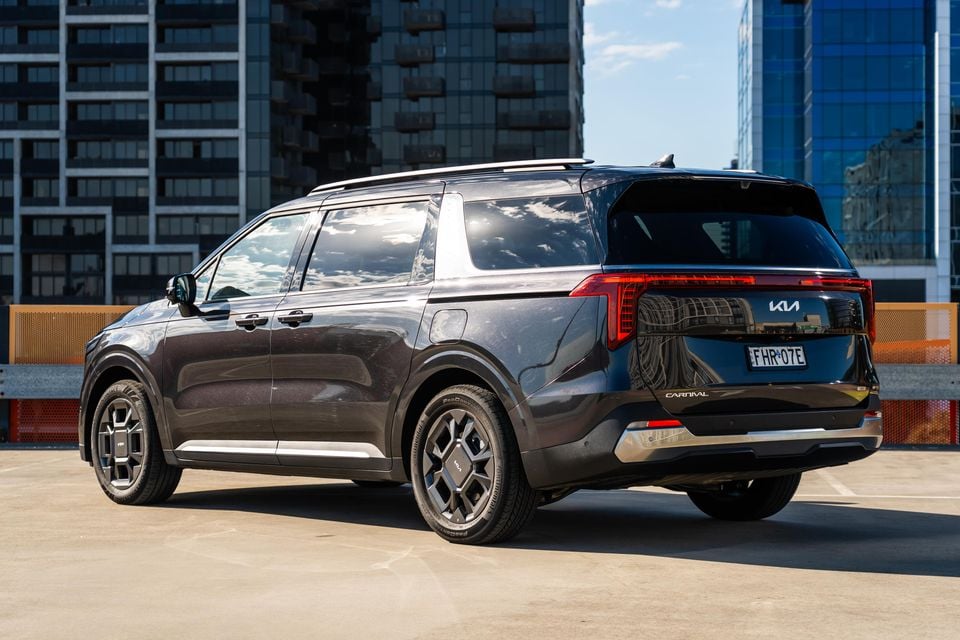
Perhaps most impressively, you still get 627 litres of cargo space with all three rows in place, thanks to the deep tub that houses the rearmost bench when stowed. For comparison, the Multivan offers 469L, the Tourneo 672L, and the Staria blows them all away with its 831L.
The top-spec Carnival GT-Line gets a power tailgate, but the hybrid version only gets a tyre repair kit instead of a space-saver spare wheel.
| Dimensions | Kia Carnival HEV |
|---|
| Length | 5155mm |
| Width | 1995mm |
| Height | 1785mm |
| Wheelbase | 3090mm |
| Cargo capacity (VDA) | 627L (all seats up)
2827L (third row folded) |
To see how the Kia Carnival stacks up against its rivals, use our comparison tool
What’s under the bonnet?
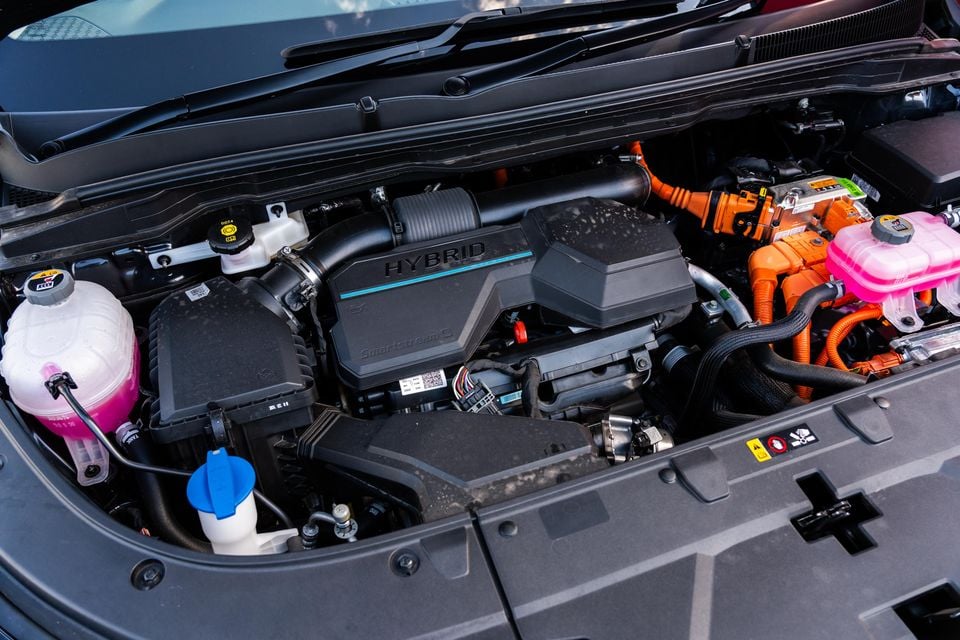
Powering the Carnival hybrid is a 1.6-litre turbocharged four-cylinder petrol engine, producing 132kW of power and 365Nm of torque, paired with an electric motor that produces 54kW and 304Nm. These combine for total outputs of 180kW/367Nm, which is sent to the front wheels via a six-speed automatic transmission.
| Specifications | Kia Carnival HEV |
|---|
| Engine | 1.6L 4cyl turbo-petrol hybrid |
| Engine outputs | 132kW / 365Nm |
| Peak electric motor outputs | 54kW / 304Nm |
| Peak system outputs | 180kW / 367Nm |
| Battery | 1.5kWh li-ion |
| Transmission | 6-speed auto |
| Drive type | Front-wheel drive |
| Kerb weight | 2334kg |
| Fuel economy (claimed) | 5.8L/100km |
| Fuel economy (as tested) | 6.9L/100km |
| Fuel tank capacity | 72L |
| Fuel requirement | 91-octane regular unleaded |
| CO2 emissions | 132g/km |
| Emissions standard | Euro 5 |
| Braked tow capacity | 1000kg |
The front-drive configuration has allowed for a flat floor throughout the vehicle, as there’s no need for a driveshaft that would create a hump and compromise foot room. For those curious, the hybrid battery is located under the second row on the driver’s side.
Our week with the car involved mixed driving. It was driven from Melbourne to Victoria’s south-east for a CarExpert video shoot and underwent some performance testing, before returning and then being used for highway-heavy commuting.
The result was recorded fuel consumption more than 1.0L/100km higher than Kia’s claim of 5.8L/100km. For context, the GT-Line diesel is claimed to consume 6.5L/100km.
To see how the Kia Carnival stacks up against its rivals, use our comparison tool
How does the Kia Carnival drive?
The Kia Carnival is an incredibly easy vehicle to drive, which has historically given it the edge over its van-based rivals.
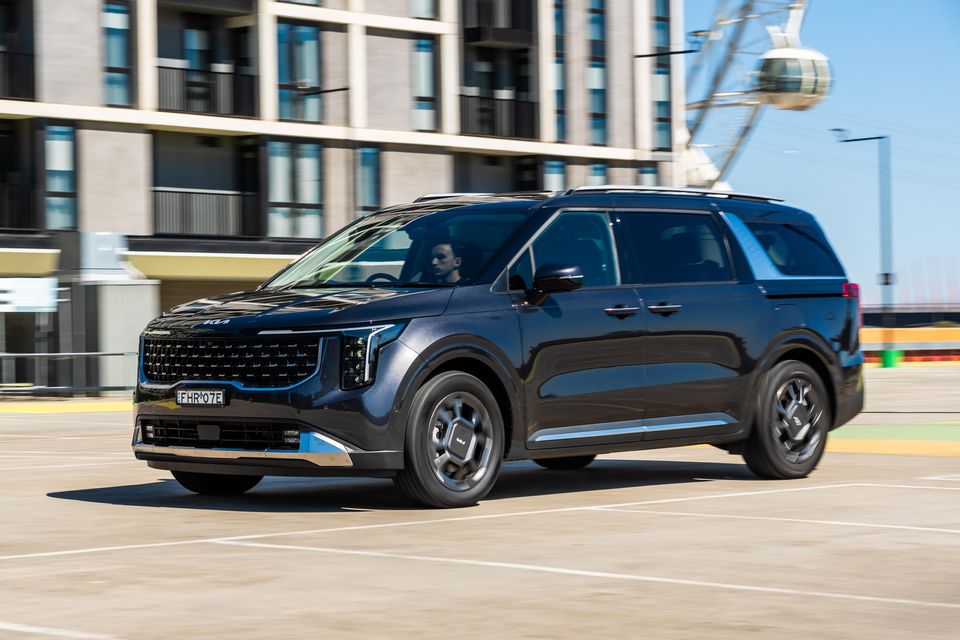
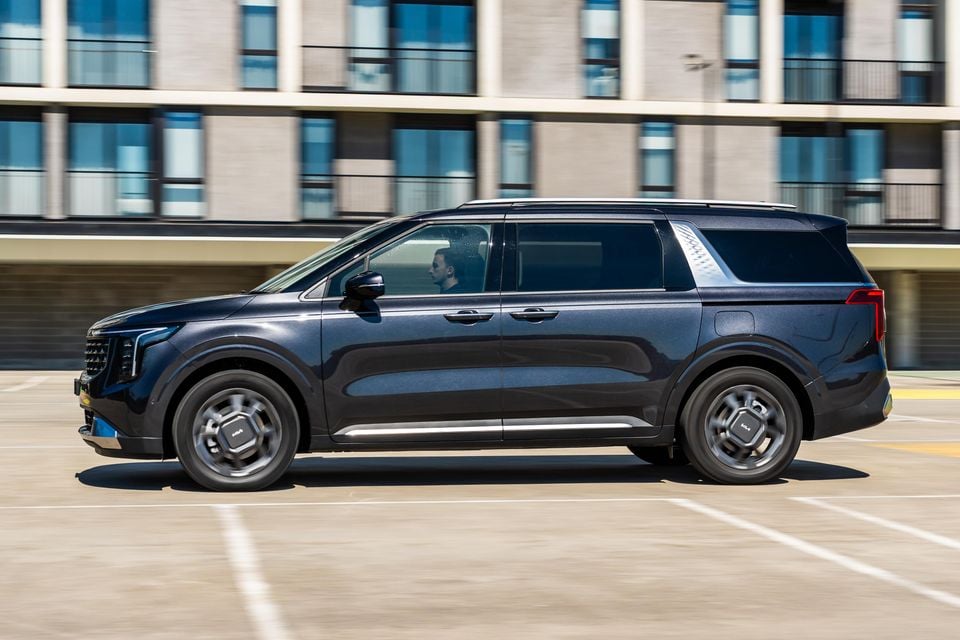
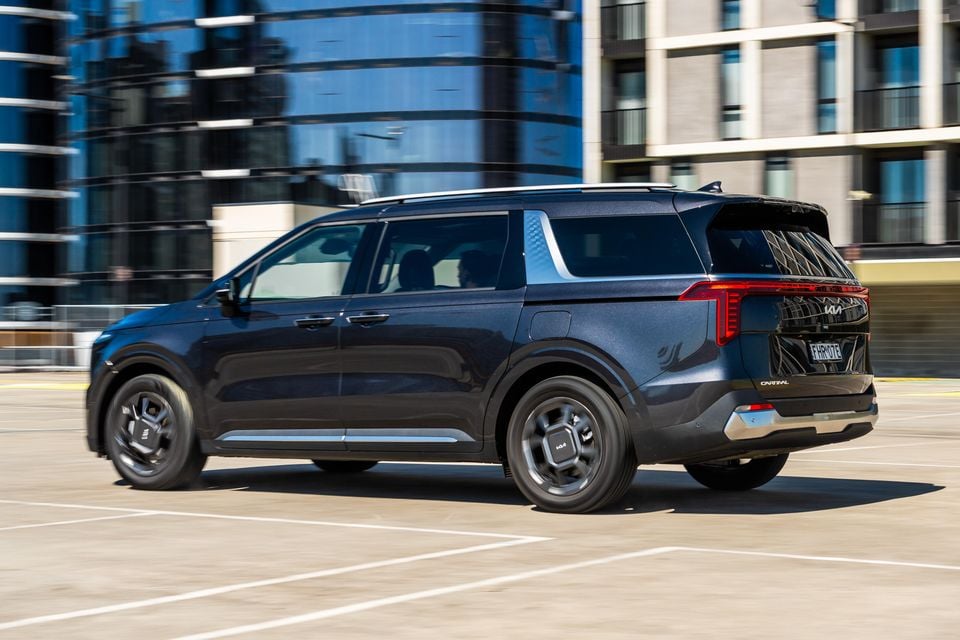
Despite its somewhat bloated proportions, the Carnival is the most SUV-like people mover currently on sale in Australia. That’s a massive part of why it’s so popular, as many family buyers are likely to be put off by the even larger proportions of any vehicle that looks like a van.
It’s immediately obvious that the Carnival sits at a similar ride height to most SUVs, and its driving position feels very familiar. It’s therefore easy to feel comfortable in, and you’ll be able to adapt just as quickly as you would to, say, a Toyota RAV4.
Flick the unique gear selector to Drive, and the Carnival hybrid will set off in whisper-quiet electric mode. It’ll happily roll around without the engine too, but when it comes time to fire up the 1.6-litre turbo-petrol engine, you’ll hardly notice that anything has changed.
The switch from electric to petrol power is near-seamless, and the only real trade-off is a touch of engine noise and some tiny vibrations from behind the firewall. It’s just a well-engineered powertrain, and the regular switching between power sources behind the scenes is nearly imperceptible.
On top of that, performance is pretty good for a vehicle this size. It isn’t fast by any means, but merely appropriate – not to mention predictable, while still being potent enough to pull off an overtake if required.
There are just three drive modes to choose from in Carnival hybrids (Eco, Sport, and Smart), compared to four in diesels (adding Normal), with Eco being the default. The Carnival behaves well in this mode, though there aren’t really any big differences between the three – Sport mode may produce a bit of wheelspin when accelerating hard in the wet.
There are also paddle shifters on the steering wheel, which do different things depending on the drive mode. In Eco or Smart mode in hybrid vehicles they adjust regenerative braking strength, and holding the right paddle will engage Auto mode, where the car adjusts regen strength based on traffic ahead.
In Sport mode, the paddles are used to shift gears. We like having this level of control, and it’s especially impressive for a plugless hybrid.
From expert reviews to the right deal
CarExpert brings together reviews, research tools and trusted buying support, guiding you from research to delivery with confidence.
Otherwise, the Carnival’s ride and handling package is well-tuned and sensible. The ride strikes a nice balance between being firm yet comfortable, which results in good body control – essential in a large vehicle capable of transporting eight people.
The steering is also nicely weighted and provides subtle road feedback, and the short front overhang makes it easy to tell if you’re about to hit something when parking. You’ll notice the bonnet is longer than you may expect for a people mover, but that’s again a symptom of the Carnival’s car-based origins.
The sensible package is rounded off by strong, well-calibrated safety gear, with its surround-view camera particularly useful in tight areas. The only real flaw here is the annoyingly audible speed limit warning, and Kia’s new-gen steering-wheel shortcut to quickly turn it off is disappointingly absent.
Otherwise, the Carnival hybrid does what it says on the tin. It’s comfortable unladen and even more so when loaded, though there is some van-style drumming from the rear of the cabin at higher speeds.
To see how the Kia Carnival stacks up against its rivals, use our comparison tool
What do you get?
There are five trim levels in the Kia Carnival range, with the GT-Line at the top.
2026 Kia Carnival S equipment highlights:
- 17-inch alloy wheels
- Temporary spare wheel
- LED headlights
- LED daytime running lights
- Automatic high-beam
- Electric heated mirrors
- Sliding sunvisor with illuminated vanity mirror
- Cloth upholstery
- Electronic park brake with auto hold
- Proximity entry with push-button start
- ‘Basic’ digital instrument cluster incl. 4.2-inch screen
- 12.3-inch touchscreen infotainment system
- Wired and wireless Apple CarPlay, Android Auto
- 8-speaker sound system
- Kia Connect with OTA software updates
Carnival Sport adds:
- 18-inch alloy wheels
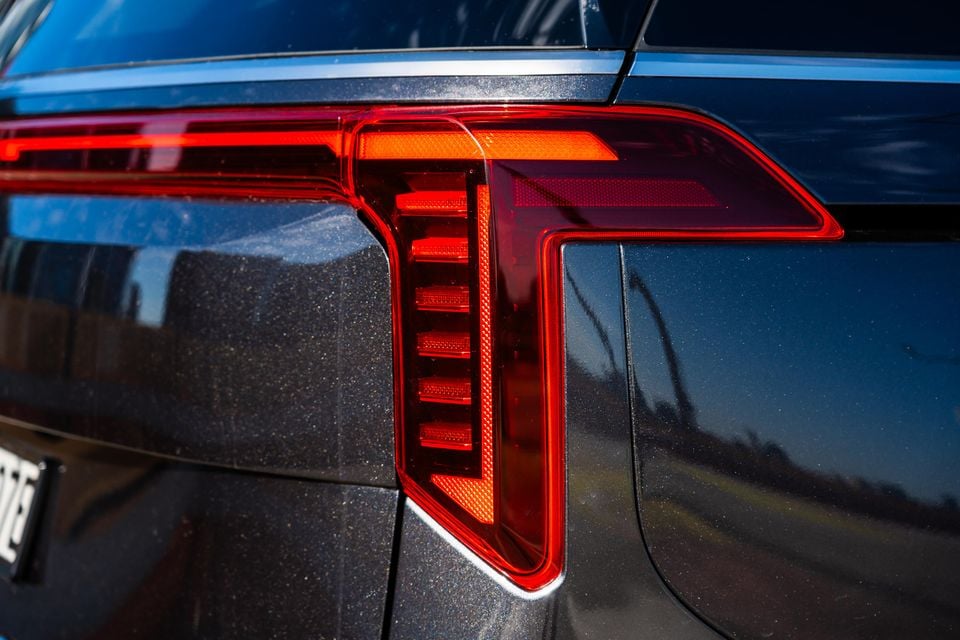
- LED rear combination lamps
- Electric folding side mirrors
- Leatherette upholstery
- Leather-wrapped steering wheel
- Leather shifter
- Auto window defog
- Dual-zone climate control
- Rear single-zone temp control
- Wireless phone charger
Carnival Sport+ adds:
- Power tailgate with auto close
- Power sliding side doors
- Auto-dimming rear-view mirror
- 12.3-inch digital instrument cluster
- Heated front seats
- Second-row outboard heated seats
- Side parking sensors
- 8-way power seat adjustment
- 2-way lumbar adjustment for driver
- Rain-sensing wipers
- Rear privacy glass
- Heated rear windshield
Carnival GT-Line Lite adds:
- 19-inch alloy wheels
- LED interior lighting
- Auto up, down window for driver
- Chrome styling elements (exterior handles, skid plates)
- Dual sunroof
- Removes 8-way front passenger seat power adjustment
Carnival GT-Line adds:
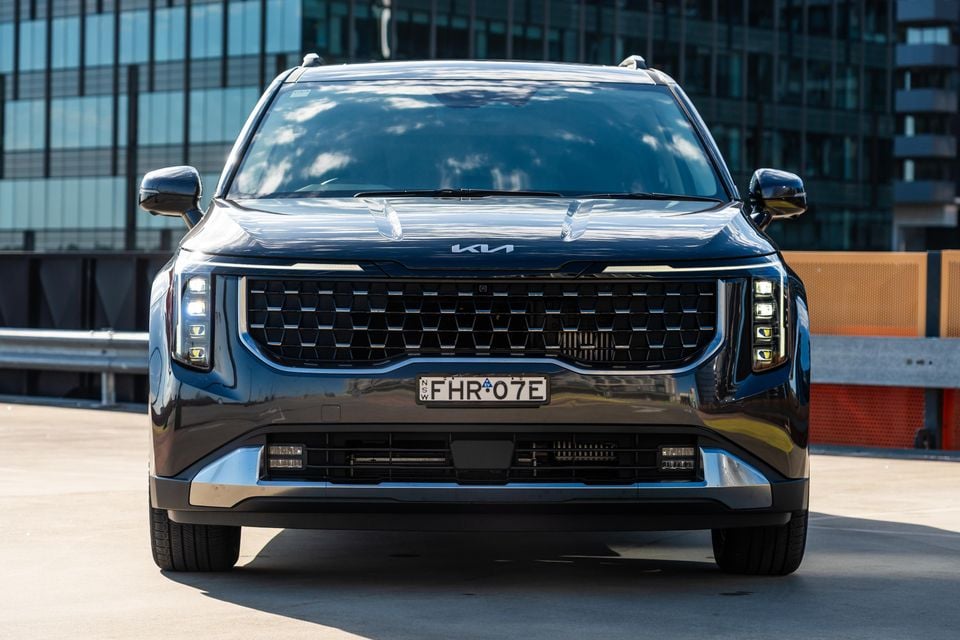
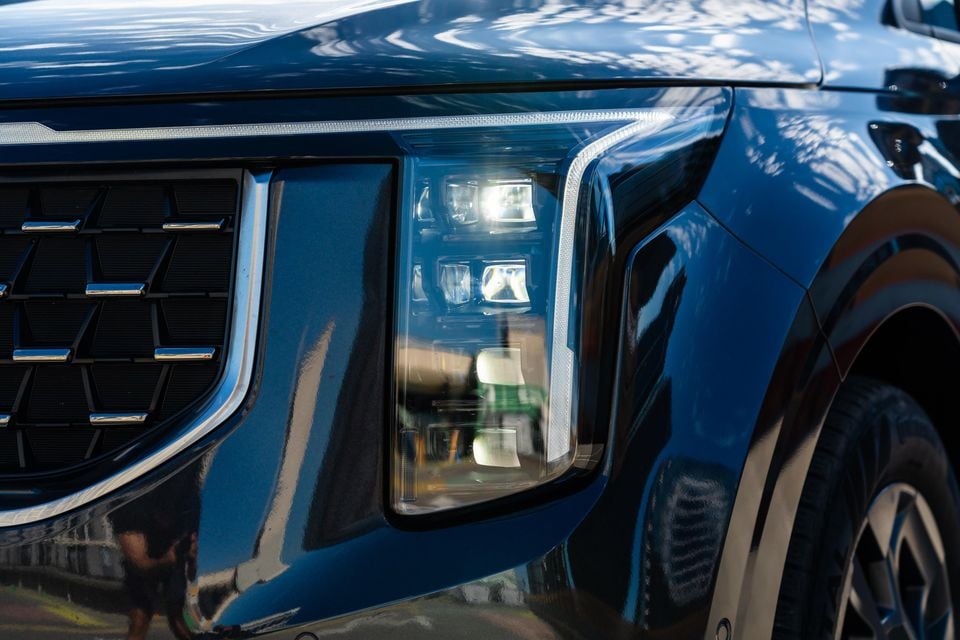
- Dual projector LED headlights
- Heated steering wheel
- Front ventilated seats
- 12-speaker Bose sound system
- Dial-type shifter
- Paddle shifters
- Digital rear-view mirror
- Head-up display
- Auto up, down windows with safety function
- Gloss black centre fascia
- Remote Start Parking Assist
- 8-way electric front seats with memory
- 4-way lumbar support (driver)
To see how the Kia Carnival stacks up against its rivals, use our comparison tool
Is the Kia Carnival safe?
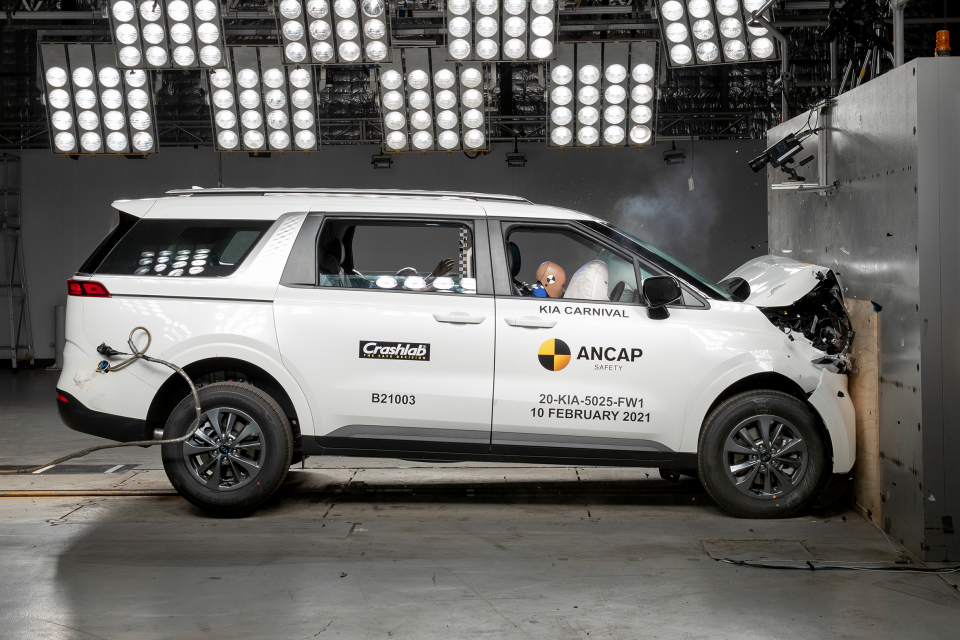
All Kia Carnival variants have a five-star ANCAP safety rating, based on testing conducted in 2021.
| Category | Kia Carnival |
|---|
| Adult occupant protection | 90 per cent |
| Child occupant protection | 88 per cent |
| Vulnerable road user protection | 68 per cent |
| Safety assist | 82 per cent |
Standard safety equipment highlights:
- 8 airbags, incl:
- Front
- Front-side
- Curtain for all three rows
- Driver’s knee
- Autonomous emergency braking
- Pedestrian detection
- Cyclist detection
- Junction assist
- Adaptive cruise control with stop/go
- Blind-spot assist
- Connected services with SOS call function for crashes
- Front and rear parking sensors
- Intelligent speed limit assist
- Lane departure warning
- Lane Following Assist (lane centring)
- Lane-keep assist
- Multi-collision braking
- Rear cross-traffic alert
- Rear occupant alert
- Reversing camera
- Trailer stability control assistance
Carnival Sport adds:
Sport+ and up add:
- Blind-Spot View Monitor
- Highway Driving Assist 2
- Steering, braking, accelerating and stop-start traffic jam assistance
- Junction Cross, Lane Oncoming, Lane Direct avoidance
- Parking Collision Avoidance – Rear (AEB reverse)
- Rear cross-traffic assist
- Side parking sensors
- Surround-view camera
Kia Connect telematics – which includes a smartphone app to check things such as fuel level and remote door locking – is standard, along with an ‘eCall’ button to summon emergency services.
To see how the Kia Carnival stacks up against its rivals, use our comparison tool
How much does the Kia Carnival cost to run?
Kia Australia backs its range with a seven-year, unlimited-kilometre warranty. Servicing for the Carnival is required every 12 months or 10,000km, whichever comes first.
| Servicing and Warranty | Kia Carnival HEV |
|---|
| Warranty | 7 years, unlimited kilometres |
| Roadside assistance | Up to 8 years (service-activated) |
| Service intervals | 12 months or 10,000km |
| Capped-price servicing | 7 years |
| Average annual service cost | $659.29 |
| Total capped-price service cost | $4615 |
Kia Australia’s individual service pricing is detailed below:
| Service | Price |
|---|
| 12 months, 10,000km | $377 |
| 24 months, 20,000km | $655 |
| 36 months, 30,000km | $494 |
| 48 months, 40,000km | $1039 |
| 60 months, 50,000km | $424 |
| 72 months, 60,000km | $880 |
| 84 months, 70,000km | $746 |
For comparison, the all-wheel drive Hyundai Staria costs $3424 to service over seven years. The Ford Tourneo, meanwhile, has longer 30,000km service intervals and costs a total of $4815 to service over seven years.
Volkswagen only outlines five years of service pricing for the Multivan, totalling $3229 – five years for the Carnival costs $2989.
It’s also worth mentioning the Carnival diesel here, which requires servicing every 12 months or 15,000km, whichever comes first, totaling $4174 over seven years.
To see how the Kia Carnival stacks up against its rivals, use our comparison tool
CarExpert’s Take on the Kia Carnival GT-Line HEV
The Kia Carnival remains a deserving segment-leader, thanks to its huge and practical interior, friendly on-road behaviour and, in this case, its well-sorted hybrid powertrain, all of which combine to create an unintimidating and highly approachable people mover.
Its strength lies in its SUV-like proportions and driving experience, which will feel far more familiar to the average driver than its van-based alternatives. Despite its size, there’s no adjustment period required here, and that’s a big part of why it’s also so popular as a fleet/rental car.
The other big thing to consider is that hybrid versions have no real rivals, making them unique in this class and giving them loads of clear air to dominate that corner of the segment. The economic benefits are hard to ignore, and the fuel economy of our press car would have been even better if it had been subject to more of the low-intensity commuting that people movers are typically subjected to.
The only thing is that the GT-Line isn’t the most logical way to get into a hybrid people mover, purely because of its higher price. As nice as it is to have the Bose sound system and additional front seat adjustment, the Carnival Sport+ (roughly $8000 cheaper) is likely to be the best bet for most private buyers.
The diesel is still a strong option and even better suited to long-distance hauling, but the hybrid shines as an all-rounder, running without the engine in the city, and chugging along at low RPM on the freeway.
Of course, it’s a shame the V6 Carnival will soon be extinct, but the hybrid Carnival is even easier to recommend since it’s unique in the market and also comes with Kia’s long warranty.
CarExpert can save you thousands on a new Kia Carnival. Click here to get a great deal.
Click the images for the full gallery
MORE: Explore the Kia Carnival showroom













 Automotive Vehicle Spec Data & 4K images Powered by JATO Dynamics Ltd