 Car News
 CarExpert Podcast
 Car Reviews
 Owner Car Reviews
 Car Comparisons
 Showroom
 Car Chooser
 Car Specifications



Dave Humphreys
2026 Hyundai Ioniq 6 N review: Quick drive
Hyundai’s hot Ioniq 6 N sedan packs the same punch as its electric SUV sibling but has a sleeker shape to tempt buyers of more obviously premium EVs.
7 Days Ago
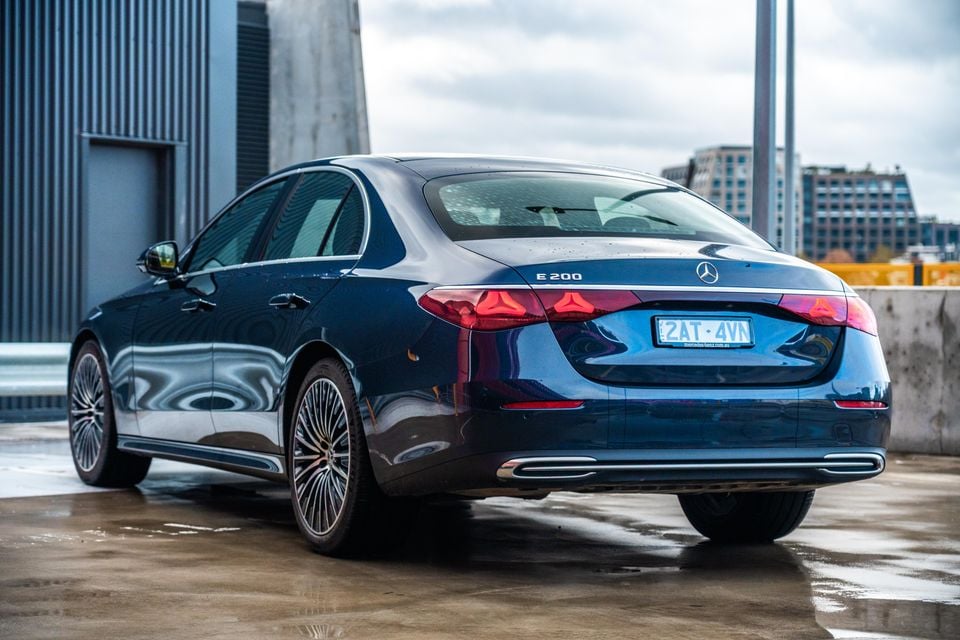
Lukewarm performance and high running costs temper our enthusiasm towards the E200 – the latest addition to the E-Class range.
CarExpert brings together reviews, research tools and trusted buying support, guiding you from research to delivery with confidence.
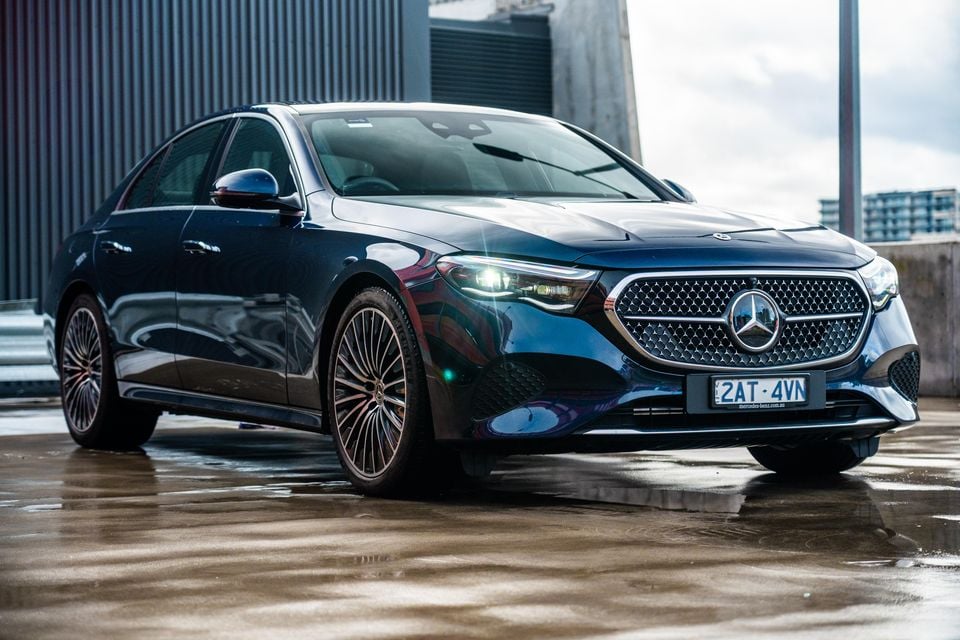
Mercedes-Benz has undertaken a mission to make its vehicles more affordable in recent times, and the E-Class is no exception.
First introduced back in 2024, the W214-generation E-Class arrived with a hefty price tag in excess of $130,000 for the E300 – a bit much for a base-specification four-cylinder sedan, even if it’s a large premium saloon from the three-pointed star, don’t you think?
Enough people agreed, because the E200 was reintroduced last year, offering luxury car buyers similar equipment for far less money.
Buyers have seemingly welcomed this decision, as the E-Class is Australia’s best-selling large luxury sedan, ahead of the BMW i5 and 5 Series.
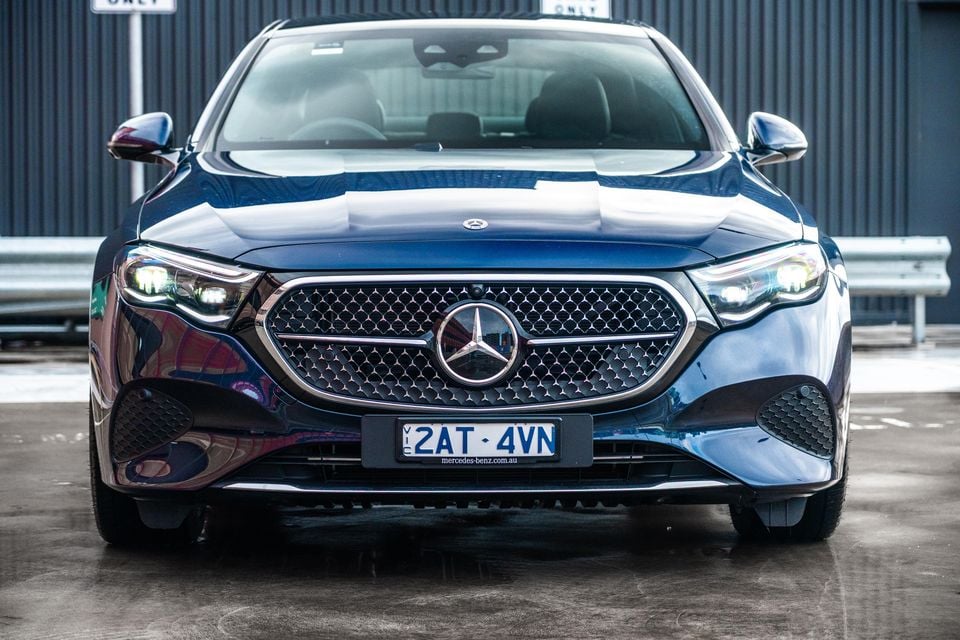
However, we’re not so sure it offers the best value of the bunch, even in E200 form…
Priced from $117,900 before on-road costs, the E200 is $14,100 less expensive than the E300 and closely aligned with entry-level versions of the BMW 5 Series and Audi A6.
| Model | Price before on-road costs |
|---|---|
| 2026 Mercedes-Benz E200 | $117,900 |
| 2026 Mercedes-Benz E300 | $132,000 |
That said, the E200 is still $13,000 dearer than the previous-generation model, which was discontinued in 2024, and bear in mind that E-Class and 5 Series prices started at around $80,000 less than a decade ago.
Our test vehicle was also equipped with the optional Comfort Package, which brings heated and ventilated leather seats for an additional $3500.
To see how the Mercedes-Benz E-Class lines up against the competition, check out our comparison tool
Buy your new car without the stress. It's fast, simple and completely free.
Great service from Travis and team, second time I have used this business would not hesitate to recommend them to anyone
Craig C.
Purchased a Ford Ranger in Sunshine Coast, QLD
CarExpert helped Craig save thousands on his Ford Ranger, now let us save you on your next new car.
Find my dealThe E200 misses out on a few interior toys, but it’s still a premium product.
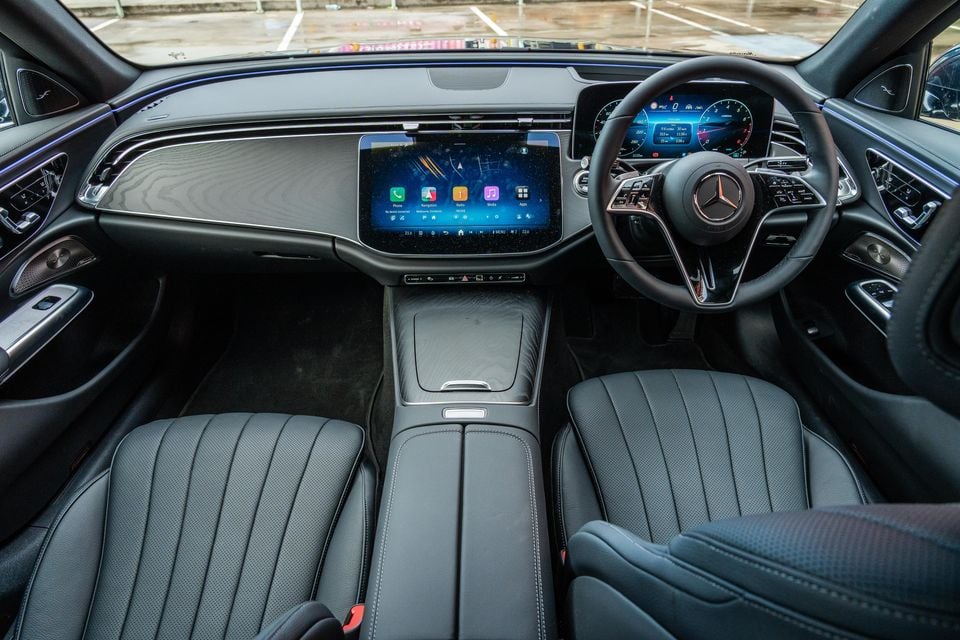
Soft-touch materials cover just about every cabin panel, with the rest adorned in textured woodgrain or upscale aluminium.
Key touch points such as the seats, steering wheel and centre armrest are trimmed in black leather, provided you fork out $3500 for the Comfort Package.
While Mercedes-Benz has cut corners in this regard, it’s not alone. BMW also reserves genuine leather for higher trim levels of the 5 Series. Genesis and Audi, on the other hand, still serve base versions of the G80 and A6 with leather upholstery.
And, crucially, the E-Class isn’t loaded with gloss-black plastic – a bugbear for anyone who likes to keep a clean car.
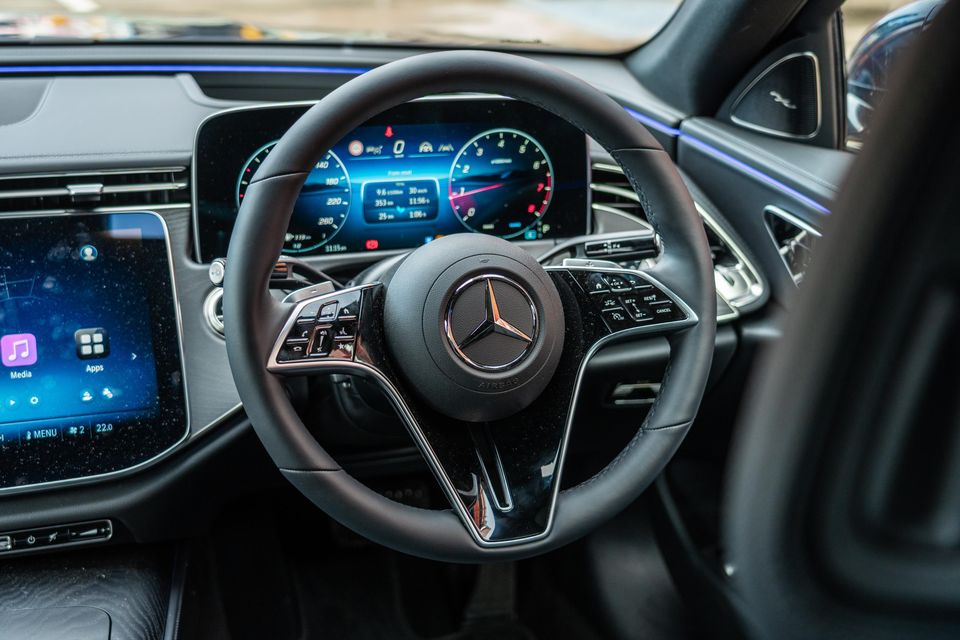
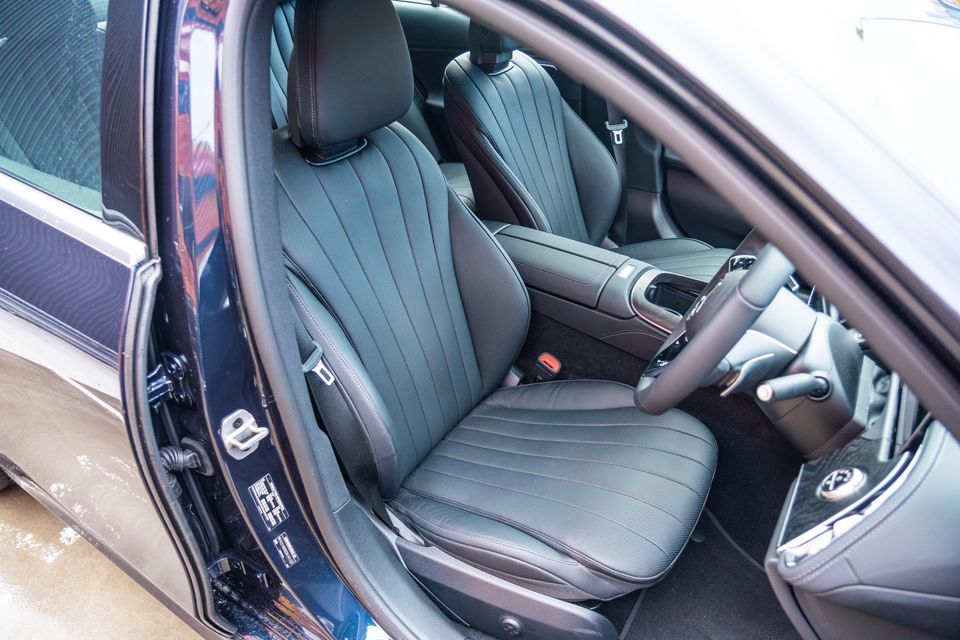
Indeed, this smooth-moving sedan is more interested in understated luxury than cheap bling. That’s evidenced not only by the selection of materials, but also the abundance of comfort-focused features in the cabin.
With the Comfort Package box ticked, the E200 sports supportive front seats with three-stage heating, cooling, and a wide range of electric adjustment, including movable lumbar support. Controls for the aforementioned features can be found on the door cards, so you don’t need to rummage around down the side of the seat base.
Electric adjustment for the steering wheel further ups convenience levels, although it was disappointing to discover that the wheel isn’t heated. And I wish there were some form of adjustable thigh support for those with longer legs.
Nevertheless, the cabin of the E200 is a comfortable space in which to spend your time. It looks the part too, especially at night when the wraparound ambient lighting strip comes to life.
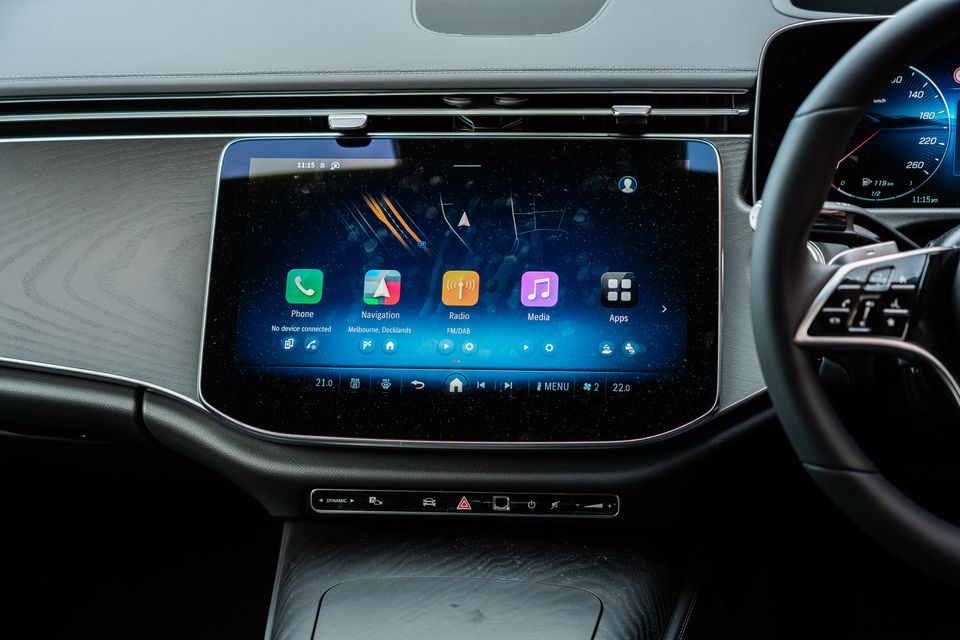
The E-Class isn’t short on modern technology, either. Base versions get a 14.4-inch infotainment touchscreen and 12.3-inch digital driver display, both of which run Mercedes-Benz’s latest MBUX software.
As such, the infotainment system is easy to operate and loaded with useful applications, including detailed navigation, YouTube, Amazon, Spotify, Apple Music, weather, news, and games. Each app is clearly labelled, and a handful of useful shortcuts are permanently pinned to the base of the display. An additional touch capacitive control panel is situated below, ensuring basic commands don’t require use of the screen.
As well as being user-friendly, the infotainment tech is visually impressive and responsive to inputs. Wireless smartphone mirroring is standard, and devices can be replenished using either a protected wireless charging pad or one of three USB-C outlets found up front.
Moving across, the E200 also features a 12.3-inch digital instrument display, as well as a head-up display.
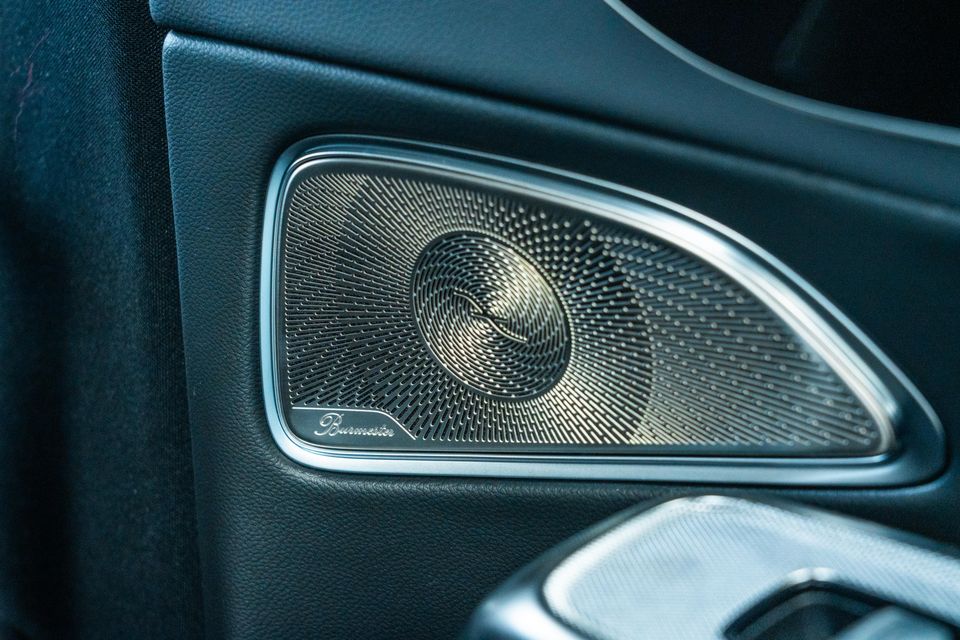
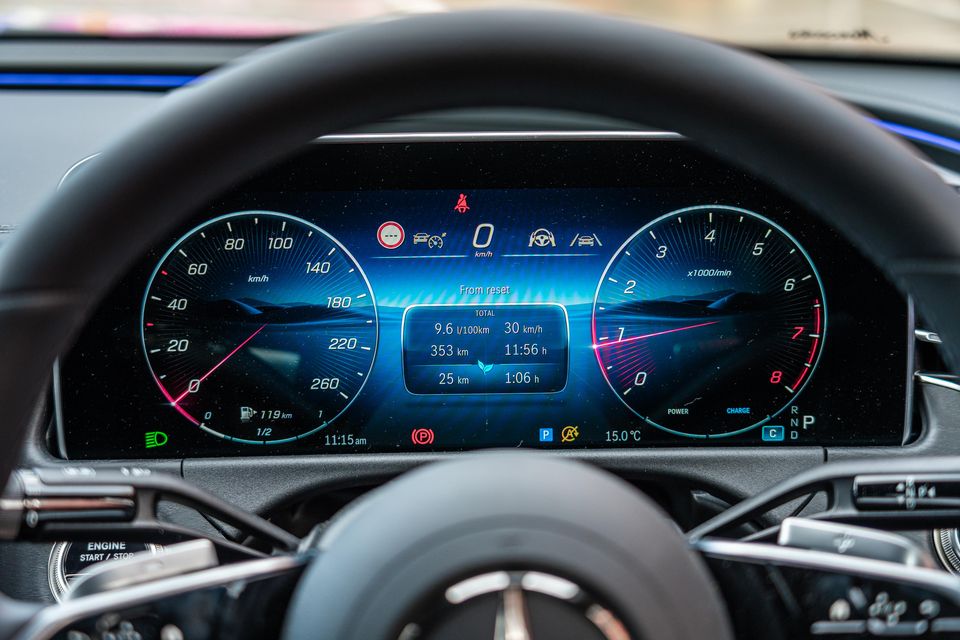
The rectangular instrument panel can be programmed to display a variety of different layouts, my preferred option being straightforward gauges separated by a customisable centre data readout. Again, the visuals are slick.
A grand total of 17 Burmester-branded speakers deliver crisp audio and punchy bass from all angles.
The E300 adds a third display for the passenger, as part of the ‘MBUX Superscreen’. It’s wholly unnecessary, and I far prefer the appearance of a wooden dash panel over a wall of screen. It’s not like your passenger will struggle to reach the central infotainment screen, either.
Another example of Mercedes-Benz taking tech a little too far is the decision to cram the steering wheel with fiddly, sensitive touch buttons. Each button is clearly labelled, but it can be tricky to execute the intended selection without looking down.
Still, Mercedes-Benz remains a technology leader within the automotive industry, and other brands would be wise to benchmark the Three-Pointed Star.
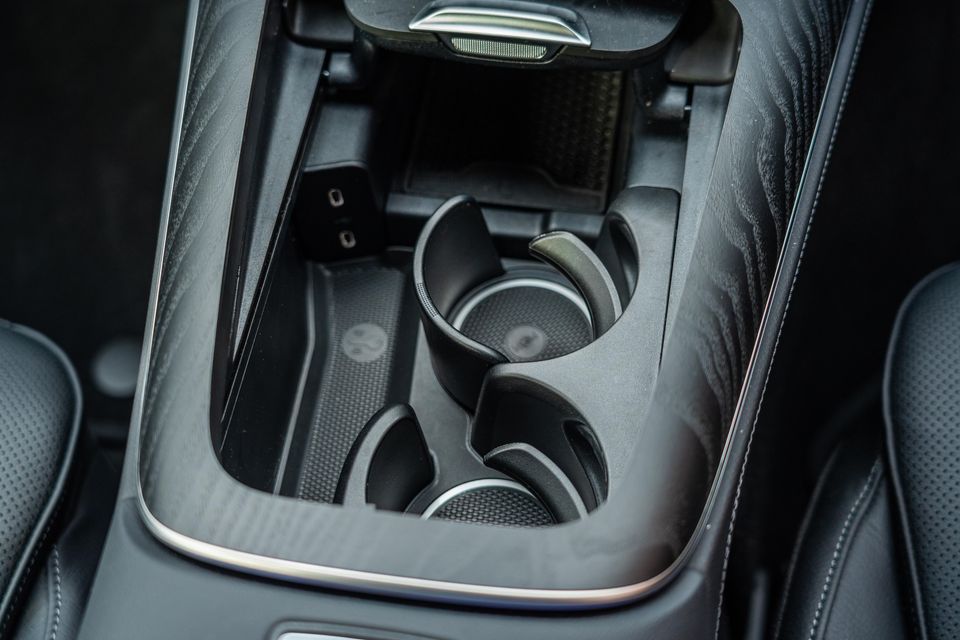
The E200 also excels in the interior storage stakes, offering several practical solutions to everyday problems. Coffee cups of all sizes fit in the centre holders, and no snack is too big for the split-opening centre console bin. All that’s missing is an overhead compartment for sunglasses – hardly a dealbreaker.
Those riding in the front of the E-Class definitely get the better end of the deal, as the second row is less accommodating.
While the rear seats have more than enough ‘squish’, legroom is a little lacking. At six-one, I could only just squeeze in behind my driving position, and even then, my knees were forced to rest against the hard plastic seat backing. Headroom is only likely to pose an issue for passengers taller than six-three.
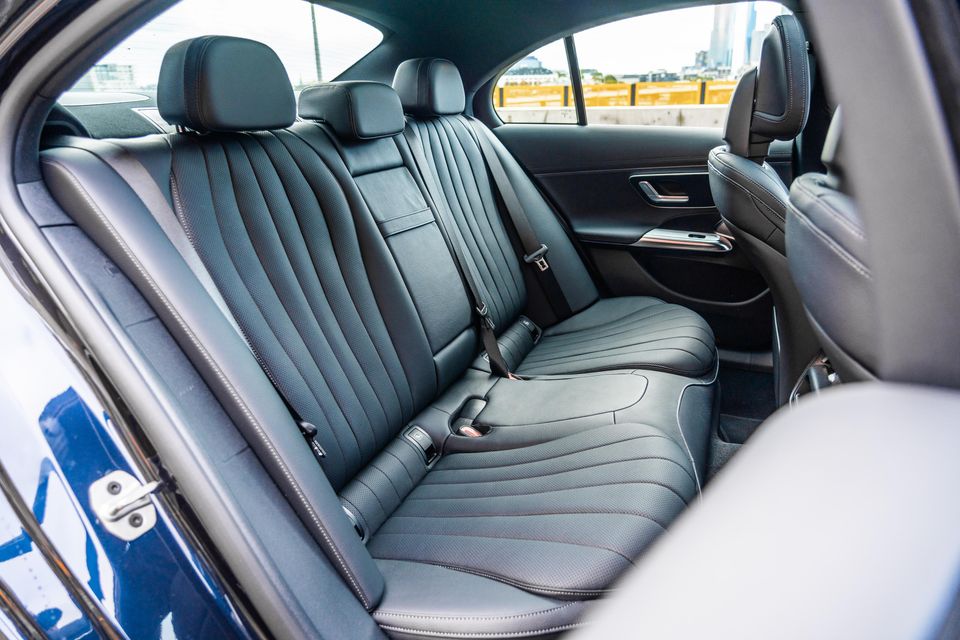
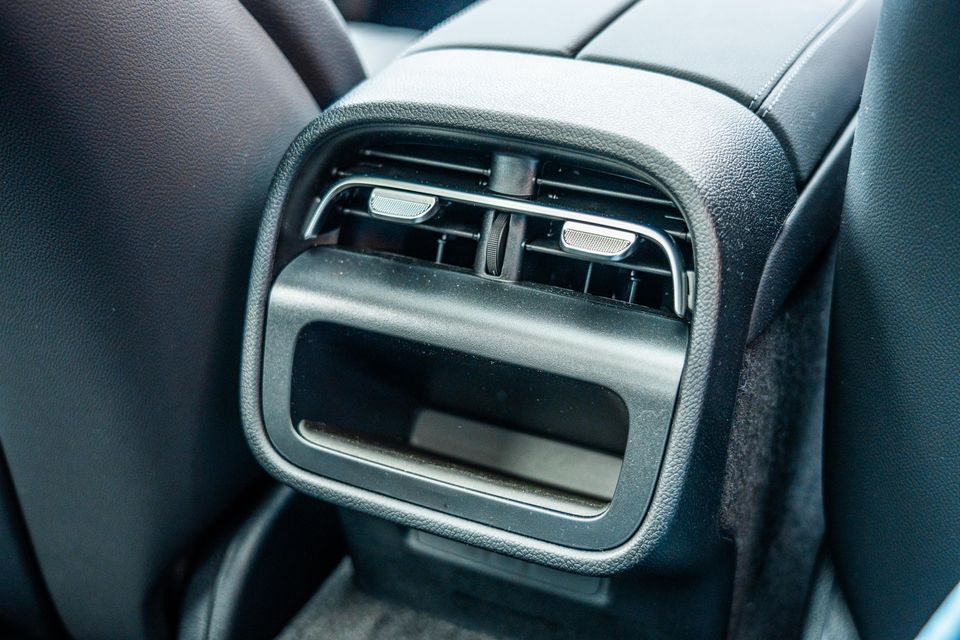
It needs to be said that the E-Class works best as a four-seater, as a high transmission tunnel impedes middle-seat legroom.
Leaving the middle seat empty also allows outboard riders to access the full breadth of rear amenities, including a centre armrest with cupholders, USB-C outlets, air vents, and a small storage nook built into the back of the centre console.
Drinks, snacks, and other loose items can also be kept in the door cards, or pockets attached to the back of the front seats.
Otherwise, the E-Class offers 540 litres of boot space – more than the A6 (530L), 5 Series (520L), and G80 (424L).
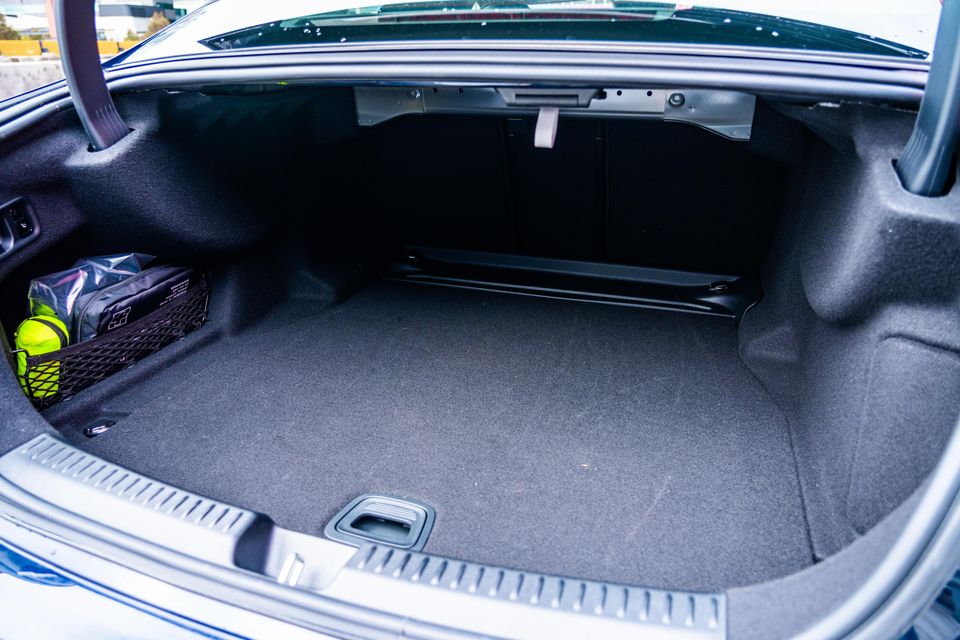
That’s enough room for a couple of large suitcases, and loading them is made easier by the fitment of a powered tailgate. There is a bit of a load lip though, so be careful when trying to slide heavy bags in.
And don’t bother looking for a spare tyre, as the E-Class only carries a tyre repair kit.
| Mercedes-Benz E200 | |
|---|---|
| Length | 4959mm |
| Wheelbase | 2961mm |
| Width | 2065mm (including mirrors) |
| Height | 1466mm |
| Boot space | 540L |
To see how the Mercedes-Benz E-Class lines up against the competition, check out our comparison tool
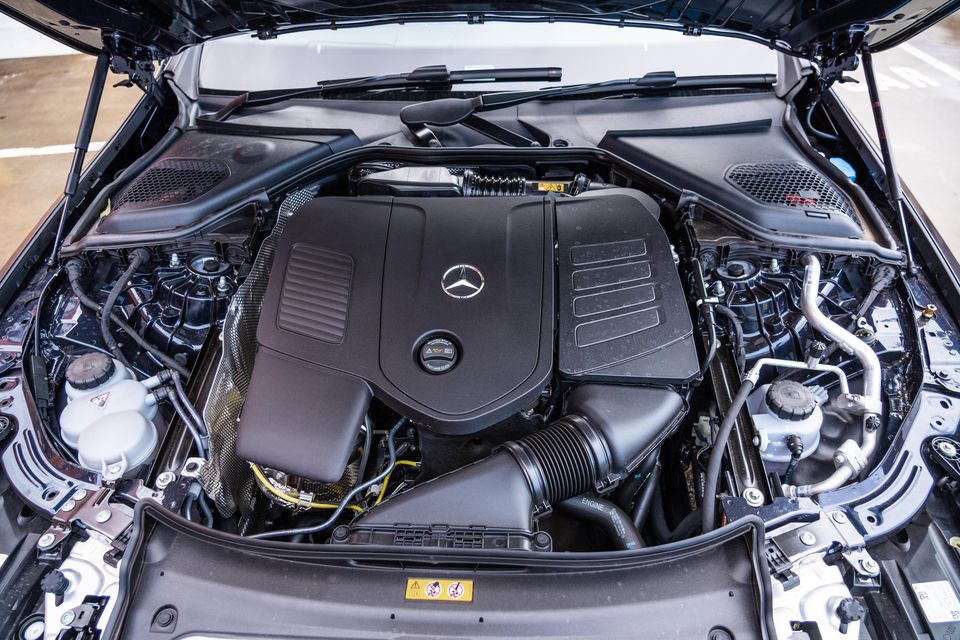
The base E200 features a 2.0-litre turbocharged four-cylinder petrol engine with 48V mild-hybrid assistance. Power is sent to the rear wheels only via a nine-speed automatic transmission.
| Specifications | Mercedes-Benz E200 |
|---|---|
| Engine | 2.0L 4cyl turbo-petrol 48V mild-hybrid |
| Power | 150kW |
| Torque | 320Nm |
| Transmission | 9-speed automatic |
| Drive type | Rear-wheel drive |
| Weight | 1825kg |
| 0-100km/h (claimed) | 7.5 seconds |
| Fuel economy (claimed, NEDC) | 7.2L/100km |
| Fuel economy (as tested) | 9.5L/100km |
| Fuel tank capacity | 66L |
| Fuel requirement | 95-octane premium unleaded |
| CO2 emissions | 162g/km |
| Emissions standard | Euro 6 |
While the integration of a 48V starter-generator between the internal combustion engine and nine-speed automatic transmission provides an additional 17kW of power and 205Nm of torque on demand, the E200 is still down on grunt compared to its bigger brother.
The W214 E200 is likewise slightly slower to 100km/h than the previous-generation model – Mercedes-Benz quotes a 0-100km/h acceleration time of 7.5 seconds for the W214, versus 7.3 seconds for the W213.
To see how the Mercedes-Benz E-Class lines up against the competition, check out our comparison tool
Something strange happened when I drove the E200.
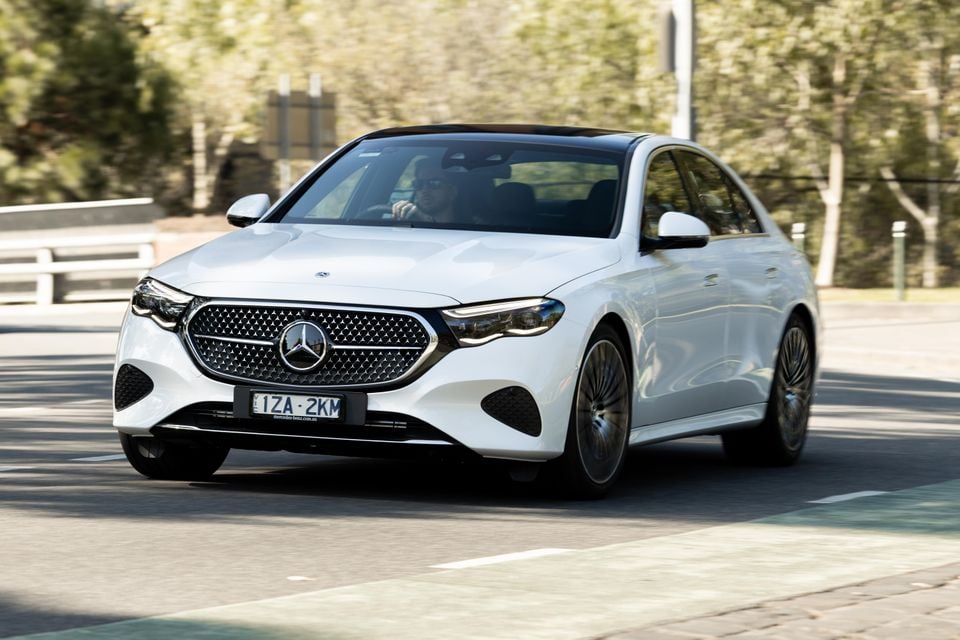
Rather than getting around in my usual respectful rush, I found myself adopting a much more relaxed driving style, characterised by smoother inputs, larger gaps to surrounding vehicles, and a general lack of urgency to get from A to B.
Perhaps I was just having a slow week. But, more likely, the E200 is a car that actively encourages you to relax behind the wheel, and that’s exactly what a good luxury sedan should do.
This class of vehicle is designed to provide temporary relief from the stress of executive life, and the latest generation of E-Class nails that brief.
Even by segment standards, the E200 isn’t particularly quick or thrilling to drive. The meagre engine outputs suggest as much, and while Mercedes-Benz claims a 0–100km/h time of around 7.5 seconds, it feels more like a nine-second car on the road.
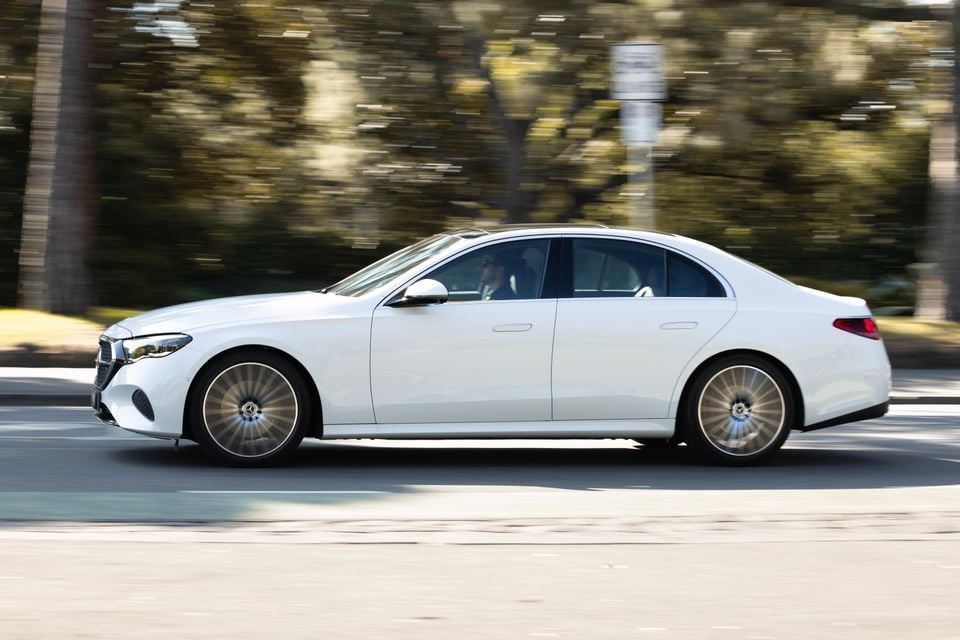
But what the E200 lacks in performance, it makes up for in comfort and refinement. The powertrain goes about its work quietly, while both pedals deliver predictably smooth responses.
The nine-speed transmission is likewise seamless in its operation, delivering almost imperceptible shifts to minimise revs and maximise efficiency.
Some might even confuse the mild-hybrid E200 for an EV, such is its ability to cruise around in near-silence. That’s great news, as it allows those inside to either converse without interruption or enjoy the brilliant sound system.
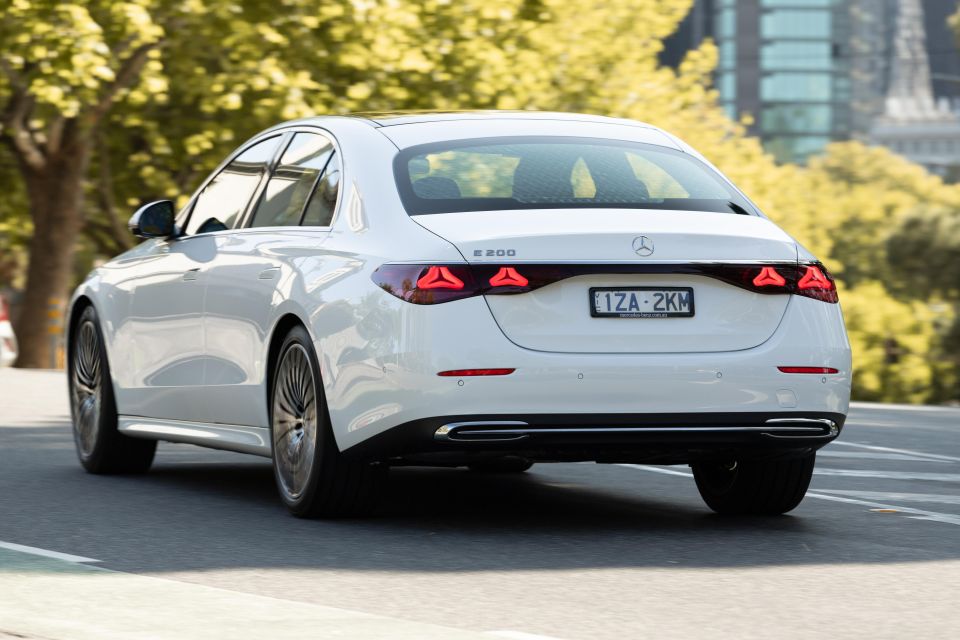
Despite the absence of adaptive dampers, ride quality is also excellent. The standard passive suspension masterfully soaks up imperfections around town, and I was particularly impressed with how the E200 negotiated one particular speed bump near our office that has a reputation for upsetting test vehicles.
CarExpert brings together reviews, research tools and trusted buying support, guiding you from research to delivery with confidence.
Adaptive air suspension is available as part of a $9400 package for the E300, but I’d argue it’s unnecessary given how cosseting the E200 proves to be.
Sure, you don’t feel quite as cocooned from the road surface as you might in the equivalent SUV. But as far as large sedans go, the E-Class is about as compliant as they come.
And, unlike most SUVs, this hunkered-down sedan actually possesses some desirable driving characteristics. For one, it’s rear-wheel drive, which means Friday nights at the skid pad… I joke, but there’s a lovely balance to how the E-Class handles corners.
The lower centre of gravity makes it feel slightly less lethargic, too.
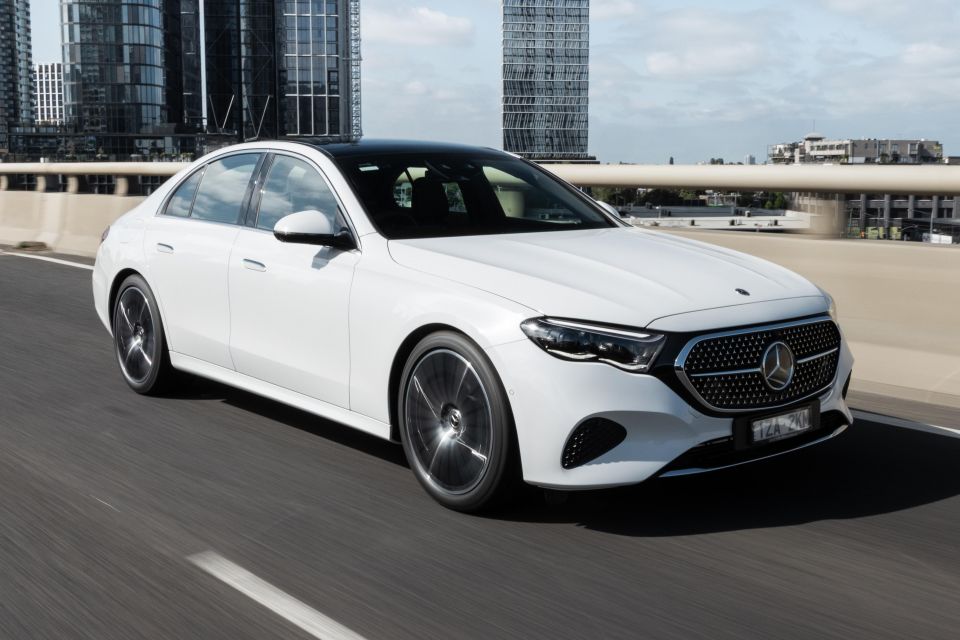
However, on the other side of the coin, ground clearance can be an issue. While it’s not a lowrider, the E200 sits lower than you might expect, so it’s best to approach steep driveways with a degree of caution.
Visibility also stands to suffer from how closely the E-Class hugs the ground, yet I never struggled to place it on the road. The A-pillars are relatively thin, and there’s enough glass over each shoulder to get a clear sense of what’s going on around you.
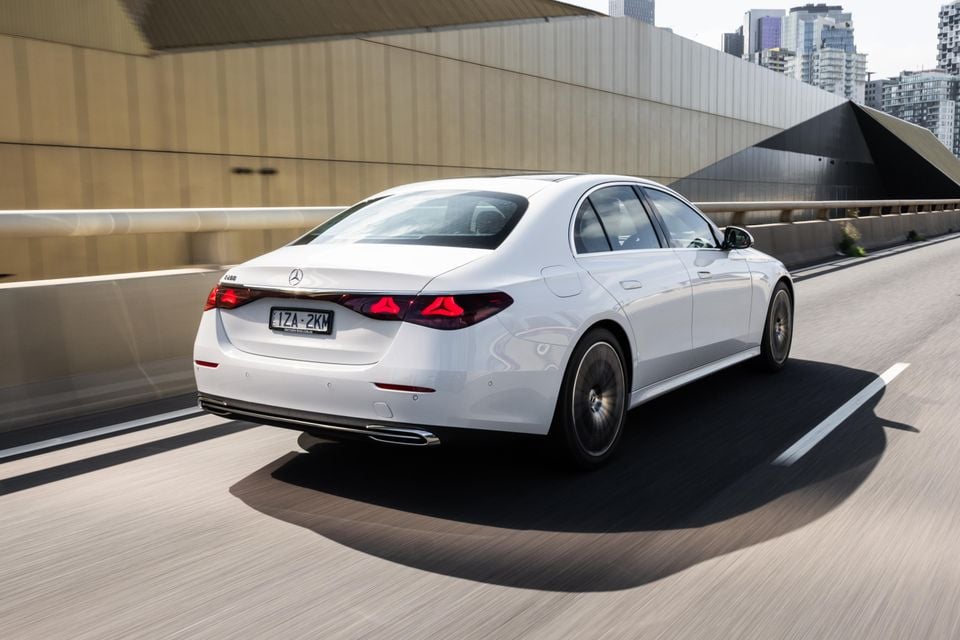
Out on the highway, the E200 remains composed. Road joins barely register in the cabin, and longer undulations are handled with grace. No matter the conditions, it feels thoroughly solid and well resolved.
Highway driving also draws attention to Mercedes-Benz’s semi-autonomous driving technology, which is up there with the best going around.
Straightforward steering wheel controls allow you to adjust the set speed and following distance easily (take note, BMW), and once all parameters are set, the adaptive cruise system rarely requires driver intervention. I was particularly impressed by the stop/go function, which allows the E200 to pull away again unassisted after coming to a complete stop in traffic.
Adaptive cruise control is just one of the many active safety systems found in the E-Class, as is the way with modern vehicles. Importantly, these aids are well calibrated and not intrusive. It’s also easy to make adjustments through the infotainment screen.
There’s also a degree of configurability to the driving experience, with a choice of Eco, Comfort, Sport and Individual drive modes. While seemingly obvious, Comfort mode suits the E200 best, although switching into other modes doesn’t dramatically alter the character of the car.
To see how the Mercedes-Benz E-Class lines up against the competition, check out our comparison tool
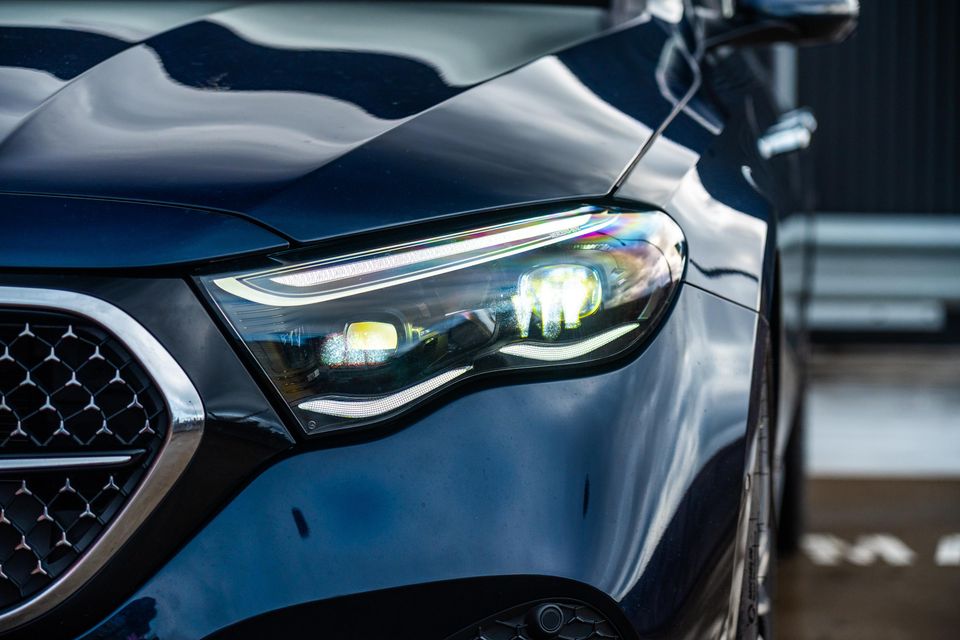
The E200 features most of the same equipment as the E300, however, it sacrifices leather upholstery for Artico faux-hide trim and loses the AMG Line exterior treatment.
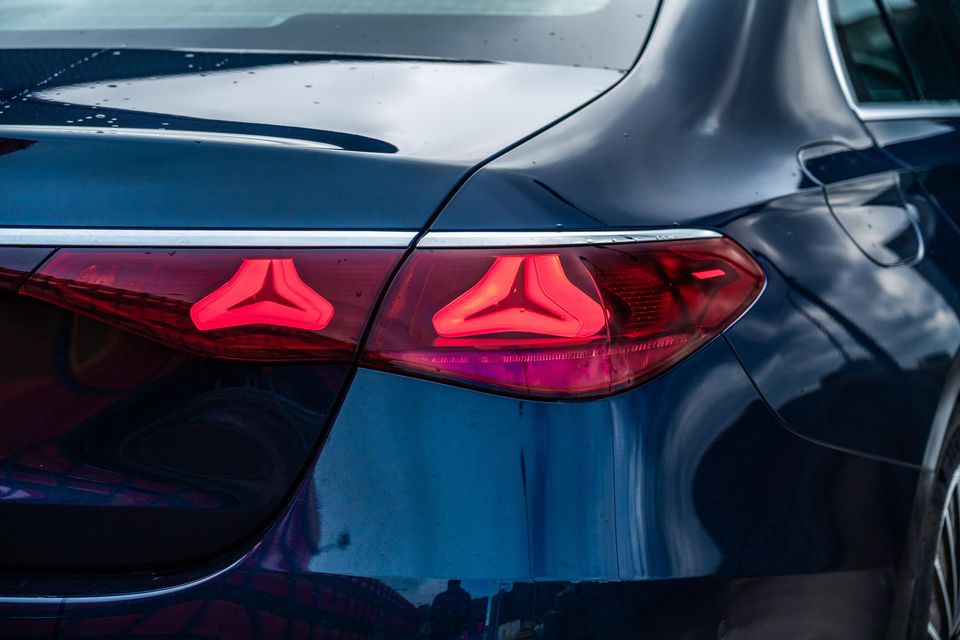
2026 Mercedes-Benz E200 equipment highlights:
E300 adds:
To see how the Mercedes-Benz E-Class lines up against the competition, check out our comparison tool
Buyers are offered a new Exclusive Line exterior package for no extra cost, which brings a three-slat grille, upright bonnet emblem and 19-inch wheels.
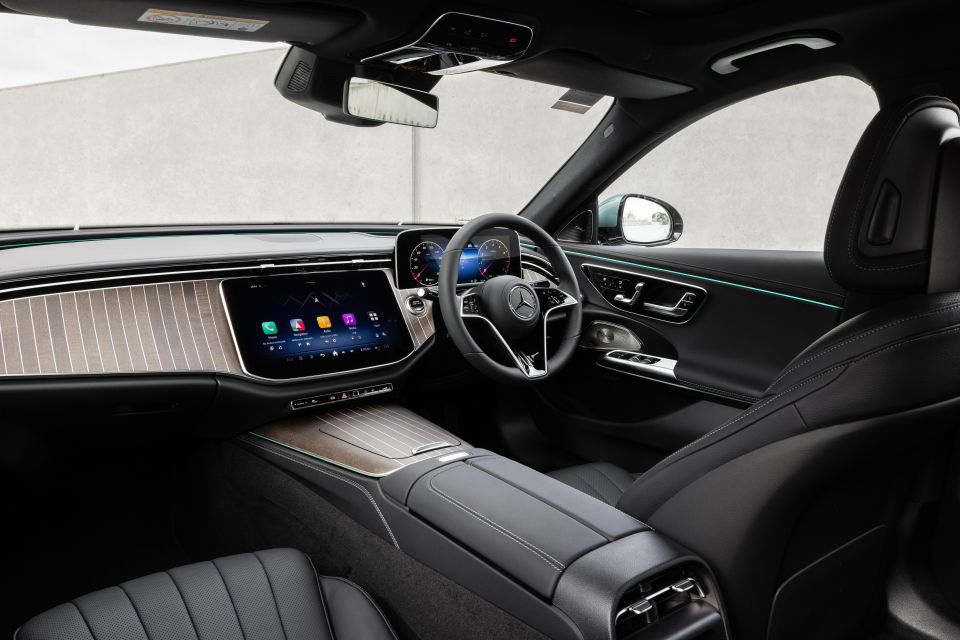
The no-cost Exclusive Line package for the E200 adds:
The $3500 Comfort Package for the E200 includes:
The $9400 Plus Package for the E300 brings:
The $5200 Energizing Package Plus for the E300 includes:
The W214-generation Mercedes-Benz E-Class wears a five-star ANCAP safety rating based on testing conducted by Euro NCAP in 2024.
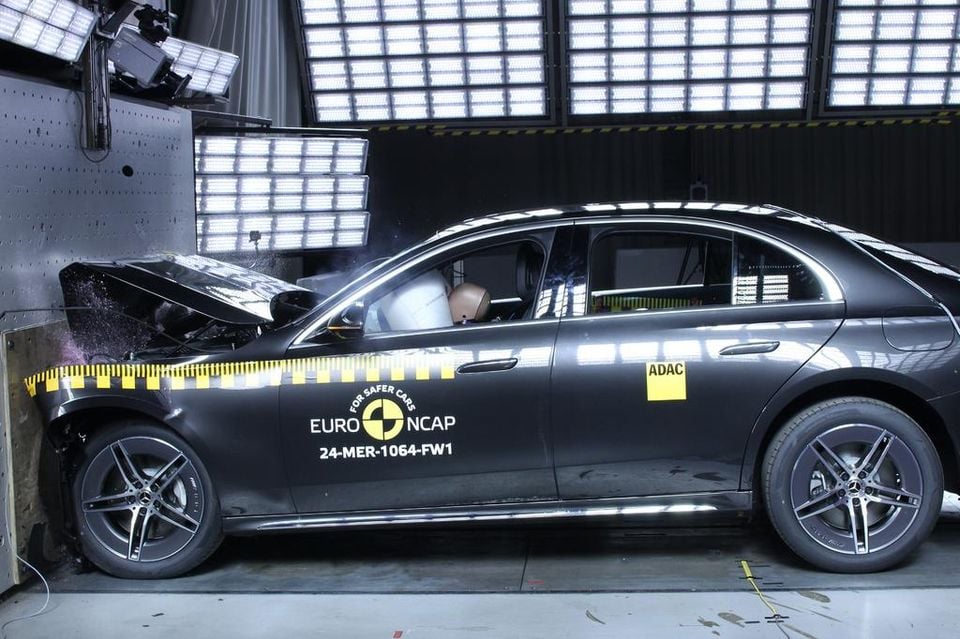
| Category | Mercedes-Benz E-Class |
|---|---|
| Adult occupant protection | 92 per cent |
| Child occupant protection | 91 per cent |
| Vulnerable road user protection | 84 per cent |
| Safety assist | 88 per cent |
Standard safety equipment includes:
To see how the Mercedes-Benz E-Class lines up against the competition, check out our comparison tool
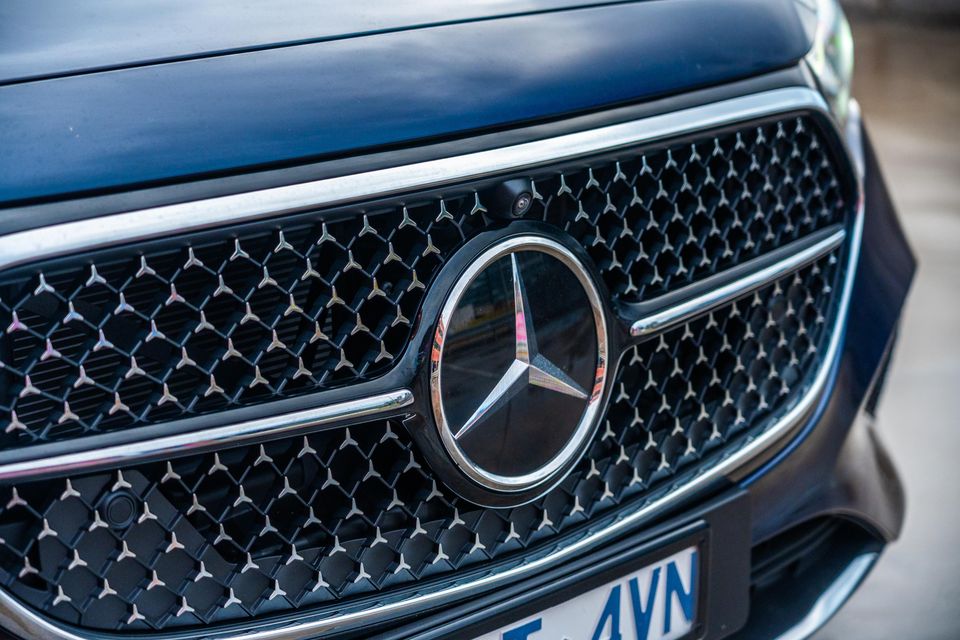
The Mercedes-Benz E-Class is backed by a five-year, unlimited-kilometre warranty.
| Servicing and Warranty | Mercedes-Benz E-Class |
|---|---|
| Warranty | 5 years, unlimited kilometres |
| Roadside assistance | 5 years |
| Service intervals | 12 months or 25,000km |
| Prepaid service plan | Up to 5 years |
| Average annual service cost | $1132 – 3 years $1169 – 4 years $1389 – 5 years |
| Total service plan cost | $3395 – 3 years $4675 – 4 years $6945 – 5 years |
Complimentary roadside assistance is available for the same period.
Mercedes-Benz is relatively generous with its service intervals (12 months or 25,000km for the E-Class), but not so much when it comes to service pricing. A five-year prepaid service plan costs $6945 – more than double what you’ll pay to maintain a BMW 5 Series or Audi A6 over the same period.
As for fuel costs, the E200 drinks at a similar rate to its main German rivals. All three are more frugal than international foes such as the Maserati Ghibli, Genesis G80, and Skoda Superb.
To see how the Mercedes-Benz E-Class lines up against the competition, check out our comparison tool
The entry-level E-Class ticks a lot of boxes for large premium sedan buyers, provided performance isn’t a priority.
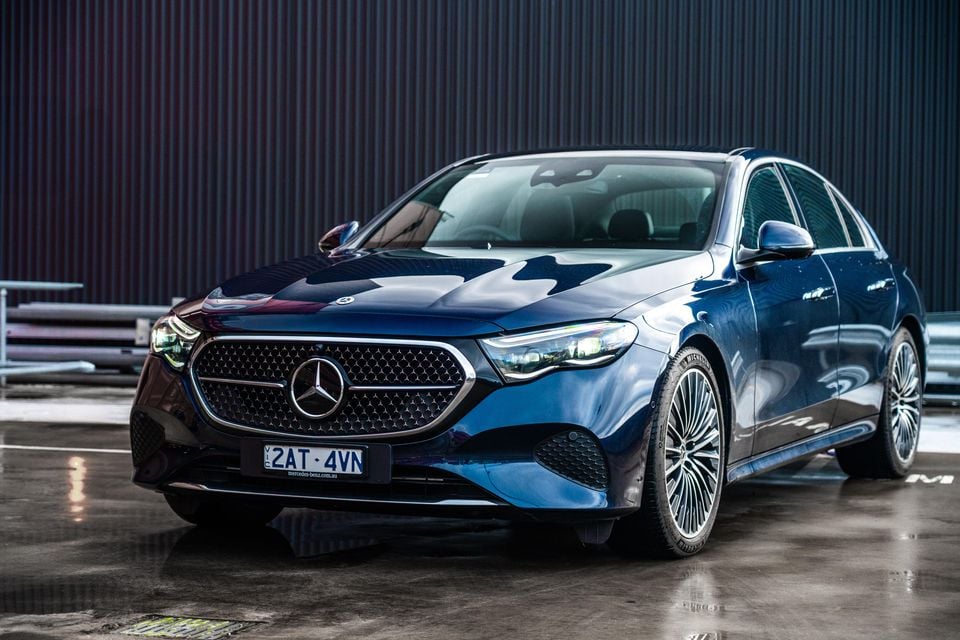
It’s comfortable, refined, efficient and loaded with impressive technology – all attributes that define automotive luxury in 2026.
With the Comfort Package equipped, the E200 is also better value than other versions of this in-demand sedan.
And yet, I still struggle to recommend it. Why? A lack of value in the ownership experience.
Servicing a Mercedes-Benz needn’t necessarily be cheap, but $7000 over five years is an absolute rort. BMW and Audi charge less than half that amount, while Genesis doesn’t take a cent. The latter even offers a complimentary pickup service – now that’s what I call premium treatment.
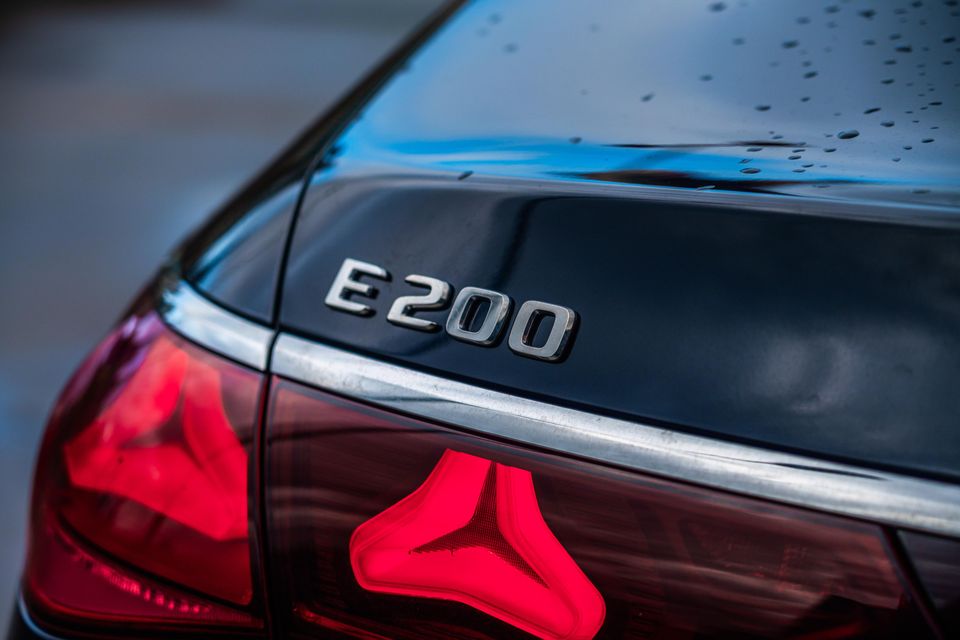
As such, with most other factors being equal (or close to it), I’d be more inclined to steer potential buyers towards the plush and punchy G80 Signature, priced from a more palatable $104,200 before on-road costs.
If you simply must buy European, the BMW 520i is another strong option in this segment, albeit quite similar in execution to the E200.
CarExpert can save you thousands on a new Mercedes-Benz E-Class. Click here to get a great deal.
Click the images for the full gallery
CarExpert brings together reviews, research tools and trusted buying support, guiding you from research to delivery with confidence.
Quickly see how this car stacks up against its competition. Select any benchmark to see more details.
Mercedes-Benz E-Class
Mercedes-Benz E-Class Sales rolling 12-months#
*Based on VFACTS and EVC data
Looking for complete Mercedes-Benz E-Class price history?
Our Mercedes-Benz E-Class Pricing Page shows exactly how prices have changed over time.
2026
$127,488
Josh Nevett is an automotive journalist covering news and reviews, with a background in motorsport journalism.
Add CarExpert as a Preferred Source on Google so your search results prioritise writing by actual experts, not AI.
Dave Humphreys
7 Days Ago

Max Davies
9 Days Ago

William Stopford
18 Days Ago
William Stopford
20 Days Ago
William Stopford
26 Days Ago
Max Davies
28 Days Ago
Add CarExpert as a Preferred Source on Google so your search results prioritise writing by actual experts, not AI.
# Based on VFACTS and EVC data
† Displayed prices are based on the drive-away price of the vehicle, which includes delivery charges, registration fees, number plates, and applicable road taxes, based on a Sydney location. However, prices may vary between states and territories, and additional costs such as compulsory third party (CTP) insurance, dealer delivery fees, and optional extras are not included. These prices are subject to change without notice and may not reflect current market pricing or dealer offers.
 Automotive Vehicle Spec Data & 4K images Powered by JATO Dynamics Ltd