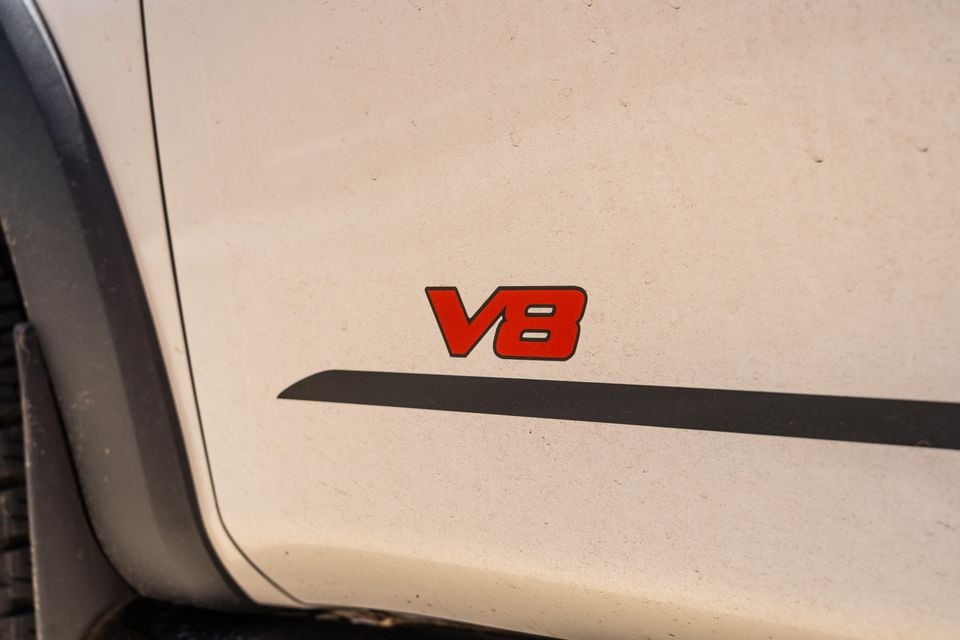
Want a V8-powered SUV that’s equally at home in the bush as it is on the blacktop? They’re hard to find in 2026.
Also want space for the whole family, including a third row of seats? The contenders can be counted on one hand, and none of them are cheap.
Indeed, the likes of the Y62-generation Nissan Patrol are a dying breed. It’s not for a lack of demand though – Patrol sales topped 6000 last year, making it one of the more popular large SUVs in Australia.
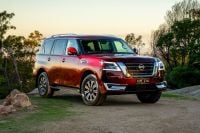
Rather, decarbonisation and more specifically emissions standards are set to spell the end of thunderous family wagons like the Patrol. A brave few including the Land Rover Defender and GMC Yukon Denali will soldier on a little longer, but Nissan has confirmed the current Patrol will ride off into the sunset later this year, before being replaced by the twin-turbo V6-powered ‘Y63’ model.
As such, the time is now for those wanting a Patrol with eight cylinders. Now is also a decent time to buy when you consider that Nissan Australia gave the Y62 Patrol a significant interior update last year, bringing new-generation infotainment among other enhancements.
However, those gains were almost immediately offset by August price hikes of $5000 across the board – a decision Nissan attributed to the federal government’s New Vehicle Efficiency Standard (NVES).
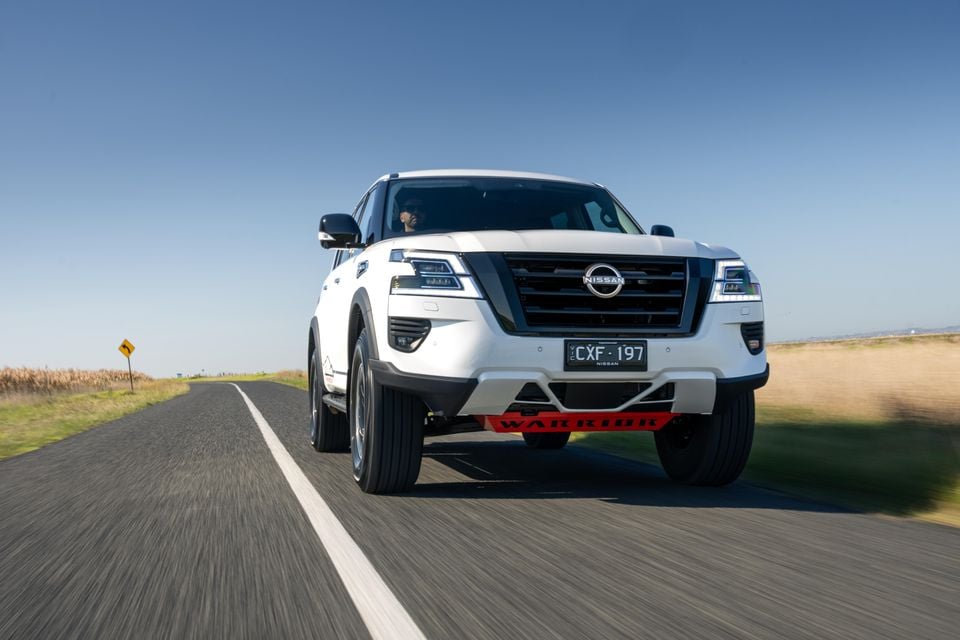
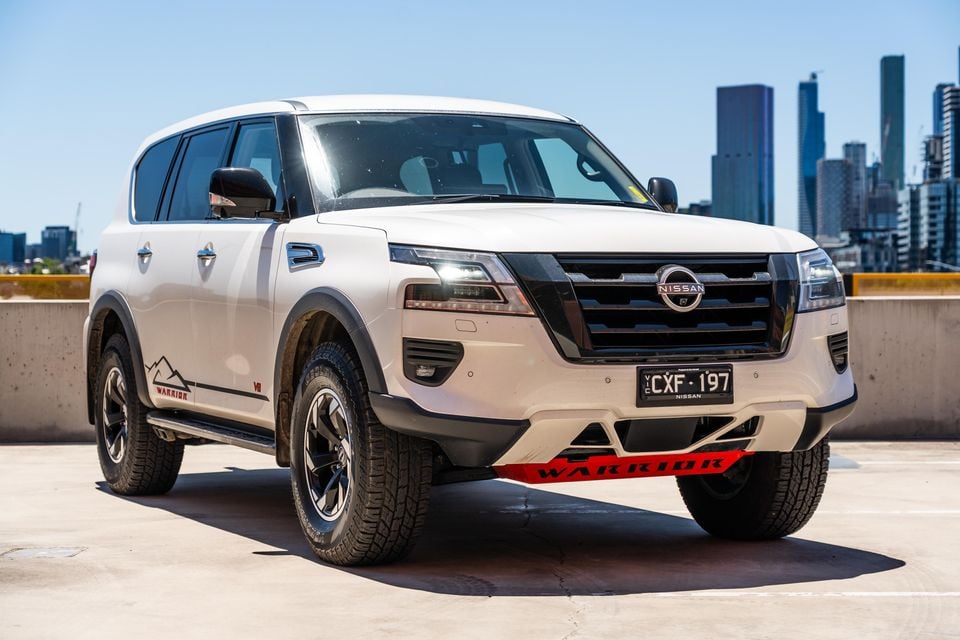
And this off-road flagship – the Warrior – is the most expensive Patrol of them all.
With a sticker price of $110,660 before on-road costs, the Warrior goes up against not only the Toyota LandCruiser 300 Series, but also versions of the Land Rover Defender and Ineos Grenadier. At the same time, it’s a fair chunk dearer than the toughest versions of the Ford Everest, GWM Tank 500, and Isuzu MU-X.
So, is it worth spending up for a glorious V8 engine and unmatched off-road chops while you still can? We spent a week with the Warrior to find out.
How much does the Nissan Patrol cost?
All versions of the Nissan Patrol are now $5000 more expensive than before, following a range-wide price increase from August 1, 2025.
| Model | Price before on-road costs |
|---|
| 2026 Nissan Patrol Ti | $95,600 |
| 2026 Nissan Patrol Ti-L | $107,100 |
| 2026 Nissan Patrol Warrior | $110,660 |
Nissan Australia blamed a range of factors for hiking prices across the Patrol range, including the federal government’s new automotive emissions legislation known as the New Vehicle Efficiency Standard (NVES).
“There is a price increase across the Patrol range effective August 1st, 2025,” said Nissan in a statement.
“A range of factors contribute to the pricing of a vehicle including cost of raw materials, logistics, foreign exchange rates, market dynamics and regulatory considerations such as NVES.”
To see how the Nissan Patrol lines up against the competition, check out our comparison tool
Let us help you find your new car
Buy your new car without the stress. It's fast, simple and completely free.
Great service from Travis and team, second time I have used this business would not hesitate to recommend them to anyone
Craig C.
Purchased a Ford Ranger in Sunshine Coast, QLD
CarExpert helped Craig save thousands on his Ford Ranger, now let us save you on your next new car.
Find my dealWhat is the Nissan Patrol like on the inside?
Clambering up into the Patrol Warrior is an event in itself, requiring a burst of physical effort and a degree of sure-footedness. As such, this isn’t a vehicle for the immobile.
But once you’re eventually seated, it’s easy to get comfortable.
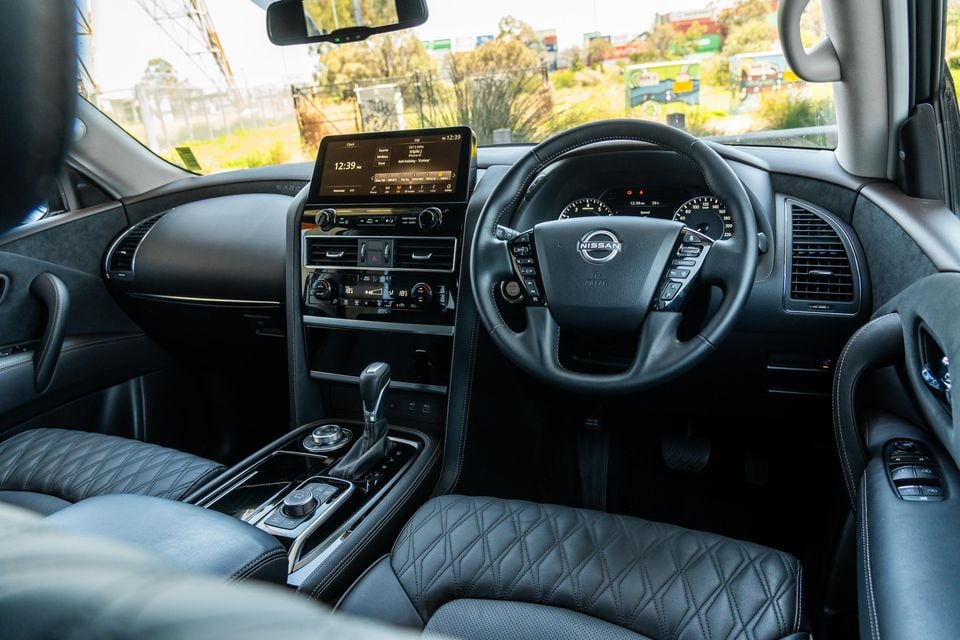
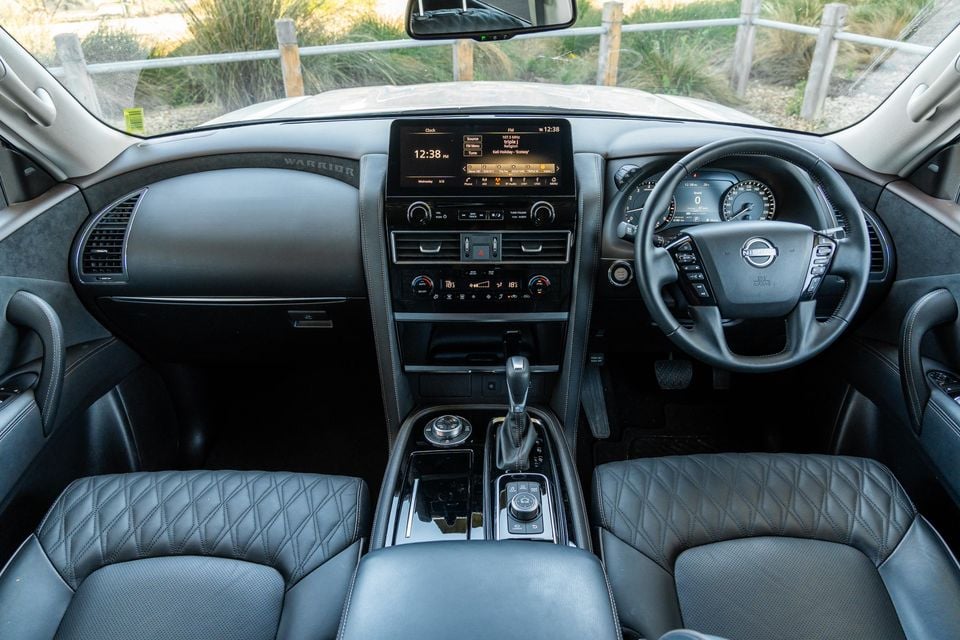
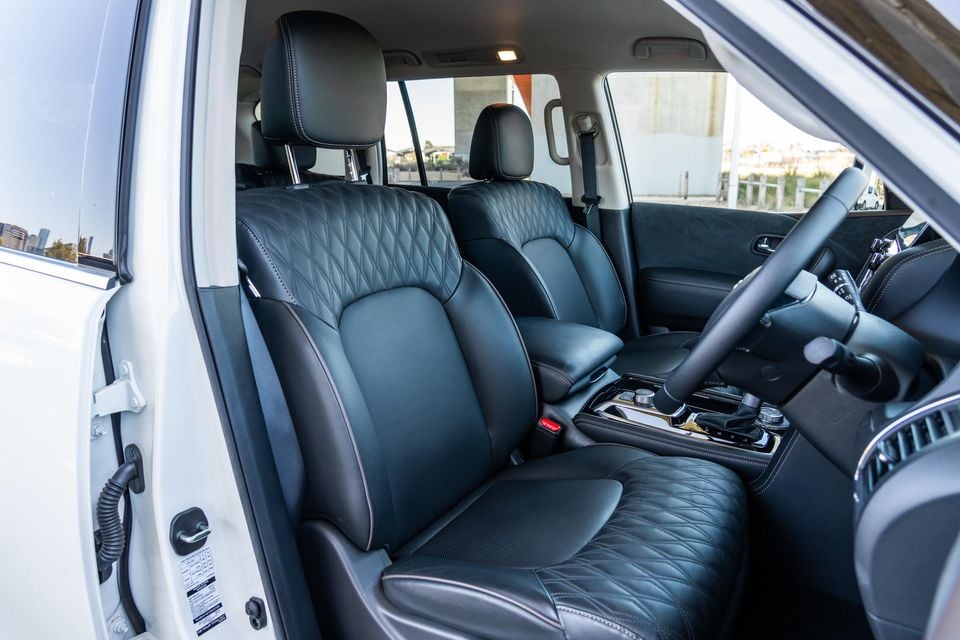
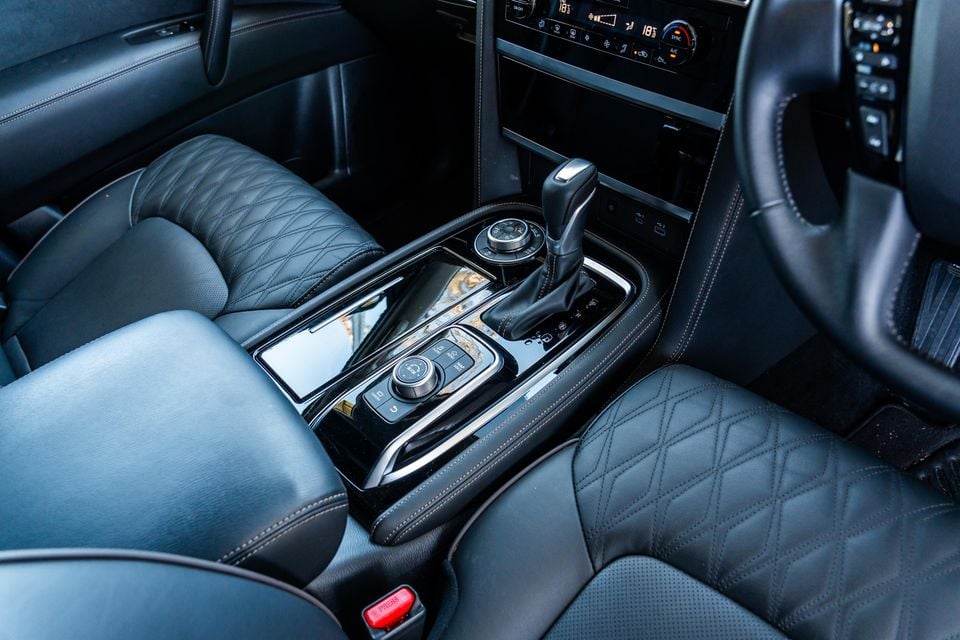
The cabin is endlessly spacious, evidenced by the wide centre console that separates driver from passenger. And the seats are plush too, with a welcoming base cushion and quilted leather upholstery that both looks and feels premium.
With that said, I was disappointed to discover that the front pews are neither heated nor ventilated. This is a product of the Warrior drawing its equipment set from the base Patrol Ti. As a result, there’s a bit of a mismatch between the Warrior’s standing and what it actually offers, especially considering its six-figure price tag.
Other key features the Warrior misses out on include a power tailgate, upgraded sound system, centre console cool box, and seat position memory – all of which belong in a flagship model.
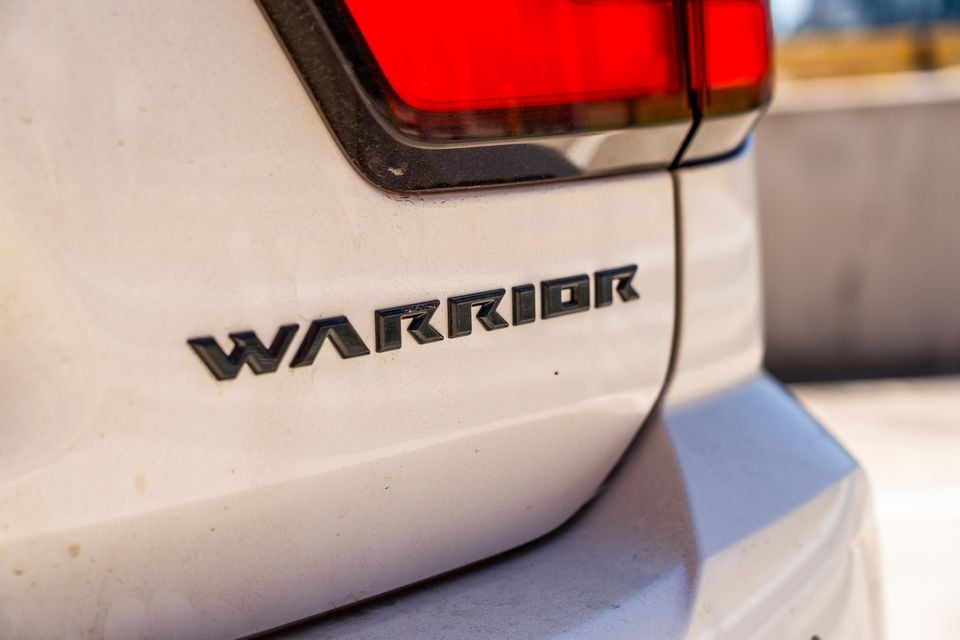
Nevertheless, the Warrior definitely justifies its positioning from a fit and finish perspective. The use of suede on the dash and door cards improves the presentation of the space, as does the inclusion of ‘Warrior’ lettering on the aforementioned dash panel. Attention to detail can also be seen in the fitment of padding where the driver’s left knee rests.
So does the Patrol Warrior feel like a step up from other Nissan products? Absolutely. But does it feel like a $110,000 car? Not quite.
It’s a similar story on the technology front.
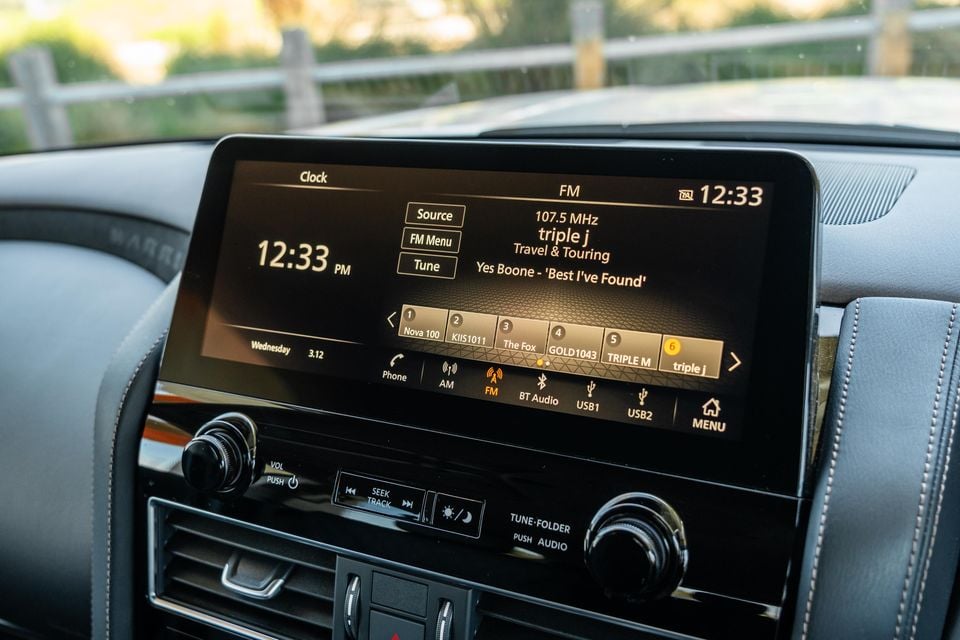
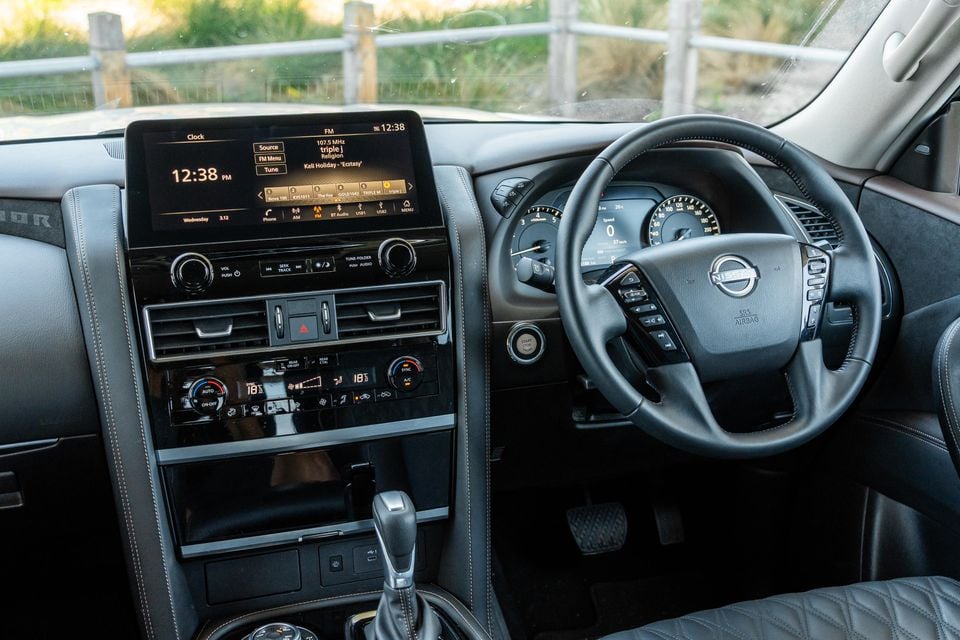
The Patrol received a major interior tech update earlier this year, adopting a new infotainment system from the US-market Nissan Armada. The 12.3-inch centre screen looks modern enough, boasting bright, crisp graphics and decent responsiveness to touch inputs.
However, the whole unit is oddly angled upward toward the ceiling, and the native navigation system now appears dated. There’s no head-up display, either.
Connected services and app integrations are also absent, so while the fresh screen represents an improvement, it still lags behind modern rivals.
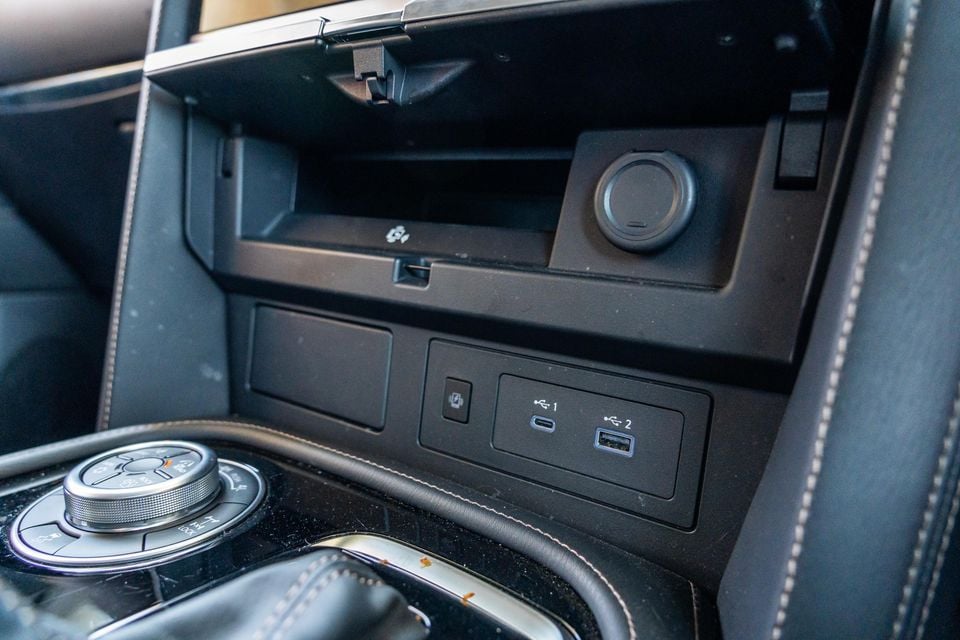
Many will default to Apple CarPlay or Android Auto though, which worked without fault throughout our test. You don’t need a cable to connect, although USB-A and USB-C outlets are present in addition to an enclosed wireless charging pad which prevents your phone from getting airborne during hardcore off-roading.
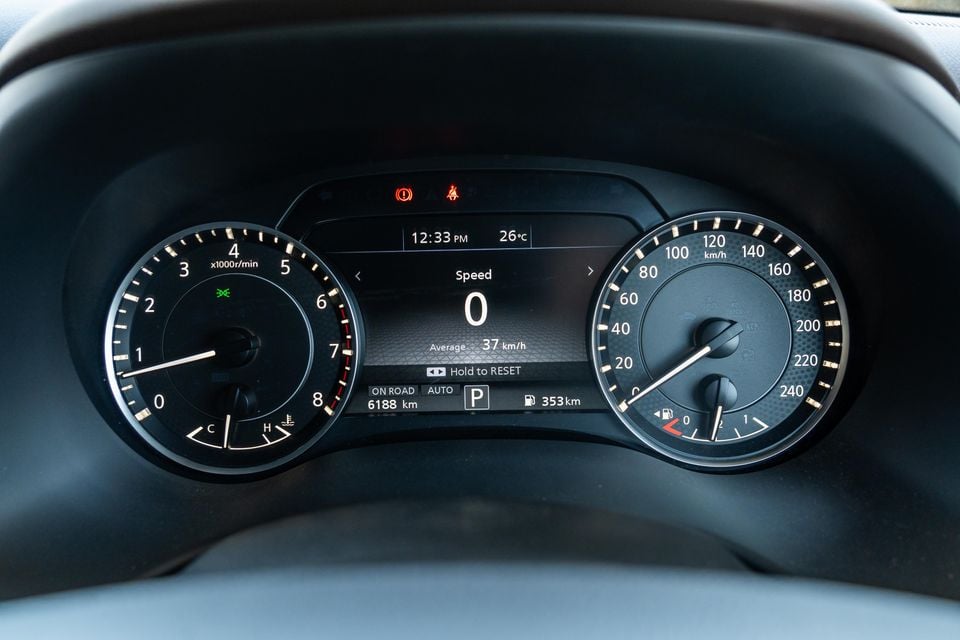
Moving across, the Patrol is still equipped with an analogue gauge cluster that also contains a small configurable centre display – another reminder that this SUV is no spring chicken. Still, the setup is functional, if nothing else.
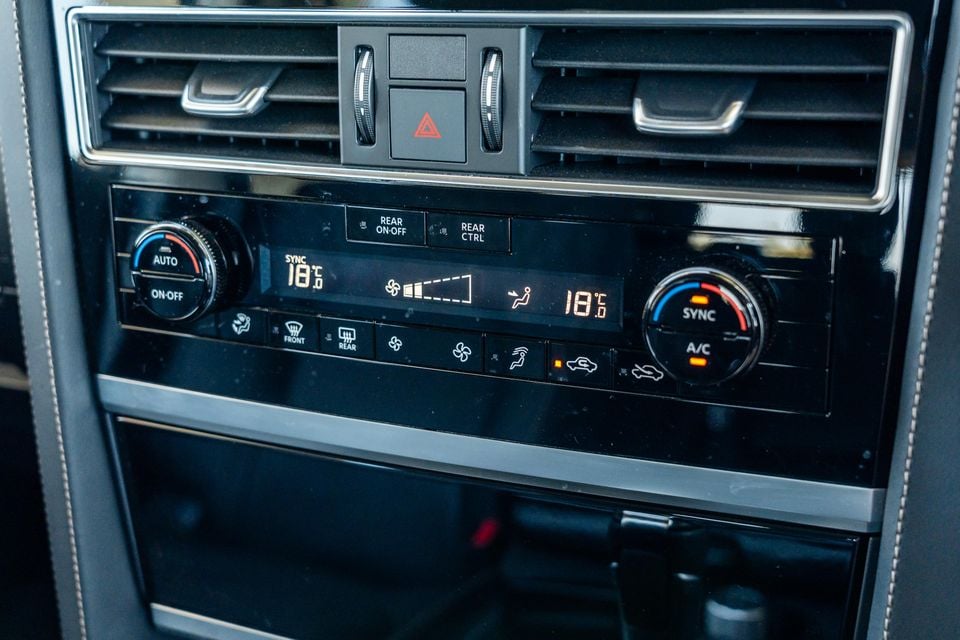
And unlike more modern SUVs, the Patrol retains proper physical buttons and switches for the climate controls. The infotainment system can also be operated via physical shortcut buttons and a rotary dial near the gear selector. As such, you needn’t ever avert your eyes from the road ahead.
Cabin storage is another strength of this behemoth. Just about everything in this car is big, including the cupholders, door bins, centre console, and glovebox, which all make for excellent liveability. Sunglasses can be stored in a dedicated overhead compartment.
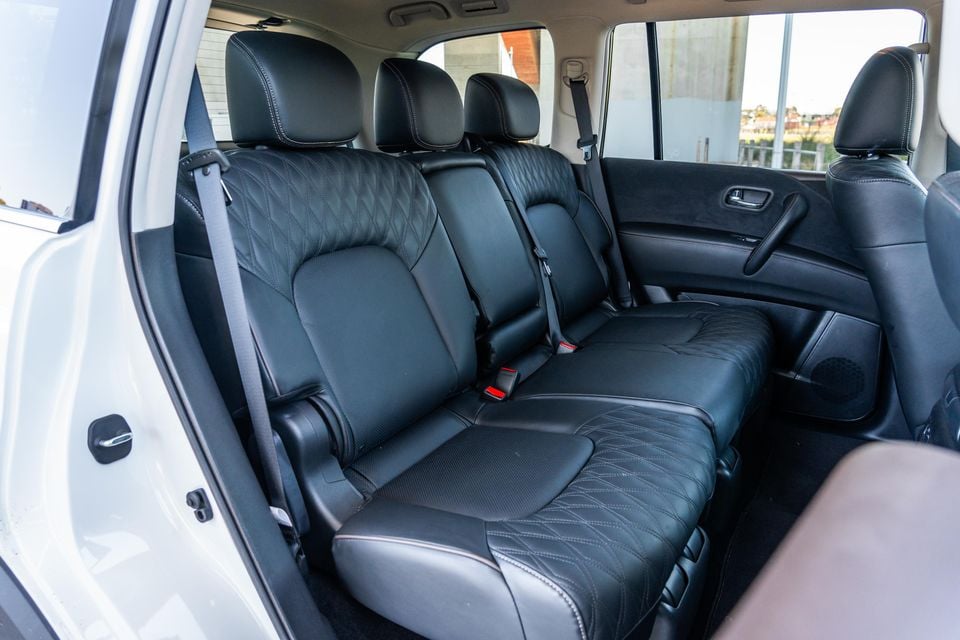
As you might expect, space is also plentiful in the second row. There’s a load of legroom, and the rear bench has an in-built recline mechanism for enhanced comfort over longer journeys. Headroom isn’t an issue either, even with the seats set to their most upright position.
The rear bench itself is soft and inviting, too, although the middle seat is noticeably firmer – a minor blemish, yet complaints from middle row passengers are unlikely given the overall room on offer.
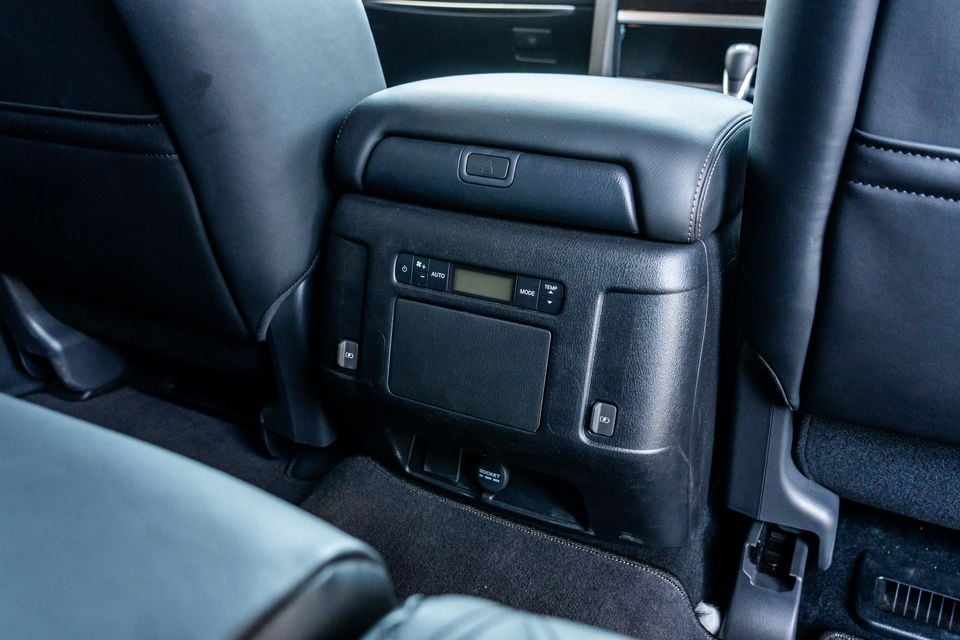
A long list of amenities complements the size of the space. Features include twin USB-A outlets, dedicated climate controls, door- and seatback storage, and a folding centre armrest with pop-out cupholders. Additionally, the front centre console bin has a bi-directional lid that can also be opened by rear passengers, affording them access to the deep cubby within.
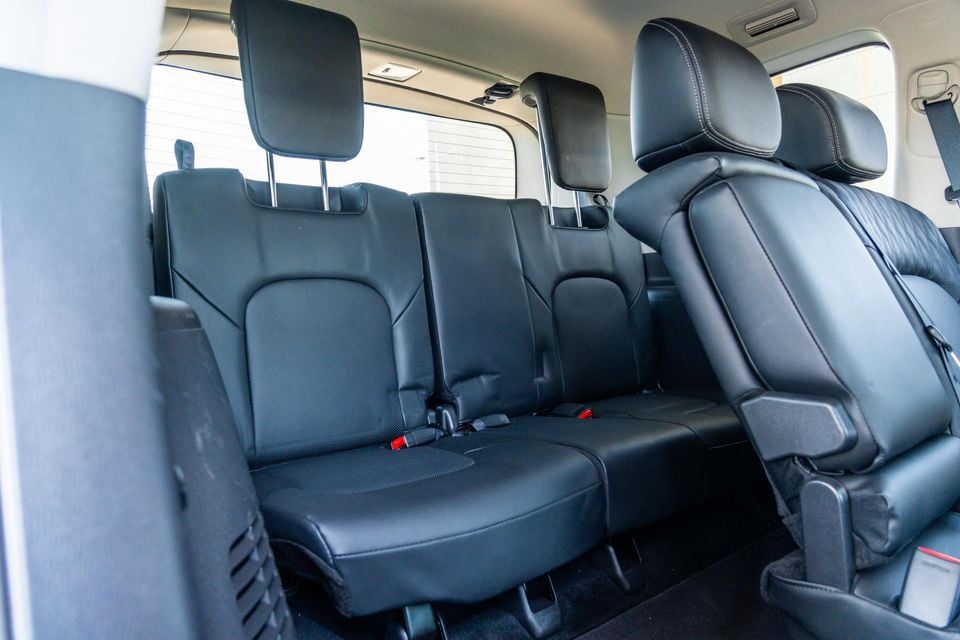
Further back you’ll find a third row of seats, as is standard across the Patrol range. You’d think this would automatically boost the Warrior above rivals in the practicality stakes, but there’s more to the story.
Because, despite the hulking proportions of the vehicle, third-row space is at a real premium. I only just managed to sandwich myself back there, and was immediately subject to strong pressure on my head, knees and toes. It’s not just adults who can expect that, as even taller kids will struggle to find a pleasant seating position.
There’s an obvious fix for this issue – the installation of fore-aft adjustability for the second row. Hopefully this arrives with the new-generation Y63 Patrol, which is due late next year.
Amenities are likewise sorely lacking. Air vents and cupholders are present, but there’s no USB connectivity.
So, the third row is best reserved for small children only, which is a massive disappointment given the Patrol’s imposing dimensions.
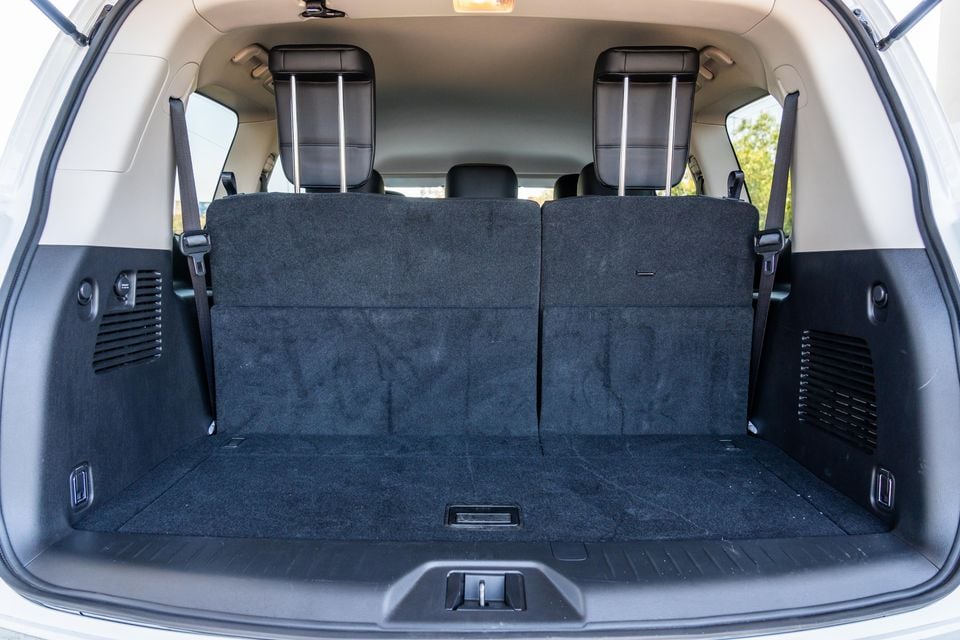
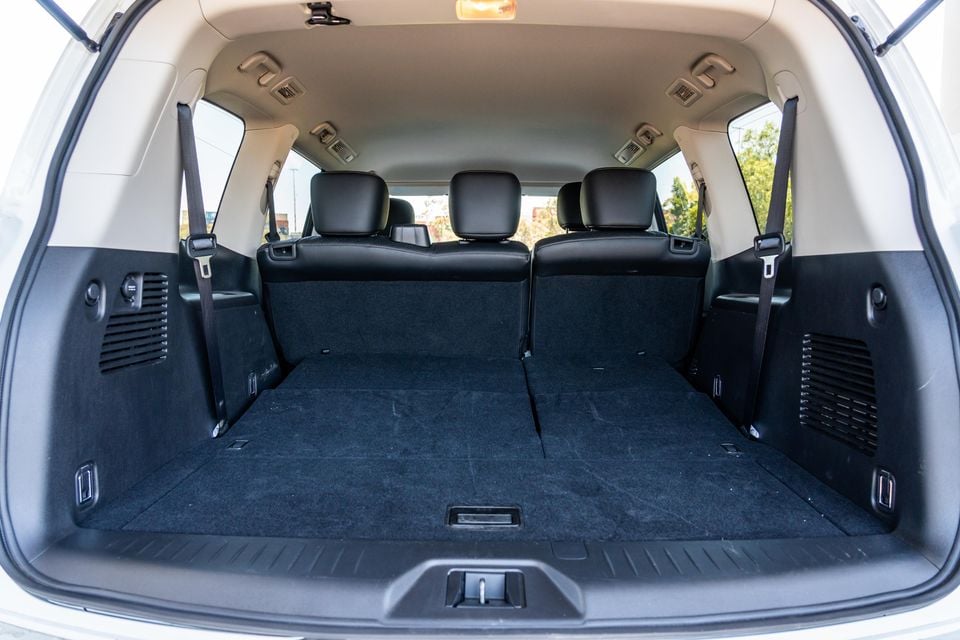
As for the boot, well that makes up for it somewhat. With all three rows in place, the Patrol promises 467 litres of capacity – substantially more than the LandCruiser, Defender, Discovery, Everest, and Tank 500. If you need more space, the total expands to 1413 litres with the rear seats folded down.
Better yet, the load floor is flat with no annoying lip and there are multiple tie-down points, as well as a 12V socket on the wall. A full-size spare tyre can be found underneath the vehicle.
| Dimensions | Nissan Patrol Warrior |
|---|
| Length | 5269mm |
| Width | 2079mm |
| Height | 1990mm |
| Wheelbase | 3075mm |
| Cargo capacity | 467L (behind third row)
1413L (behind second row)
2623L (behind front row) |
To see how the Nissan Patrol lines up against the competition, check out our comparison tool
What’s under the bonnet?
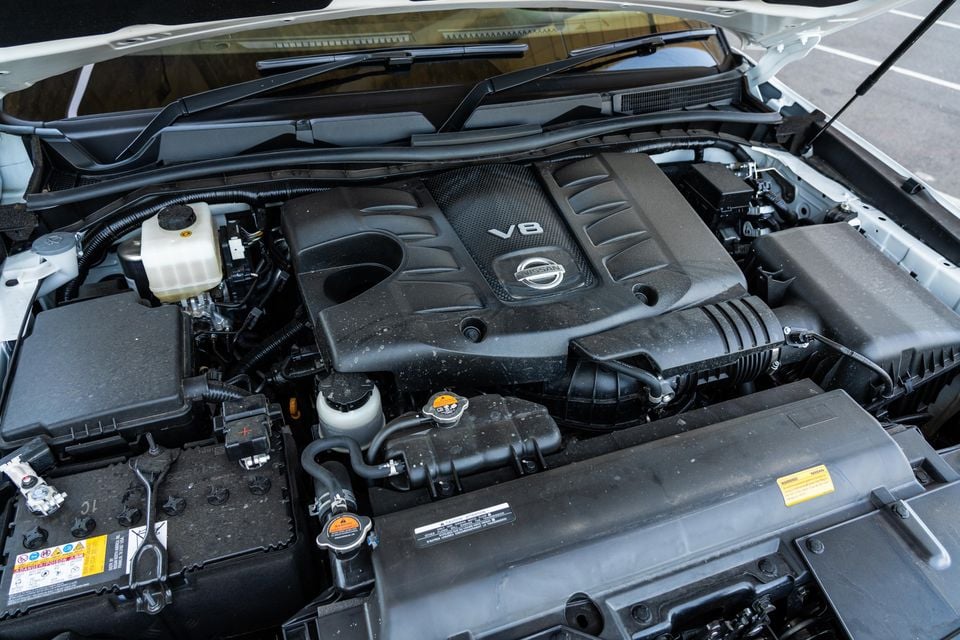
The Patrol retains a burbling naturally aspirated V8 for now, at least until the Y63 generation introduces a new twin-turbo petrol V6 in its place.
| Specifications | Nissan Patrol Warrior |
|---|
| Engine | 5.6L naturally aspirated V8 |
| Power | 298kW |
| Torque | 560Nm |
| Transmission | 7-speed automatic |
| Drive type | Four-wheel drive |
| Fuel economy (claimed) | 14.4L/100km |
| Fuel economy (as tested) | 16.5L/100km |
| CO2 emissions (claimed) | 334g/km |
| Fuel tank | 140L |
| Weight | 2884kg |
| Payload | 736kg |
| Braked towing capacity | 3500kg |
| Gross vehicle mass (GVM) | 3620kg |
| Gross combination mass (GCM) | 7000kg |
To see how the Nissan Patrol lines up against the competition, check out our comparison tool
How does the Nissan Patrol drive?
Nissan may have modernised the interior of the Patrol, but the driving experience is still fundamentally old-school.
From the moment you hit the start button, it’s apparent this beast is a relic of a bygone era. The 5.6-litre V8 grumbles to life with a little more fanfare than most modern SUVs, and setting off requires the use of a foot-operated parking brake – a rare feature in 2026. So rare, in fact, that I had never previously encountered one in two years of reviewing new cars.
It’s quirks like this that remind you of the Patrol’s ancient underpinnings, and further unique traits present themselves once you get rolling. For example, at low speeds the hydraulic steering is far heavier than you might expect, second only to the Ineos Grenadier in its heft.
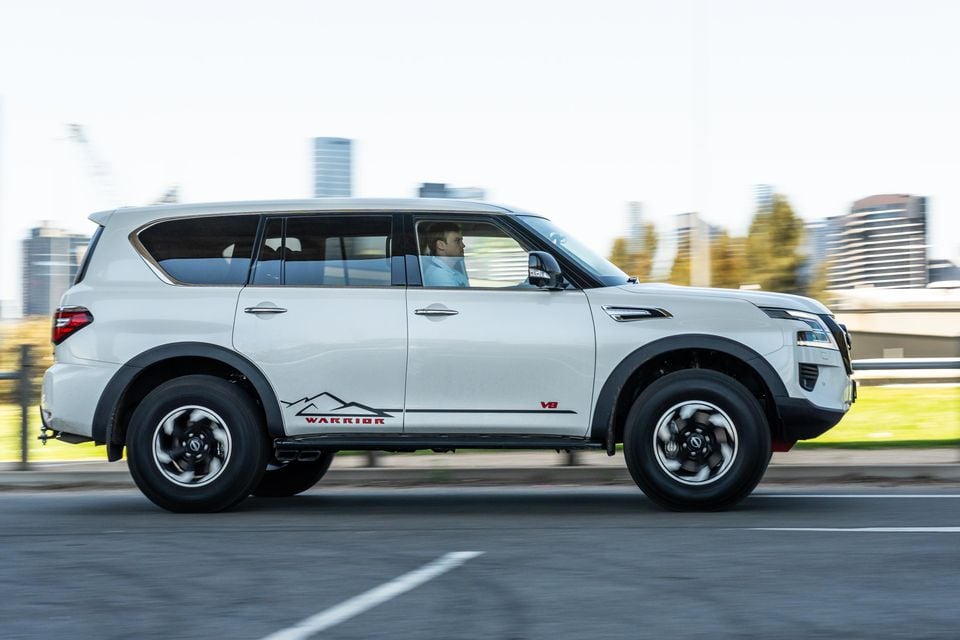
The sheer size of the Patrol also makes it one of the most challenging SUVs to manoeuvre in urban environments. At 5.3m long and 2.1m wide, the Warrior feels too big for tight alleyways and suburban streets despite a towering driving position that provides excellent visibility. There’s a lot of guesswork involved in placing the corners of this SUV, and steering corrections require strong forearms.
To make matters worse, the turning circle is poor, and the steering system tends to protest and judder at full lock.
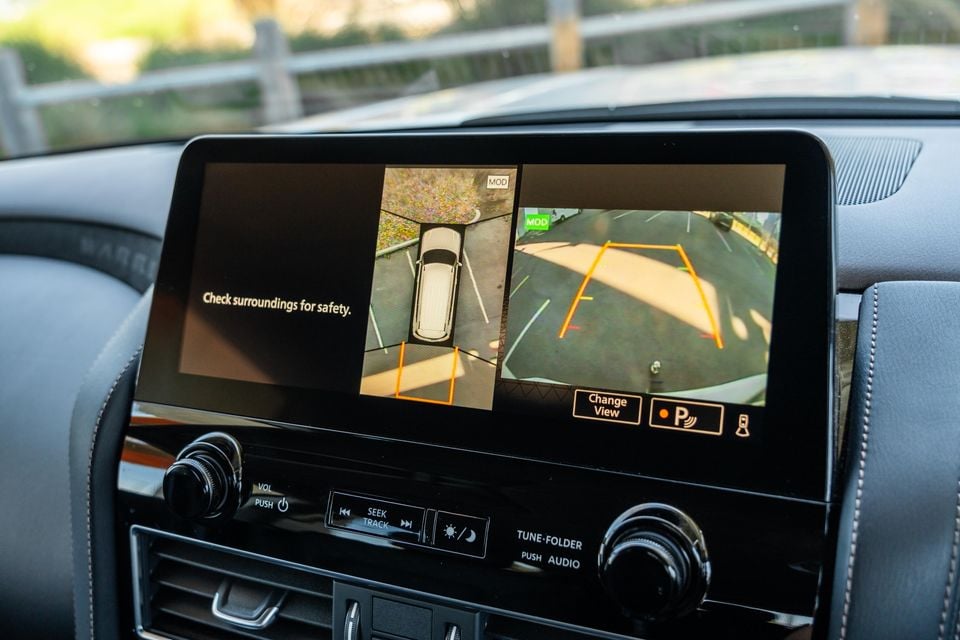
I found that out the hard way when attempting to navigate my way out of an underground carpark, which required a multi-point turn and use of the surround-view camera, a piece of tech that proved invaluable. With that said, the picture resolution is grainy by current standards, and when parking you can still expect the Patrol to exceed the limits of standard spaces.
I wouldn’t recommend peak-hour commuting, either. Stop/start driving can be a chore at the best of times, but the challenges are amplified in a car that weighs nearly 2.9 tonnes. And it doesn’t help that the brake pedal is soft and completely devoid of feel.
The Warrior also struggles for smoothness around town. It bounces and thumps over imperfections in the road, feeling busy and sometimes unrefined, especially for the price.
As for fuel economy, well let’s just say Greta Thunberg wouldn’t approve of the Patrol. I saw an average consumption of 16.5L/100km over a week of mixed driving that included a return trip to Anglesea via the iconic Great Ocean Road. That’s at least 50 per cent higher than what a LandCruiser or Everest Tremor would return, let alone plug-in hybrids like the GWM Tank 500. It’s the price you pay for character and simplicity.
From expert reviews to the right deal
CarExpert brings together reviews, research tools and trusted buying support, guiding you from research to delivery with confidence.
With that said, the huge 140-litre fuel tank allows for long touring range between servo stops.
Still, the Patrol isn’t built for the city. So if you’re after a seven-seater for the school run and occasional camping trips, alternatives like the Defender and LandCruiser are far easier to live with every day.
But if cross-country cruising and off-road adventures are more your style, the Patrol Warrior becomes a compelling proposition.
First and foremost, the open road presents welcome opportunities to stretch the legs of the muscular V8. Outputs of 298kW and 560Nm remain impressive, and the Patrol is a momentum machine – there’s ample torque down low, but power builds progressively through the rev range, and there’s real reward for pushing towards redline.
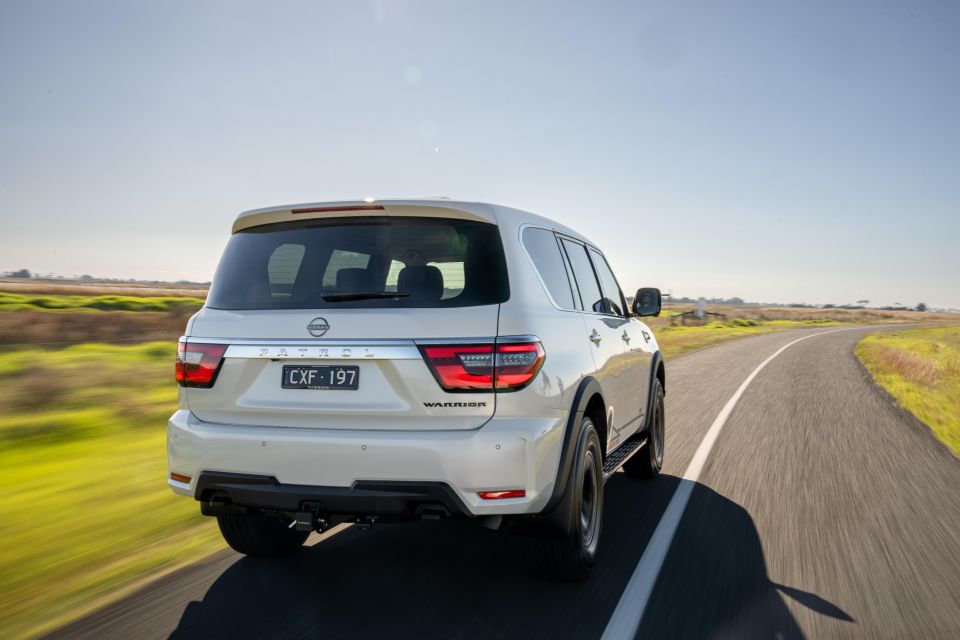
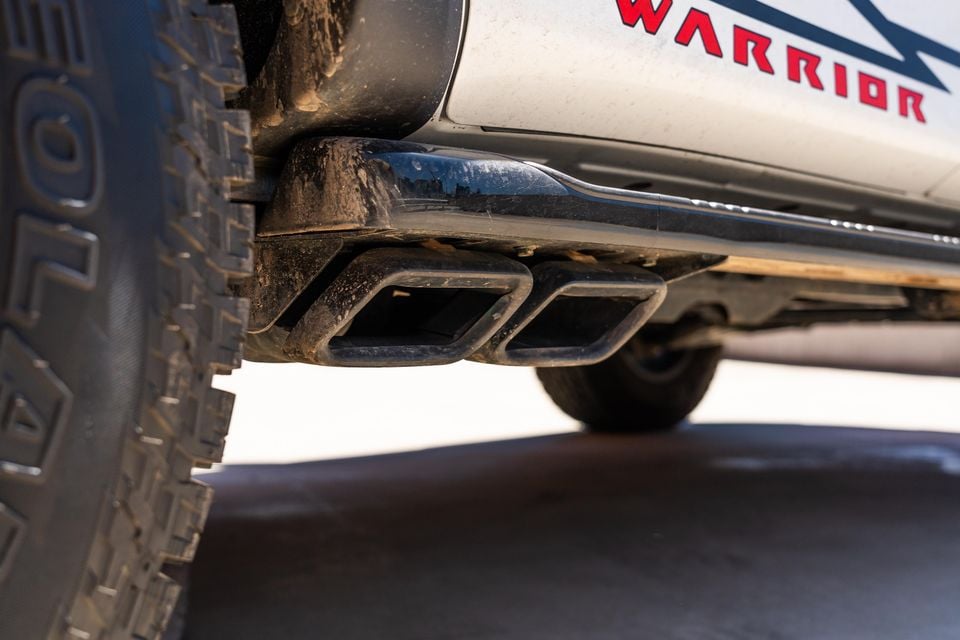
Part of the Warrior’s appeal is its bi-modal side-exit exhaust, which unleashes a brassy roar above 2500rpm. It’s hard to find an SUV that makes such a brilliant noise in 2026, and even harder to find one that hides its muscle when desired.
The Patrol’s V8 is mated to a seven-speed automatic transmission that suits the character of the car. It’s a little lazy but generally smooth and adept at harnessing the grunt up front. There are no paddle shifters behind the steering wheel, so taking manual control requires the use of the central gear selector. I wouldn’t bother though, as you’re unlikely to get sharp responses out of the gearbox.
Indeed, the Patrol performs best when driven in a relaxed manner. It chews up highway kilometres with ease, delivering improved ride comfort and lighter steering at higher speeds.
Adaptive cruise control helps to take some of the stress out of longer journeys, too. However, it’s necessary to stay alert, as the Patrol tends to wander about in its lane without the assistance of active lane centring.
Extra attention is required on twisty sections of tarmac, as this off-road-biased Warrior isn’t particularly fond of corners. The fitment of all-terrain tyres detracts from on-road grip, and you feel every ounce of weight as body roll through bends. As we knew already, this is not an SUV that enjoys being hustled, at least on the blacktop.
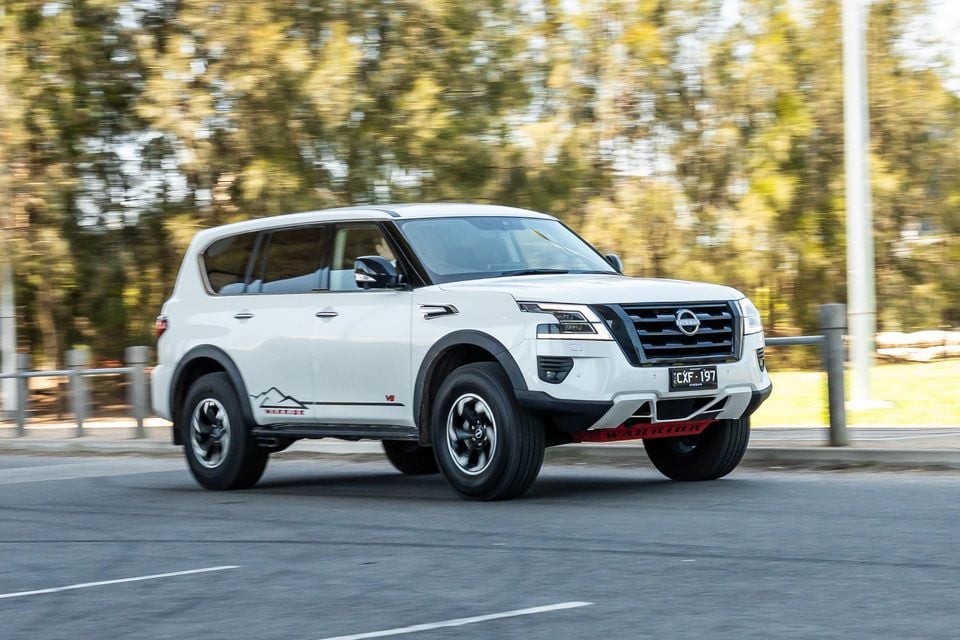
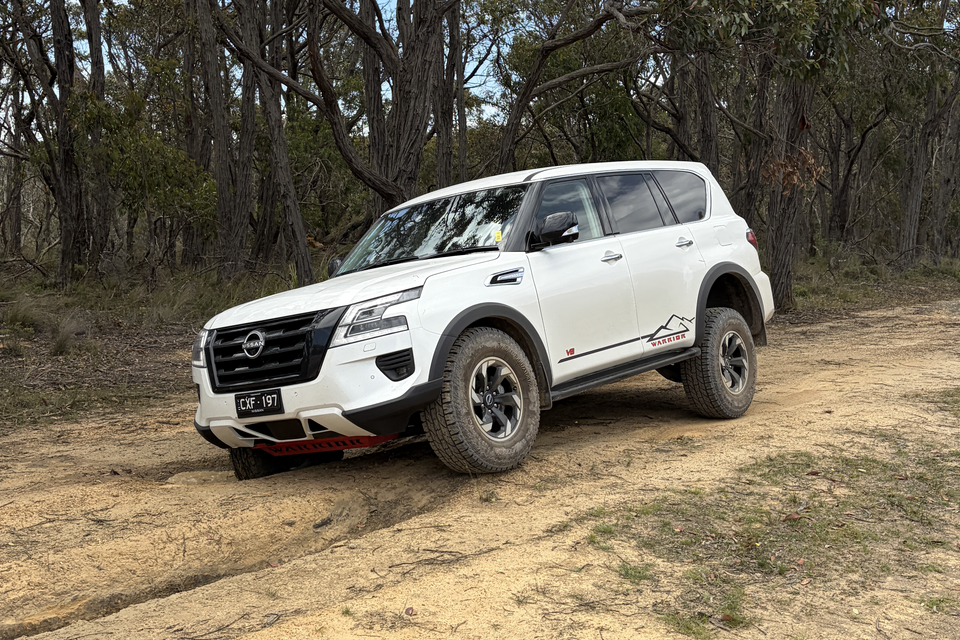
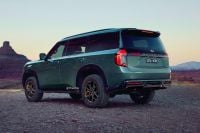
But when the bitumen ends, it’s a whole different story. Put simply, the Warrior lives up to its name off-road, thanks in large part to modifications made by Nissan Australia’s engineering partner Premcar.
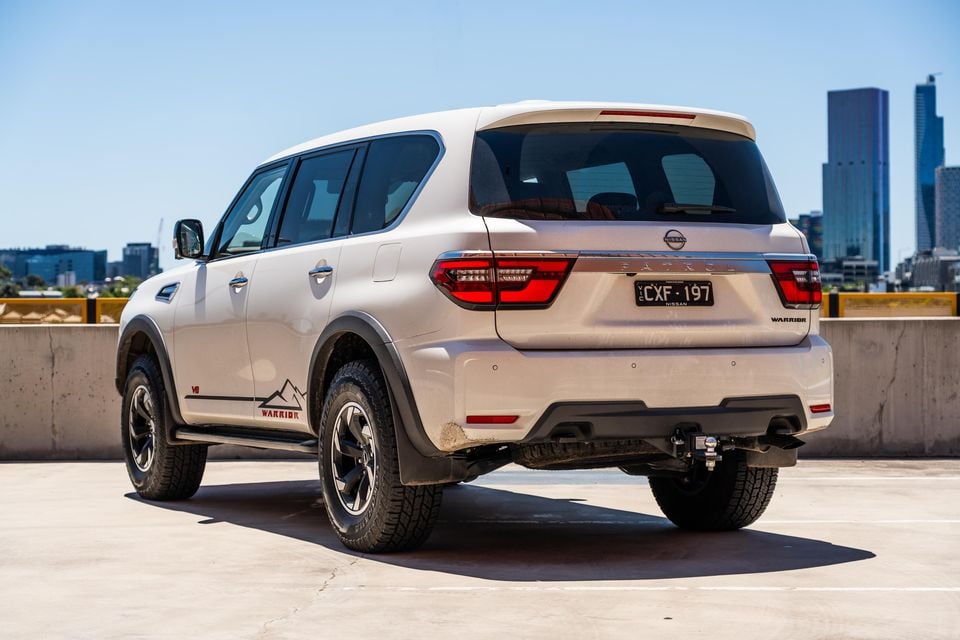
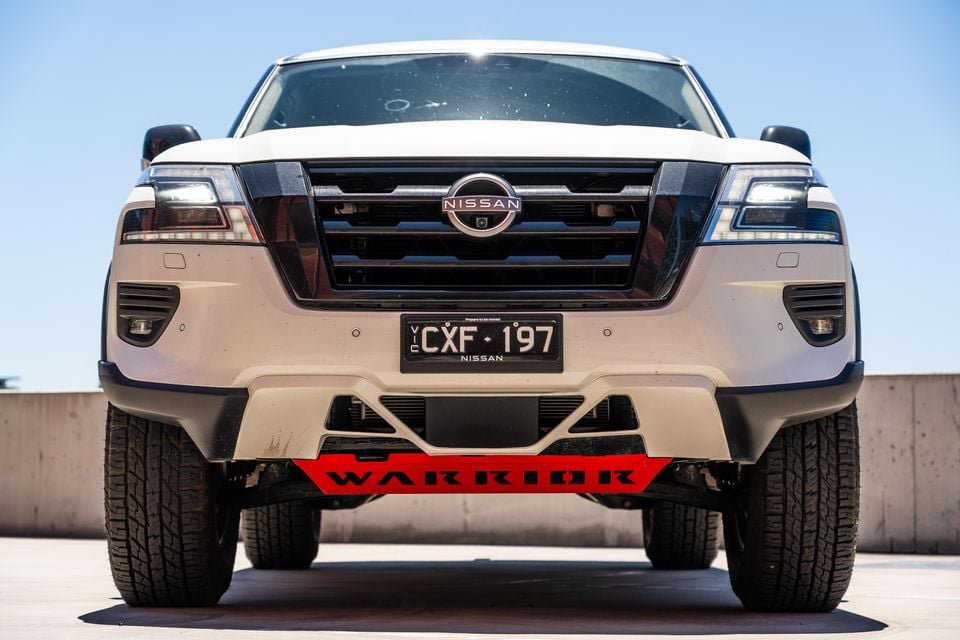
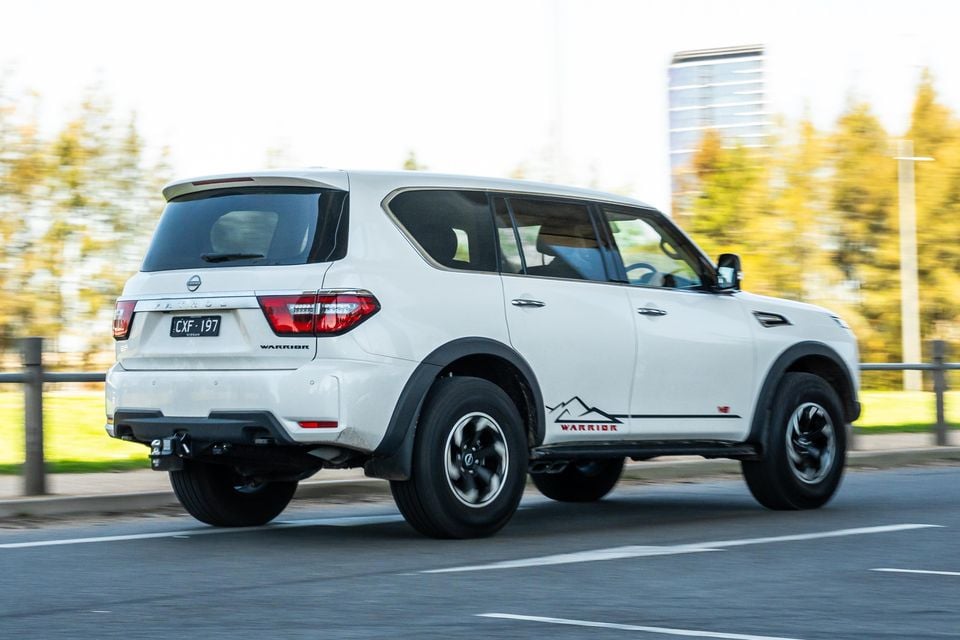
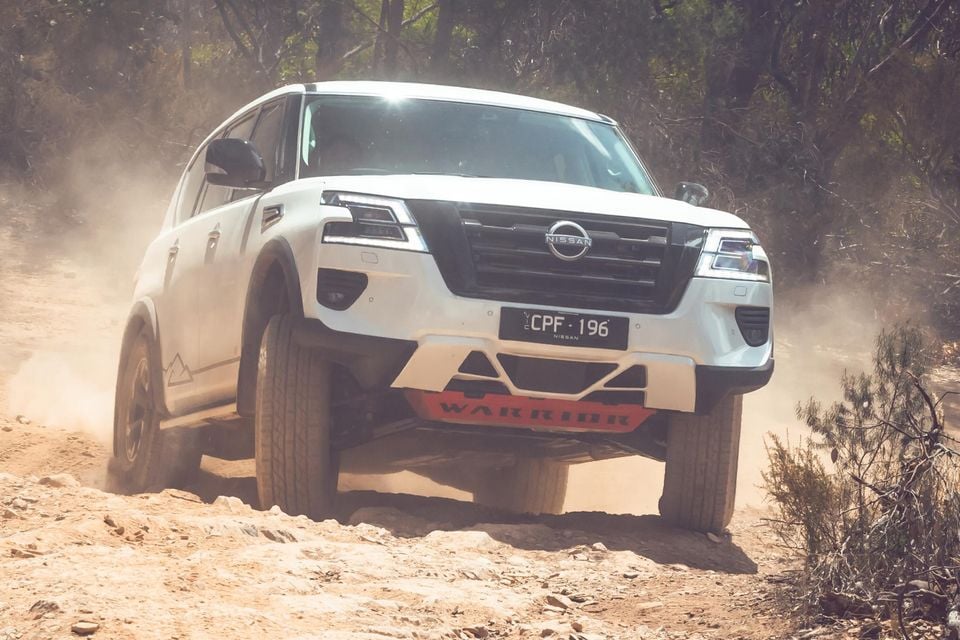
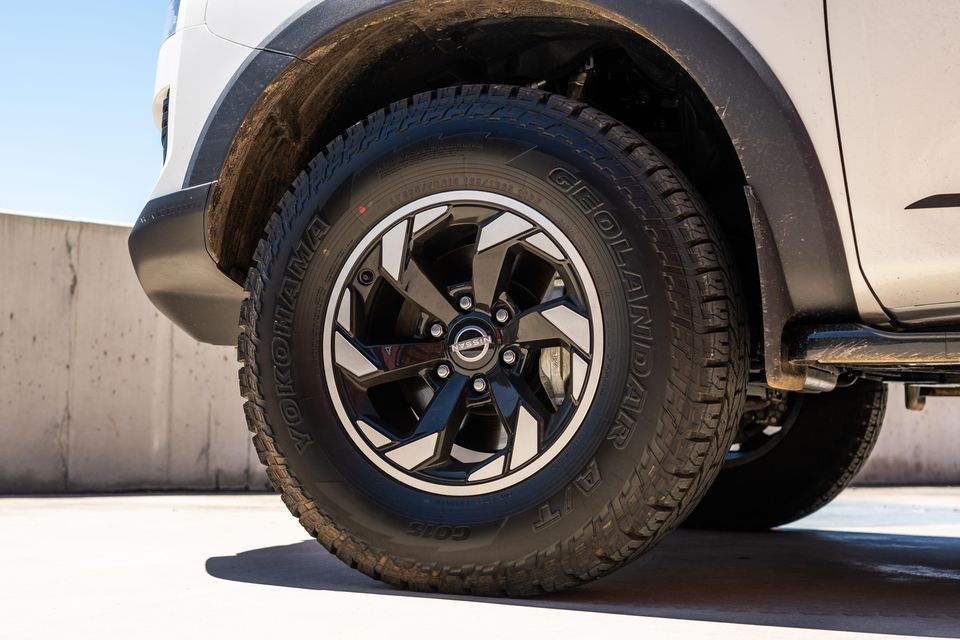
Compared to the standard Patrol, the Warrior gains the aforementioned all-terrain tyres, reworked suspension including a 50mm lift and retuned Hydraulic Body Motion Control (an anti-roll system that replaces conventional stabiliser bars), a bash plate, and two rear recovery points. That’s a strong set of upgrades considering the standard car was hardly afraid of getting down and dirty.
In fact, the 50mm increase in ride height gives the Warrior 323mm of ground clearance – the most of any new car on sale in Australia, ahead of the Ford Ranger Super Duty (up to 299mm) and Defender (up to 294mm). Meanwhile, the LandCruiser GR Sport offers just 245mm.
In practical terms, this means that you can tackle obstacles in the Warrior that other vehicles just can’t clear. Extra ground clearance also affords the driver additional visibility of the path ahead.
And when traversing rugged terrain, you really get to experience the benefits of the Warrior’s long suspension travel, which protects occupants from harsh impacts. The chunky all-terrain tyres also do their best work on loose surfaces, providing consistent grip on unstable earth.
Other helpful features include high and low range gearing, a rear differential lock, crawl control, and terrain-based drive modes (sand, snow, and rock).
However, you won’t find some of the more modern aids found in rivals, such as transparent chassis cameras or other similar off-road camera systems like those found in Jeep and GWM models. Instead, the Warrior relies mostly on good ol’ fashioned mechanical toughness.
That’s more than enough for it to be one of the best off-roaders on the market, as proven by the results of our 2023 large SUV mega test, which found a standard Patrol to be the best overall off-road SUV on sale.
At the time, Founder Paul Maric said:
“Despite its age, [the Patrol] is an absolute trooper, showing that you don’t need all the latest whiz-bang gadgets to go anywhere.”
Stay tuned to the CarExpert YouTube channel to find out how this Warrior tester performed in our 2026 mega test.
| Off-road dimensions | Nissan Patrol Warrior |
|---|
| Track front and rear | 1735mm |
| Ground clearance | 323mm |
| Approach angle | 40.0 degrees |
| Departure angle | 23.3 degrees |
| Ramp breakover angle | N/A |
| Wading depth | N/A |
To see how the Nissan Patrol lines up against the competition, check out our comparison tool
What do you get?
The three-grade Patrol lineup remains the same for MY26, with the Warrior sitting at the top of the tree.
2026 Nissan Patrol Ti standard equipment highlights:
- 18-inch alloy wheels
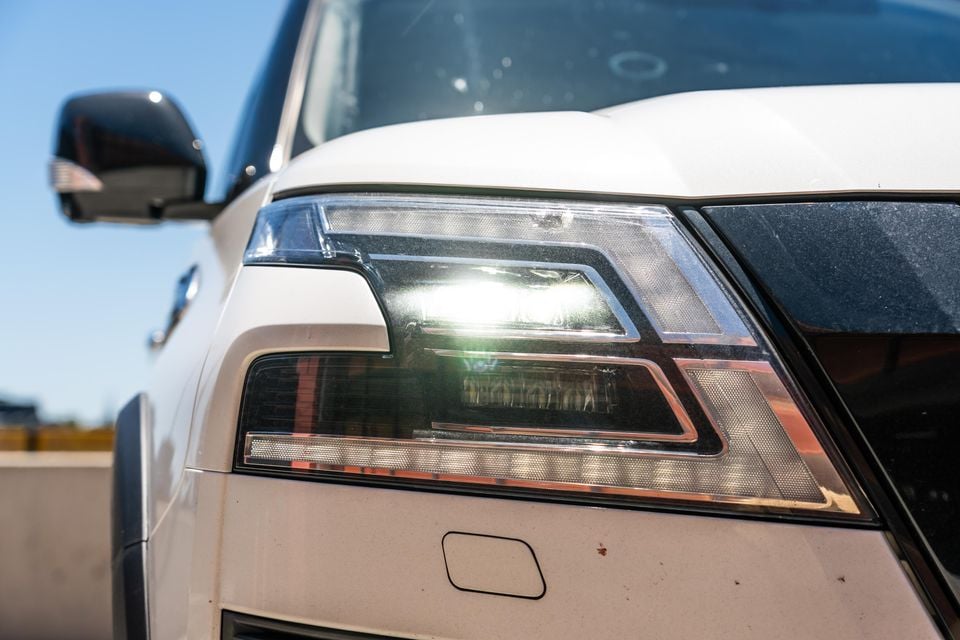
- Automatic LED headlights
- LED fog lights
- Heated, power-folding exterior mirrors
- Leather-accented upholstery
- 10-way power driver’s seat
- 8-way power passenger seat
- Dual-zone climate control
- 7.0-inch driver display
- Off-road monitor
- 12.3-inch touchscreen infotainment
- Wireless Apple CarPlay, Android Auto
- 1 x front USB-A outlet
- 1 x front USB-C outlet
- Wireless phone charger
- 6-speaker sound system
- Rear Helical limited-slip differential
- Hill descent control
Patrol Ti-L adds:
- ‘Premium’ bumper with unique grille
- Power sunroof
- Power tailgate
- Puddle lights
- Roof rails
- 13-speaker Bose premium audio
- Centre console cool box
- Digital rear-view mirror
- Heated and ventilated front seats
- Memory for driver’s seat, mirrors and steering column position
- Power tilt, telescopic steering column adjustment
Patrol Warrior adds – over Ti:
- 18-inch wheels
- All-terrain tyres
- Bi-modal side-exit exhaust
- 50mm suspension lift
- Reworked Hydraulic Body Motion Control
- Warrior front bumper and bash plate
- Black fender flares, mirror caps, grille
- 2 x rear recovery points
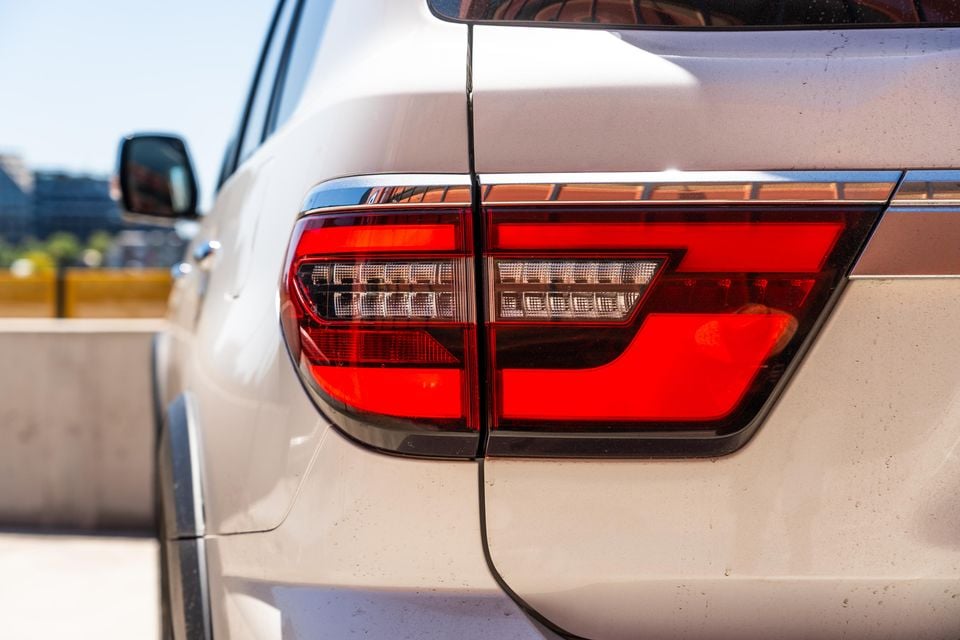
- Unique rear bumper with black valance panel
- Alcantara door and dash inlay
- High-gloss black interior trim
To see how the Nissan Patrol lines up against the competition, check out our comparison tool
Is the Nissan Patrol safe?
The current Nissan Patrol has never been tested by safety authority ANCAP.
Standard safety equipment includes:
- Adaptive cruise control
- Autonomous emergency braking
- Blind-spot assist
- Lane-keep assist
- Parking sensors – front, rear
- Rear cross-traffic alert
- Surround-view camera
- incl. Moving Object Detection
- Tyre pressure monitoring
To see how the Nissan Patrol lines up against the competition, check out our comparison tool
How much does the Nissan Patrol cost to run?
Outrageous fuel consumption aside, the Patrol is actually reasonably inexpensive to run and maintain thanks to a long 10-year conditional warranty and affordable capped-price servicing.
| Servicing and Warranty | Nissan Patrol |
|---|
| Warranty | Up to 10 years or 300,000km |
| Roadside assistance | Up to 10 years |
| Service intervals | 12 months or 10,000km |
| Capped-price servicing | 5 years |
| Total capped-price service cost | $2495 – $499 each |
To see how the Nissan Patrol lines up against the competition, check out our comparison tool
CarExpert’s Take on the Nissan Patrol Warrior
A generational transition may be imminent, but it’s easy to see why the Y62 Patrol continues to sell in droves.
Few off-road SUVs chew up long stretches of open road with such ease, while none can match the intoxicating noise of the loud and proud V8 found in this beast.
That’s especially true of the Warrior, which adds a valved exhaust and greatly enhanced off-road capability to an already enticing package.
But urban buyers take note: the Patrol Warrior isn’t particularly suited to the cut and thrust of the school run. With heavy steering and compromised dynamics, it’s a handful to drive around town.
The third row is also unexpectedly tight, and missing features up front might leave drivers feeling shortchanged.
Therefore, this is a proper family off-roader that demands to be used for its intended purpose.
Because, when limited to suburban errands, the Warrior isn’t worth the $110k it now commands, nor the fuel bills it generates. Such buyers should instead go down the Land Rover/Range Rover or Toyota LandCruiser route, or even pivot to the cheaper GWM Tank 500 and Ford Everest.
However, if true adventure calls, the Warrior remains a trustworthy companion with superior presence to the models mentioned above. It’s also the pick of the Patrol range.
And time is running out if you want your Patrol with a V8, as by next year we’ll be talking about the six-cylinder Y63 model that won’t stand out from the crowd so easily.
CarExpert can save you thousands on a new Nissan Patrol. Click here to get a great deal
Click the images for the full gallery
MORE: Explore the Nissan Patrol showroom

 Car News
 CarExpert Podcast
 Car Reviews
 Owner Car Reviews
 Car Comparisons
 Showroom
 Car Chooser
 Car Specifications







 Automotive Vehicle Spec Data & 4K images Powered by JATO Dynamics Ltd