
William Stopford
Skoda Octavia to take on Camry with new Toyota-style hybrid system
The Volkswagen Group's new 'full' hybrid powertrain will appear in the Skoda Octavia, according to the Czech brand's technical boss.
9 Hours Ago
Volkswagen has belatedly entered Australia's mainstream PHEV market with the Tiguan eHybrid, boasting over 100km of electric range and solid value for money.

Marketplace Editor
Marketplace Editor
Marketplace Editor
Marketplace Editor
CarExpert brings together reviews, research tools and trusted buying support, guiding you from research to delivery with confidence.
As the song by Lizzo goes – it's about damn time!
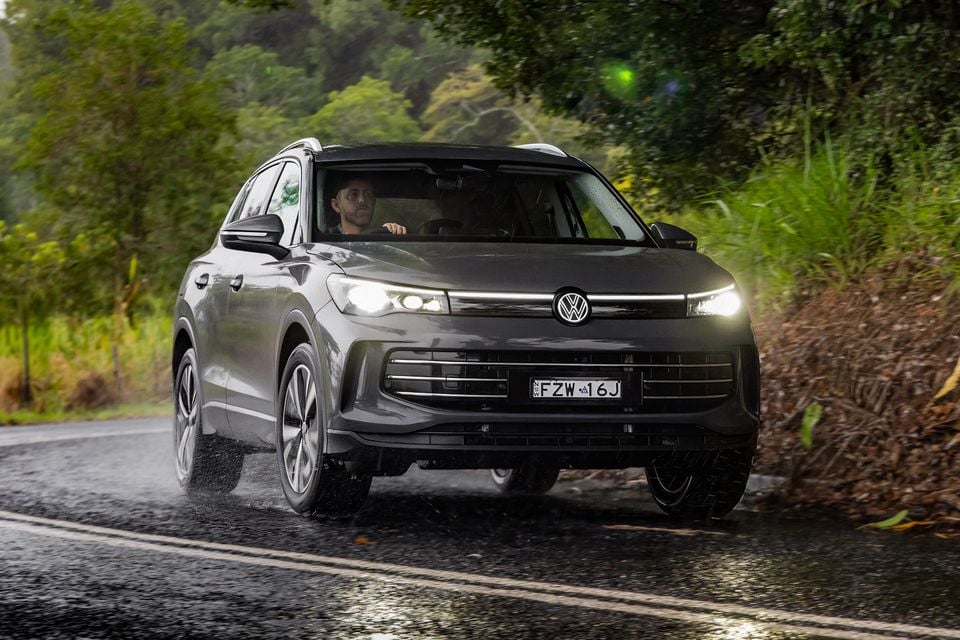
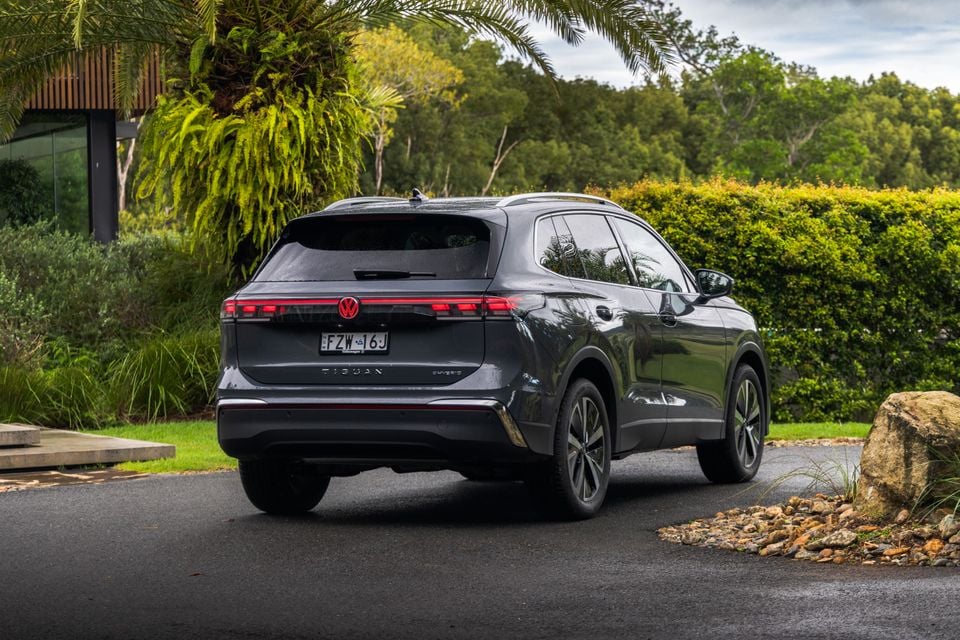
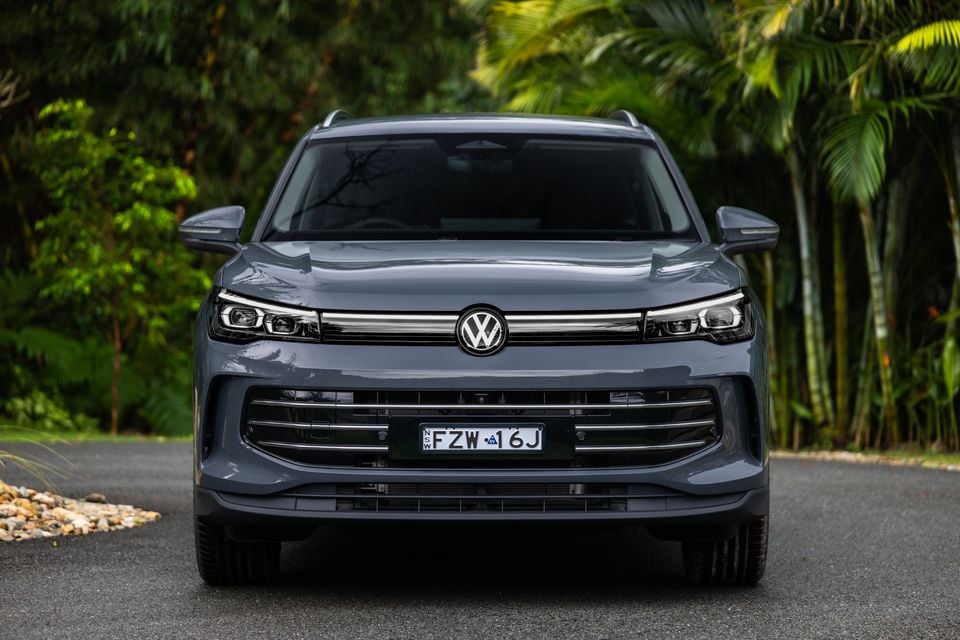
The 2026 Volkswagen Tiguan eHybrid finally adds plug-in hybrid (PHEV) technology to the German brand's mid-size SUV in Australia, giving it a properly efficient and electrified alternative to top-selling rivals.
A PHEV Tiguan isn't news, given even the previous generation offered a plug-in option overseas after its mid-life facelift, and the latest iteration launched with PHEV tech three years ago in Europe. Better late than never, I guess.
The Tiguan eHybrid arrives alongside the larger, seven-seat Tayron eHybrid with the same powertrain, both offering two states of tune and over 110km of WLTP-certified EV driving range regardless of the variant you choose.
As PHEV demand continues to grow in Australia, VW is actually on the front foot among legacy brands in the mainstream mid-size SUV segment Down Under, beating Toyota to the punch with its upcoming RAV4 PHEV. In fact, the Mitsubishi Outlander PHEV hasn't really had any competition other than from Chinese brands, namely BYD which now dominates the PHEV space.
VW Australia has its work cut out for it, and that's probably why the German brand has gone hard on pricing and specs. Just $3000 separates the plug-in hybrid Tiguan from its petrol-only equivalent, which is substantially less than the norm for PHEV price premiums.
Furthermore, the eHybrid range is launching with sharp drive-away pricing before the end of financial year (EOFY), with its $63,990 D/A offer undercutting the cheapest plug-in RAV4 and Outlander despite being generally better equipped and hailing from Europe.
To find out if VW's attainable new PHEV SUV is worth a look in an ever-competitive market, we joined the Australian media launch in Byron Bay for our first drive on local roads. We'll touch on both 150kW and 200kW variants in this review, but focus on the former.
The Tiguan and Tayron eHybrid model lineups offer two trim levels in Australia – Elegance and R-Line – with different powertrain variants for each trim.
| Model | Price before on-road costs | Drive-away pricing (until June 30) |
|---|---|---|
2026 Volkswagen Tiguan 110TSI Life | $45,650 | $44,990 |
2026 Volkswagen Tiguan 110TSI Elegance | $51,450 | - |
2026 Volkswagen Tiguan 150TSI R-Line 4Motion | $56,850 | - |
2026 Volkswagen Tiguan 150TSI Elegance 4Motion | $61,590 | - |
2026 Volkswagen Tiguan 150TSI eHybrid Elegance | $64,590 | $63,990 |
2026 Volkswagen Tiguan 195TSI R-Line 4Motion | $71,550 | - |
2026 Volkswagen Tiguan 200TSI eHybrid R-Line | $74,550 | $73,990 |
The eHybrid variants are launching with sharp drive-away pricing offers until June 30, equating to savings around $6000-$7000 off retail pricing, meaning they also undercut equivalent petrol variants at least until the EOFY.
That's a little unusual in the current automotive landscape, even as the New Vehicle Efficiency Standard (NVES) takes effect, with most plug-in hybrids traditionally demanding much larger premiums relative to their petrol or diesel equivalents.
Even within the VW Group it's abnormal. The related Cupra Terramar commands nearly $10,000 more for the VZe PHEV (200kW FWD) versus the VZ (195kW AWD). And the Tiguan 200TSI R-Line comes within $500 of the Terramar VZ ($73,490 D/A).
Chinese brands still significantly undercut the Tiguan with similarly sized PHEVs, though. The BYD Sealion 6 costs $52,990 plus on-roads for the most expensive version, while the recently updated Geely Starray EM-i is even cheaper again, at $41,490 plus on-roads for the flagship Inspire Extended Range.
To see how the Volkswagen Tiguan lines up against the competition, check out our comparison tool
Having spent some time with the petrol-only Elegance and R-Line, there aren't really any surprises here.
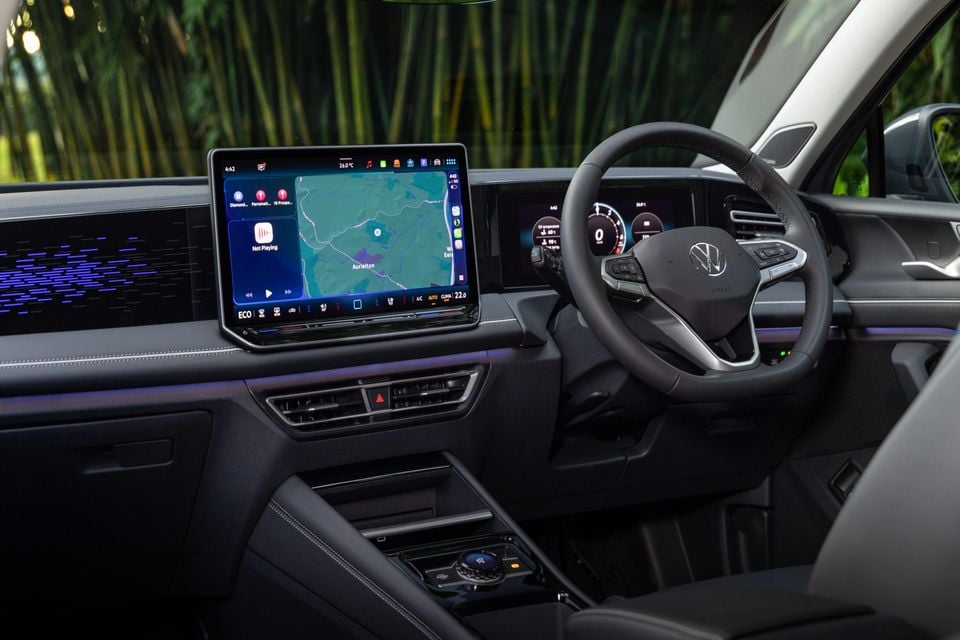
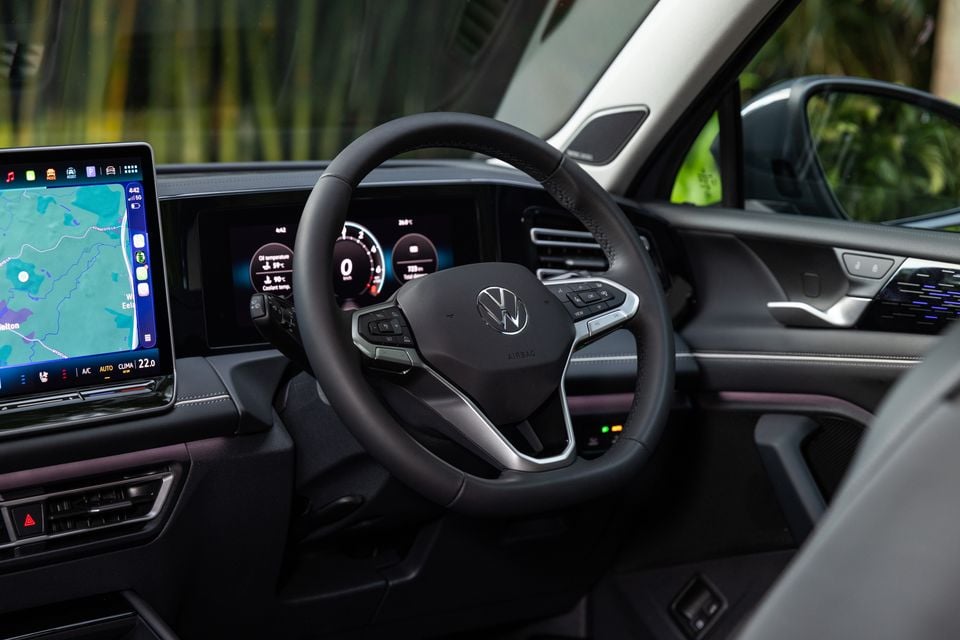
As with other members of the Tiguan family, VW really went all out with display tech while also re-honing in on tactility and perceived quality for the major touch points.
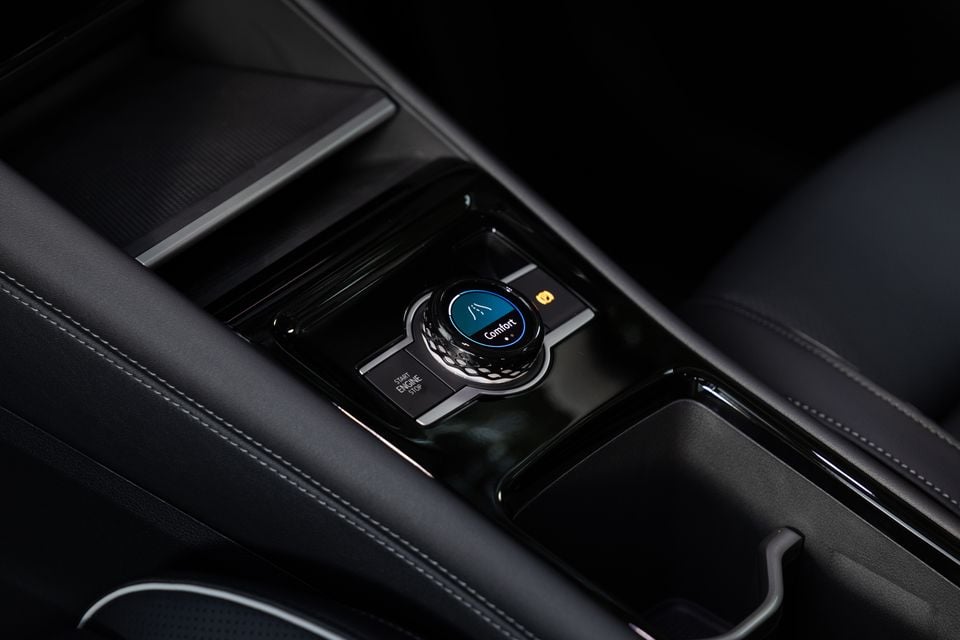
The banishment of fiddly touch-capacitive buttons on the steering wheel is a highlight, as is the smart dial on the centre tunnel that can be configured to toggle different functions. It can also light up in different colours based on the selected ambient lighting.
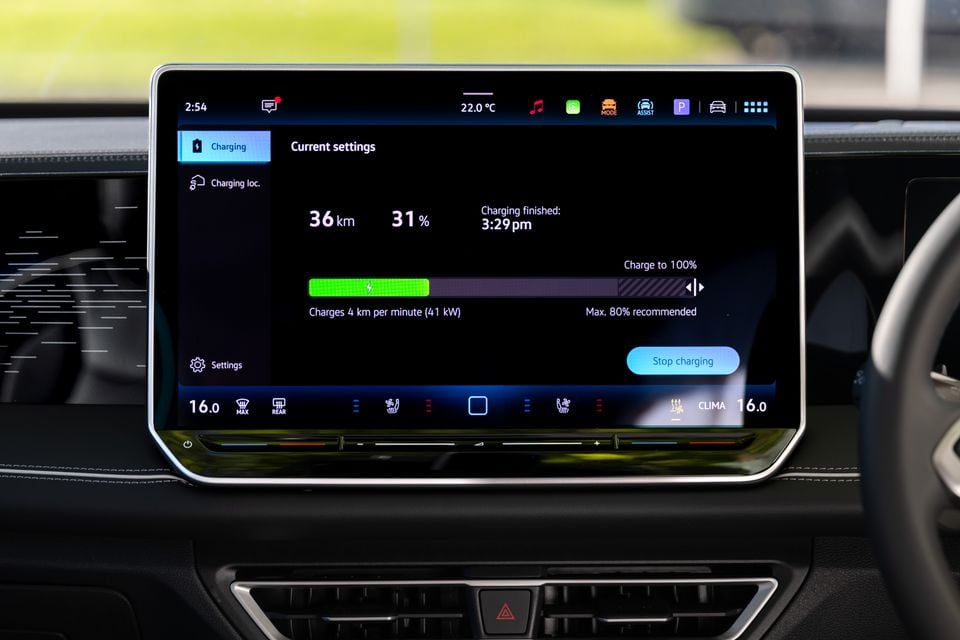
The massive 15-inch touchscreen infotainment system looks a little tacked on and won’t suit all tastes, but it’s running the latest version of Volkswagen’s software interface, meaning a dedicated (virtual) toolbar for climate controls, snappier load times than the infotainment system that launched with the pre-update Mk8 Golf hatchback, and a simplified menu structure.
Sadly, VW Australia still doesn’t offer proprietary connected services ex-factory, but does offer a third-party solution via the GoConnect smartphone app, which offers decent baseline functionality like vehicle status and being able to schedule services with your local dealer.
I also liked the Elegance's standard Harman Kardon premium audio system, which offers really clear and deep sound with the option to dial up the bass and surround effects for a more immersive experience – but I'm also not sure if I like it more than the excellent Sennheiser system offered in the Cupra Terramar.
The uplift in material quality is noticeable too, with more soft-touch surfaces and stitched leather-look detailing. As many premium brands continue to lower their standard of fit and finish, VW is heading in the right direction here. But while the presentation has improved in most ways, I’m not sure about how I feel about the bluff gloss-black dash insert that sits behind the touchscreen and incorporates the driver's display.
Combined with the etched ambient lighting cutouts, it’s a little naff and looks a little too much like VW is trying to ape the Chinese brands – just my opinion.
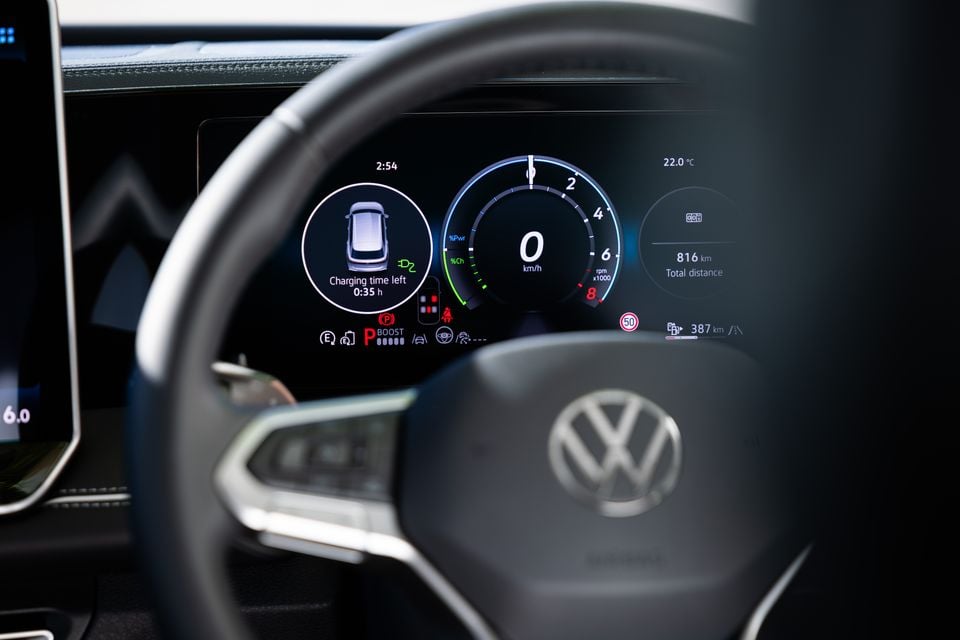
Little differentiates the Tiguan eHybrid from the petrol-powered version, though the 10.25-inch Digital Cockpit Pro instrument cluster has a power meter that combines with the digital tachometer, as well as additional symbols and widgets that go with the electrified underpinnings. You can also toggle a charge status meter in the infotainment system, as well as an animated energy flow graphic if that's your thing.
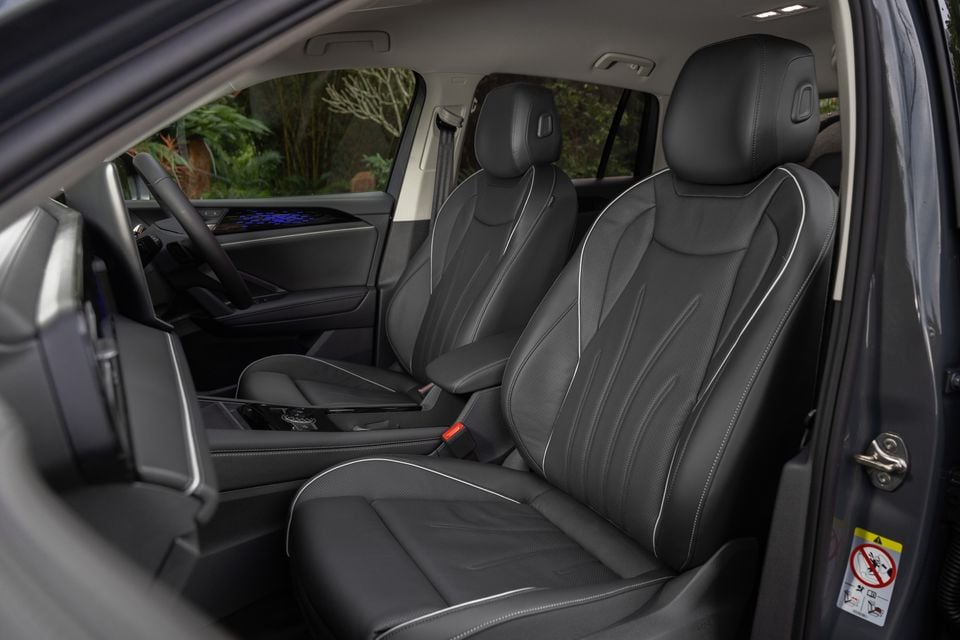
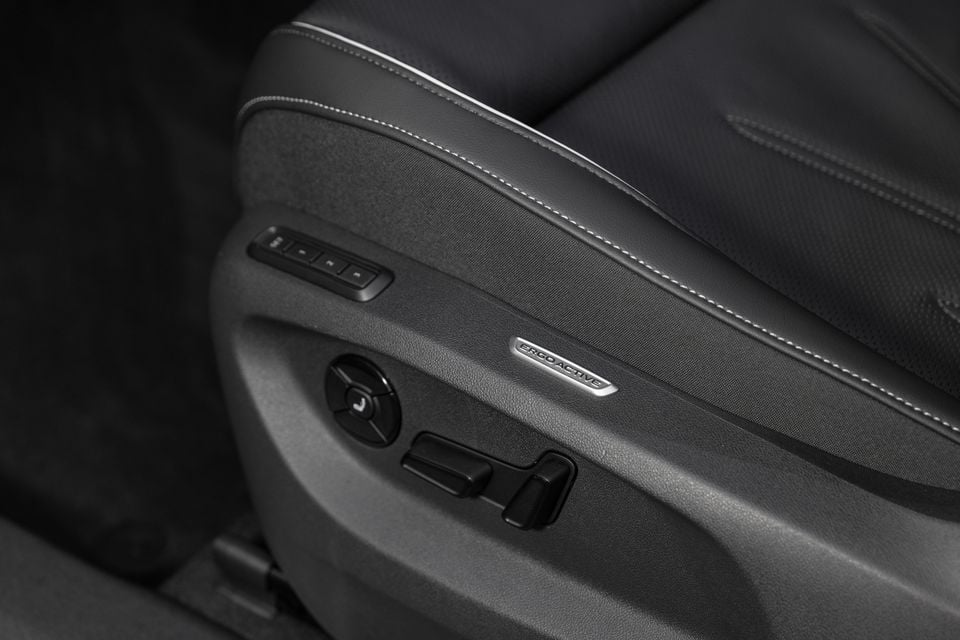
Also worth noting are the excellent front seats, which wear 'ergoActive' branding and feature 12-way power adjustment, three-position memory function, as well as three-stage heating and ventilation in addition to a pneumatic massage function.
Storage remains a Tiguan strong point, with plenty of nooks and crannies to stow your belongings in.
Of particular note are the huge, flock-lined door bins, which put the ones in my Golf to shame. The cubby under the centre console, complete with wireless phone charger, is also a nice touch.
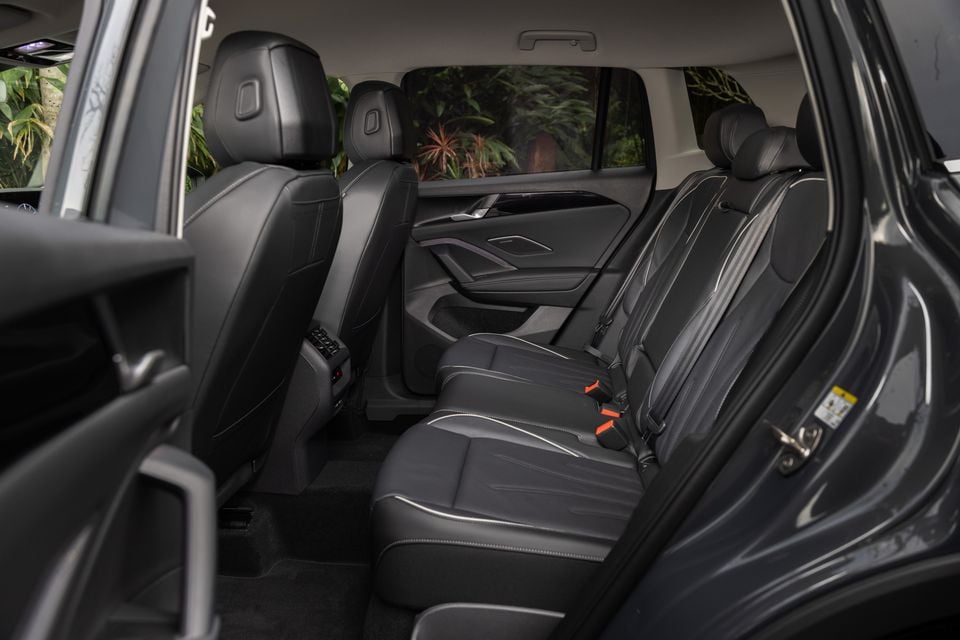
Despite being one of the smaller models in its class (at least in terms of length), the Tiguan’s well-packaged rear means there’s surprisingly good passenger and boot space.
At 6'1" tall, I can easily sit behind my preferred driving position, with good room for two adults, or three at a stretch. The driveline hump in the floor will eat into the foot space of the centre passenger, but the footwells on either side are pretty deep and wide.
Clever features include a third zone of climate control, as well as a sliding and reclining rear bench in a 60:40 split. You can also fold down the rear seatbacks in 40:20:40 format, so if you need to stow a longer item you can still seat four adults in comfort.
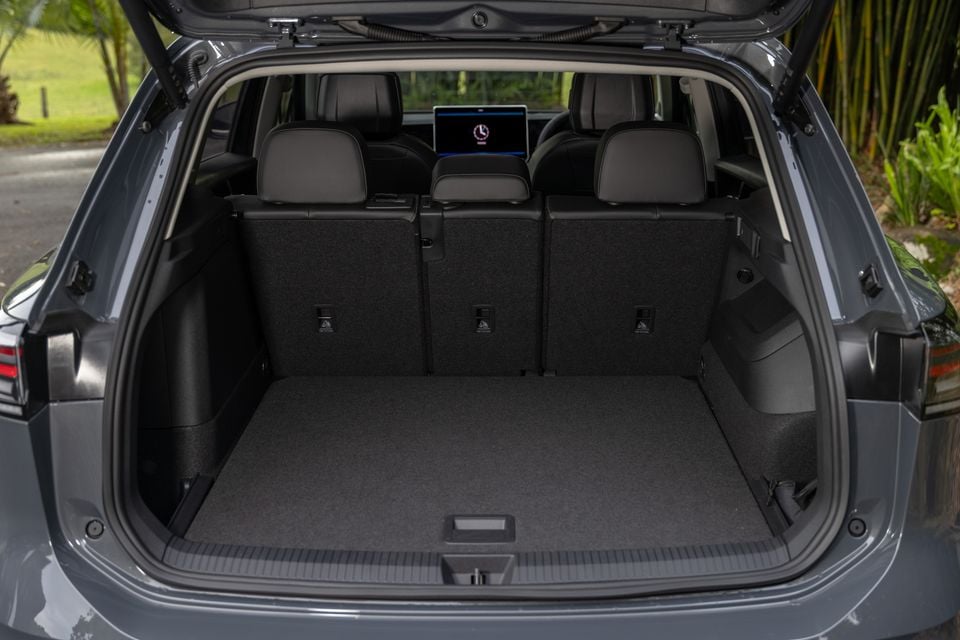
Behind said sliding and reclining second-row seat there's 490 litres of boot space with the rear seatbacks upright in their 'forward' position, expanding to 1486L with them folded. Compared to the non-eHybrid Tiguan, the PHEV loses about 160L of capacity, largely due to the battery being mounted under the boot floor.
Another difference between the Tiguan PHEV and its ICE siblings is the removal of a space-saver spare wheel. Instead there's a tyre repair kit – which to be fair is pretty common for PHEVs and EVs.
| Dimensions | Volkswagen Tiguan eHybrid |
|---|---|
| Length | 4536-4539mm |
| Width | 1842-1859mm |
| Height | 1666-1667mm |
| Wheelbase | 2680mm |
| Cargo capacity | 490-1486L |
To see how the Volkswagen Tiguan lines up against the competition, check out our comparison tool
All Tiguan eHybrids employ a turbocharged 1.5-litre 'TSI' four-cylinder petrol engine teamed with an electric motor, lithium-ion battery pack, and a six-speed 'DSG' dual-clutch automatic transmission driving the front wheels only.
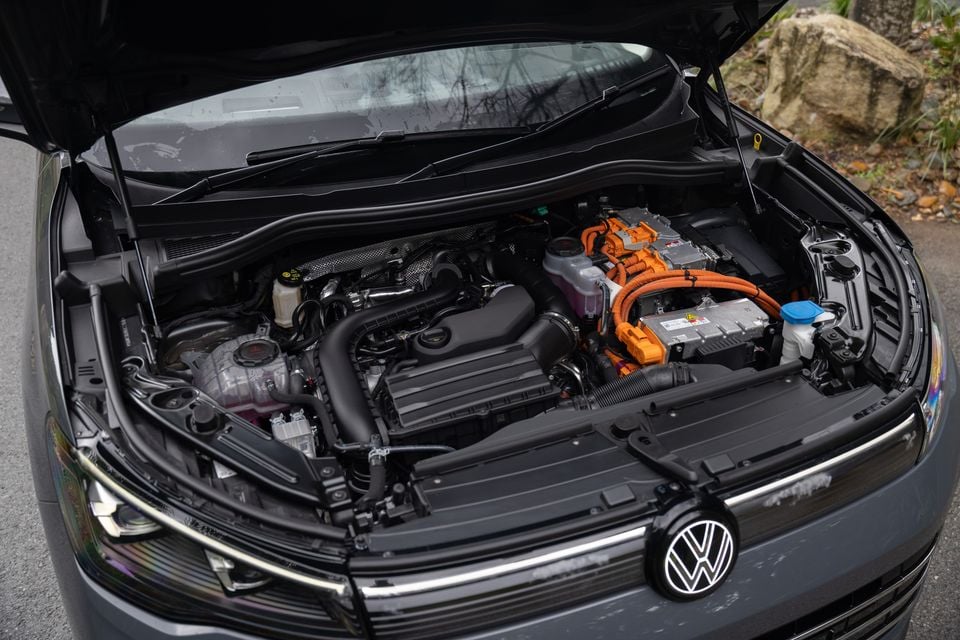
| Specifications | Tiguan 150TSI eHybrid | Tiguan 200TSI eHybrid |
|---|---|---|
| Engine | 1.5 4cyl turbo-petrol | 1.5 4cyl turbo-petrol |
| Engine outputs | 110kW + 250Nm | 130kW + 250Nm |
| Electric motor outputs | 85kW + 330Nm | 85kW + 330Nm |
| System outputs | 150kW + 350Nm | 200kW + 400Nm |
| Battery | 19.7kWh li-ion | 19.7kWh li-ion |
| Transmission | 6-speed DSG | 6-speed DSG |
| Drive type | FWD | FWD |
| Weight | 1873kg – Tare | 1883kg – Tare |
| 0-100km/h (claimed) | 8.2 seconds | 7.2 seconds |
| Fuel economy (claimed) | 1.6L/100km | 1.7L/100km |
| Fuel economy (as tested) | 1.7L/100km | 2.9L/100km |
Energy consumption (claimed) | 13.8kWh/100km | 14.1kWh/100km |
Energy consumption (as tested) | 14.1kWh/100km | 13.2kWh/100km |
| Electric driving range | 117km | 115km |
| Fuel tank capacity | 45L | 45L |
| Fuel requirement | 95-octane premium unleaded | 95-octane premium unleaded |
| CO2 emissions | 37g/km | 38g/km |
| Emissions standard | Euro 6 | Euro 6 |
| Braked towing capacity | 1800kg | 2000kg |
As we've found in other VW Group models with this powertrain, the Tiguan is very capable of achieving excellent real-world efficiency without much effort.
Our circa-40km loop in the 150kW model left largely in E-Mode and Comfort settings yielded an indicated energy consumption figure of 1.7L/100km and 14.1kWh/100km, pretty much bang on the official claim; while more spirited testing of a charged 200kW R-Line returned 2.9L/100km and 13.2kWh/100km – still pretty good considering the conditions, which we'll get to further down.
Even if left in Hybrid Mode with less than 50 per cent charge (about 25km indicated EV range), the trip computer showed 3.8L/100km and 7.1kWh/100km following a 59km transit leg, probably 95 per cent of which was spent at 110km/h on the freeway with plenty of uphill and downhill variations, dispelling the notion that PHEVs are inefficient on the open road.
While Volkswagen Australia doesn't quote a combined driving range with a full battery charge and a full fuel tank, like a lot of Chinese manufacturers do for their plug-in hybrids, the German brand does quote "more than 900km" of total range for European models, which should easily be achievable given those indicated figures achieved on the drive, despite the Tiguan eHybrid's relatively small 45L fuel tank.
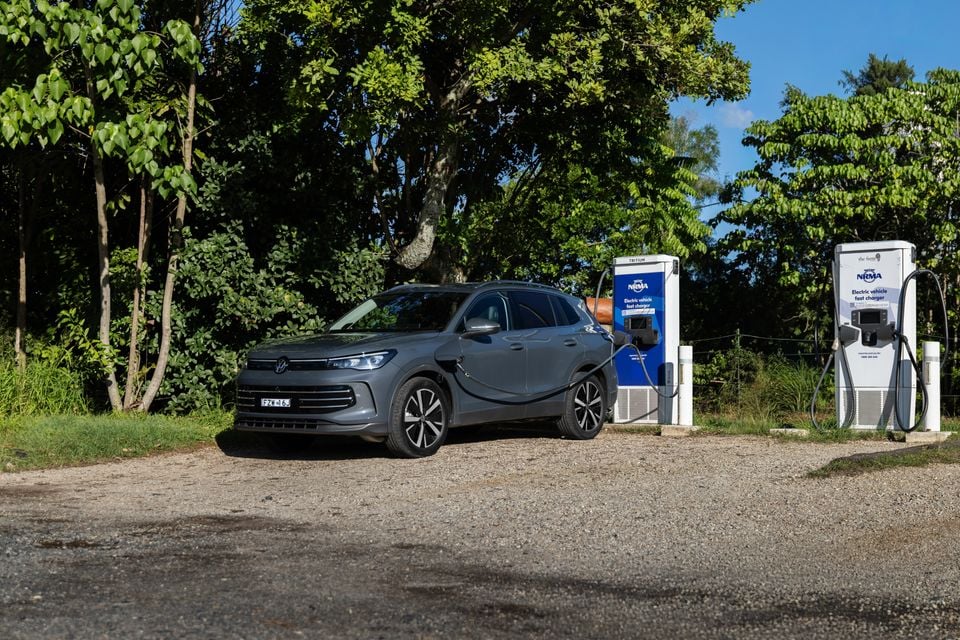
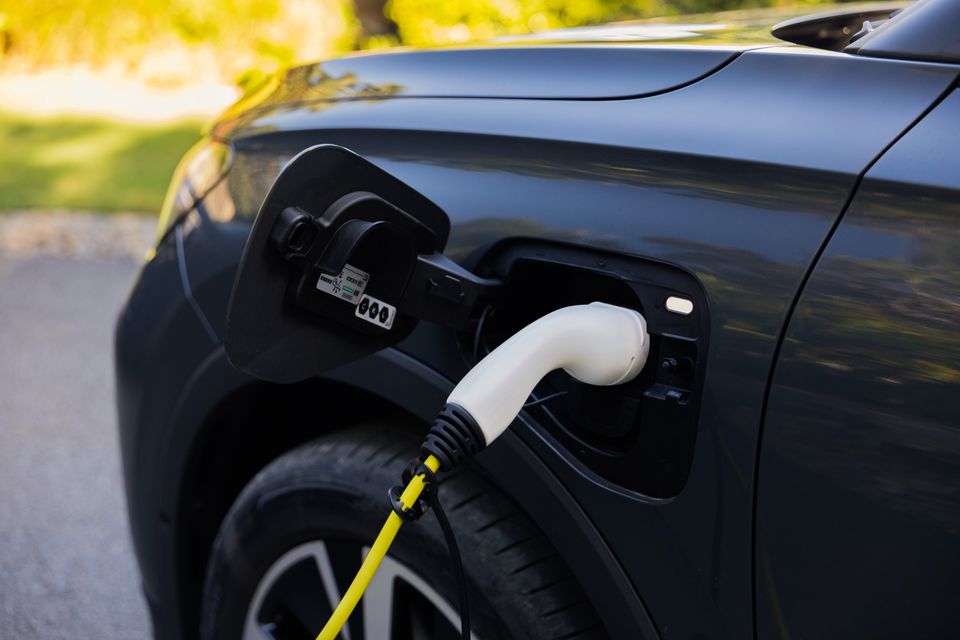
The Tiguan eHybrid's 19.7kWh battery supports 11kW AC charging as well as 40kW DC fast-charging. At the former rate the battery will charge from 0-100 per cent in 2.5 hours, while the latter can fast-charge the battery from 10-80 per cent in 26 minutes.
To see how the Volkswagen Tiguan lines up against the competition, check out our comparison tool
We drove the 150TSI and 200TSI eHybrids back-to-back on slightly different routes in and around the Byron Bay area, including a good mix of road, traffic and weather conditions.
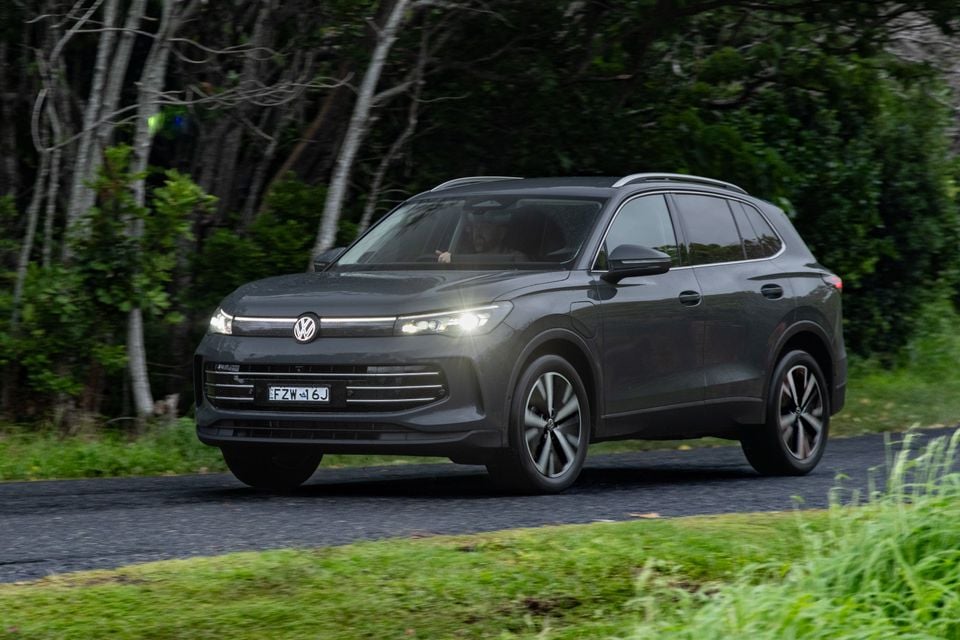
We started off in the 150TSI eHybrid Elegance, the more comfort-oriented version. The loop in the 'base' grade was a more varied route comprising mixed driving conditions, including urban, country, twisty and highway roads.
With a full battery and tank of petrol on board, I left the Elegance to its own devices to see how it would fare – as expected, it was mostly good.
The Tiguan eHybrid will default to EV mode with sufficient charge in the battery, prioritising electric power to minimise fuel use and emissions. The 85kW/330Nm electric motor doesn't sound all that powerful on paper, but it offers the sort of outputs that not long ago would have been quoted by a smaller diesel engine in a car like this.
As such, the immediacy of torque response and linearity of the e-motor's power delivery makes for smooth and quiet progress, even if you can occasionally feel the DSG shifting as you roll along.
Only if you hit the kick-down point will the powertrain fire up the petrol engine to give you its full beans, but since it only drives the front wheels and doesn't sport a proper mechanical limited-slip differential, full throttle isn't something I'd use often.
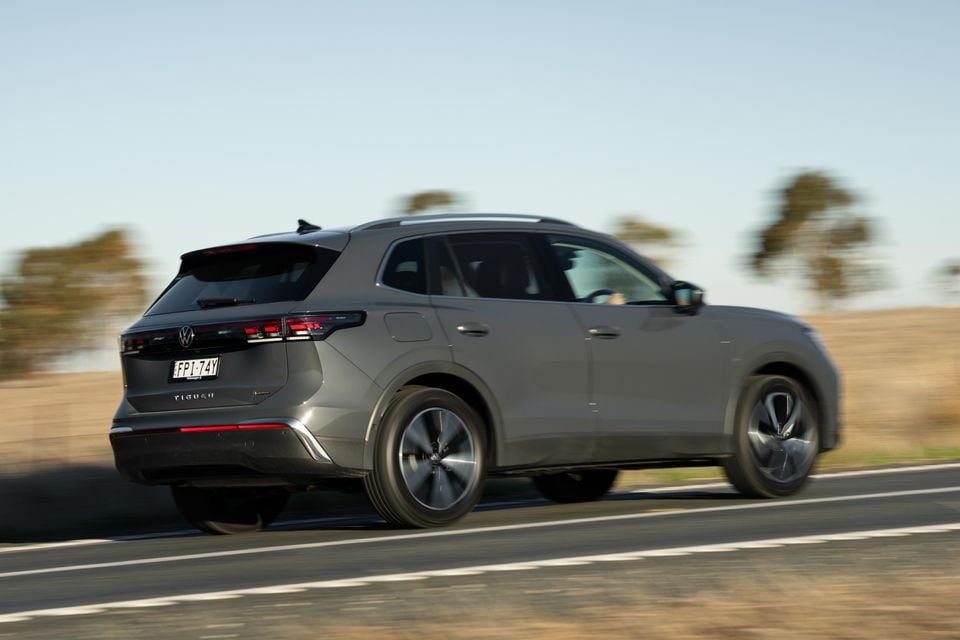
Attempting a quick blat from a side street onto a country highway, full throttle even in the 150kW eHybrid just elicits mad wheelspin at the front-end. Regardless of the wheel and tyre package specified, and forces the traction control to work overtime – it's best to be measured and patient when setting off.
Once rolling, the 150TSI eHybrid feels quite punchy and almost quicker than the figures would suggest. At full noise, the 1.5 TSI petrol engine is still quite muted, though the thrummy engine note isn't as coarse or grating as the naturally aspirated engines in its rivals – but it's hardly sporty, regardless of whether you opt for the 150kW or 200kW versions.
I actually prefer the synthesised sound generator in the Cupra Terramar, if only because it adds a little theatre when it's in its most aggressive setting, and offers a few different options to tailor it to your tastes. Might be a hot take, but anyway...
Ride and steering in the Elegance is quite clearly focused on everyday comfort and manoeuvrability, with very light steering and a supple ride especially in Comfort mode – remembering the Tiguan eHybrid comes standard with VW's trick 15-stage adaptive dampers.
Even in Sport mode it's far from harsh or uncomfortable, and in the more aggressive setting the steering adds weight for more engagement. However, the latter feels artificial and doesn't really add any extra feel, even if the steering response is pretty quick and accurate in general.
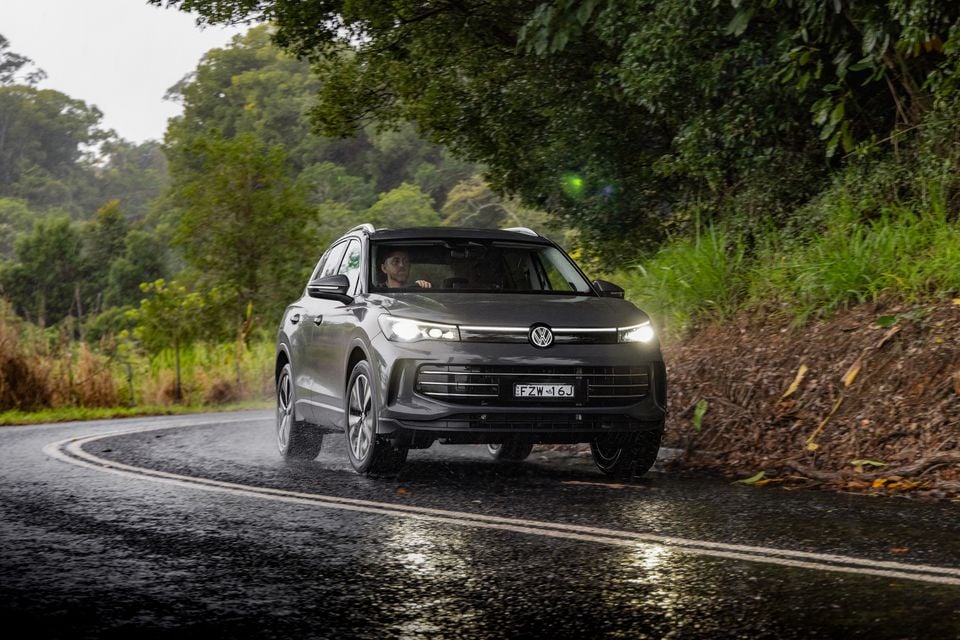
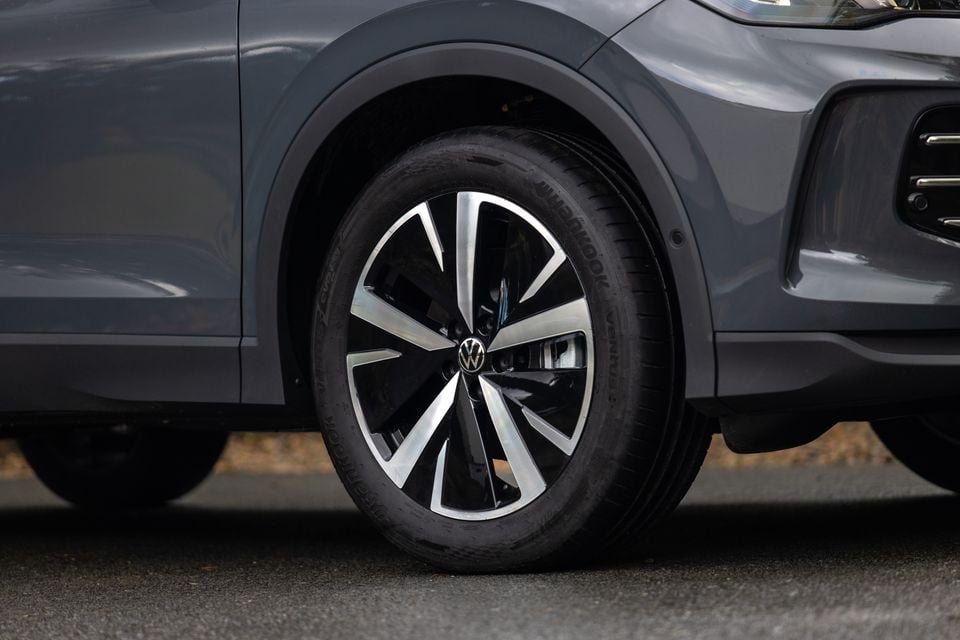
Moving into the more powerful 200kW R-Line, with its standard variable-ratio progressive steering rack and larger wheels shod in low-profile tyres, there's not a distinctly sportier feel save for the mildly spicier acceleration response and ever-so-tighter steering and chassis calibration.
Other than that, it's just slightly firmer and less cushy over sharper hits, slightly noisier at high speeds and on rougher roads, and that's about it. As you'd expect, body control and general compliance is fairly European in feel, being on the tauter side of comfortable without being too jarring or slappy over sharper hits in both grades – though as noted the R-Line is a little sharper in most respects without being a revelation.
What I'm trying to say is the Tiguan eHybrid isn't really going to be a glass slipper for keen drivers trying to keep that hot hatch feel in an SUV. If you want that more dialled-in feel and response, the Cupra Terramar is much more in that camp, if you can justify the extra spend for what is effectively the same vehicle underneath.
While not necessarily a standout for athleticism or engagement, the Tiguan's on-road manners are definitely in line with VW's 'premium for the people' schtick, offering a more upmarket and refined feel behind the wheel than a lot of electrified offerings at a similar price point. It's an excellent all-rounder, complemented by excellent real-world efficiency.
As noted earlier, we were able to match VW's official consumption claim, with an indicated 1.7L/100km and 14.1kWh/100km during our time with the 150kW Elegance. The 200kW R-Line upped that to 2.9L/100km and 13.2kWh/100km when driven more dynamically and in Sport mode over a more technical and undulating route, with greater time spent in Hybrid rather than EV mode.
Beyond the behaviour and performance of their plug-in powertrain, the eHybrids retain the same excellent driver assist calibration as the wider Tiguan range.
Travel Assist remains one of the better semi-autonomous highway assistants in the business, with adaptive cruise and lane-centring features working predictably, accurately and intuitively.
The blind-spot monitoring and rear cross-traffic alert systems also do what they say on the tin, and the audible speed limit assistant has a faint and peaceful chime rather than the incessant and annoying bongs presented by rival brands and models.
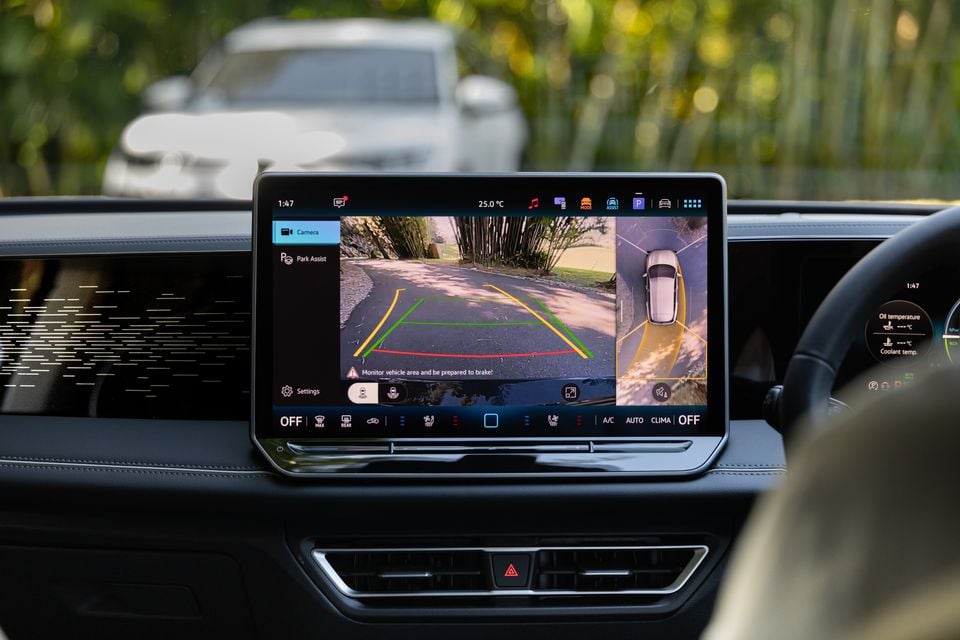
The eHybrid range also comes standard with Area View surround cameras as well as front and rear sensors to make parking this SUV a little bit easier, and there's even a Park Assist Plus function which can semi-autonomously slot the Tiguan into both perpendicular and parallel spaces.
To see how the Volkswagen Tiguan lines up against the competition, check out our comparison tool
The Tiguan eHybrid is available in up-spec Elegance and R-Line trim levels in Australia.
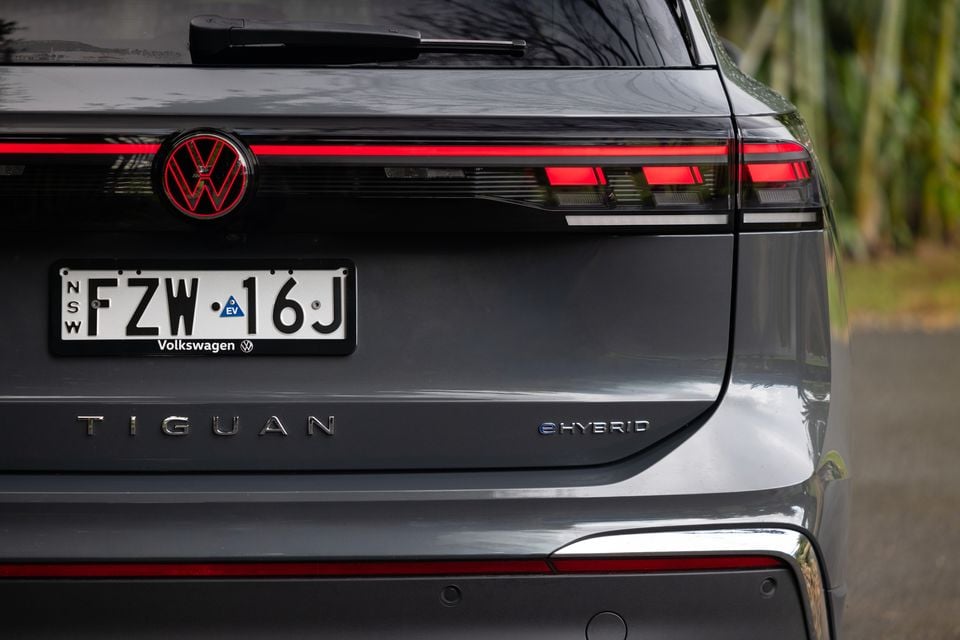
CarExpert brings together reviews, research tools and trusted buying support, guiding you from research to delivery with confidence.
2026 Volkswagen Tiguan 150TSI eHybrid Elegance highlights:
2026 Volkswagen Tiguan 200TSI eHybrid R-Line adds:
To see how the Volkswagen Tiguan lines up against the competition, check out our comparison tool
A handful of optional features are available for the Tiguan eHybrid range.
Black Style Package – 200TSI eHybrid R-Line: $1500
Single-item options include:
To see how the Volkswagen Tiguan lines up against the competition, check out our comparison tool
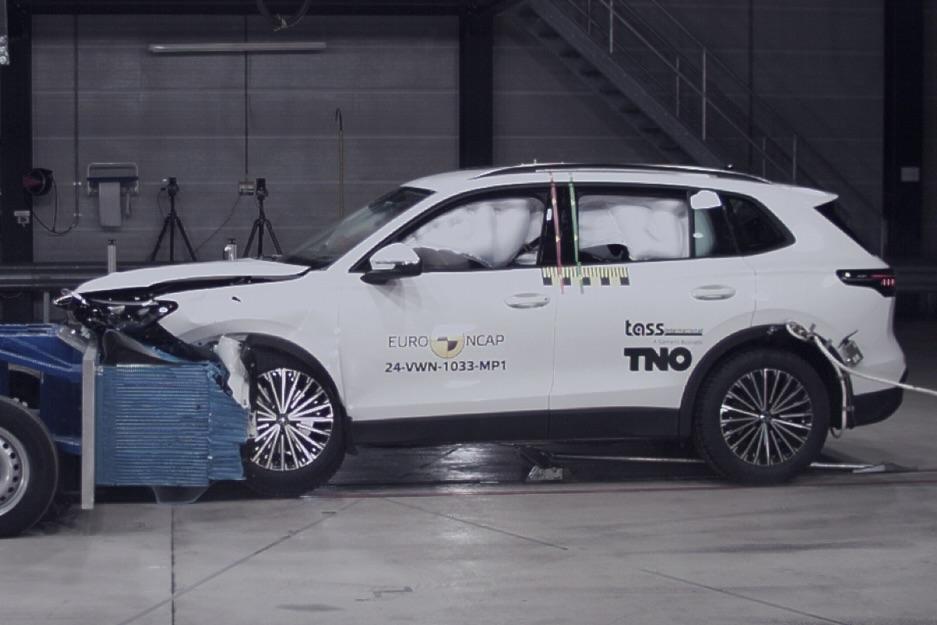
The latest Volkswagen Tiguan has a five-star ANCAP safety rating based on testing conducted by Euro NCAP in 2024 – which applies to all variants including the plug-in hybrids.
| Category | Volkswagen Tiguan |
|---|---|
| Adult occupant protection | 83 per cent |
| Child occupant protection | 88 per cent |
| Vulnerable road user protection | 84 per cent |
| Safety assist | 78 per cent |
Standard safety equipment includes:
To see how the Volkswagen Tiguan lines up against the competition, check out our comparison tool
The Tiguan eHybrid is subject to the same five-year, unlimited-kilometre new-vehicle warranty as the wider Tiguan range, with separate high-voltage battery coverage that matches that of the brand's EVs.
| Servicing and Warranty | Volkswagen Tiguan eHybrid |
|---|---|
| Warranty | 5 years, unlimited kilometres – Vehicle 8 years or 160,000 kilometres – HV battery |
| Roadside assistance | 12 months – then service activated |
| Service intervals | 12 months or 15,000 kilometres |
| Capped-price servicing | Up to 5 years – Care Plan |
| Total capped-price service cost | $1605 – 3yr Care Plan $3391 – 5yr Care Plan |
Scheduled maintenance sticks to the same 12-month or 15,000km intervals as the petrol range, though VW's five-year prepaid 'Care Plan' is slightly dearer at $3391 (versus $3320 for the regular TSI).
To see how the Volkswagen Tiguan lines up against the competition, check out our comparison tool
One of my bigger criticisms of the latest Tiguan was the lack of hybridisation available in Australia, and finally that has been addressed.
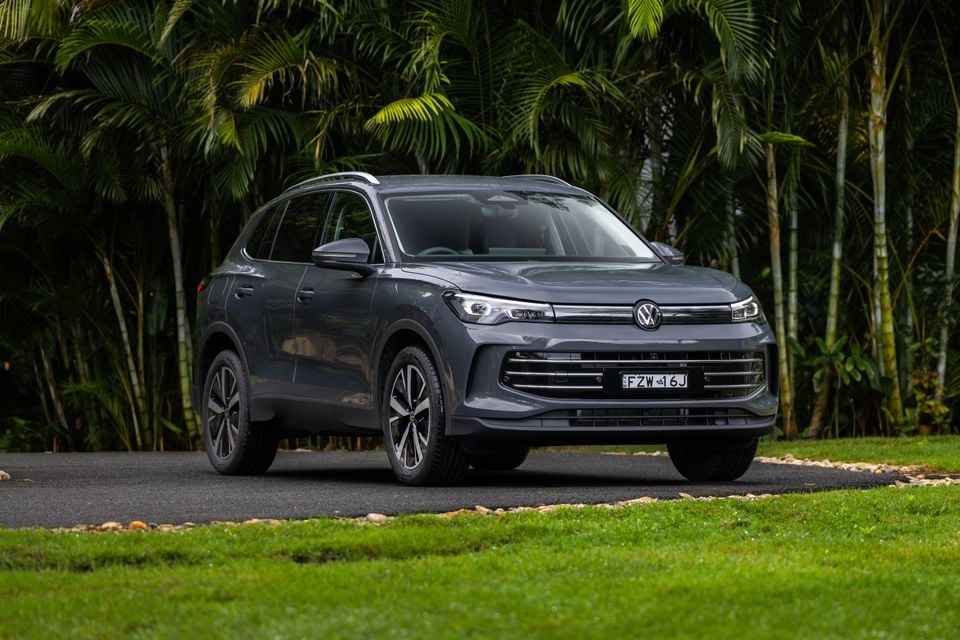
Even with the added weight of the PHEV components, the Tiguan eHybrid range remains competent all-round, with highlights including a generally supple ride, punchy (but not earth-shattering) performance, and well-calibrated driver assist and infotainment technologies which clearly demonstrate the added engineering investment compared to some cheaper alternatives.
Volkswagen's sharp drive-away pricing offers also really sweeten the deal, slashing $6000-$7000 off the bottom line and also putting the European-made Tiguan eHybrid right in the thick of mainstream-branded competition from Toyota and Mitsubishi, while also offering more premium features than both brands for similar money.
Yes, we still lament the lack of proper net-based connectivity, the tacked-on display designs, and the touchscreen's fiddly capacitive touch sliders for the climate controls. But I'd probably opt for either the 150TSI and 200TSI eHybrids over their petrol-only equivalents if I had my sights set on the Tiguan as my next family SUV.
That said, I don't see the point in spending the extra $10,000 on the R-Line unless you're absolutely in love with the design, because it doesn't feel all that much more powerful from behind the wheel and doesn't offer a lot else over the objectively well-rounded Elegance trim.
Charge it regularly and you'll easily use less than half the fuel as the 150TSI 4Motion version does, and while it has a 13L smaller fuel tank you've still got over 900km of theoretical combined driving range if you start in Hybrid mode with a full tank of fuel and a fully charged battery. PHEV benefits are no longer limited to the city, though the lack of a spare wheel could be a problem outside of it.
So if you're in the market for a plug-in hybrid family SUV but aren't quite ready to take a punt on a Chinese brand, the new Tiguan eHybrids could easily be one of your top picks, particularly in Elegance trim.
Interested in buying a Volkswagen Tiguan? Let CarExpert find you the best deal here
Click the images for the full gallery
CarExpert brings together reviews, research tools and trusted buying support, guiding you from research to delivery with confidence.
Quickly see how this car stacks up against its competition. Select any benchmark to see more details.
Volkswagen Tiguan
Volkswagen Tiguan Sales rolling 12-months#
*Based on VFACTS and EVC data
Looking for complete Volkswagen Tiguan price history?
Our Volkswagen Tiguan Pricing Page shows exactly how prices have changed over time.
2024
$48,212
2025
$49,357
2026
$50,050
2025
$55,342
2026
$56,140
2025
$60,907
2026
$61,810
2024
$61,947
2024
$65,622
2024
$69,226
James Wong is an automotive journalist and former PR consultant, recognised among Australia’s most prolific motoring writers.
Add CarExpert as a Preferred Source on Google so your search results prioritise writing by actual experts, not AI.
William Stopford
9 Hours Ago


Josh Nevett
11 Hours Ago
William Stopford
12 Hours Ago
William Stopford
13 Hours Ago
James Wong
15 Hours Ago
Josh Nevett
15 Hours Ago
Add CarExpert as a Preferred Source on Google so your search results prioritise writing by actual experts, not AI.
# Based on VFACTS and EVC data
† Displayed prices are based on the drive-away price of the vehicle, which includes delivery charges, registration fees, number plates, and applicable road taxes, based on a Sydney location. However, prices may vary between states and territories, and additional costs such as compulsory third party (CTP) insurance, dealer delivery fees, and optional extras are not included. These prices are subject to change without notice and may not reflect current market pricing or dealer offers.
 Automotive Vehicle Spec Data & 4K images Powered by JATO Dynamics Ltd