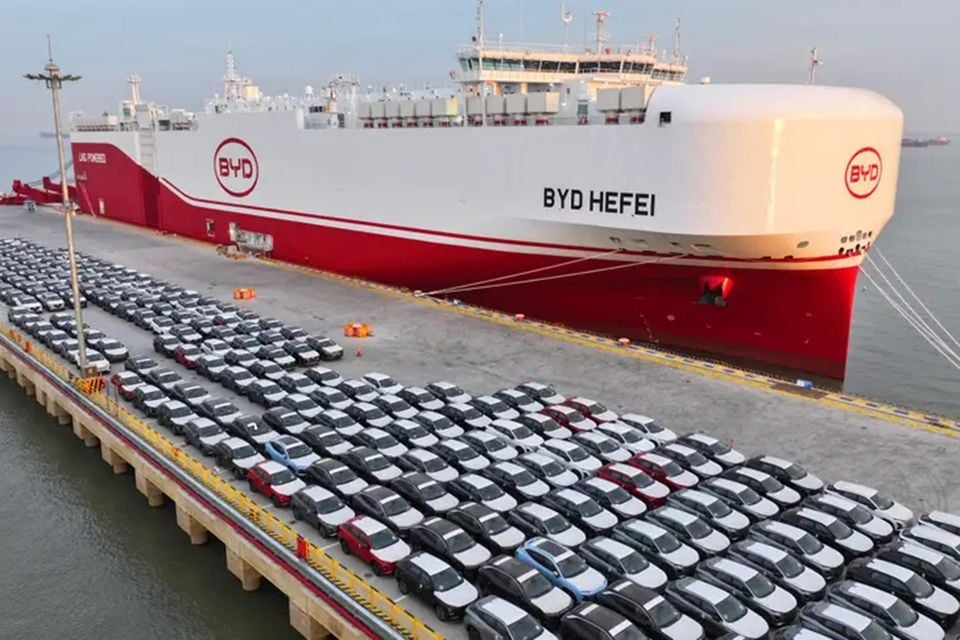
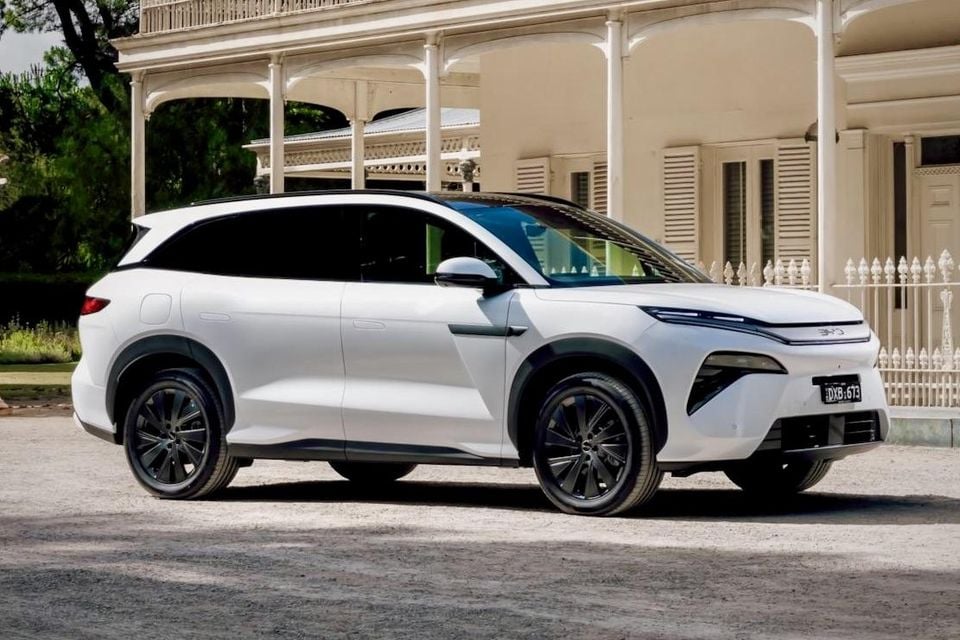
BYD is shipping 30,000 vehicles to Australia across May and June in response to record fuel prices driving a sales spike, which saw it finish third in overall sales last month.
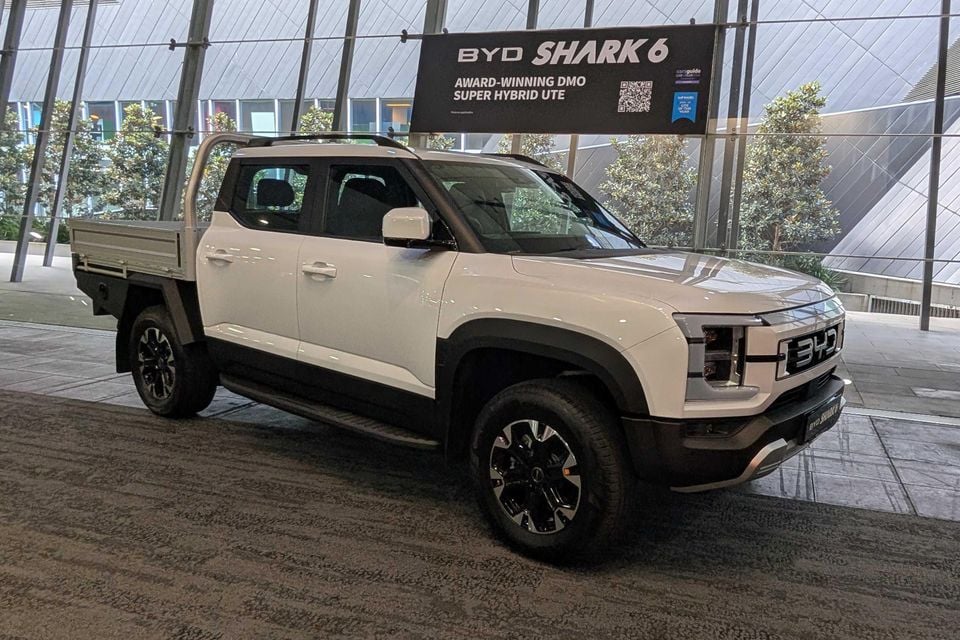
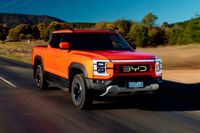
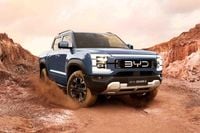
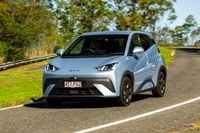
The bulk order is roughly triple the brand’s typical shipment volume, following its second-best monthly sales result, and ramps up supply of new models such as the Shark 6 ute and Sealion 8 seven-seat SUV.
Speaking through an interpreter at the 2026 Melbourne motor show, BYD Asia Pacific managing director Liu Xueliang told media, including CarExpert, that the automaker was preparing to ship a record number of vehicles following unprecedented customer demand.
BYD delivered an all-time best of 7217 vehicles locally last month – behind only Toyota and Kia and up 50 per cent year-on-year – following 5001 and 5323 deliveries in January and February respectively.
CarExpert can save you thousands on a new car. Click here to get a great deal.
“We hope that by continuing this supply of our vehicles, we can make sure that consumers won’t be heavily impacted by the shortage of fuel,” Mr Xueliang said.
“In the coming months we are going to speed up the spread of EV [electric vehicles] in the Australian market … as you know, BYD has its own ships, so we are going to use our vessel to deliver these vehicle to the Australian market.”
While BYD made headlines in 2025 for widespread stockpiling of vehicles – including in the parking area of a theme park south of Sydney – the recent sales surge has significantly reduced its inventory levels.
BYD also said the increased volume will ensure faster customer deliveries, including for its Denza luxury brand.
“As you may be aware, other countries are increasing demand – this is a change because of the fuel crisis,” Mr Xueliang said.
“We always launch our strategy based on the market need. If the market requires more EVs, then we will launch more pure EVs. It’s mainly to catch up to market demand”.
BYD Australia chief operating officer Stephen Collins said: “If you look at January, February, March, we sold 5000, 5000, 7000, so that’s the sort of running rate.”
“So yeah it’s significantly more [than usual], obviously reflecting the order intake that we’ve seen in the last month or so.”
BYD’s year-to-date sales to the end of March totalled 17,541, compared to 8767 at the same point last year – an increase of 100.1 per cent.
It delivered 52,415 vehicles in 2025, and is on track to deliver its 100,000th vehicle in Australia later this year, having sold its first locally in 2022.
“We’ve got pretty significant back-orders, and obviously [expect] April, May and June to be strong – seasonally it’s always strong – so we’re expecting the vast majority of those vehicles will be sold,” said Mr Collins.
Mr Collins said the company expects weekly shipments to help distribute vehicles to dealers and customers.
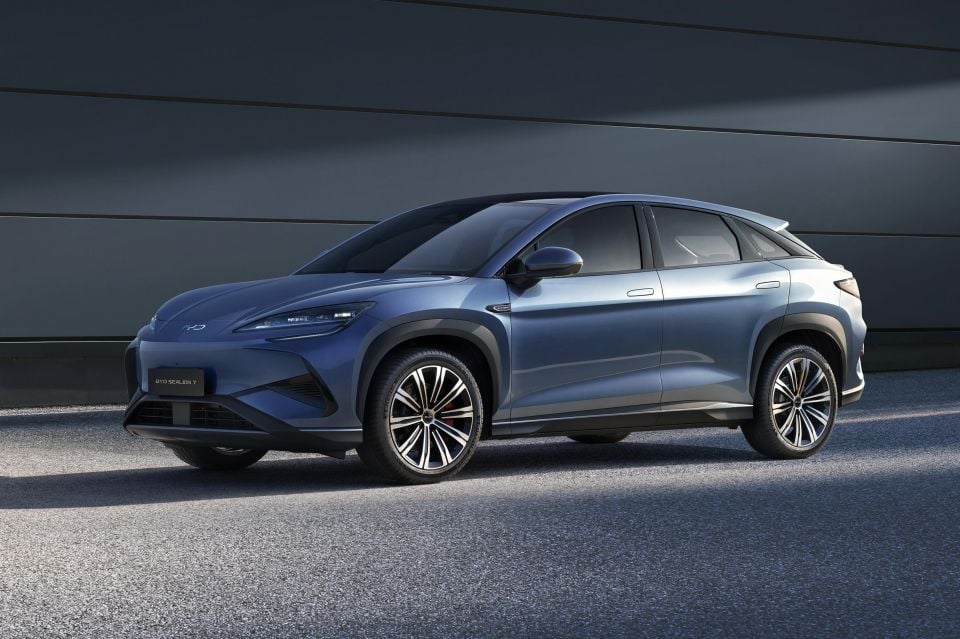
The Sealion 7 electric SUV has been its best-seller, ahead of the Shark 6 plug-in hybrid (PHEV) ute and the Sealion 6 PHEV SUV.
BYD’s sales contributed to Chinese-made vehicles outselling all others for the first time in February 2026.
This followed Chinese brands overtaking Japanese makes to become the number one source of new vehicles globally for the first time in 2025.
After becoming a top-10 brand locally last year with over 52,000 sales, BYD is aiming for the podium in 2026 with help from at least eight new models, placing it alongside the likes of Mazda, Kia and Ford but behind perennial market leader Toyota.
MORE: Explore the BYD showroom