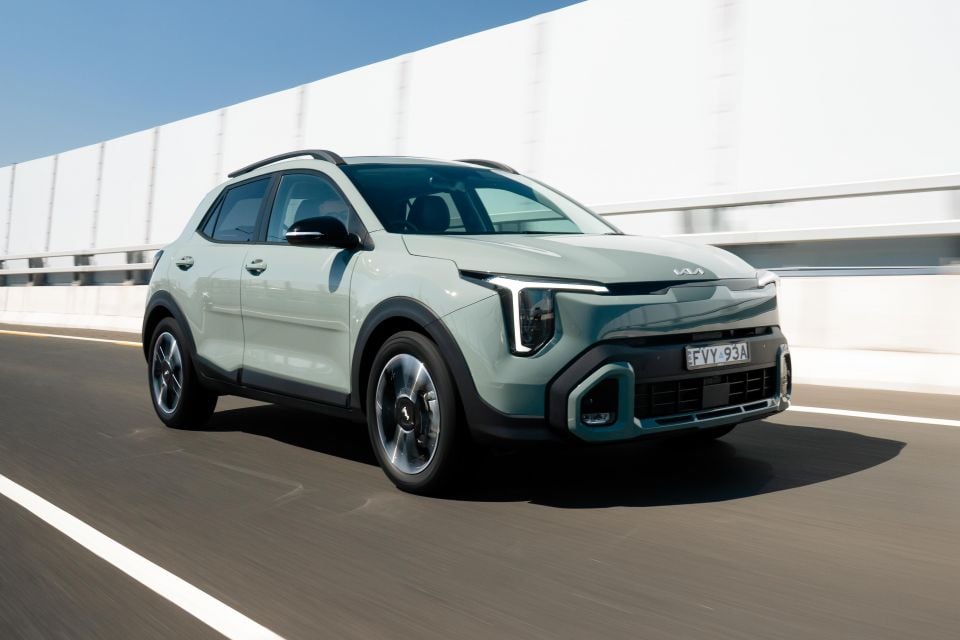
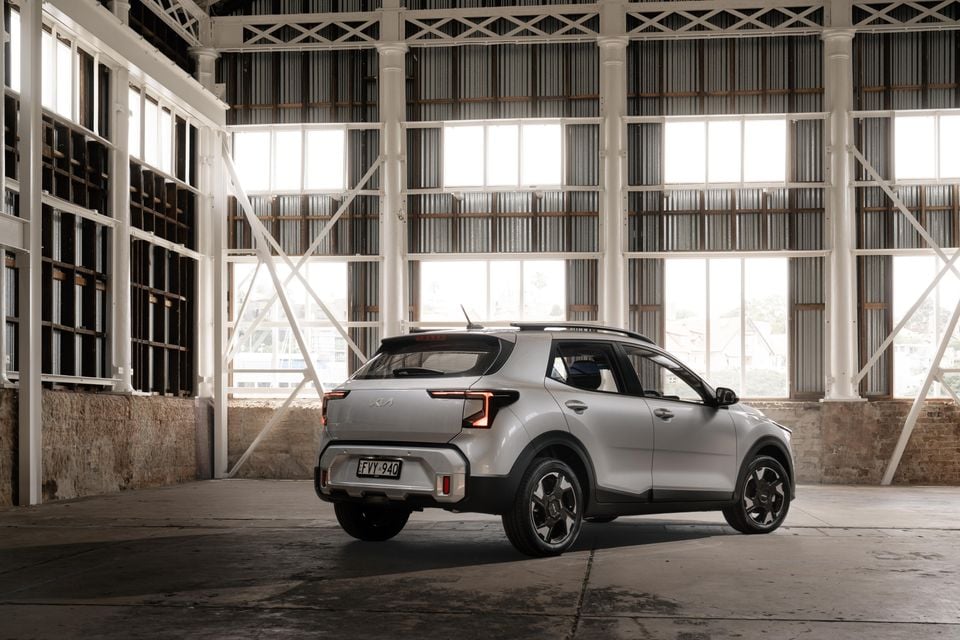
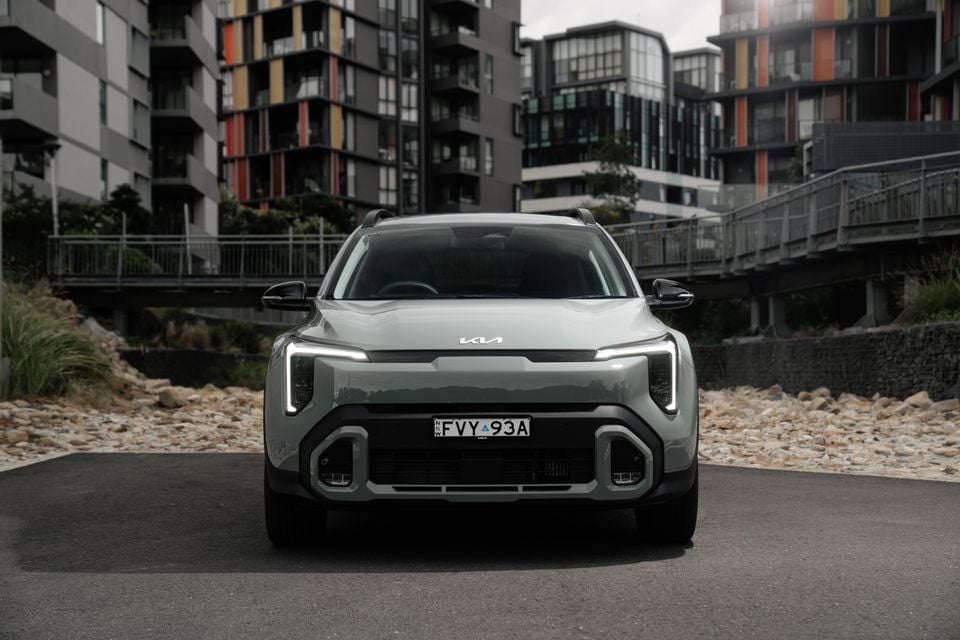
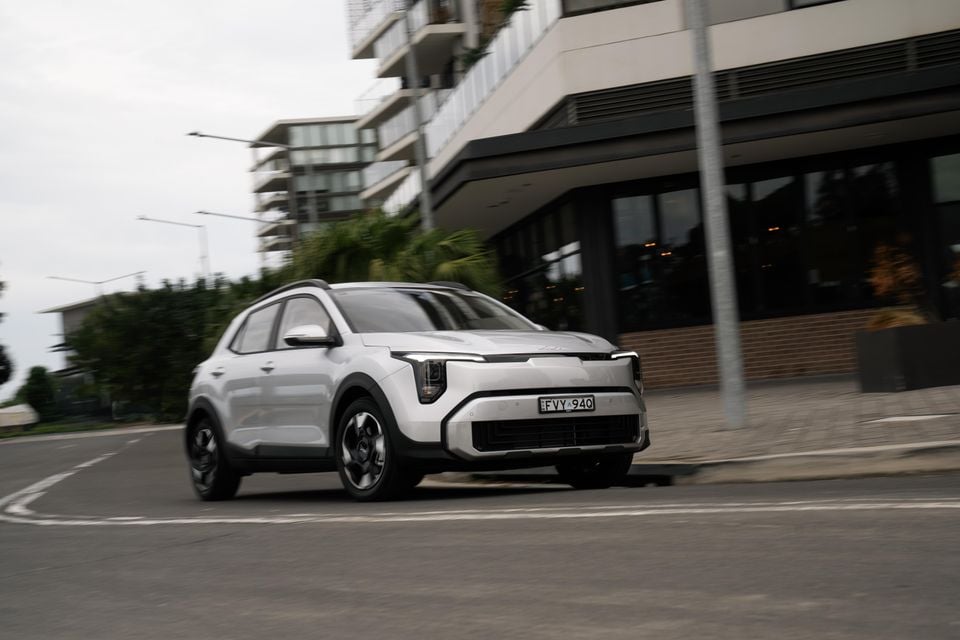
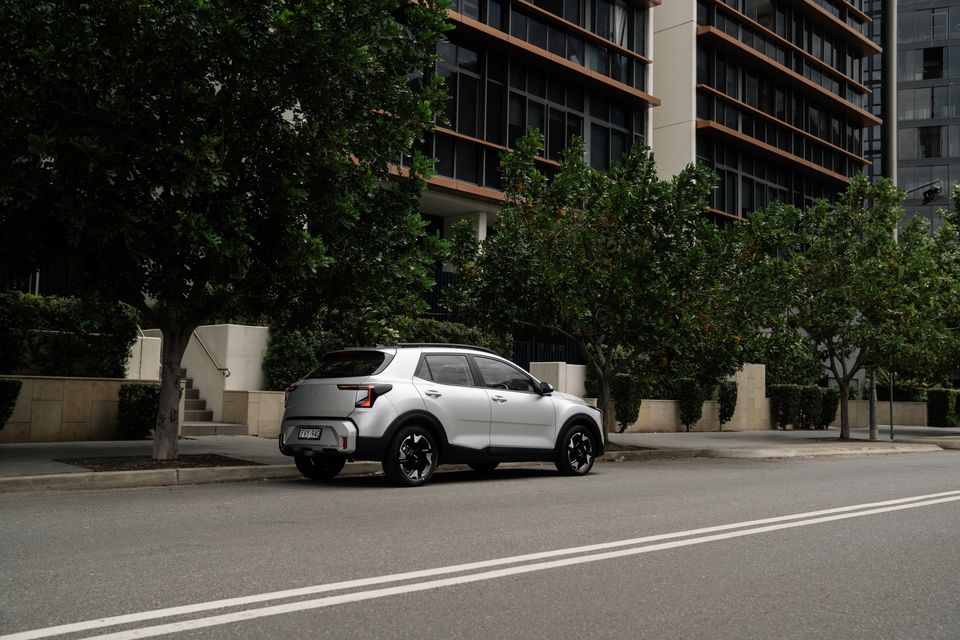
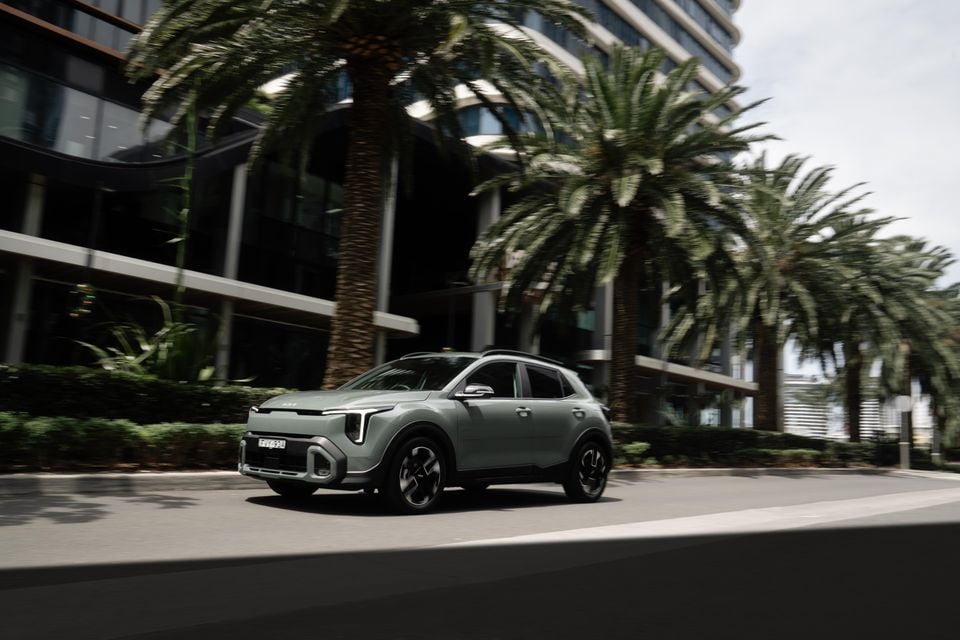
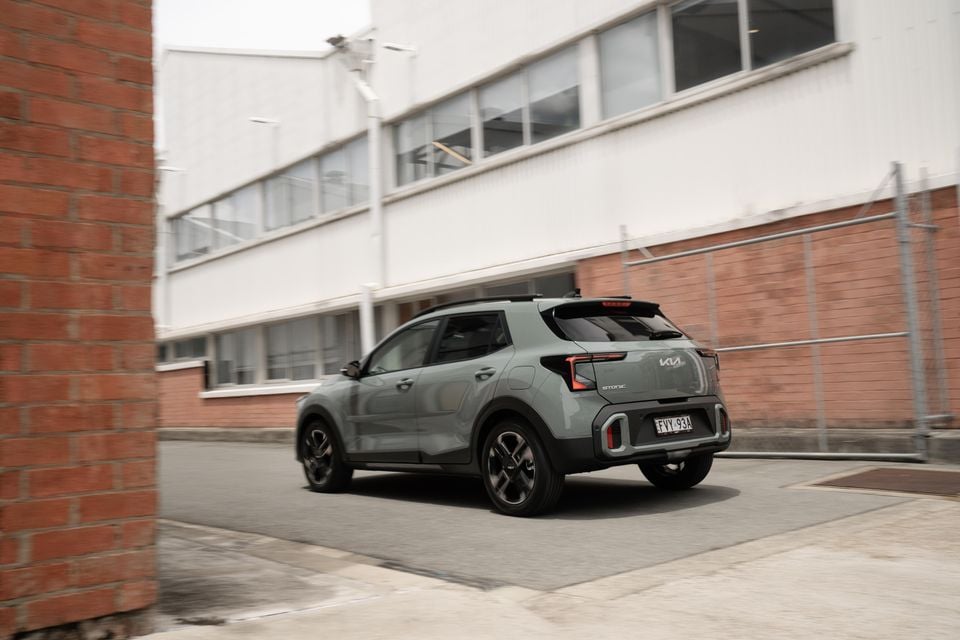
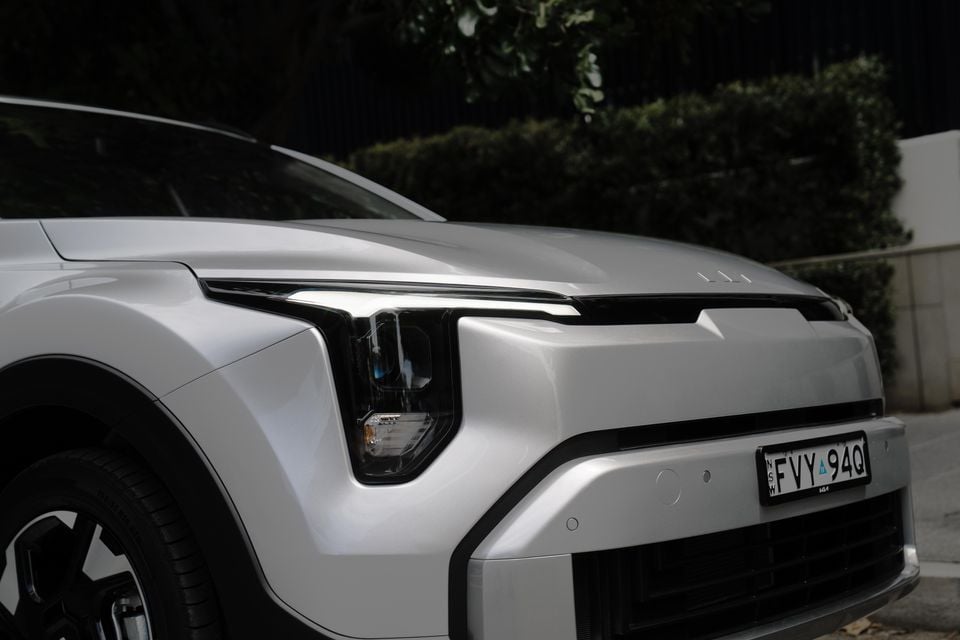
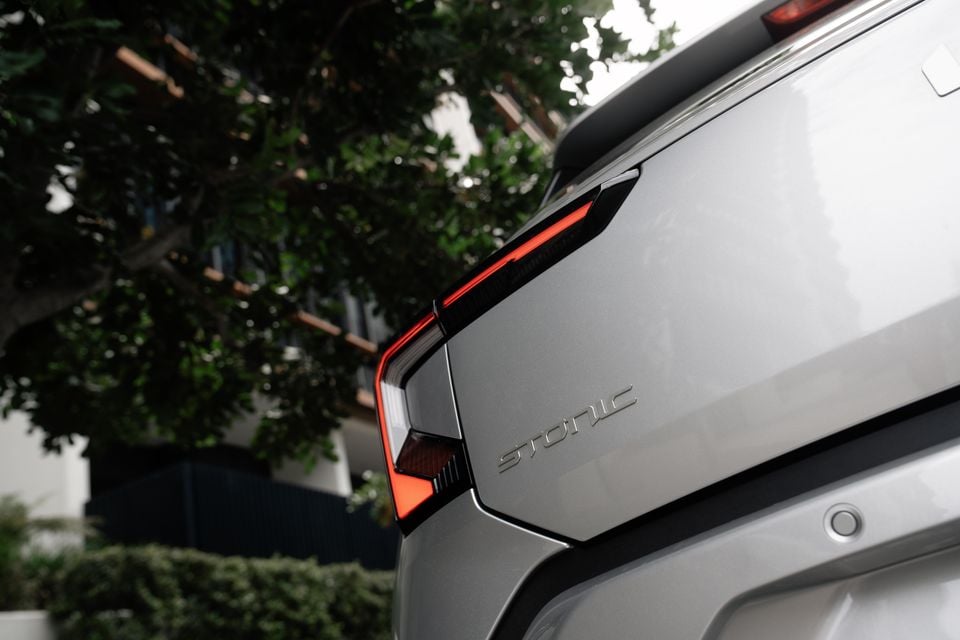
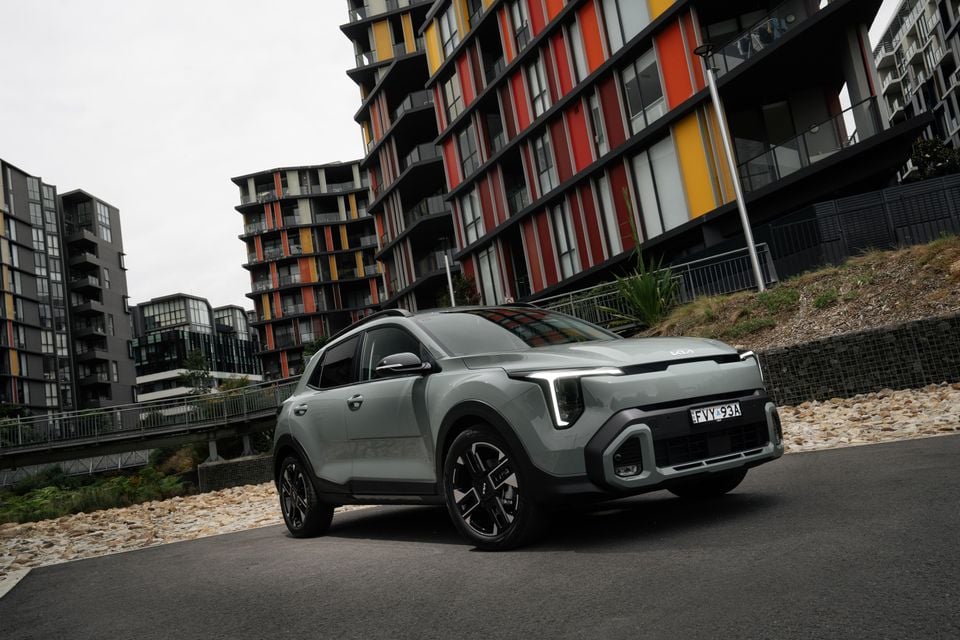
No, this isn’t an all-new Kia Stonic, it’s just had a very, very substantial nip and tuck.
Yes, Kia’s smallest SUV in Australia has received a second facelift. This one much more substantial than the last, and it’s arriving in Australia now with mild-hybrid assistance and more technology than ever.
Prices are up, but the starting price remains under the budget-friendly $30,000 barrier, and the city crossover’s new Euro-centric drivetrain promises better performance and efficiency than the old one.
The light and small SUV segments continue to get more competitive. Chinese challengers like the Chery Tiggo 4 and MG ZS continue to gain share, while old faithfuls like the Mazda CX-3 and Toyota Yaris Cross are holding strong.
For Kia, the Stonic has been a solid performer for some time, and now that the related Rio light hatch has been retired it’s the brand’s most attainable model after the Picanto micro-hatch.
While the Korean brand can’t match the sharp drive-away prices of its Chinese competitors, it continues to tout its long warranty, seamless tech integration, and of course its local chassis tuning program.
To see how the reskinned Stonic stacks up in today’s competitive market, we attended Kia’s first drive launch event in Sydney.
How much does the Kia Stonic cost?
The price of entry into the MY26 Stonic range is up $2020 to $28,180 before on-road costs, or $30,890 drive-away.
| Model | Price before on-road costs | Drive-away pricing |
|---|
| 2026 Kia Stonic S | $28,180 (+$2020) | $30,890 |
| 2026 Kia Stonic Sport | $32,290 (+$2000) | $34,490 |
| 2026 Kia Stonic GT-Line | $35,740 (+$3260) | $37,990 |
Prices for the mid-spec Sport and top-spec GT-Line are also up by between $2000-$3000, though this is also reflective of the new electrified drivetrain, the addition of connected services, and the extra safety technologies.
Find your perfect new car with CarExpert
By comparison, the ageing Mazda CX-3 (which dates back to 2014, compared to the Stonic’s 2017 roots) is priced from $32,990 drive-away as part of an advertised 2025 plate clearance, and there’s no powertrain hybridisation of any kind offered in the Australian market.
Furthermore, the hybrid-only Toyota Yaris Cross starts from over $36,000 drive-away in its most basic form, while the Hyundai Venue can be had from $26,290 drive-away at the time of writing.
China’s Chery Tiggo 4 Hybrid kicks off from $29,990 drive-away, while the larger MG ZS Hybrid+ can be had from $30,888 drive-away with current promotional pricing.
To see how the Kia Stonic lines up against the competition, check out our comparison tool
What is the Kia Stonic like on the inside?
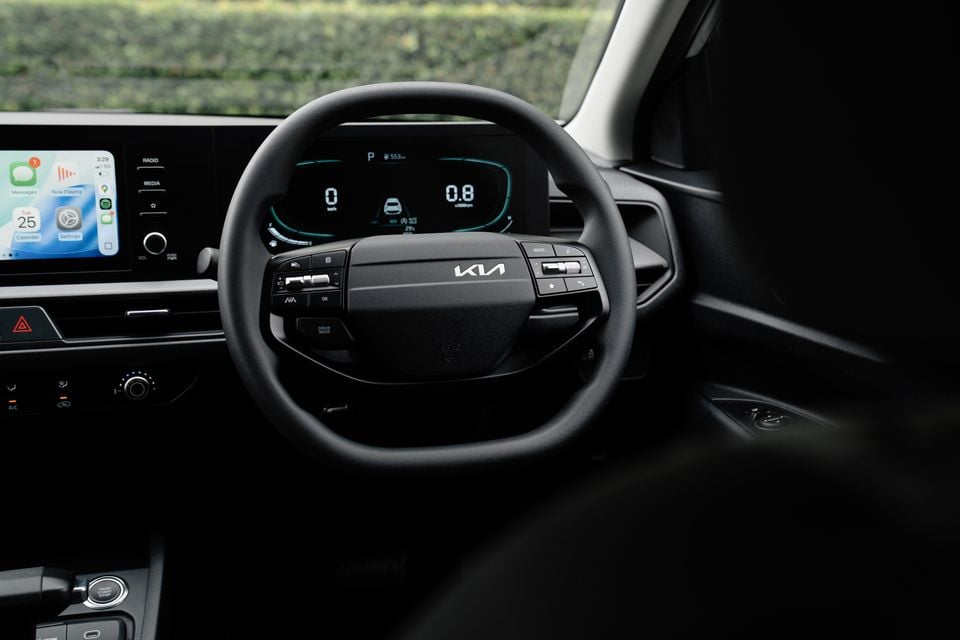
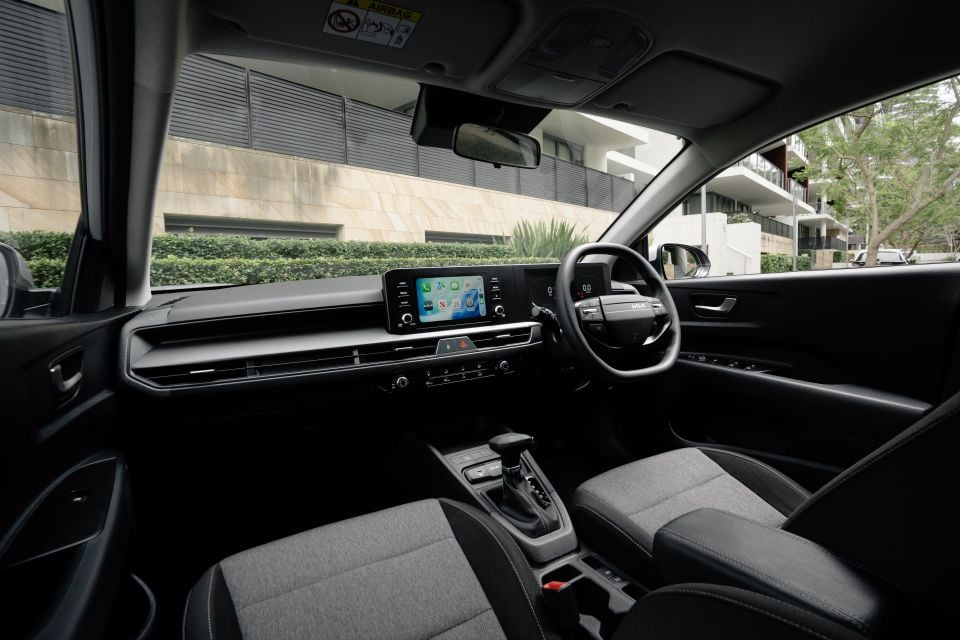
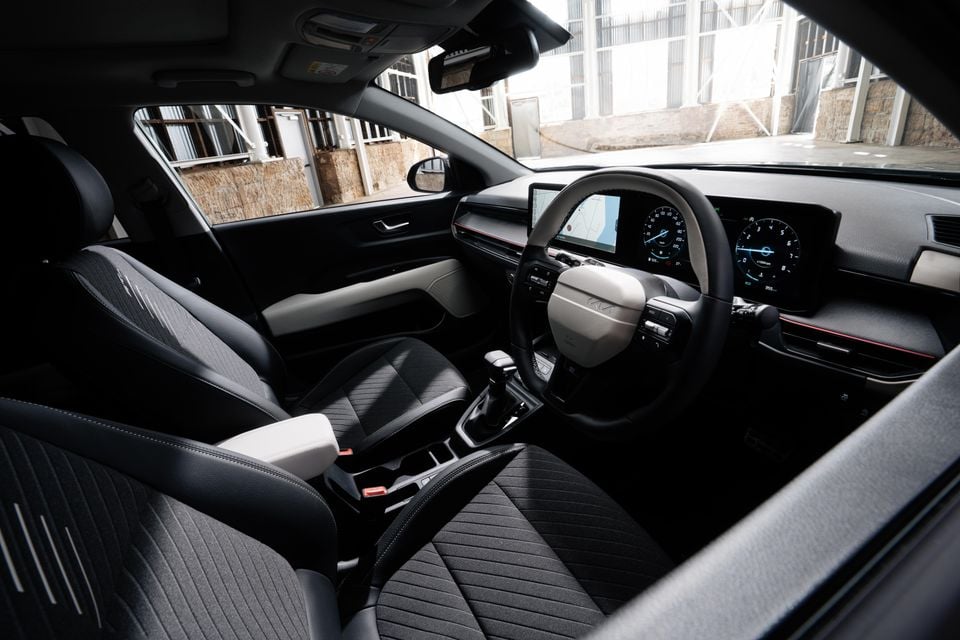
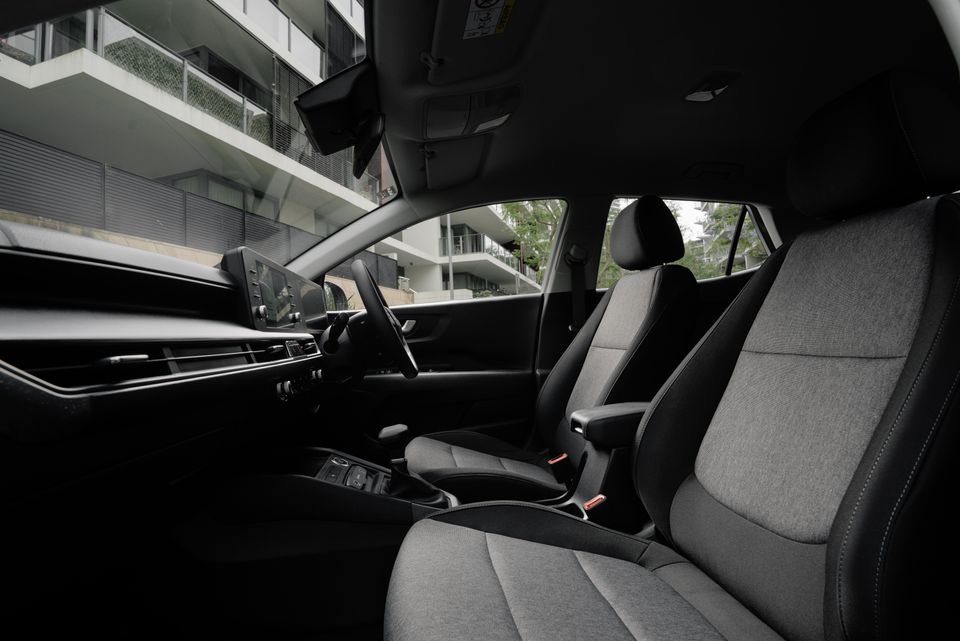
Like the exterior, there have been substantial design revisions in the Stonic’s cockpit.
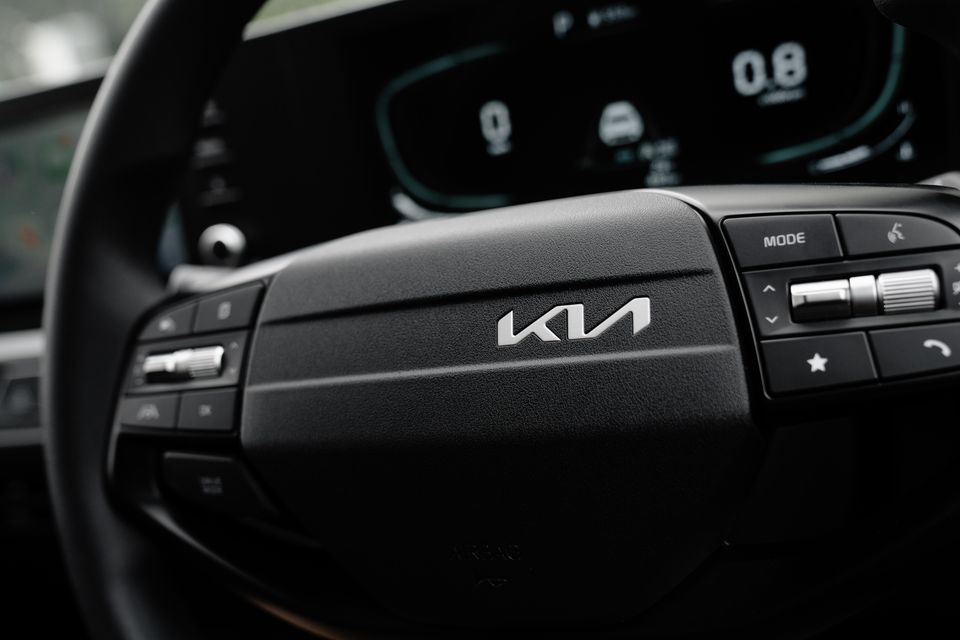
The dashboard and centre console have been redesigned, as have the steering wheel and interior trimmings. The chunky GT-Line tiller is quite nice to hold, while the retro two-spoke design in the S and Sport is nicked from other new Kia models.
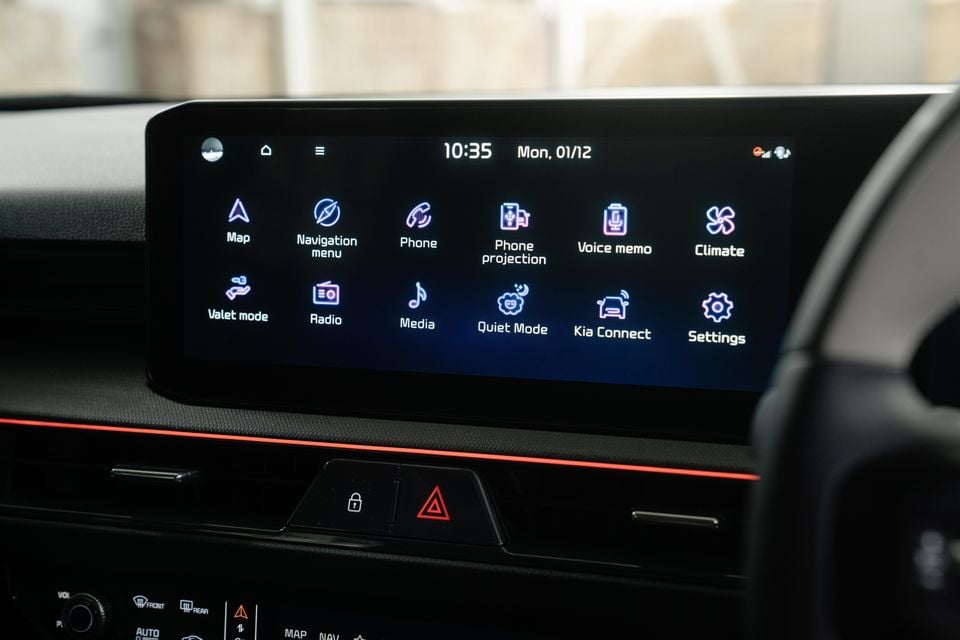
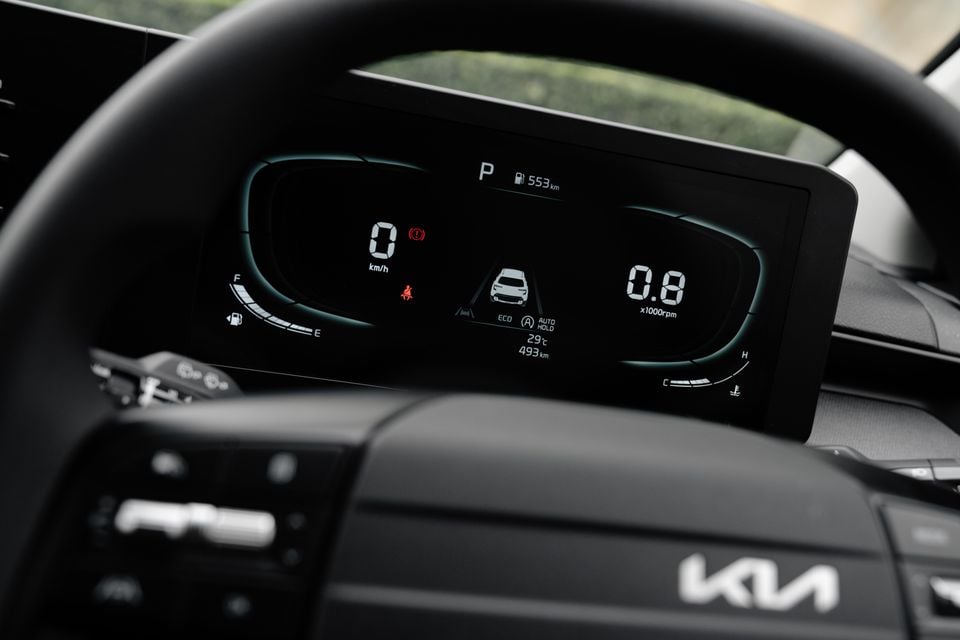
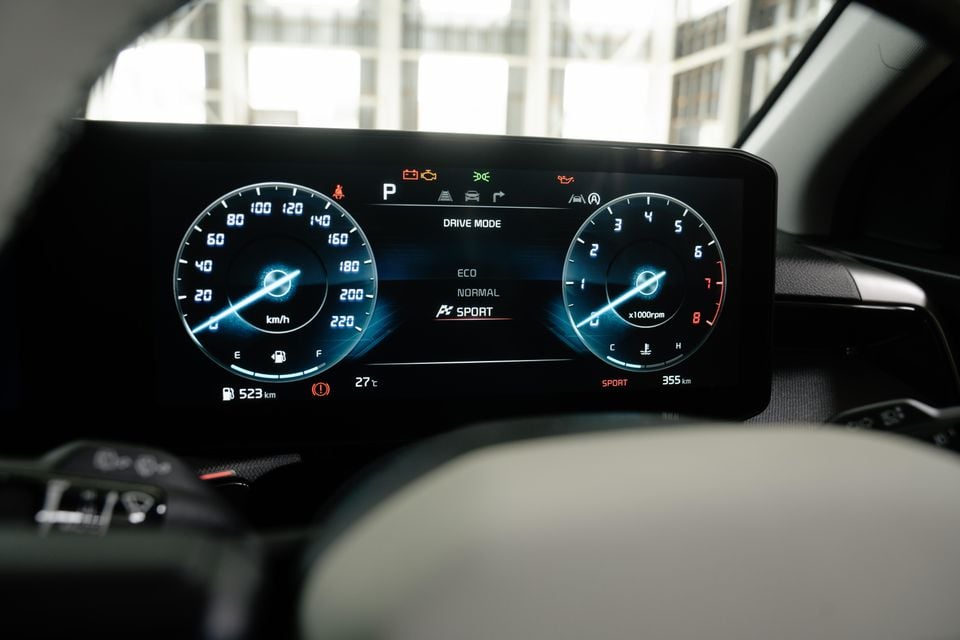
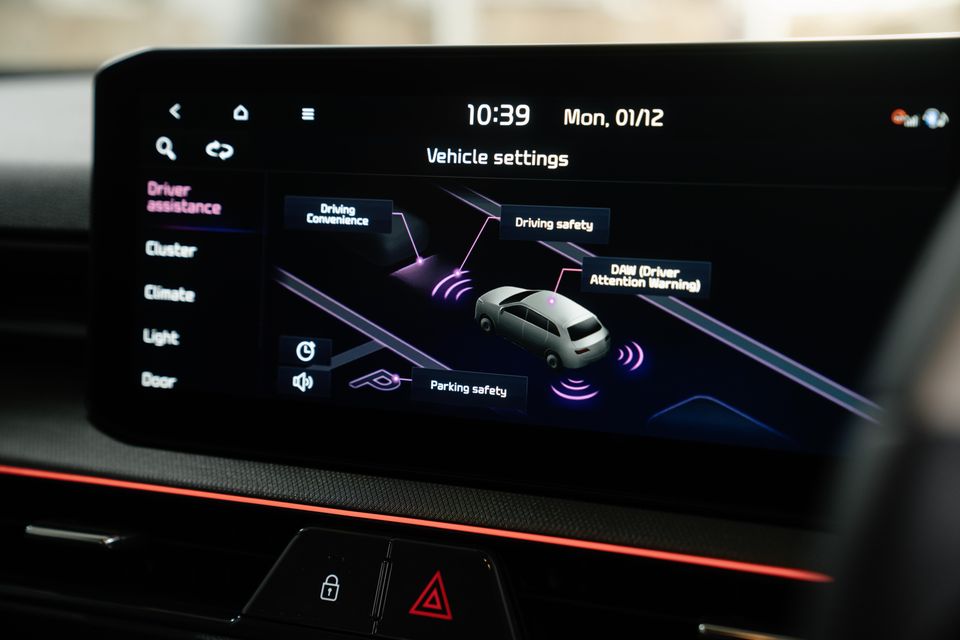
It depends on the variant just how different and upgraded it is, but the mid-spec Sport and flagship GT-Line get a new 12.3-inch infotainment touchscreen, and the GT-Line also adds a matching 12.3-inch digital instrument cluster.
Below the conjoined displays is the switchable touch bar that we’ve seen on larger Kia models like the Sportage and Sorento, which doesn’t necessarily further the experience compared to physical switches and buttons but remains one of the better touch-heavy multimedia concepts in modern cars.
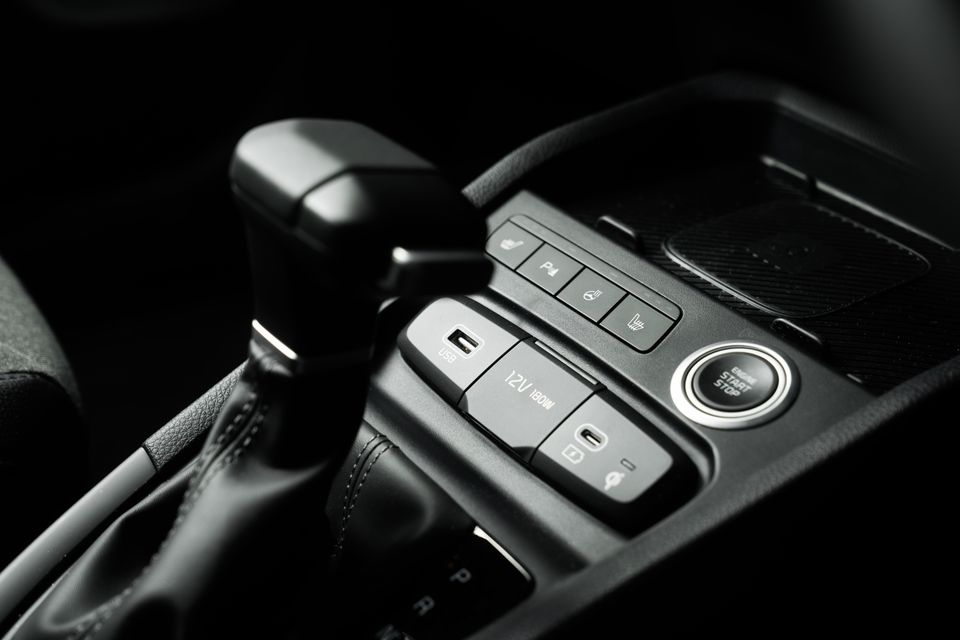
The base S gets the new design but more basic displays and switchgear. All models do, however, pick up convenience items like push-button start and an electric parking brake, as well as USB-A and USB-C outlets up front.
While the displays appear to have the same look as Kia’s latest models, they’re actually running the previous-generation software rather than the latest ccNC (connected car Navigation Cockpit) setup that you’ll find in the K4 or any of the latest EV models, for example.
As such, it means that Apple CarPlay and Android Auto remain, frustratingly, wired. The general design of the interface also feels a bit behind other models in the Kia lineup, even if the more classic design works fine in isolation and probably wouldn’t be an issue for many.
The revised centre console means revised storage as well, headlined by a dedicated phone holder which features a wireless charging pad in the GT-Line (sort of redundant with wired smartphone mirroring, but anyway), as well as a set of cupholders and cubbies in between the front seats.
Other additions depending on variant include multi-colour ambient lighting (GT-Line), a heated steering wheel (GT-Line), as well as the aforementioned Kia Connect suite (Sport, GT-Line) which brings embedded internet connectivity, app-based remote services, and over-the-air software updates.
Beyond that, from the doors rearward not all that much has changed.
The new design, trims and textures are welcome changes, but the cabin is still largely finished in hard, scratchy plastics which is most evident in the carryover door cards.
Compared to Chinese competitors, which go hard on glossy presentation and soft-touch surfaces where you’re likely to prod or rest your elbow, the Kia’s tardis-like setup is simple, plain, and fuss-free – if a little lacking in tactility.
It’s fine for what it is though, and compared to the CX-3 and Yaris Cross – or even the Venue – it’s no worse off in terms of perceived quality.
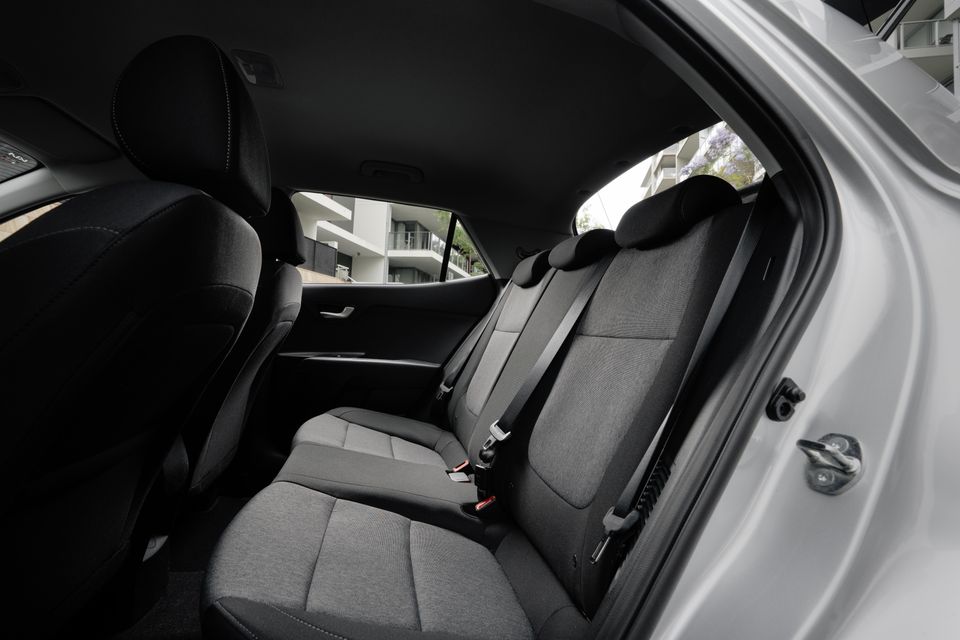
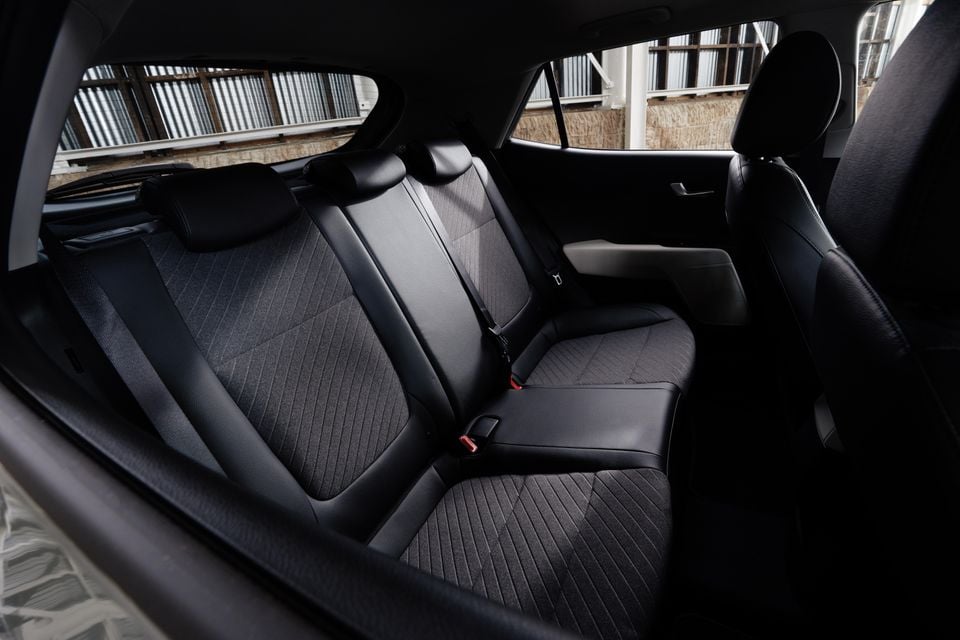
Rear seat dimensions remain identical to the previous model, meaning there’s decent – if not standout – space for second-row passengers.
Keeping in mind this car was spawned from a light-class hatchback, the Stonic’s rear seats are big enough for two adults to squeeze behind two adults – even my 6’1″ frame could sit there in relative comfort.
Convenience features in the rear are few and far between, with no fold-down centre armrest or air vents to speak of. You get bottle holders in the doors, and that’s about it.
Parents eyeing the Stonic will be pleased by the ISOFIX child seat anchors on the outboard seats, as well as top-tethers across all three.
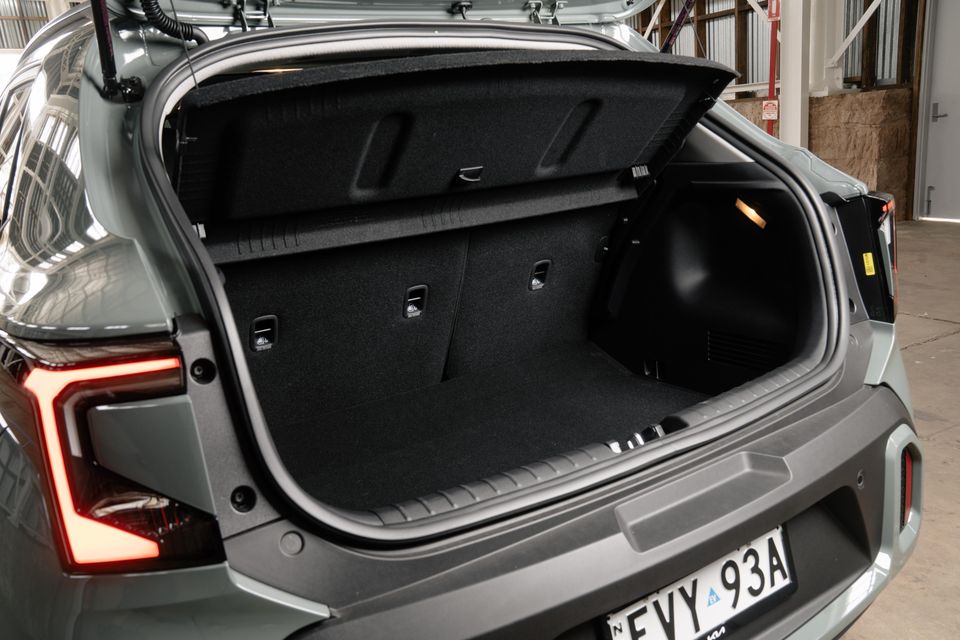
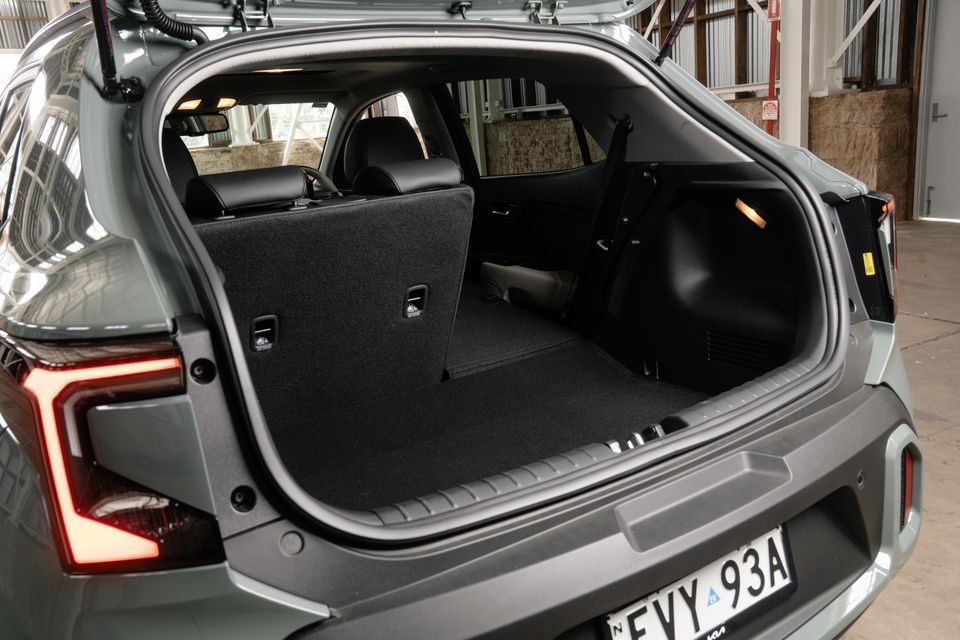
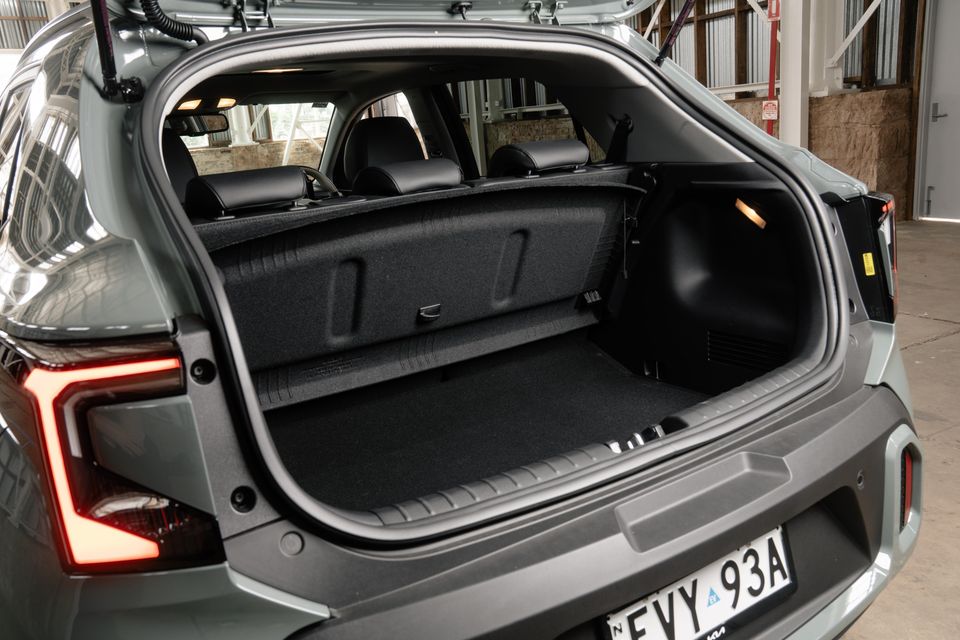
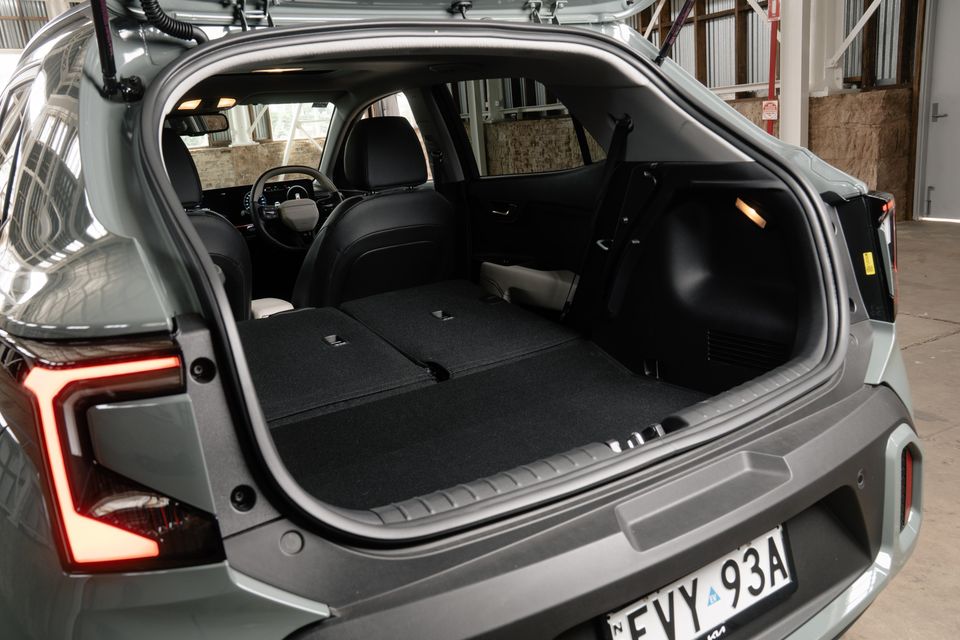
While the capacity of the boot hasn’t changed, the new Stonic brings a couple of key revisions to the cargo area.
Quoted volume of 352-1155 litres (with the rear seat backs up or down) are identical, though there’s a new parcel shelf that can tuck in behind the rear seats, while the mild-hybrid battery lives under the boot floor where the spare wheel used to be – now, there’s just a repair kit.
| Dimensions | Kia Stonic |
|---|
| Length | 4165mm |
| Width | 1760mm |
| Height | 1500mm – S
1520mm – Sport, GT-Line |
| Wheelbase | 2580mm |
| Cargo capacity (VDA) | 352L – rear seats up
1155L – rear seats folded |
To see how the Kia Stonic lines up against the competition, check out our comparison tool
What’s under the bonnet?
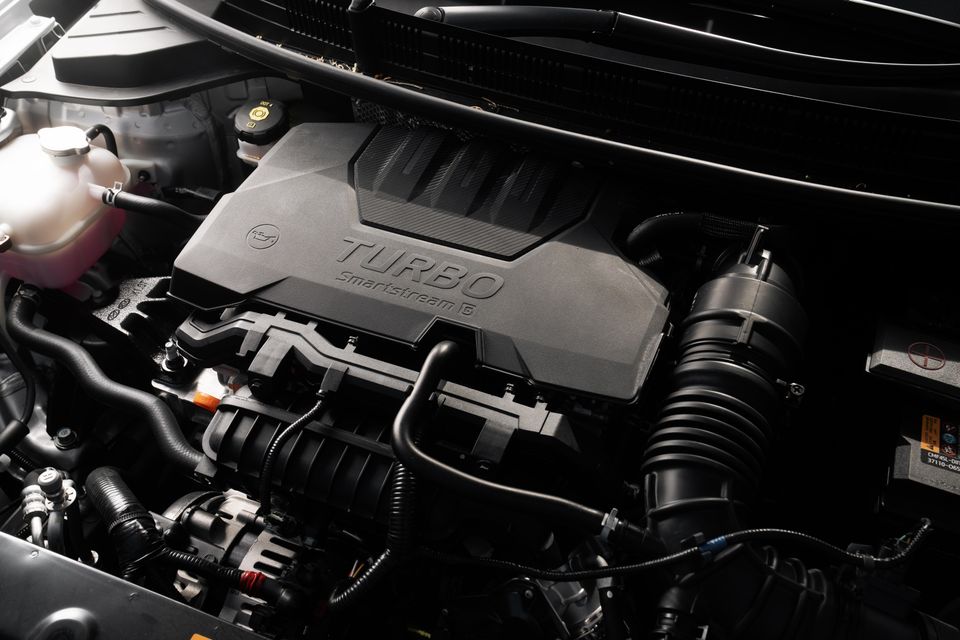
The same 1.0-litre three-cylinder turbo-petrol engine lives under the bonnet, but Australia now gets the 48V mild-hybrid version that has been on sale in overseas markets like Europe for some time.
| Specifications | Kia Stonic |
|---|
| Engine | 1.0L 3cyl turbo-petrol
48V MHEV |
| Power | 88kW @ 6000rpm |
| Torque | 172Nm @ 1500-4000rpm |
| Transmission | 7-speed dual-clutch auto |
| Drive type | Front-wheel drive |
| Weight | 1265kg |
| Fuel economy (claimed) | 5.0L/100km |
| Fuel economy (as tested) | 6.8L/100km |
| Fuel tank capacity | 45L |
| Fuel requirement | 91-octane regular unleaded fuel |
| CO2 emissions | 116g/km |
| Emissions standard | Euro 5 |
| Towing capacity | 450kg – unbraked
900kg – braked |
Power is up 14kW, while fuel consumption is down by 0.4L/100km on the combined cycle – or 0.6L/100km on the urban cycle according to official testing. The addition of 48V assistance also brings a 9g/km reduction in CO2 emissions, which is pretty critical in today’s emissions-focussed climate.
For the technical buffs, Kia Australia says the lithium-ion battery under the boot has an operating voltage of 30-51.6 volts, a rated capacity of 9.8Ah or 436.5Wh, a max charge/discharge power of 12.5kW at 50 per cent state of charge (SOC), and an operating temperature bracket of -35 to 60 degrees Celsius.
Our indicated fuel consumption figure of 6.8L/100km was recorded while driving through plenty of high-traffic city and suburban roads, plus a stint on the Pacific and Old Pacific Highways – more on the driving in the next section.
To see how the Kia Stonic lines up against the competition, check out our comparison tool
How does the Kia Stonic drive?
I drove the Stonic GT-Line from Kia Australia’s HQ in Macquarie Park in north-west Sydney, up to Mount White further north on the way to Gosford.
The near-50km drive leg started in the high-traffic surrounds of Kia’s local HQ, with plenty of suburban streets and highways, before stretching the Stonic’s legs on the final section which combined both the open Pacific Highway as well as the twisty and technical Old Pacific Highway as we arrived into Mount White.
Keeping in mind the Stonic is a city-focused car at its core, and the mild-hybrid system is designed to improve efficiency in stop-start city traffic. As with the pre-update model, the Stonic has a mildly sporty leaning feel that makes it at home around the city and suburbs, but it isn’t afraid to get out on the open road.
The locally tuned suspension errs on the firmer side, and the lightly weighted steering offers fairly quick response, making the Stonic feel pretty chuckable and dynamic. It feels a bit wider and squatter than you might expect too, which gives it confident roadholding.
Performance from the mild-hybrid three-cylinder turbo engine feels a bit peppier than the old model, thanks to the 48V system’s assistance under load – though there’s no increased torque on paper.
It’s also snappier off the line as the mild-hybrid system’s starter-generator is much quicker to fire up than the non-MHEV mill’s idle start-stop system.
The seven-speed DCT auto occasionally offers the odd hesitation, as well as a slightly elastic feeling in first and second gears, but it’s noticeably improved.
That said, in Sydney’s hilly northern suburbs, I did have the odd occasion in a slip lane or rolling through a left turn into an uphill street when a progressive throttle input would take the transmission one or two moments to kick down and get the engine on the boil.
In fairness, other three-cylinder rivals – think Volkswagen T-Cross – have the same issue at times, while naturally aspirated rivals with limited torque can send their engines into a dizzying loud spin.
The rumbly turbo triple is well subdued even under hard acceleration, and it happily settles into a quiet hum at a cruise. Even better, the Stonic will ‘sail’ when coasting, switching off the engine to save fuel – and it actually does it quite a bit.
It’s also got good mid-range shove once it’s in the zone, and the DCT auto is quick and snappy on upshifts. Sadly, even in the GT-Line, there are no paddle shifters to take control of the gears yourself, though you can flick the T-bar selector to the side and shift ‘tiptronic’ style.
You can also toggle through three drive modes – Eco, Normal and Sport – with the car defaulting to Eco on startup. There’s an uptick in throttle response and steering weight as you progress from Eco through to Sport, but even in the GT-Line this isn’t going to make it feel like a hot hatch.
On the open road, road noise is noticeable but not any worse than in most rivals. At least the Stonic feels settled at freeway speeds, meaning it can confidently head out of the city if you need it to.
From expert reviews to the right deal
CarExpert brings together reviews, research tools and trusted buying support, guiding you from research to delivery with confidence.
As for driver assistance, the Sport and GT-Line are now equipped with adaptive cruise control, while collision avoidance tech is bolstered by an uprated autonomous emergency braking (AEB) system with junction turning assist (Sport, GT-Line), as well as multi-collision braking.
The former works well with the standard Lane Following Assist active centring, making for almost semi-autonomous driving capability – though the brand’s navigation-based Highway Driving Assist function isn’t offered here despite being available overseas.
Active blind-spot assist intervenes with steering correction if the Stonic’s on-board sensors think you’re about to merge into a faster vehicle’s path, and the driver attention monitoring isn’t as overbearing as Hyundai’s and Kia’s newer systems, thank goodness. There’s no annoying audible speed-limit warning, either.
Parking this compact crossover is pretty easy too, despite the ‘SUV’ classification, with city-friendly dimensions aided by good outward visibility though the windows and mirrors, as well as a reversing camera and front/rear parking sensors.
To see how the Kia Stonic lines up against the competition, check out our comparison tool
What do you get?
As before, the Stonic is offered in three distinct trim levels in Australia – S, Sport and GT-Line.
2026 Kia Stonic S equipment highlights:
- 16-inch alloy wheels in 195/55R16 tyres
- Tyre repair kit
- Auto halogen projector-type headlights
- LED front fog lights
- Heated, power-folding exterior mirrors
- Electric parking brake with auto hold
- Cruise control
- Proximity entry with push-button start
- 4.2-inch instrument cluster screen
- 8.0-inch touchscreen infotainment system
- Apple CarPlay – wireless
- Android Auto – wireless
- 6-speaker sound system
- Tilt and telescopic steering column adjustment
- Cloth upholstery
- 6-way manually adjustable driver’s seat
- 60:40 split/fold rear seats
- Power windows with auto up/down for driver
- 1 x USB-A outlet
- 2 x USB-C outlets
- 1 x 12V outlet
- Manual air-conditioning
Kia Stonic Sport adds:
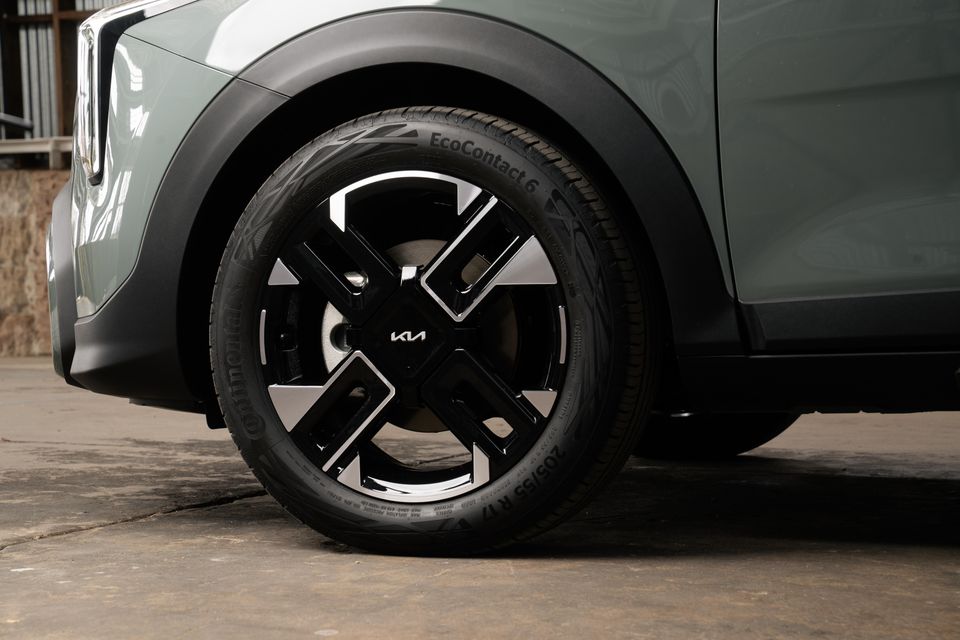
- 17-inch alloy wheels in 205/55 R17 tyres
- Rain-sensing wipers
- Rear privacy glass
- LED front fog lights
- 12.3-inch touchscreen infotainment system
- Wired-only Apple CarPlay and Android Auto
- Over-the-air software updates
- Satellite navigation
- DAB+ digital radio
- Cloth and leatherette upholstery
- Leatherette-wrapped steering wheel and shifter
- Sliding front centre console armrest
- Additional USB-C outlet
- Illuminated vanity mirrors
- Climate control air-conditioning
- Kia Connect telematics
- incl. remote control of locks, vehicle status monitoring via app
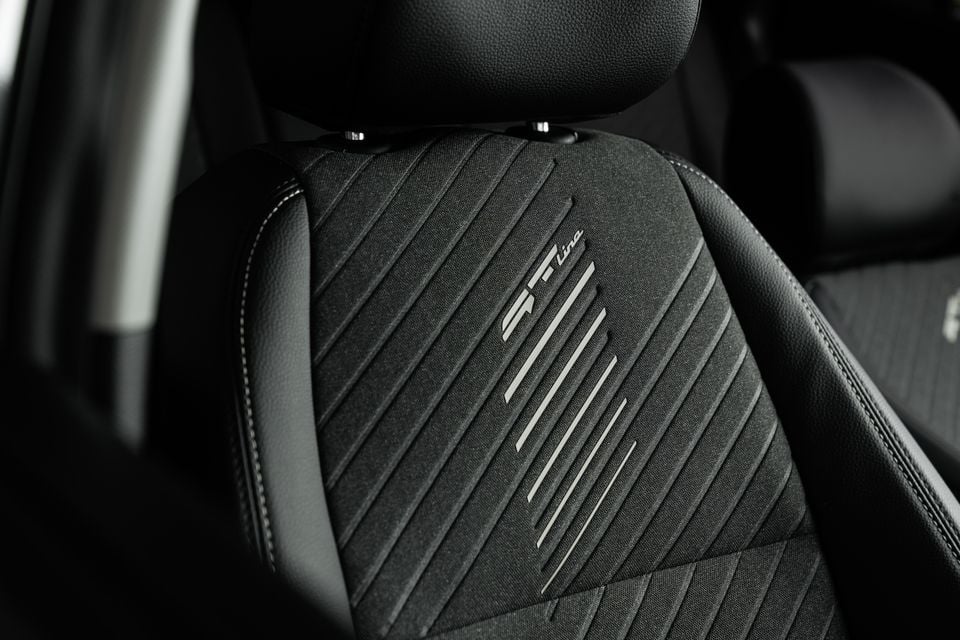
Kia Stonic GT-Line adds:
- LED reflector-type headlights
- Sunroof
- 12.3-inch digital instrument cluster
- Heated front seats
- Heated steering wheel
- 2-tone leatherette sports steering wheel
- Alloy pedals
- Ambient lighting
- Ventilated wireless phone charger
To see how the Kia Stonic lines up against the competition, check out our comparison tool
Is the Kia Stonic safe?
The outgoing Stonic’s five-star ANCAP safety rating has now expired, and Kia Australia has no plans to have it retested it – likely because it wouldn’t achieve a full five stars against the latest, strictest criteria.
Previously, the Stonic wore a 2017-stamped five-star safety rating based on crash tests conducted on the now-defunct Rio hatchback on which it’s based.
Standard safety equipment includes:
- 6 airbags
- Autonomous emergency braking (AEB)
- Vehicle, pedestrian and cyclist detection
- Blind-spot assist
- Lane-keep assist
- Lane Following Assist – lane centring
- Lead Vehicle Departure Alert
- Multi-collision brake
- Parking sensors – front, rear
- Reversing camera
- Front, front-side and curtain airbags
Stonic Sport adds:
- Adaptive cruise control
- Forward Collision Avoidance Assist 1.5 – AEB
- incl. junction turning assist
Multi-collision brake, adaptive cruise control, and Forward Collision Avoidance Assist 1.5 are all new for MY26.
To see how the Kia Stonic lines up against the competition, check out our comparison tool
How much does the Kia Stonic cost to run?
As with the wider Kia range, the Stonic is covered by a seven-year, unlimited-kilometre warranty with capped-price servicing for the same period, and up to eight years of roadside assistance.
| Servicing and Warranty | Kia Stonic |
|---|
| Warranty | 7 years, unlimited kilometres |
| Roadside assistance | Up to 8 years |
| Service intervals | 12 months or 10,000 kilometres |
| Capped-price servicing | Up to 7 years |
| Total capped-price service cost | $3780 – 7 years |
Annoyingly, Hyundai and Kia still persist with 10,000km service intervals for their turbocharged models. So, if you do above-average annual mileage, that’s something to consider.
In addition, the Stonic’s service pricing is quite exxy. The second and fourth services cost $552 and $812(!) respectively, while the sixth and seventh visits are an also-pricey $681 and $635, respectively. That makes the Stonic more expensive to maintain than most of its key rivals.
To see how the Kia Stonic lines up against the competition, check out our comparison tool
CarExpert’s Take on the Kia Stonic
The refreshed Stonic is a more refined take on an already solid little crossover, but it’s far from groundbreaking or standout in the current market.
While it remains pretty well priced compared to the direct competition, and now offers much of the high-end tech that is increasingly common at the more attainable end of the new car market, there are still a few chinks in its armour.
The gatekeeping of certain features for higher grades seems silly in 2025/26, especially for stuff like LED headlights and the high-grade digital instrument cluster. And high servicing prices and short distance intervals remain complaints.
But on the flipside, the Stonic is one of the cheaper light SUVs from a legacy brand, offering an engaging locally tuned ride and handling package, relatively efficient turbocharged performance, and a well-sorted suite of infotainment and safety technologies – though some parts of that depend on the grade you choose.
The mid-spec Sport remains the value pick, while the GT-Line showcases just about everything the nameplate has to offer – for a price. Personally, however, I think the bigger and newer K4 S with Safety Pack (from $35,490 drive-away) is a smarter buy.
CarExpert can save you thousands on a new Kia Stonic. Click here to get a great deal.
Click the images for the full gallery
MORE: Explore the Kia Stonic showroom

 Car News
 CarExpert Podcast
 Car Reviews
 Owner Car Reviews
 Car Comparisons
 Showroom
 Car Chooser
 Car Specifications










 Automotive Vehicle Spec Data & 4K images Powered by JATO Dynamics Ltd