 Car News
 CarExpert Podcast
 Car Reviews
 Owner Car Reviews
 Car Comparisons
 Showroom
 Car Chooser
 Car Specifications



William Stopford
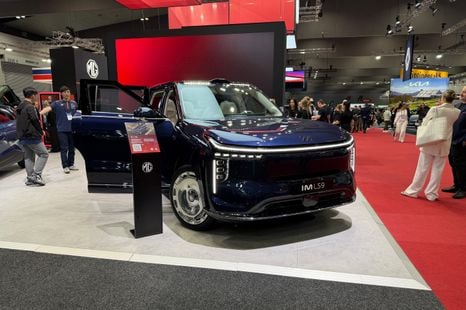
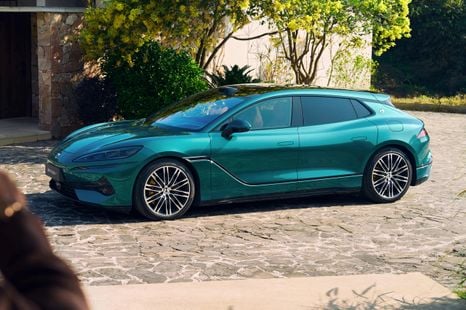
MG previews luxurious extended-range electric flagship SUV in Australia
MG has previewed a luxurious, full-size extended-range electric SUV for a potential Australian launch.
11 Hours Ago
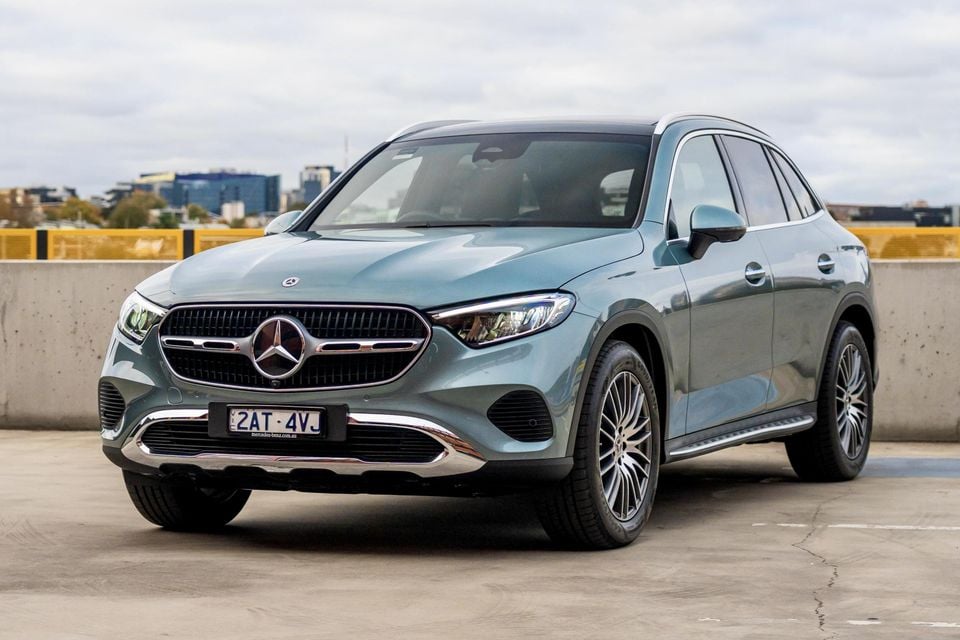
It makes sense to save some coin on the entry-level GLC200, but you'll probably get a better deal elsewhere in the mid-size luxury SUV sector.
CarExpert brings together reviews, research tools and trusted buying support, guiding you from research to delivery with confidence.
The Mercedes-Benz GLC-Class hasn’t existed for long in terms of the premium German auto brand’s long and storied history, but the mid-size prestige SUV has quickly become a very important model in its lineup.
Replacing the GLK in 2015, the original GLC was available with a range of petrol and diesel engines across a multitude of variants, including AMG performance variants. The second-generation model was launched in 2022, once again in both wagon and ‘Coupe’ forms, and the small initial lineup has continued to grow.
Reflecting Australia’s insatiable appetite for SUVs, the GLC continues to outsell the closely related and once-dominant C-Class, and last year it was Merc’s best-selling model in Australia by a considerable margin.
Its rivals didn’t have a bad year either – in fact, the BMW X3 was ahead in the sales charts, while the Lexus NX took out top spot in the mid-size luxury SUV segment.
To bolster the appeal of the GLC, Mercedes-Benz has made a few key running updates in recent years. Of note, it introduced the base-spec GLC200 and expanded the nameplate’s versatility with the plug-in hybrid GLC350e in 2025.
That brought it up to speed with hybridised versions of the X3 and NX, but the addition of the GLC200 was arguably more important in opening up the GLC range to those on a somewhat tighter budget.
Like the entry-level variants of the X3 and Audi Q5 model lines, the GLC200 is fitted with a lower-output petrol engine than the existing GLC300 variants, and also loses a fair amount of standard equipment. All that helped it land at $89,000 before on-road costs, which is where it remains a year later.
On test here, the 2026 Mercedes-Benz GLC200 4Matic is more expensive than its direct rivals from BMW, Audi, and Lexus, and it’s also under pressure from South Korean brand Genesis, a relative newcomer in the luxury world.
Does this more attainable GLC justify its relatively high price, how does it stack up against the competition, and is it worth considering over the other luxurious SUV options?
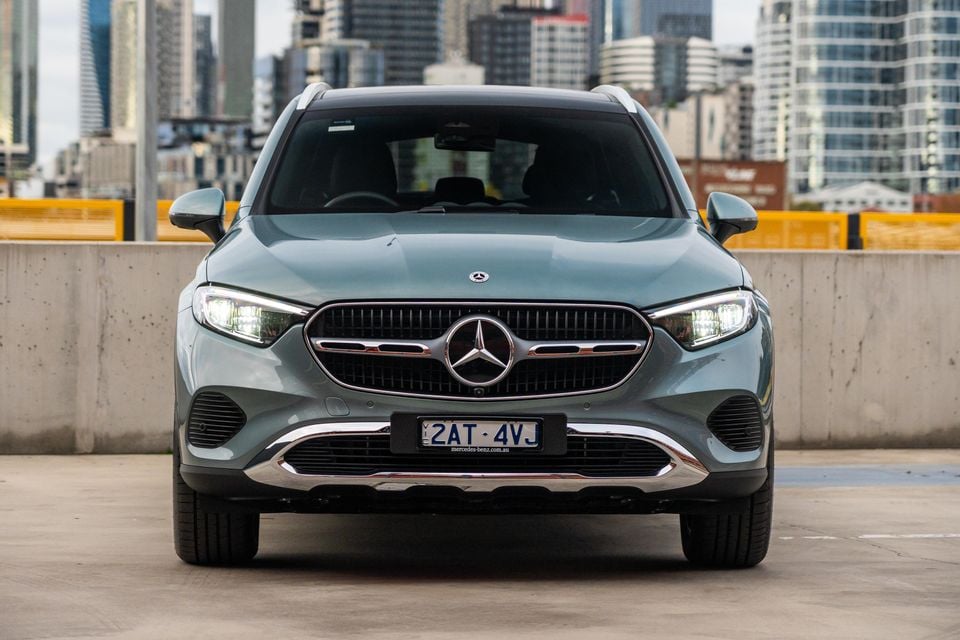
Our GLC200 tester sits at the bottom of the GLC-Class lineup, priced at $89,000 before on-road costs.
| Model | Price before on-road costs |
|---|---|
| 2026 Mercedes-Benz GLC200 4Matic | $89,000 |
| 2026 Mercedes-Benz GLC350e 4Matic | $99,900 |
| 2026 Mercedes-Benz GLC300 4Matic | $105,100 |
| 2026 Mercedes-Benz GLC300 4Matic Coupe | $117,100 |
Rivals include base-spec variants from other premium brands, including the BMW X3 20 xDrive for $87,300 before on-roads, and the cheapest all-wheel drive Audi Q5, the TDI 150kW quattro, for $87,600 before on-roads.
You could also branch out to Asia, where you’ll find the cheapest all-wheel drive Lexus NX, the hybrid NX350h, for $76,500 before on-roads. Relative newcomer Genesis, meanwhile, offers the GV70 2.5T Advanced from $80,300 before on-roads.
It’s also worth mentioning the range-topping Mercedes-AMG GLC performance variants are still available, starting at $136,900 before on-roads for the GLC43 and extending to $200,700 before on-roads for the flagship GLC63 S E Performance.
To see how the Mercedes-Benz GLC stacks up against the competition, use our comparison tool
Buy your new car without the stress. It's fast, simple and completely free.

Great service from Travis and team, second time I have used this business would not hesitate to recommend them to anyone
Craig C.
Purchased a Ford Ranger in Sunshine Coast, QLD
CarExpert helped Craig save thousands on his Ford Ranger, now let us save you on your next new car.
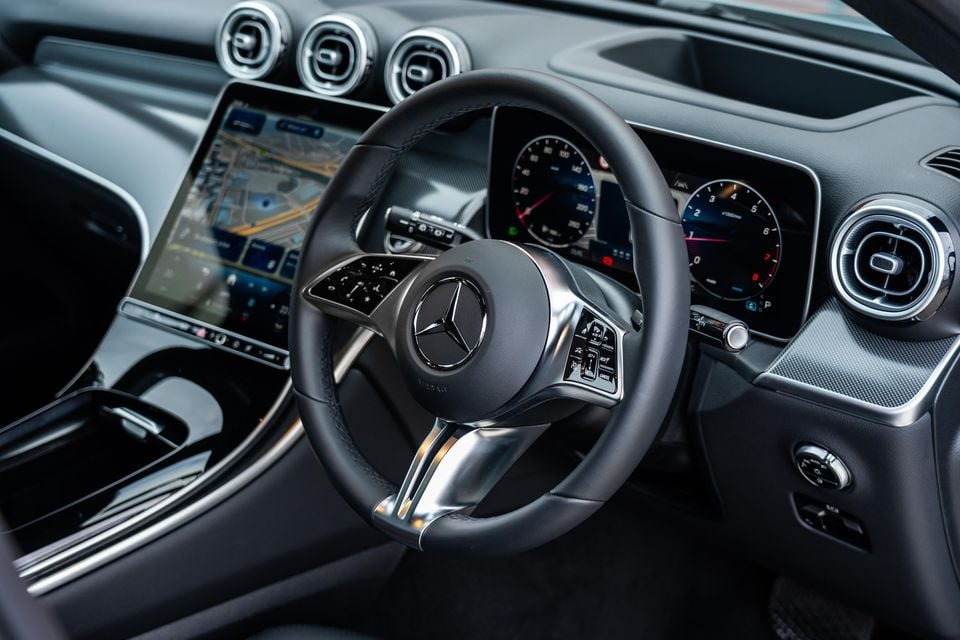
Find my dealModern Mercedes-Benz interiors often have a surface-level sheen that wears off once you start using everything, and the GLC200’s screen-heavy cabin is neither particularly elegant to look at nor very satisfying to interact with.
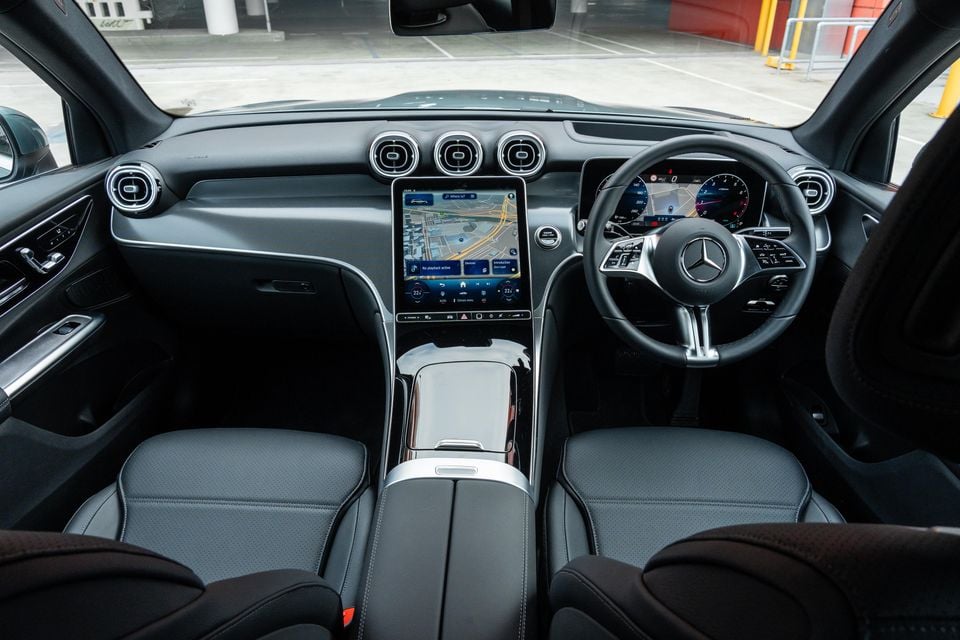
Mercedes-Benz’s designers have left an awful lot of empty space at the front of the cabin. Unlike the minimalist designs of other brands, it doesn’t make the GLC look all that tidy – just look at the huge swooping ‘waterfall’ dashboard, the slightly off-centre infotainment panel, and the weirdly high air vents.
Material choice plays a significant role here. That swooping section is hard plastic despite the softer leather-look surface above it, and there’s a sea of piano black material on the centre console that will be a magnet for smudges.
Some may find the GLC’s cabin luxurious and fancy, but it just doesn’t work for this reviewer. That said, there weren’t any major creaks or rattles in our press car, so build quality seems alright initially, but the plastic air vents on the dash, seat controls on the doors and stalks behind the steering wheel all feel somewhat flimsy.
On that note, there are no physical buttons in here apart from the start/stop button. That doesn’t mean there are no controls outside the screen, but they’re all haptic and, once again, finished in glossy plastic.
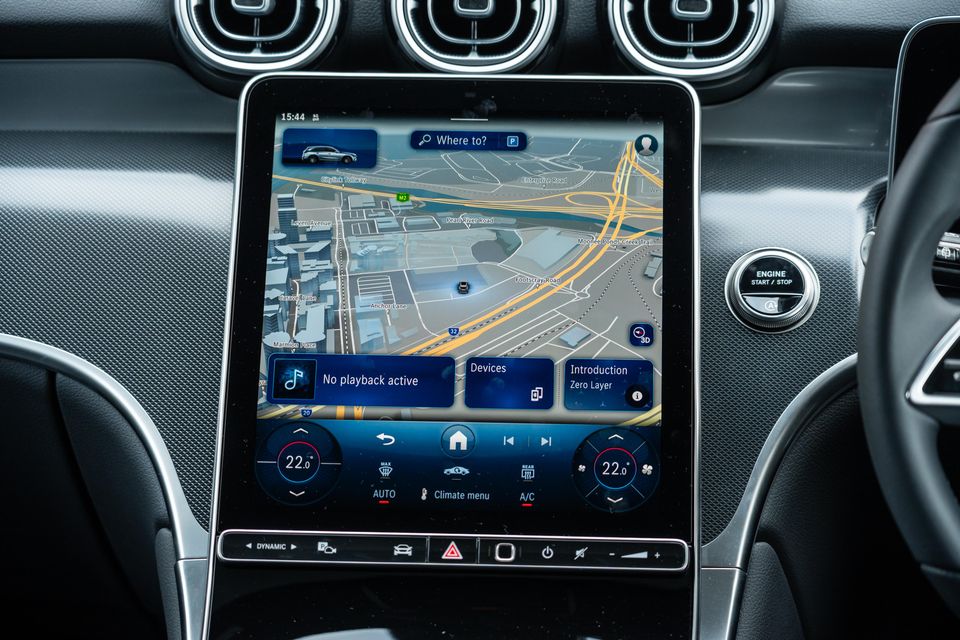
This is a real shame. We’d love to see more than just a simple ribbon of touch-buttons in the middle, and the steering wheel would be much more functional if it had controls that you can physically push.
The result is a cabin that’s a bit fiddly to interact with. Of course, the result of all this ‘simplification’ – if you’d like to call it that – is an over-reliance on screens, as that vertical central display is your primary control hub for the whole car. Its graphics may be sharp, it’s responsive, and there’s a selection of handy apps, but a purely digital climate system is disappointing.
The dedicated ‘Climate Menu’ button is also incredibly easy to miss, leaving you wondering where to find the full array of controls. Wireless Apple CarPlay and Android Auto are at least standard, but we can’t help but yearn for the more tactile Mercedes-Benz interiors pre-2020.
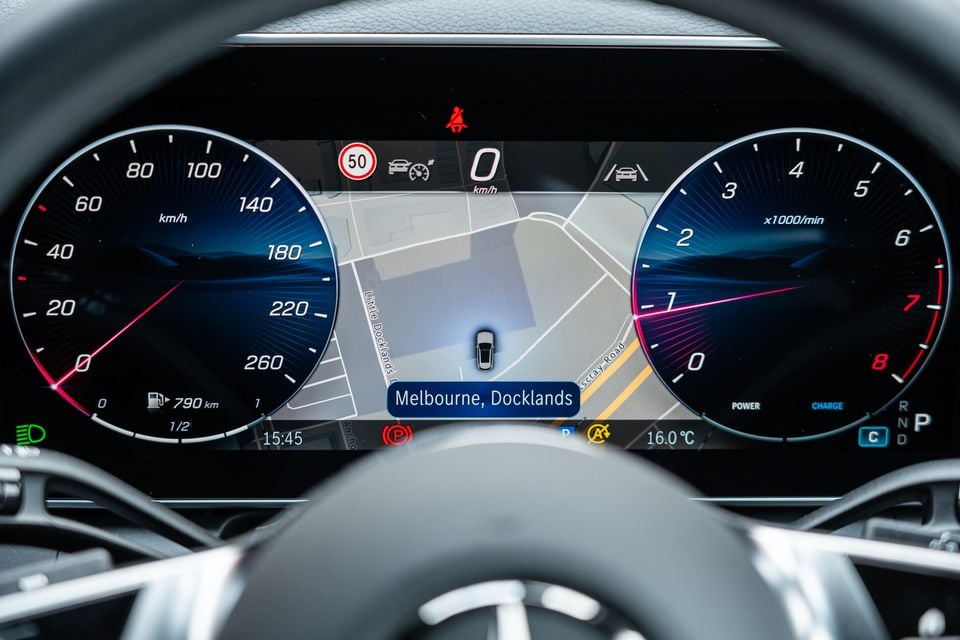
The integration of the instrument display isn’t particularly slick either, but we do like its graphics and customisability. There are multiple display options on hand, which you’ll eventually figure out how to flick between by pressing the vaguely labelled steering wheel buttons.
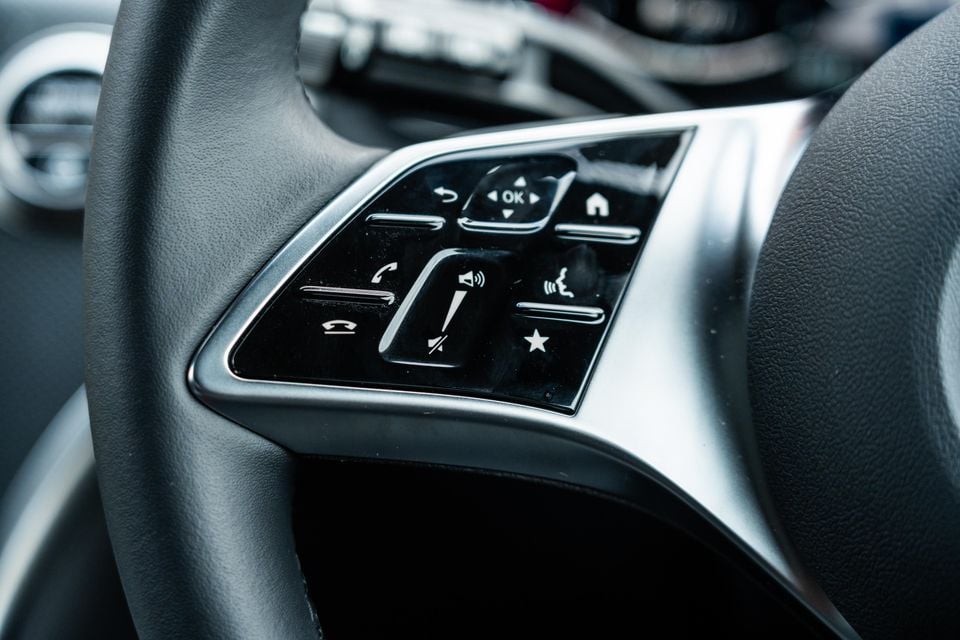
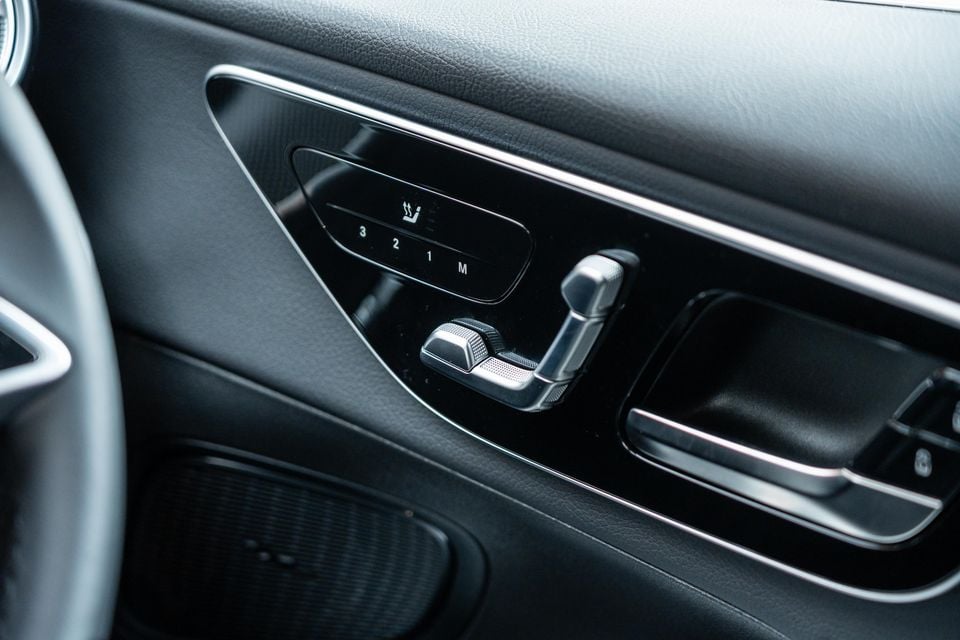
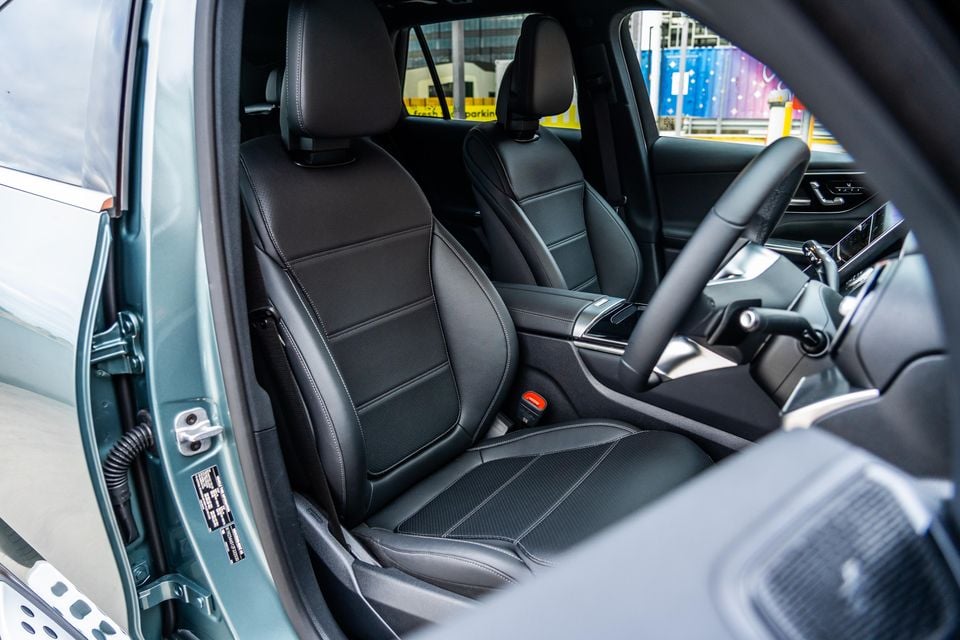
Aside from all that, the GLC’s cabin is fairly comfortable. The steering wheel is nicely sized and finished in smooth leather, and we like the satin-look metallic accents and shiny three-pointed star badge in the middle.
The seats are also plush and offer a wide range of adjustment controls on the doors, in typical Merc fashion. Seat heating is standard but ventilation isn’t, which is a little disappointing given the price of the base GLC – albeit not as annoying as its exclusion in more expensive variants.
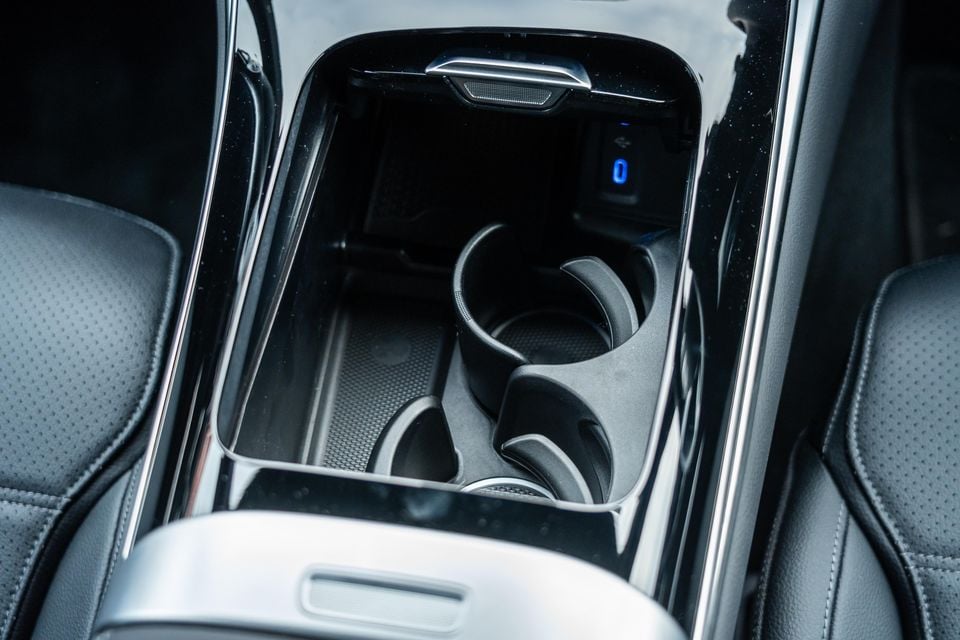
Otherwise, the cabin doesn’t do much more than what you see on the surface. Under the glossy sliding lid in the middle is a small storage cubby with two cupholders, a wireless phone charger, and two USB-C outlets.
The use of piano black material will forever be a gripe here, mostly because it’s in such a high-touch area. Further back is a storage box under a split-opening padded lid, providing another USB-C port, while other storage options include a decently sized glovebox and door pockets.
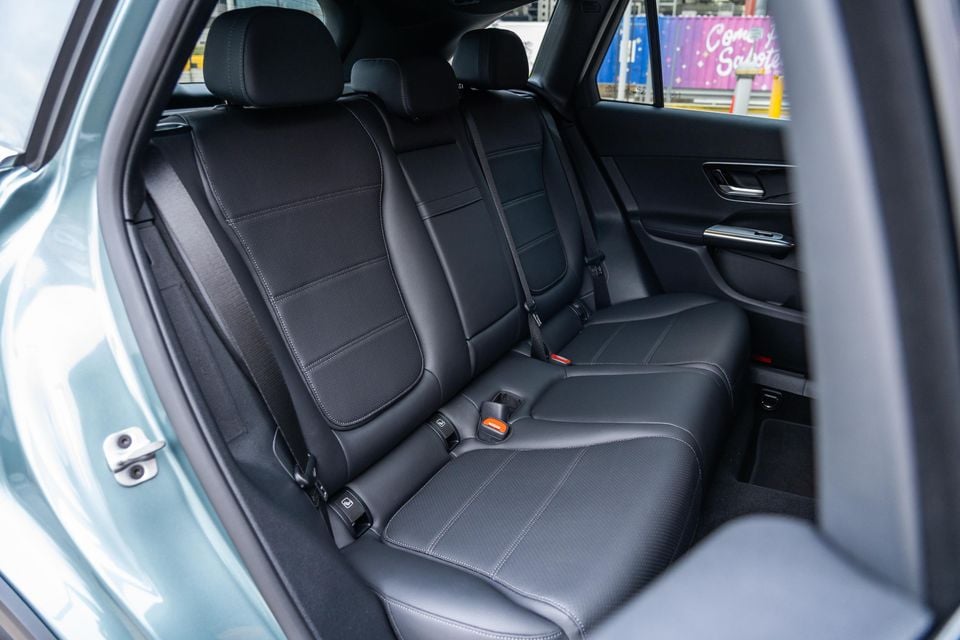
The second row offers decent comfort, and average-height passengers shouldn’t have any issues with space. It’d be nice to have a touch more room, but the glass roof at least makes it feel more airy – not to mention brighter given the otherwise drab colour palette.
While amenities aren’t particularly generous, rear-seat occupants benefit from air vents on the back of the centre console and a padded fold-down armrest with cupholders. It’s disappointing there are no USB outlets here, which is a bizarre omission given the GLC’s family-oriented purpose and, again, its price.
As for the boot, its quoted 620-litre seats-up capacity is larger than that of the X3 (570L) and Q5 (520L), and it’s very usable in the metal. The cargo floor is huge and there are a multitude of hooks and nets to keep things in place, while the power tailgate moves quickly and makes everything just a touch easier.
Fortunately, and unlike other hybridised vehicles, the GLC features a space-saver spare under the boot floor as standard. Mercedes-Benz has long fitted its cars with tyre repair kits, so a space-saver is a pleasant surprise, even if a full-size alternative is still preferable.
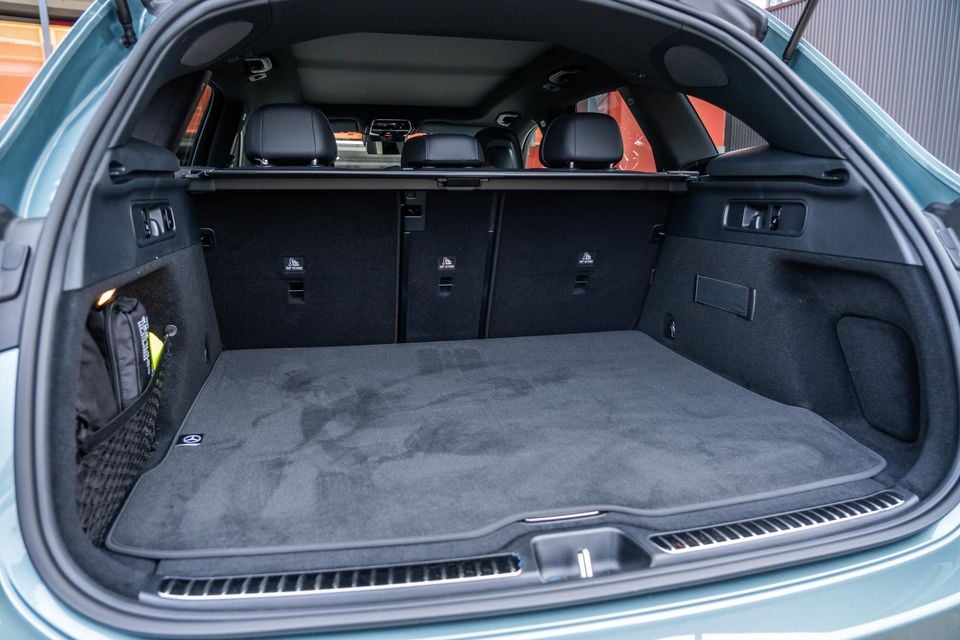
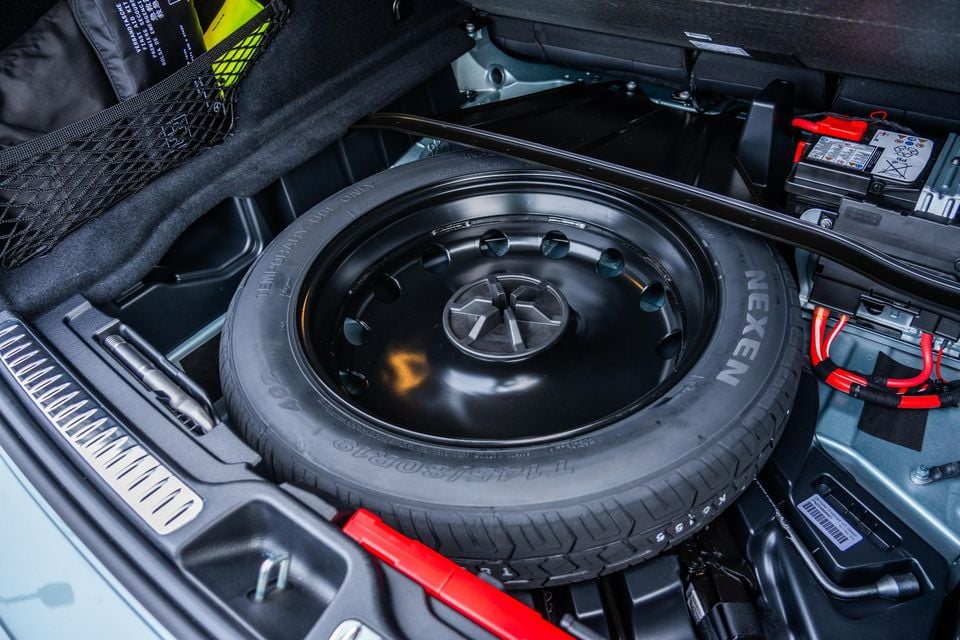
| Dimensions | Mercedes-Benz GLC200 4Matic |
|---|---|
| Length | 4723mm |
| Width | 1890mm |
| Height | 1634mm |
| Wheelbase | 2888mm |
| Cargo capacity | 620L (rear seats up) 1680L (rear seats folded) |
To see how the Mercedes-Benz GLC stacks up against the competition, use our comparison tool
Powering the base GLC200 is a 2.0-litre turbocharged four-cylinder petrol engine producing 150kW of power and 320Nm of torque. It’s paired with a 48V mild-hybrid system, with drive sent to all four wheels through a nine-speed automatic transmission.
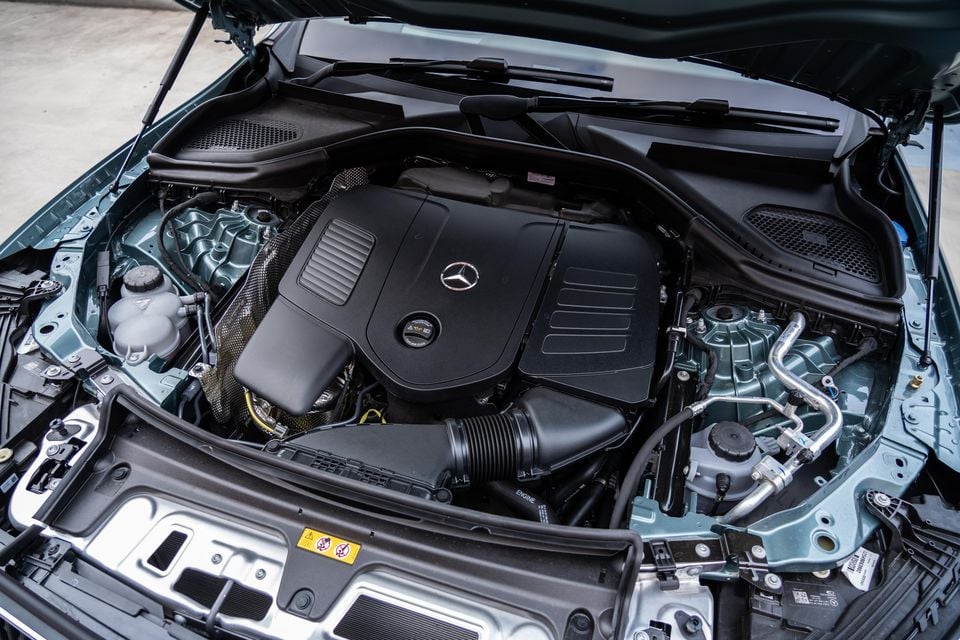
| Specifications | Mercedes-Benz GLC200 4Matic |
|---|---|
| Engine | 2.0L 4cyl turbo-petrol with 48V mild-hybrid system |
| Power | 150kW |
| Torque | 320Nm |
| Transmission | 9-speed automatic |
| Drive type | All-wheel drive |
| Kerb weight | 1976kg |
| 0-100km/h (claimed) | 7.8s |
| Fuel economy (claimed) | 7.5L/100km |
| Fuel economy (as tested) | 6.8L/100km |
| Fuel tank capacity | 62L |
| Fuel requirement | 95-octane premium unleaded |
| CO2 emissions | 170g/km |
| Emissions standard | Euro 6 |
| Braked tow capacity | 2400kg |
Our week with the car involved highway commuting and inner-town errand-running, including a handful of stints with all five seats in use.
Given none of this was particularly intensive driving, it’s no real surprise that we were able to best Mercedes’s fuel consumption claim, which is already a relatively impressive figure given the GLC’s size and lack of full-hybrid assistance.
To see how the Mercedes-Benz GLC stacks up against the competition, use our comparison tool
The GLC’s divisive interior contrasts with its on-road behaviour, which is best described as inoffensive.
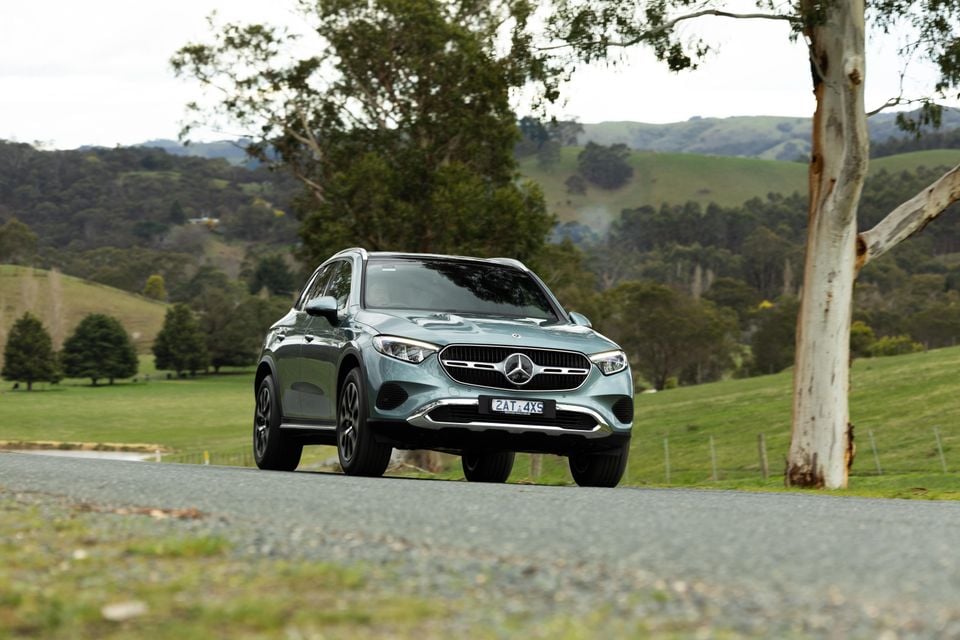
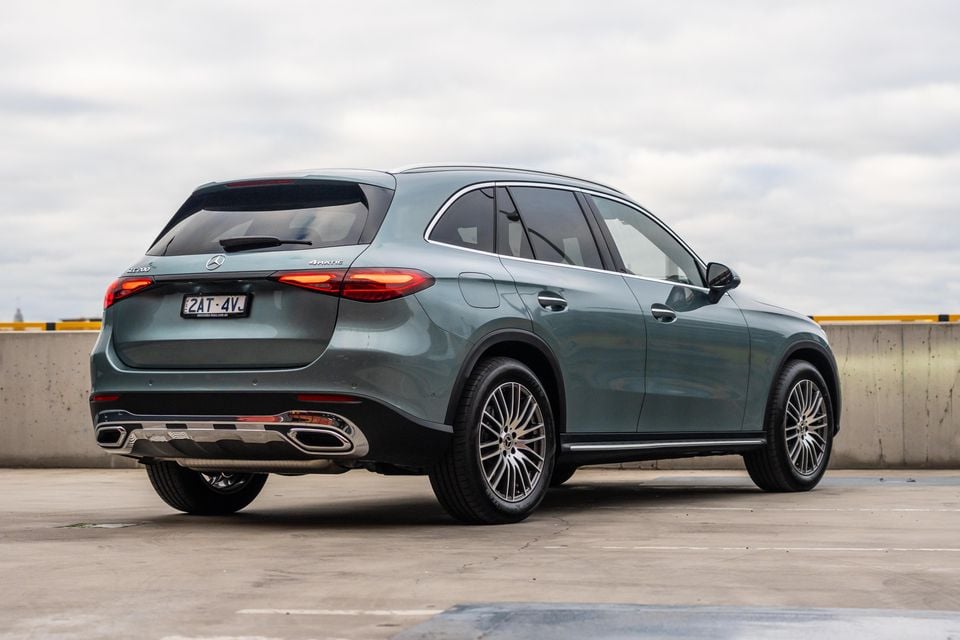
That comes with one caveat, though. We dislike the flimsy side steps Mercedes has fitted, as they feel hollow and incapable of supporting the weight of a grown adult – aside from the fact they’re pointless given the GLC isn’t a high-riding off-road SUV.
Unfortunately they’re among the first things that greet you when you hop in to drive for the first time. Another is the engine, which fires up into a non-descript four-cylinder idle that is neither sonorous nor grating.
You then flick the plastic gear selector stalk down to Drive and set off. Despite all that, the GLC feels solid once you start moving. Its engine isn’t particularly potent, so it’s not especially quick, but its performance is appropriate for the application. The car world cares too much about 0-100km/h times, anyway.
The GLC will get up to speed with no issue, and the engine never feels all that strained. Mercedes-Benz knows this base model isn’t supposed to set the world on fire, and so it offers a very sensible powertrain.
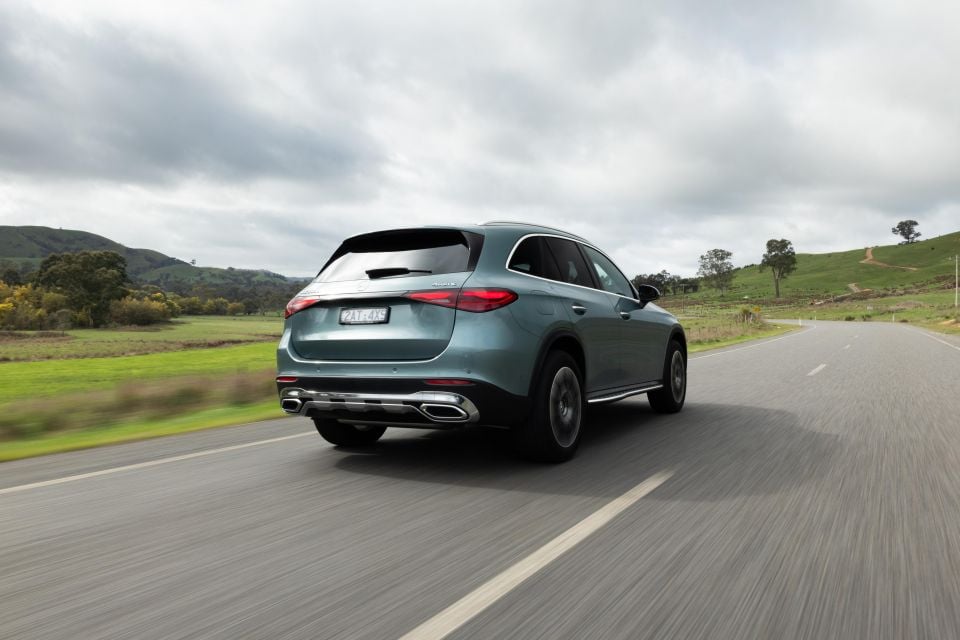
There may not be a conventional hybrid GLC like the Lexus NX, but the Benz’s powertrain lineup is otherwise on par with its German competition. After all, the GLC350e exists as a plug-in hybrid option, even if it isn’t cheap.
Supporting the 2.0-litre engine in our GLC200 tester is a competent nine-speed auto. It’s a traditional torque-converter unit, which means its shifts are predictable and generally smooth. It doesn’t display any signs of confusion when having to kick down, nor does it make itself known in normal driving.
Our only gripe in this area is that there’s a slight delay between mashing the throttle and the car taking off, but only under hard acceleration. It’s particularly noticeable in the car’s Comfort drive mode, but Sport mode helps remedy it.
Sport mode also tweaks the gear shifts and steering weight to make the car a touch more lively. It doesn’t transform the GLC200 into a corner-carver, but it’s nice to have the option when the roads get twisty.
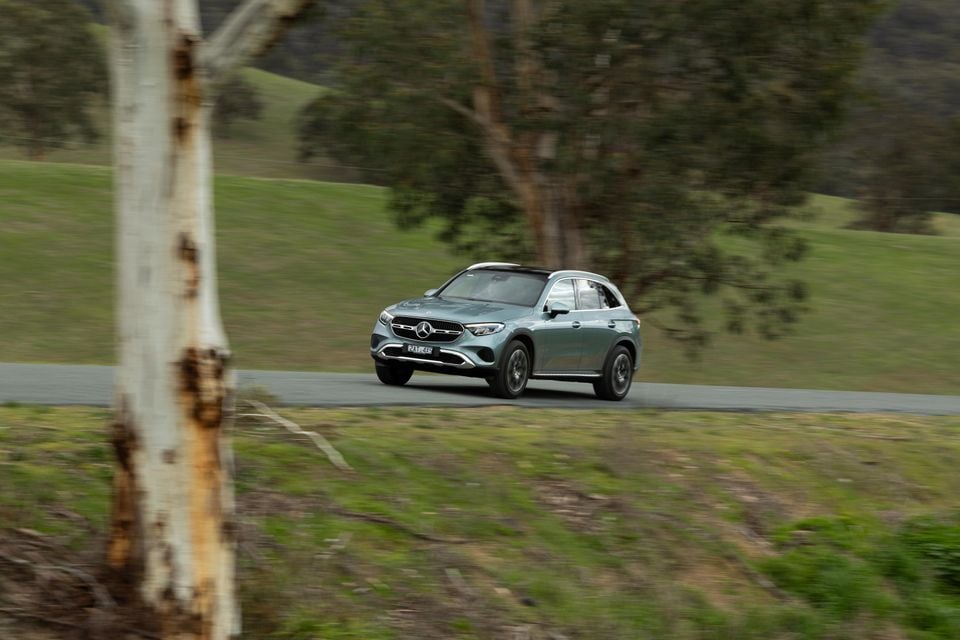
This SUV is best experienced in Comfort mode, though, as that’s where it best reflects its role as a luxury-oriented family commuter. It ensures the engine and transmission behave exactly as they should for this purpose, and we find the normal steering weight very livable – all can be customised in Individual mode, too.
The GLC200’s ride is also well-calibrated, but not perfect. It errs on the firmer side, which is fine and somewhat offset by the base-trim’s chunky tyre sidewalls, but some bumps are more noticeable than others.
There was one moment at 60km/h when a bump sent a real shock through the car, more so than most other cars we’ve driven on that road. That suggests the car isn’t quite as compliant as we’d like, but this is only a small nitpick in the context of a generally consistent on-road package.
You could argue the GLC200 doesn’t bring anything to the table that necessarily justifies its status or price, but it still feels like a more premium experience than what you get in a mainstream SUV. If we were rating this car on driving experience alone, it’d probably score higher.
CarExpert brings together reviews, research tools and trusted buying support, guiding you from research to delivery with confidence.
The driving experience is backed up by generally solid refinement levels. Road noise is nicely subdued on the chunky tyres mentioned earlier, and we didn’t notice any real issues with wind noise when driving without music from the solid nine-speaker sound system.
Rounding it off is a suite of well-calibrated safety gear. We had no issues with any of the car’s passive assistance systems, such as lane-keep assist or blind-spot monitoring, and the adaptive cruise control behaved reliably without struggling to match traffic speed or slamming on the brakes when a faster car cuts in front.
Annoyingly, even for someone typically cruise control-averse, this car doesn’t come with lane-centring to go with that adaptive cruise system. This is yet another feature found in countless cheaper cars, so it’s weird that Mercedes-Benz doesn’t include it as standard on the GLC200 or even the GLC300. It is, however, available as part of a $5846.50 option pack.
The GLC200 is generally a well-assembled package, and our experience with its engine, transmission, suspension, and steering was pleasant. It’s just a shame you have to fork out extra for valuable safety tech.
To see how the Mercedes-Benz GLC stacks up against the competition, use our comparison tool
Non-AMG GLC variants are available in two trims.
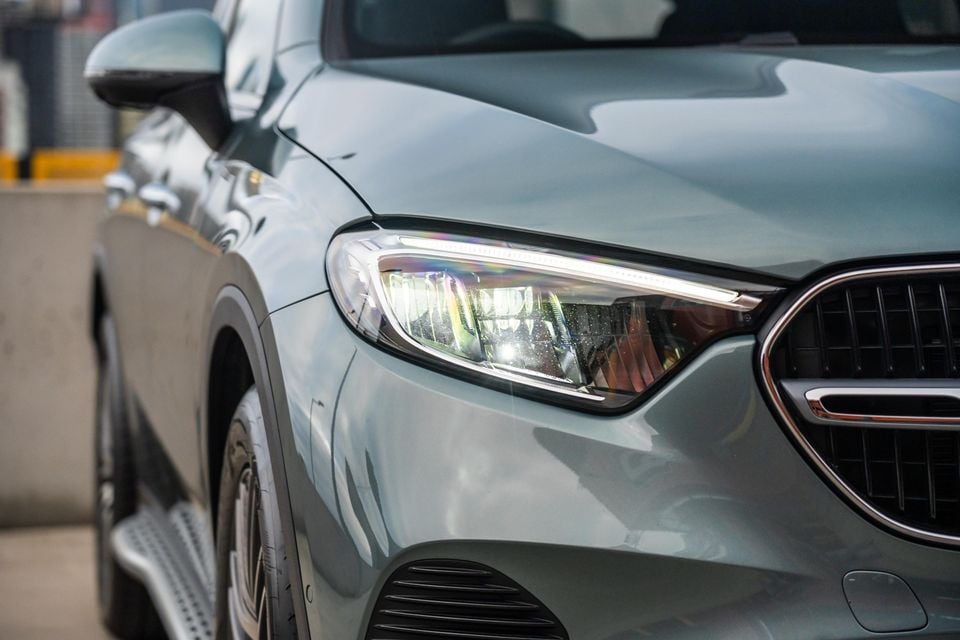
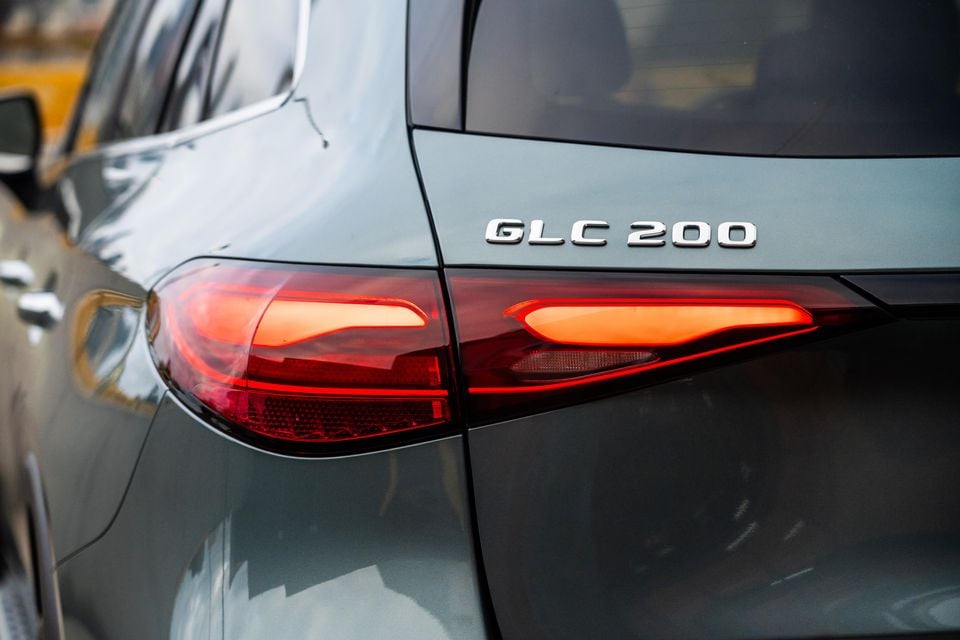
2026 Mercedes-Benz GLC200 equipment highlights:
GLC350e adds:
GLC300 adds (over GLC200):
GLC300 Coupe adds:
GLC200 Plus Package ($5846.50) adds:
GLC200 Night Package ($999.90) adds:
To see how the Mercedes-Benz GLC stacks up against the competition, use our comparison tool
The Mercedes-Benz GLC has a five-star ANCAP safety rating, based on testing conducted by Euro NCAP in 2022.

| Category | Mercedes-Benz GLC |
|---|---|
| Adult occupant protection | 92 per cent |
| Child occupant protection | 92 per cent |
| Vulnerable road user protection | 74 per cent |
| Safety assist | 84 per cent |
Standard safety equipment highlights:
To see how the Mercedes-Benz GLC stacks up against the competition, use our comparison tool
Mercedes-Benz Australia backs its vehicles with a five-year, unlimited-kilometre warranty. Servicing for non-AMG GLC variants is required every 12 months or 25,000km, whichever comes first.

| Servicing and Warranty | Mercedes-Benz GLC |
|---|---|
| Warranty | 5 years, unlimited kilometres |
| Roadside assistance | 5 years |
| Service intervals | 12 months or 25,000km |
| Capped-price servicing | Prepaid service plans |
| Total capped-price service cost | $3400 (3-year plan) $4690 (4-year plan) $7350 (5-year plan) |
As ever, Mercedes-Benz service pricing is way more expensive than what its rivals offer.
For reference, five-year service plans cost $2595 for the BMW X3 and $3520 for the Audi Q5, while Lexus offers five years of capped-price servicing for the NX for a total of $3225.
Genesis blows them all out of the water though, as all of its new models including the GV70 are offered with five years of free scheduled servicing.
To see how the Mercedes-Benz GLC stacks up against the competition, use our comparison tool
The 200 is one of the more logical buys in the GLC family, but that doesn’t mean this SUV makes much sense overall.
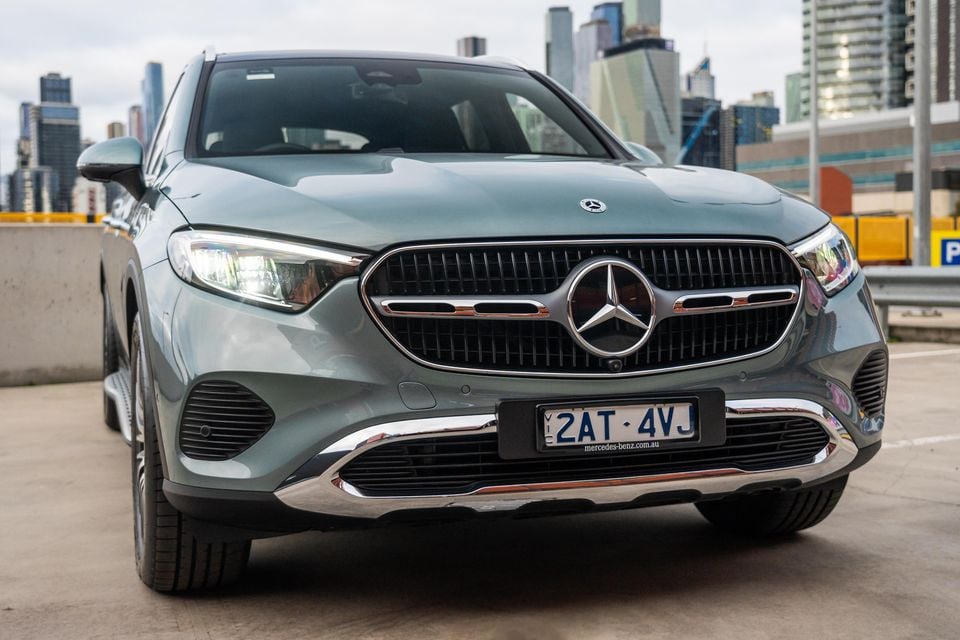
Some may find the interior luxurious and stylish, and it’s difficult to argue against the generally straightforward on-road experience. It’s also the cheapest member of the GLC lineup, which makes it relatively attainable in the luxury car world, though it’s outclassed by the GLC350e.
That should all be enough to satisfy rusted-on Mercedes-Benz fans, and those who strive to own the hallowed three-pointed star badge, but anyone shopping for a higher-end mid-size SUV will almost certainly get a better deal elsewhere.
And we’re not even talking about the GLC’s most direct competitors from BMW and Audi, which offer much the same despite being slightly cheaper. Instead, we’d point buyers towards the Genesis GV70, particularly in base 2.5T Advanced trim.
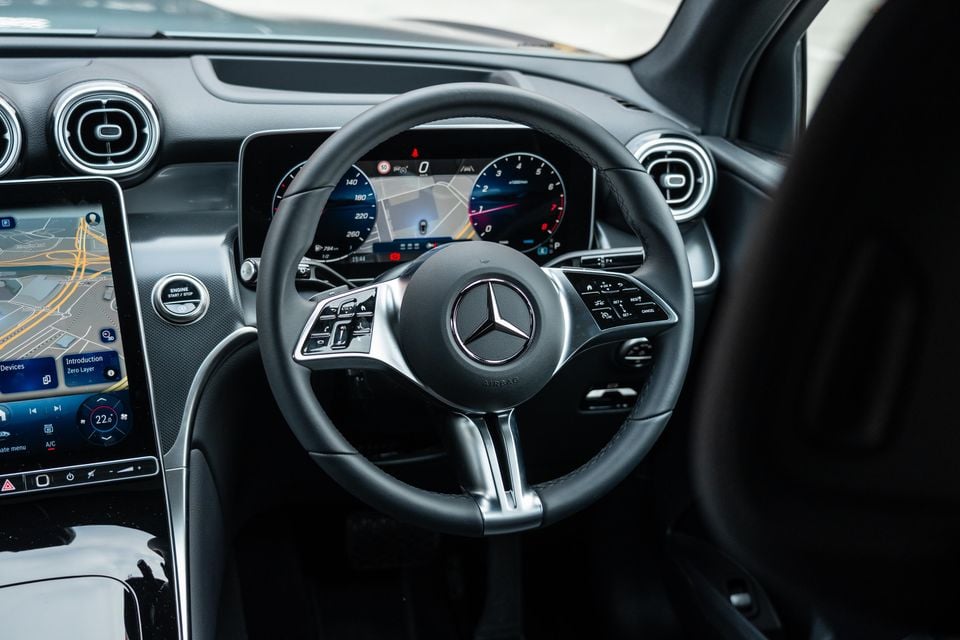
It’s nearly $10,000 cheaper than the base GLC yet offers a much more powerful engine and an interior that has a decidedly unique, luxurious edge to it – not to mention an insanely good servicing deal. The only downside is that it’s much thirstier than the GLC200.
The Lexus NX is the cheapest of all despite offering hybrid power as standard, but its premium interior flair is noticeably absent until you start moving higher up the range, and like the Genesis it may not appeal to German badge snobs.
All that is to say that the GLC200 is a good prestige SUV, but some of Mercedes-Benz’s competitors do it better.
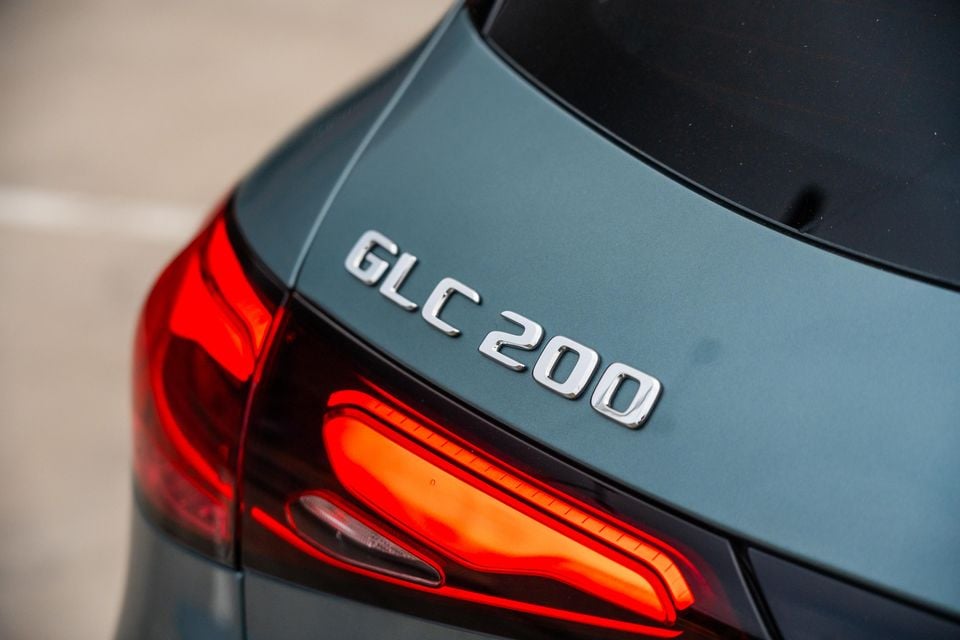
CarExpert can save you thousands on a new Mercedes-Benz GLC. Click here to get a great deal.
Click the images for the full gallery
CarExpert brings together reviews, research tools and trusted buying support, guiding you from research to delivery with confidence.
Quickly see how this car stacks up against its competition. Select any benchmark to see more details.
Max Davies is a CarExpert journalist with a background in regional media, with a passion for Japanese brands and motorsport.
Add CarExpert as a Preferred Source on Google so your search results prioritise writing by actual experts, not AI.
William Stopford
11 Hours Ago

Damion Smy
12 Hours Ago

Marton Pettendy
13 Hours Ago
William Stopford
13 Hours Ago

Matt Campbell
15 Hours Ago
Damion Smy
15 Hours Ago
Add CarExpert as a Preferred Source on Google so your search results prioritise writing by actual experts, not AI.
# Based on VFACTS and EVC data
† Displayed prices are based on the drive-away price of the vehicle, which includes delivery charges, registration fees, number plates, and applicable road taxes, based on a Sydney location. However, prices may vary between states and territories, and additional costs such as compulsory third party (CTP) insurance, dealer delivery fees, and optional extras are not included. These prices are subject to change without notice and may not reflect current market pricing or dealer offers.
 Automotive Vehicle Spec Data & 4K images Powered by JATO Dynamics Ltd