 Car News
 CarExpert Podcast
 Car Reviews
 Owner Car Reviews
 Car Comparisons
 Showroom
 Car Chooser
 Car Specifications



Damion Smy
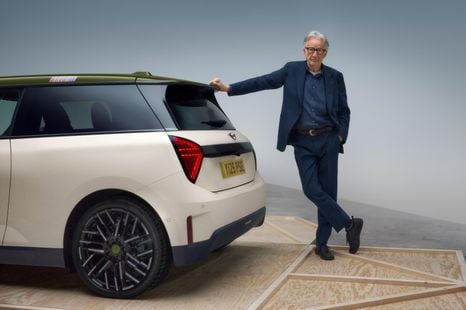
2026 Mini Cooper SE Paul Smith Edition arrives in Australia
The first Paul Smith Edition to be offered in Australia has landed, adding the designer’s playful character to the Cooper SE electric hatch.
48 Minutes Ago
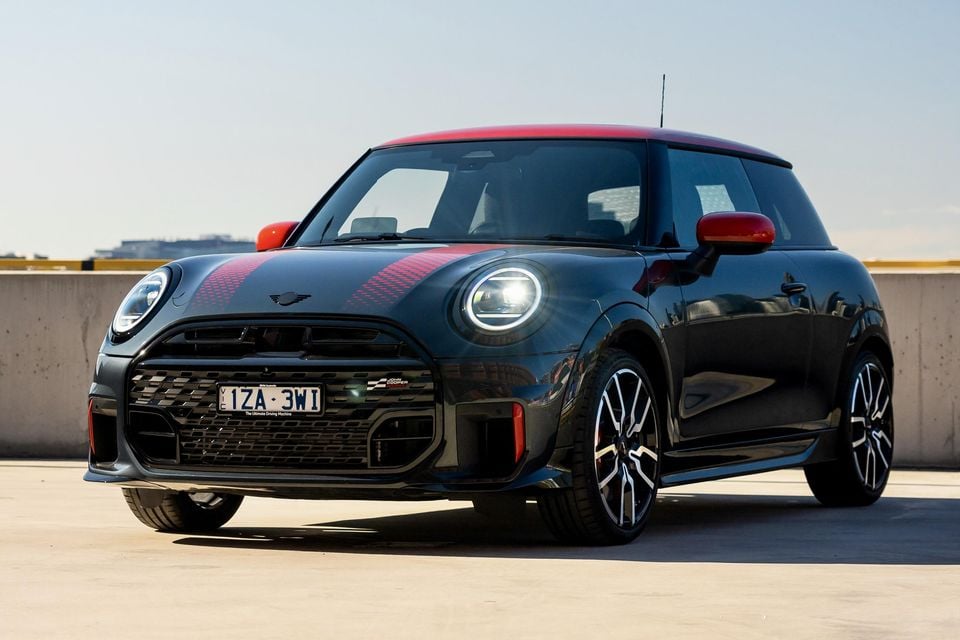
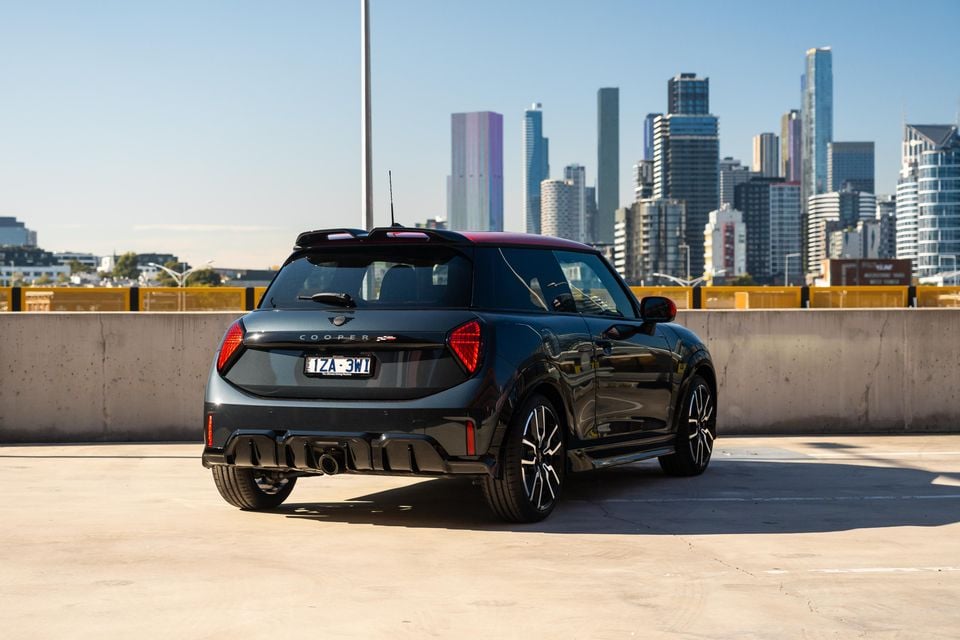
Mini's John Cooper Works tuning division is alive and well, and it's weaved some magic on the fourth-generation Cooper hatch.
CarExpert brings together reviews, research tools and trusted buying support, guiding you from research to delivery with confidence.
Whether you’re familiar or not, two terms are synonymous with Mini: the Cooper hatchback and John Cooper Works.
Let’s break them down, starting of course with the Cooper, Mini’s smallest model and most iconic nameplate. Now in its fourth generation since being revived by German automaker BMW in 2001, the Cooper has remained true to its compact, three-door hatchback roots, even if it’s much bigger these days and the lineup has been expanded to include five-door and convertible options.
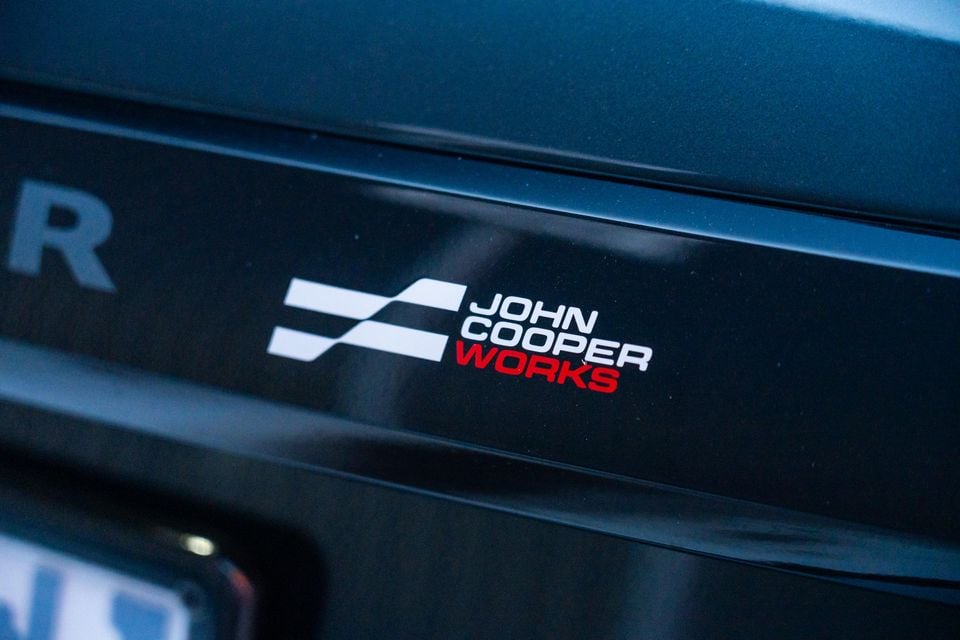
Then there’s John Cooper Works (JCW), Mini’s in-house performance division. Founded in 2002 by Michael Cooper and named after his father, Formula 1 race car designer John Cooper, JCW has been responsible for hot Mini models since BMW acquired it in 2008.
But the Cooper JCW has technically existed since 2003, when the JCW Tuning Kit was first made available for the first-gen R53-series Cooper S hatch. Various mechanical enhancements brought a substantial power upgrade to the standard supercharged hatch, and JCW followed it up with a second kit in 2004 with more upgrades and more power again.
Interestingly, the first JCW kits weren’t available to order from BMW’s Mini factory in the UK until 2005. That meant Cooper S owners had to return to a Mini dealership to have them retrofitted as an official option, which makes original Cooper JCWs fairly rare and valuable if all of their original identification documents are intact.
There’s even an online register to track all of the Cooper JCWs that BMW didn’t document.
Fast-forward to 2024 when the fourth-gen Cooper broke cover. It originally launched with petrol and electric variants, the latter co-developed by BMW and China’s GWM through a joint venture that is now also responsible for its production.
Then, in 2025, Mini reintroduced full-fat JCW vehicles to the Cooper range, including an electric hot hatch, two-door convertible variants, and three-door hatch variants – one of which is the 2026 Mini Cooper JCW Favoured on test here.
With unique suspension, brakes, seats, and higher-output powertrains, the JCW models are the sharpest Coopers currently on sale, and Mini fans will no doubt see value in the fact they’re still built in the UK.
In general, however, the Cooper is proving popular in Australia despite its niche status. In 2025, it was by far Australia’s best-selling premium light hatch (outperforming the likes of the Hyundai i20 N, Volkswagen Polo, and Audi A1), and even nipped at the heels of the mainstream Toyota Yaris.
Is the Cooper JCW a smart buy in the low-volume Mini range and, more importantly, does it remain true to the hot Coopers of old?
Our JCW Favoured tester is one of 23 Mini Cooper variants currently available. It’s not cheap at $60,990 before on-road costs, but it’s just one of several variants in the lineup priced above $60,000.
| Model | Price before on-road costs |
|---|---|
| Cooper C | |
| 2026 Mini Cooper C Core 3D | $41,990 |
| 2026 Mini Cooper C Core 5D | $43,990 |
| 2026 Mini Cooper C Classic 3D | $44,990 |
| 2026 Mini Cooper C Classic 5D | $46,990 |
| 2026 Mini Cooper C Favoured 3D | $47,990 |
| 2026 Mini Cooper C Favoured 5D | $49,990 |
| 2026 Mini Cooper C Classic convertible | $51,990 |
| 2026 Mini Cooper C Favoured convertible | $54,990 |
| Cooper S | |
| 2026 Mini Cooper S Classic 3D | $49,990 |
| 2026 Mini Cooper S Classic 5D | $51,990 |
| 2026 Mini Cooper S Favoured 3D | $52,990 |
| 2026 Mini Cooper S Favoured 5D | $54,990 |
| 2026 Mini Cooper S JCW Sport 3D | $54,990 |
| 2026 Mini Cooper S JCW Sport 5D | $56,990 |
| 2026 Mini Cooper S Classic convertible | $56,990 |
| 2026 Mini Cooper S Favoured convertible | $59,990 |
| 2026 Mini Cooper S JCW Sport convertible | $61,990 |
| Cooper SE | |
| 2026 Mini Cooper SE Favoured 3D | $58,990 |
| Cooper JCW | |
| 2026 Mini Cooper JCW Classic 3D | $57,990 |
| 2026 Mini Cooper JCW Favoured 3D | $60,990 |
| 2026 Mini Cooper JCW E Favoured 3D | $63,990 |
| 2026 Mini Cooper JCW Classic convertible | $64,990 |
| 2026 Mini Cooper JCW Favoured convertible | $67,990 |
Naturally, Mini JCW rivals are limited to other hot hatches, though they are somewhat of a dying breed.
The most direct comparison is with the Toyota GR Yaris GTS, particularly the automatic version. More powerful and exclusively all-wheel drive, the three-door hatch is priced at $62,990 before on-roads.
Other Asian competitors include the front-drive, five-door Hyundai i30 N automatic for $52,000 before on-roads and, at a stretch, the front-drive, manual-only Honda Civic Type R, which is currently off-sale but is typically priced at roughly $80,000 drive-away.
Similarly expensive is the BMW M135 xDrive, an all-wheel drive, five-door German hatch that costs $84,700 before on-roads. At the lower end of the scale is the Hyundai i20 N priced at $38,500 before on-roads, and the Volkswagen Polo GTI, at $41,990 before on-roads.
To see how the Mini Cooper stacks up against its rivals, use our comparison tool
Buy your new car without the stress. It's fast, simple and completely free.
Great service from Travis and team, second time I have used this business would not hesitate to recommend them to anyone
Craig C.
Purchased a Ford Ranger in Sunshine Coast, QLD
CarExpert helped Craig save thousands on his Ford Ranger, now let us save you on your next new car.
Find my dealMini has a distinctive interior flavour that may not be to everyone’s taste, but there’s still some old-school charm inspired by Coopers of the past.
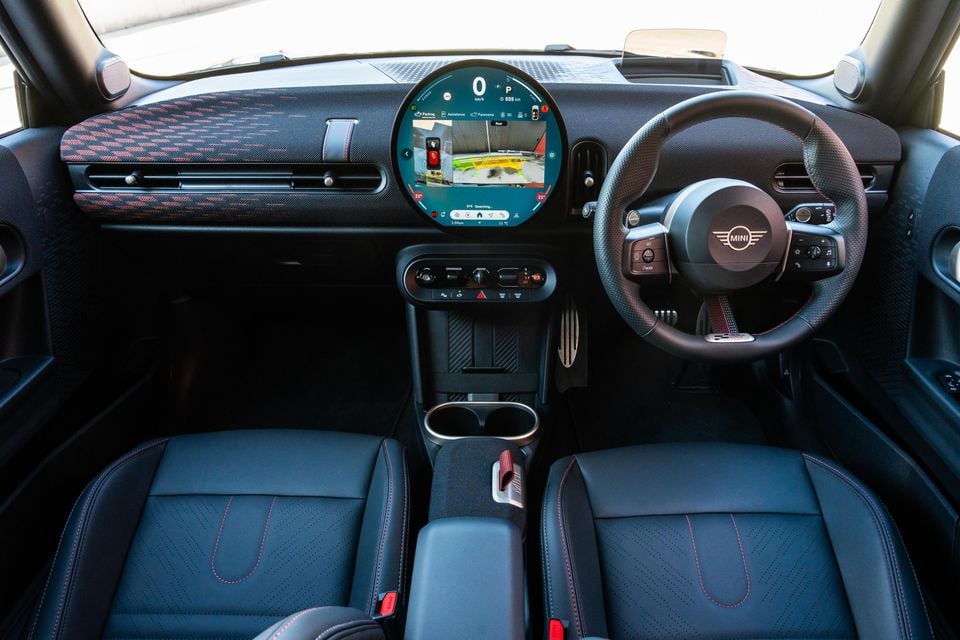
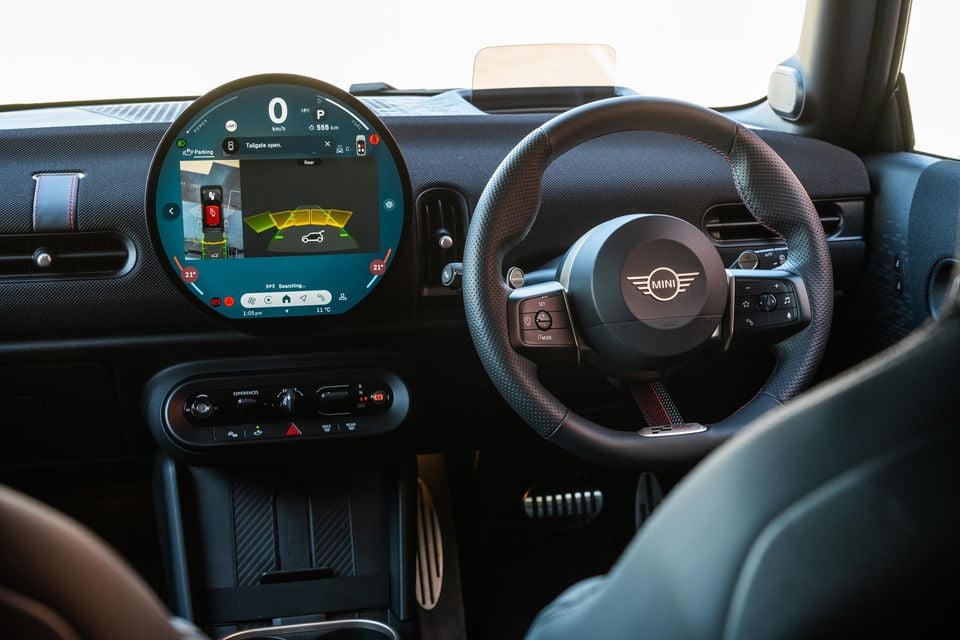
It’s difficult to miss the large circular infotainment display in the centre of the dash, which mirrors the circular panels of the first two BMW-built Cooper generations. Where those generations primarily used this space for the vehicle’s analogue rev counter, the current hatch offers a full digital screen that builds on the concept introduced with the previous-gen car.
Unfortunately, it is still somewhat confusing and will take time for those unfamiliar with the brand to learn. There are menus upon menus, and it seems as if something new pops up in every direction you swipe. That’s before you even touch the typically lengthy BMW settings menu.
That said, there isn’t really another car on the market (outside of the Mini stable) that’s this endearing. The vibrant graphics, smooth map animations, and especially Mini’s animated assistant, ‘Spike’ the dog, should be plenty to draw you in – but we still dislike that the climate controls are entirely digital, and that the system is generally unintuitive.
Wireless Apple CarPlay and Android Auto are still standard, but their integration is clunky because they only fit a rectangular shape and can’t fill the circular space. This is a peculiar limitation, and you’ll notice the same when you activate the reversing camera.
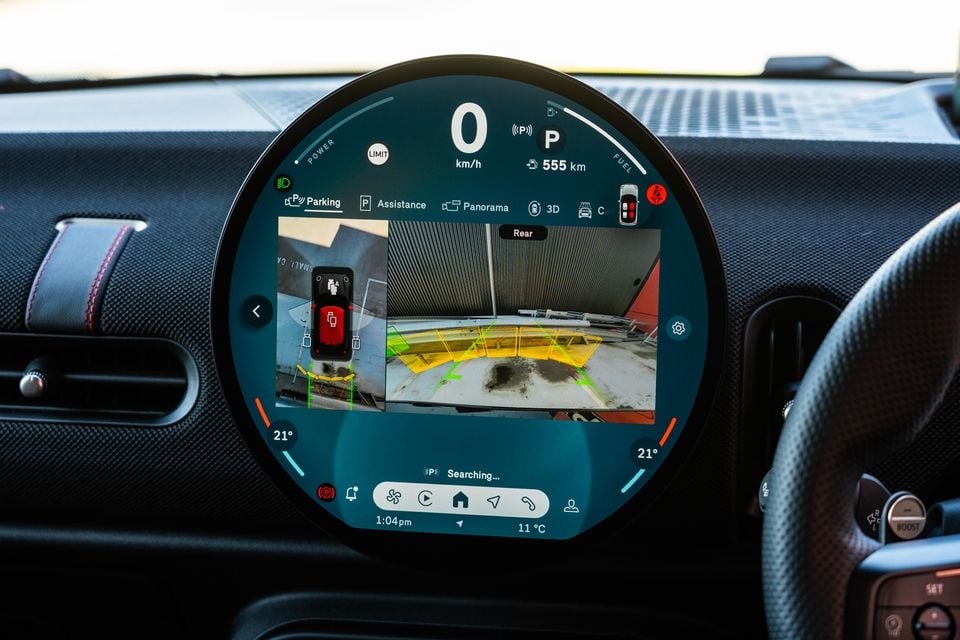
The major drawcard of this screen, however, is the level of personalisation on offer. Installed on all Coopers are Mini’s seven ‘Experiences’, which change the screen’s look with distinct colours, styles, fonts, and widgets.
That means you can go from a minimalist design with pared-back graphics, to an older look with classic-style gauges and warm colours, to the straight-to-the-point ‘Go-Kart’ mode that shows a power gauge, huge tacho, and all sorts of other stylised performance gauges – not to mention various mechanical tweaks we’ll touch on later.
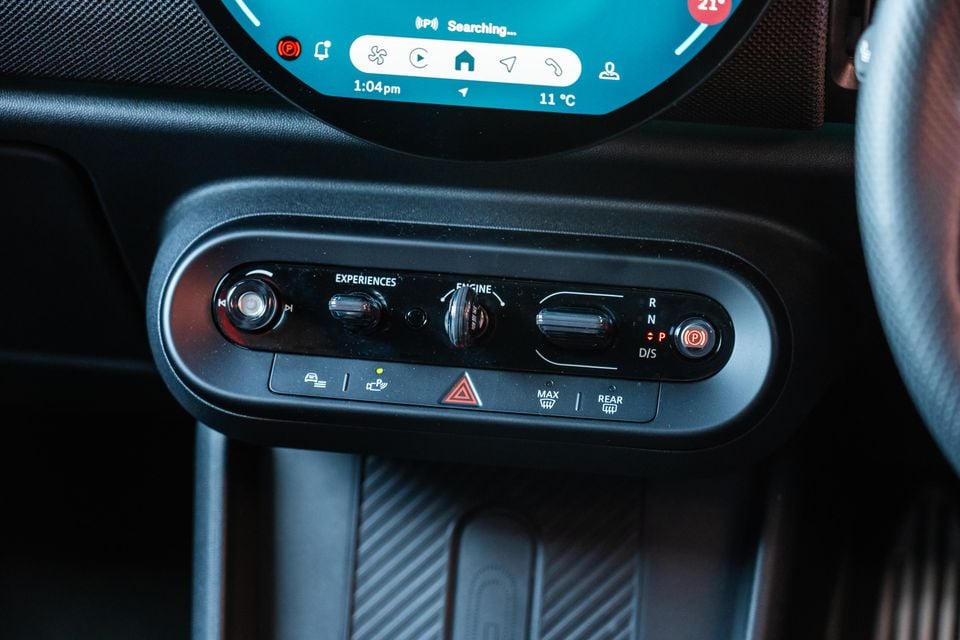
These are a lot of fun, and they give the Cooper a real sense of character. Backing it up is an equally unique set of switchgear below the screen, comprising a volume dial and three large switches, one of which is dedicated to flicking between Experiences.
In the middle is a key-like switch you twist to start or stop the engine, and next to it is another up/down switch that serves as the gear selector. It’ll take newcomers a second to fathom it all out, but we actually like having these to play with.
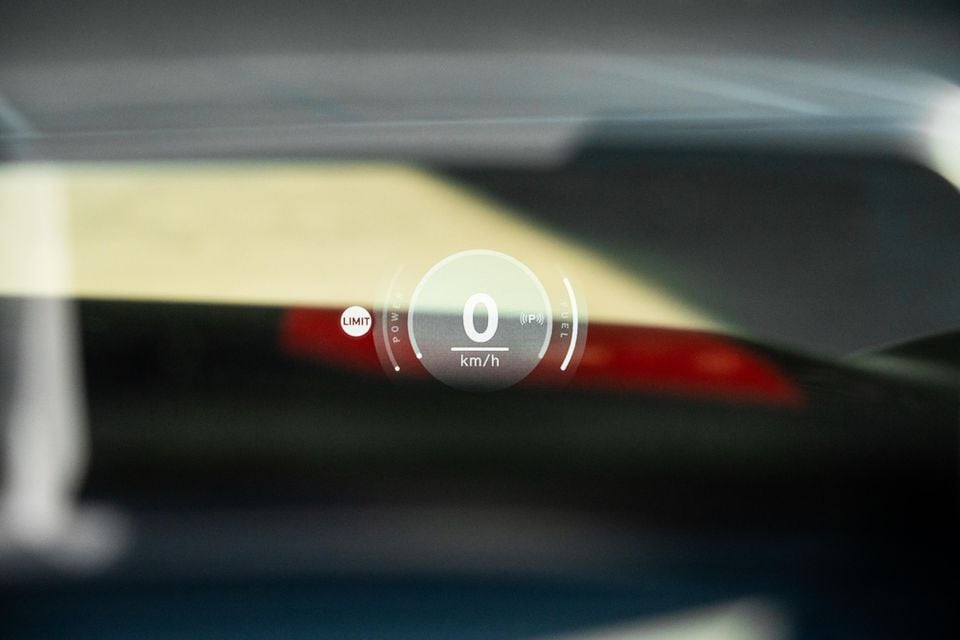
It’s also worth noting that Mini hasn’t carried over the circular speedo seen in front of the steering wheel in older-generation Coopers, instead replacing it with a clear, plastic head-up display (HUD) panel. It’s perhaps not quite as sleek as it could be – the windscreen is likely too upright for a normal HUD, hence the panel – but it’s functional.
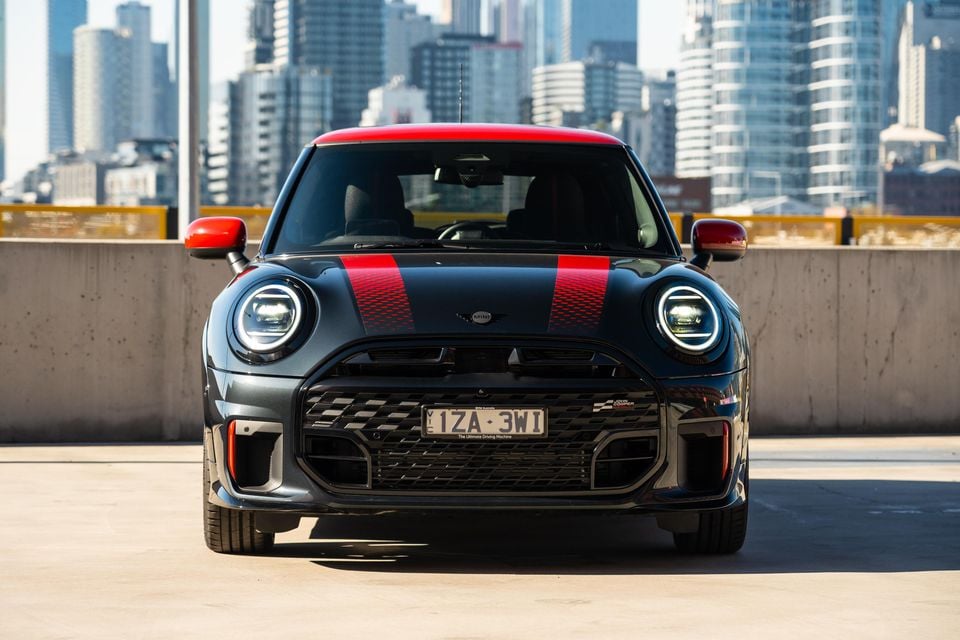
Elsewhere, you’ll find an interesting mix of materials. There’s a JCW-specific red-and-black knit-like material on the dash and doors, the steering wheel is very stout in true BMW fashion, and there are plenty of copper-coloured accents scattered throughout.
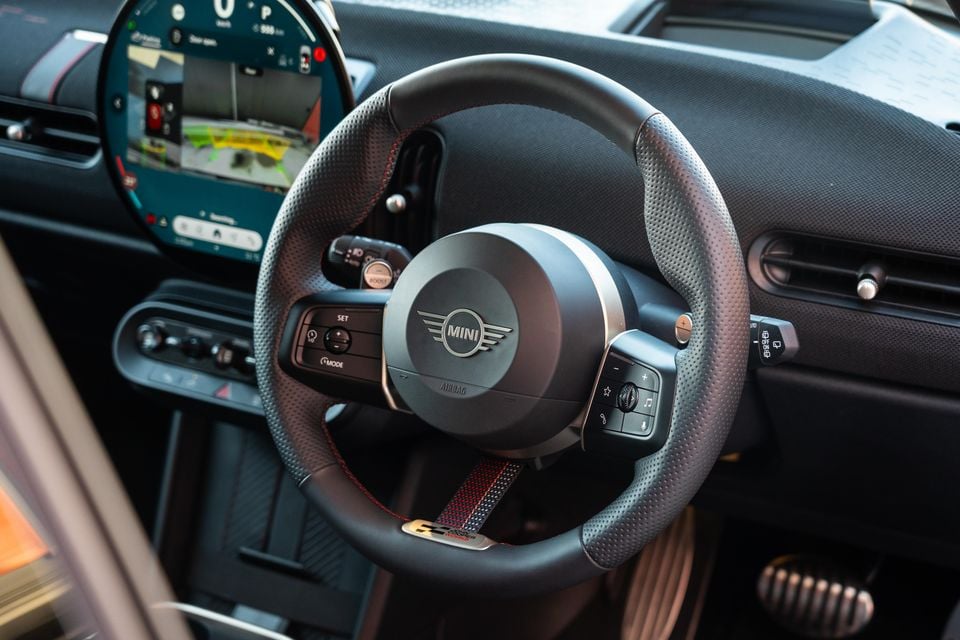
The steering wheel is nice to hold with its perforated leather finish, and we like the circle-themed paddle shifters and the quirky strip of fabric pretending to be a third spoke. BMW’s buttons and stalks look a little out of place visually, but we can appreciate that everything is legible and clean – there’s no piano-black plastic anywhere, either.
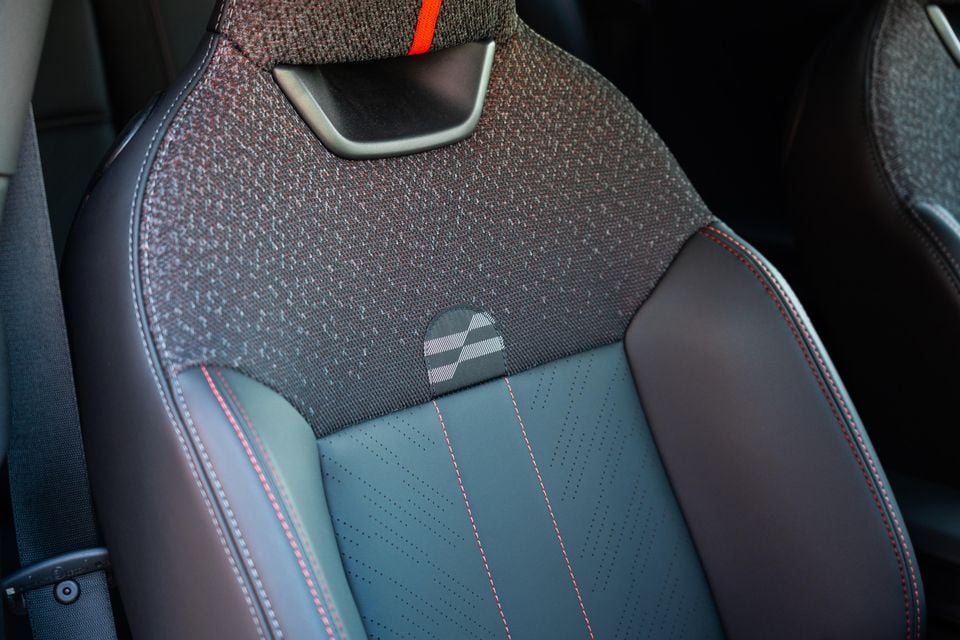
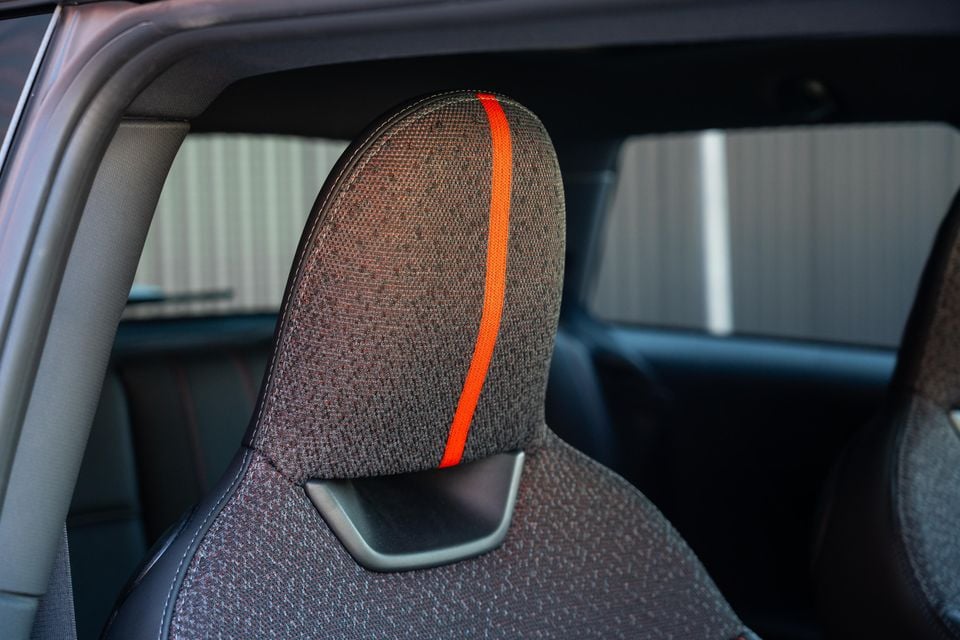
As for the seats, they’re JCW-specific and finished in a synthetic leather-and-fabric mix with numerous sporty design elements. They’re understandably quite firm with strong bolstering, but at least there’s powered adjustment and heating, albeit no ventilation.
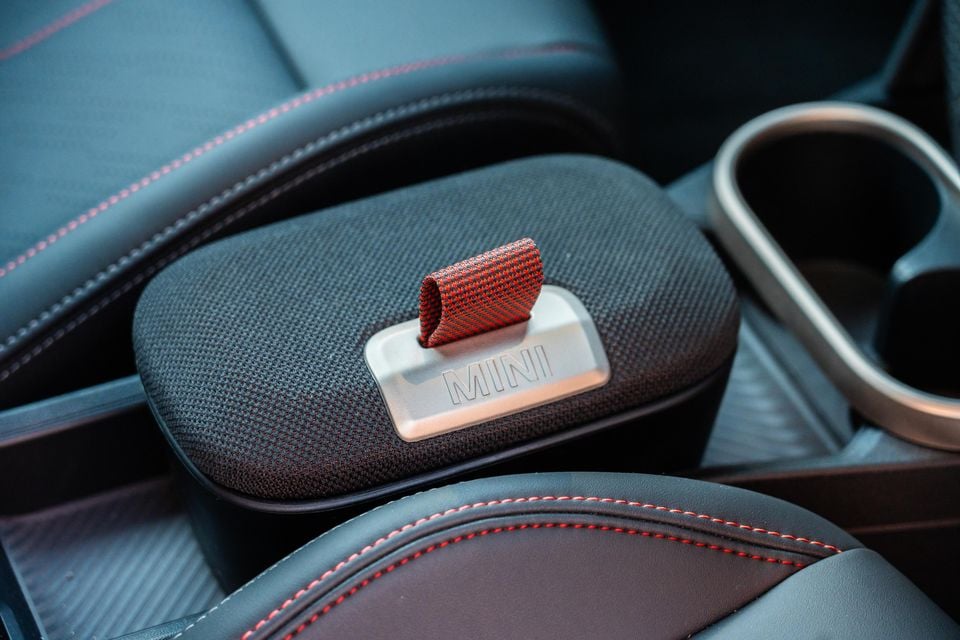
Though the cabin feels quite airy, storage options are somewhat limited. There’s a passenger-side glovebox and slim door bins, while the centre console houses two cupholders and Mini’s unique lidded storage box.
You can also charge your phone wirelessly by sliding it under the elastic strap below the central screen, or plug it in using the USB-C ports and 12V outlet under the fixed central armrest.
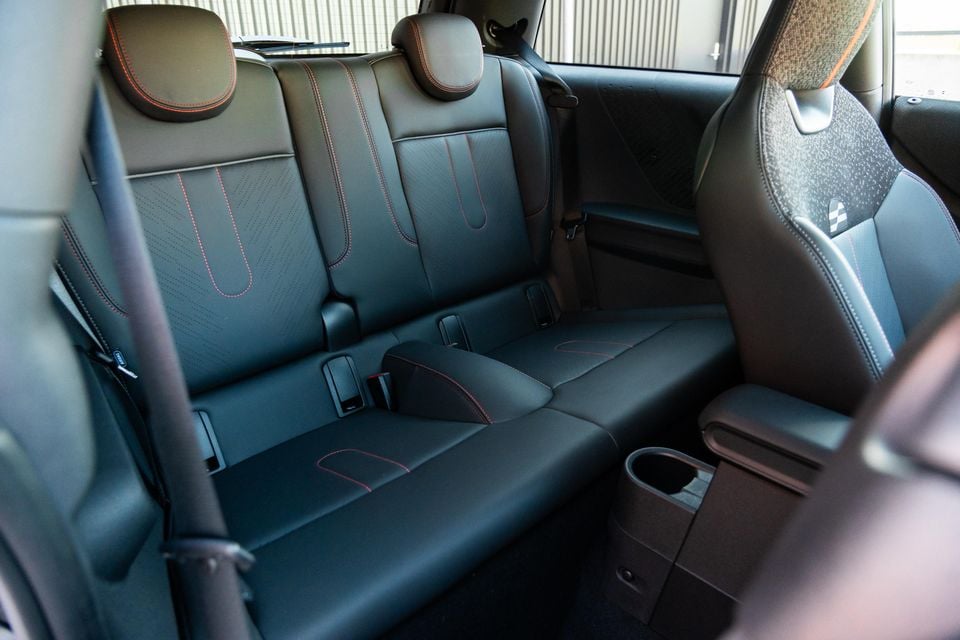
The rear seats aren’t terribly functional, though that’s to be expected in a compact three-door hot hatch. The front seats slide and fold to make access easier, but there are only two seats back here and they’re fairly flat and firm – you still get child seat anchors, though.
A single cupholder is generously mounted in the centre. Legroom and headroom are comparable to the GR Yaris, although the Toyota’s seats are slightly more cushy – perhaps a Toyota Morizo-esque rear-seat delete could be a shout for a more hardcore JCW.
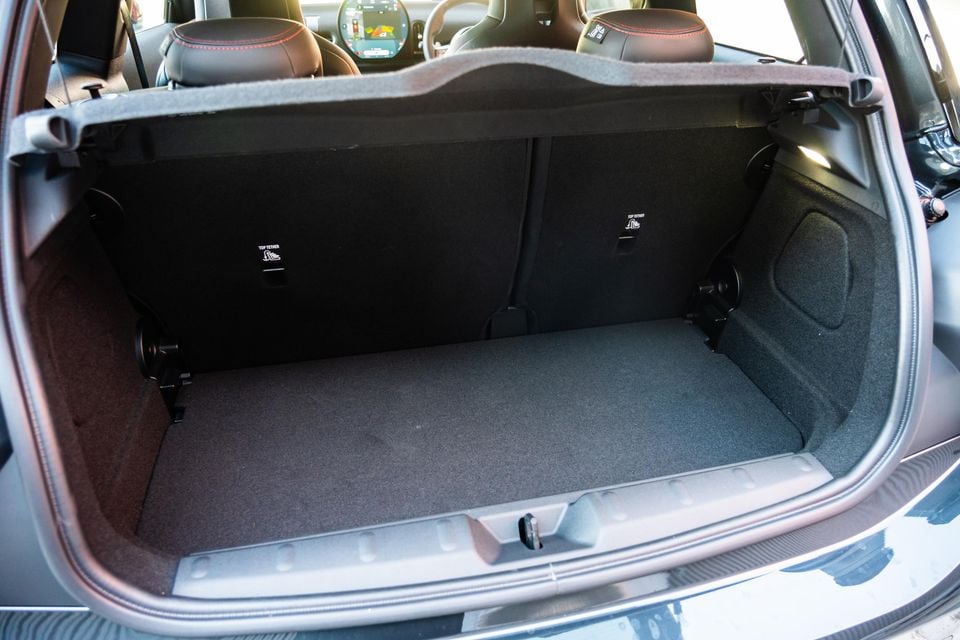
The boot is similarly cramped, though its 210 litres of quoted capacity is larger than the quoted 174L of the GR Yaris. While floor space seems less generous in the Cooper, vertical space appears larger thanks to its boxier body.
There’s no power tailgate or spare wheel, which is to be expected in such a small car, despite the hefty price tag. But the opening is still generous and you’ll be able to fit in a couple of small suitcases, perhaps more if you fancy a game of Tetris.
To summarise, the current Mini Cooper has an interior that’s quirky yet remains true to the nameplate’s DNA, and there are just enough JCW enhancements to pique your interest before you hit the road.
| Dimensions | Mini Cooper JCW Favoured |
|---|---|
| Length | 3876mm |
| Width | 1744mm |
| Height | 1452mm |
| Wheelbase | 2495mm |
| Cargo capacity | 210L (rear seats up) 725L (rear seats folded) |
To see how the Mini Cooper stacks up against its rivals, use our comparison tool
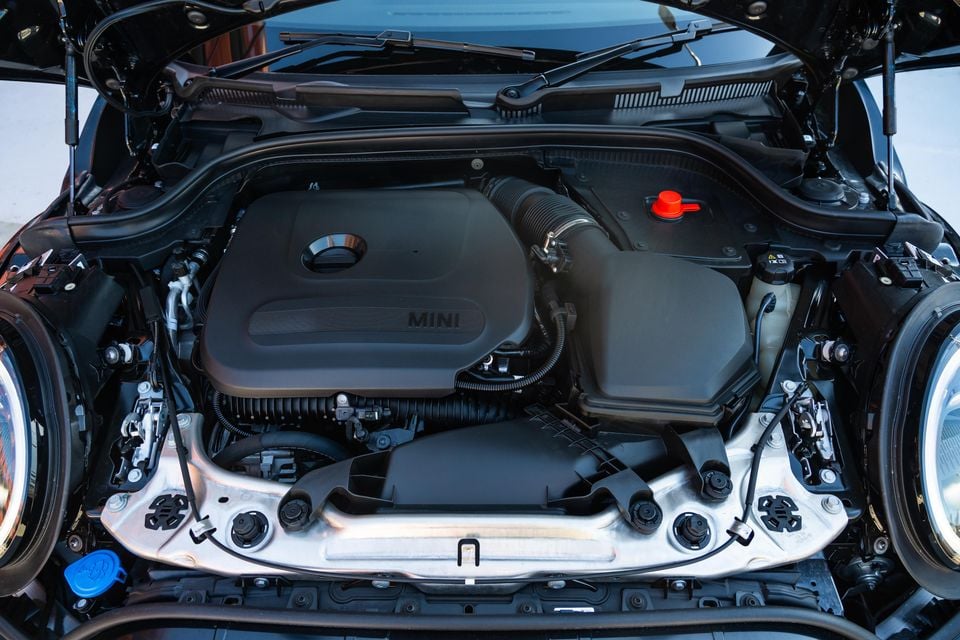
Powering all Cooper JCW models is a 2.0-litre four-cylinder turbo-petrol engine producing 170kW of power and 380Nm of torque. Drive is sent to the front wheels through a seven-speed dual-clutch automatic transmission (DCT).
| Specifications | Mini Cooper JCW Favoured |
|---|---|
| Engine | 2.0L 4cyl turbo-petrol |
| Power | 170kW |
| Torque | 380Nm |
| Transmission | 7-speed dual-clutch auto |
| Drive type | Front-wheel drive |
| Kerb weight | 1330kg |
| 0-100km/h (claimed) | 6.1 seconds |
| Fuel economy (claimed) | 6.8L/100km |
| Fuel economy (as tested) | 6.9L/100km |
| Fuel tank capacity | 44L |
| Fuel requirement | 98-octane premium unleaded |
| CO2 emissions | 155g/km |
| Emissions standard | Euro 6 |
The JCW variants offer the most potent powertrains across the Cooper range, but all vehicles are front-wheel drive, and all combustion-powered versions come with a seven-speed DCT.
Below is a brief breakdown of each variant/powertrain combo, though it is somewhat confusing:
Mini Cooper C (Core, Classic, Favoured):
Mini Cooper S (Classic, Favoured, JCW Sport):
Mini Cooper JCW (Classic, Favoured):
Mini Cooper SE, JCW E (Favoured):
Our week with the petrol-powered Cooper JCW Favoured involved a mix of highway, suburban, and country driving, though the latter was at higher speeds on twisty roads.
Even so, our recorded fuel economy was nearly identical to Mini’s claim, which is already fairly frugal for a performance car. For context, the automatic GR Yaris has a combined fuel consumption of 9.1L/100km, though its turbo three-pot produces a peppier 221kW and 400Nm.
To see how the Mini Cooper stacks up against its rivals, use our comparison tool
Mini has long spruiked the ‘go-kart’ angle in its marketing spiel for the Cooper, which may seem a little on-the-nose, but the JCW is an excellent example of why you shouldn’t knock things before you try them.
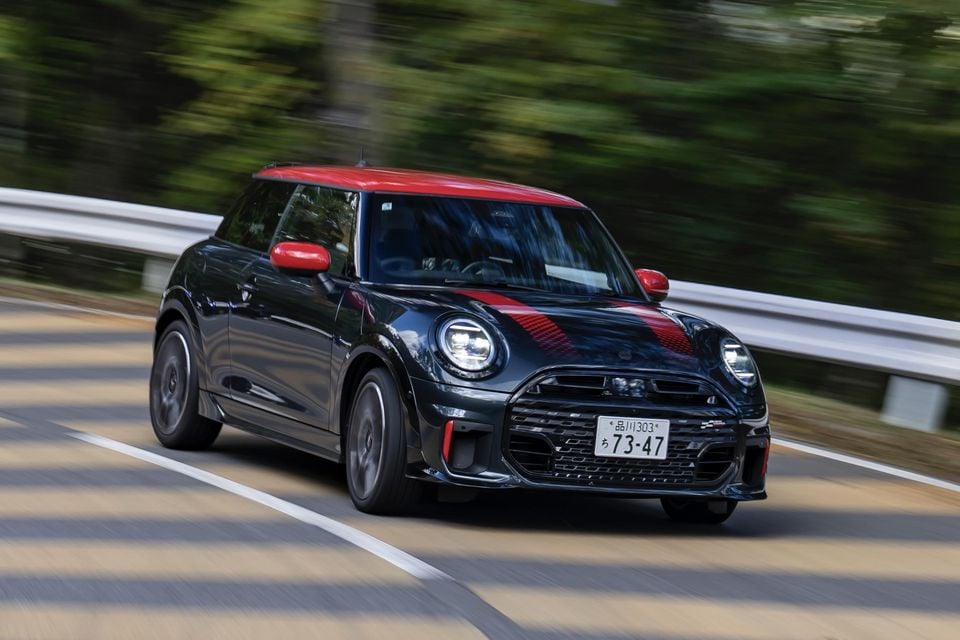
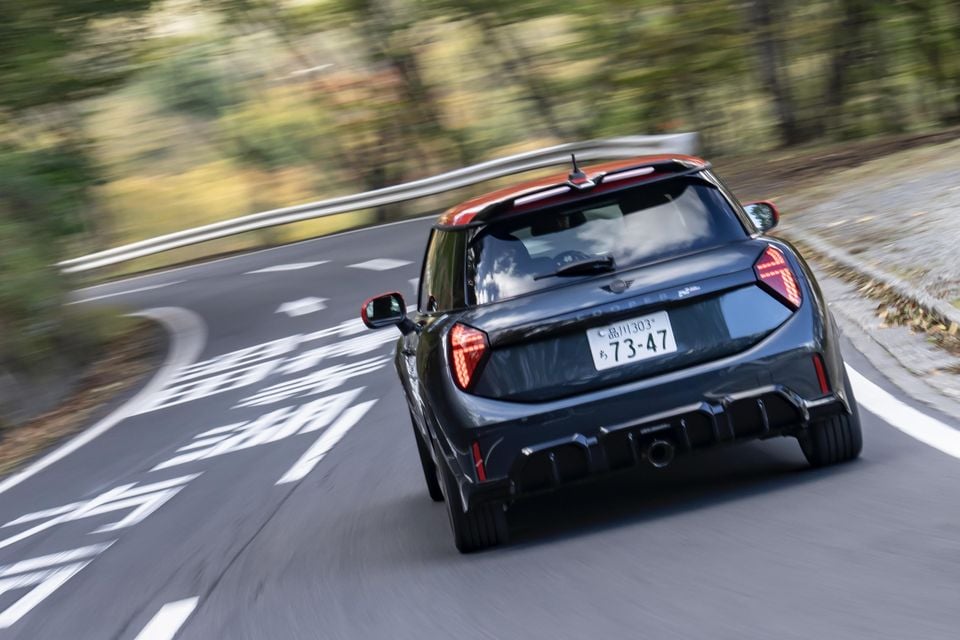
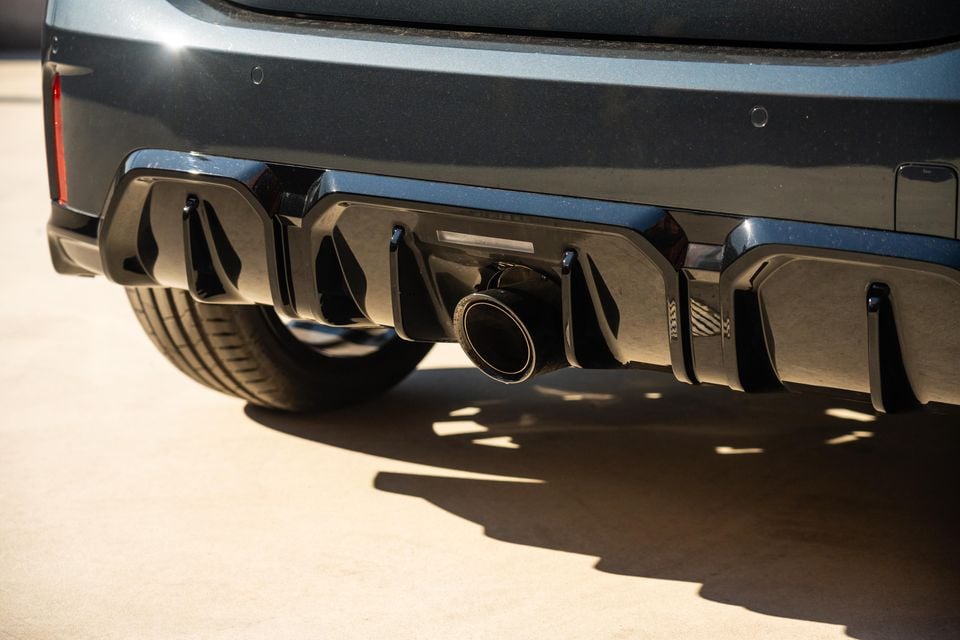
The experience starts with a twist of the key-like switch on the centre console, after which the JCW springs to life with a fairly gruff four-cylinder idle. While the unique centre-exit exhaust is far from silent, you’ll quickly notice that some of the noise inside is synthesised. That’s always a little disappointing in a performance car.
However, if that or the interior creates any doubt about the impact of the JCW badge on this particular Mini, it’ll quickly be cast aside. For one, the suspension is incredibly stiff – not unexpectedly so, but this is a super-sharp hot hatch – and the paper-thin tyres also contribute to the harsher ride than you get in the GR Yaris.
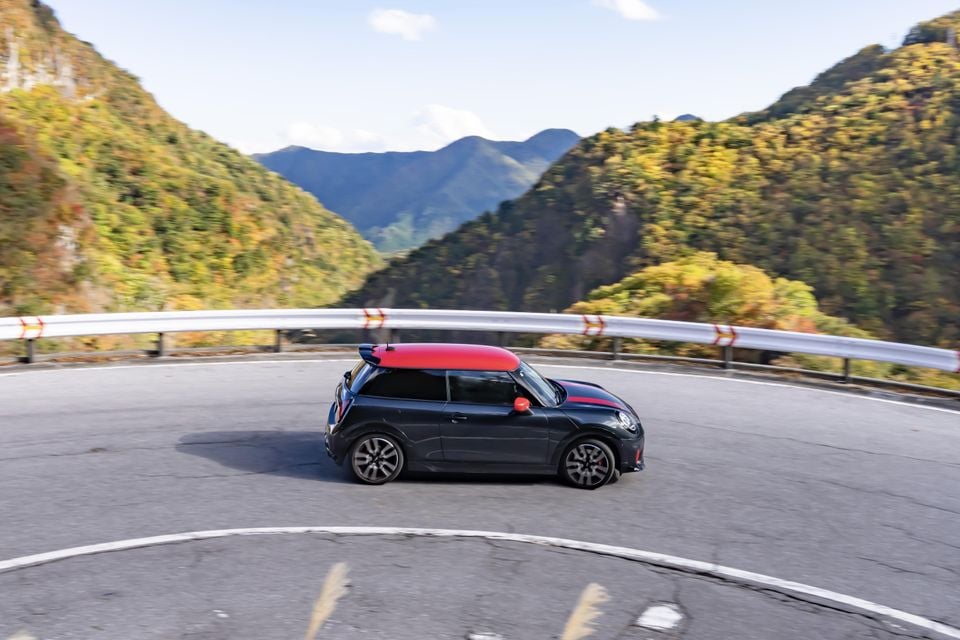
But while the Toyota was built to cope with rough off-road terrain and loose surfaces, this Mini shines in exactly the opposite conditions. That’s fitting, given that the original 1960s Mini earned its stripes on the tight, twisty tarmac of the Monte Carlo Rally.
Throw the modern JCW into a turn and its kart-like personality immediately shines through. It’s incredibly agile, with its small body and short wheelbase making for a very lively yet stable hatch that only feels more comfortable as the roads get twistier.
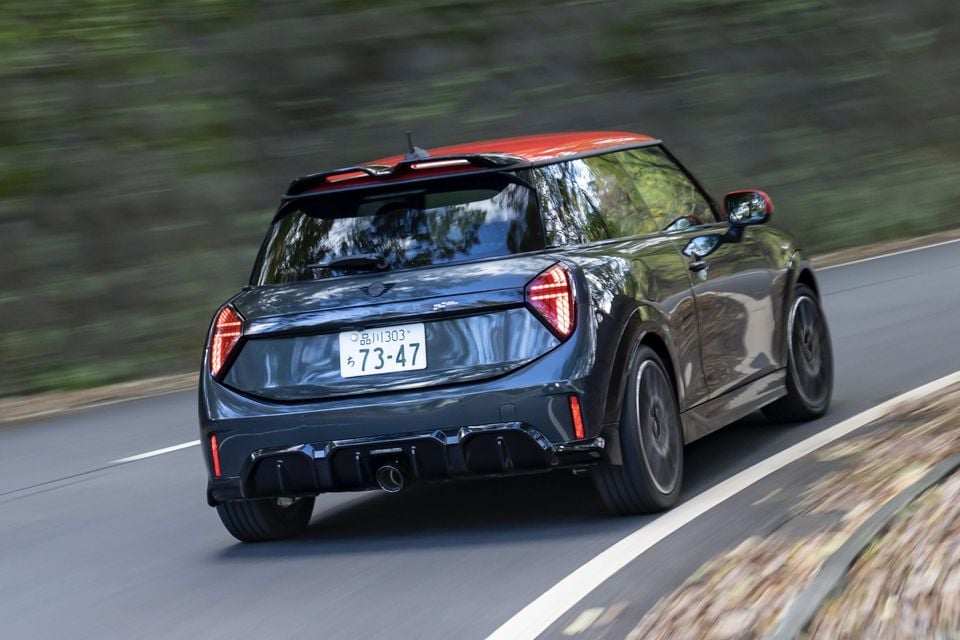
Point the chunky steering wheel into a bend and the car follows obediently. It’s particularly sharp on changes of direction, and the way the rear-end dances about while the front bites into the road is addictingly fun – exactly how a front-drive hot hatch should be.
Funnily enough, the JCW is best experienced in the ‘Go-Kart’ Experience mode, in which everything gets dialled up: the steering gets heavier, the suspension gets firmer, the fake engine noise gets louder, the transmission prioritises lower gears. It’s the whole nine yards.
The balance of everything just feels right, and you could very easily spend all day on twisty roads without getting sick of it. We can also commend the JCW’s bespoke brakes, which do an excellent job of staying consistent when you’re continuously throwing out the anchor. Average drivers will struggle to truly exploit this car’s impressive chassis talents.
As for the engine, and aside from the faux sound pumped through the speakers, nothing about it is fake. Plant your foot on the loud pedal and the car shoots off as the engine climbs quickly and smoothly through its rev range, provided you do so in a straight line, of course.
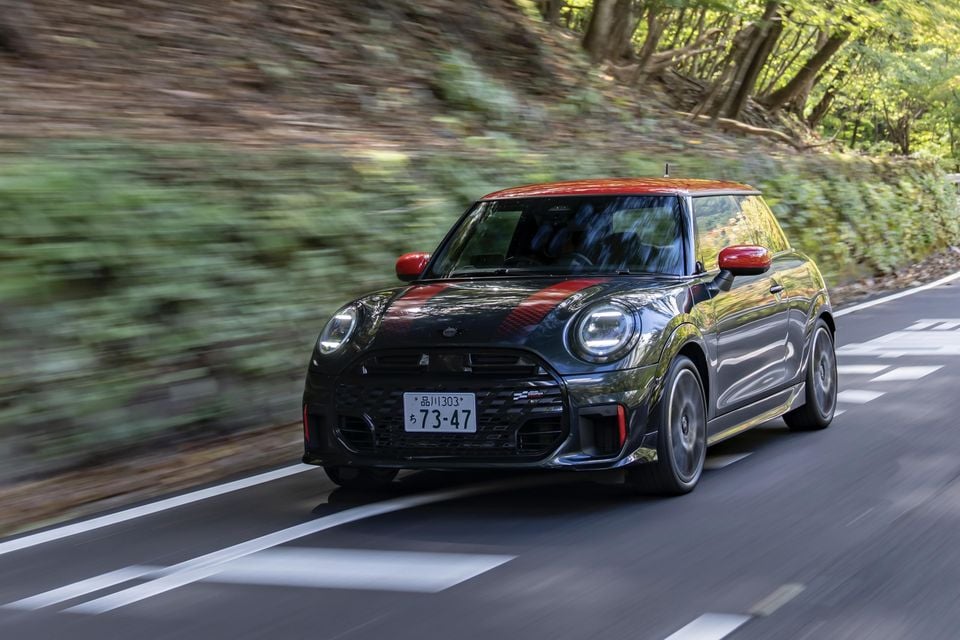
Being a front-drive car you will encounter some torque steer when accelerating hard out of a turn, so some finesse on the throttle goes a long way. But it’s by no means unmanageable given 170kW is hardly monstrous power, and the power delivery and throttle mapping are well-calibrated and predictable.
Its performance capability feels entirely appropriate for a car of this size and purpose. Potent enough to keep you interested, but not outrageous to the point where it’s difficult to control – the JCW is slower in the 0-100km/h sprint than a GR Yaris, sure, but it makes up for it dynamically.
As brilliant as cars like that Yaris are, there aren’t really any modern cars that capture the vibe and character of their predecessors like this Mini Cooper does.
On that note, the JCW also impresses from an ergonomic standpoint. In a direct comparison with a first-gen BMW Cooper JCW from the early 2000s, the cars feel remarkably similar from behind the wheel – the proportions of the A-pillars, windscreen, and even the dashboard haven’t changed at all.
CarExpert brings together reviews, research tools and trusted buying support, guiding you from research to delivery with confidence.
That makes sense given the new car’s wheelbase is practically the same as it was 25 years ago, while the overall length is only 200mm longer. The modern Mini hatches are similar to the Mazda MX-5 roadster in that sense, which has famously stayed the same size since its inception.
Obviously, the latest Cooper is worlds away from the old British Mini in terms of size, technology and refinement, but the trade-off for its trademark razor-sharp sportiness is compromised everyday driving.
With the JCW’s thin tyres and stiff suspension (even if it includes adaptive damping that softens the ride slightly outside of Go-Kart mode), it lacks compliance on bumpy regional roads and tyre noise is on the louder side, making it tiresome if you’re spending a lot of time in the sticks.
That said, we were surprised by its livability during daily commuting. The seats are supportive, the firm suspension won’t be an issue if you’re accustomed to performance cars, and its direct steering and compact dimensions make it a hoot to rip through the city and park in tight spots, though non-JCW variants are even better suited to the urban world.
The JCW’s solid engine performance is backed by a competent dual-clutch automatic transmission that performs well during both hard driving and day-to-day use. It doesn’t exhibit typical dual-clutch struggles when crawling in traffic or going from traffic light to traffic light, nor does it get confused with sudden throttle inputs.
There’s a manual mode activated by the steering wheel paddle shifters, which is another nice-to-have feature and incorporates BMW’s ‘Boost’ mode. After holding the downshift paddle, it delivers 10 seconds of maximum power to accelerate quickly or make an overtake.
Being a BMW product, the Cooper also benefits from top-tier safety tech. None of its safety systems will bug you as you’re driving along, and the adaptive cruise control with lane-centring function is reliably able to match the speed of traffic around you and maintain speed around tight-ish highway bends.
Topping it all off is excellent outward visibility thanks to the large windows, which combine with the extensive suite of safety gear to make the Cooper a breeze to manoeuvre and park.
To see how the Mini Cooper stacks up against its rivals, use our comparison tool
There are four trim levels across the Mini Cooper range – Core, Classic, Favoured, and JCW Sport. The C, S, SE, and JCW designations represent different powertrains and/or states of tune.
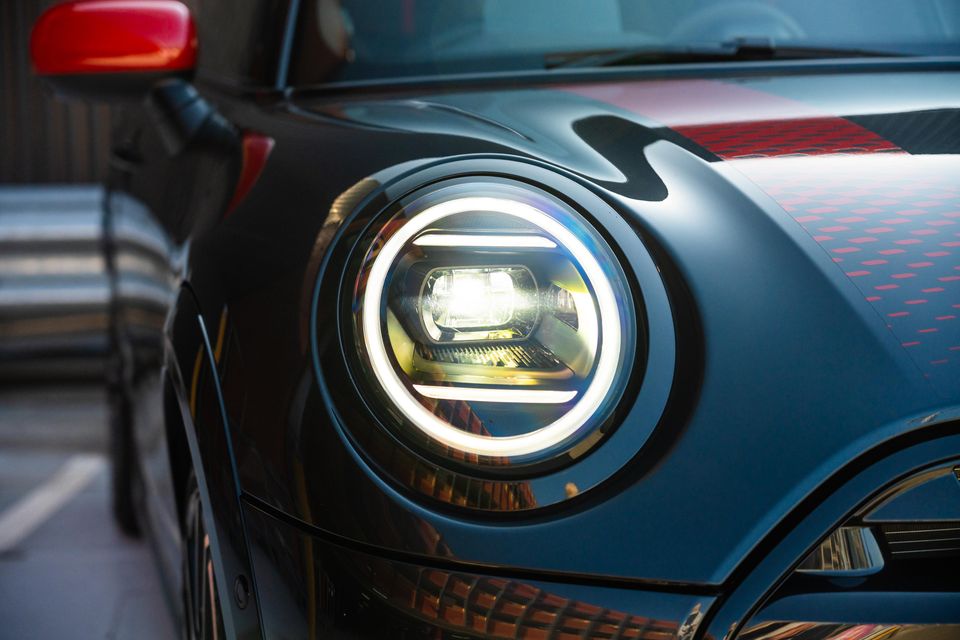
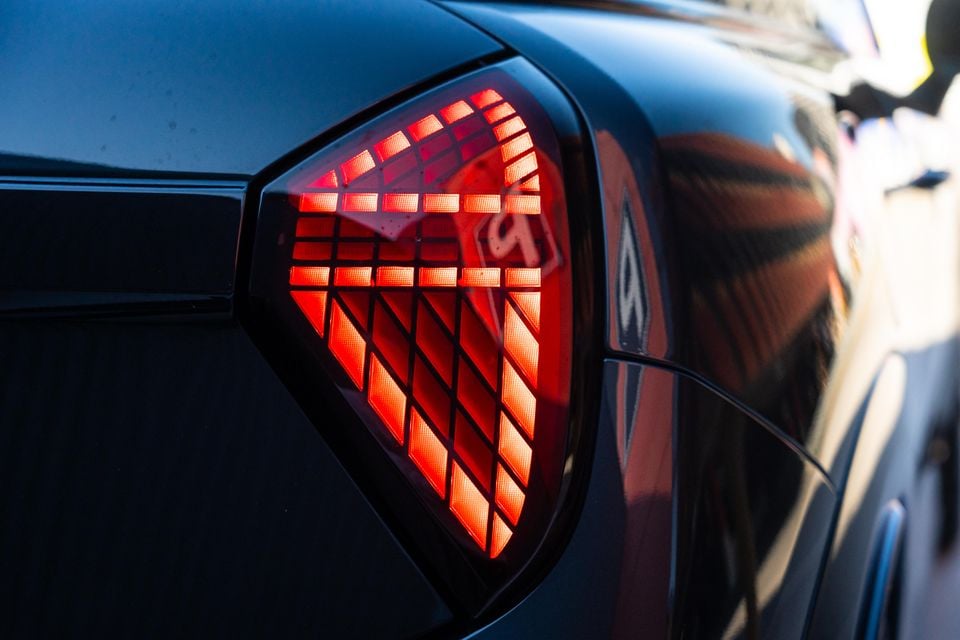
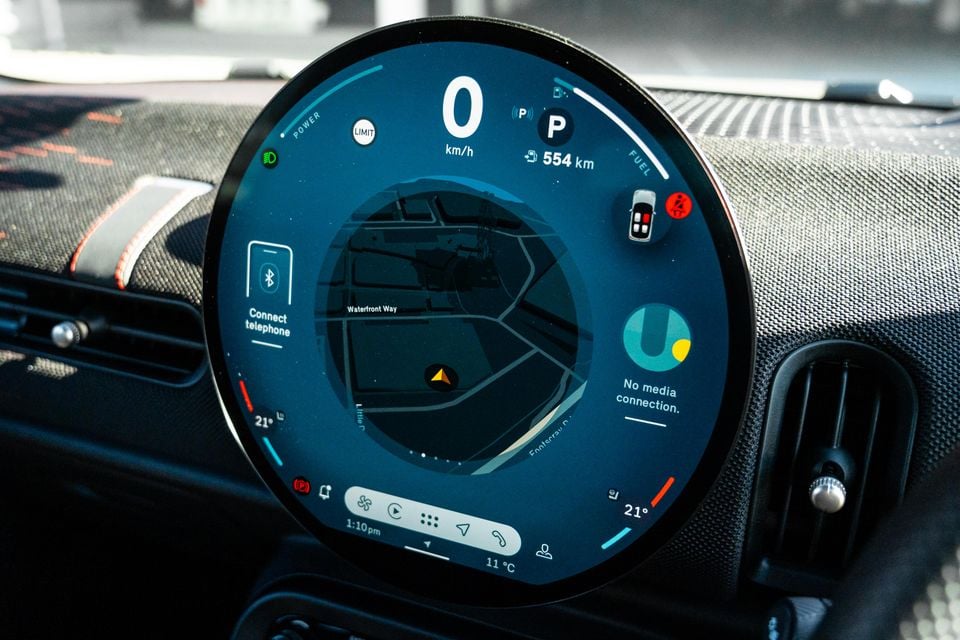
2026 Mini Cooper Core equipment highlights:
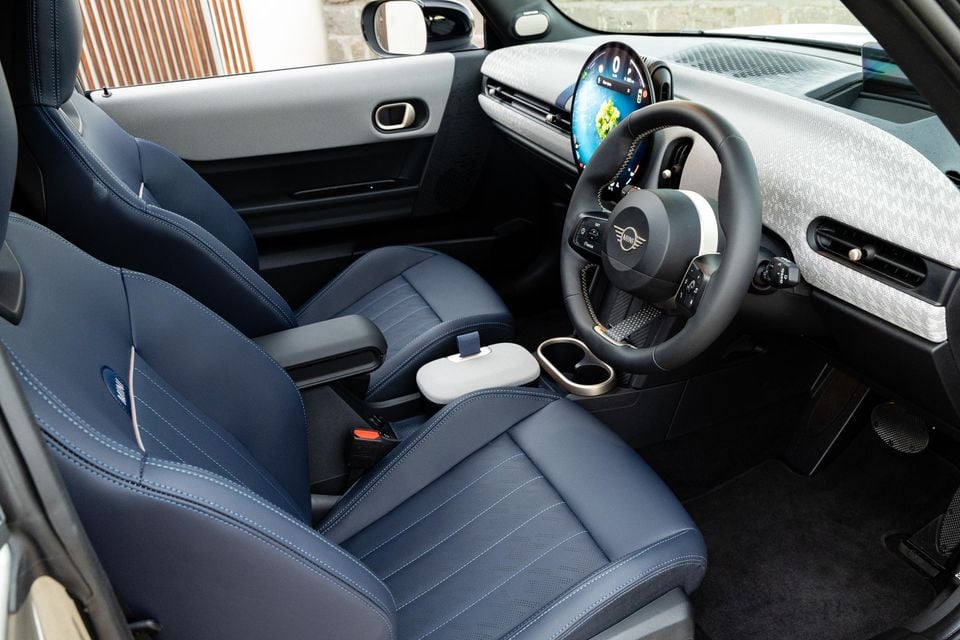
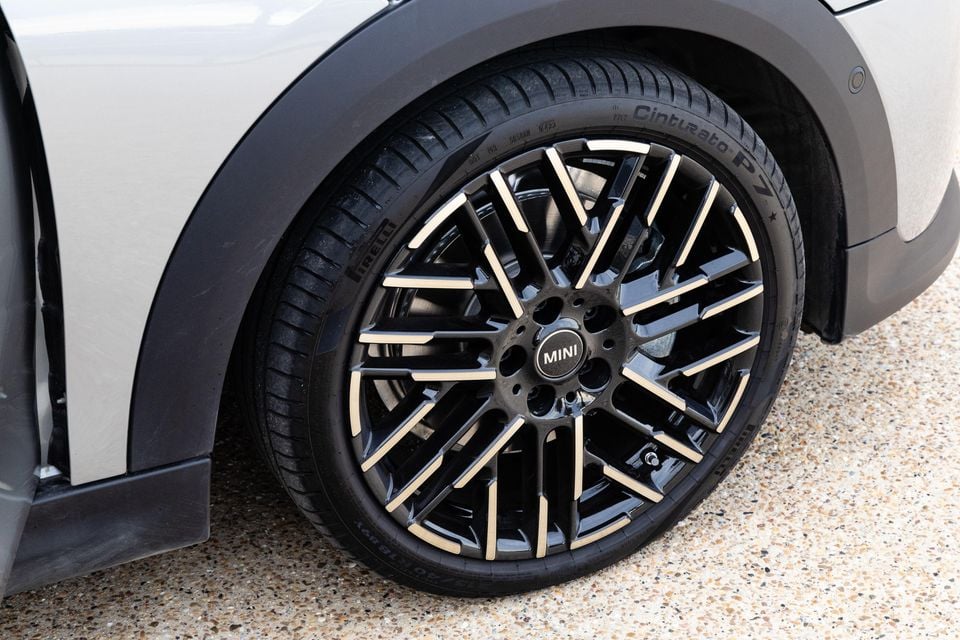
Cooper Classic adds:
Cooper JCW Classic adds (over Classic):
Cooper Favoured adds:
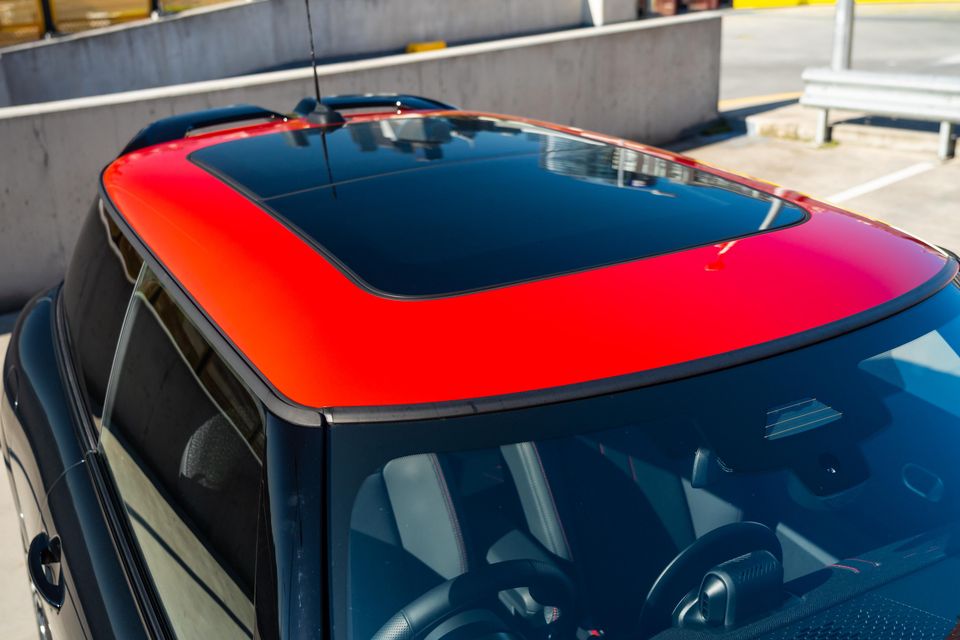
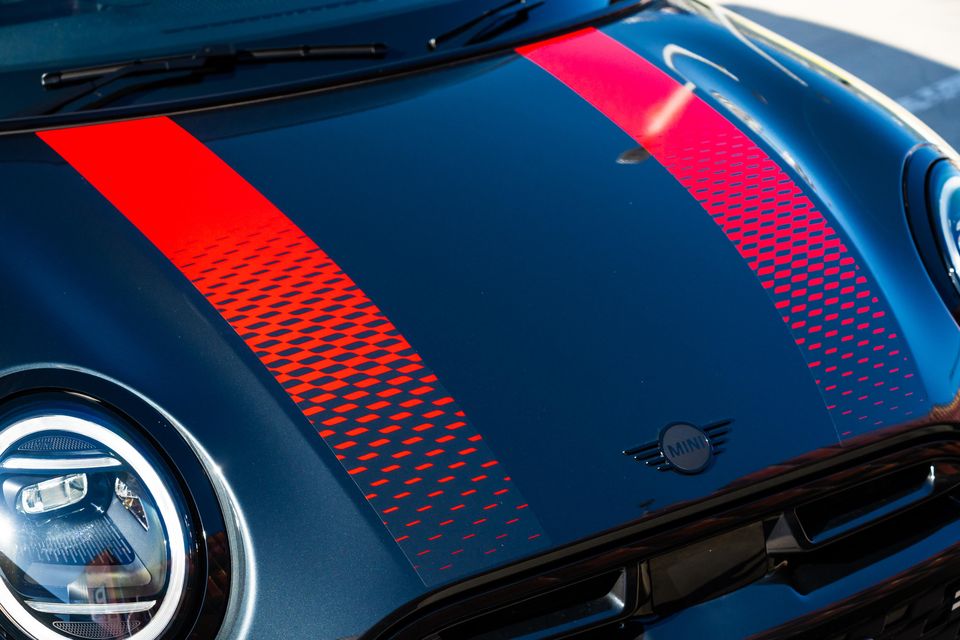
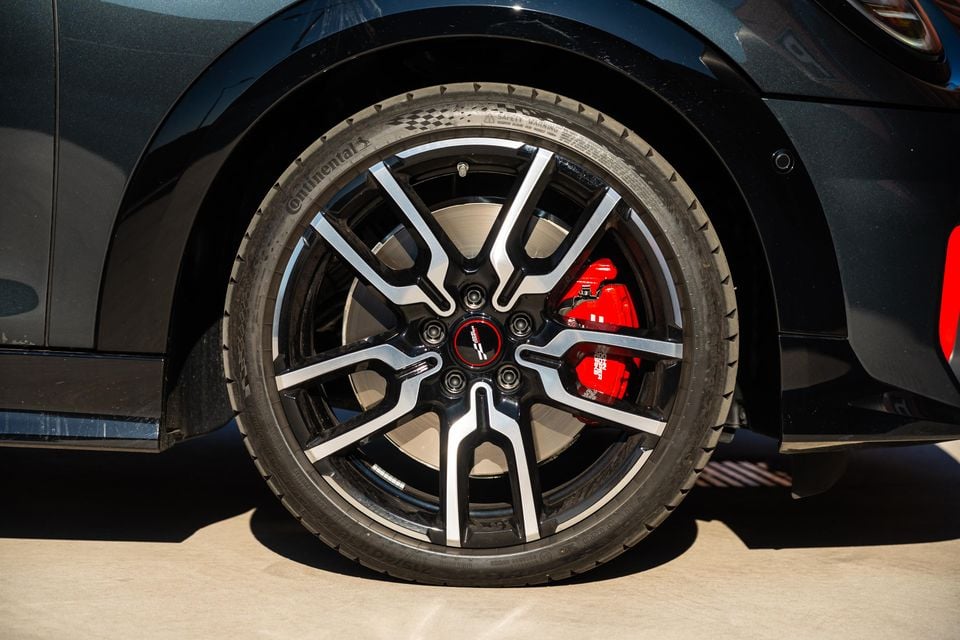
Cooper JCW Favoured adds (over Favoured):
Cooper JCW E Favoured adds (over JCW Favoured):
Cooper JCW Sport adds (over non-JCW Favoured):
To see how the Mini Cooper stacks up against its rivals, use our comparison tool
The current-generation Mini Cooper has not been crash-tested by ANCAP and is therefore unrated.
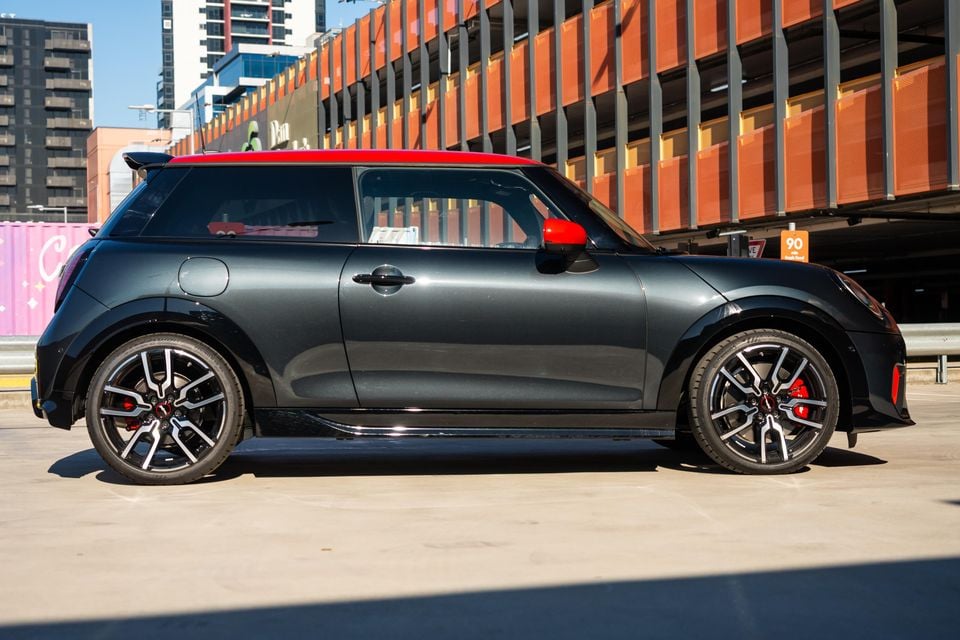
Standard safety equipment highlights:
Cooper Classic adds:
To see how the Mini Cooper stacks up against its rivals, use our comparison tool
Mini Australia backs its range with a five-year, unlimited-kilometre warranty. The brand doesn’t outline service intervals; instead, it follows its parent company, BMW, in adopting a ‘Condition Based Service’ schedule.
| Servicing and Warranty | Mini Cooper JCW |
|---|---|
| Warranty | 5 years, unlimited kilometres |
| Roadside assistance | 3 years |
| Service intervals | Condition-based |
| Capped-price servicing | 5-year, 80,000km prepaid plan |
| Total capped-price service cost | $2425 |
Mini says its vehicles continually monitor their own health using information collected from on-board sensors, and then alert owners (and your local Mini workshop) when it’s time for a service. It says service intervals will depend on the owner’s driving style and the vehicle’s condition.
In any case, Mini Australia offers a five-year prepaid service plan across its lineup for $2425.
Compared with rivals, the GR Yaris auto requires servicing every six months or 10,000km, with the first six services (spanning three years) capped at $335 each for a total of $2010.
The Hyundai i30 N will cost $1975 over five years, while the Honda Civic Type R will cost $995 over the same timeframe thanks to a capped price of $199 for each of its first five services.
To see how the Mini Cooper stacks up against its rivals, use our comparison tool
The Cooper JCW is an absolute blast, made all the more commendable by a brand that clearly understands what a JCW should be and knows how to execute it properly.
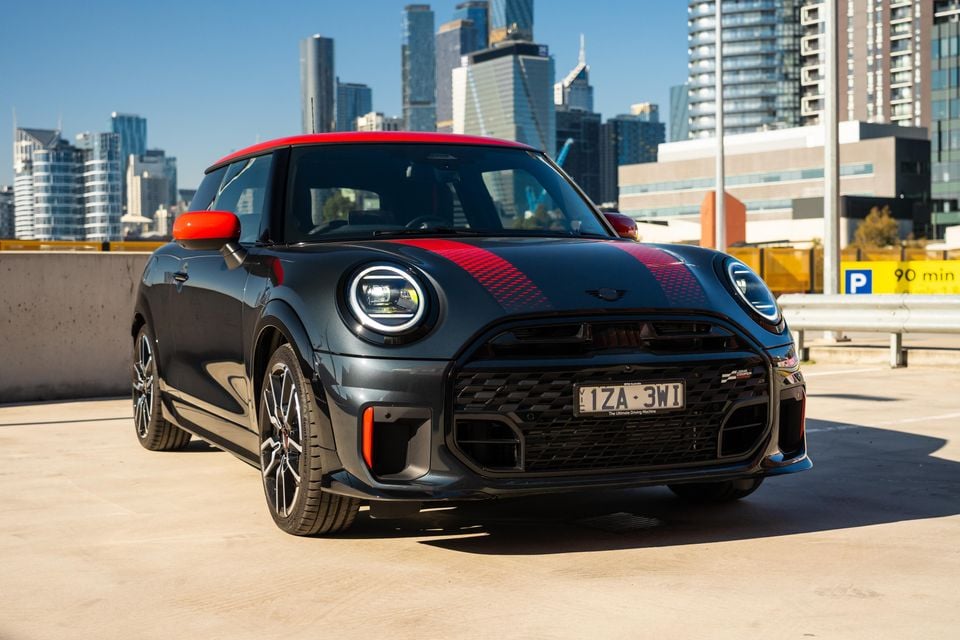
With the demise of cars like the Ford Fiesta ST and Renault Clio RS, the JCW is among the last bastions of performance-focused, front-drive compact hatches from Europe. The only other real example of the breed is the VW Polo GTI, but no Euro brand has truly stuck to the three-door hatch formula in the way Mini has.
And the Cooper JCW is the best example of the genre. Its small body, short wheelbase and well-tuned suspension make it a playful yet stable car to drive at all speeds, striking the perfect cornering balance with lively rear-end pivoting and confidence-inspiring front-end grip – there’s no heinous front-drive understeer here.
Part of that is due to a power output that perfectly suits this application. It doesn’t feel like Mini has tried to create a monster here. Instead, it has understood the brief and produced a car that handles well and has just enough power to keep you entertained.
That’s bolstered by a competent transmission and strong brakes, all of which combine to make for a nicely rounded driving package. It’s not perfect though, because the modern Mini marque isn’t known for familiar, easy-to-learn interiors.
As visually distinctive as it is, the Cooper’s cabin is unlike any other car’s. It may give the modern Minis a lot of character inside, but it’s definitely an acquired taste.
Then there’s the price, which feels like a fairly obvious display of ‘BMW tax’, even if this is only a Mini. For the same price, you can get a GR Yaris, which may be similar in size but packs a lot more power and all-wheel drive. The Toyota’s interior is much less flashy, but you could argue that makes it less intimidating than the Cooper.
At least the Mini is cheaper to service than the Toyota, and it’s difficult to dispute that it’s a well-engineered car with top build quality. That all combines to make a small hatch that’s refreshingly engaging to drive, as well as unique. In a world of cookie-cutter car designs, it’s refreshing that Mini still caters to those with a hankering for something a bit left-field.
We can’t help but imagine how good the Cooper JCW would be with a manual gearbox like the original JCWs had, but overall, the convincing British hot hatch formula here doesn’t have us craving a drastic change-up.
CarExpert can save you thousands on a new Mini Cooper. Click here to get a great deal.
Click the images for the full gallery
CarExpert brings together reviews, research tools and trusted buying support, guiding you from research to delivery with confidence.
Mini Cooper 3 Door
Mini Cooper 3 Door Sales rolling 12-months#
*Based on VFACTS and EVC data
Looking for complete Mini Cooper 3 Door price history?
Our Mini Cooper 3 Door Pricing Page shows exactly how prices have changed over time.
Max Davies is a CarExpert journalist with a background in regional media, with a passion for Japanese brands and motorsport.
Add CarExpert as a Preferred Source on Google so your search results prioritise writing by actual experts, not AI.
Damion Smy
48 Minutes Ago

Derek Fung
8 Hours Ago
Damion Smy
21 Hours Ago
Damion Smy
6 Days Ago

Josh Nevett
7 Days Ago

William Stopford
20 Days Ago
Add CarExpert as a Preferred Source on Google so your search results prioritise writing by actual experts, not AI.
# Based on VFACTS and EVC data
† Displayed prices exclude on-road costs such as delivery charges, registration fees, number plates, insurance and applicable road taxes. These prices are subject to change without notice and may not reflect current market pricing or dealer offers.
 Automotive Vehicle Spec Data & 4K images Powered by JATO Dynamics Ltd