 Car News
 CarExpert Podcast
 Car Reviews
 Owner Car Reviews
 Car Comparisons
 Showroom
 Car Chooser
 Car Specifications


Matt Campbell
2026 Nissan Navara ST review
Nissan has reworked its work-ready Navara ute range, and this variant stands out as a tidy new truck for the worksite.
23 Hours Ago
Toyota's reworked ute has received some important changes, but can it overcome the fact it’s based on an ageing platform?
Senior Contributor
Senior Contributor
Senior Contributor
Senior Contributor
CarExpert brings together reviews, research tools and trusted buying support, guiding you from research to delivery with confidence.
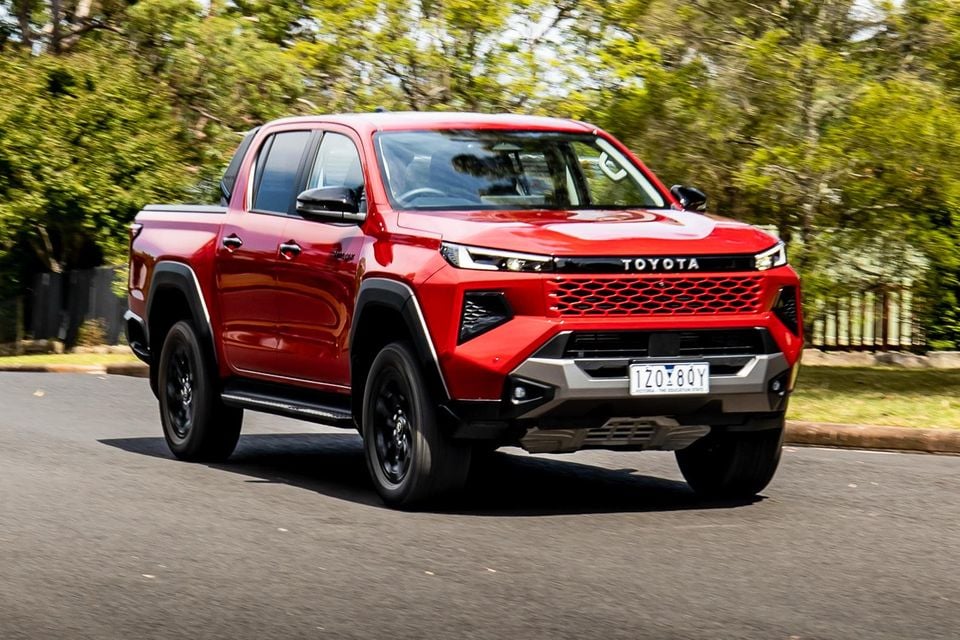
The new-generation Toyota HiLux has hit Aussie showrooms and streets, and it’s got a big reputation to maintain.
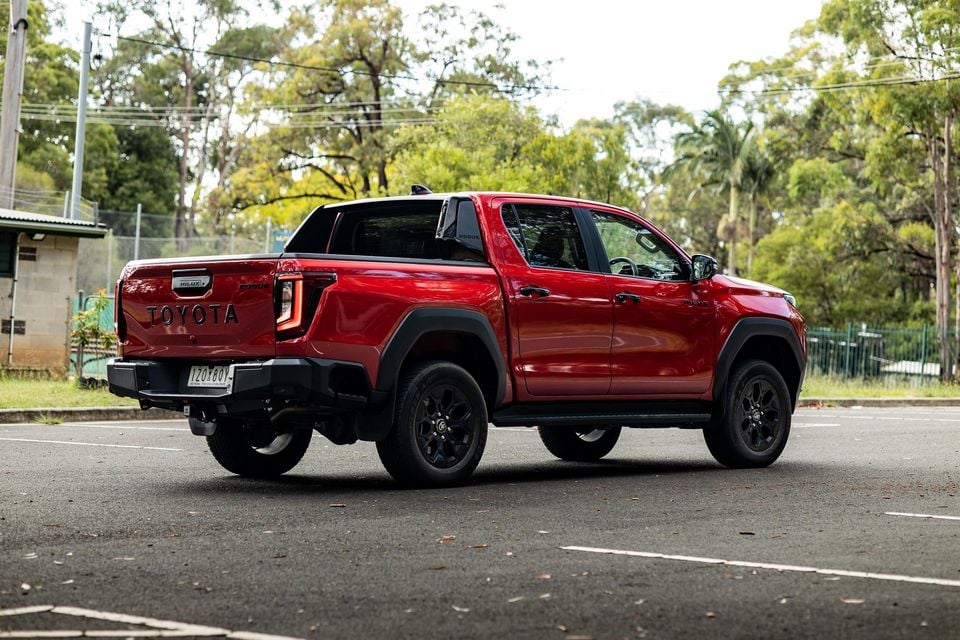
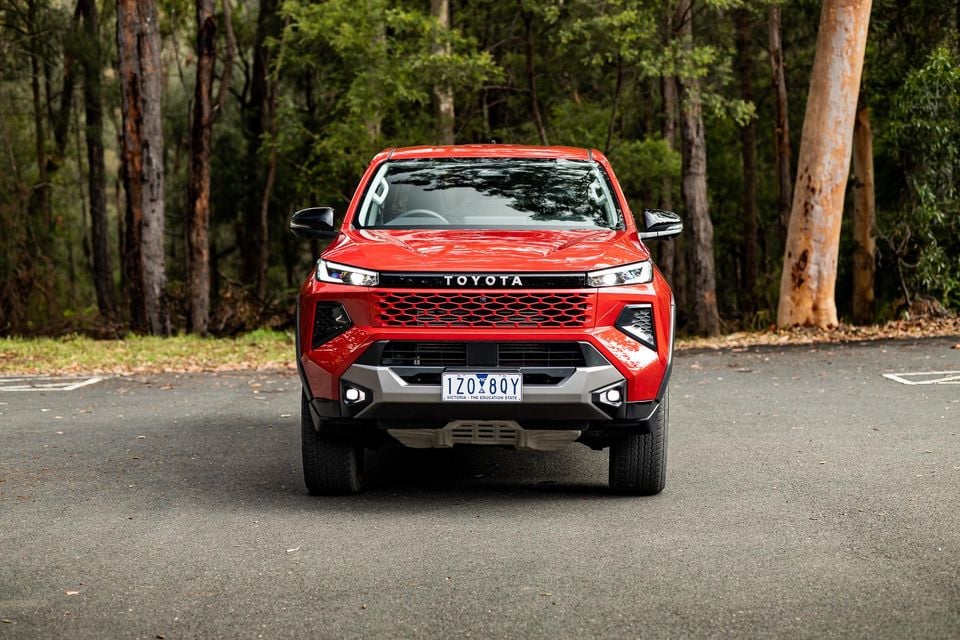
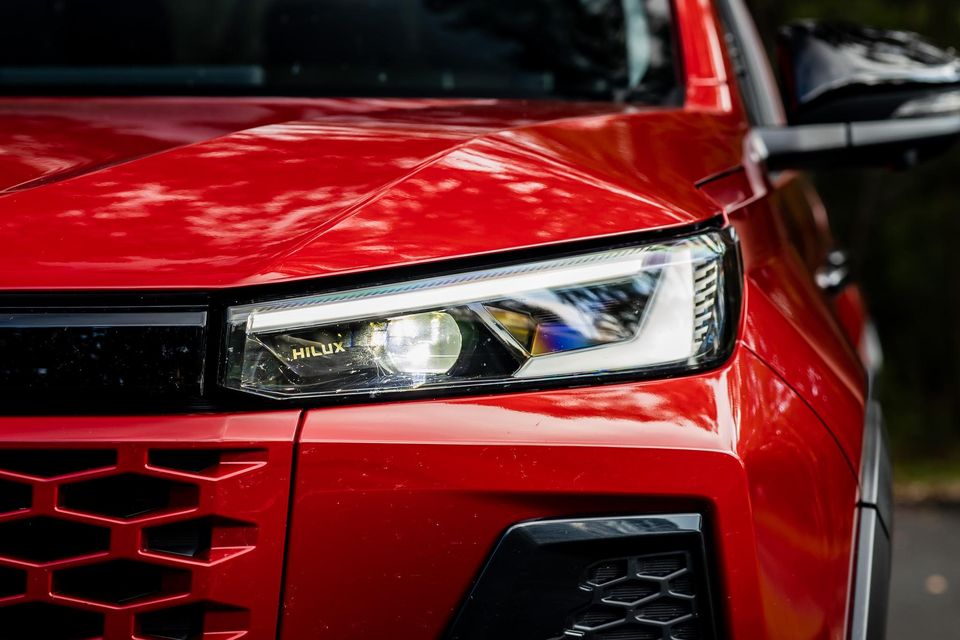
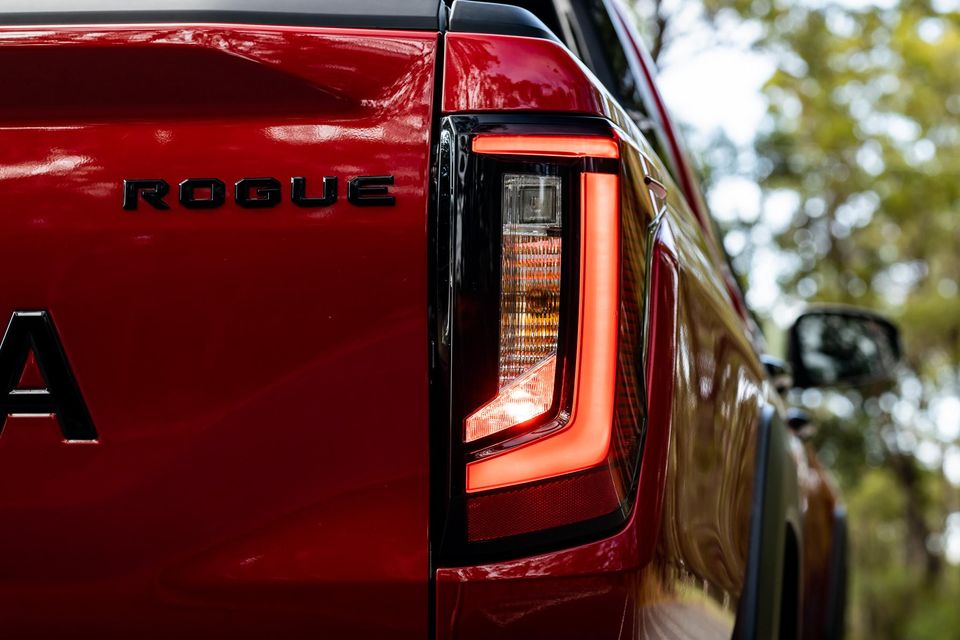
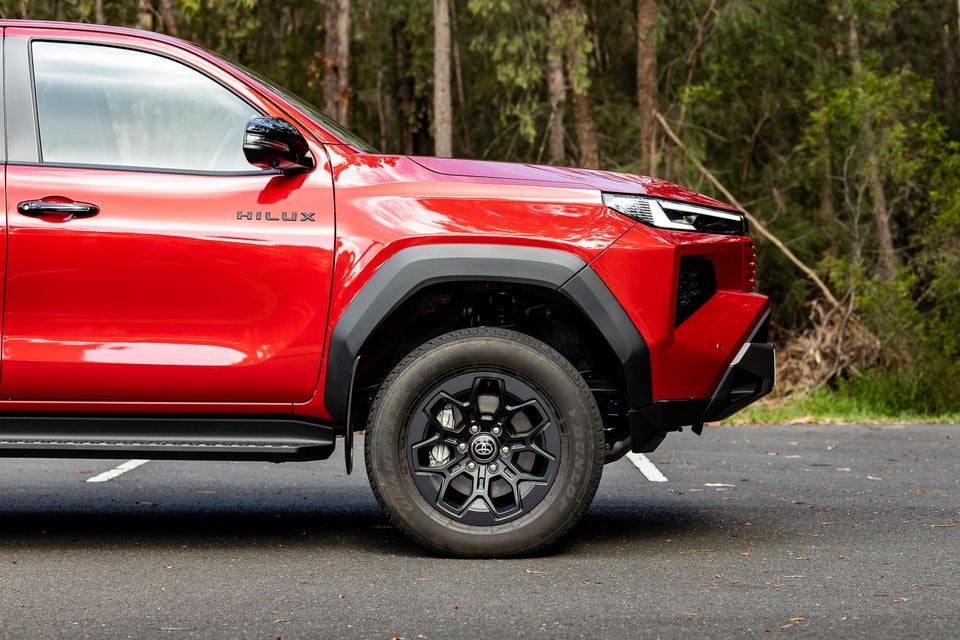
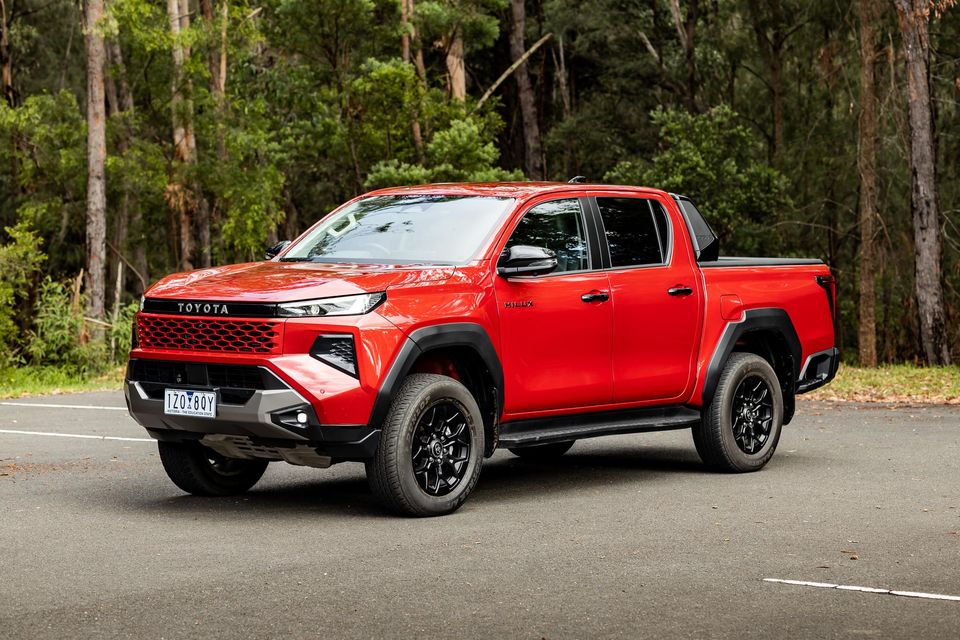
With a front- and rear-end redesign that makes it look more macho and modern than before, and an interior overhaul that brings it in line with the best of the rest, the updated HiLux range is more appealing now than it has been for years.
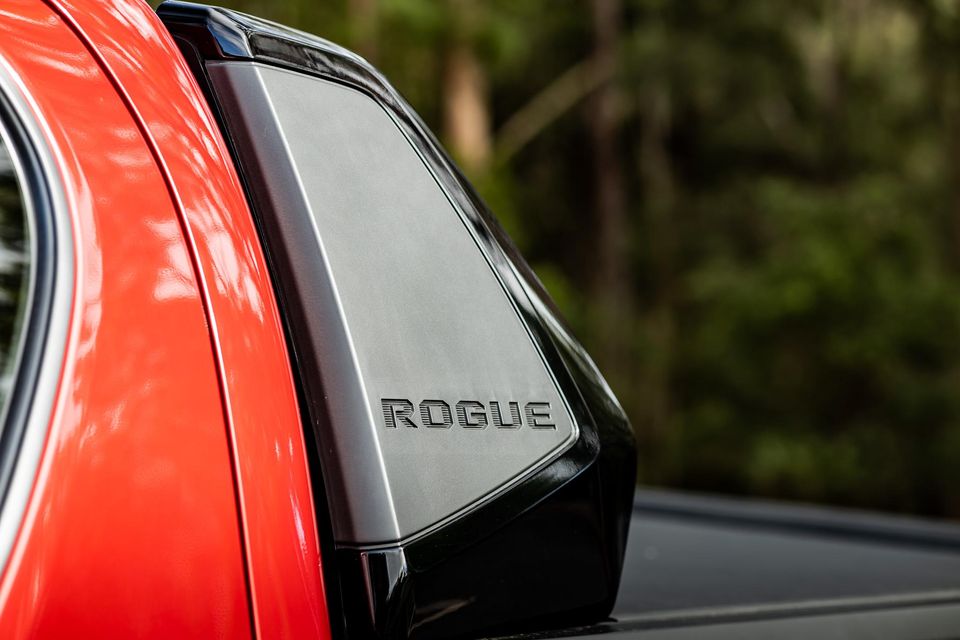
But is the range-topping Rogue variant the pick of the pack? With some lifestyle-focused inclusions, it makes a lot of sense – and in fact, it makes some of the alternatives seem a little expensive.
So let’s run through it in detail in this real-world review.
This is one of the top-spec grades in the new Toyota HiLux range, but it isn’t as expensive as you might have been expecting.
| 2026 Toyota HiLux 4×2 | Price before on-road costs |
|---|---|
| WorkMate 2.8 manual single-cab/chassis | $33,990 |
| WorkMate 2.8 auto single-cab/chassis | $35,990 |
| WorkMate 2.8 auto double-cab pickup | $47,990 |
| SR 2.8 auto dual-cab pickup | $52,990 |
| 2026 Toyota HiLux 4×4 | Price before on-road costs |
|---|---|
| WorkMate 2.8 auto single-cab/chassis | $45,990 |
| WorkMate 2.8 auto double-cab/chassis | $52,490 |
| WorkMate 2.8 auto double-cab pickup | $53,990 |
| SR 2.8 auto extra cab-chassis | $54,990 |
| SR 2.8 manual double-cab/chassis | $54,990 |
| SR 2.8 48V auto double-cab/chassis | $57,990 |
| SR 2.8 48V auto double-cab pickup | $59,490 |
| SR5 2.8 manual double-cab pickup | $63,990 |
| SR5 2.8 48V auto double-cab/chassis | $64,490 |
| SR5 2.8 48V auto double-cab pickup | $65,990 |
| Rogue 2.8 48V auto double-cab pickup | $71,990 |
| Rugged X 2.8 48V auto double-cab pickup | $71,990 |
Look, $71,990 plus on-roads (so, nearly $80k in your driveway) is not going to suit all budgets, but the Rogue is a specific model aimed more at lifestyle buyers, those who might be more likely to tow a speedboat than a horse float.
If you’re wondering, at this level you could otherwise consider a Ford Ranger Sport V6 for $71,590 plus on-roads. And the outgoing hardcore Nissan Navara Pro-4X Warrior costs $71,643 plus on-roads.
A Mazda BT-50 SP is priced at $71,950 plus on-roads, while the related Isuzu D-Max X-Terrain is $73,000 plus on-roads – but both of those models have drive-away deals available.
Or you could look at a plug-in hybrid BYD Shark 6 (from $57,900 plus on-roads), or the Mitsubishi Triton GSR (from $64,590 plus on-roads).
To see how the Toyota HiLux lines up against the competition, check out our comparison tool
Obviously the biggest upgrade here is the technology-forward redesign of the HiLux’s cabin.
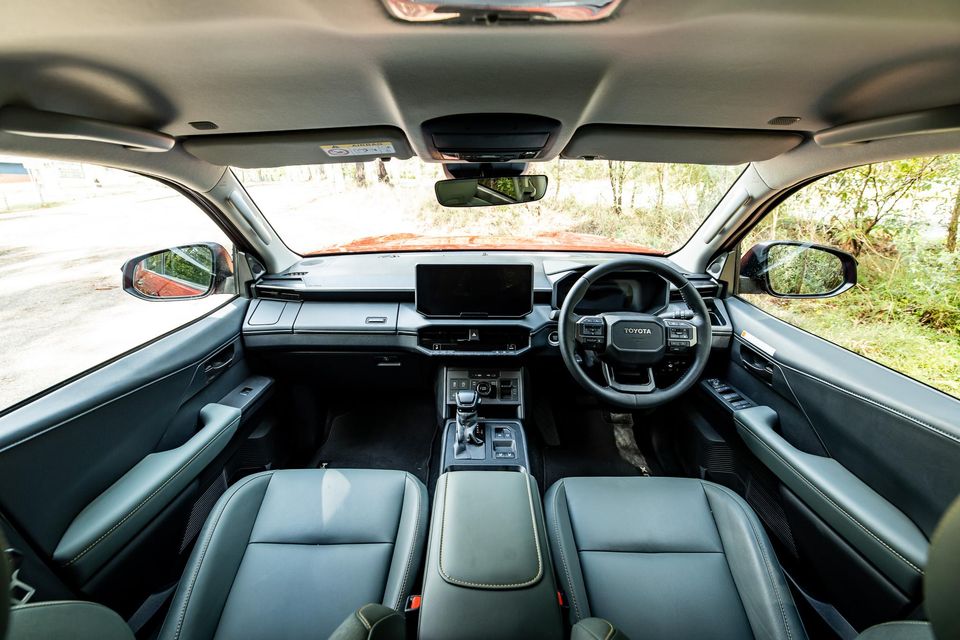
Towards the end of the last-generation model’s life cycle, the interior felt very tired compared to new rivals in the segment, but now it’s far more compelling.
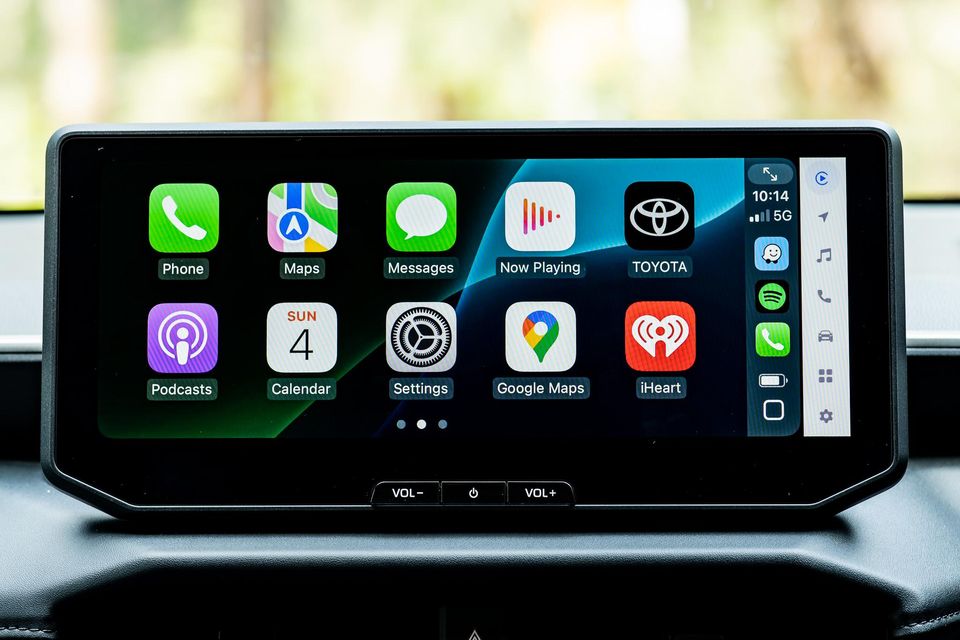
The big new 12.3-inch touchscreen media system sits proudly (perhaps too proudly for some people’s taste?) on the dashboard, and the fact that it doesn’t have some buttons that you might be hoping for means it might be difficult to get to terms with. But there is a pair of volume buttons at the base of the screen bezel, and a power button to turn the screen off or mute it.
The usability of the screen? Well it’s typical Toyota. It has the same menus as some other models, and that can feel a little bit annoying at times.
Some of the menus feel like they are somewhat hidden, and there’s a chance you will need to spend some time getting to know the screen if you are uninitiated.
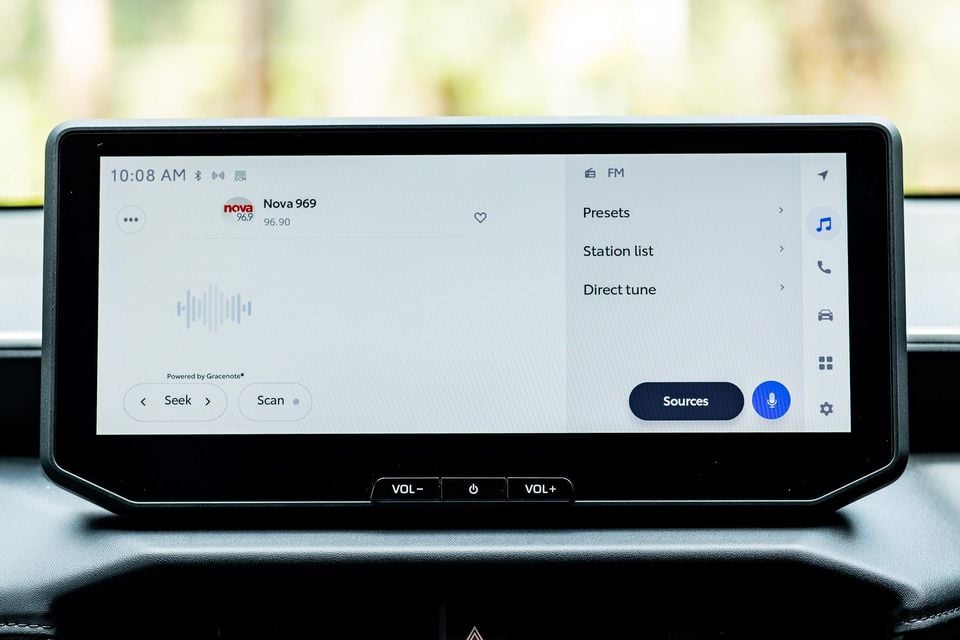
However, if you are the sort of person who just connects up to Apple CarPlay or Android Auto, those are easily available and decently accessible in terms of usability, too.
Otherwise there’s built-in sat-nav, and you’ve got a number of other controls that you can jump through on that screen.
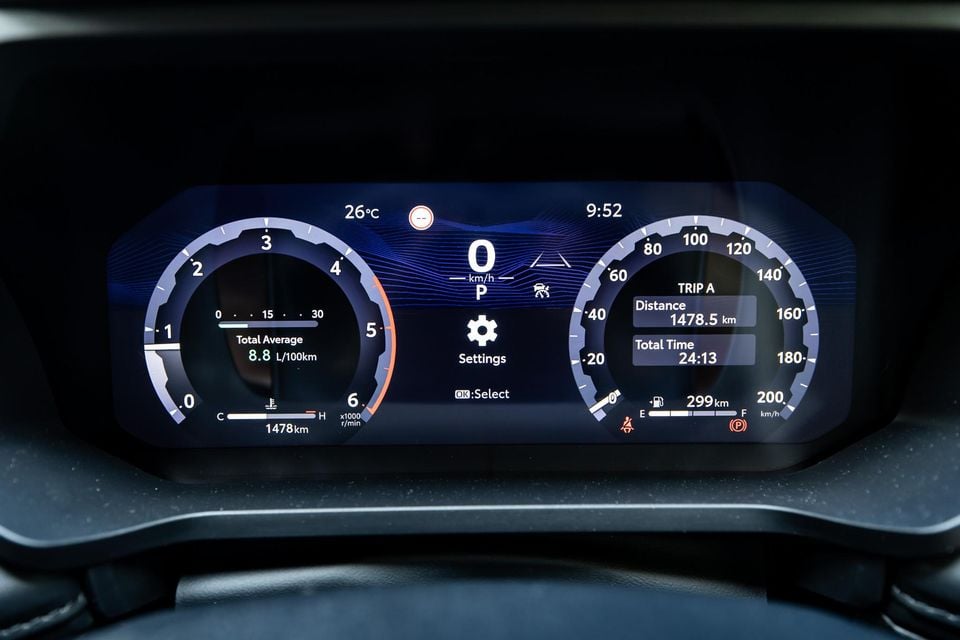
In front of the driver there’s also another 12.3-inch digital screen, with a decent amount of information available to you, and a configurability to that display as well. Change the drive mode and the display will illustrate that, and it certainly makes it feel more upmarket than before.
I like the design with the cog motifs around the tacho and speedo, and it’s a very easy-to-look-at piece of technology. It’s also pretty easy to interact with, with steering wheel controls to manage the job.
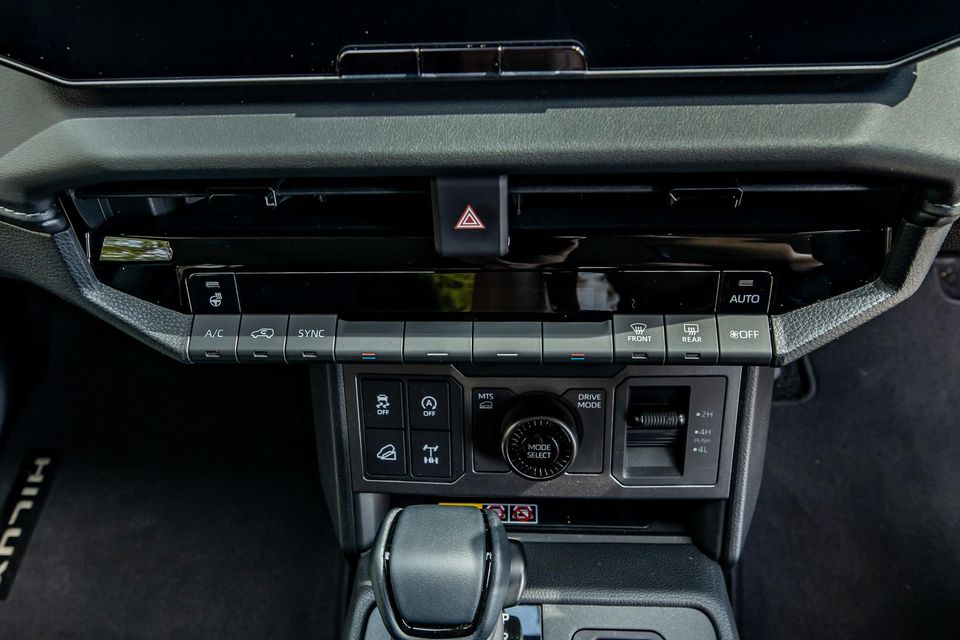
There are some buttons and controls including a panel for your climate system with trigger switches for the temperature, fan and air direction, as well as demister and recirc buttons, which is increasingly becoming rare.
Below the centre screen section there is also a bank of controls for your driving stuff – including hill descent control, rear diff lock, drive mode dial selector and buttons, and your four-wheel drive selector system.
There’s also seat heating buttons – but they remain single-stage operation, whereas some rivals offer three-stage adjustment – and there still aren’t any ventilated seats, either.
Towards the centre console area there is a pair of cupholders which can be removed, a covered console bin with a soft finish on top (more on that in a sec) and, inside, there is a 230V power outlet and 12V port.
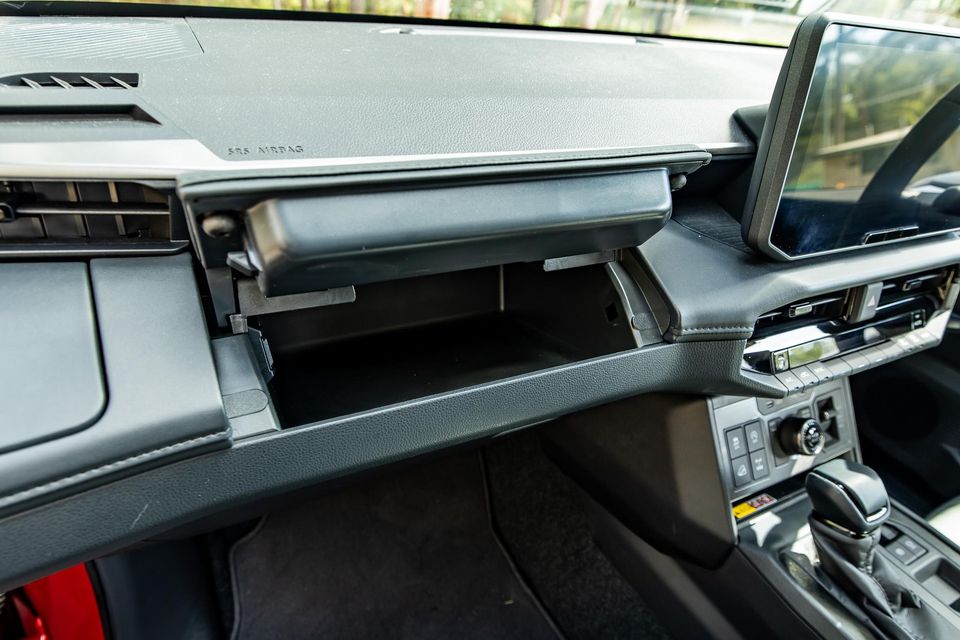
Now that cover on the centre armrest? So annoying. It rubs up against the driver’s seat (but not the passenger’s!?) and squeaks as the materials rub together at low speeds. It’s the most annoying thing and, no, it’s not just limited to this vehicle – other HiLux Rogues have it, too! It needs fixing.
Beyond that, the storage setup is very accommodating in this vehicle.
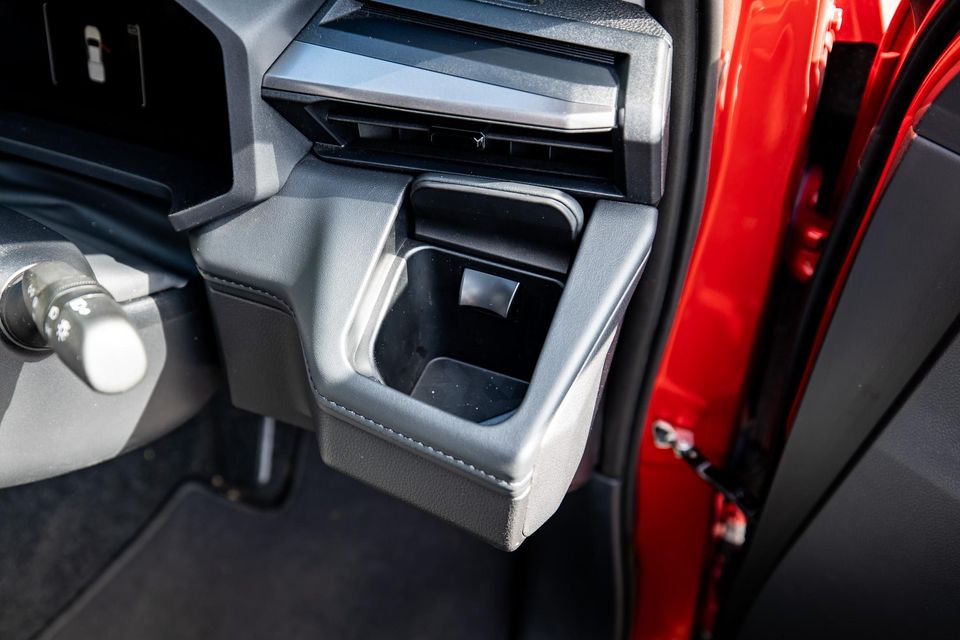
There are big bottle holders in the doors with sizable sleeves, and on the dashboard you’ll find openable cupholders on either side, a pop-open glovebox topper, and a lockable main glovebox.
Overhead there is a sunglasses holder, and an auto-dimming rear-view mirror. Up there you’ll also find nearby light switches, and your SOS call button.
But there is only one vanity mirror (for the passenger, and without illumination!), while the driver just gets a single loose material strap to potentially stow some paperwork.
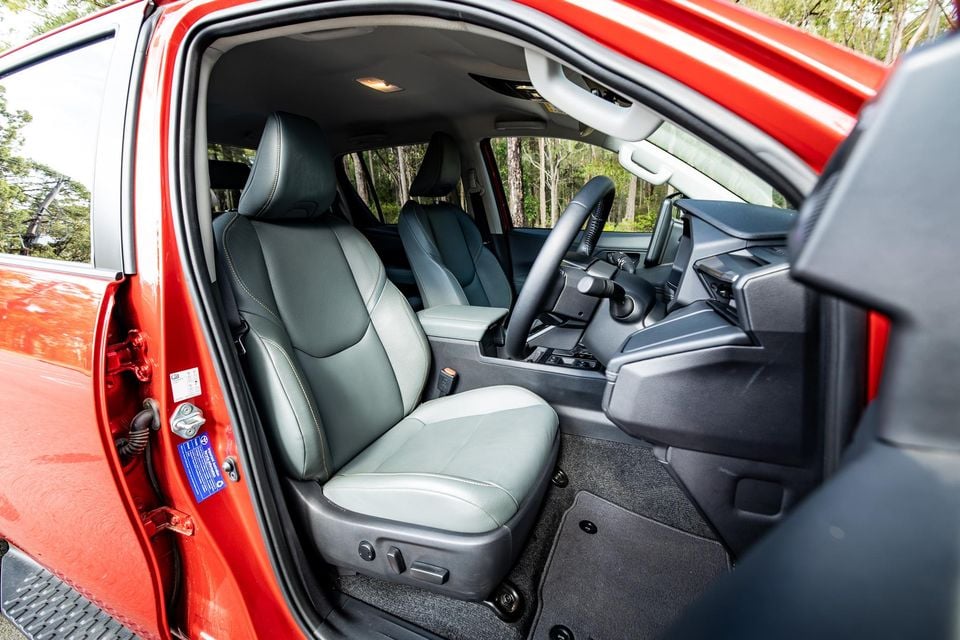
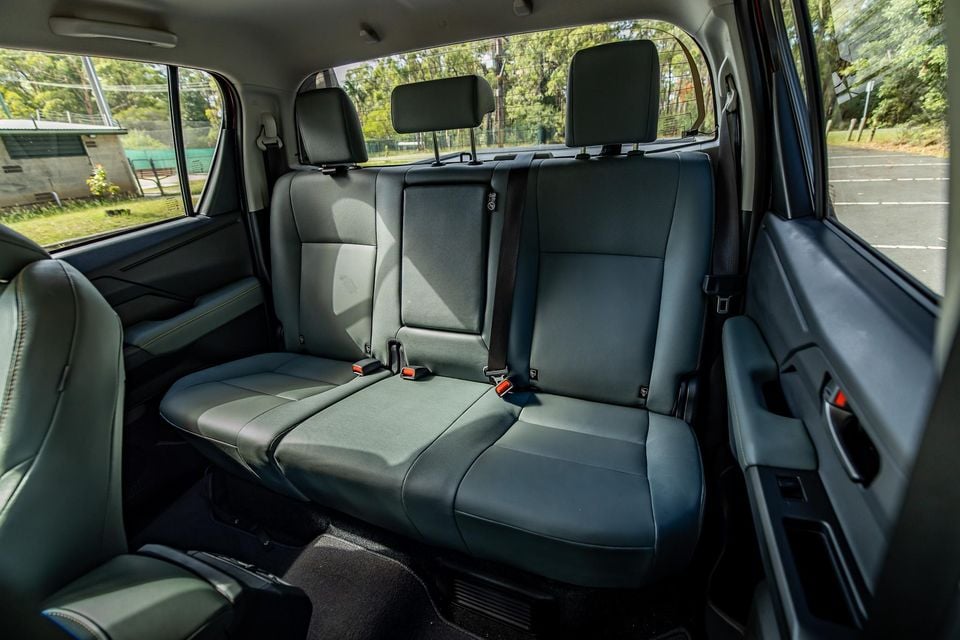
The back seat hasn’t seen major improvements, and it still delivers one of the more cramped feeling back-seat experiences in the segment.
For a six-foot (182cm) adult behind their own driving position, it’s tight. Toe room is limited, knee room is compromised, and headroom is also tighter in this ute than in most others in the segment. Plus Toyota still hasn’t done away with those stupid fixed overhead grab handles that seem like a concussion waiting to happen for a taller rear-seat rider.
I speak from a level of experience here – I’ve been a back-seat passenger on a rough track in the last HiLux, and I whacked my head on it quite hard. Not a fun experience, but also something that mightn’t matter to you.
Storage space in the back is fine, including a pair of map pockets, bottle holders in the doors, a flip-down takeaway bag hook on the rear of the passenger seat, and map pockets for both sides.
The seat base can be folded up for extra storage if needed, and it does so in a 60:40 motion.
As for child-seat options, there are window-seat ISOFIX hooks, but Toyota hasn’t changed the top-tether situation, meaning you still need to thread your tethers through straps at the top of the window seats to hook them to a central point. It never feels as tight or secure as you’d want it to, in my opinion.
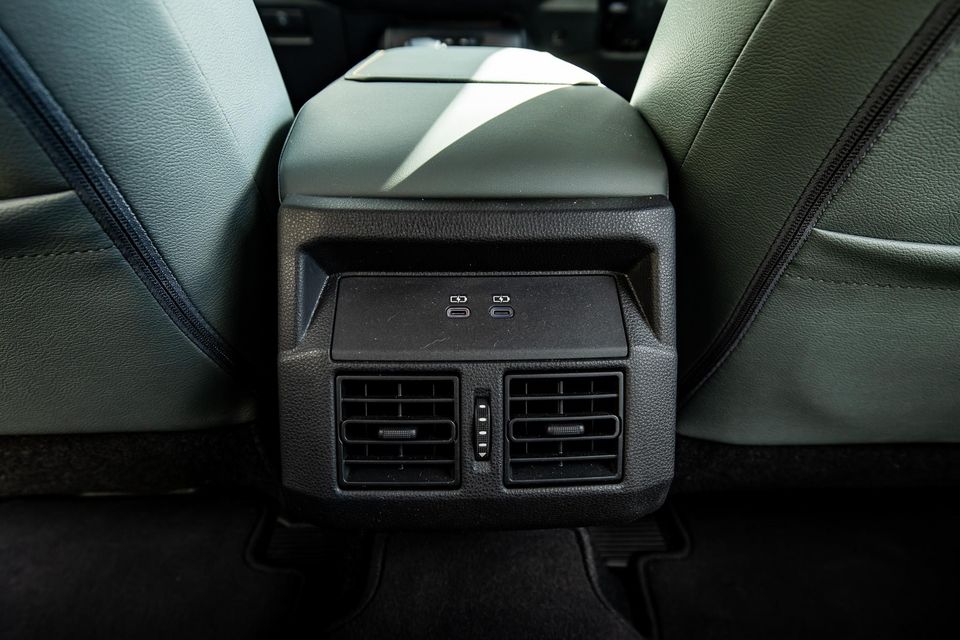
Otherwise there are directional air-vents and a flip-down armrest with cupholders.
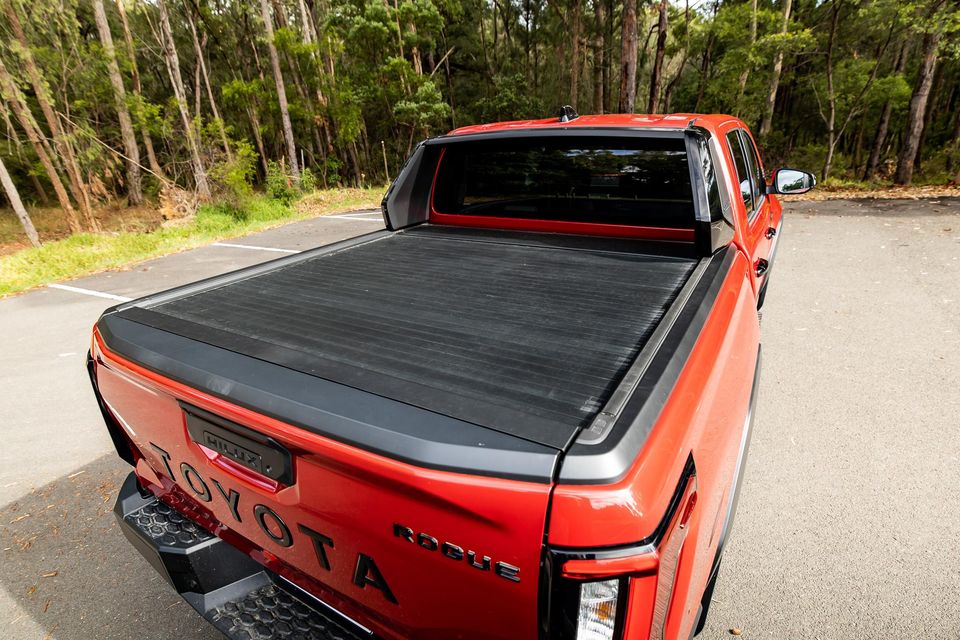
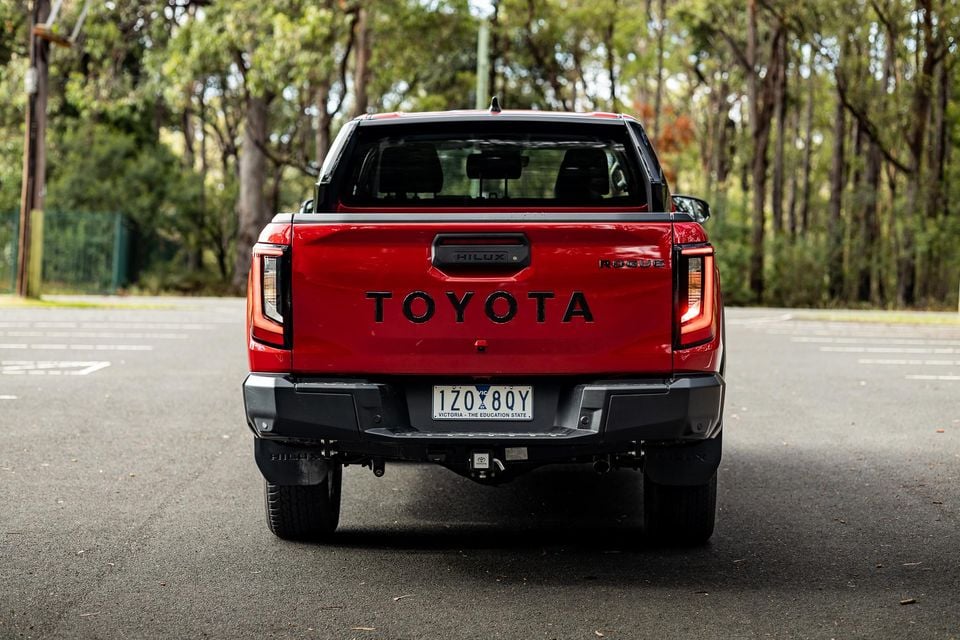
This one is a bit like a ute with a boot, given its electric roller cover system and (removable) carpet tub lining – a marine-grade material finish that is velcroed in place.
The cargo cover has a few ways to be operated – there are open/close buttons on either side of the rear of the tub, or you can use the key fob to remotely open or close it.
But be mindful, because the vehicle on test was basically brand-new yet had a squeaky operation to the roller, and it failed a few times, too. Plus it eats into tub headboard space significantly – and it’s not like the new HiLux has the biggest tray in its class.
By the tape, the tub measures 1570mm long, 495mm deep, 1645mm wide and there’s just 1105mm between wheel-arches, meaning it won’t be pallet-friendly (not that it would be in this configuration, anyway).
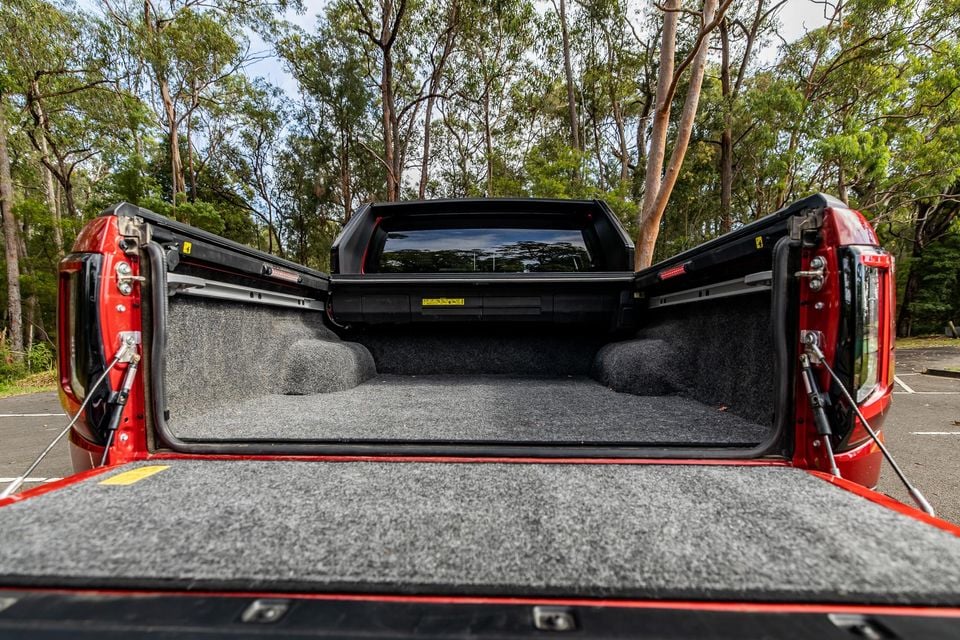
There are tie-down hooks at the sides of the tub interior, and an adjustable rail-mounted tie-down system, too.
This version has lighting for the tub cover, and there’s a 12V port in the back as well, which is handy for using electrical accessories. Under the tub is a full-size spare wheel.
| Dimensions | Toyota HiLux Rogue |
|---|---|
| Length | 5320mm |
| Width | 1885mm |
| Height | 1848mm |
| Wheelbase | 3085mm |
To see how the Toyota HiLux lines up against the competition, check out our comparison tool
Toyota has stuck with what customers know, carrying over the same four-cylinder turbo-diesel engine as before. The outputs are identical, and there’s still a six-speed automatic transmission.
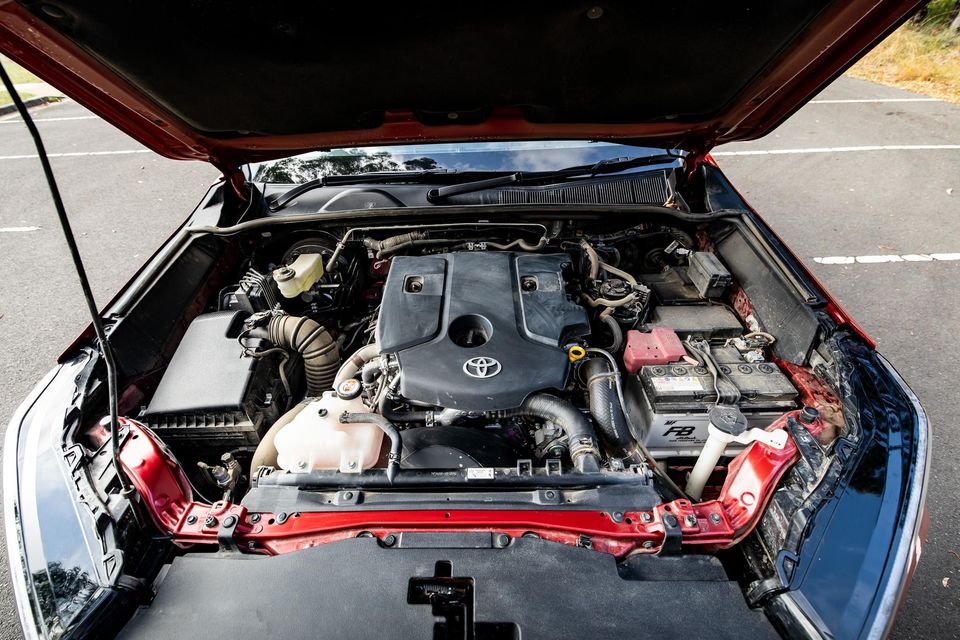
| Specifications | Toyota HiLux Rogue |
|---|---|
| Engine | 2.8L 4cyl turbo-diesel 48V MHEV |
| Power | 150kW |
| Torque | 500Nm |
| Transmission | 6-speed automatic |
| Drive type | Part-time four-wheel drive |
| Fuel economy (claimed) | 7.6L/100km |
| Fuel economy (as tested) | 8.9L/100km |
| CO2 emissions (claimed) | 201g/km |
| Fuel tank | 80L |
| Weight | 2342kg |
| Payload | 778kg |
| Braked towing capacity | 3500kg |
| Gross vehicle mass (GVM) | 3120kg |
| Gross combination mass (GCM) | 6300kg |
In this spec, it also includes a 48-volt hybrid system designed to reduce fuel consumption and emissions, thanks to an 8.5kW/65Nm electric motor generator – though no additional performance is quoted by Toyota.
The outputs still hit harder than some rivals, but you can get more grunt from an LDV Terron 9 or MG U9 if you only shop for four-pot diesels. And of course the V6 offerings from Ford and VW are gruntier.
As for fuel consumption? Well, the claimed number is staggeringly low for this slightly electrified version of the Lux, at 7.6L/100km. On my test, which included open road, freeway, country and urban driving, I saw 8.9L/100km. So, pretty real-world efficient.
And while some might love the fact the HiLux still doesn’t require AdBlue, others will say that leaves it in the past compared to some rivals.
To see how the Toyota HiLux lines up against the competition, check out our comparison tool
Expecting a bold change from the last HiLux? Well you might be actually pleasantly surprised by this new version.
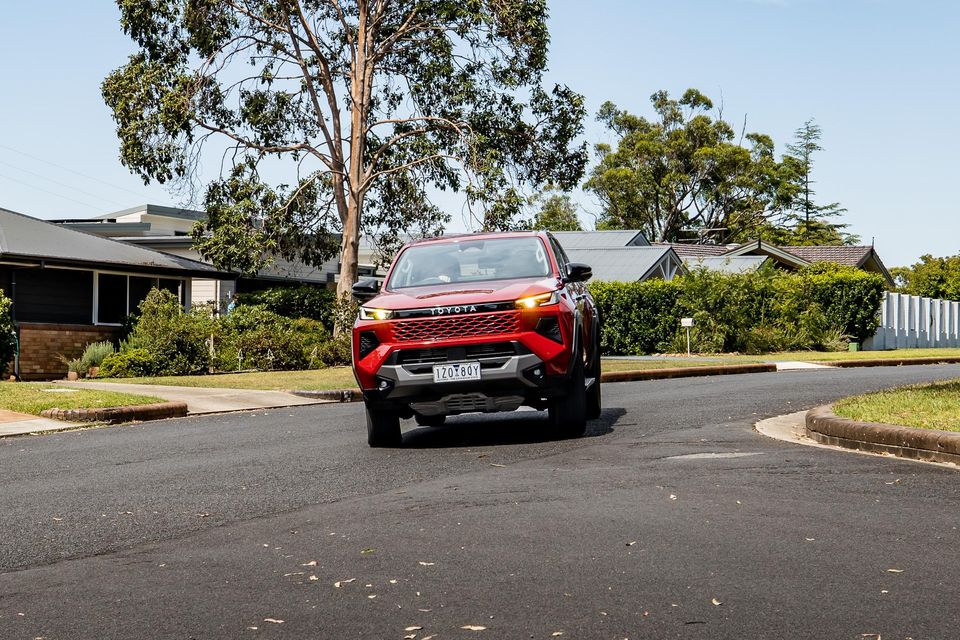
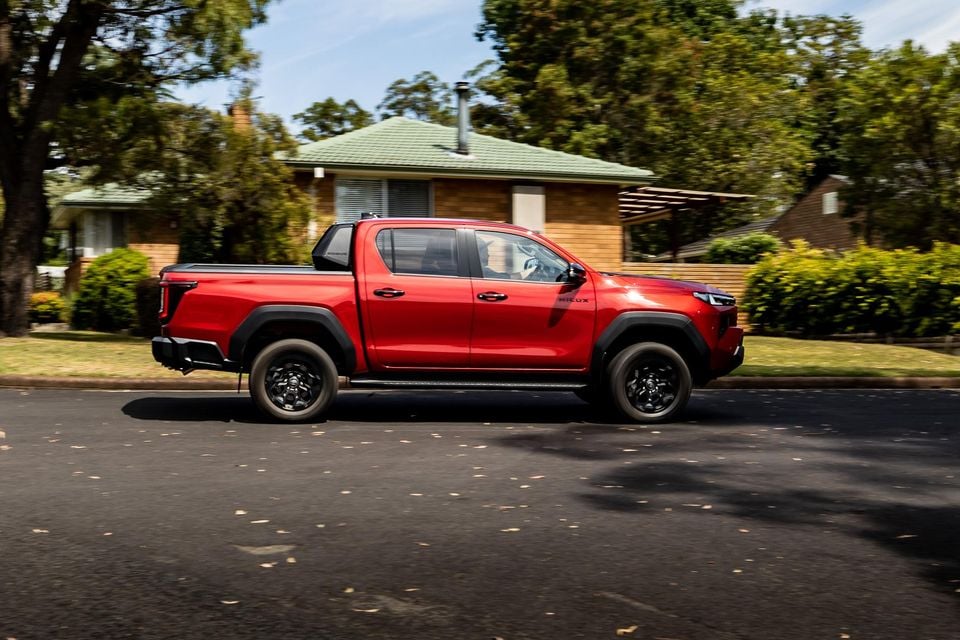
In particular, the SR5 variant gets the more softly sprung rear suspension that is designed to be more accommodating for a mix of different uses.
The way the vehicle behaves over lumps and bumps in the surface is pretty confident, although it is still evident that this is a dual-cab ute – and with no load on board it can still feel a little bit sharp and jumpy at the back over rigid edges in the surface.
But the general compliance, capability and comfort levels are very good for this updated HiLux, and the chassis tweaks have been well and truly worth it.
There’s also a big difference to the steering behaviour – it’s a new electronic power steering system, as opposed to the old hydraulic system.
CarExpert brings together reviews, research tools and trusted buying support, guiding you from research to delivery with confidence.
It doesn’t have as much feel and you can’t sense each pebble through the tiller as you could in the old model, but it does have a bit more directness and reasonably good weighting to it at all speeds.
For urban driving it is light and feels quite easy to manoeuvre, while at highway speeds the steering is heftier and more direct in its responses, making it feel more agile.
Those changes certainly bring it into line with some of the others in the segment in terms of the general dynamics.
As for the engine? Well, the carryover powertrain is, as predicted, still strong and perky and also very eager to accelerate up to around 80km/h, while at high speeds it can be a little less responsive.
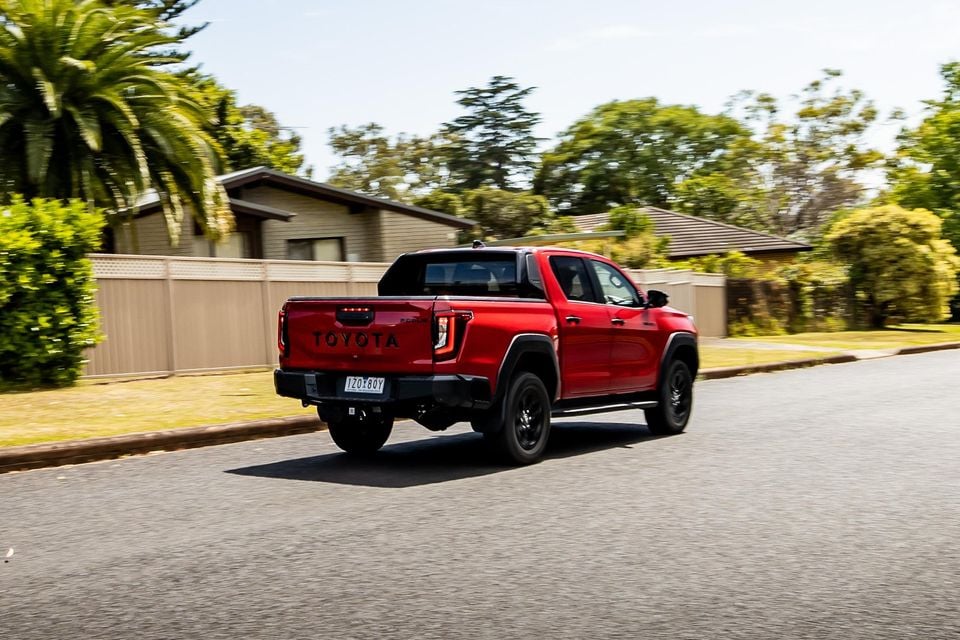
I found during my testing that the six-speed automatic transmission could be caught out at freeway pace when sudden acceleration was required.
At low speed the engine is eager, and the gearbox is clever. And the engine idle stop/start system – if you leave it on! – is pretty well mannered. It smooths out the way it restarts the powertrain and while it is hardly hard-core hybrid technology, there is clearly some evidence to suggest it does make an impact on real-world fuel consumption.
Another great thing is the new HiLux hasn’t been fouled by the addition of incessant safety technology – there is no driver monitoring camera so that means no bing-bong annoyance. You also get a speed sign recognition system but thankfully it doesn’t beep at you.
Beyond that, the lane keep assist feature is easier to switch off, and the adaptive cruise control works pretty well. Then there’s the parking camera system, which is way better in this iteration than in previous HiLuxes.
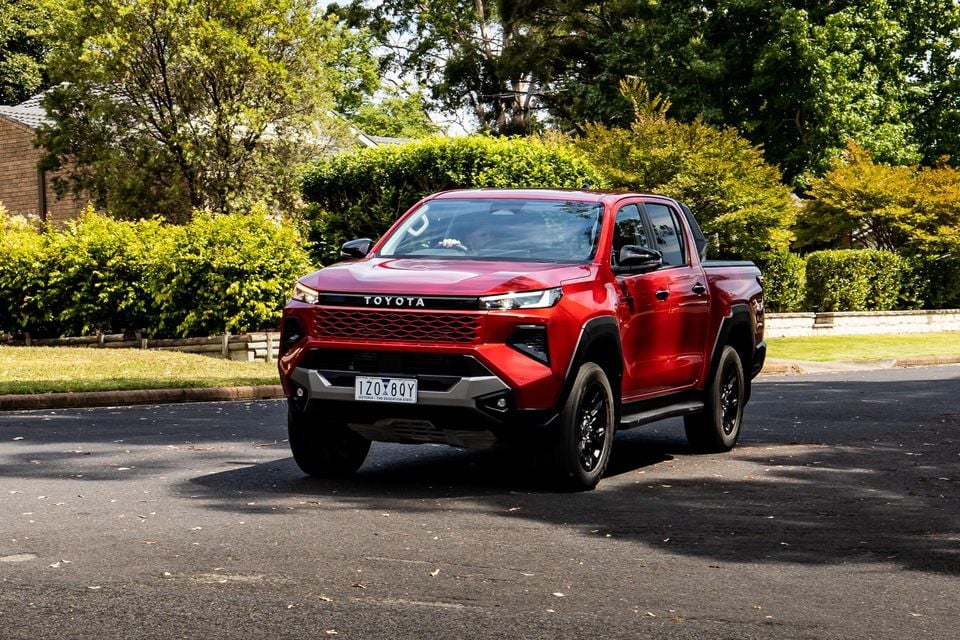
Overall refinement is decent, but not groundbreaking.
There is still some evidence of road noise intrusion on rough surfaces, and some wind noise at freeway pace as well – especially around the mirrors and the A-pillars.
And while this is a tried-and-tested powertrain, it’s also a noisy one – especially up to 60km/h. You will certainly remember you’re driving a diesel-powered four-cylinder.
All in all, this is certainly a big improvement for the HiLux nameplate, but it still falls short of the class-leaders like the Ford Ranger and Volkswagen Amarok.
| Off-road dimensions | Toyota HiLux Rogue |
|---|---|
| Track front and rear | 1530mm – front 1555mm – rear |
| Ground clearance | 224mm |
| Approach angle | 29 degrees |
| Departure angle | 26 degrees |
| Ramp breakover angle | TBC |
| Wading depth | TBC |
To see how the Toyota HiLux lines up against the competition, check out our comparison tool
For the full rundown, you can read our price and specs article here. But for your reference, here’s what you get as you climb up the HiLux ladder:
2026 Toyota HiLux WorkMate standard equipment highlights:
The SR adds (or replaces):
The SR5 adds:
The Rogue adds:
The Rugged X adds:
If you’re spending this much, I’d argue that maybe the Rugged X is the more appealing option for more Aussies. But have your say in the comments!
To see how the Toyota HiLux lines up against the competition, check out our comparison tool
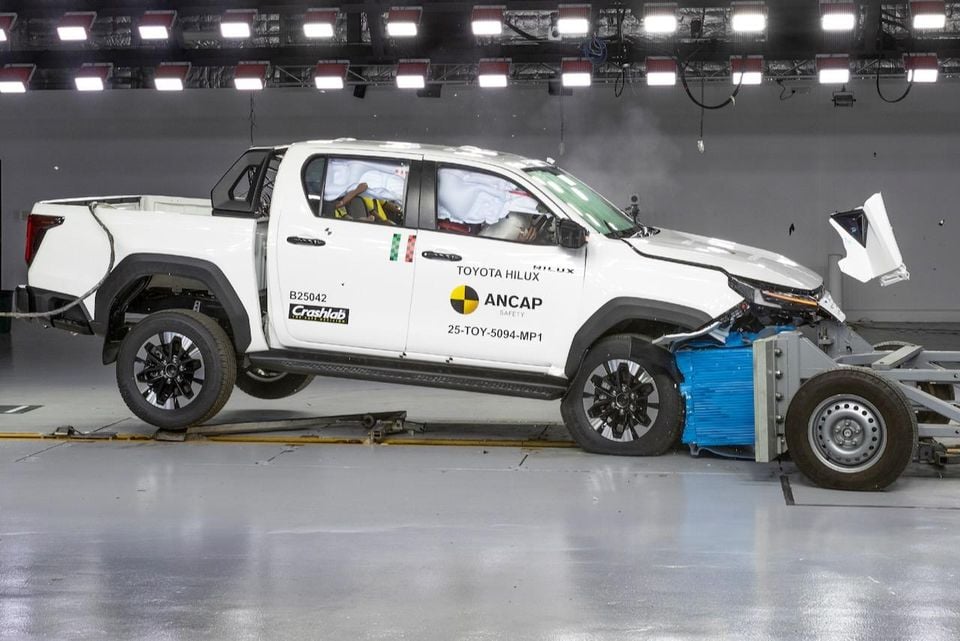
The new HiLux has achieved a five-star ANCAP safety rating, despite the fact it doesn’t have annoying stuff like a driver monitoring camera! That rating doesn’t apply to the hardcore Rugged X, due to its different front-end design and structure.
| Category | Toyota HiLux |
|---|---|
| Adult occupant protection | 84 per cent |
| Child occupant protection | 89 per cent |
| Vulnerable road user protection | 82 per cent |
| Safety assist | 82 per cent |
Standard safety features include:
The SR and above add:
It’s, ahem, safe to say, this new HiLux is a winner on safety.
To see how the Toyota HiLux lines up against the competition, check out our comparison tool
Choose a HiLux and you’re getting, reputably, one of the most reliable utes on the market. Right?
| Servicing and Warranty | Toyota HiLux |
|---|---|
| Warranty | 5 years, unlimited kilometres |
| Roadside assistance | Up to 7 years (service-activated) |
| Service intervals | 6 months or 10,000km |
| Capped-price servicing | 5 years or 75,000km |
| Average annual service cost | $790 |
| Total capped-price service cost | $3950 |
Well, it’s also covered by Toyota’s five-year, unlimited-kilometre warranty, and if you service the vehicle on time with Toyota, you will also get up to seven years of powertrain warranty cover.
The servicing intervals are shorter than some rivals – six months and 10,000km – which might go some way to explaining why this ute has a good reputation for reliability.
If you do a lot of distance, though, it’ll get pricey to pay for all that servicing. There’s a capped-price service plan for the first five years or 75,000km, but remember that’s 10 visits to Toyota, whereas some rivals would inconvenience you for half that amount over the same period.
To see how the Toyota HiLux lines up against the competition, check out our comparison tool
To me it feels as though Toyota has made the changes it really needed to in order to keep the HiLux within the consideration set in the ute segment.
It’s still not the best ute to drive, nor is it the most luxurious nor most refined.
But what it is, is a top choice for those looking for known capability and a reputation for reliability, and now with many of the latest features you’d expect in a modern dual-cab 4×4 ute.
The Rogue itself is a solid choice, with a number of helpful inclusions that make it stand out from the crowd at this price point.
CarExpert can save you thousands on a new Toyota HiLux. Click here to get a great deal.
Click the images for the full gallery
CarExpert brings together reviews, research tools and trusted buying support, guiding you from research to delivery with confidence.
Quickly see how this car stacks up against its competition. Select any benchmark to see more details.
Toyota HiLux
Toyota HiLux Sales rolling 12-months#
*Based on VFACTS and EVC data
Looking for complete Toyota HiLux price history?
Our Toyota HiLux Pricing Page shows exactly how prices have changed over time.
2026
$38,966
2026
$58,536
2026
$69,866
2026
$78,106
2026
$78,106
Matt has more than a decade of experience in automotive journalism, and loves exploring the pros and cons of new cars, delving into deep-dive industry stories, and going for a drive just for the fun of it.
Add CarExpert as a Preferred Source on Google so your search results prioritise writing by actual experts, not AI.
Matt Campbell
23 Hours Ago

William Stopford
3 Days Ago

Damion Smy
4 Days Ago
William Stopford
6 Days Ago
Damion Smy
6 Days Ago

Max Davies
7 Days Ago
Add CarExpert as a Preferred Source on Google so your search results prioritise writing by actual experts, not AI.
# Based on VFACTS and EVC data
† Displayed prices are based on the drive-away price of the vehicle, which includes delivery charges, registration fees, number plates, and applicable road taxes, based on a Sydney location. However, prices may vary between states and territories, and additional costs such as compulsory third party (CTP) insurance, dealer delivery fees, and optional extras are not included. These prices are subject to change without notice and may not reflect current market pricing or dealer offers.
 Automotive Vehicle Spec Data & 4K images Powered by JATO Dynamics Ltd