
Derek Fung
Volvo CEO thinks buyers will return to wagons
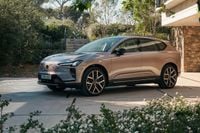
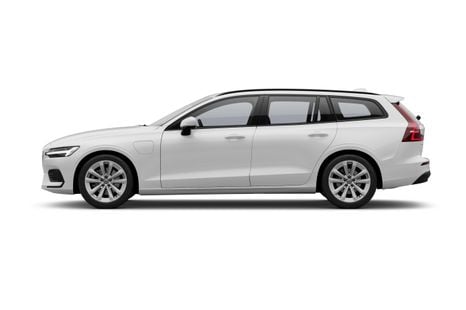
Wagons only made up five per cent of Volvo's global sales in 2025, but the brand's CEO is forecasting some light at the end of the tunnel.
21 Minutes Ago
The all-new EX60 is the electric counterpart to Volvo's most popular model, but can it do the XC60 justice? Ben Zachariah went to Spain to find out.
CarExpert brings together reviews, research tools and trusted buying support, guiding you from research to delivery with confidence.
It’s been almost two decades since Volvo unveiled the XC60 concept – a mid-size SUV that would become the best-selling model in the company's history.
As of mid-2025, more than 2.7 million examples of the XC60 have been sold globally since it was launched in 2008, overtaking the iconic 240 as Volvo’s most popular vehicle.
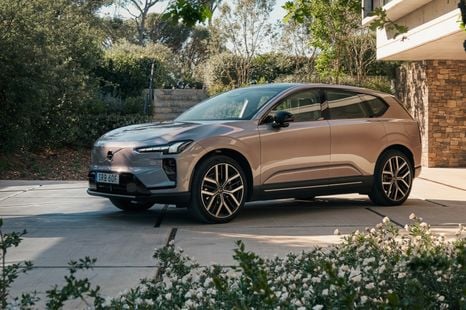
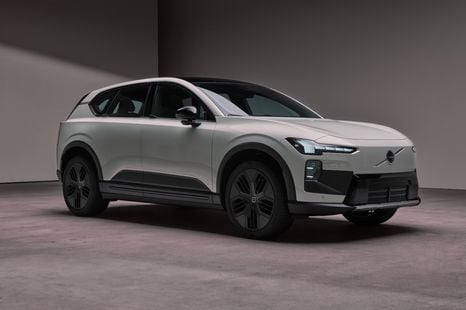
Now there’s this: the Volvo EX60, which takes the XC60 and evolves it into an electric vehicle – sitting between the EX40 and EX90 in the Swedish brand’s EV lineup.
Announced in January, the all-new EX60 is rolling out in Europe and other markets shortly, though Australian buyers won’t see the electric Volvo in local showrooms until around the fourth quarter of 2026.
Priced from about $87,000, the EX60 will initially be available in two variants: the rear-wheel drive P6 Ultra and the all-wheel drive P10 Ultra.
However, there are suggestions the model range could expand to include the EX60 Cross Country soft-roader, the forthcoming high-performance P12, and perhaps even a new entry-level variant positioned below the P6.
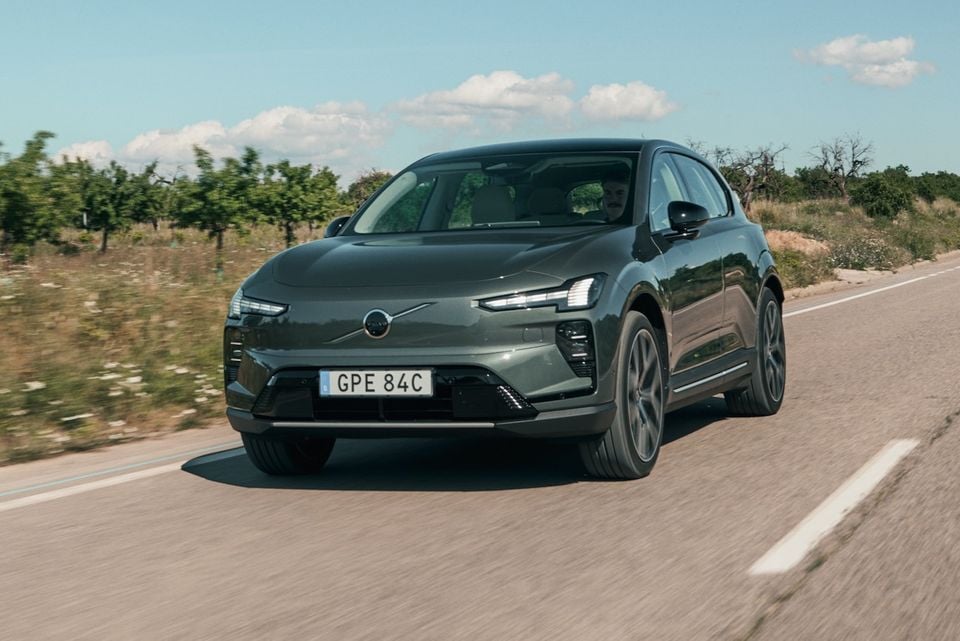
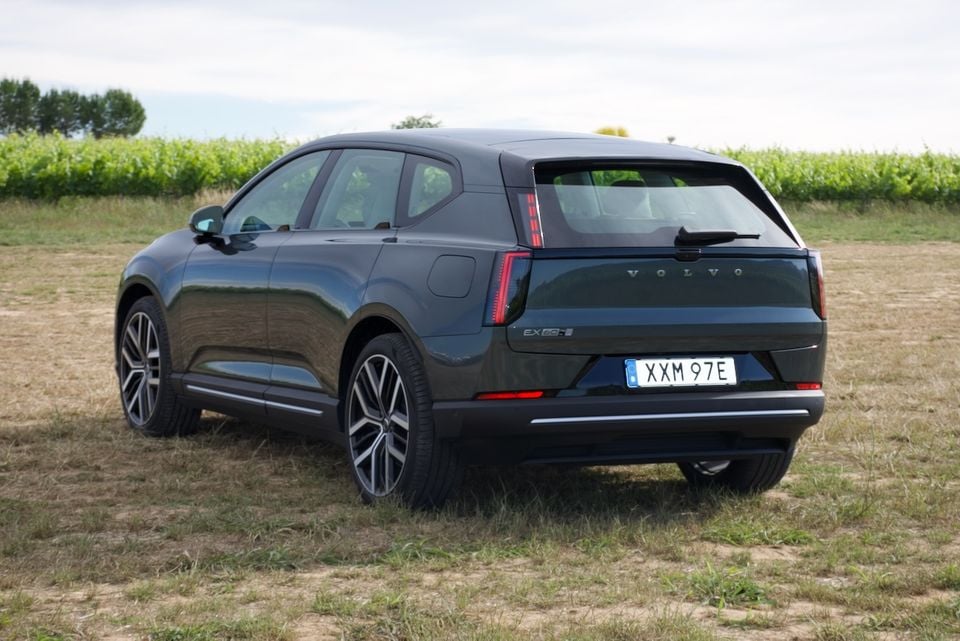
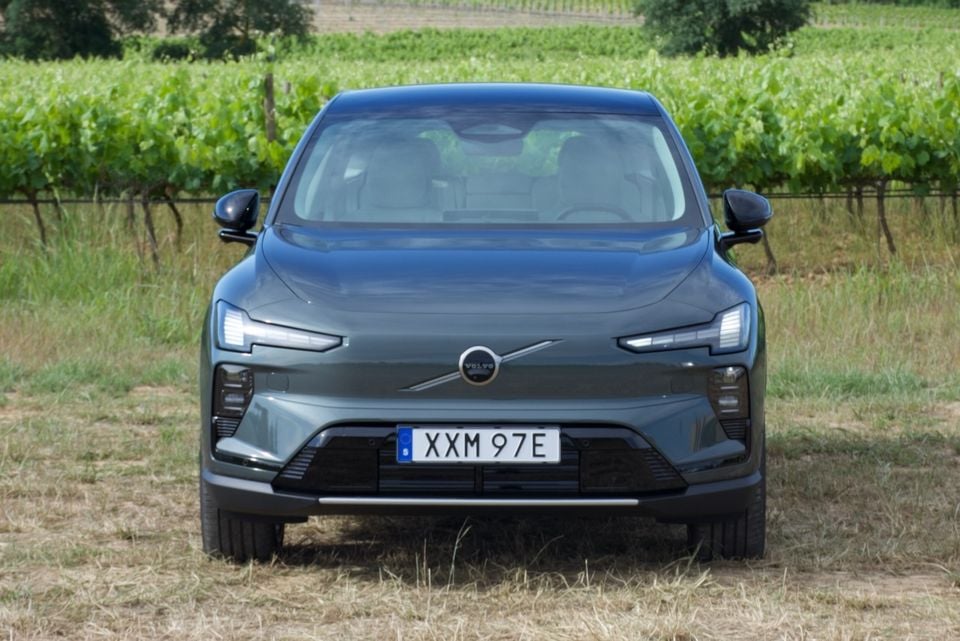
There are some cool features on the EX60. Volvo claims an aerodynamic drag coefficient of 0.26Cd, which isn’t bad for a mid-size SUV, and matches the likes of the new Nissan Leaf SUV and Toyota C-HR.
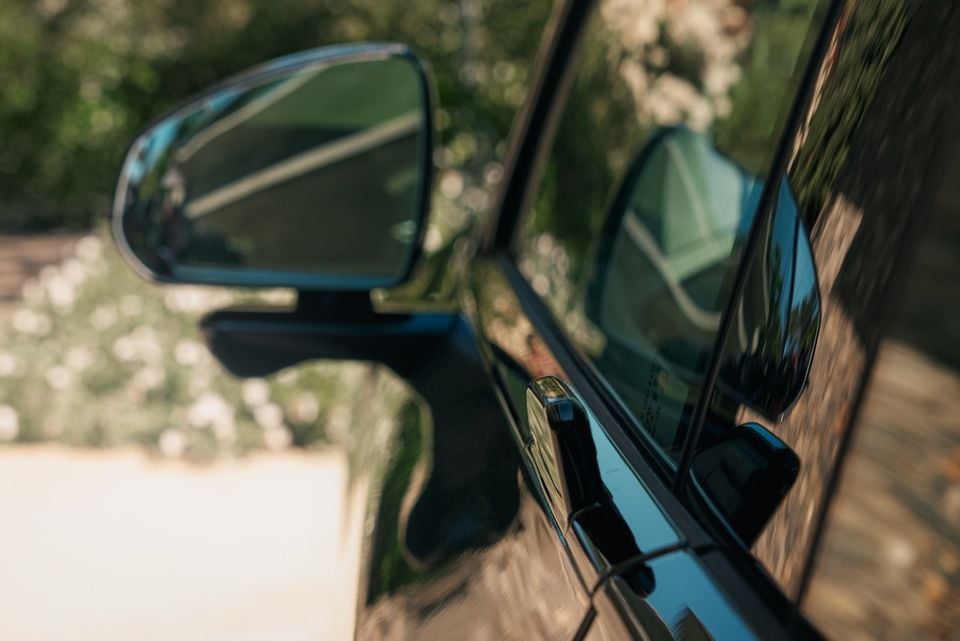
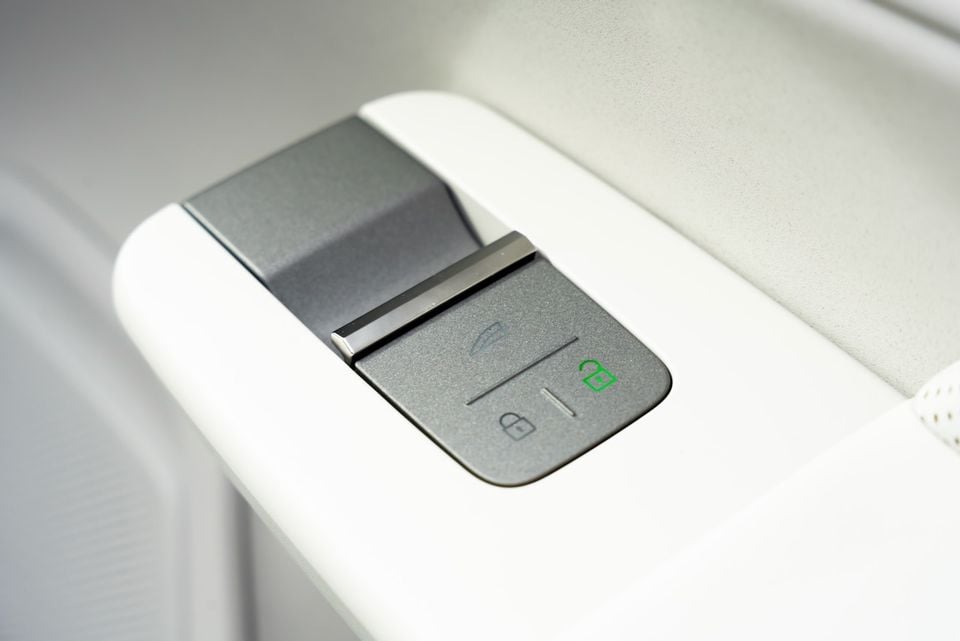
Perhaps my favourite, though, are the ‘wing grip’ exterior door handles – which are, really, little more than buttons. Not dissimilar from those on the Ford Mustang Mach-E, they help maintain the clean lines down the side of the vehicle, while also being enjoyable to use... assuming your car's 12-volt battery has enough charge to let you in.
A lot of the vehicle’s innovations are hidden beneath the surface, based on the car’s new SPA3 platform – and Volvo isn’t shy about spruiking this new architecture, with the company’s Chief Engineering and Technology Officer, Anders Bell, saying the SPA3 is “the best electric vehicle platform in the world”. Big claim.
Not all new models get a global launch, but Volvo chose Barcelona in Spain to let us loose in its latest creation for the first time, and it was evident there’s a lot of pride in the new EX60. Clearly, this is a model the brand expects to do well, carrying the torch onwards from the XC60.
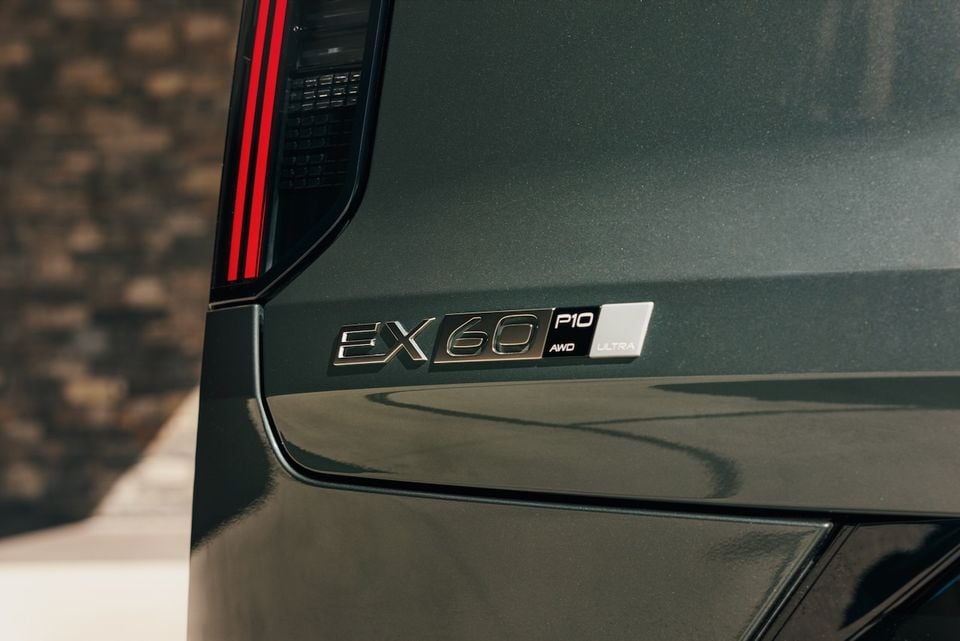
The 2027 Volvo EX60 kicks off with the P6 RWD Ultra, priced from $86,990 before on-road costs, with the P10 AWD Ultra starting from $101,990 plus on-roads.
| Model | Price before on-road costs |
|---|---|
2027 Volvo EX60 P6 RWD Ultra | $86,990 |
2027 Volvo EX60 P10 AWD Ultra | $101,990 |
For context, that positions the EX60 P10 AWD Ultra just below the upcoming BMW iX3, while the Audi Q6 e-tron sits between the P6 and the P10, priced from $99,900.
To see how the Volvo EX60 lines up against the competition, check out our comparison tool
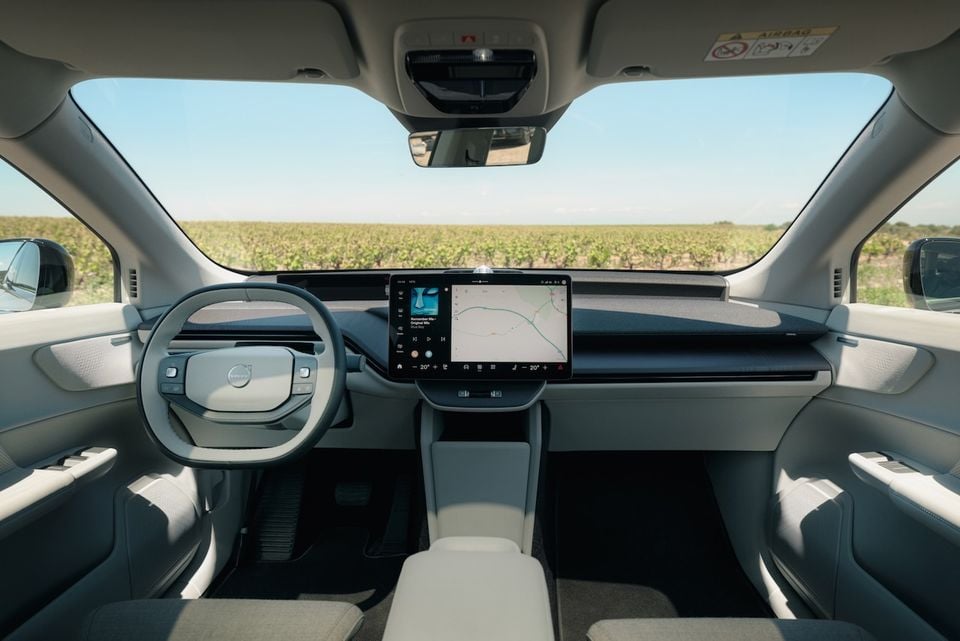
The automotive world seems to have embraced the Scandinavian design approach to interiors, with minimalistic architectural influence consisting of clean dashboards, open-pore wood trims, and stripped-back centre stacks.
So, how does the iconic Swedish brand outdo the copycats? By doing it better.
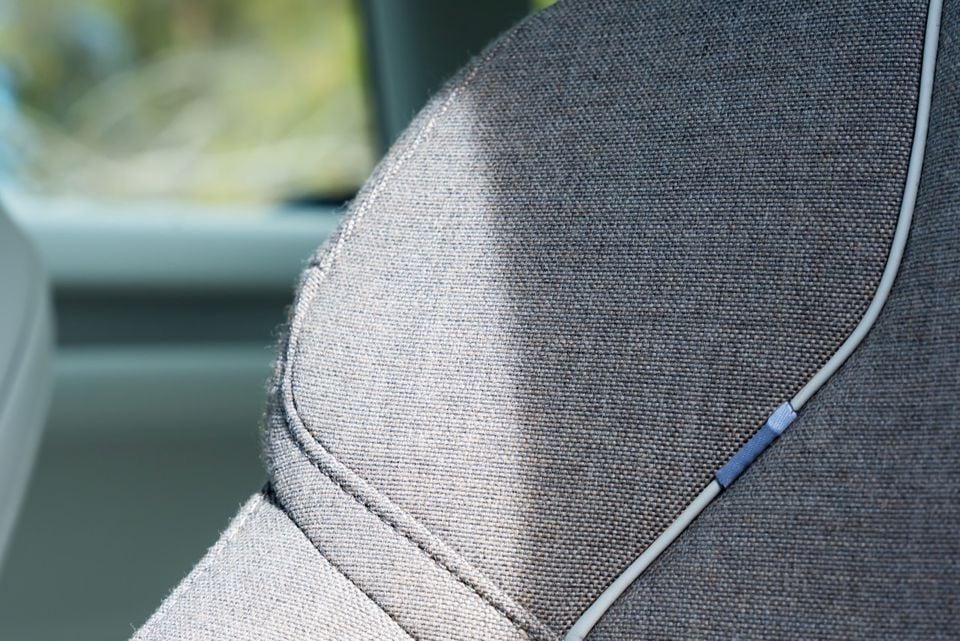
Looking like an evolution of the EX30’s cabin, the entry-level EX60 P6 has one of the most beautiful interiors in recent memory, thanks to a tailored wool seat fabric that is, frankly, one of the coolest things about this car – or any car.
In actual fact, it’s a blend of 30 per cent wool and 70 per cent recycled polyester. The wood dash trim is also real and FSC-certified, which is all part of Volvo’s sustainability commitment.
Strictly speaking, the P6 features a ‘rye-tailored wool blend in dawn interior with dark rubus fused ash wood decor’. I’m not sure what any of that means, but it looks fantastic.
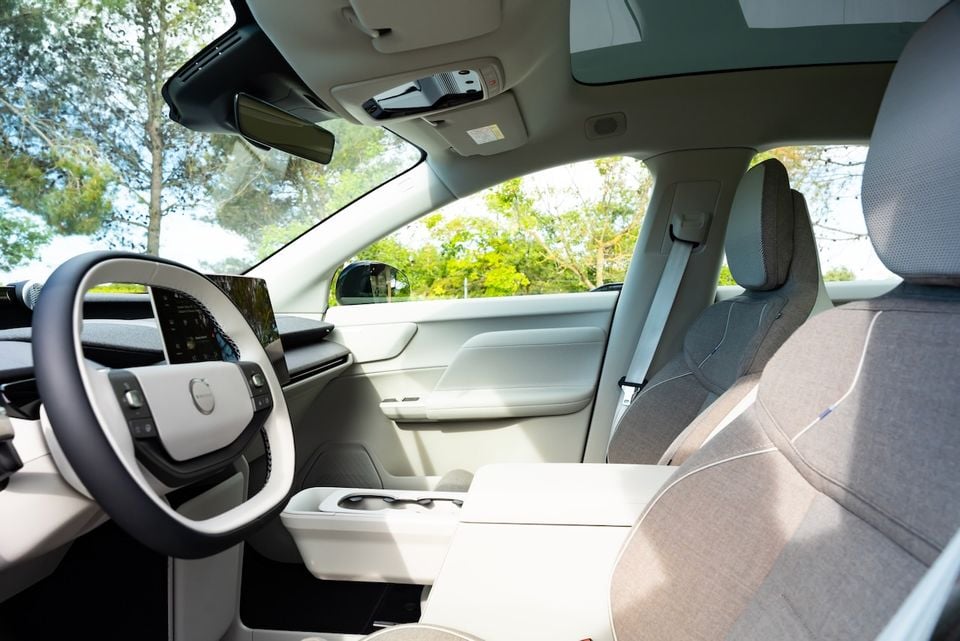
Move up to the P10 and the wool blend is replaced with either Nappa leather or Nordico upholstery, which the company refers to as a ‘leather alternative’. Given how excellent the wool is in the P6 – and how widespread leather-type upholstery is now – it felt like a bit of a backward step, despite the quality of the fabrics used.
It’s a running theme, with the surfaces throughout the cabin feeling high quality and screwed together well – even with these apparently being pre-production test vehicles.
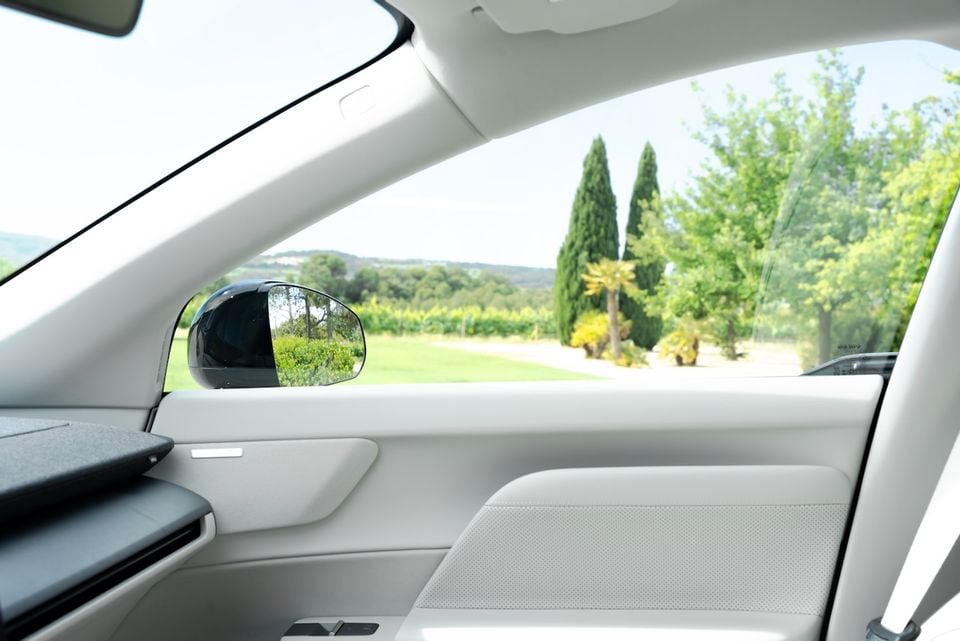
However, while the extensive use of white vinyl on the doors, steering wheel, and other surfaces helps create an airy feeling inside, my experience is these kinds of colours can be the first to collect dirt and stains without proper cleaning and maintenance, prematurely ageing the car.
Frankly, I think the problem is that everyone who works at car companies gets brand-new cars on a regular basis, so they don’t see what it’s like to live with an automobile for two, three, five years.
It does feel as if there’s been considerable attention paid to the materials, and that carries across to the switchgear. Volvo hasn’t introduced new types of buttons like so many of its rivals; instead, it’s just focused on making all the touchpoints usable and crisp, like the buttons on a MacBook laptop.
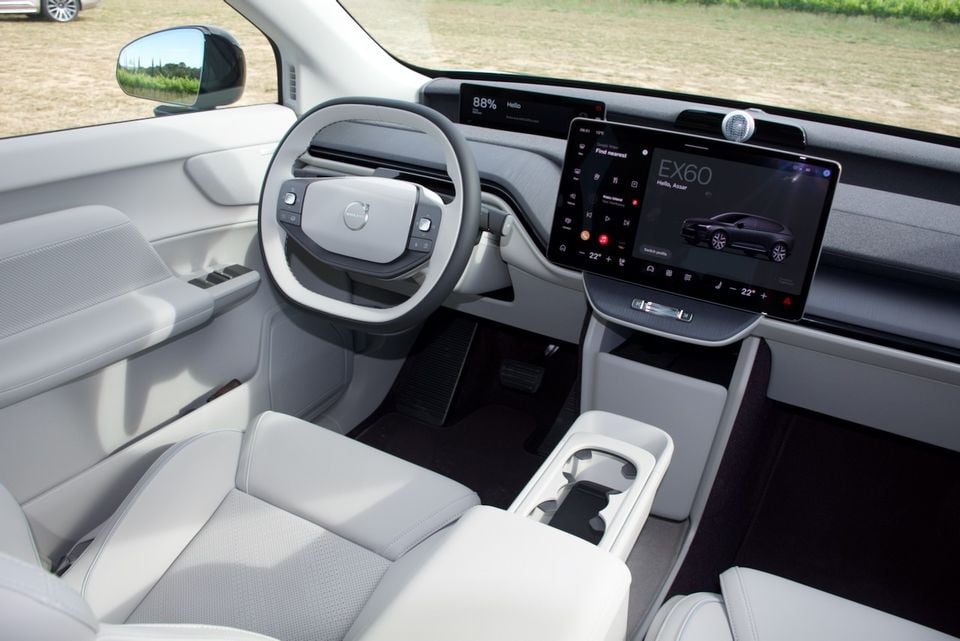
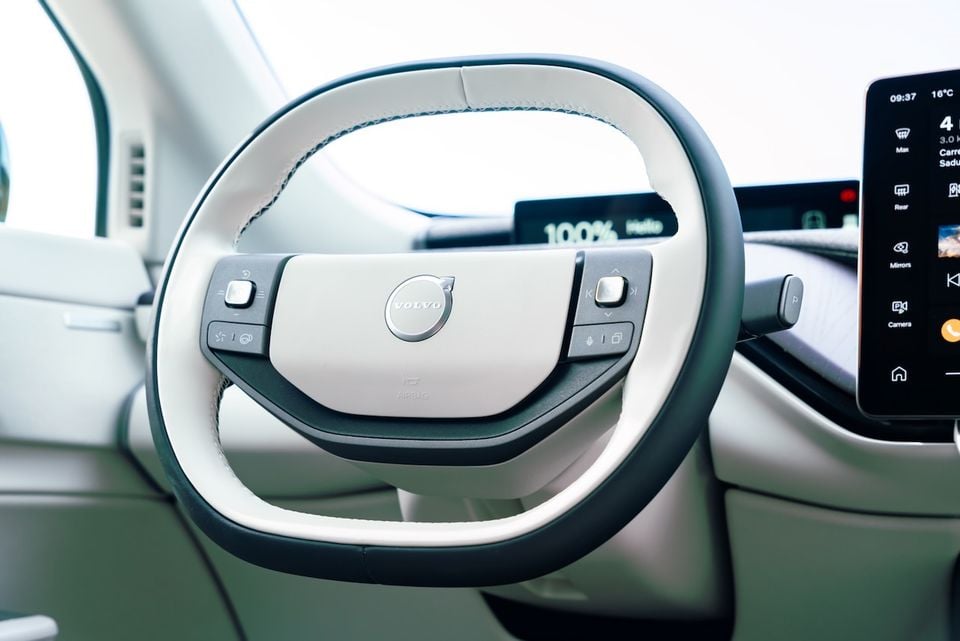
Volvo’s designers haven’t been entirely immune to industry trends, though. The steering wheel is now a truncated circle, being flat on the top and the bottom. It looks good in photos but, in reality, the overall diameter feels just a little bit small in the hands.
Another trend the company has fallen victim to is replacing the wiper stalk with the drive selector.
Both the indicator and drive selector stalks are beautifully designed and of high quality, but there was an instance when my co-driver pushed down the stalk when wanting to indicate right.
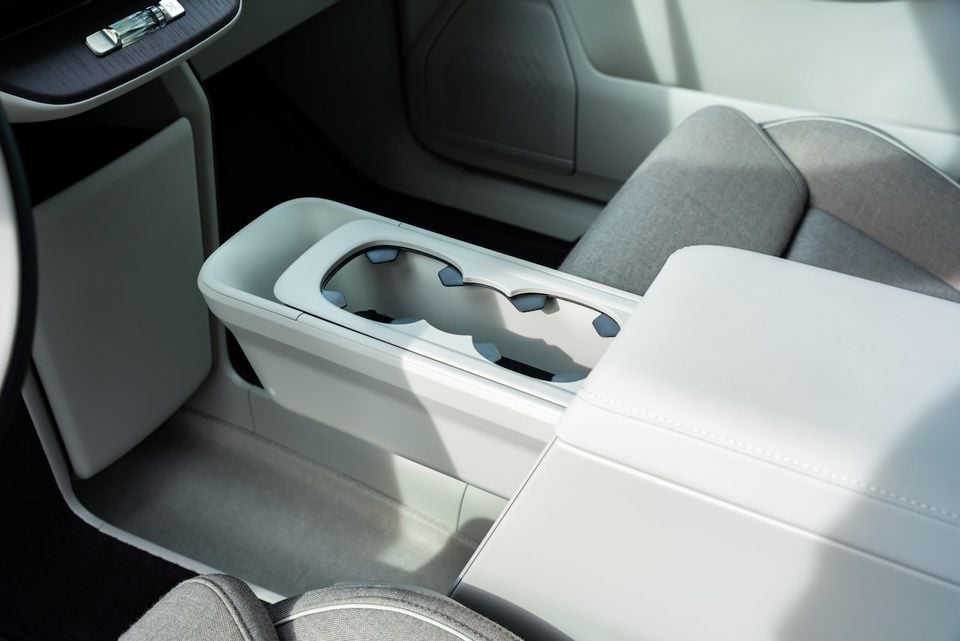
Manufacturers tell us they are doing this to free up space in the centre console – though, like Volvo, they don’t actually seem to be doing anything with this space. There’s just a retractable set of cupholders there instead, which is somewhat flimsy and doesn’t feel consistent with the rest of the cabin.
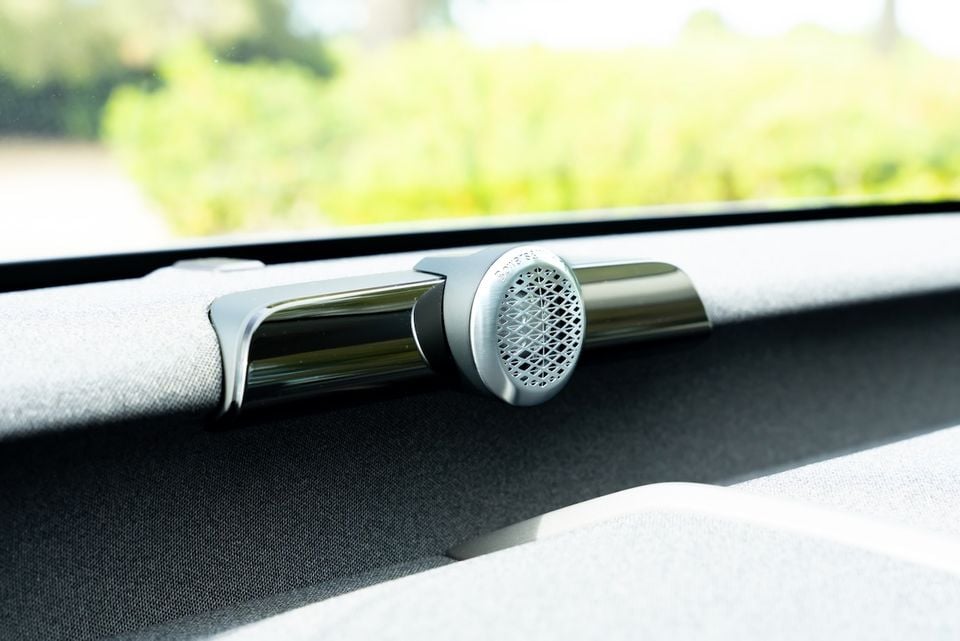
Speaking of consistency, with Volvo getting rid of its crystal gear selector, there’s now a crystal thumb wheel for the volume control in the centre of the dash – adding some continuity to the EX60’s interior.
Both the P6 Ultra and P10 Ultra come with the 28-speaker Bowers & Wilkins premium audio system, and it’s fantastic. Helped by speakers in the headrests, the sound quality remains clear and crisp with excellent balance, no matter how loud you push it.
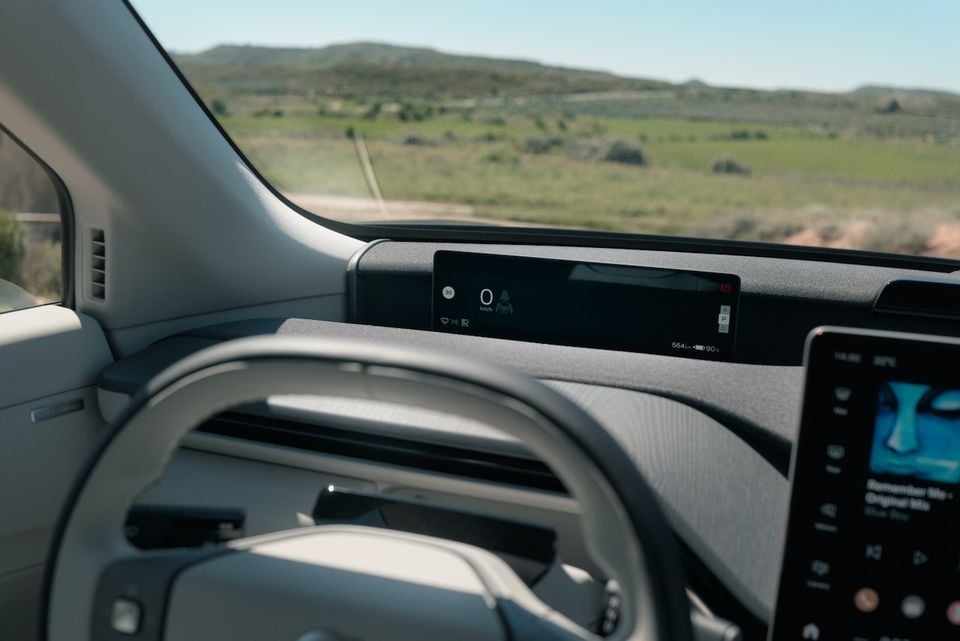
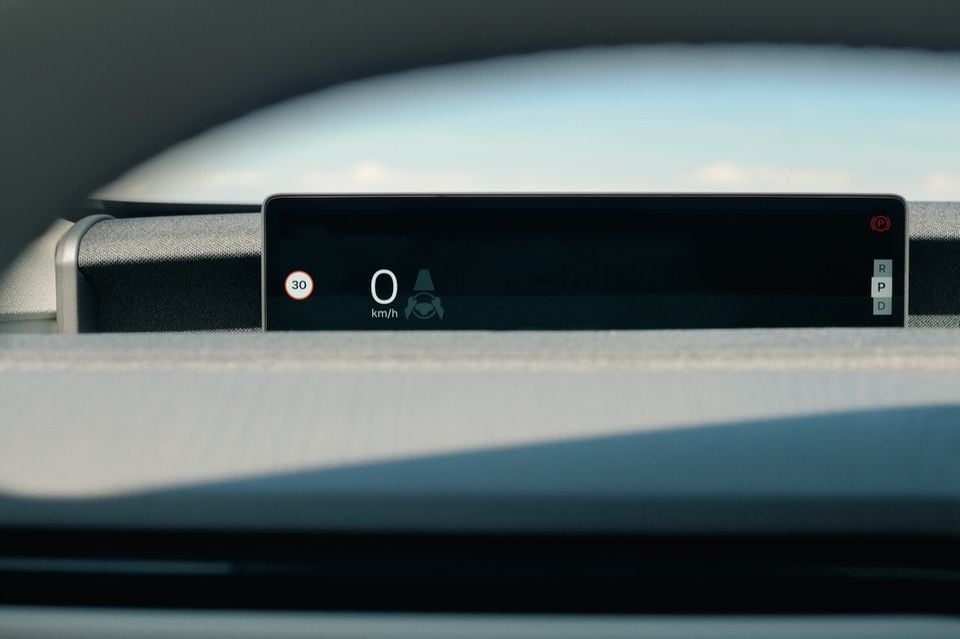
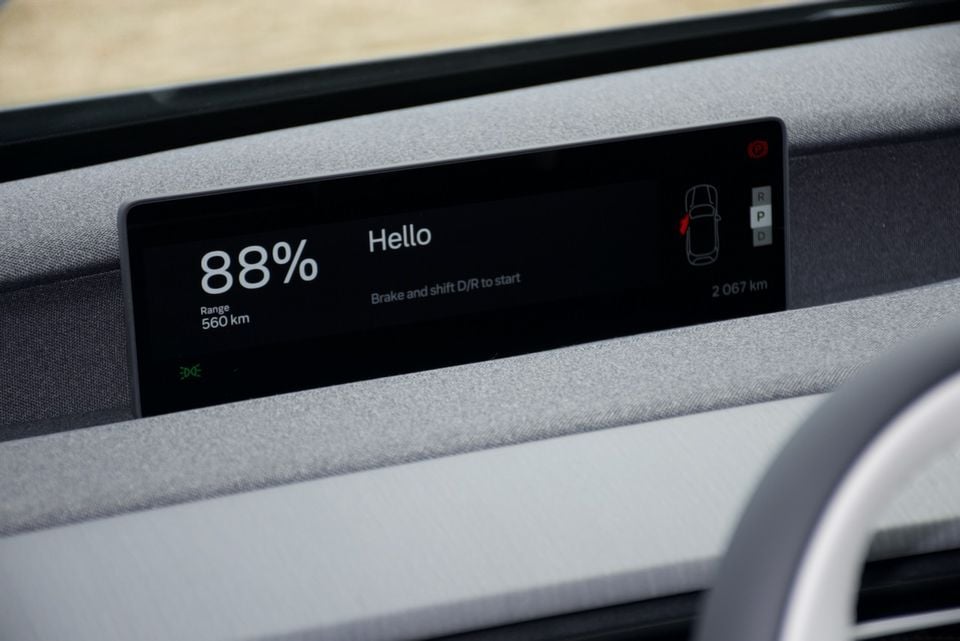
One of the better innovations is the high-mounted digital instrument cluster, sitting just below the windscreen. Not only does this mean the position of the steering wheel does not impede the display, but your eyes can easily glance from the road to check your speed. It’s basically the same concept that Honda introduced on its Civic more than 20 years ago, and it works just as well now as it did then. It also eliminates the need for a head-up display that projects onto the glass.
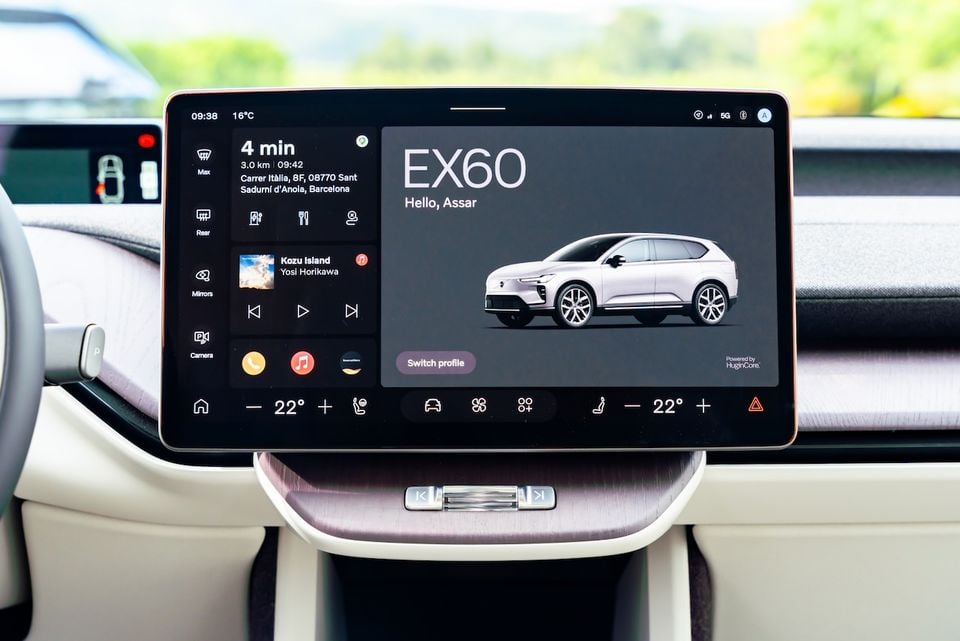
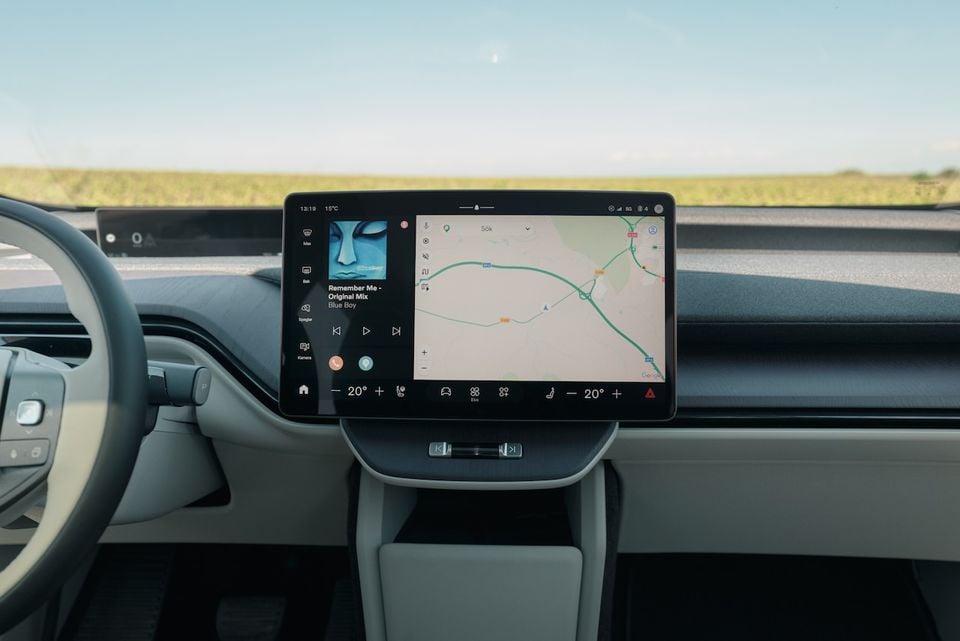
Also new is the ‘floating’ landscape-style 15-inch infotainment tablet – a departure from Volvo’s typical portrait-oriented touchscreens. There are two shortcut menu bars, with the lower one providing constant access to the car’s dual-zone automatic climate control, while the sidebar menu gives access to different menus.
The lack of physical buttons is always an annoyance, but of the screen-based systems this one works pretty well. The horizontal positioning also makes a lot more sense, allowing the driver to easily access maps and music streaming.
Volvo’s made a big deal out of its integration with Google voice commands, which now includes the ability for the occupants to chat with artificial intelligence. While the standard commands worked well enough, the AI was a bit chatty and naturally didn’t work when the mobile signal was poor.
But there are benefits, like putting questions to it about the area you’re driving through, or answering those questions about life that children tend to ask. Integrating the AI assistant with your Google account could potentially make work tasks more efficient, though we didn’t have the ability to test this in detail.
Rather than traditional, physical keys, our test cars were accessed and started using a digital key loaded onto a smartphone. Tesla and BMW have been offering this for years, too, and though it's a neat idea I do worry about what happens when your mobile runs out of battery.
Volvo has also introduced its 'multi-adaptive' seatbelt systems on the EX60. Essentially, sensors in the seat will match the size and shape of your body to 11 pre-set profiles, with the belt adapting to you, as well as the type and severity of a collision.
In terms of ergonomics, the seating and steering both offer a good amount of adjustment, and the front seats are wonderfully comfortable – made all the more enjoyable following a Ryanair flight a couple of days earlier. Moving the seats is a bit unusual, with a single toggle on the side that changes functions depending on what you need to adjust.
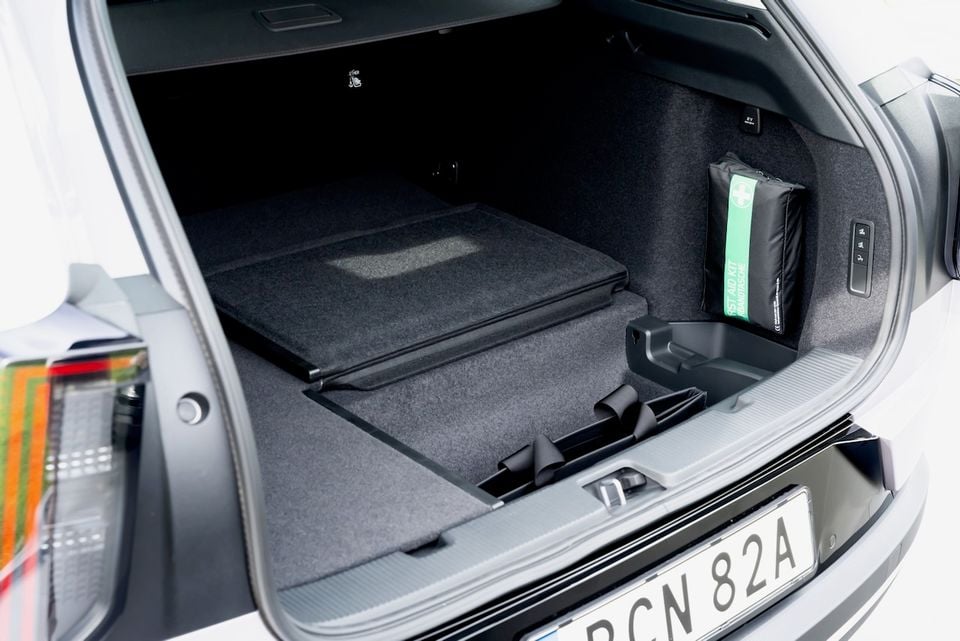
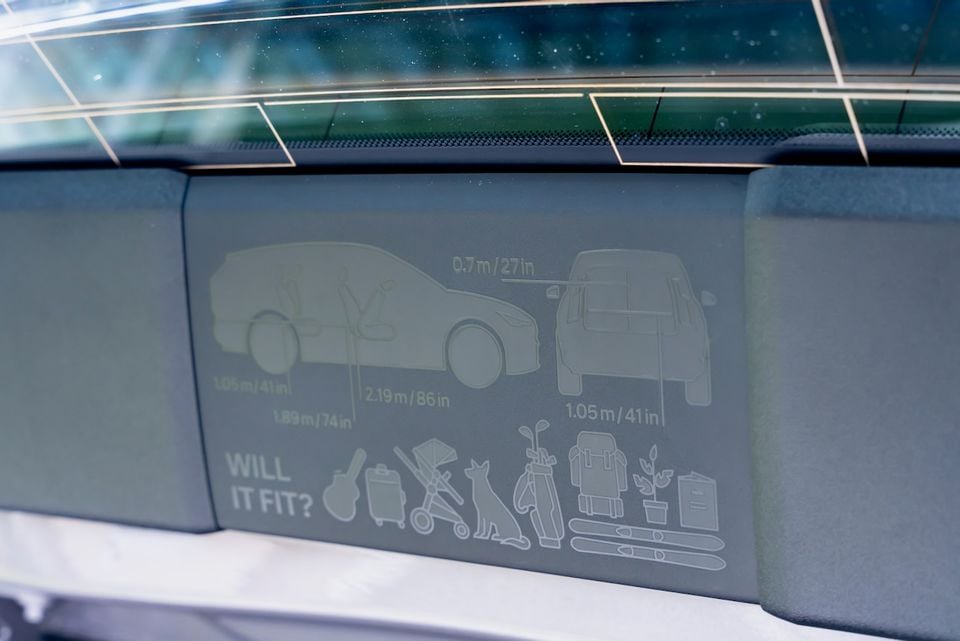
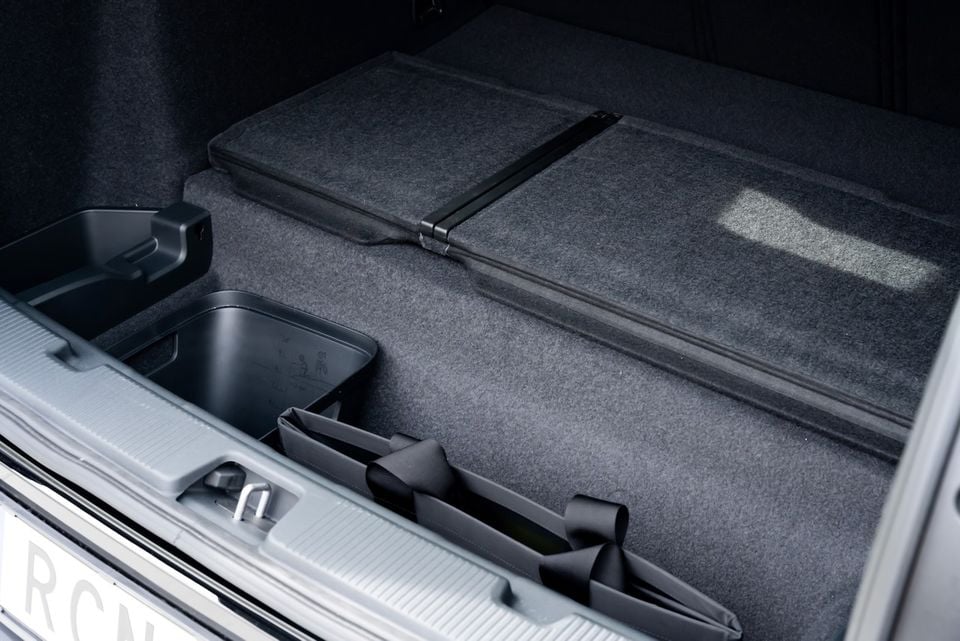
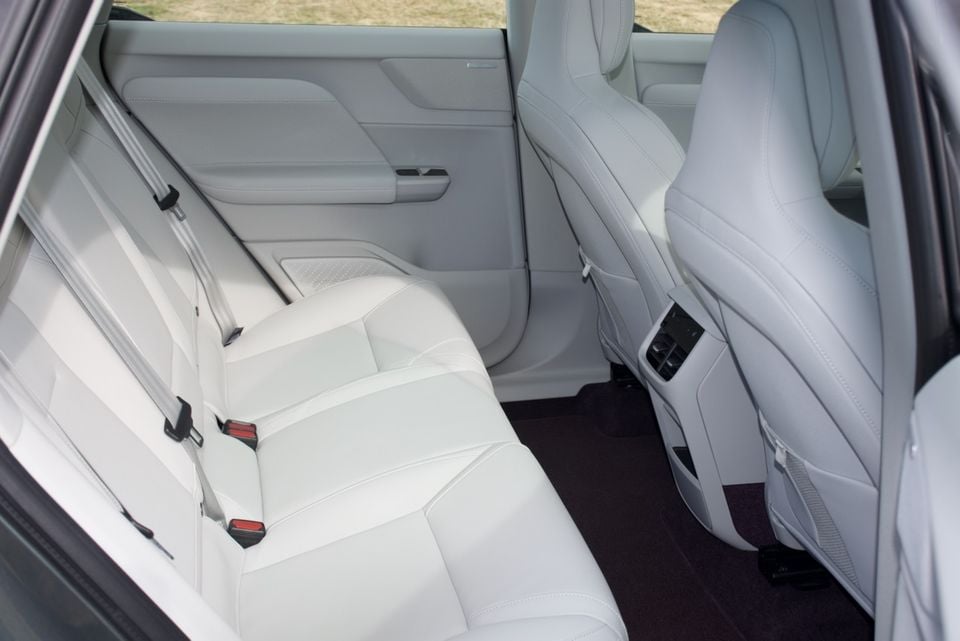
We've no immediate complaints about the back seats, given how big this ‘mid-size’ SUV is now. Storage throughout the cabin is also good, with lots of bins and spaces to hold your knick-knacks, a 58-litre frunk under the bonnet, and 523L of boot space – which includes under-floor storage.
I suspect the under-floor storage bin will end up being particularly useful, and it can be optioned with either a waterproof bag for your scuba gear, or a crab bucket if that’s what you’re into. Really.
Drop the 40/20/40-split rear seatbacks and the boot space increases to 998L under typical measurements.
| Dimensions | Volvo EX60 |
|---|---|
| Length | 4803mm |
| Width | 1908mm |
| Height | 1635mm |
| Wheelbase | 2970mm |
| Cargo capacity | 523L (rear seats up) |
To see how the Volvo EX60 lines up against the competition, check out our comparison tool
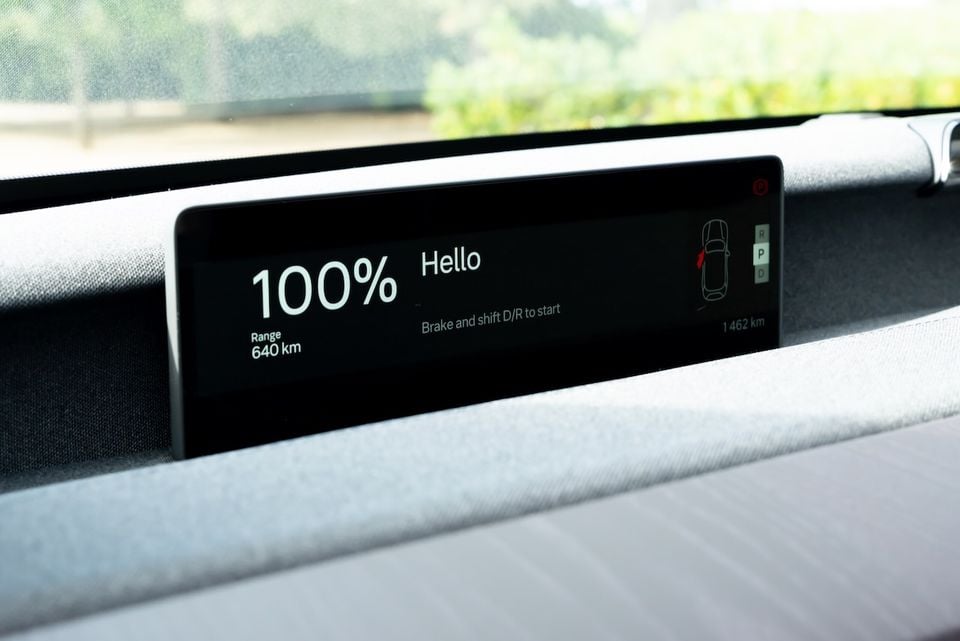
The Volvo EX60 P6 RWD Ultra comes with a single electric motor, sending 275kW of power and 480Nm of torque to the rear wheels, fed by an 83kWh (80kWh usable) battery, for 620km of driving range based on the WLTP standard.
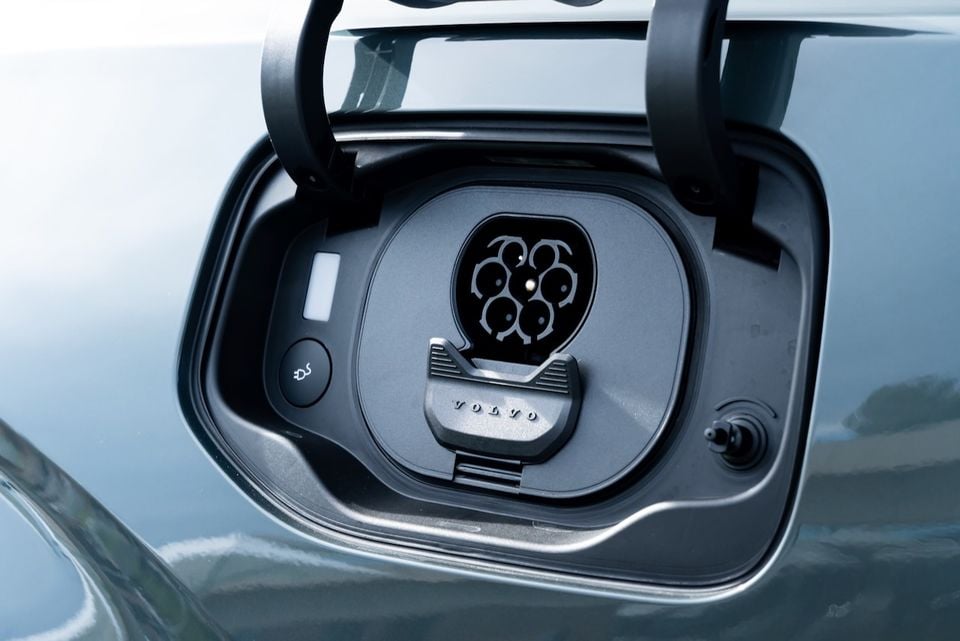
Along with a claimed 0-100km/h time of 5.9 seconds, Volvo says the P6 has an average energy consumption figure of 14.7kWh/100km, which is more or less on par with the likes of the Renault Megane E-Tech and the rear-drive Tesla Model Y.
Step up to the all-wheel drive EX60 P10 Ultra, and you gain a second electric motor for combined outputs of 375kW and 710Nm. That drops the claimed 0-100km/h sprint time to 4.6 seconds, while the range increases to 660km thanks to a larger 95kWh battery (91kWh usable), but energy consumption increases to a claimed 15.7kWh/100km.
There is also the P12 – which has yet to be confirmed for the Australian market – which sees power jump to 500kW and 790Nm, dropping the claimed 0-100km time to 3.9 seconds. Its huge 117kWh (112kWh usable) battery stretches the range to an impressive 810km.
While we’re on the technical side, it’s worth mentioning the EX60 features cell-to-body construction, meaning the battery cells are integrated into the vehicle’s body – rather than being a battery slab that’s mounted to the underside of the car.
CarExpert brings together reviews, research tools and trusted buying support, guiding you from research to delivery with confidence.
The benefits of this are a more rigid chassis, supposedly improved impact protection for occupants, and a lower floor height. While it no doubt has its benefits, buyers should consider the fact that you cannot simply swap out the battery pack if something were to ever go wrong.
Volvo also uses a ‘mega-casting’ technique for its rear floor structure, in which a single, sculpted piece of aluminium is cast, rather than welding together approximately 100 pieces of individual metal – streamlining production and lightening the vehicle.
| Specifications | Volvo EX60 P6 RWD | Volvo EX60 P10 AWD |
|---|---|---|
| Drivetrain | Single-motor electric | Dual-motor electric |
| Battery | 83kWh (80kWh usable) | 95kWh (91kWh usable) |
| Power | 275kW | 375kW |
| Torque | 480Nm | 710Nm |
| Drive type | Rear-wheel drive | All-wheel drive |
| 0-100km/h (claimed) | 5.9 seconds | 4.6 seconds |
| Energy consumption (claimed) | 14.7kWh/100km | 15.7kWh/100km |
| Claimed range | 620km | 660km |
| Max DC charge rate | 320kW (800V) | 370kW (800V) |
To see how the Volvo EX60 lines up against the competition, check out our comparison tool
Volvo has long been underappreciated for how its vehicles drive.
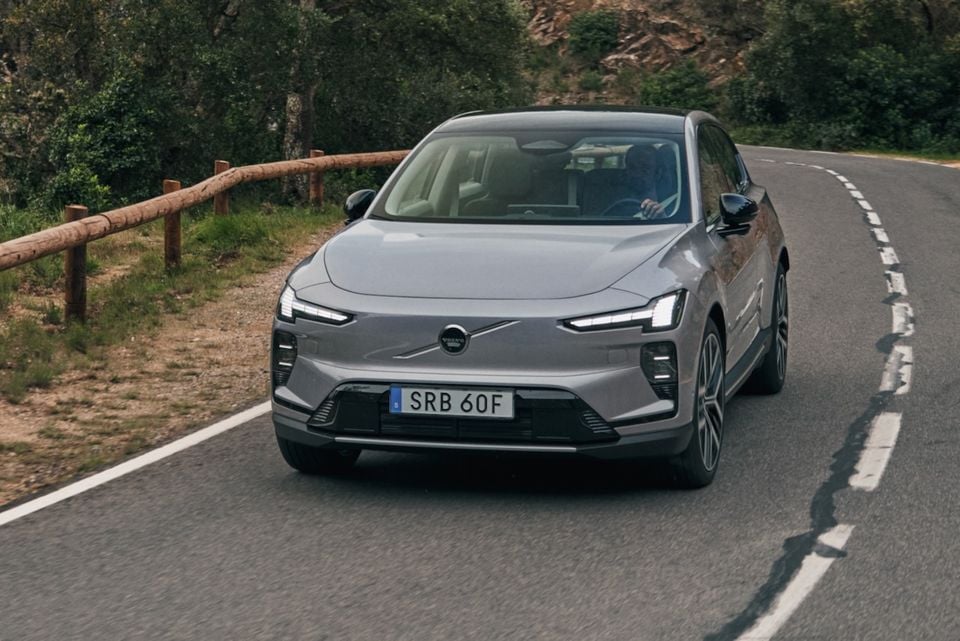
With some notable exceptions, Volvo cars have never been dynamically exciting, but they have offered a solid, comfortable on-road experience that is not dissimilar to that from Mercedes-Benz.
The latest EX60 continues that lovely, cloud-like ride quality, with one exception – which we’ll get to in a moment.
Firstly, the cabin is wonderfully insulated. Although helped by the smooth roads of Spain, noise remained at a minimum throughout our drives, helping to reduce fatigue and maintain a luxury feel, even at speed. It’s one of the best things about electric cars, in this case helped by the EX60's active noise cancellation tech.
However, electric cars sometimes have big power claims, and while those figures are technically correct, manufacturers will map the torque output of the electric motor or motors. Or to put it simply, you don’t always have access to the vehicle’s full performance, even when you flatten the throttle.
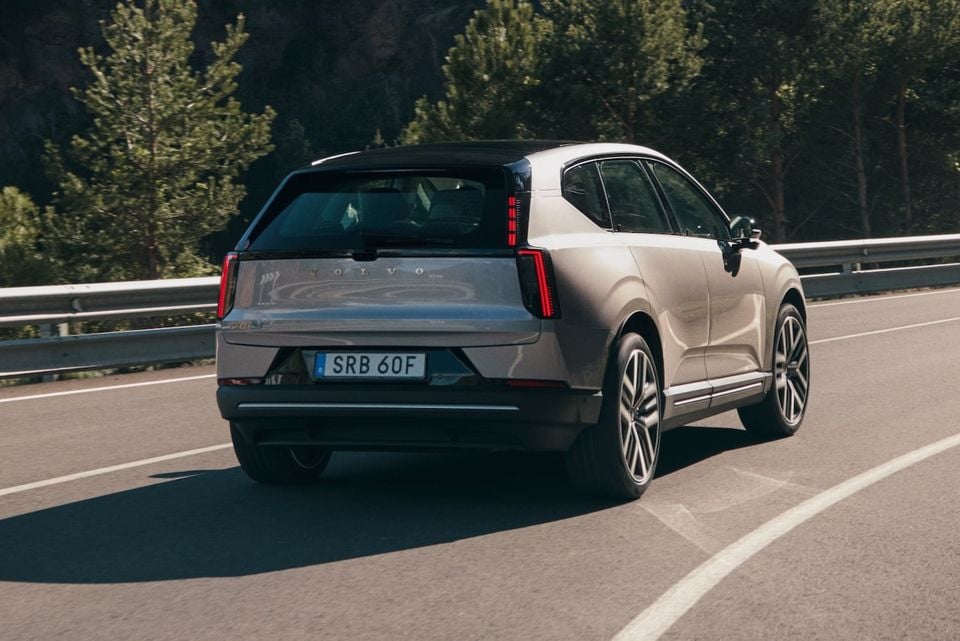
And while there does seem to be a bit of that when accelerating from a standstill, the power delivery is really impressive – even in the P6. It’s particularly impressive when you’re rolling from anything above 40km/h up to freeway speeds, with a nice progressive flow of torque.
I was expecting a more noticeable difference between the P6 and the P10, given there’s more than a second between their 0-100km/h claims. There is definitely a step up in performance, but it’s not night and day. The P10 is plenty quick, though, without feeling like it’s stepping into the realm of a sporty vehicle.
But the benefit of the P10 is in its balance. All-wheel drive means it’s far more neutral and planted in the way it responds to driver inputs. It really felt as if the car was developed with the AWD powertrain as the focus, with the rear-drive layout of the P6 being a bit of an afterthought.
That isn’t to say the P6 is bad in any way, it’s just that the P10 feels more rounded in its handling and on-road manners.
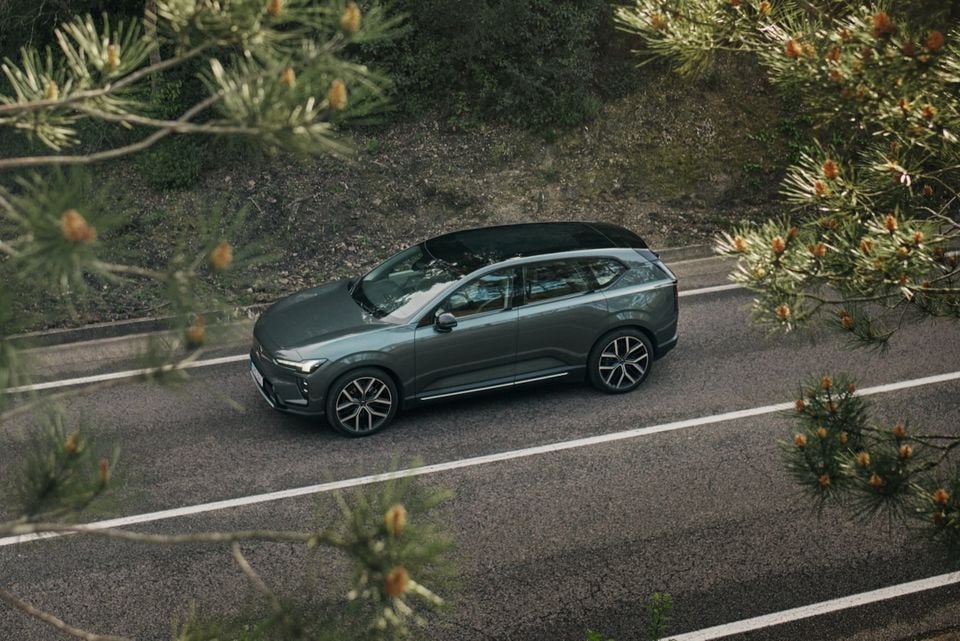
Around corners, the EX60 has loads of grip. We were able to push the P6 to entice oversteer around a tight bend – cancelled out by the computer without any fanfare before there was any danger – but the P10 remained planted at any and all (reasonable) speeds.
The ‘exception’ I referred to earlier relates to the steering. Besides being far too light and offering almost zero communication with the front wheels, the steering itself is far too jittery. This was only exacerbated by the small steering wheel and not helped by the lack of feedback.
All of this translated to somewhat of a flighty driving experience – which is in contrast to the EX60’s relaxed demeanour overall.
Admittedly, after a day of driving along motorways and through the countryside, the sensitive steering did make a bit more sense once we hit Barcelona’s peak-hour traffic.
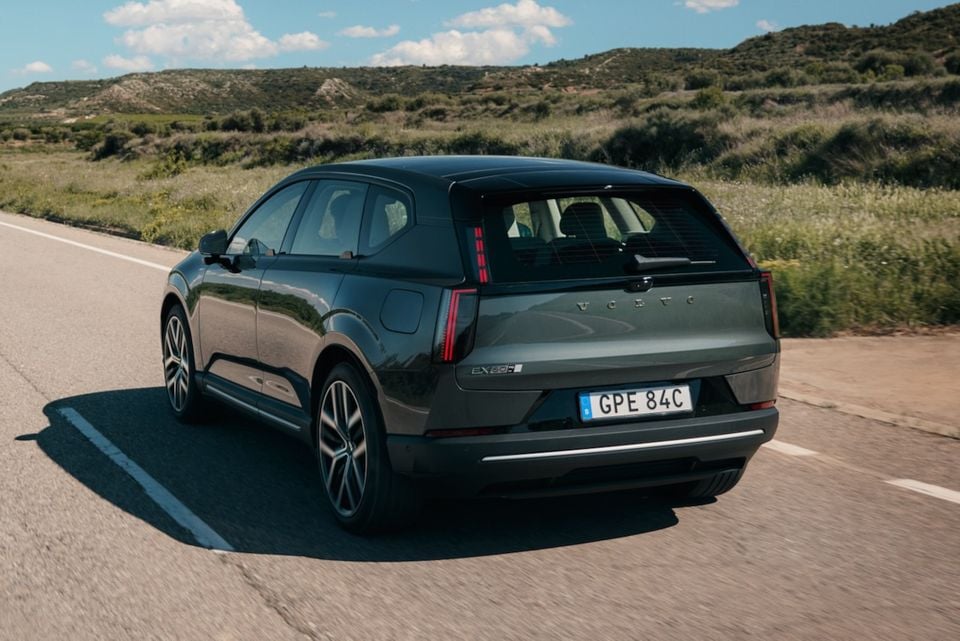
Selecting the ‘comfort’ driving mode does seem to help soften inputs around the edges a bit. Select the sport mode in the P10, and – helped by the adaptive dampers that firm up – the chassis becomes more responsive, like it’s just downed a shot of espresso.
On tight winding roads, it provides a more direct driving experience, but most of the time we found the comfort mode suited the Swedish SUV better.
Those adaptive dampers on the P10 were particularly good over rough surfaces, though there were no complaints with the P6’s standard suspension.
Overall, we came away impressed with our first interaction with the EX60. We’re hoping Volvo engineers will turn down the steering sensitivity a couple of notches, but there’s a lot to like here.
To see how the Volvo EX60 lines up against the competition, check out our comparison tool
Exact features and specifications have yet to be locked in for the Australian market, but we do know the initial EX60 range will include the P6 and P10 variants.
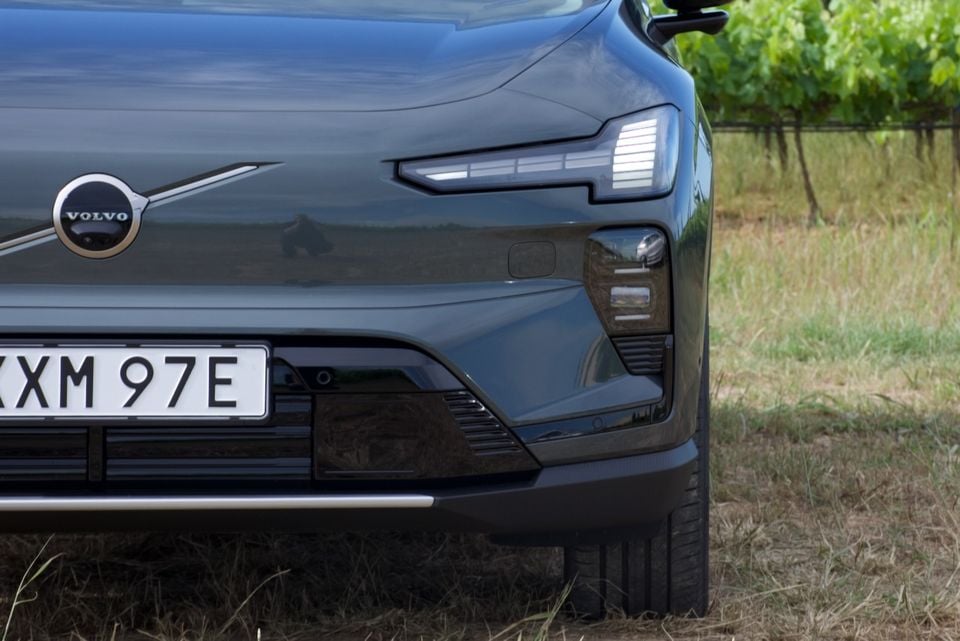
2027 Volvo EX60 equipment highlights:
To see how the Volvo EX60 lines up against the competition, check out our comparison tool
The Volvo EX60 has yet to be tested by ANCAP or its sister organisation, Euro NCAP.
If safety is important to you, it might be worth waiting for the ratings to be published – but given Volvo's long-running commitment to safety, there is an expectation of it doing well. In fact, we'll be interested to see just how high the score will be, particularly with the new seatbelt systems.
Standard safety equipment includes:
To see how the Volvo EX60 lines up against the competition, check out our comparison tool
The EX60 is expected to be backed by Volvo Car Australia's five-year, unlimited-kilometre vehicle warranty – with the brand's hybrids and EVs receiving an additional three years of coverage for the battery.
| Servicing and Warranty | Volvo EX60 |
|---|---|
| Warranty | 5 years, unlimited kilometres |
| Roadside assistance | 5 years |
| Service intervals | 30,000km or 24 months |
| Capped-price servicing | TBC |
However, Volvo has referred to the EX60 gaining a 10-year battery warranty, although there's no confirmation at this stage of whether that will be extended for local buyers.
Service costs have also yet to be announced for the Australian market.
To see how the Volvo EX60 lines up against the competition, check out our comparison tool
Our first taste of the Volvo EX60 was certainly a positive experience, overall.
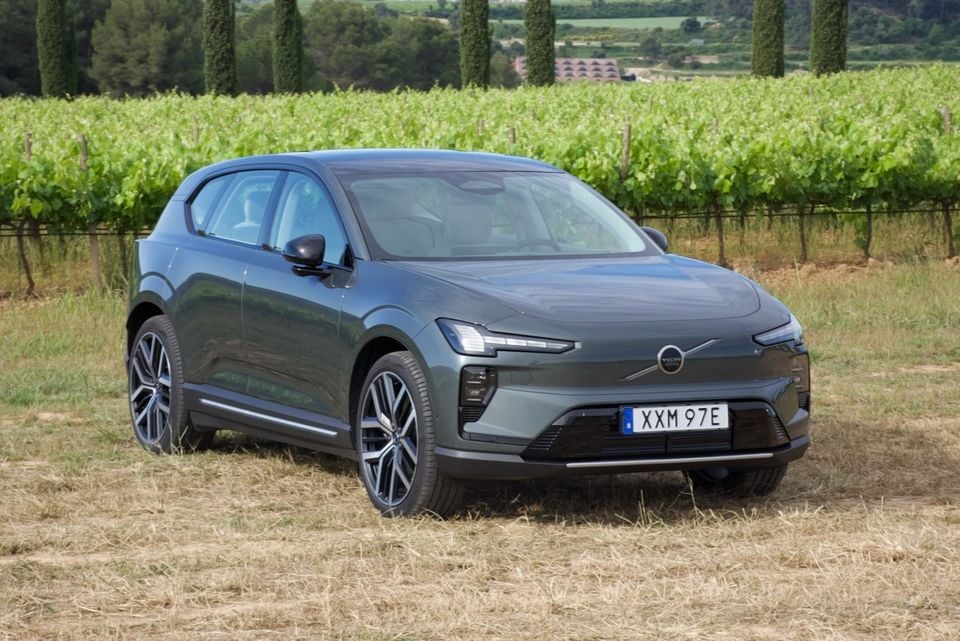
Though we have some minor complaints – most notably with the car’s fidgety steering – the vehicle offers a high level of luxury, and should be considered a serious competitor to the likes of the Germans. In some ways, it’s superior.
Volvo has become a master of interior design and execution, and the EX60 is a perfect example of the brand’s capabilities. The overall fit and finish is top-notch, and combines with superb materials and genuine consideration about how the driver and their passengers interact with the vehicle.
While our preference would be for the wool interior of the P6, the powertrain of the P10 was easily the pick between the two. The balance and grip were superb, with a healthy level of performance also available.
Thanks to its near-silent cabin, the EX60 could be the perfect solution for those who need to commute into the city in heavy traffic, delivering you to your destination in safety and comfort – and potentially with a few emails cleared, thanks to the AI assistant.
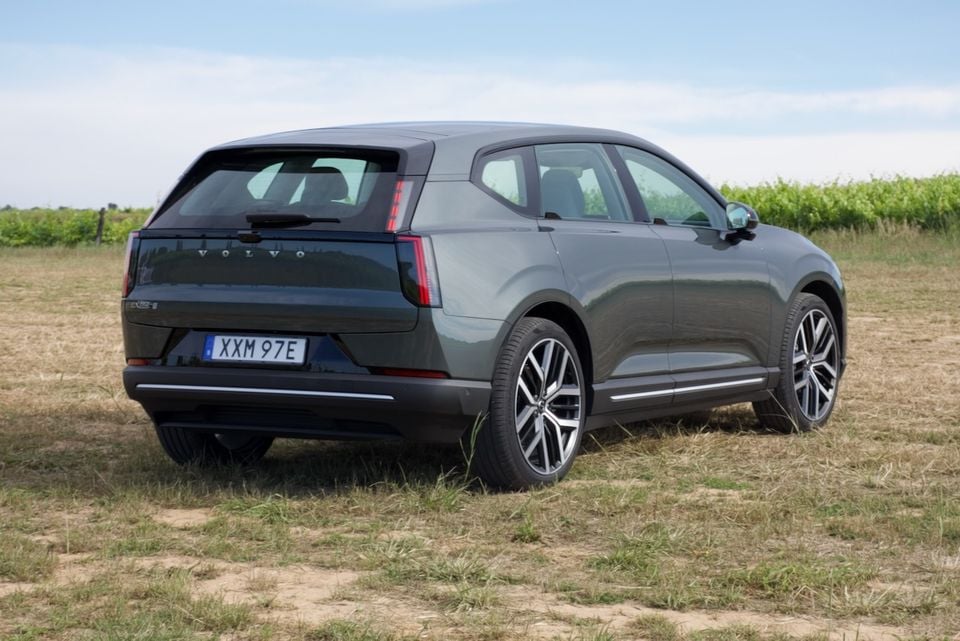
We’re looking forward to getting a production version of the 2027 Volvo EX60 into the CarExpert office once the model is launched in Australia, but our first impressions suggest this is a worthy electric counterpart for the popular XC60.
CarExpert can save you thousands on a new Volvo EX60. Click here to get a great deal
Click the images for the full gallery
CarExpert brings together reviews, research tools and trusted buying support, guiding you from research to delivery with confidence.
Ben Zachariah has 20-plus years in automotive media, writing for The Age, Drive, and Wheels, and is an expert in classic car investment.
Add CarExpert as a Preferred Source on Google so your search results prioritise writing by actual experts, not AI.
Derek Fung
21 Minutes Ago

Damion Smy
53 Minutes Ago

Matt Campbell
7 Hours Ago

Ben Zachariah
14 Hours Ago
Ben Zachariah
14 Hours Ago
Ben Zachariah
14 Hours Ago
Add CarExpert as a Preferred Source on Google so your search results prioritise writing by actual experts, not AI.
# Based on VFACTS and EVC data
† Displayed prices exclude on-road costs such as delivery charges, registration fees, number plates, insurance and applicable road taxes. These prices are subject to change without notice and may not reflect current market pricing or dealer offers.
 Automotive Vehicle Spec Data & 4K images Powered by JATO Dynamics Ltd