 Car News
 CarExpert Podcast
 Car Reviews
 Owner Car Reviews
 Car Comparisons
 Showroom
 Car Chooser
 Car Specifications


William Stopford
GM working on Ford Bronco, Jeep Wrangler rival with V8 power – report
GM has reportedly restarted development on a rugged off-roader to take on the Ford Bronco, almost eight years after cancelling the original project.
2 Hours Ago

Deputy News Editor
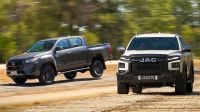
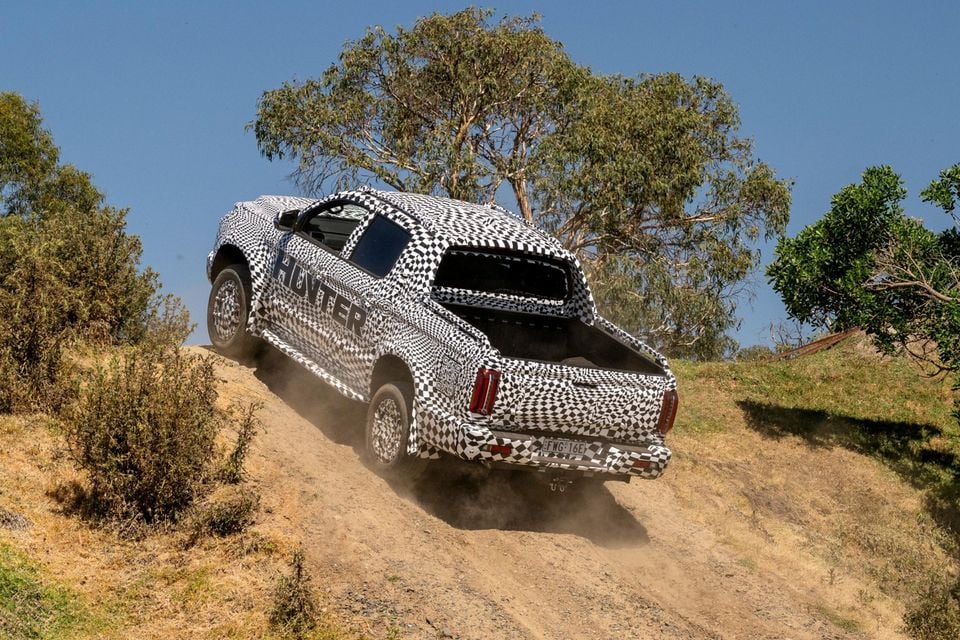
The JAC Hunter plug-in hybrid (PHEV) dual-cab ute has wrapped up its testing regime at the Lang Lang Proving Ground in Victoria – best known as the former Holden Proving Ground – ahead of its scheduled mid-2026 Australian showroom arrival.
The Hunter is the PHEV version of the turbo-diesel T9 dual-cab ute that debuted the brand in Australia in early 2024.
It’s due in showrooms mid-year as the brand’s second nameplate in Australia, with local pricing, equipment levels and model grades yet to be announced.
The Hunter will compete with the Ford Ranger PHEV, BYD Shark 6, GWM Cannon Alpha PHEV and recently announced Chery KP31 PHEV dual-cab utes.
CarExpert can save you thousands on a new car. Click here to get a great deal.
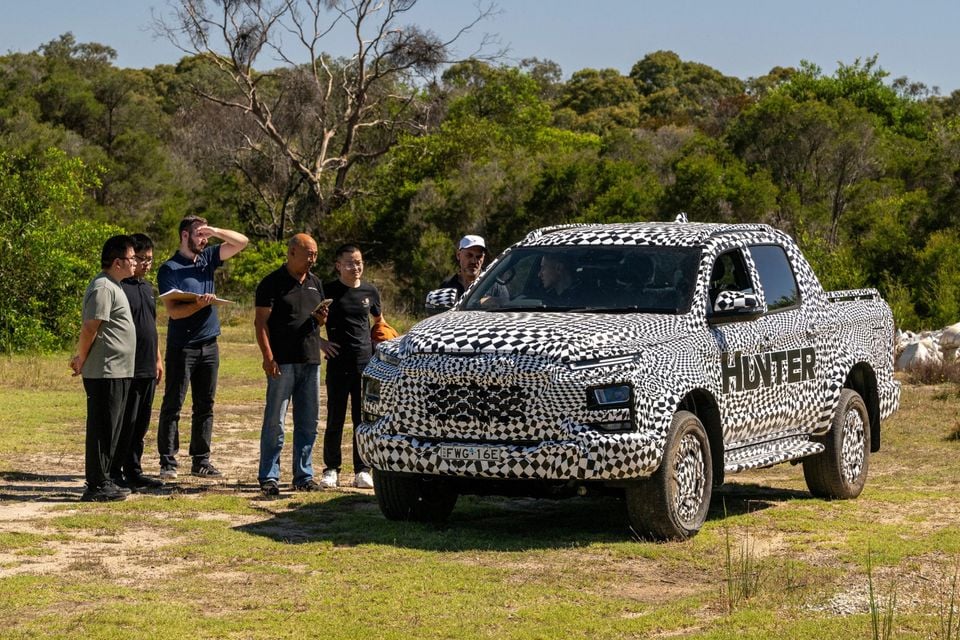
All bar the BYD have local testing input, given the Ranger’s global engineering was led by Ford Australia, while the Cannon Alpha benefits from local tuning – also at the Lang Lang facility (and beyond) – by former Holden dynamics guru Rob Trubiani.
Chery, too, has confirmed it’s undertaking an extensive local testing program for its dual-cab ute, codenamed KP31 but likely to use a more consumer-friendly name when it goes on sale here in 2027.
“This local development program is our most exhaustive and ambitious to date,” said JAC Motors Australia managing director Ahmed Mahmoud in a statement.
“It will push JAC Hunter – and engineers from China and Australia – to the absolute limit. By the time JAC Hunter goes on sale … It will be match-fit and ready for Australia.”
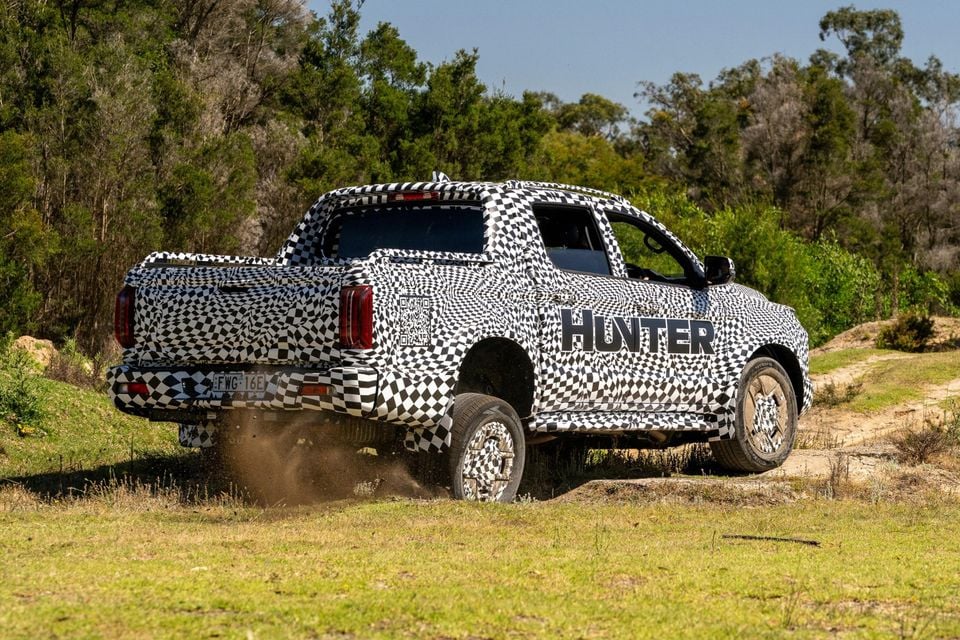
According to JAC, the Hunter has now completed more than 50,000km of local testing.
Its PHEV powertrain features a 2.0-litre turbocharged four-cylinder petrol engine and two electric motors – one on each axle – with its combined outputs of 385kW and 1000Nm shading the Ranger PHEV’s 207kW/697Nm figures and the Shark 6’s 321kW/650Nm.
Using a 31.2kWh lithium-iron phosphate (LFP) battery, the JAC dual-cab can also run on electric power for “more than 100km” on an unspecified test cycle.
The Ranger PHEV has 43km of range on the WLTP cycle, while the Cannon Alpha PHEV has approximately 98km of WLTP range (115km on the NEDC cycle).
The Hunter will also have a 3.3kW vehicle-to-load capability, meaning its battery can be used to provide power to equipment or act as a backup energy source for work or camping sites.
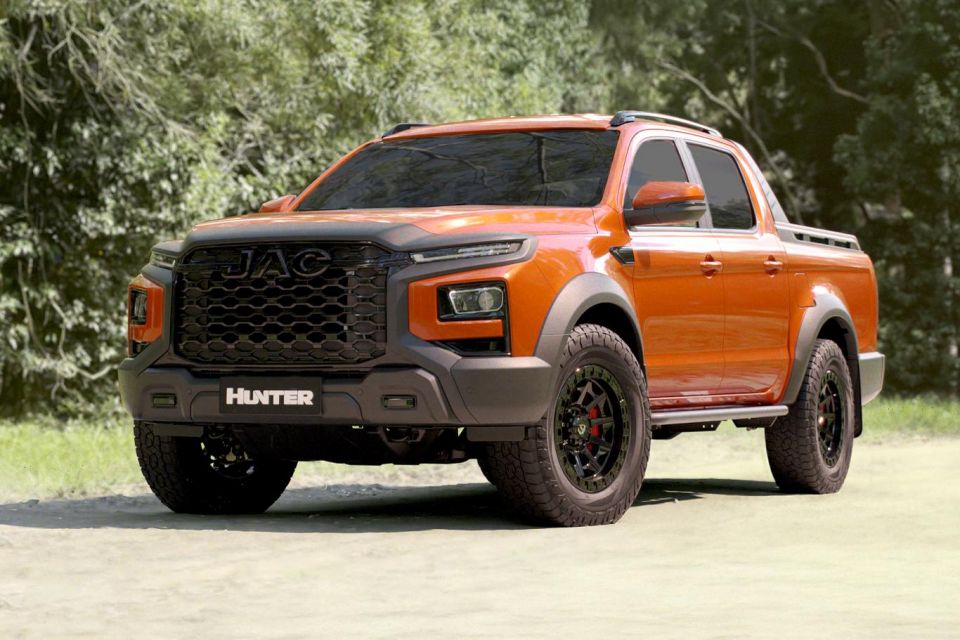
Melbourne-based engineering firm Segula Technologies Australia was engaged by JAC to prove the Hunter PHEV powertrain’s readiness for local conditions and customers.
Like Chery’s program, the Australian tune may set the template for overseas models.
“Australia’s unique combination of challenging conditions, sophisticated buyers, and high usage demands makes it an ideal proving ground,” said JAC Motors Australia technical director Hongjian Jiang.
“Lang Lang has been globally recognised as an automotive centre of excellence for many decades.
“The extensive real-world testing we can replicate on its many arduous bitumen, dirt and off-road circuits all contributes to optimising JAC’s first plug-in hybrid ute for Australian conditions – and for Australian ute buyers.”
“Improvements we identify through this program have potential to benefit Hunter customers worldwide.”
MORE: Explore the JAC showroom
Go deeper on the cars in our Showroom, compare your options, or see what a great deal looks like with help from our New Car Specialists.
Damion Smy is an award-winning motoring journalist with global editorial experience at Car, Auto Express, and Wheels.
William Stopford
2 Hours Ago

CarExpert
3 Hours Ago
Damion Smy
3 Hours Ago
Damion Smy
5 Hours Ago
Damion Smy
6 Hours Ago
William Stopford
7 Hours Ago
Add CarExpert as a Preferred Source on Google so your search results prioritise writing by actual experts, not AI.